
Blooming in the fall?!
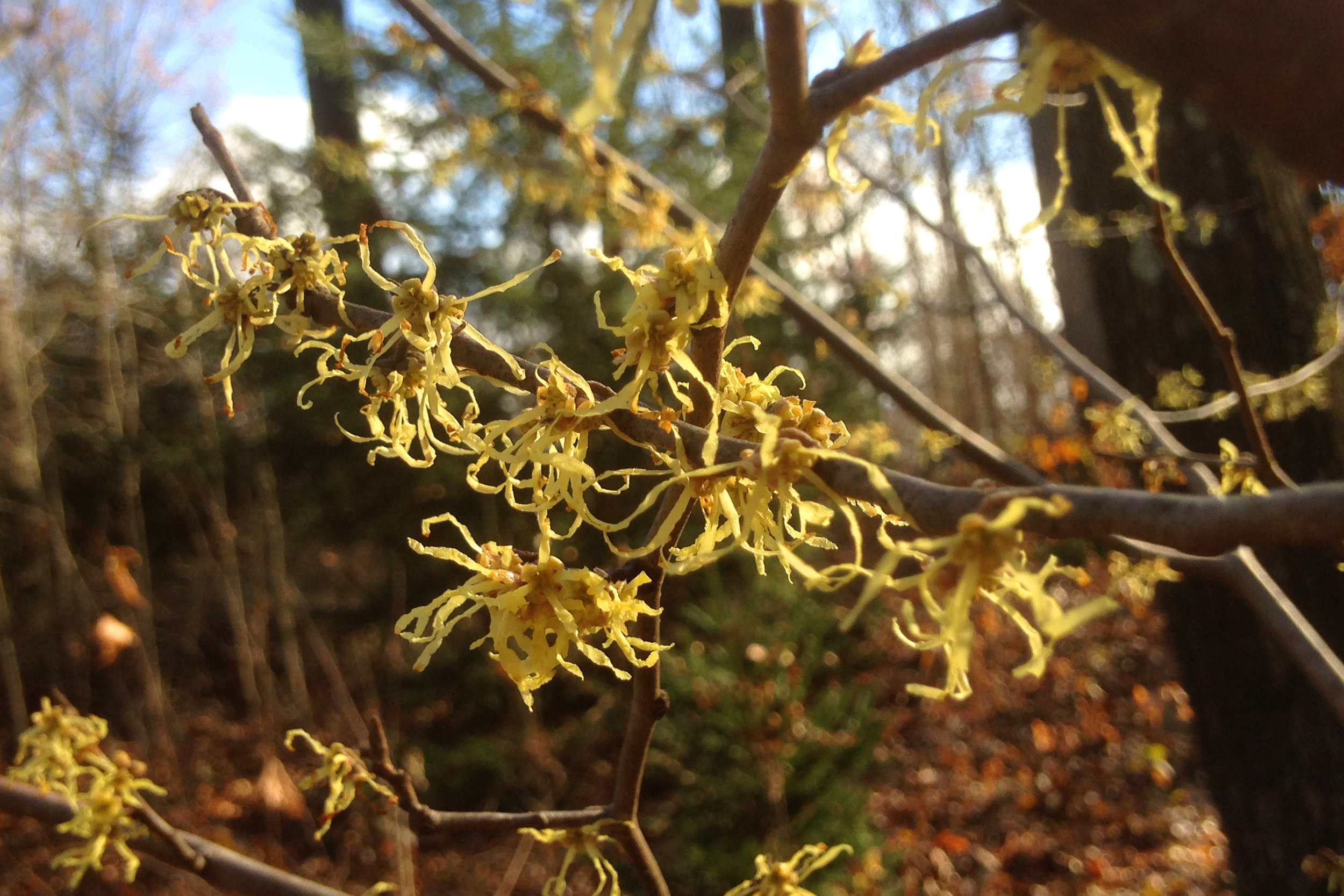
One of my favorite things about the fall season are the flowers of our native Witchhazel. If you look carefully you may still be fortunate enough to see them. On the cold grey days of fall, when other plants have lost their color, our native Witchhazel bursts into a show of yellow flowers brightening up the landscape around them.

Blooming in the fall?!
An Often Overlooked Fall Color
One of my favorite things about the fall season are the flowers of our native Witchhazel. If you look carefully you may still be fortunate enough to see them. On the cold grey days of fall, when other plants have lost their color, our native Witchhazel bursts into a show of yellow flowers brightening up the landscape around them.
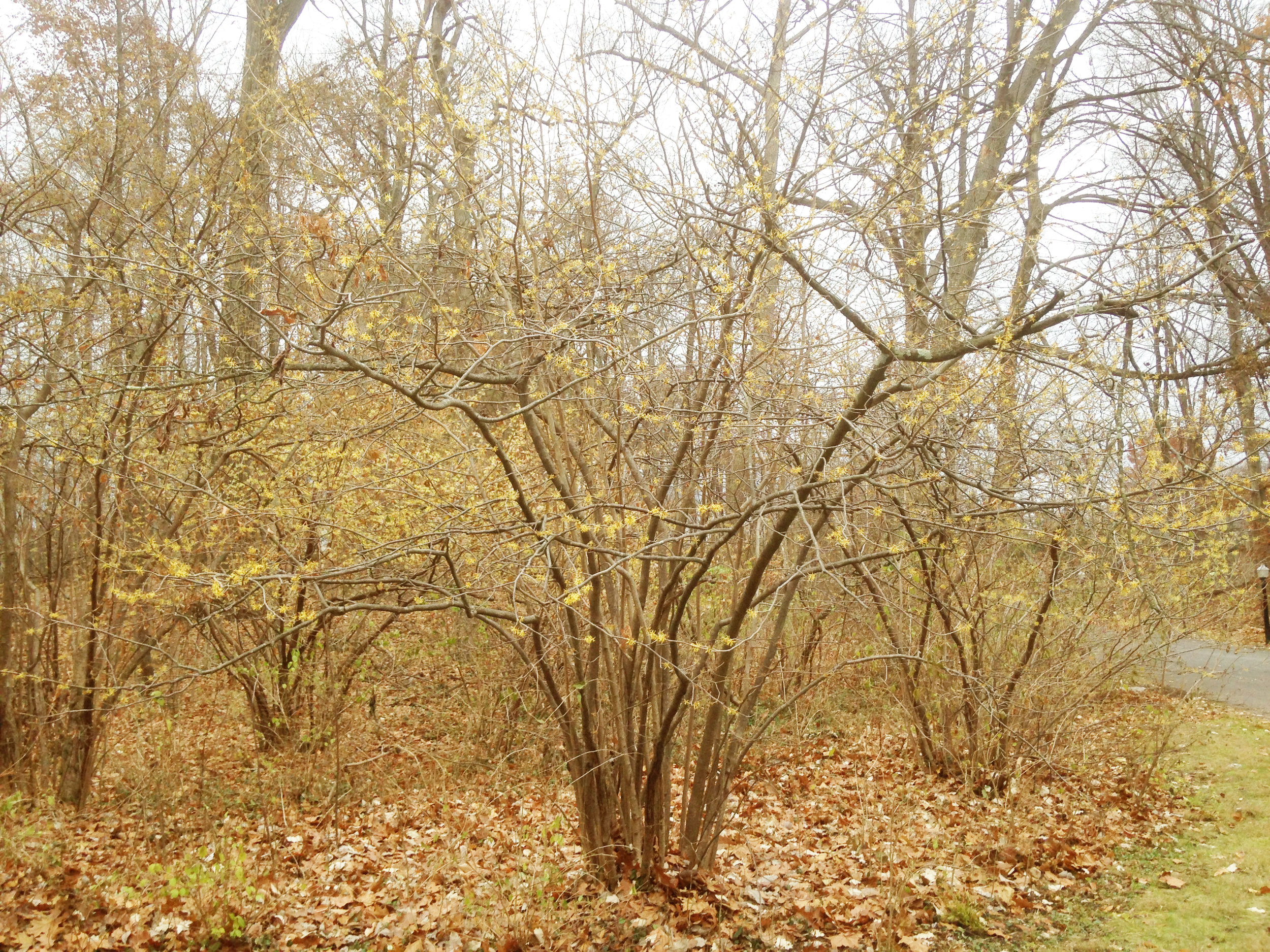
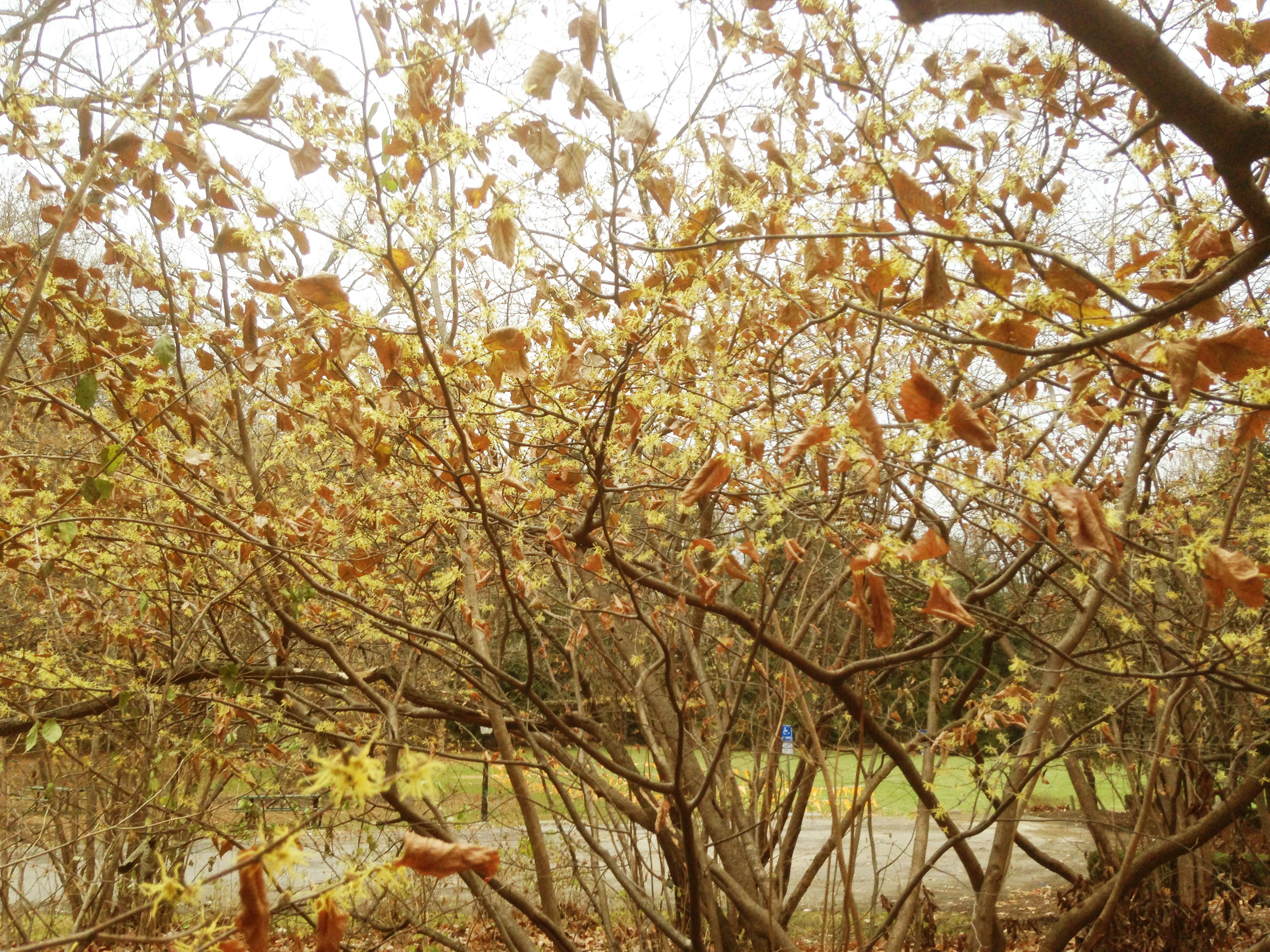
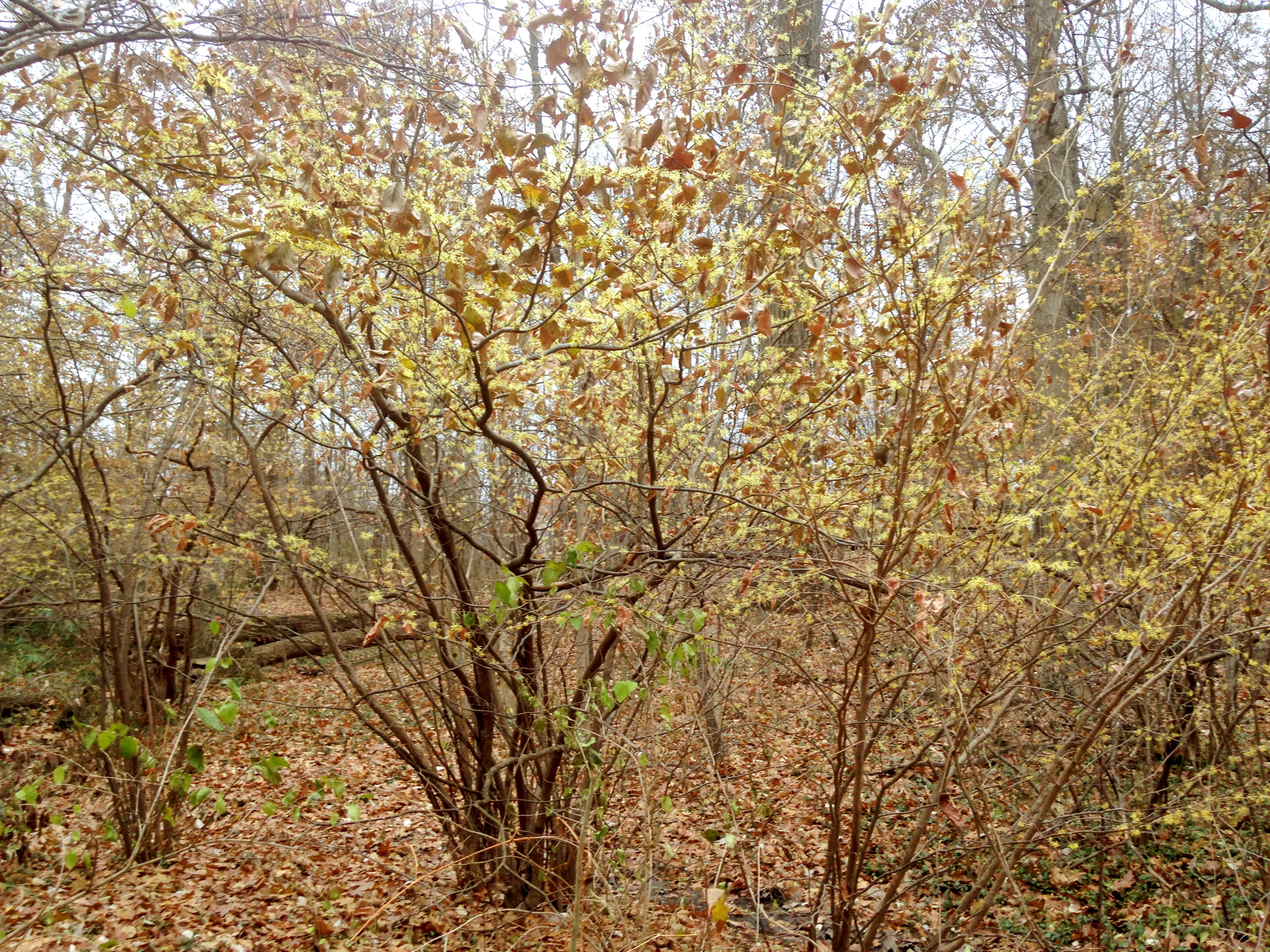
Common Witchhazel, Hamamelis virginiana, is a native small wide spreading tree (or large shrub) native to central Ohio and much of the midwest and eastern United States. It grows naturally on dry woodland slopes, in moist woods and along the banks of streams. It has a high tolerance to shade and clay soils making it a useful plant for the urban landscape. Witchhazel can be used as a focal point, shrub border, or for the wildlife garden as it provides food for birds, honeybees and the spring azure butterfly (the juvenile form feeds on the foliage).
Witchhazel will often go unnoticed by most folks until mid October when it produces its fragrant yellow strap like flowers. The flowers will normally last 4 - 6 weeks fading by December. This week, I’ve observed Witchhazel still in peak flower in client’s yards and in parks and woods around central Ohio. There is nice stand at Jeffrey Park in Bexley just North of the tennis courts I recommend checking out.
If you’ve been looking for a small tree to add to your property - consider the Common Witchhazel.
Side note: Vernal Witchhazel, Hamamelis vernalis is a native Witch Hazel of Southern Missouri, Oklahoma, Arkansas, and Louisiana that flowers late winter/early spring. The nursery industry has made this plant commercially available as well as two Asian species, Hamamelis japonica and Hamamelis mollis. There are also dozens of cultivated varieties and hybrids of these species so you or someone you know may have Witchhazel that flowers at a different time or in a different color.

TJ Nagel | Regional Manager, Russell Tree Experts
ISA Certified Arborist® OH-6298A // Graduated from The Ohio State University in 2012, Earned B.S. in Agriculture with a major in Landscape Horticulture and minor in Entomology // Tree Risk Assessment Qualified (TRAQ) // Russell Tree Experts Arborist Since 2010
Witch-Hazel Cone Gall
I find insects that cause galls to be really interesting. There are many different types, usually host-specific, with various shapes and sizes of galls formed. In most instances, the feeding of the insect causes an abnormal growth reaction in the plant that forms this gall where either the adult or the immature insect lives inside.
The photo below is of Witch-hazel cone gall, caused by an aphid bearing the same name. I find insects that cause galls to be really interesting. There are many different types, usually host-specific, with various shapes and sizes of galls formed. In most instances, the feeding of the insect causes an abnormal growth reaction in the plant that forms this gall where either the adult or the immature insect lives inside. In this case, a single aphid will feed on the leaf in spring, causing the gall to form. While inside the gall, the female aphid will produce young that eventually emerge in two forms, with two destinies: A wingless form stays on the host plant; the winged form goes to live on Birch trees. In autumn a second winged generation develops and flies back to the witch-hazel where eggs are laid on the twigs to start the process again the following spring.
When we see galls on leaves and twigs, do we stop to think about the lives of these insects, and the plants that support them? This world we share is much larger than we realize – it gets bigger the more we look up, or down, and we’re all in this together.
Your friendly neighborhood arborist,
José Fernández
ISA BCMA® OH-5129B
Insect notes summarized from Insects That Feed on Trees and Shrubs, by Warren T. Johnson and Howard H. Lyon, second edition.