
By Chris Gill
ISA Certified Arborist® OH-6416A
October 22, 2026
— — —
As winter settles into Ohio, the landscape takes on a whole new look. Leaves fall; temperatures drop, and deciduous trees enter their natural dormant period, slowing their growth and conserving energy until spring returns. But just because a tree looks quiet and bare doesn’t mean there’s nothing happening.
In fact, winter can be one of the best times to give your trees some extra attention. For homeowners and property managers, dormant season pruning can improve tree structure, reduce the risk of certain diseases, and help prepare trees to better withstand Ohio’s unpredictable weather.
During winter dormancy, trees are no longer producing leaves or actively extending new shoots. Instead, they rely on energy reserves stored throughout their roots, trunk, and branches. Pruning during this period gives arborists an opportunity to address structural concerns before the next growing season begins. While trees still respond to pruning wounds through their natural defense processes, proper pruning techniques and appropriate timing can help minimize unnecessary stress. For many shade trees, late fall through early spring is an excellent time to complete this work.
One of the biggest advantages of winter pruning is improved visibility. Without leaves covering the canopy, an arborist can get a much clearer view of the tree’s overall structure. Weak branch attachments, competing leaders, crossing or rubbing limbs, and dead or damaged branches are easier to identify. These concerns may be more difficult to see during the growing season when dense foliage obscures the tree’s framework.
Addressing structural issues during dormancy can help establish better branch spacing and a more balanced canopy. Removing branches that rub together can prevent future wounds, while correcting poor or weak branch structure when appropriate can help reduce the likelihood of failure as the tree matures. Properly maintained structure can also better prepare trees for the snow, ice, thunderstorms, and strong winds we experience throughout Ohio.
Disease prevention is another important consideration when deciding when to prune, particularly with oak trees.
Oak wilt is a serious and potentially fatal disease affecting oak trees. It can spread through connected root systems and through insects attracted to fresh wounds. Because insect activity is greater during warmer portions of the year, avoiding unnecessary pruning wounds during higher risk periods can help reduce the chance of disease transmission.
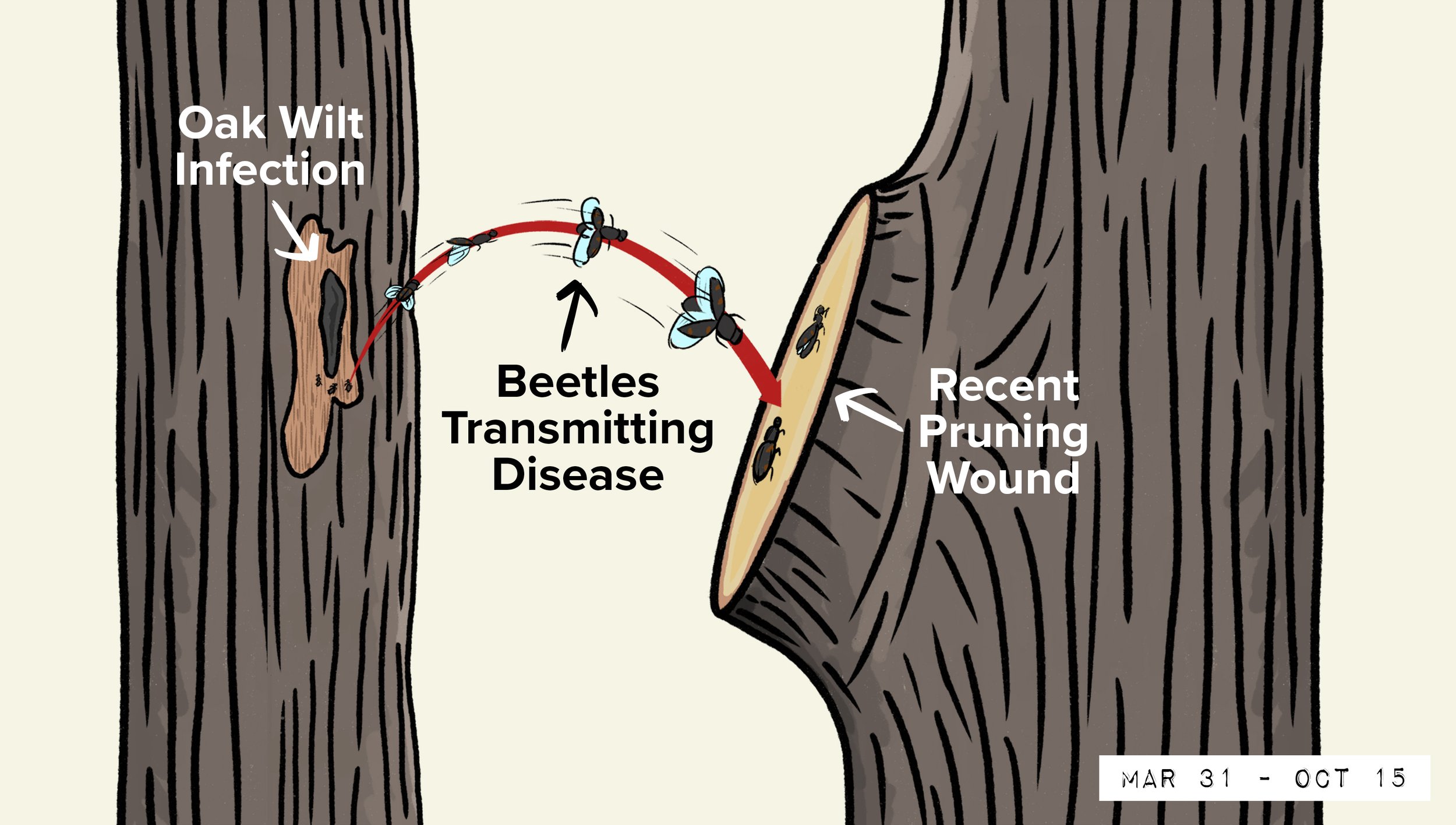
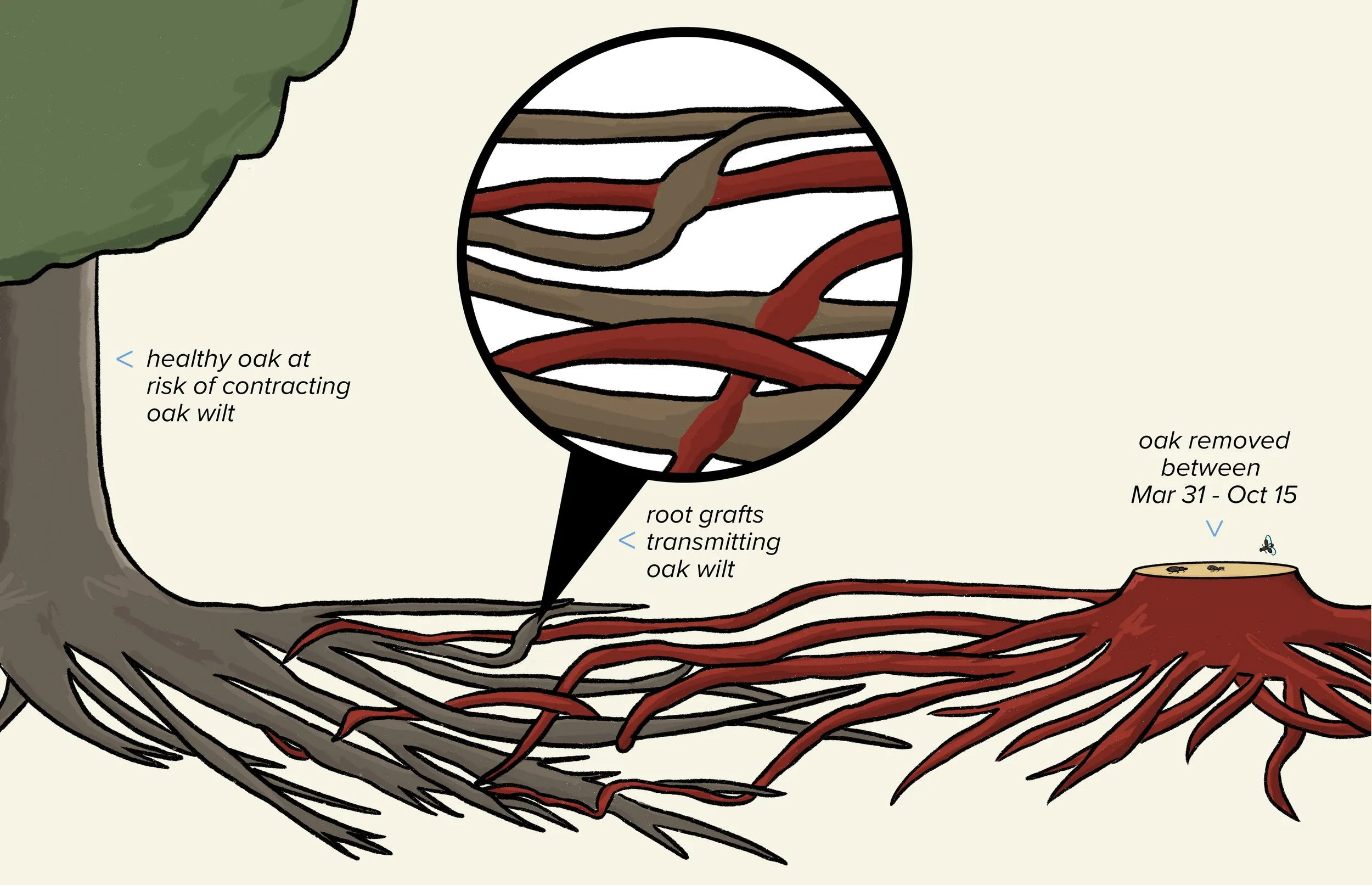
For planned maintenance, pruning oaks during the dormant season is generally preferred. Oaks in the Red oak group (Pin oak, Northern Red Oak, Shingle oak, Black oak, etc.) are particularly vulnerable and can decline rapidly once infected. White oaks tend to be more tolerant, but they still benefit from careful pruning practices and appropriate timing.
Our native Elm trees also benefit from thoughtful pruning schedules. Dutch elm disease can be spread by elm bark beetles, making dormant season pruning a good option for routine maintenance when insect activity is reduced.
Maples present a slightly different situation. When pruned in late winter or early spring, they may release sap from fresh pruning cuts, commonly referred to as “bleeding.” Although the appearance can concern homeowners, this sap flow generally does not harm an otherwise healthy tree.
Fruit trees, including apples and pears, can also benefit from dormant season pruning. Proper pruning can improve canopy structure, sunlight penetration, and air circulation while helping maintain productive fruiting wood.
Winter is not necessarily the ideal pruning season for every tree or shrub. Many spring-flowering plants produce flowers from buds formed during the previous growing season. Pruning these plants too early can remove flower buds and reduce the upcoming spring display.
Dead, damaged, diseased, or hazardous branches may need to be addressed whenever necessary, regardless of the season. For routine pruning, however, the best timing depends on the species, its condition, and the goals of the work.
Some homeowners hesitate to prune in winter because a freshly pruned tree can appear especially bare without foliage. But good pruning isn’t about removing as much growth as possible. It’s about identifying and removing the right branches for a specific purpose.
By addressing structural concerns while trees are dormant, a qualified arborist can help prepare them for healthy growth in the spring. Once new leaves emerge, the benefits of improved branch spacing, better structure, and a properly managed canopy become much easier to see.
Winter provides a valuable opportunity to look at trees differently. Without leaves hiding their structure, problems that may have gone unnoticed throughout the summer become much easier to identify. A winter tree inspection can help determine which trees would benefit from pruning now and which are better left for another season.