
My Quest to Make the Best Sumacade
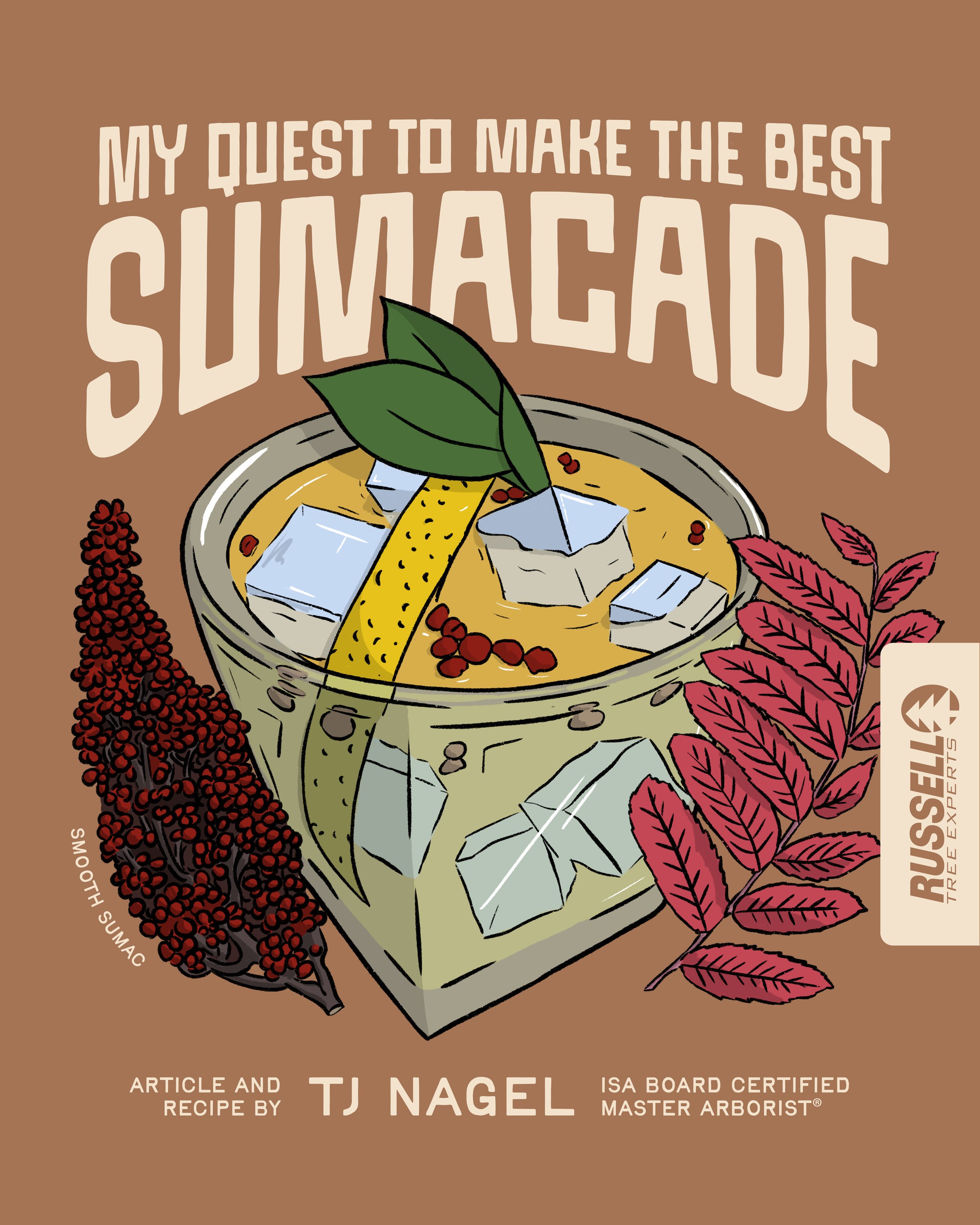
Several years ago, an arborist colleague of mine from Puerto Rico shared a story about how his family made a “lemonade-like” drink with the fruit of sumac trees. I like lemonade, and I like sumac trees, and I’ve thought about this periodically over the years when I’ve crossed paths with sumac in the late summer, but I’ve just never gotten around to playing with the fruit. More recently, on social media, I crossed paths with a forager who shared her affinity for sumac fruit and the tea-like beverage she was making with it. Over that same weekend, I noticed the sumac trees at the edge of our woods and along our driveway in Zaleski, Ohio were full of bright red clusters of ripe fruit. Sumac Lemonade (here on referred to as Sumacade) was about to happen.
It took four tries to get my Sumacade beverage to the point that it was amazing, so I write this article as a public service announcement in the hopes that you can enjoy this drink the way I do now on your first attempt.
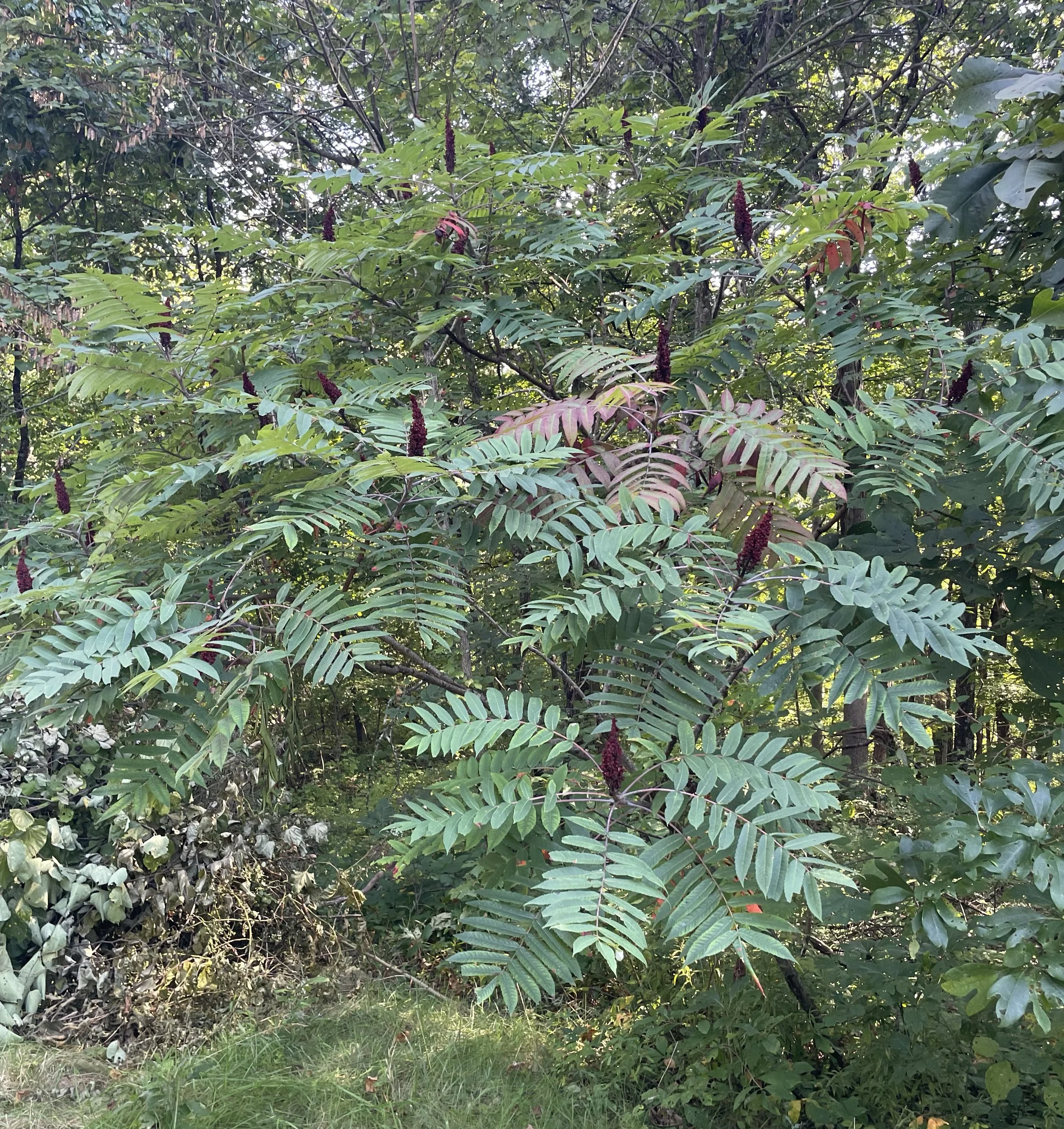
But first, I want to talk briefly about the tree. We have four native species of true sumac in Ohio, and you can make Sumacade from all of them. Staghorn sumac (Rhus typhina), smooth sumac (Rhus glabra), shiny sumac (Rhus copallinum), and fragrant sumac (Rhus aromatica) all take up residence in the Buckeye State. Fragrant sumac is a low-growing groundcover shrub that is restricted mostly to the lake counties of Ohio. It’s not incredibly common, and the clusters of fruit are small, so I don’t recommend using this as your source for Sumacade. Staghorn sumac, Smooth sumac, and Shiny sumac are all large shrubs to small-sized trees that produce large cone-sized clusters of red berries. You can find at least one of these three species in all 88 of Ohio’s counties, typically growing in unmanaged fields or at the edge of woods. I also find them quite often along the sides of roads in rural areas, and the nursery industry has introduced several cultivated varieties for the landscape. Sumac trees are dioecious, which means some plants produce male flowers, while other plants produce female flowers, so not every sumac tree is going to be a fruit producer - just the girls. What makes sumac berries taste great in a beverage is the water-soluble sour and tangy coating on their berries, which is primarily malic acid and a little vitamin C. Malic acid is the same organic compound that gives green apples and grapes their characteristic tangy, sour, and fruity flavor. You’ve probably enjoyed sumac fruit and malic acid already if you’re a fan of Middle Eastern or Mediterranean foods, as it’s a common souring agent in many of their popular dishes.

A couple more interesting facts about sumac — they have outstanding red fall color in their foliage, their flowers are relished by bees, butterflies, moths and ants and their fruit is a late summer/fall staple for over 300 species of birds (so don’t be greedy when you’re making sumacade).
Quick side note - we also have Poison sumac (Toxicodendron vernix) in Ohio. This CANNOT be used for sumacade. Poison sumac is NOT a true sumac. Notice its Latin name, Toxicodendron, puts it in a separate genus from true sumacs, Rhus. Poison sumac is in the same genus as poison ivy (Toxicodendron radicans), and poison sumac also contains urushiol, which gives folks the same red, itchy rash as poison ivy. The fruit of poison sumac is white and is very different in appearance and color from the red fruit of true sumac. Also, the range of poison sumac is limited to the very Northeastern parts of Ohio, and the plants typically grow in bogs and wet sites, very different from the culture of true sumacs that prefer the edge of woods, dry hillsides, and fields. I want to talk more about the importance of Latin names and the confusion of common names, but I’ll spare you for now and save that for another article.
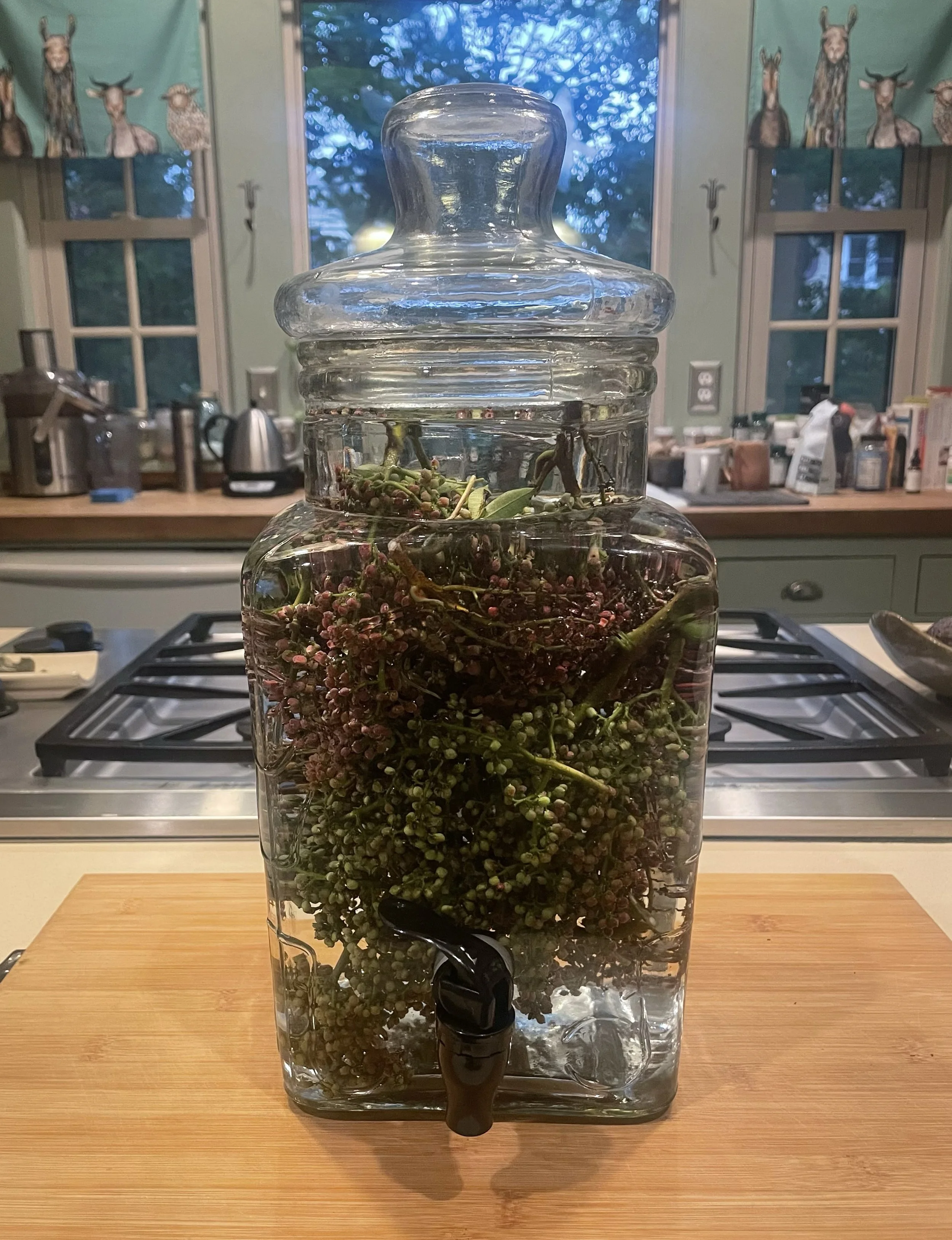
Back to making sumacade: Someone gave us a beverage dispenser for our wedding, which I’ve never used until this moment, but it's the perfect-sized container for making sumacade. It holds 1.32 gallons or 5 liters if you like the metric system. This is the container I used for all 4 batches of sumacade, and this amount usually lasts my wife and me about a week. What follows are my four experiences learning about and developing this interesting fruit and beverage.
Take 1
My First Batch!
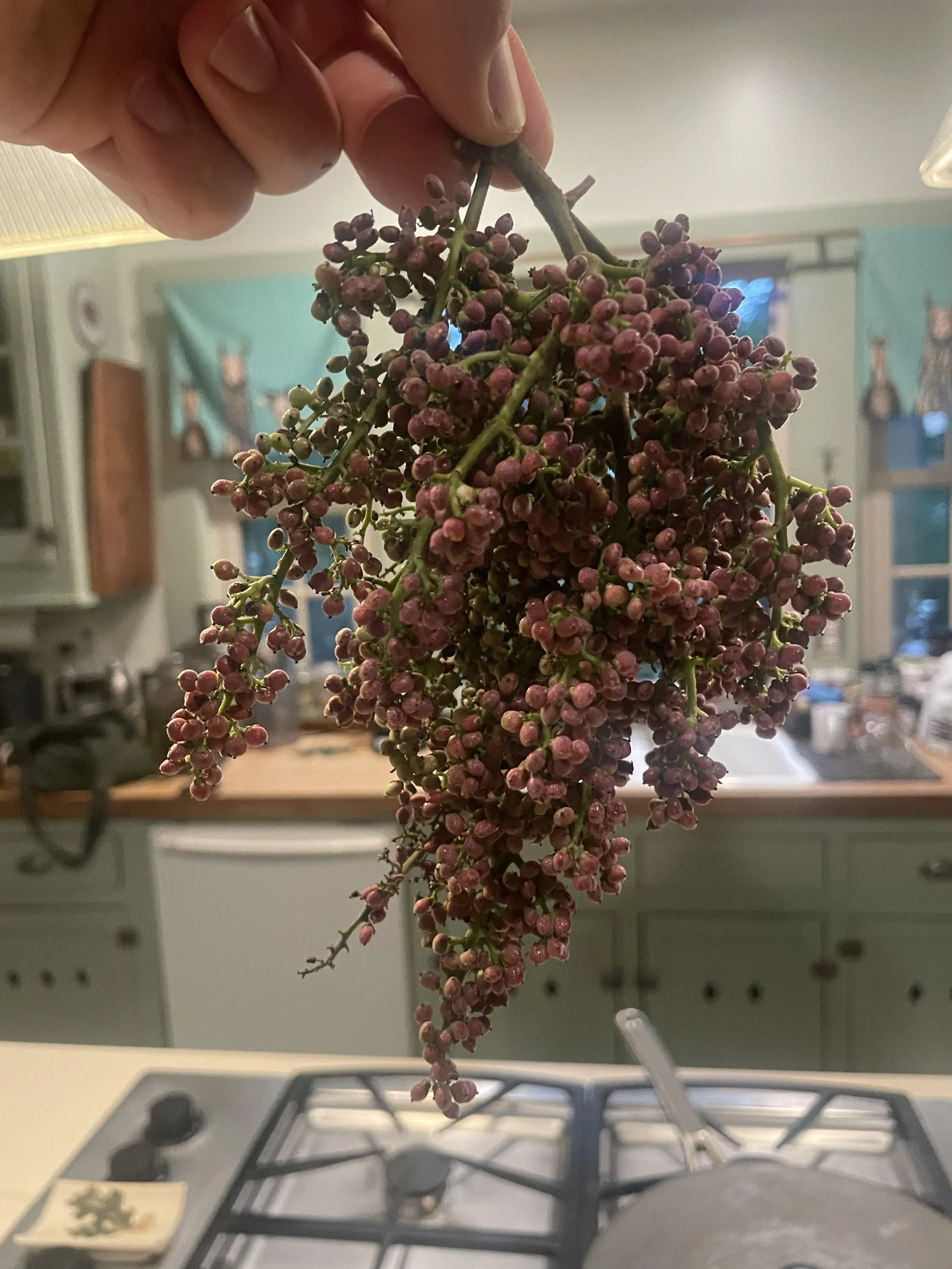
I picked a lot of shiny sumac fruit (Rhus copallinum) around the middle of August - it’s the most common sumac on our property, and it's also my favorite species of sumac for its bright, shiny red fall color. Burning bush doesn’t hold a candle to it - if you are looking for a native woody in the 8ft to 15ft size range that has fall color with some serious main character energy, Shiny sumac is your plant. My social media friend instructed me to put a dozen or so berry clusters in my beverage container and to set it in the sun for the afternoon to make a sumac tea. I picked a spot on the south side of our house that would get good afternoon sun and spent the day rubbing my palms together in anticipation. The water turned a nice shade of yellowish-orange, and the beverage was drinkable, but the flavor just wasn’t what I was expecting. It tasted like weak tea without sweetener and was a little astringent. Definitely not something I would look forward to drinking regularly, so it was back to the drawing board. I was really hoping for a more sour flavor.
Take 2
I did some research and asked Google which species of Ohio’s native sumacs had the highest concentration of malic acid coating on their fruit. Turns out staghorn sumac and smooth sumac are the highest, so I decided to try sumacade again with one of these two species. I read online that overheating sumac fruit will cause the berries to release bitter tannins and ruin the clean sour taste. I wondered if this had happened somehow with my first batch. I also have noticed that the birds seem to like the fruit of shiny sumac the least, as most of the plants on our property still have all of their berries while the fruits of smooth and staghorn sumac are quickly disappearing. This probably means something. Like maybe Shiny sumac fruit is “for the birds.” LOL
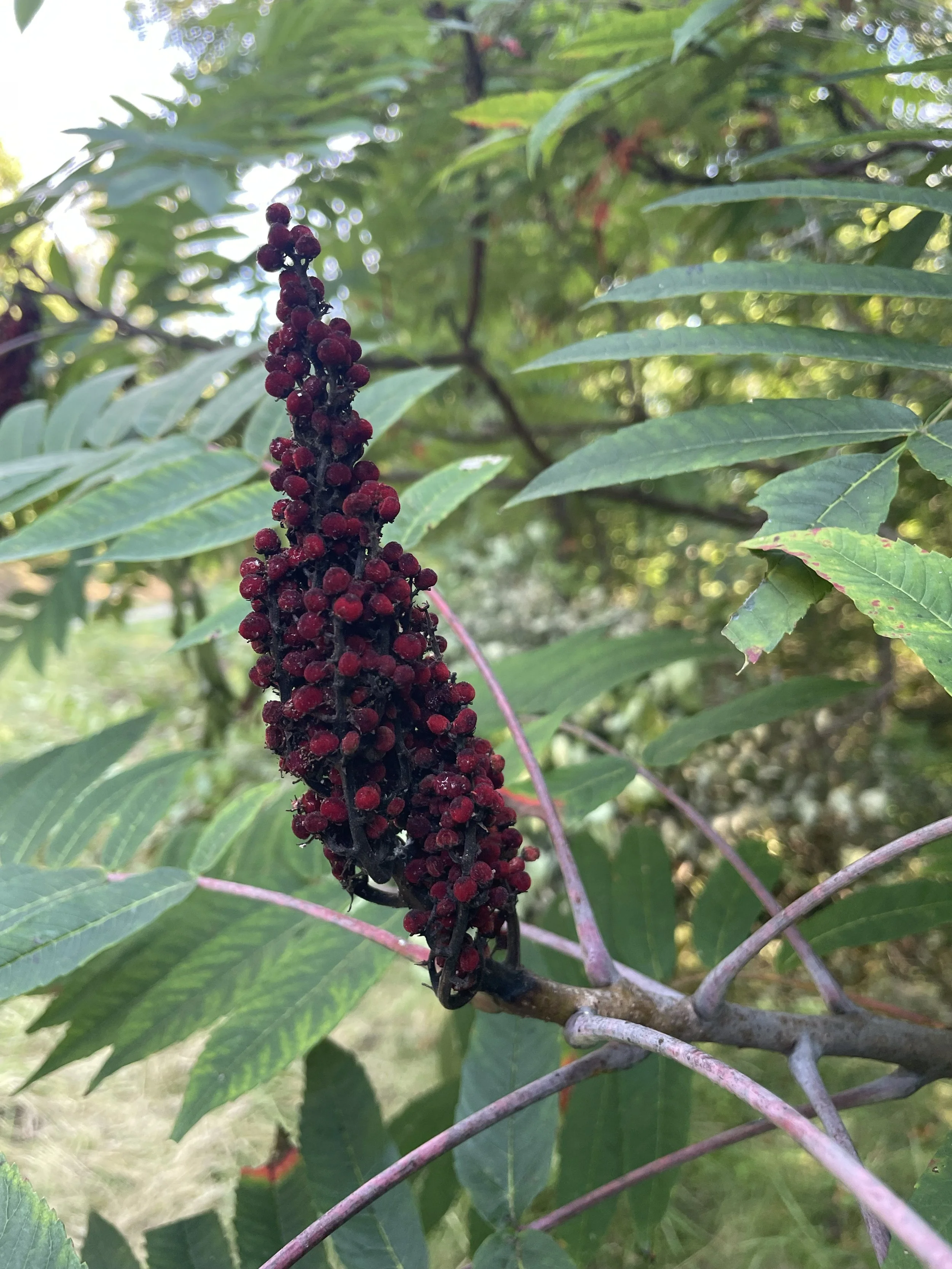

At our Zaleski forest farm, we have smooth sumac and staghorn sumac growing wild as well. These two plants look very similar, with the primary difference being that staghorn sumac has significant pubescence (fine fuzzy hairs) that covers the young stems, rachis (the leaf stem), and the fruit. These fine hairs, called trichomes, function as a defense mechanism and are an irritant to most folks, so if using staghorn sumac to make sumacade, the beverage needs to be filtered through cheesecloth or a coffee filter before consumption. This extra step helped me to select smooth sumac fruit for my second batch. I placed about a dozen smooth sumac fruit clusters into my beverage dispenser, added water, and set the container in the south side sun for the day. Drum roll…
A step in the right direction but still not what I had hoped for. I could taste more of the sour taste, and the beverage was definitely refreshing on a hot day and worth drinking, but I still knew something could be improved. I decided to go back to social media and confer with more of my foraging friends.
Take 3
While I was composting the used sumac berry clusters from Take 2, I noticed that while the outsides of the fruit had faded from their exposure to water and sun, the undersides were still red and still sour to taste. In other words, there was still malic acid not making its way into the sumacade. I decided I would spend the extra time removing the berries from the panicle, the structure that holds the fruit together, to expose more of each berry’s surface area to the water to attempt to enhance/strengthen the flavor. I was also instructed by a fellow forager to NOT expose the fruits to direct sunlight and to store the sumacade in the refrigerator immediately after making it, and to let the berries soak overnight before drinking. Also, I needed to give the mix an aggressive stirring every few hours during that time. Another drum roll…
This was by far the best batch yet. A very refreshing tart tea. Not sure if it was the chilling or the process of removing the fruit from the panicle (or both) that made it so much better than Take 2, but I’ll take it. I really enjoy having sumacade in the refrigerator when I’m in the mood for something more exciting than water, but it's still too early to drink wine. I also appreciate that it’s foraged off of our land and that I know where it came from and how it was handled. Full disclosure, I’ve shared this with several friends and neighbors, and it’s not for everyone. I decided I would make one more batch to try to make something that would be a real crowd pleaser.
Take 4 - Final recipe
I decided to take a step from lemonade’s playbook and add a sweetener to the sumacade. In an effort to keep things tree-themed, I added one cup of organic, pure maple syrup. I also sliced up a lemon picked from our Meyer lemon tree (an indoor houseplant I’ve had for twenty years) and added it to the mix. This has become my official recipe for mouth-watering sumacade — a beverage that I describe as tasting like a glorified Arnold Palmer (a mix of Iced Tea and Lemonade for you young folks). The volume that had been lasting us a week now disappears in just a couple of days. It’s soooooo good!
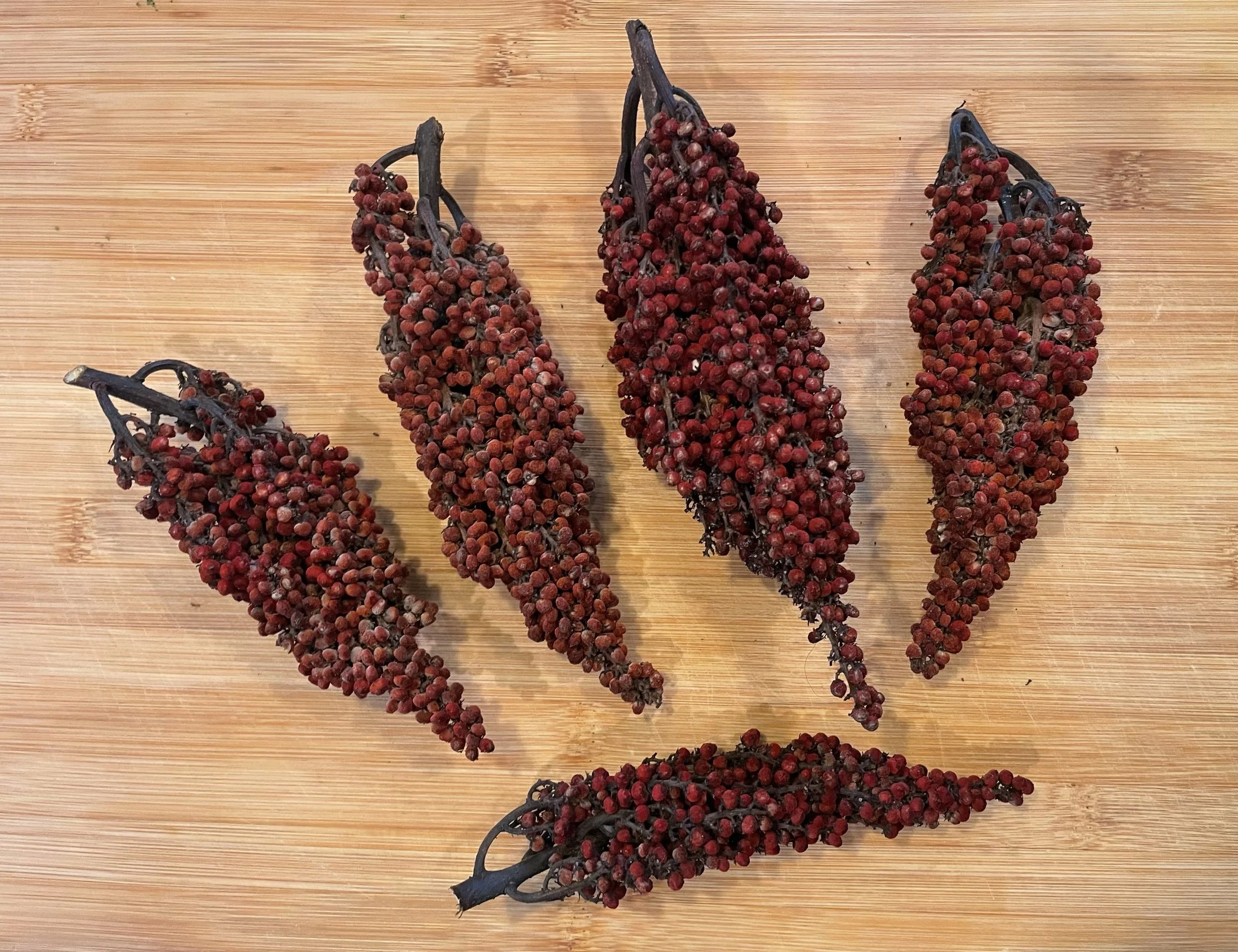
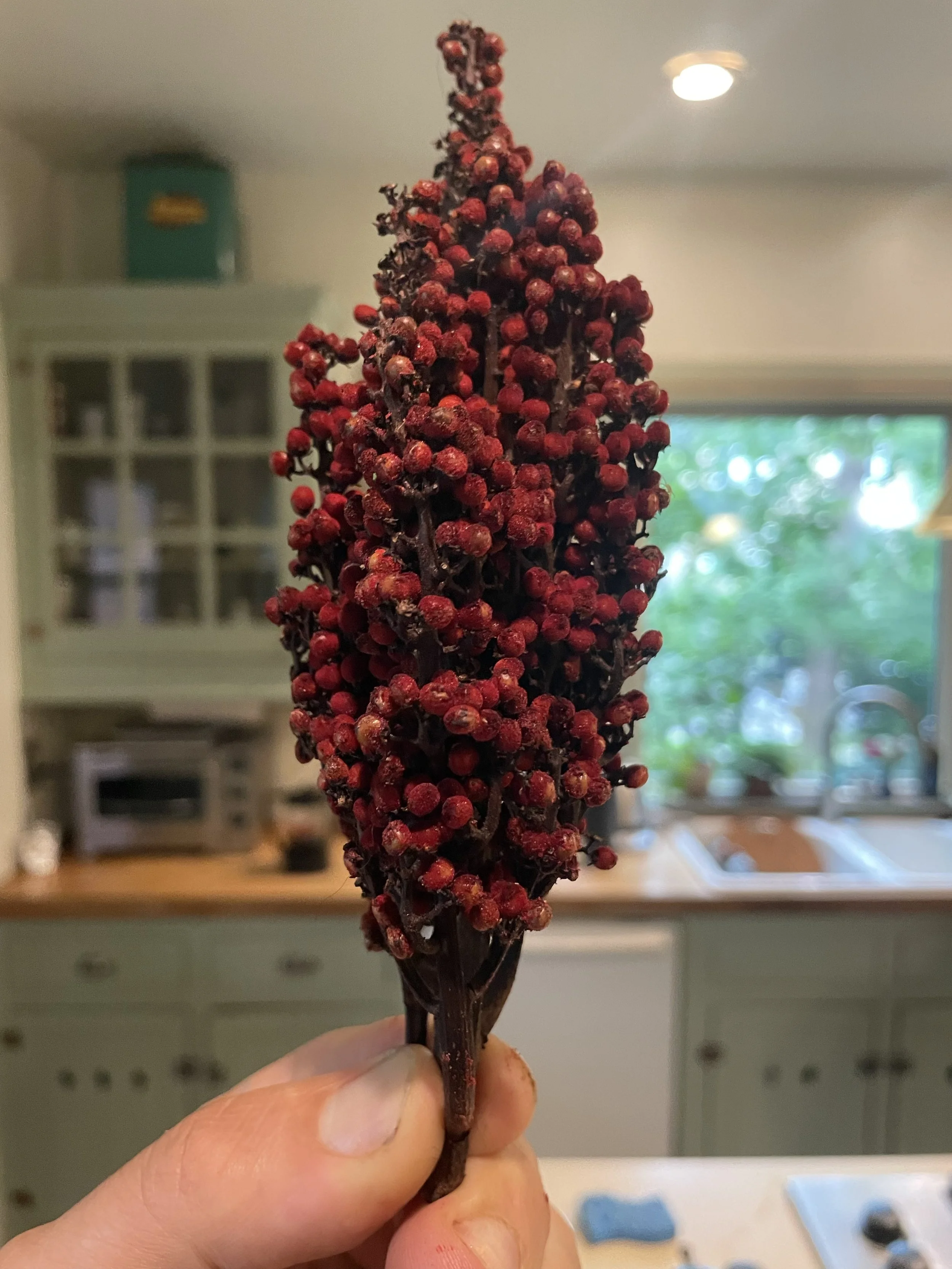
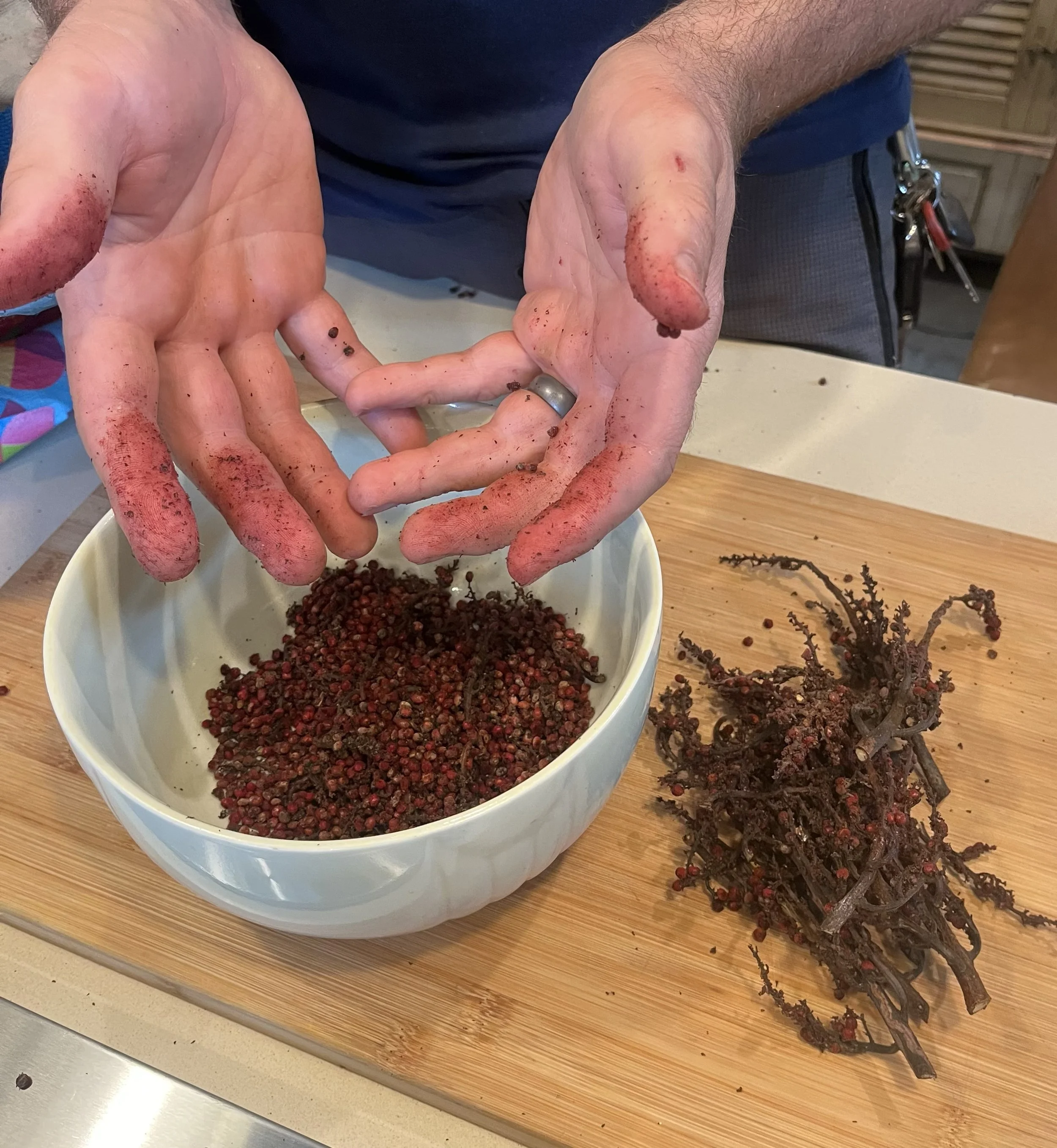
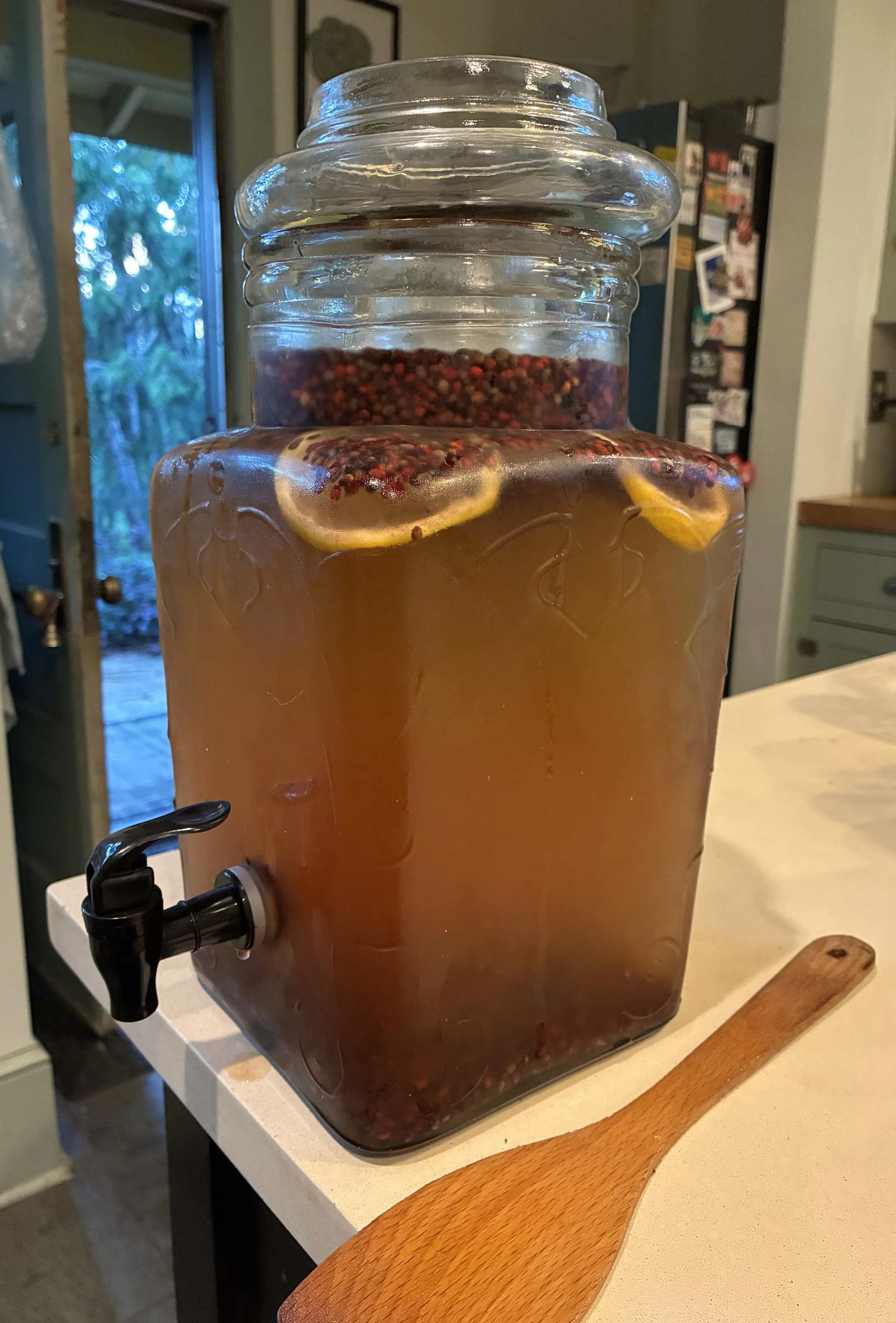
For now, I am strictly using the fruit of smooth sumac (Rhus glabra), as the birds and I believe it has the best flavor and it is the least difficult to process…
So here is the recipe:
Remove the sumac berries from the panicles of approximately 12 - 15 Smooth sumac fruit clusters (colloquially called Sumac bobs by those who know). This yields about a cup and a half of berries.
Add the berries to approximately 1.2 gallons of cold water. Make this mixture in a large container (mason jars also work great) and allow the berries to soak overnight in the refrigerator, giving the mixture a good stirring every few hours.
Add one cup of pure maple syrup and the juice of half a lemon.
Cut the other half of the lemon into thin slices and add directly to the mix.
Give the beverage a final stir and enjoy
If you do not have a beverage dispenser, pour the sumacade through a strainer to keep the sumac berries/seeds out of your drink. You can put the sumac berries back into the container to continue soaking or throw them into the compost.
I like to garnish with a sprig of mint or basil leaves
Keep the excess sumacade refrigerated until you are ready for more

[click to download and print]
I hope you enjoy sumacade as much as I do. Sumac trees are native, beautiful in the landscape, beneficial for wildlife, and easy to grow. Being able to use the fruit is a bonus, but if it's not your cup of tea (pun intended) you’ll still appreciate its red fall color.
Until next time, TJ