
Retaining Trees to Support Wildlife
By Nick Ryan
Arborist, Russell Tree Experts
October 1, 2026
———
The role of an arborist may vary significantly depending on who you ask. Whether it be the mitigation of tree-related hazards, clearing essential utilities and structures, aesthetic improvements, or providing direct care to improve the health and longevity of individual trees, it is clear that an arborist provides many services. At the core, arboriculture could be described as the active maintenance of the relationship between trees, people, and everything in between. In the pursuit of achieving a variety of objectives, over 60,000 certified arborists across the world make dozens of small decisions throughout their day. Many of these decisions will directly impact the health, density, and composition of the local canopy. All of this is to say that arboriculture has the opportunity to play a major role in the health of the urban canopy. A strong population of trees in urban areas provides an enormous amount of utilitarian value on its own, with a significant portion of this value coming from their role in supporting a healthy local ecosystem. There are a wide variety of choices an arborist can make to support this relationship of trees and habitat. Many of these choices can be easily implemented, with little impact on daily operations, to emphasize the retention of preexisting habitat. To complement the initial retention of habitat, there are also more proactive options available that can create habitat and actively expand the services of an arborist.
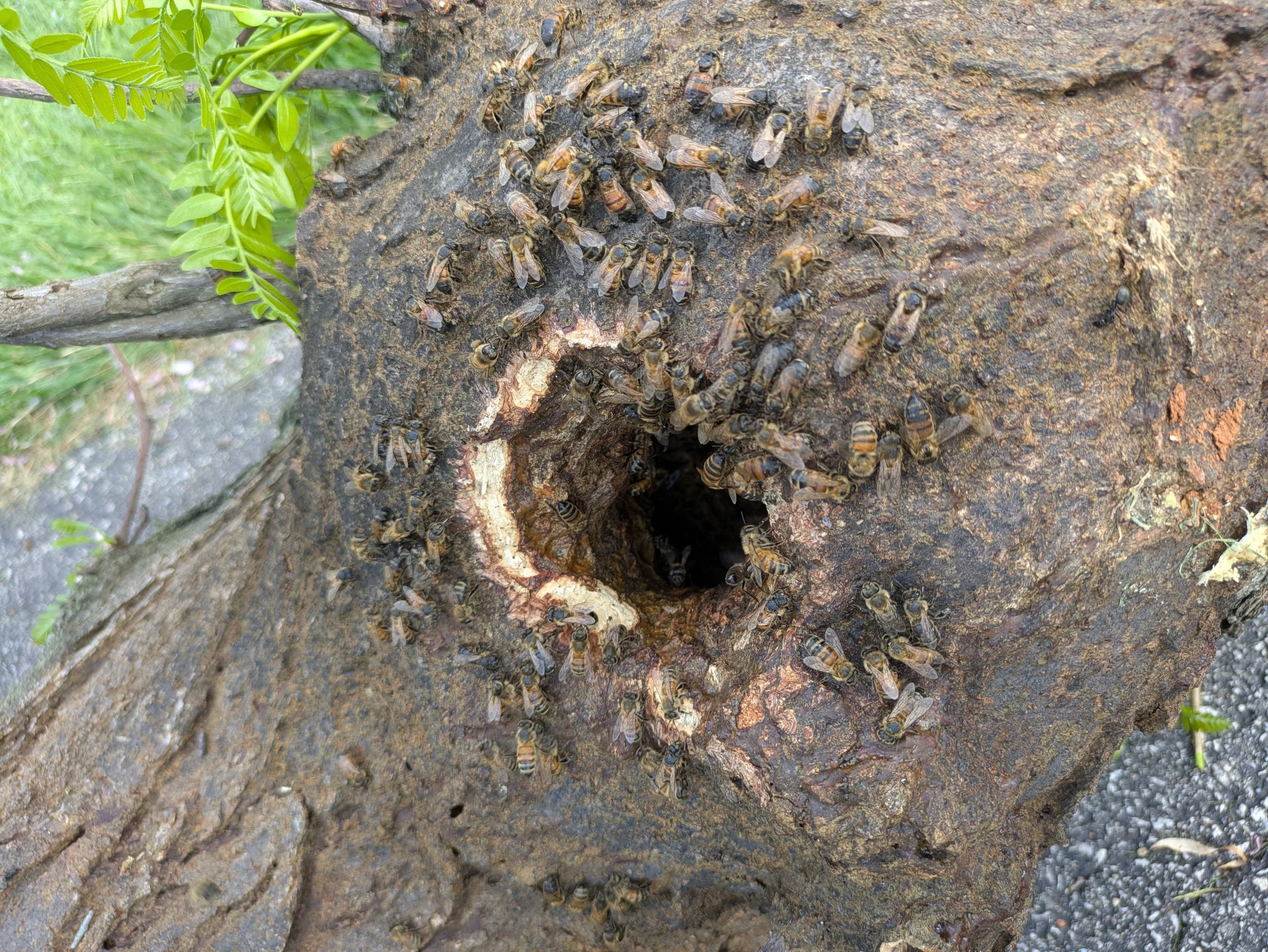
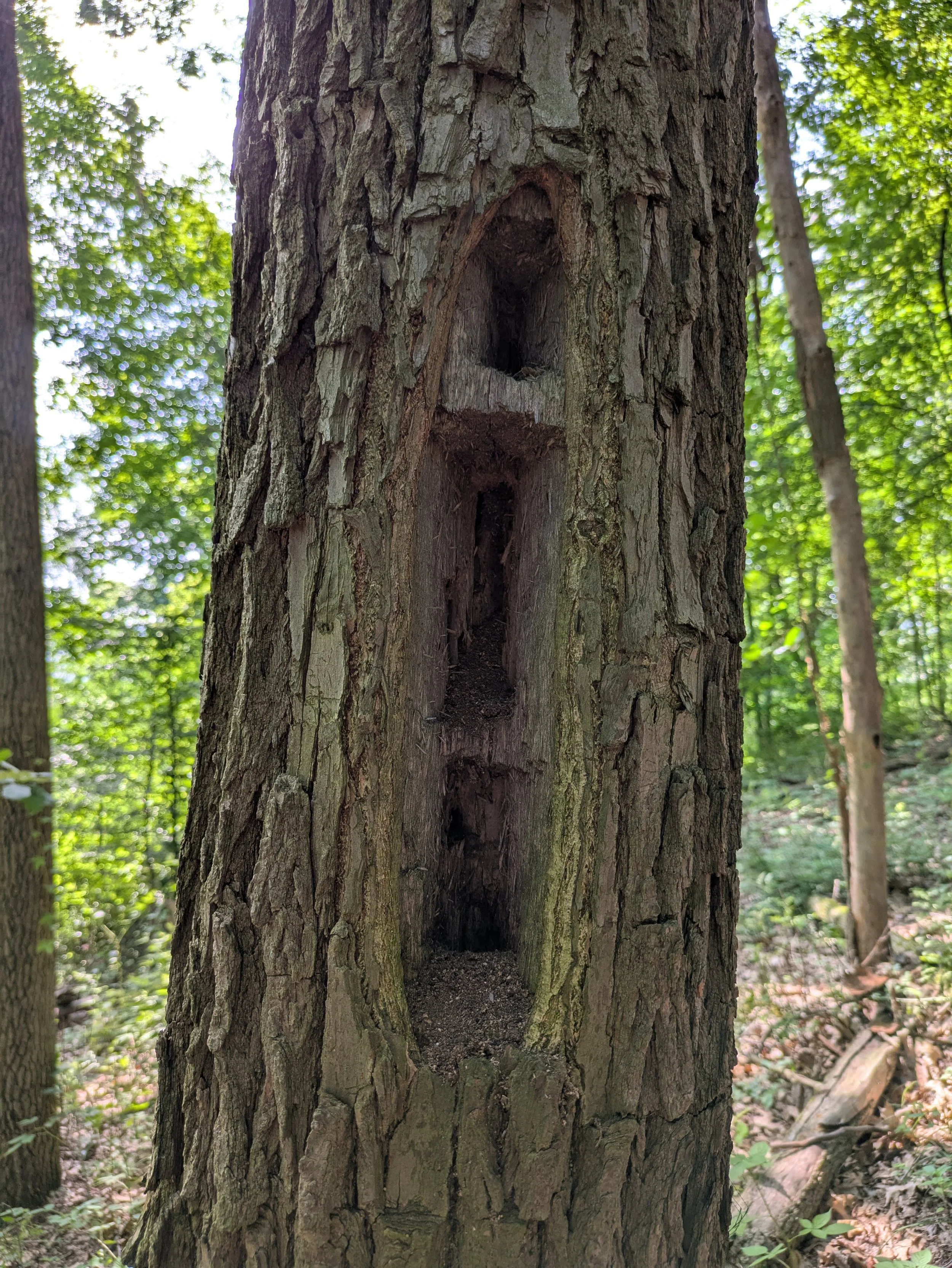
Retaining preexisting habitat can most simply be achieved by taking the least amount of action to achieve the objectives agreed upon by the arborist and their client. Often, less is more. A very common example arises in the form of hazard mitigation related to standing dead trees. It is very reasonable to identify a dead or structurally compromised tree close to any residence or utilities as a hazard that must be dealt with; the importance is how and to what degree it is managed. In this case, it is a common practice to remove the tree in its entirety, but by the time the tree is reduced to a single trunk, it is highly likely that any previously existing risk has been totally eliminated; thus, leaving the tree trunk standing is a perfect opportunity for habitat retention. As the trunk of the tree remains standing over many years, weather and wildlife are allowed to take their course and make great use of the wood. Exposure to the elements will perpetuate the slow decomposition; various species of fungi, birds, and beneficial insects are allowed to carve their way into a sturdy home, eventually forming larger hollows suitable for an immense variety of life. It is likely that trees provide just as much to their ecology in death as they do in life, with a single tree trunk very capable of hosting hundreds of species over many years.
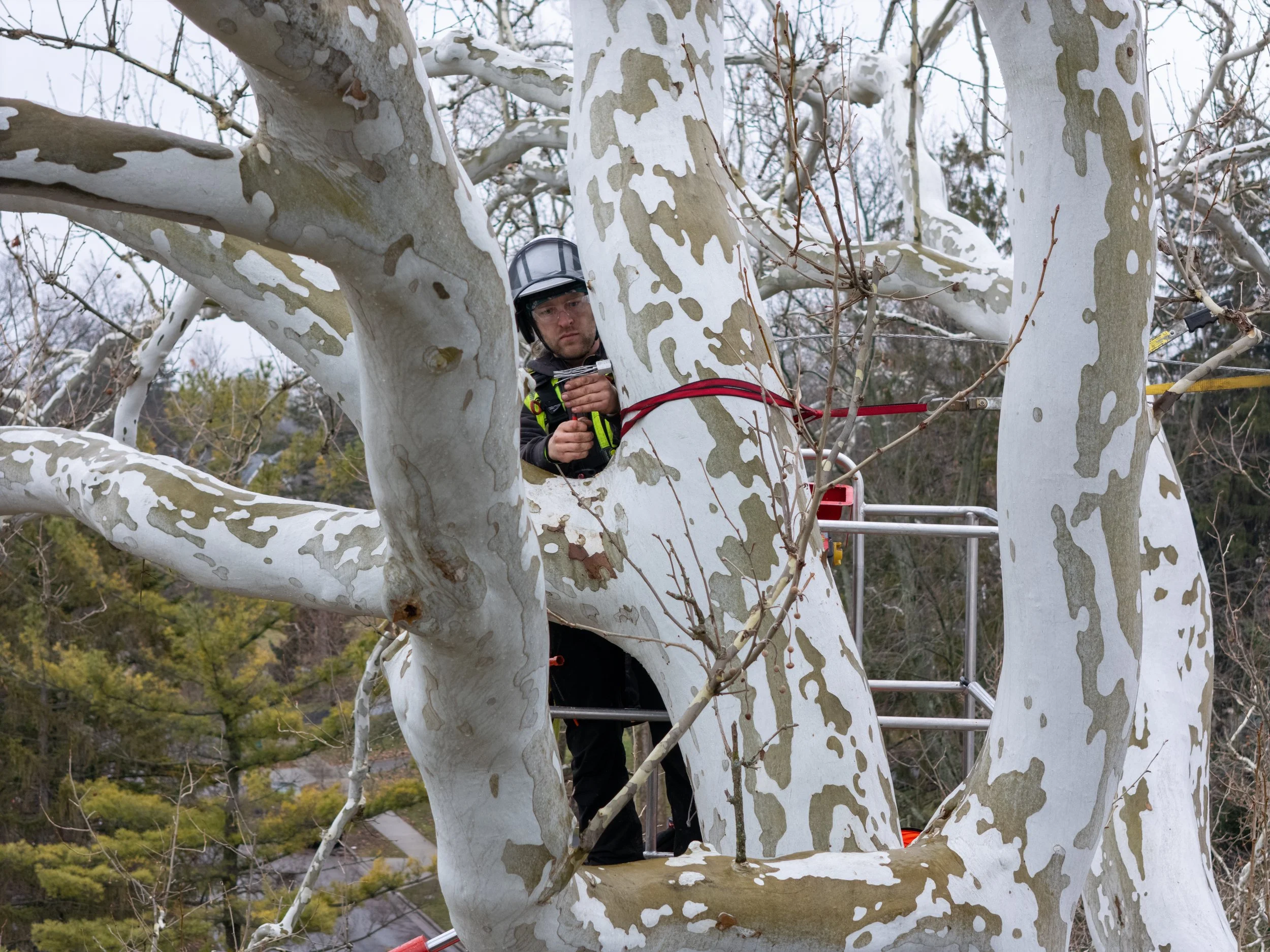
A similar approach towards retention can very easily be taken in the case of a still living and structurally compromised tree. Again, a common response is the total removal of the tree, but considering the quickly advancing practice of tree support systems, there are a wide variety of tools available to an arborist to prolong the life and mitigate the risk of old trees. The installation of high-tension cables (fig. 3, sometimes in combination with brace rods, can often be considered when facing the possible removal of old trees.
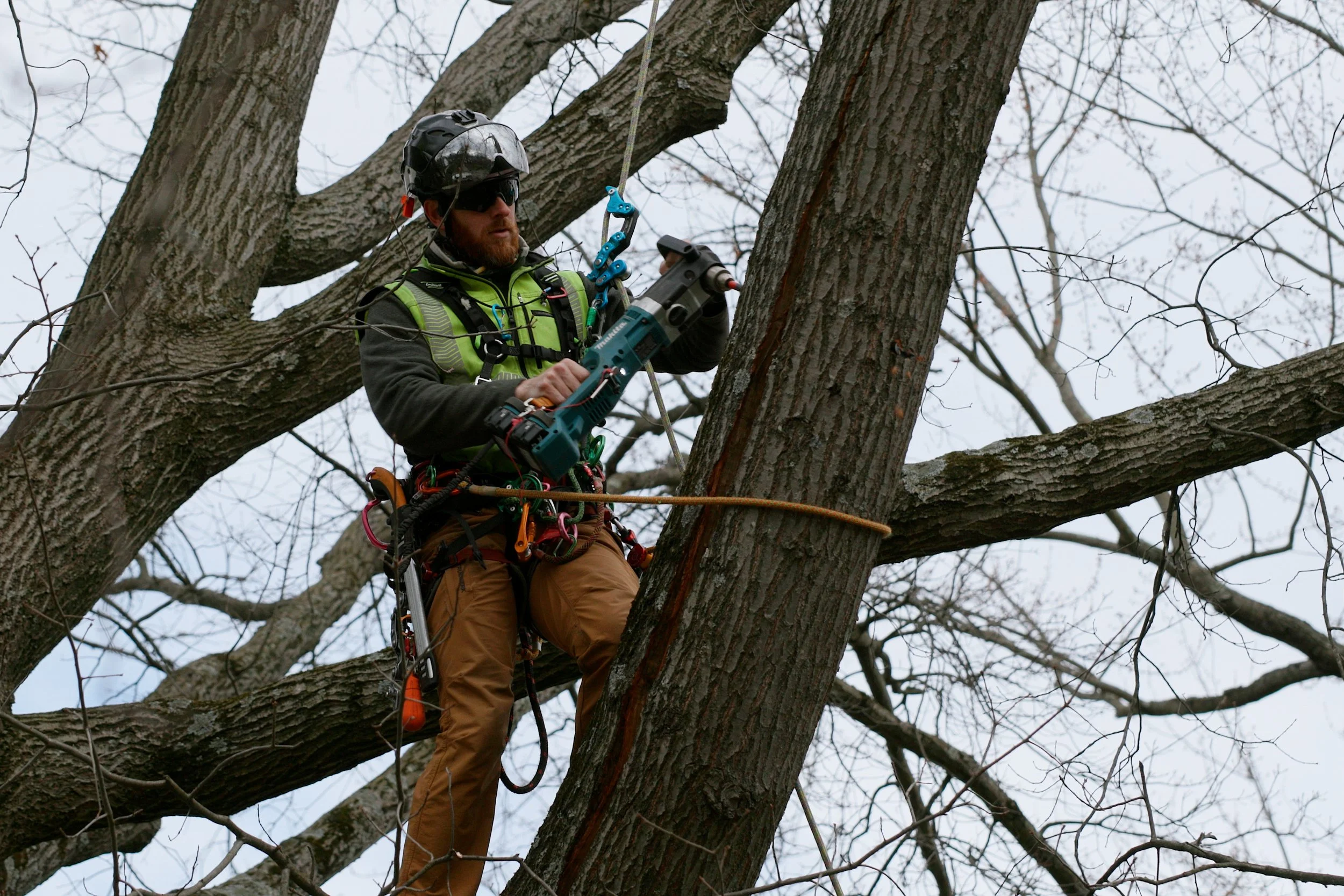
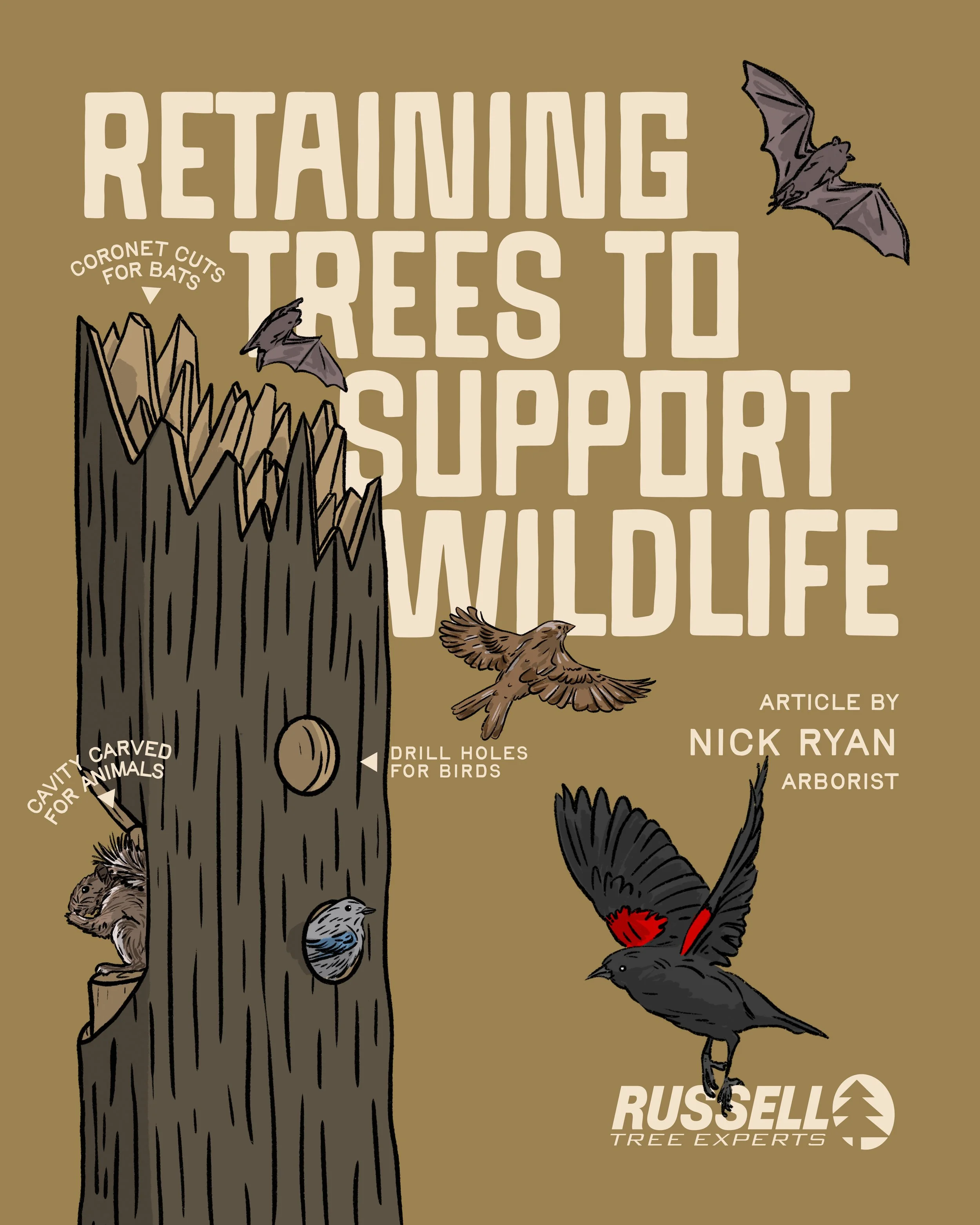
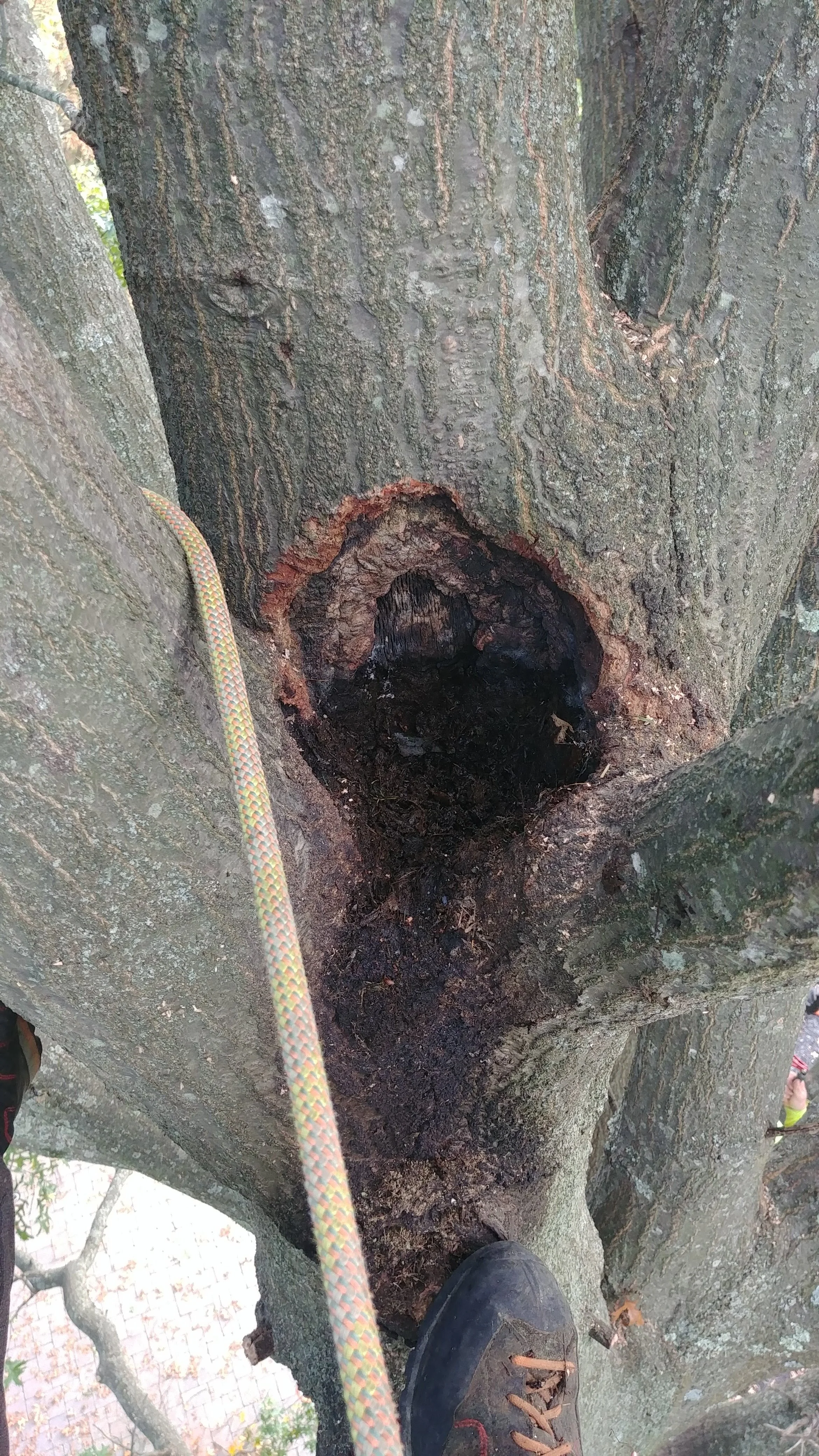
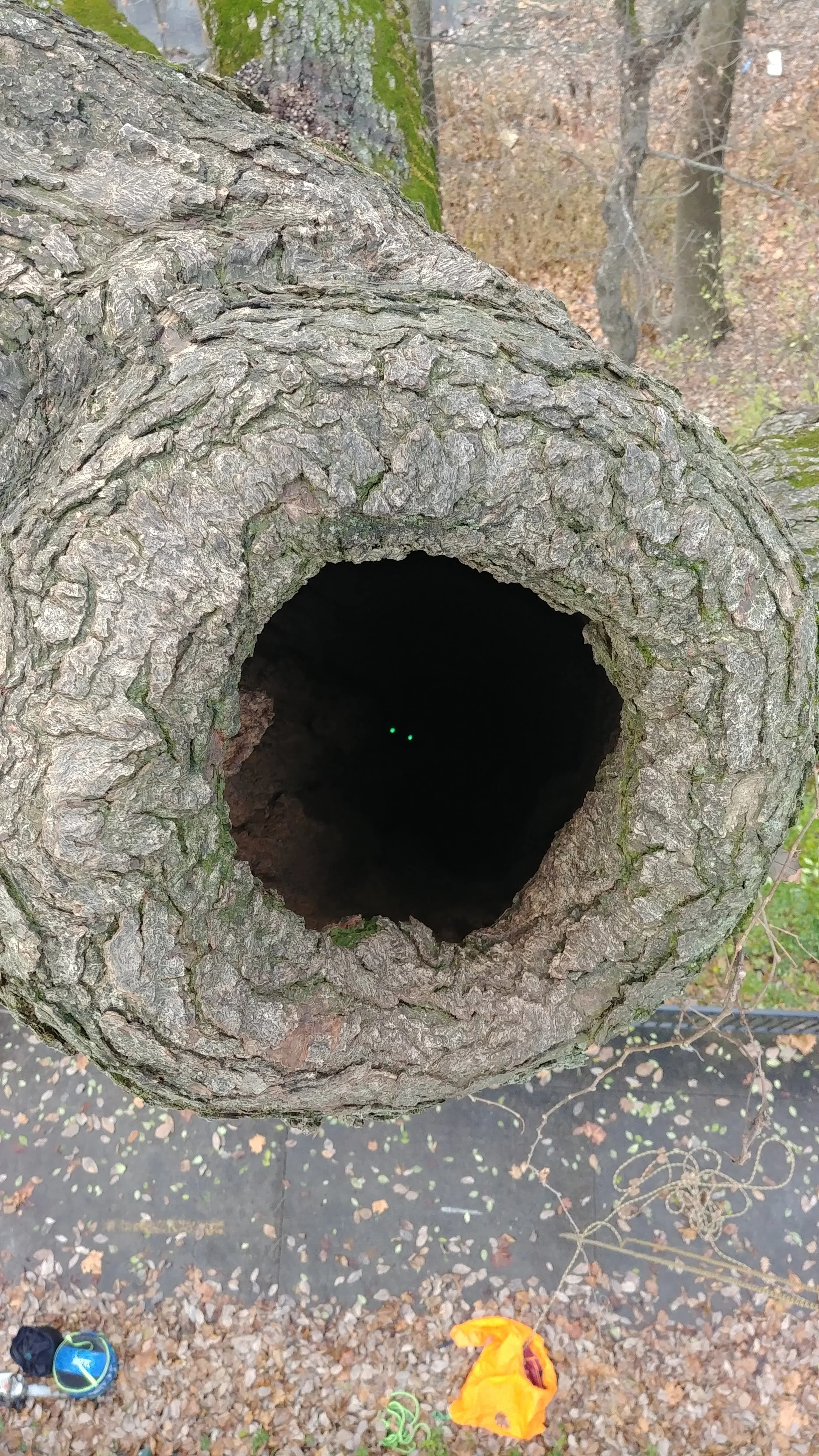
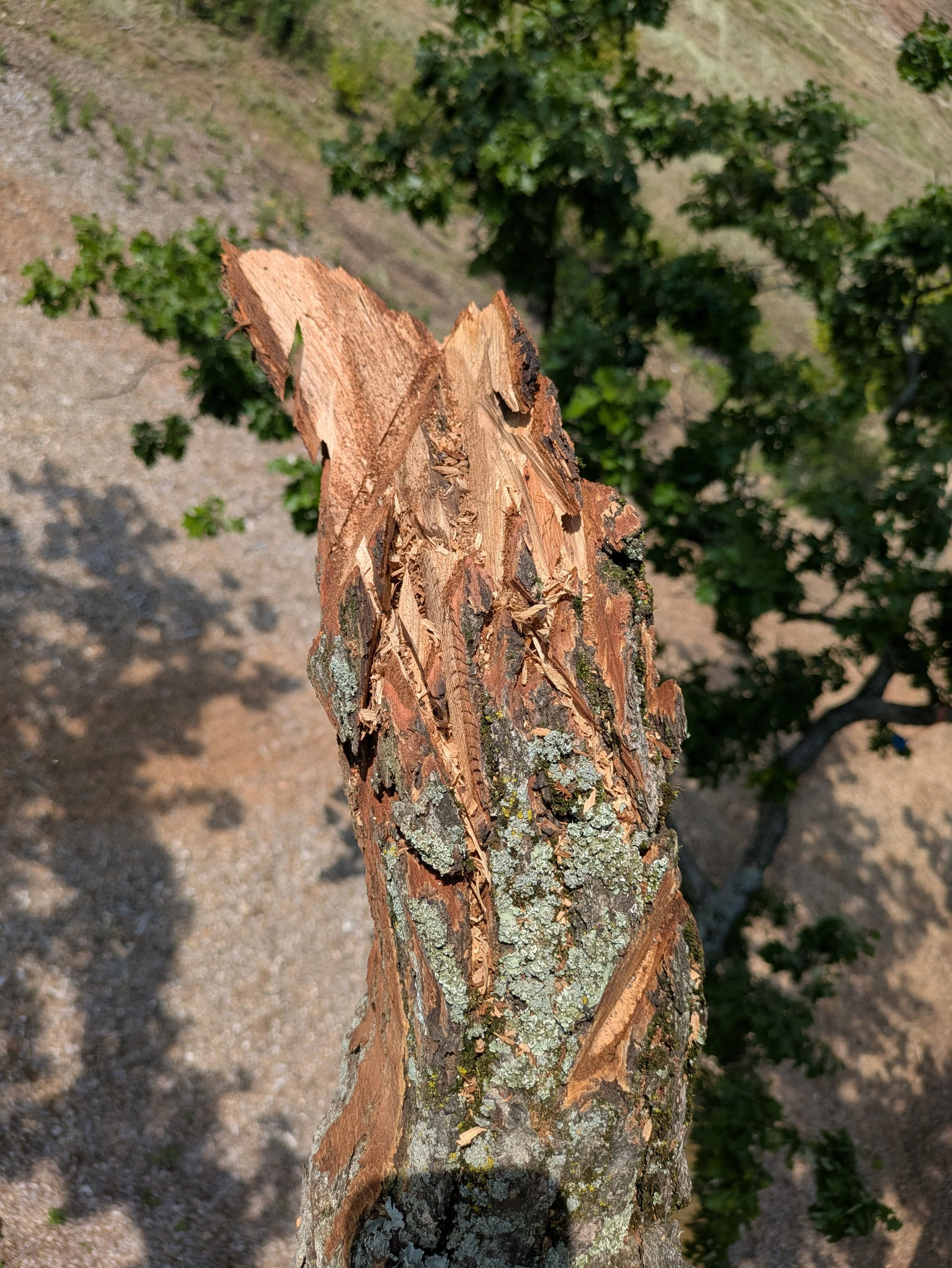
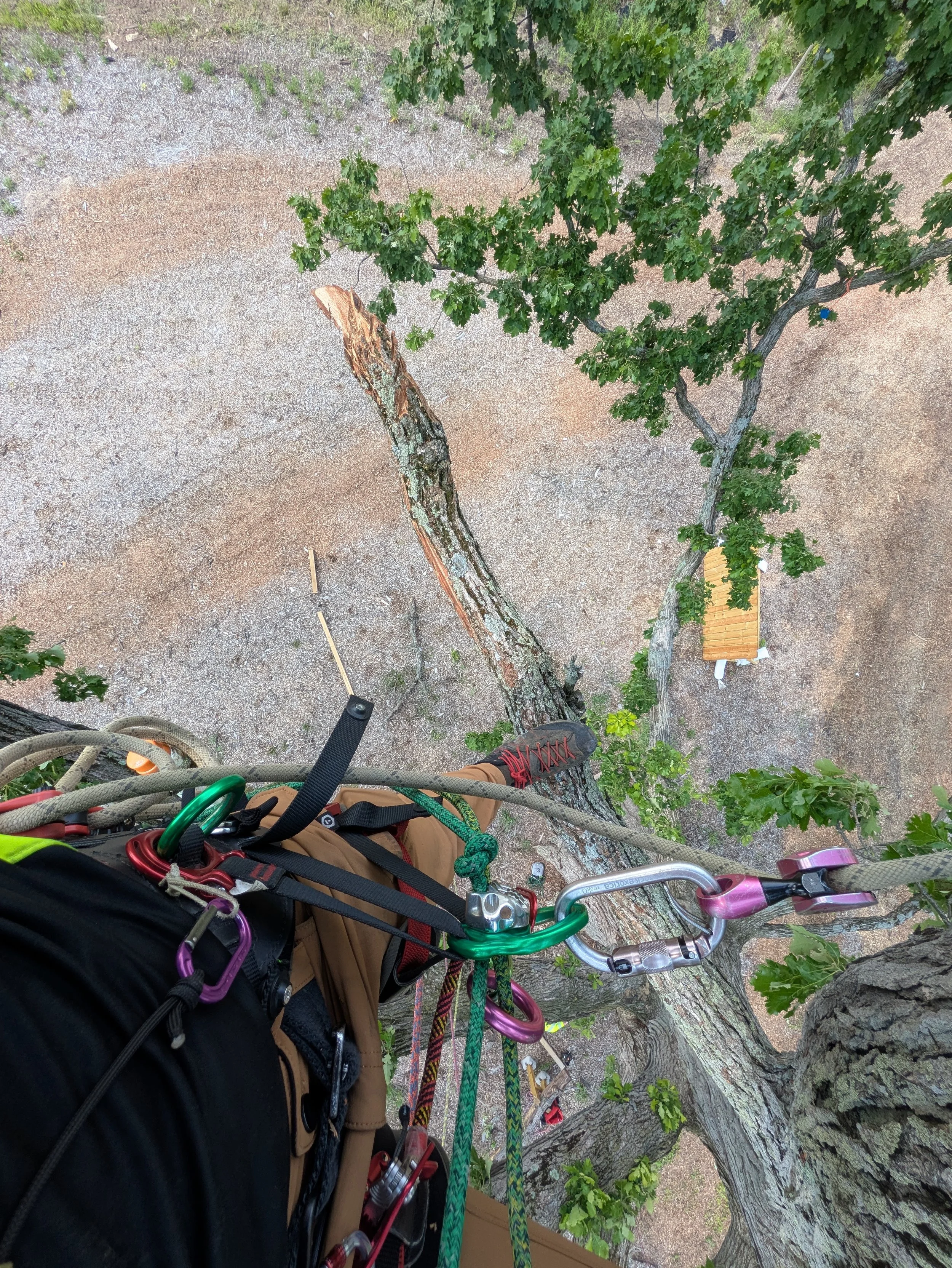
For those interested in a more proactive approach, there are quite a few options available to enhance tree-based habitat. Consider the same standing tree trunk mentioned previously. Time will inevitably take its course in degrading the wood, but there are also methods to expedite the process. Replicating years of natural decay can be accomplished easily through various methods of cutting and drilling, processes already familiar to an experienced arborist, while utilizing the same daily tools. Coronet cuts (fig. 2,3) replicating a natural breakout maximize surface area and retain pockets of moisture, creating an ideal entry point for wood-decaying fungi and insects. Slat cuts made by plunging the bar of the saw can create narrow shelters of various depths, ideal for roosting bats.
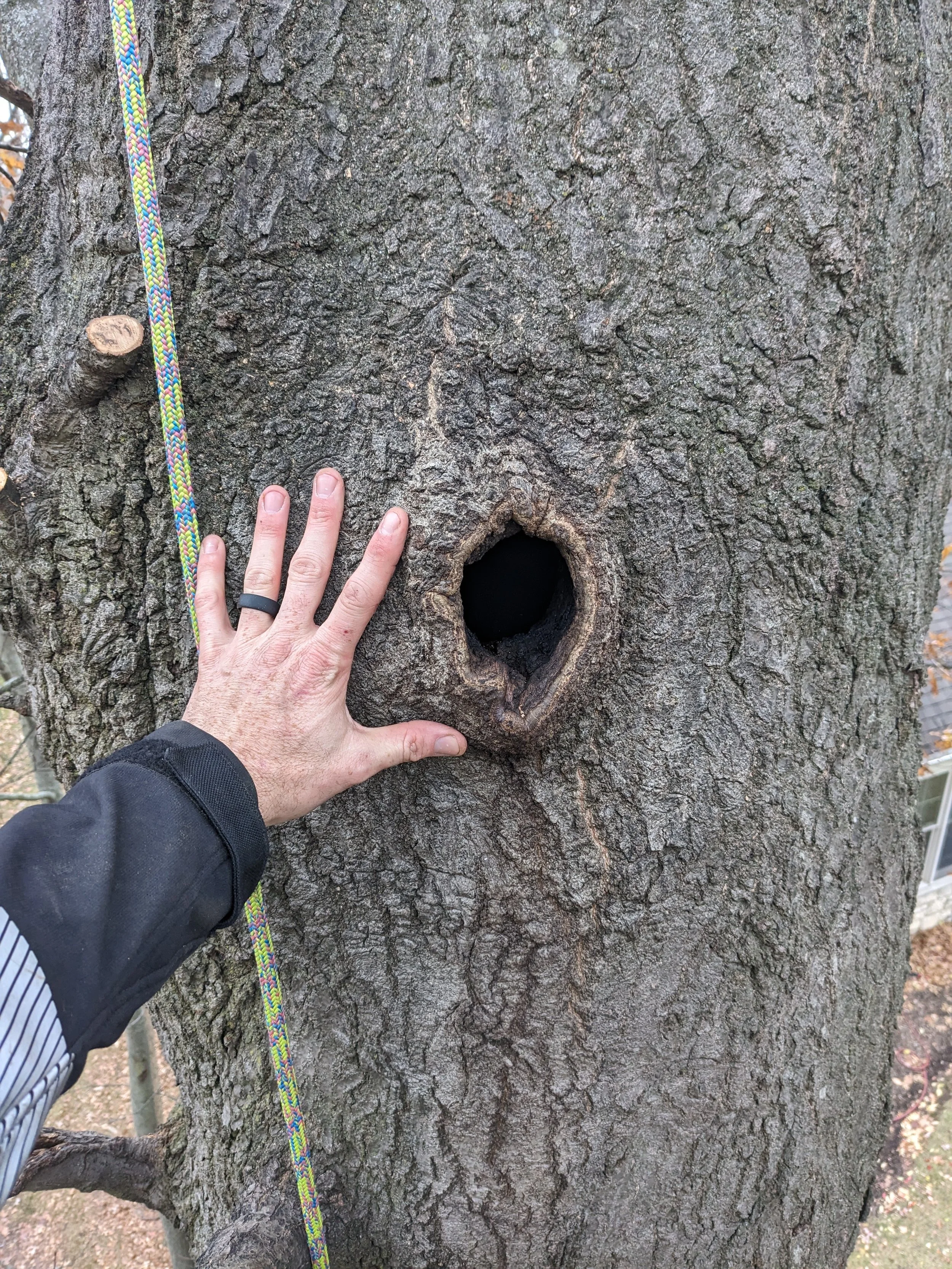
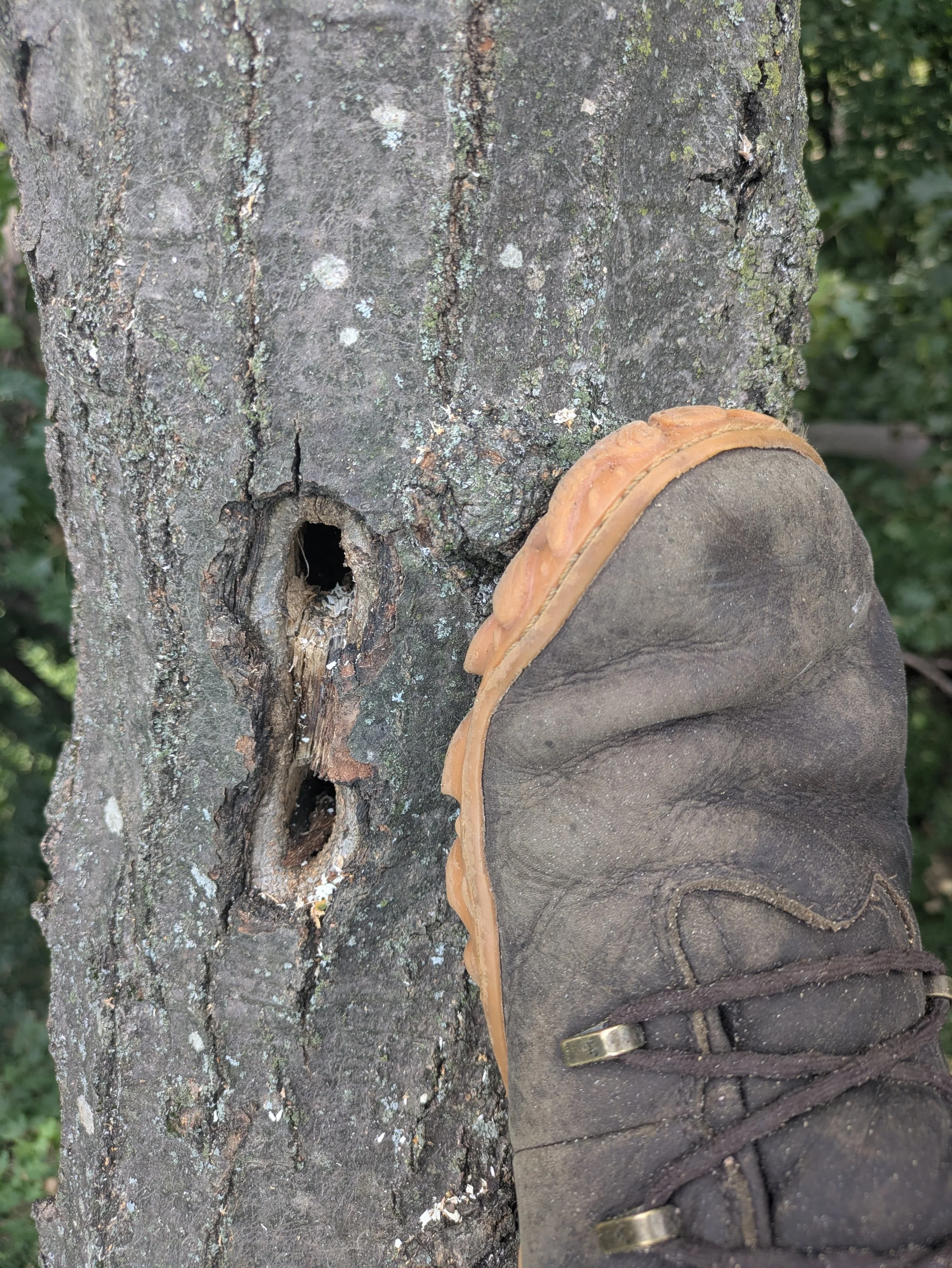
More obviously, simply drilling out a large hollow is a highly effective way to create an inviting home for a woodpecker or flying squirrel (fig. 5). In combination, these handful of methods offer a lot of room for creativity and create opportunities to cater to specific species. When considering the course of action for habitat enhancement, the best results come with intention. Consider local wildlife and how to best utilize the material available; different species will be more inclined towards hollows of different shapes and sizes. When approached with proper intentions and research, one standing tree or tree trunk can be molded into a proper habitat for countless species in the course of a day. A proactive enhancement of life.
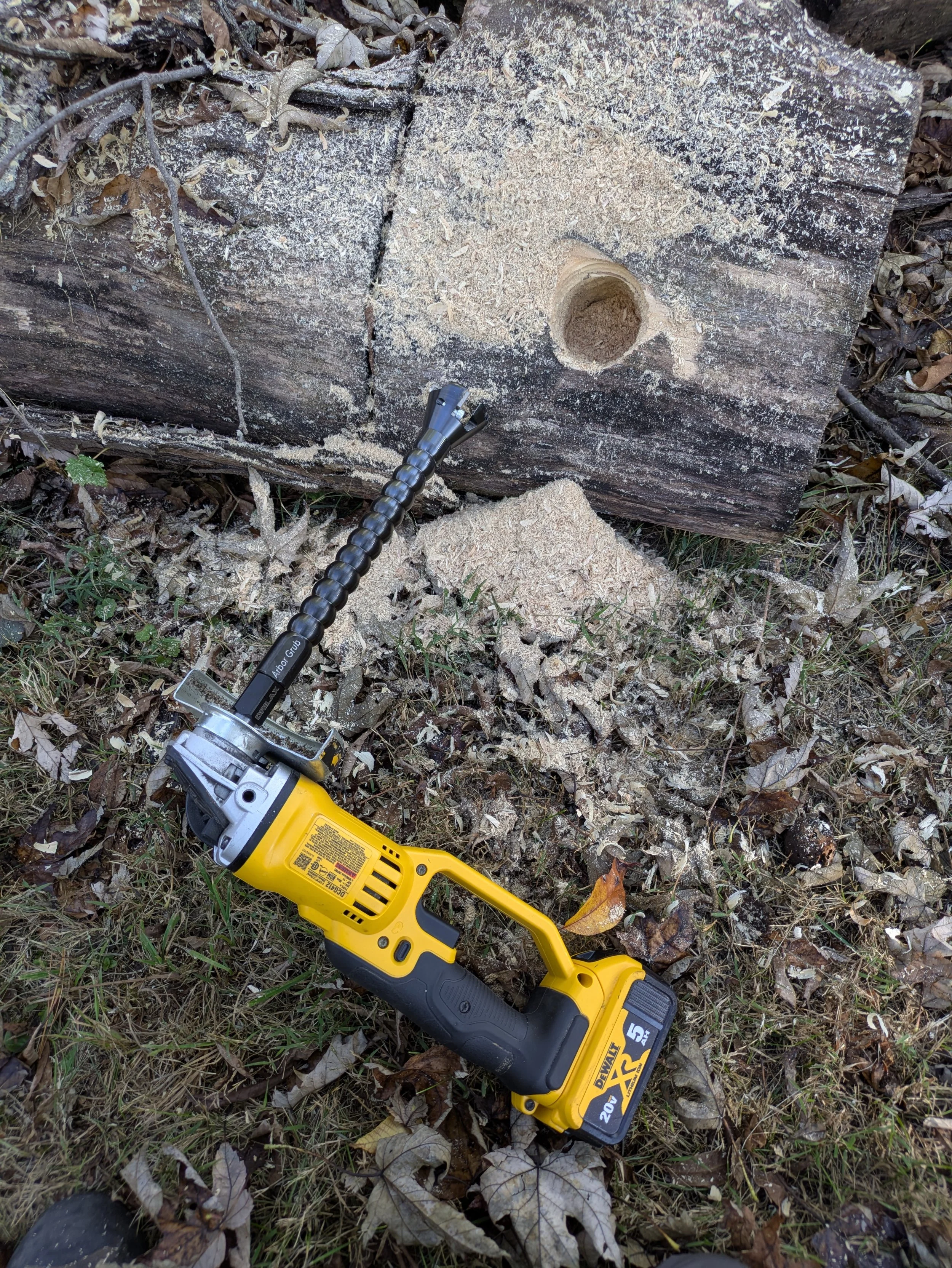
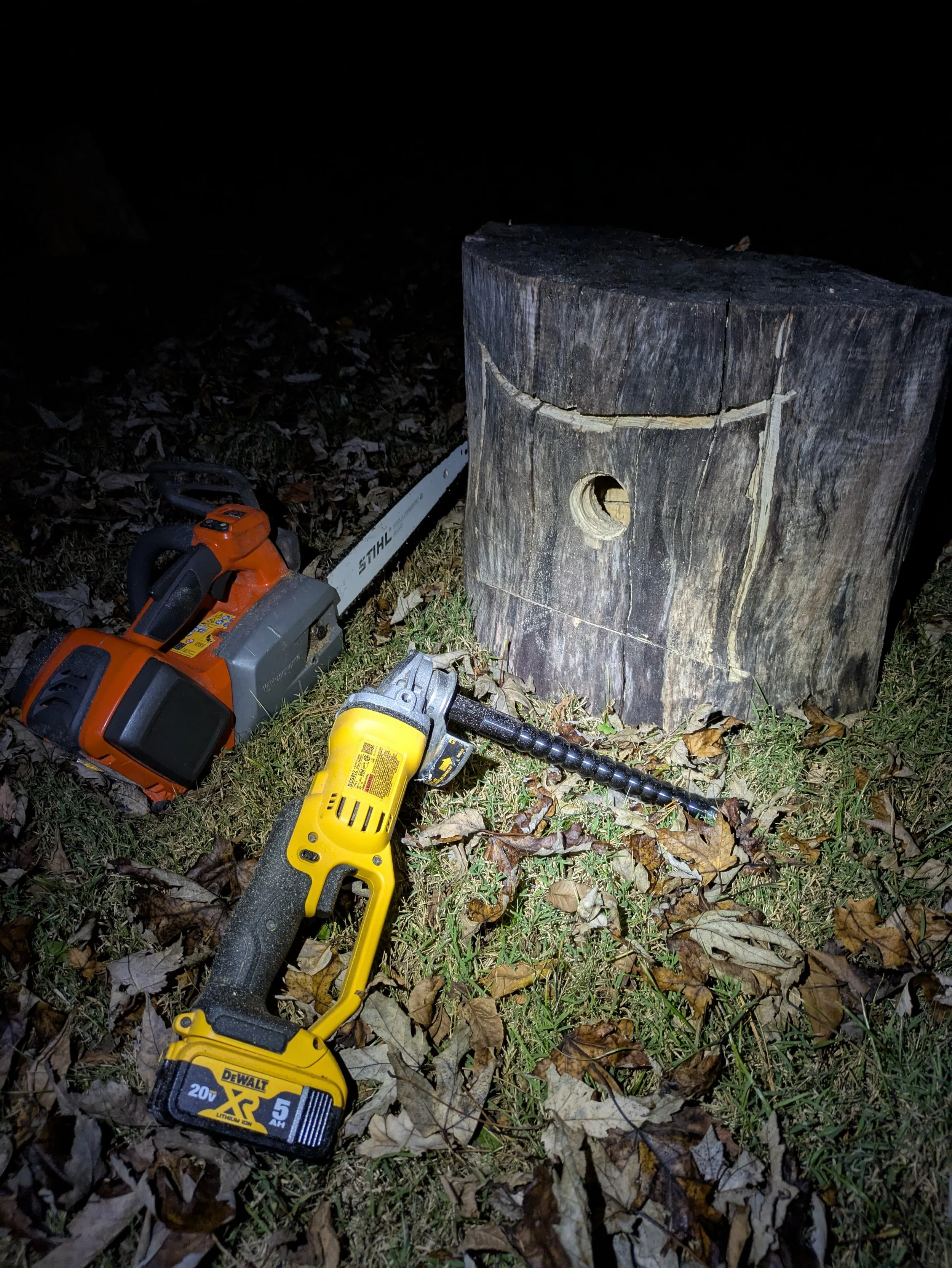
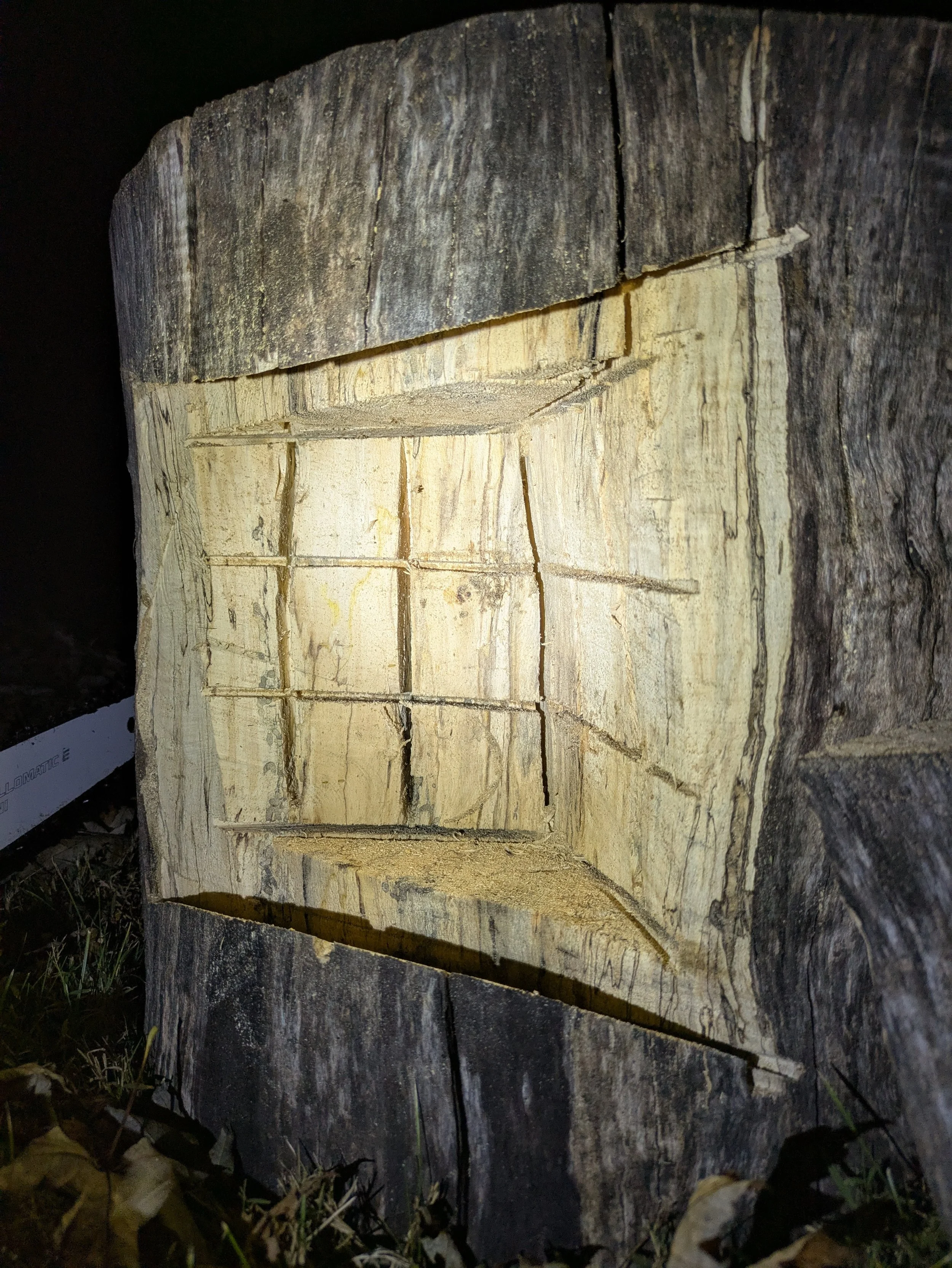
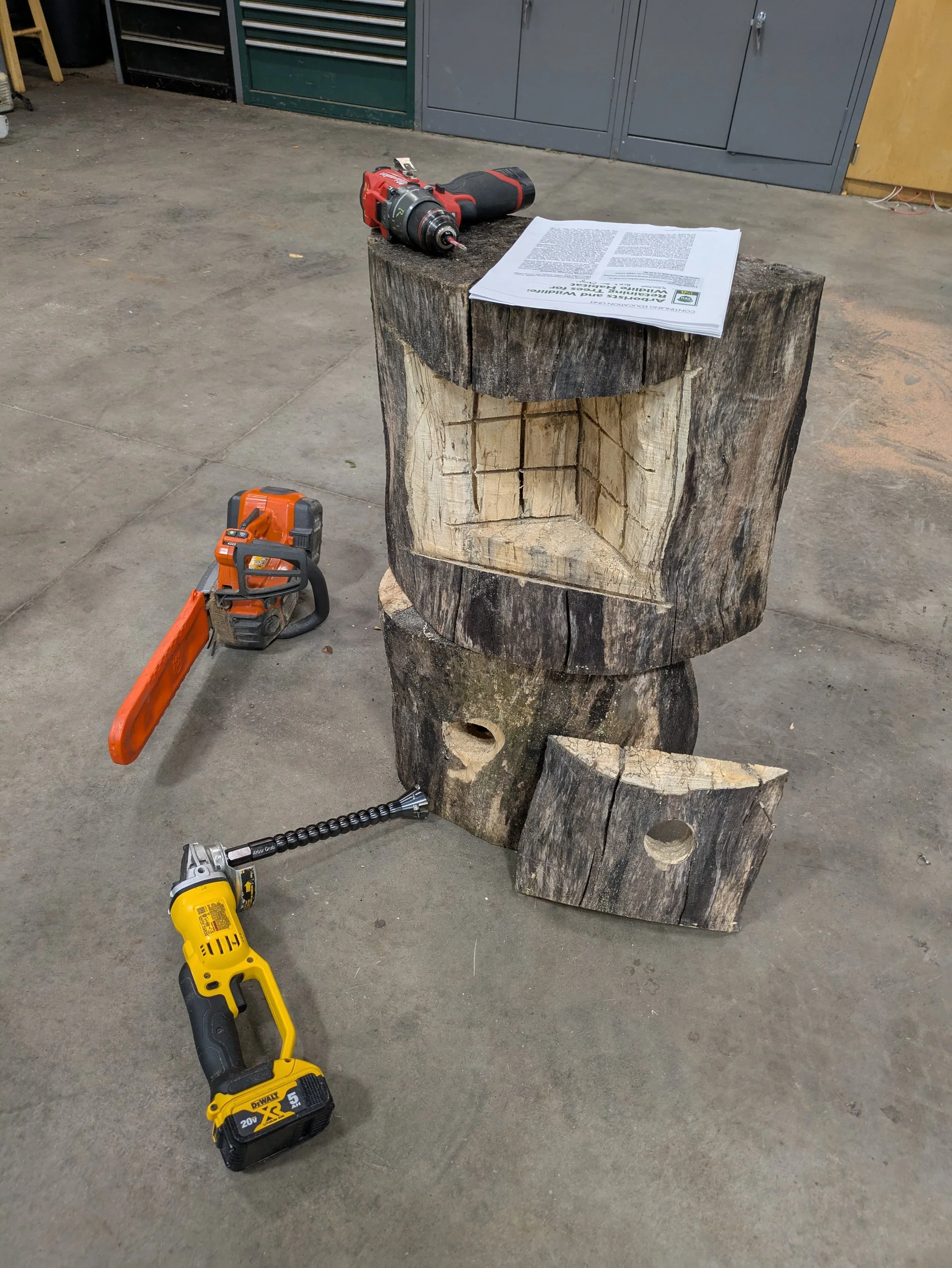
Fig 5-8 - Making tree hollows for cavity-dwelling species
It should be noted that this article is an extremely brief introduction to the potential of habitat services within arboriculture. If you find the concept to be of interest, always feel inclined to have a discussion with your consulting arborist. Oftentimes, the option for habitat is overlooked under the assumption of a lack of interest on the part of the client. Open conversations between the consultant and the client make for great opportunities to expand these services.