Native vs Invasive vs Exotic Tree Species
By Enrique Arayata
ISA Certified Arborist® OH-7252A
September 17, 2026
———
Planting a tree is one of the best things you can do for our planet! Trees sequester carbon out of the air, produce oxygen, provide homes for wildlife, minimize soil erosion and water runoff, provide something beautiful to admire, and so much more! However, did you know that there’s a wrong way to plant a tree? Along with some usual suspects like incorrect planting depth, planting in unideal soil pH and sunlight conditions, or not removing tags, twine, and burlap, a tree can be incorrectly planted by simply being an invasive or unideal exotic species. Such is the case with amur honeysuckle (Lonicera maackii) and Colorado blue spruce (Picea pungens) in Ohio. In this article, we’ll take a deeper dive into the following terms: native trees, invasive species, and exotic trees. The goal is to understand the pros and cons of each tree type to help you make a more well-informed decision when selecting your next tree for planting.

Native species are trees that naturally occur in a particular region and have developed there over long periods of time. They’ve adapted to the local climate, soil, weather conditions, and wildlife. Generally, but not always, native trees can be more insect- and disease-resistant compared to non-native species since they have adapted to their local weather and pests throughout the years. Some examples of native Ohio trees are black gum (Nyssa sylvatica), eastern redbud (Cercis canadensis), red maple (Acer rubrum), white oak (Quercus alba), and yellow buckeye (Aesculus flava).
One of the biggest advantages of planting native trees is that they support local wildlife. Native insects, birds, and other animals often depend on native plants for food and shelter. Native trees are usually well adapted to local environmental conditions, which can make them easier to maintain once established. They may require less supplemental watering, fertilizer, or other care, compared to non-native species. Planting native trees can also help preserve the natural character and biodiversity of a region.

Invasive species are non-native trees that spread aggressively and cause environmental, economic, or other harm. Unlike ordinary exotic trees, invasive species can reproduce and spread rapidly, often outcompeting native plants for sunlight, water, nutrients, and space. Some invasive species are so harmful to the environment that they are even illegal to sell, spread, or plant, such as callery pear (Pyrus calleryana) in Ohio.
The major disadvantage of invasive trees is that they reduce biodiversity. When an invasive species takes over an area, it can replace native plants due to winning the competition for space. This can throw the native food web out of whack and change habitats and food that local wildlife depend on. A reduction in biodiversity also contributes to a monoculture, which can be risky if a disease or pest starts to target the remaining or more populous tree species.
Invasive trees can be difficult and expensive to control once they become established. Removing them may require repeated cutting, treatment, or other management. In some cases, their seeds can spread over large areas, due to wind or bird droppings, allowing new populations to develop away from the original planting site. Examples of invasive species in Ohio are Tree-of-Heaven (Ailanthus altissima), callery pear (Pyrus calleryana), amur honeysuckle (Lonicera maackii), and autumn olive (Elaeagnus umbellata).

Exotic trees, sometimes called non-native trees, are species that do not naturally occur in the area but have been brought there by people. This is not to be confused with an invasive species. An invasive species is an exotic species, but an exotic species is not an invasive species. Some exotic trees are planted because they have attractive flowers, interesting shapes, fast growth, tolerance to a certain disease or pest, or other desirable characteristics.
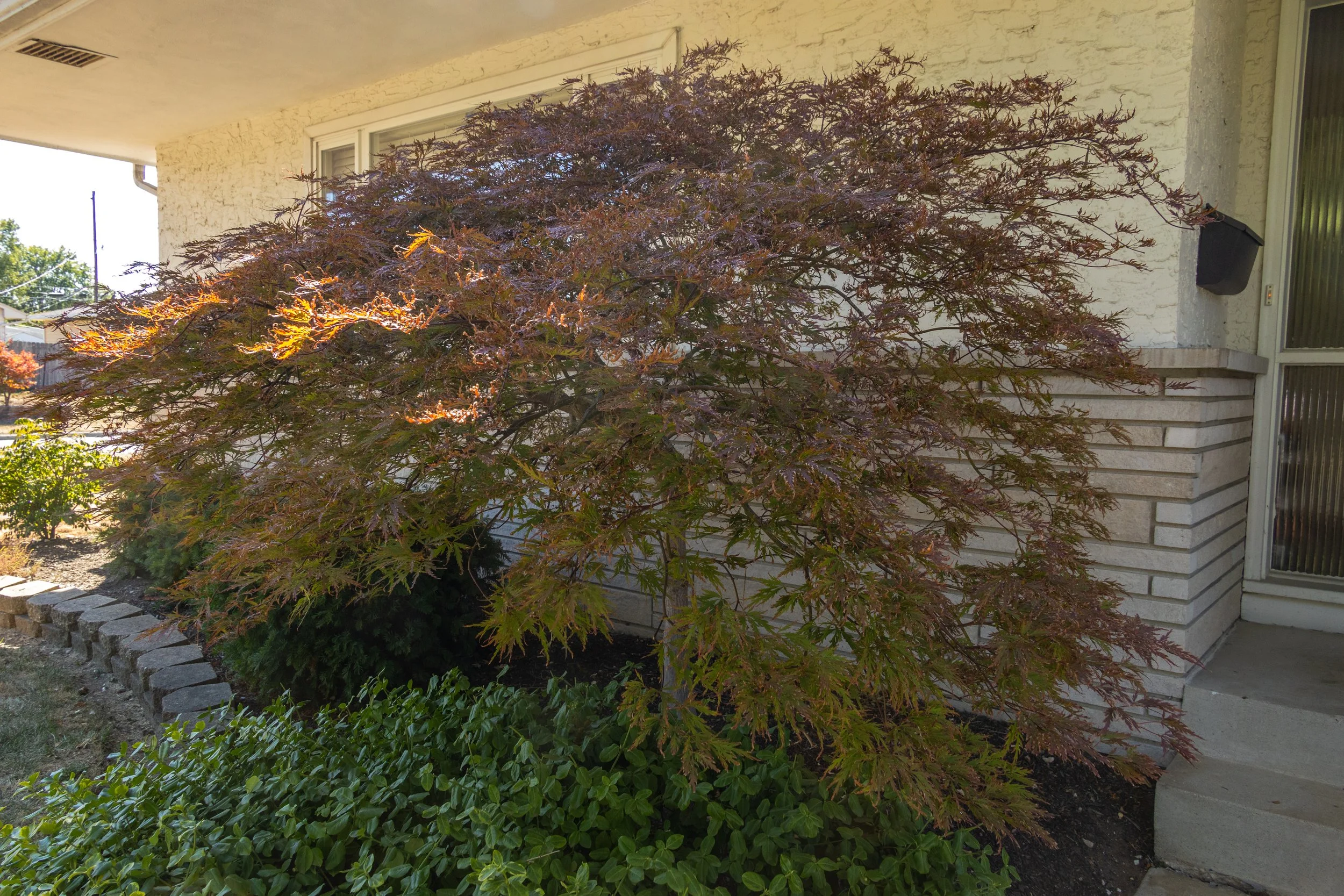
Japanese maple (Acer palmatum)
One advantage of exotic trees is that they can increase biodiversity and contain useful characteristics that may not be available among native species. Some can grow quickly, provide excellent shade, tolerate difficult conditions, increase the aesthetic appeal to a property, or add ornamental value to landscapes. Two examples of some great exotic trees in central Ohio are Japanese maple (Acer palmatum) for residential homes and ginkgo (Ginkgo biloba) for urban/street trees.
However, exotic trees also have disadvantages. Because they evolved somewhere else, they may not provide the same benefits to local wildlife as native trees. Local insects and animals may not be able to use them as effectively for food or shelter. Exotic trees may also require more maintenance (water, fertilizer, pruning, etc) if they are poorly suited to the local environment. An example of a high-maintenance exotic tree is the Colorado blue spruce (Picea pungens), which can be highly susceptible to Rhizosphaera needle cast if not treated on a yearly basis.
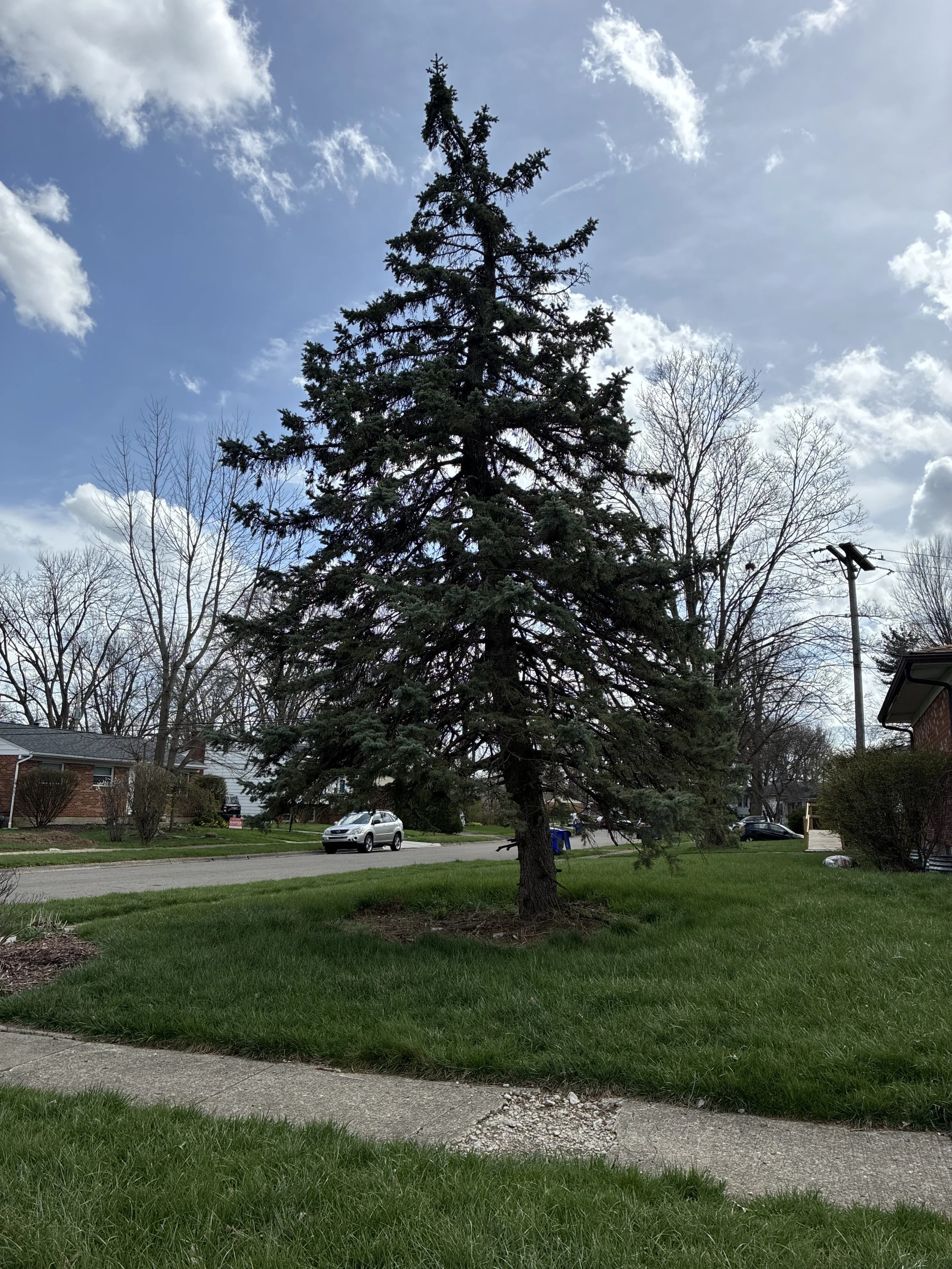
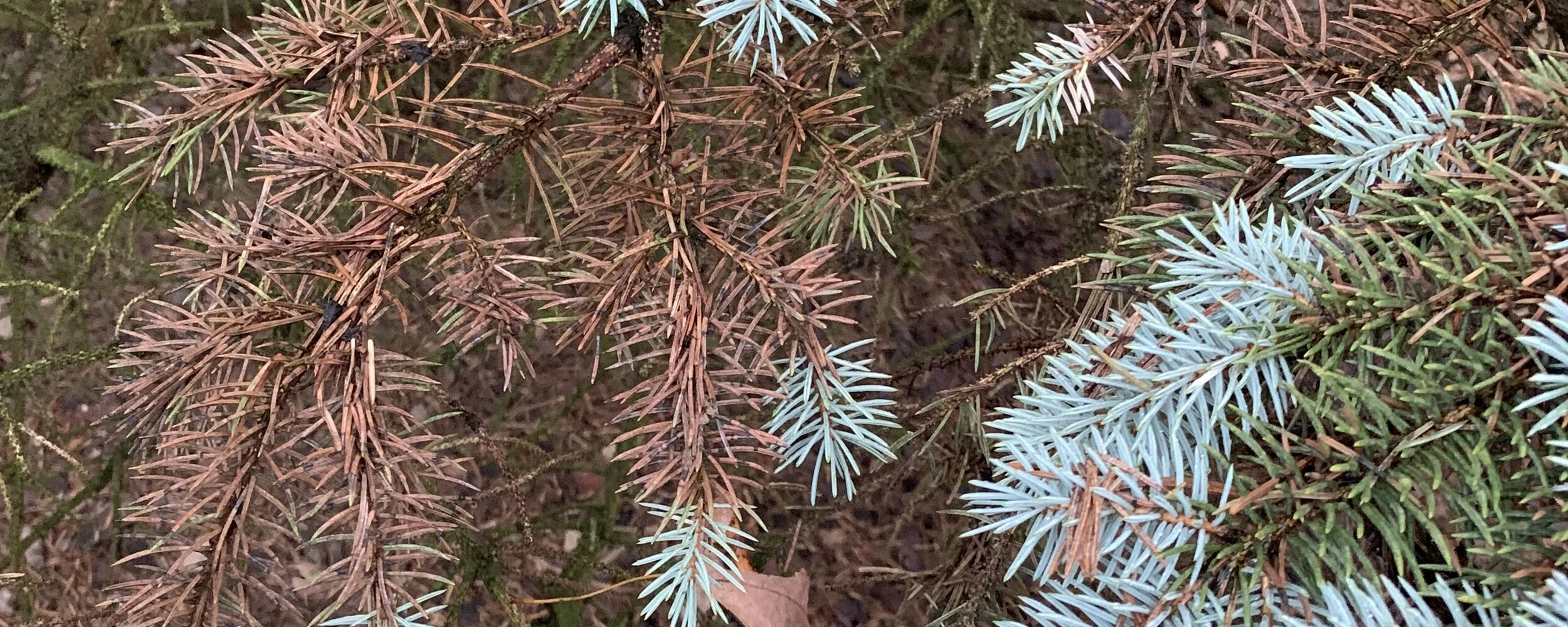
Most importantly, as mentioned earlier, an exotic tree is not automatically invasive, but some exotic species can become invasive. This makes it important to research a tree before planting it. If the tree has been introduced to the local area for multiple years and is sold at a commercial nursery, there is a good chance it is not an invasive species.

Evasive trees are an elusive species of trees that run away from you. When an evasive tree knows they have been spotted, they pick up their roots, flee, and hide… Just kidding! Evasive trees aren’t a thing. My colleague TJ just wanted me to make sure I sneak this joke into my article.
SO… WHAT TYPE OF TREE SHOULD I PLANT?
Overall, native trees are usually the most environmentally beneficial choice because they are adapted to local conditions and provide important resources for native wildlife. Exotic trees can offer useful qualities and can be appropriate when they are carefully selected and are not known to cause ecological problems. On the flip side, invasive species should generally be avoided at all times because of their ability to spread rapidly and damage native ecosystems.
If you’re looking for a tree to plant and don’t want to spend hours of time, starting with a list of native species can significantly cut down on the amount of research you have to do. Choosing the right tree can provide benefits for decades while helping protect the health and diversity of the surrounding environment. Linked below are other ARBOR ED™ articles related to tree selection or planting that I recommend giving a read, such as on planting sites, planting depth, and more benefits to planting native. For a free tree work quote by one of our ISA Certified Arborists®, visit RussellTreeExperts.com/Quote or call us at (614) 895-7000!
ADDITIONAL ARBOR ED™ ARTICLES!