By Enrique Arayata
ISA Certified Arborist® OH-7252A
July 23, 2026
———
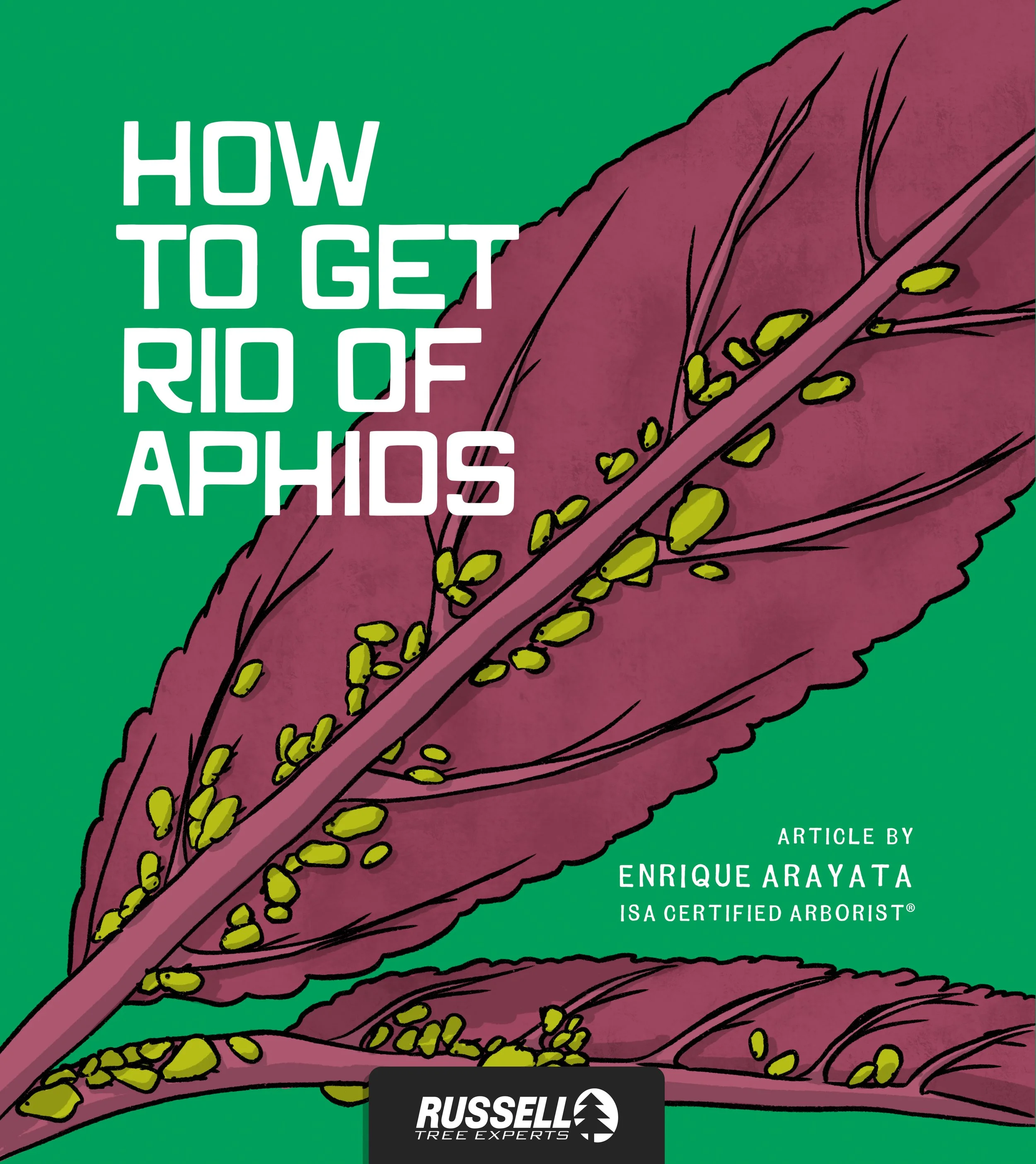
Aphids are abundant and annoying! Try saying that five times fast. Aphids are soft-bodied insects that feed on your tree by sucking the nutrients out of its leaves. In return, the tree gets nothing but sadness and pain. They typically show up around early-to-mid spring and can appear in waves throughout the growing season until about October/November. Untreated aphids can lead to yellowed, misshapen or curled leaves, honeydew deposits that could result in black sooty mold, an overall unsightly appearance, and stunted growth.
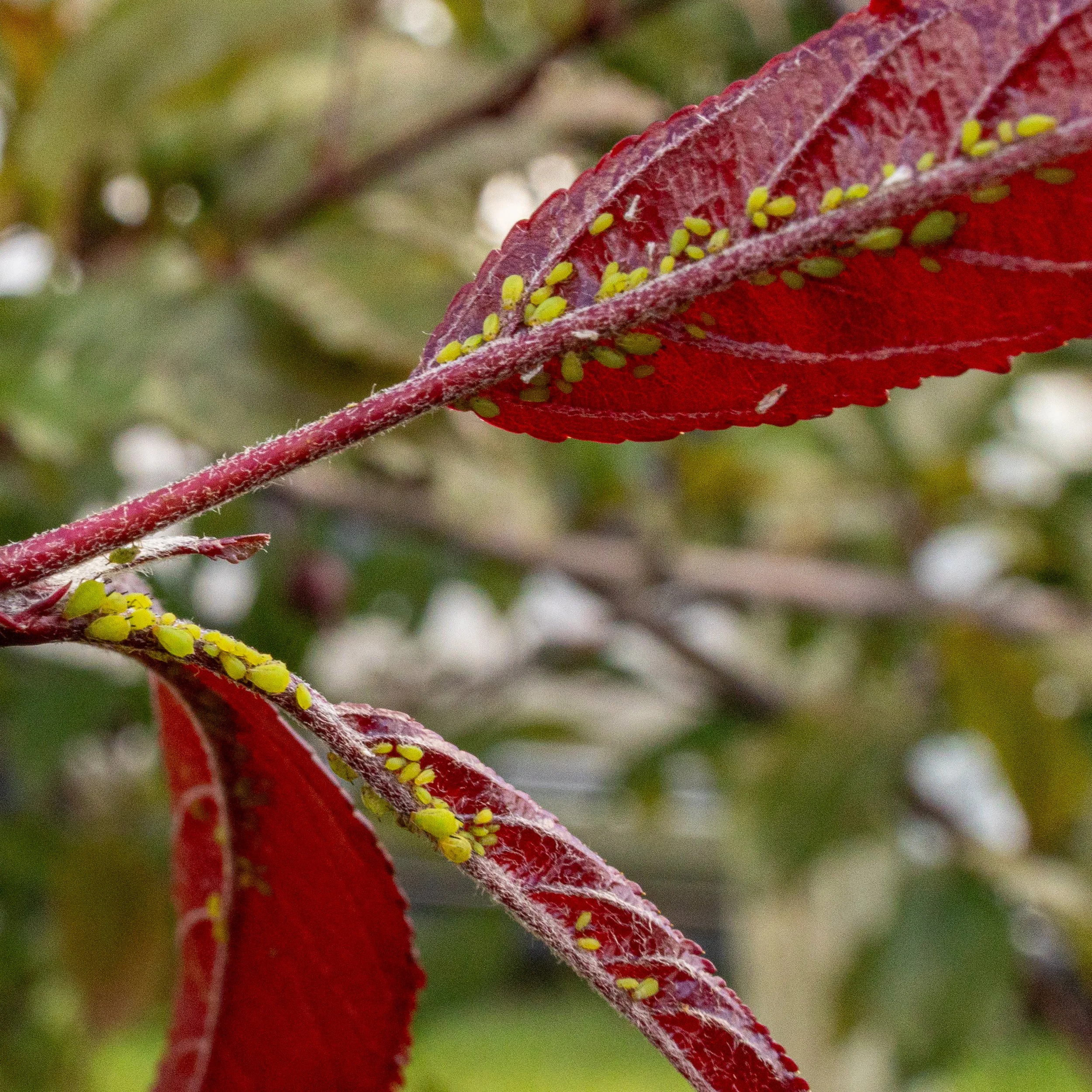
Prairifire crabapple tree suffering from aphids ©Russell Tree Experts
Typically, aphids are super tiny and can be found on the underside of leaves. They commonly show up by hopping from plant to plant or by gliding through the wind with their small wings. Aphids can be attracted to your tree for a variety of reasons, such as thriving new growth, fruits, and flowers. They also often target newly fertilized trees, as the increased chlorophyll in the tree is like an all-you-can-eat buffet to them.
So why are aphids bad? Well, their population can get out of control FAST due to their ability to reproduce both sexually and asexually. One aphid can produce fifty to one hundred offspring of nymphs every 20-30 days. Studies have shown that this can lead to 10-12 generations of offspring in one growing season, potentially totaling millions of aphids if left untreated.
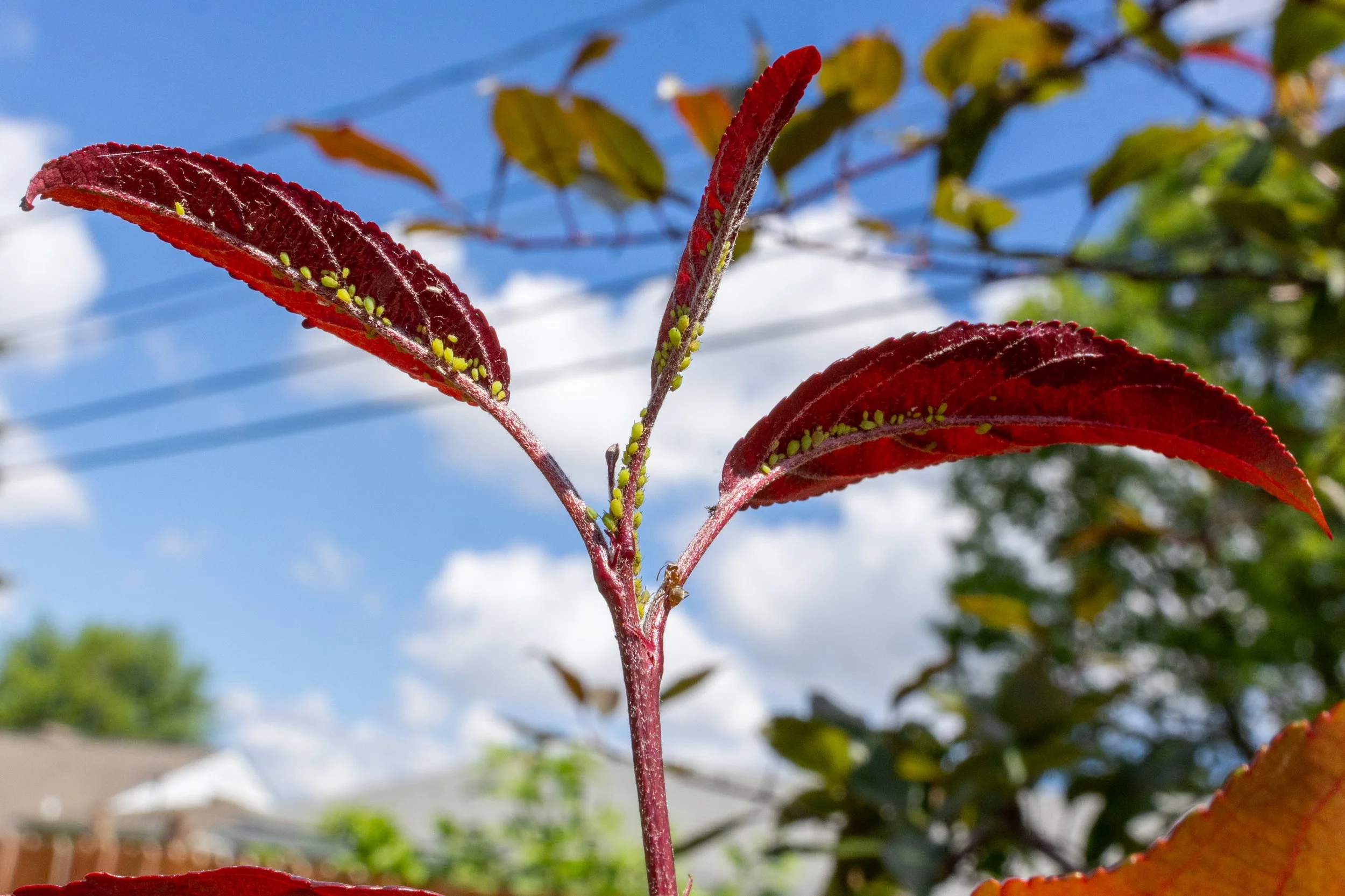
Prairifire crabapple tree suffering from aphids ©Russell Tree Experts
If you have aphids on your tree, it’s not all doom and gloom. The good news is that aphids have soft bodies and are relatively easy to manage compared to other pests like some beetles and scale. I would classify them as an annoyance rather than a catastrophic issue. They also don’t show up every single year. If you were to have an aphid issue this year on your tree, it doesn’t necessarily mean you have to worry about them every single year from here on out. So, with that said, let’s go over 4 ways to manage aphids!
1. LADY BUGS
Ladybugs love aphids. If you were to purchase/find some ladybugs and release them near the aphids, you can bet that they will start to keep their population in check. Ladybugs don’t feed on tree wood or leaves, so there is no worry there. They can also be seen consuming honeydew left behind by aphids and other insects, helping minimize the amount of black sooty mold that could develop on your tree.
2. PRESSURIZED WATER
In young and small quantities, you can use a pressurized stream of water and spray them away. This technique is called syringing. The finicky part is finding the right pressure that will shake off the aphids, but not damage any leaves, branches, or bark on your tree. Water may not always do the trick, but I usually recommend this first before trying out the next two options, as most people have a garden hose or pressure washer handy!
3. NEEM OIL OR INSECTICIDAL SOAP
The third option is to use neem oil or an insecticidal soap to get rid of your aphids. There’s a variety of ways to use them, such as a concentrate, oil, or ready-to-use spray. I would recommend reading the specific instructions for best use practices and how to apply the treatment to the affected leaves. Something to be cautious of is that certain soaps and oils can cause leaf scorch and bloom damage if applied on a bright and sunny day, so I cannot stress it enough to read the instructions of the specific product you select prior to application. Also be sure to wear proper personal protective equipment (PPE)! Typically, this will be gloves, safety glasses, and a face covering to minimize your exposure to any hazardous chemicals.
4. HIRE AN ARBORIST!
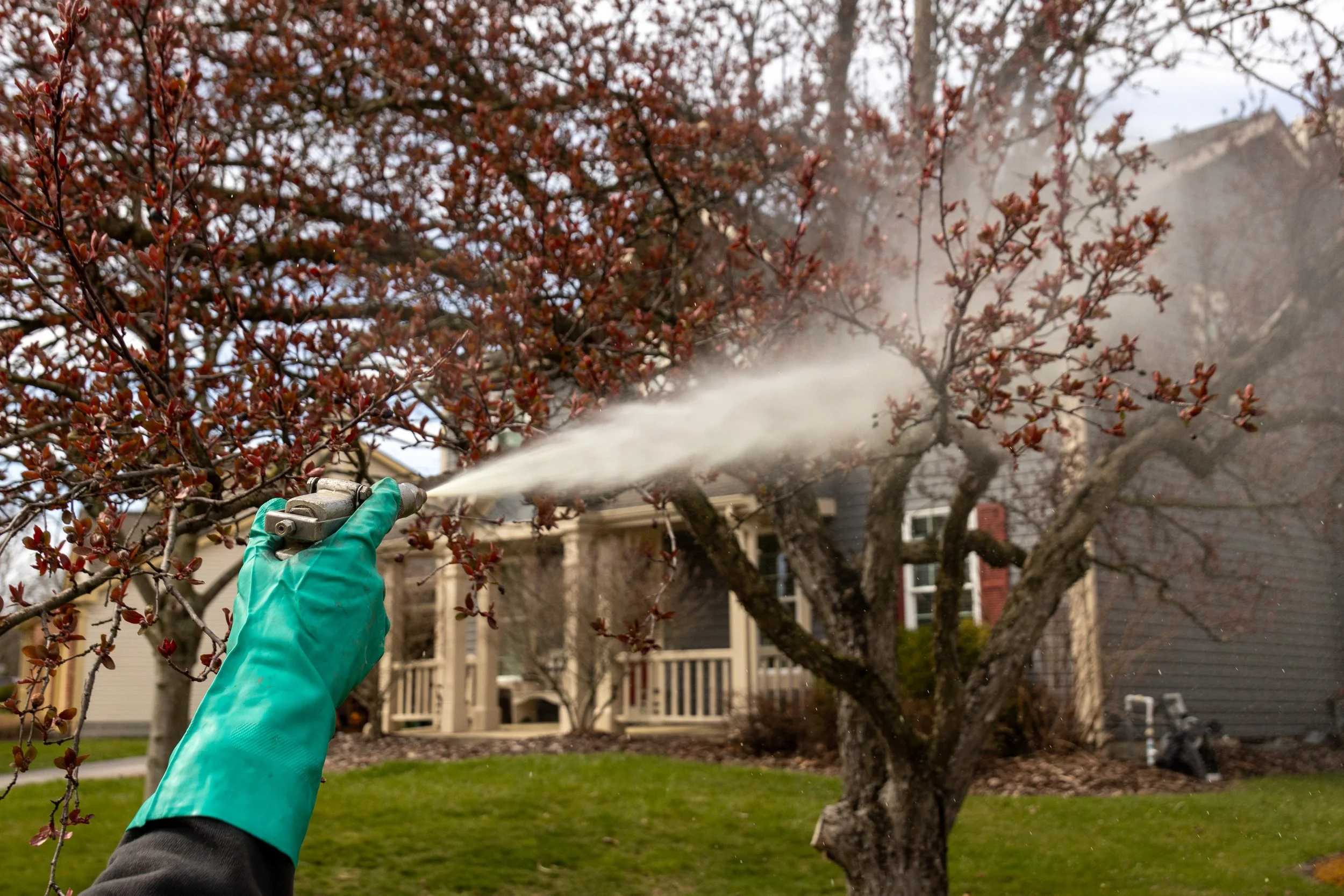
The last method of dealing with an aphid problem is to hire an ISA Certified Arborist®! This is a great option for larger aphid infestations on multiple and/or taller trees! At Russell Tree Experts, we treat aphids by using bifenthrin delivered via a spray hose and applying it to the foliage. Bifenthrin typically kills aphids in 24 hours or less and has a residual aphid-killing effect on your leaves for 1-2 weeks after application.
And that’s about it! You now know all the basics when it comes to aphids, why they are bad, and how to treat them. Down below is a video tutorial I made on methods 2, 3, and 4 for how to get rid of aphids. If you have aphids and are interested in hiring Russell Tree Experts, one of our ISA Certified Arborists® can inspect your property, provide a tree work quote for free, and recommend the best course of action for your tree! Just visit RussellTreeExperts.com/quote or call our office at (614) 895-7000!
VIDEO: HOW TO GET RID OF APHIDS!
ADDITIONAL ARBOR ED™ ARTICLES!