Three Tips When Tree Shopping
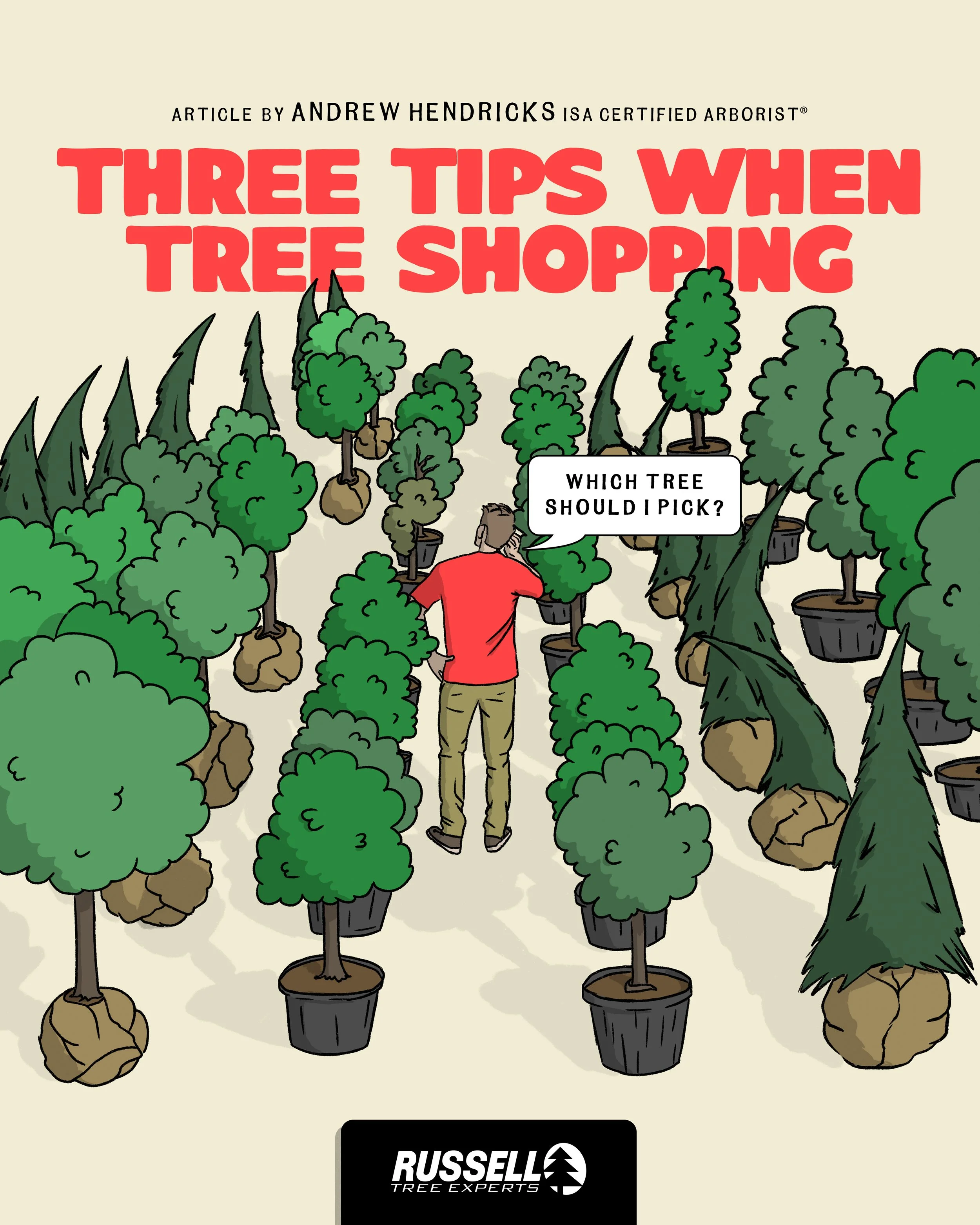
Buying a tree from a nursery is an investment that should provide beauty, shade, and environmental benefits for years to come. Unfortunately, many nursery-grown trees have hidden problems that are not visible at first glance. Some common issues found at nurseries include buried root collars, stem-girdling roots, and damage to main trunks. If these problems are overlooked at the time of purchase, they can reduce the tree’s health, aesthetic appearance, stability, and overall lifespan.
Tip #1
Check The Root Collar
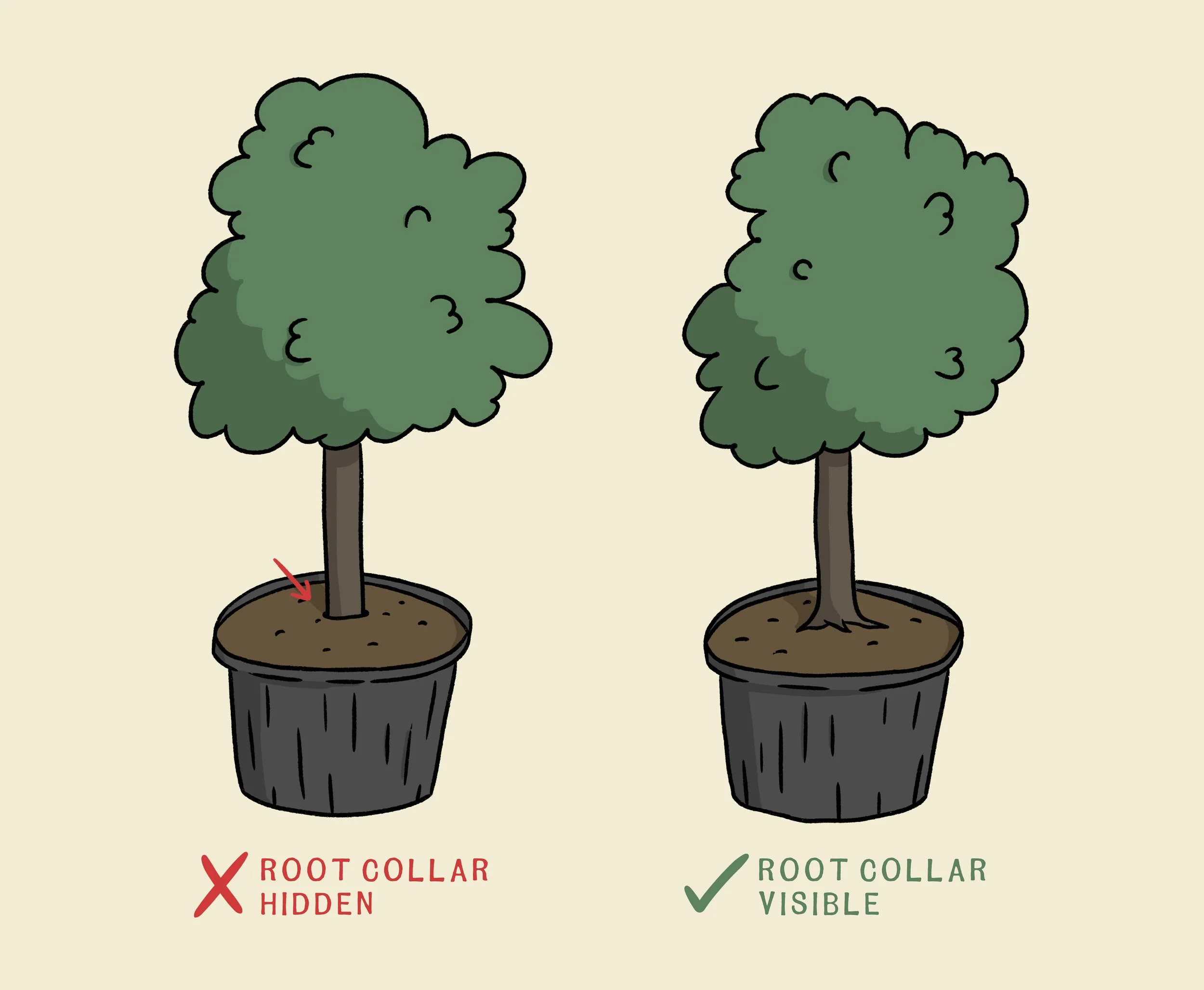
The root collar, also known as the root flare, is the point where the trunk widens and transitions into the major structural roots. In a healthy tree, the root flare should be visible at or slightly above the soil surface. An example of a tree with no root flare would be like looking at a telephone pole: straight lines going into the soil or mulch with no curves leading into the structural roots. When there is no root flare present, the tree can experience reduced oxygen availability, poor root development, and increased susceptibility to disease. The root flare can become buried during production operations at a nursery when transferring saplings into larger containers. Mulch is also often added on top of trees at nurseries during the wintertime to help regulate temperature and moisture. Purchasing these trees may appear healthy in the container at the time of purchase; however, the hidden problem can become evident several years after planting. Correcting this issue becomes more difficult and more expensive as time passes with each growing season.
Tip #2
Check for Stem-Girdling Roots
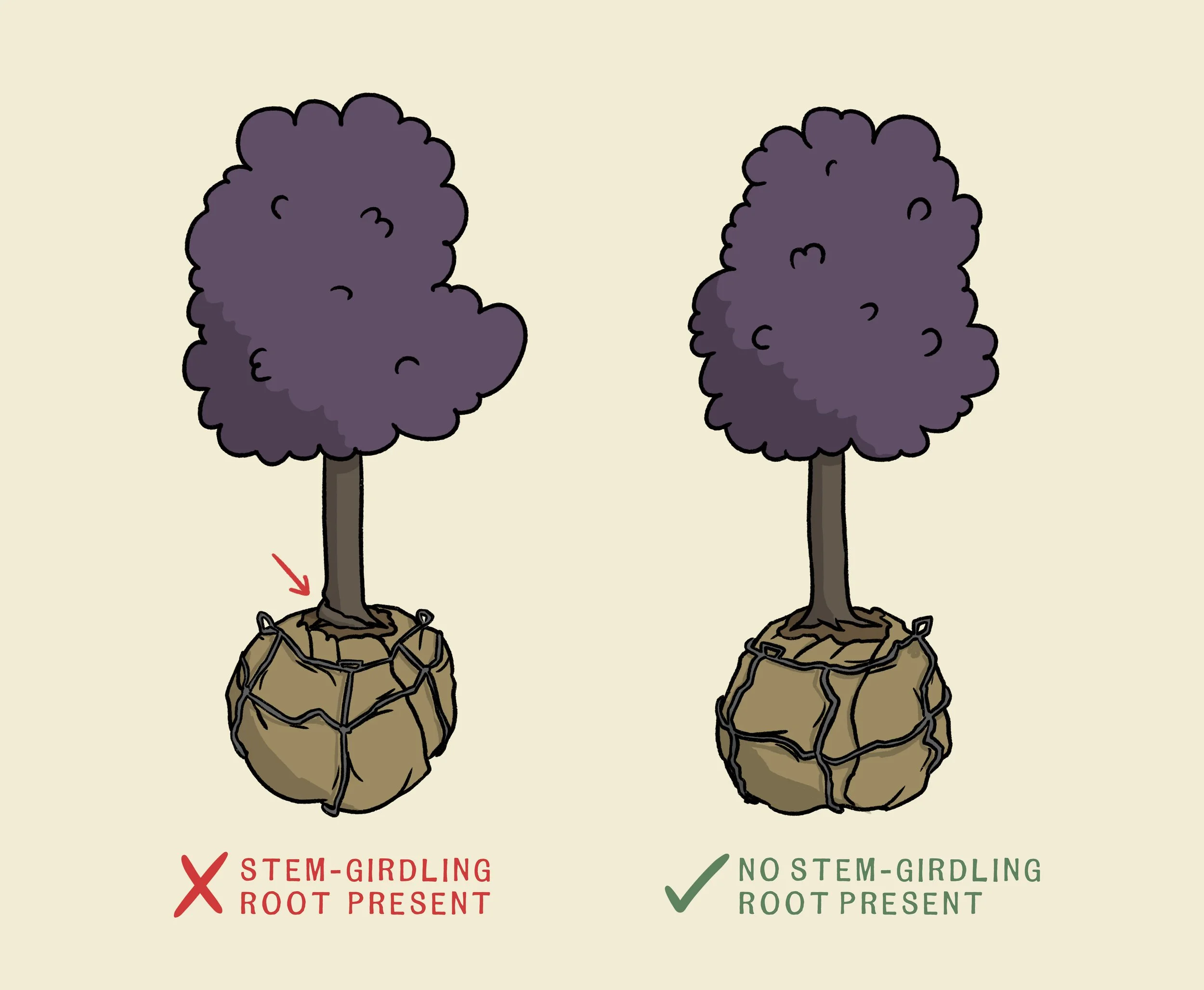
Stem-girdling roots are another serious defect commonly found in container-grown and balled-and-burlapped trees. A girdling root develops when a root circles around the trunk or other major root instead of growing outward into the surrounding soil. As the tree increases in diameter, the circling root presses against the trunk and restricts the movement of water and nutrients. Over the years, this compression can weaken, stunt, and even kill the tree in some cases. Stem-girdling roots can form in nurseries when young saplings are left in smaller pots too long, where roots grow outward, hit plastic sides of a pot, and begin circling the pot. After a period of time, these saplings are transferred to larger pots where a similar growth habit takes place until they reach a marketable size. Stem-girdling roots are most common in container-grown specimens compared to balled-and-burlapped trees, which were grown in the ground in rows.
Tip #3
Check for Trunk Damage
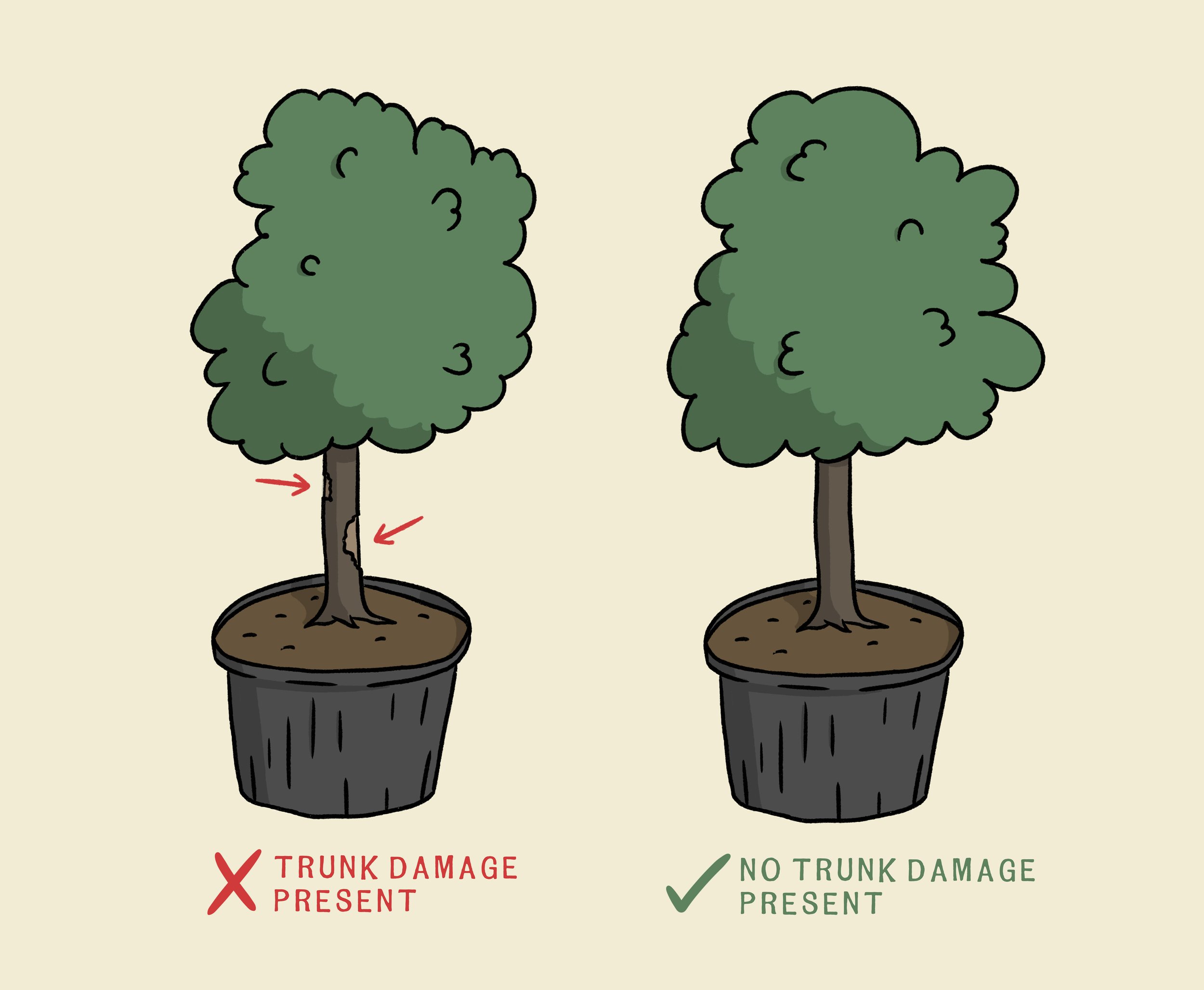
Damage to the main trunk can greatly increase the likelihood of infection due to decay fungi and/or disease. During harvest and transport from the fields to your local nursery, trees and shrubs are handled multiple times and have many miles to travel, and this increases the opportunities for damage to occur to each plant. It’s important to inspect your potential future shade tree for any damage before purchasing. Gently remove any burlap wrapped around the trunk to inspect for any hidden rubbing, cracks, or decay. This is a good time to look for root flare and any indications of girdling roots. One indication of girdling roots below the soil line is flat spots on the main trunk.
— — —
The good news is that trees that are acquired with these defects can often be corrected. Circling roots can sometimes be pruned or straightened before planting if they have not become too large.
After planting, the root flare should remain visible, and mulch should be applied in a ring or donut shape to avoid forming a mulch volcano. Planting trees and shrubs at the appropriate height is crucial for establishing healthy plants. Preventing problems at planting is far easier than attempting to correct them years later.
If you do find trees on your property that were recently planted and are in need of some assistance, we offer root collar excavations, which is a specialized service where we use high-pressure air to expose buried root flares and uncover stem-girdling roots, which then can be severed, prolonging the life of your tree for the many years to come.
ADDITIONAL ARBOR ED™ ARTICLES!