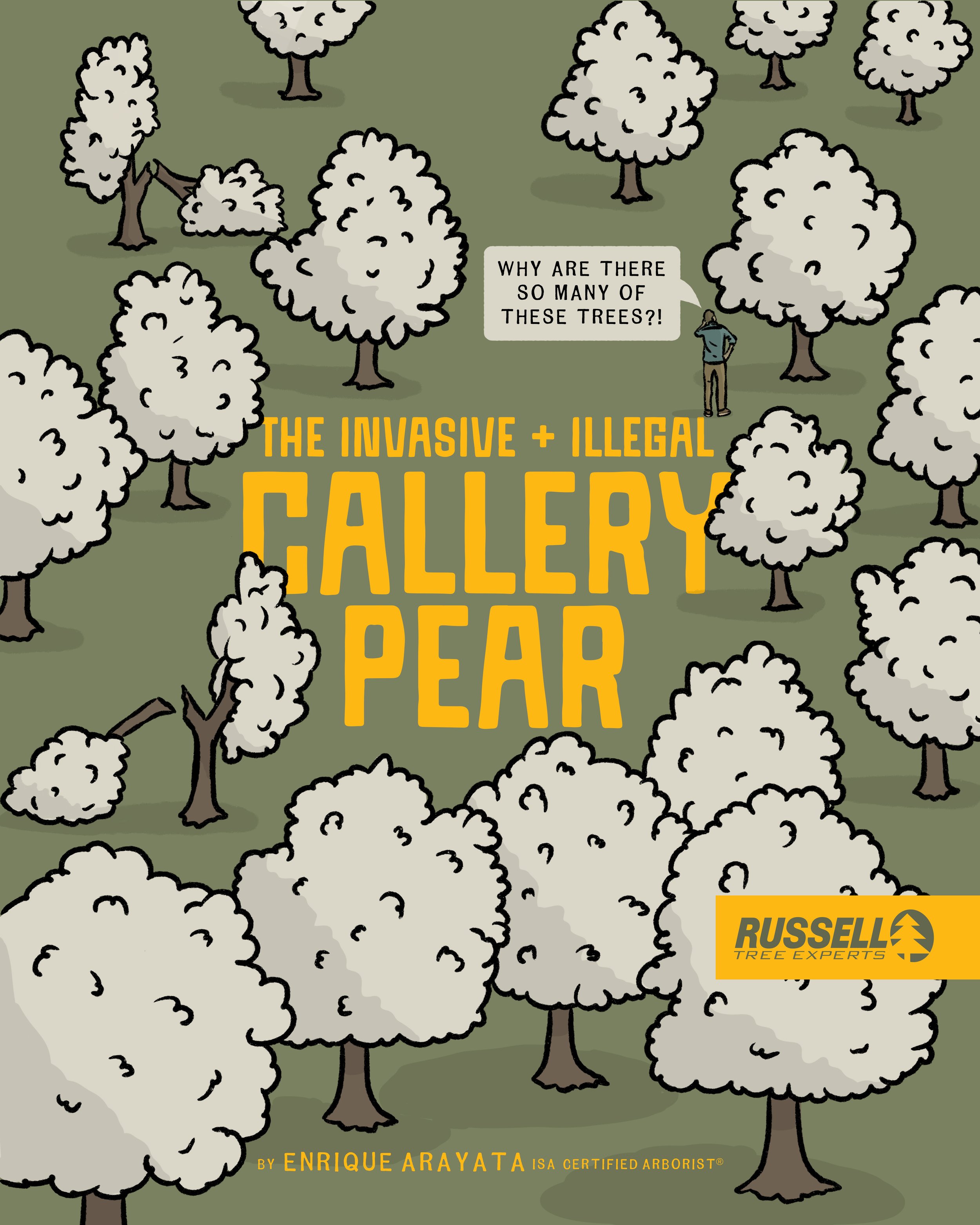
The Invasive & Illegal Callery Pear
By Enrique Arayata
ISA Certified Arborist® OH-7252A
March 26, 2026
Spring is right around the corner! How do I know? Well, besides the obvious with the calendar dates progressing and the warmer temperatures in the forecast, I can see the early spring color of the callery pear tree (Pyrus calleryana). This tree is one of the first flowering trees in Ohio’s spring season and is an indicator that we are at the tail end of winter.
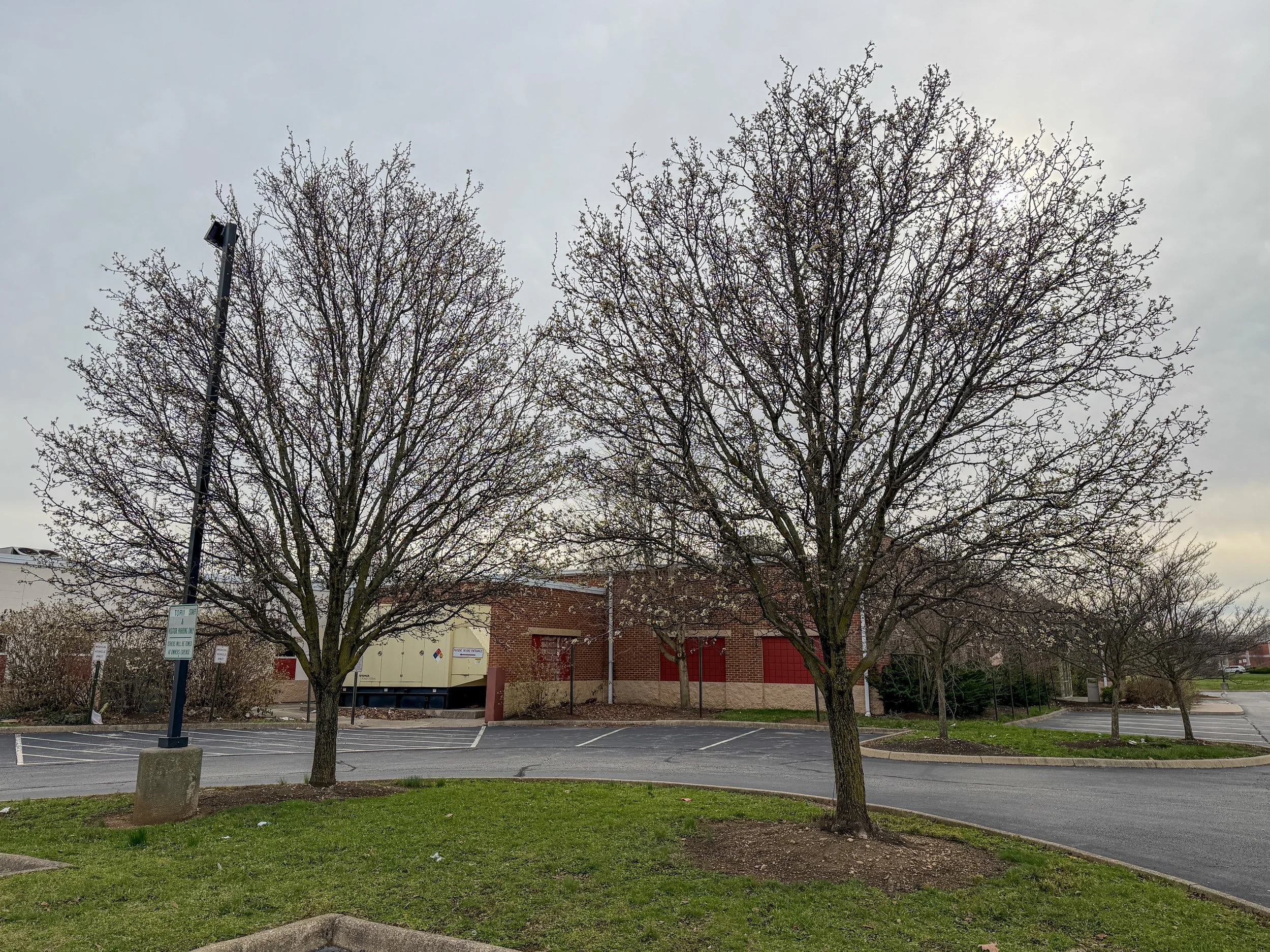
2 callery pear trees (Pyrus calleryana)
©Russell Tree Experts
Something that might not be so obvious is that the callery pear is an invasive species that is illegal in Ohio! The punishment for owning a callery pear tree is jail time. Okay, I’m kidding about jail, but not about it being illegal. As of 2023, it is no longer legal to sell or plant callery pear trees in Ohio. (Read more here) This goes for all cultivated varieties of callery pear trees such as autumn blaze, Cleveland select, and the common bradford pear. They are illegal because of their harm to Ohio’s native ecosystem.
What is An Invasive Species?
An invasive species is a species planted outside of its native habitat that will cause environmental or economic harm. Another example of an invasive species in Ohio is amur honeysuckle (Lonicera maackii). This is different from an exotic tree, which is a tree planted in a non-native site that is not known to cause environmental or economic harm. An example of an exotic tree in Ohio is Japanese maple (Acer palmatum).
How Are Callery Pear Trees Invasive? (And Why They Stink)
Non-Native: They are natively found in East Asian countries such as China, Japan, and Vietnam. They were imported to Ohio in the 1900s.
Rapid Growth: Callery pear trees are above average in their ability to grow quickly, flower, produce fruit, and spread.
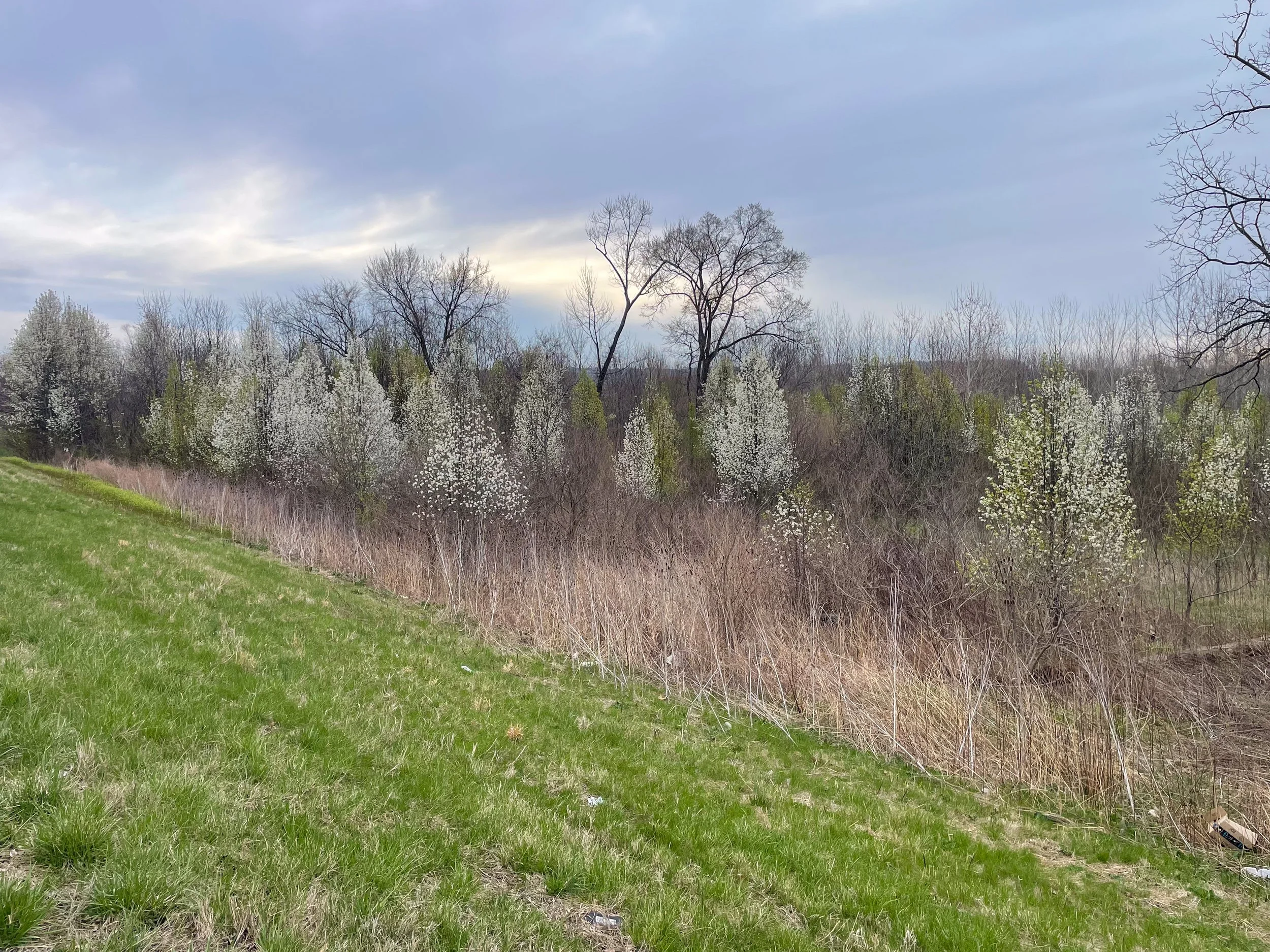
Spreads Easily: Volunteer callery pear trees can spread and pop up rapidly. This is due to their rapid growth, due to their ability to produce fruit in as few as 3 years, and due to birds eating the fruit and spreading seeds to new planting sites via droppings.
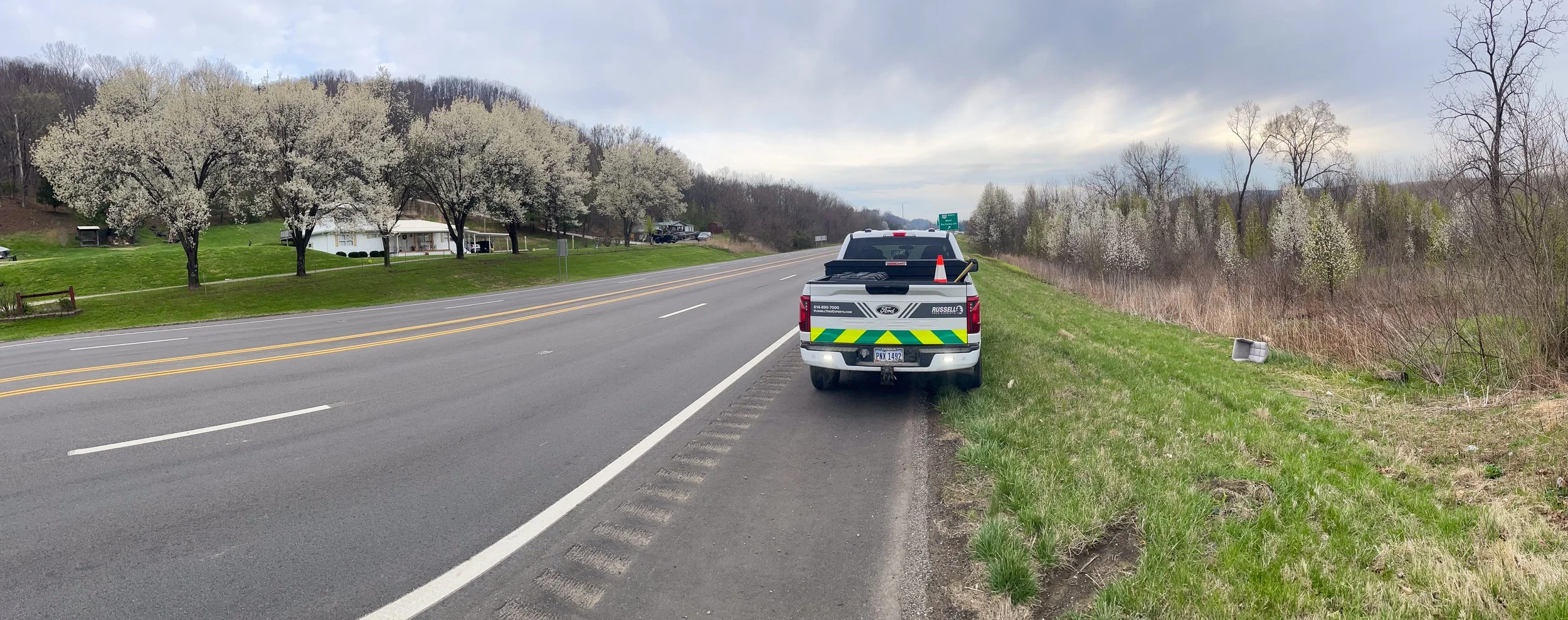
Planted callery pear trees on the left. Volunteer callery pear trees on the right
©Russell Tree Experts
Can Grow “Anywhere”: Maybe not literally anywhere, but callery pear can tolerate a wide range of planting sites with varying soil types, soil pH, light levels, moisture levels, and more. They can grow in native Ohio soil and in urban, construction-grade soil.
©Russell Tree Experts
Outcompetes Native Species: Combining all the previous points together, callery pear trees often outcompete native species for space, water, sunlight, and nutrients. If left unchecked, this can result in a reduced population of native Ohio species and lean closer towards the direction of a monoculture. A monoculture of any tree species is risky and could be detrimental if a new pest or disease were to come and wipe them out, such as Dutch elm disease or chestnut blight.
Foul Odor: The general public agrees that callery pear trees stink. The smell is unpleasant and is often compared to vomit or rotting fish.
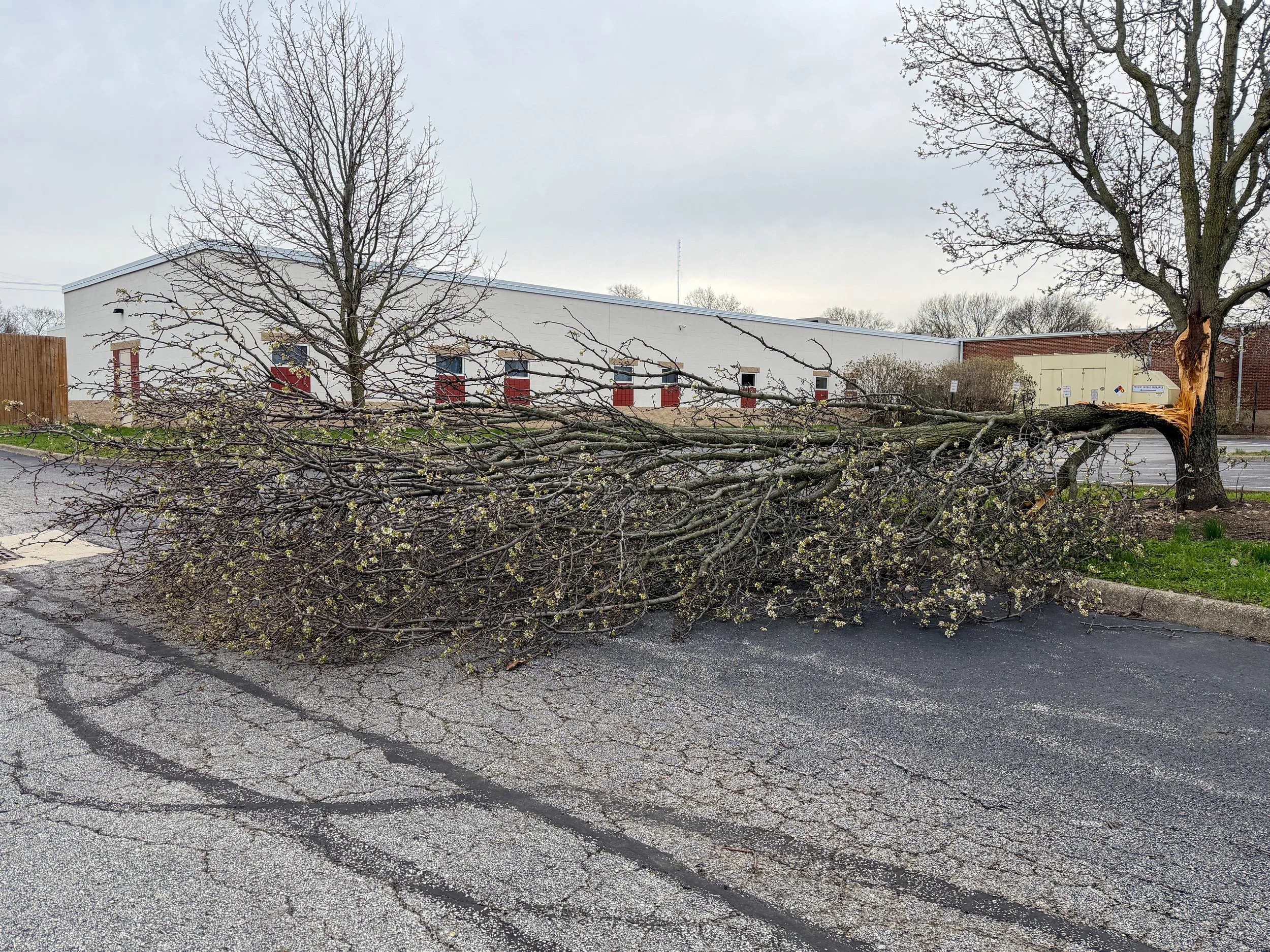
This callery pear tree failed during a strong wind event
©Russell Tree Experts
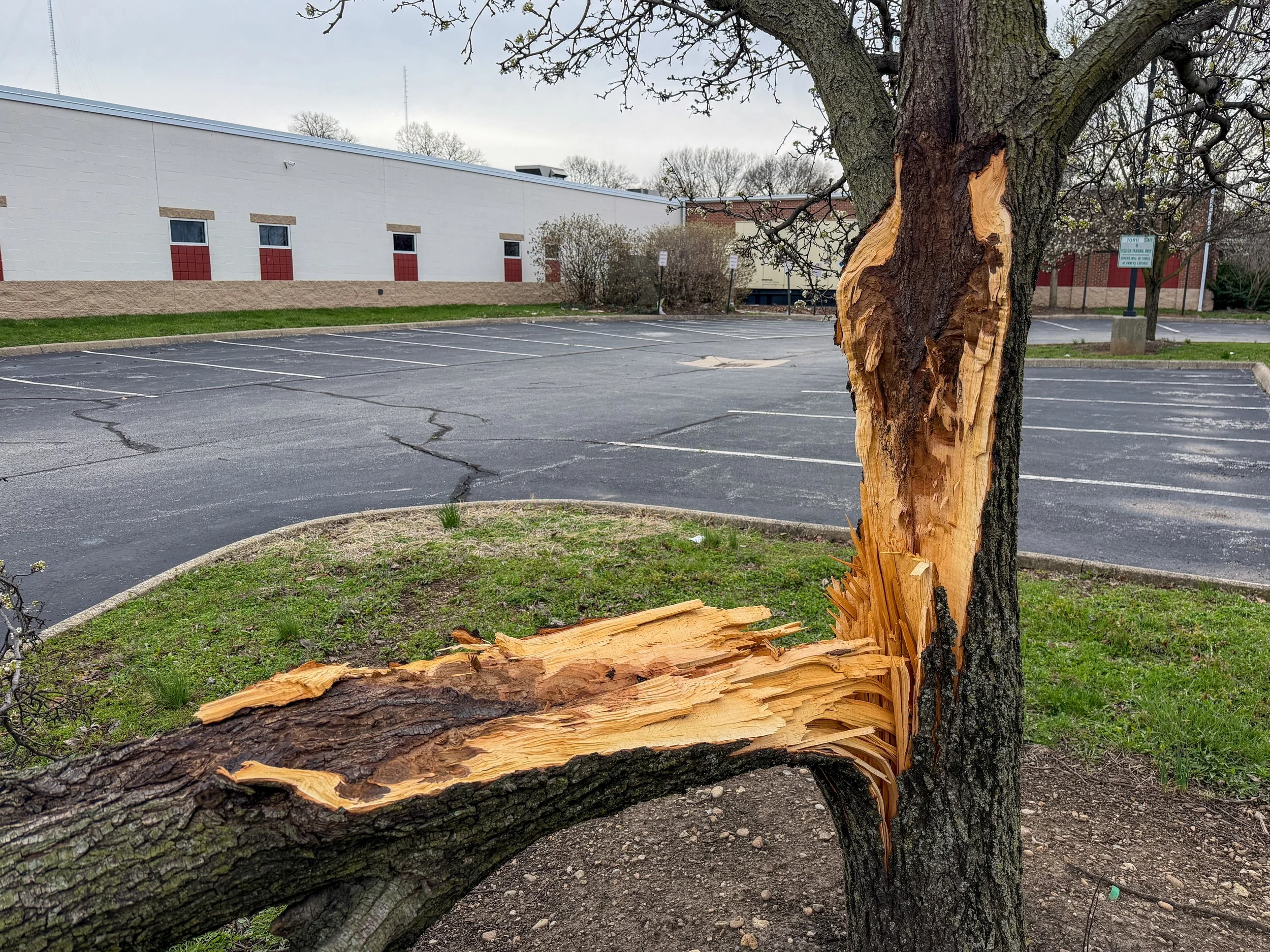
Prone to Storm Damage: Callery pear trees are more susceptible to limb breakage during intense storms due to their poor branching habits like narrow crotch unions and due to their brittle wood. As of the time of writing this, central Ohio has had multiple storm events over the past two weeks. As a result, we have had multiple emergency storm jobs, a few of which were removing callery pear trees that had multiple limbs break off and fail.
Inedible Fruit: Have you ever purchased callery pear fruit at your local grocery store? Me neither. Their fruit is inedible and considered toxic in high quantities due to the release of cyanide when crushed or chewed.
©Russell Tree Experts
Poor Lumber: As mentioned earlier, callery pear wood is brittle. Their trunks also don’t get as thick in diameter compared to other trees such as oaks, maples, or walnuts. Both of these result in callery pear being far from the first option in the lumber or paper industry.
Why Was Callery Pear Planted in the First Place?
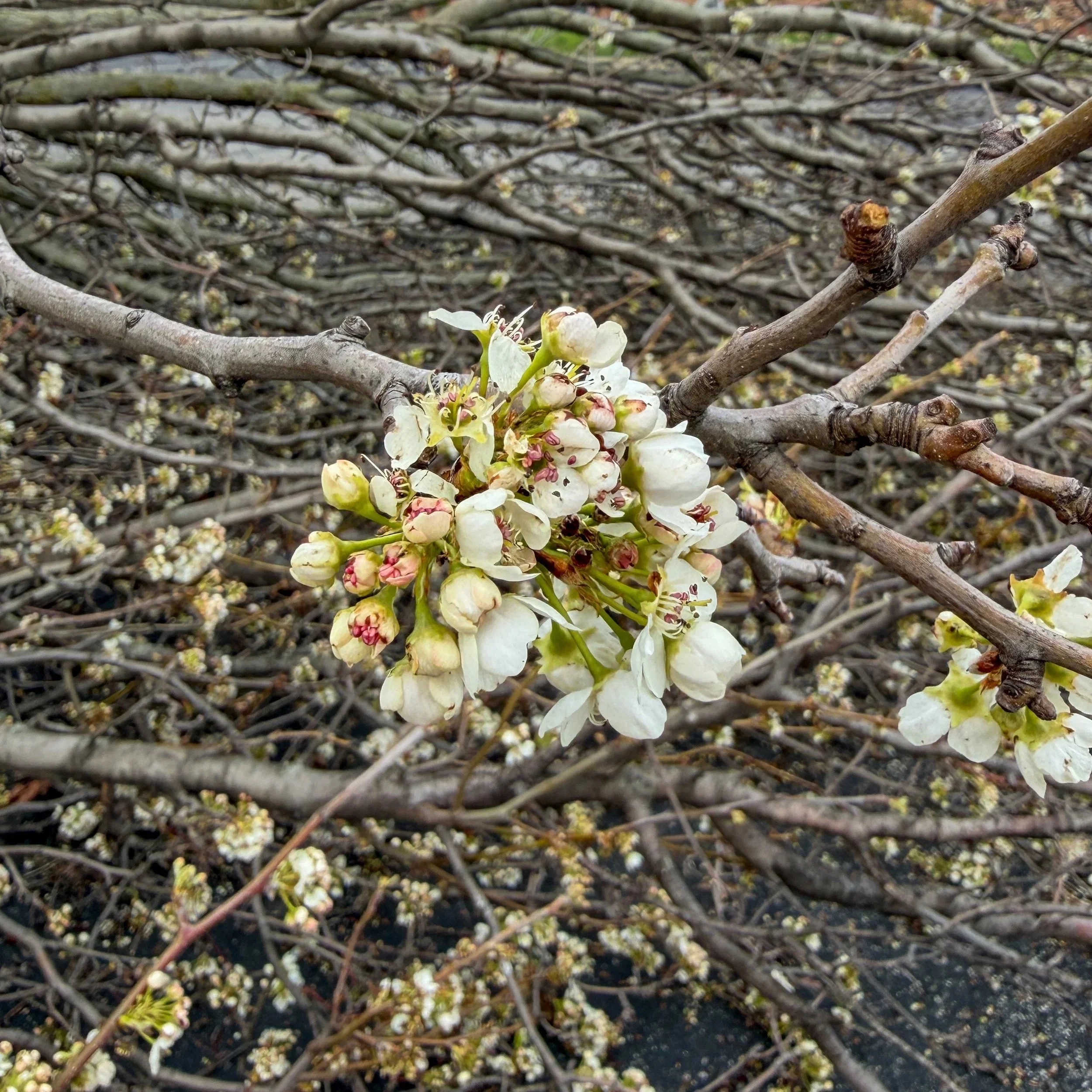
The white flowers of a callery pear tree
©Russell Tree Experts
It sounds like callery pear trees stink (because they do, literally), so why was it imported from Asia in the first place? Well, they can tolerate being planted in poor soil conditions like urban, construction-grade backfill, they have showy white flowers in early spring, and they are resistant to fire blight, a deadly disease for trees in the rosaceae family such as apple and pear trees. While these three benefits may sound nice, the overall environmental and economic impact for the callery pear tree is a net negative in Ohio, and there are many other trees that can check those three boxes.
What Can I Plant Instead?
If you’re looking for a tree similar to callery pear, there are many alternatives such as royal white eastern redbud (Cercis canadensis f. alba ‘Royal White’), sugar tyme crabapple (Malus x Sutyzam), common serviceberry (Amelanchier arborea), kousa dogwood (Cornus kousa), sweetbay magnolia (Magnolia virginiana), and ivory silk Japanese tree lilac (Syringa reticulata ‘Ivory Silk’), just to name a few! All of these trees have showy white flowers, are non-invasive, and will grow to somewhere in the ballpark of 15 to 30 feet tall and wide, similar to the callery pear.
What Should I Do if I Have a Callery Pear Tree in My Yard?
I don’t want to sound dramatic, but if you have a callery pear tree on your property, I would highly consider removing it. If it is close to your house or something of value, definitely consider removing it to minimize the risk of property damage. If it is in the middle of nowhere and won’t hit anything if it were to get damaged and fall, it’s not the end of the world, but I would still consider removing it since birds will feed on the fruit and spread the seeds elsewhere.
If you do plan on removing your callery pear tree, I would look around and see if there’s a program in your local area that will compensate you for the tree removal, whether that’s helping cover the cost of the removal itself or helping cover the cost of a new tree. In 2024, Pollinator Pathway of Licking County distributed free trees and garden center vouchers for residents who removed a callery pear tree from their yard. In 2025, the Franklin Soil and Water Conservation District offered a $100 to $500 reimbursement towards a new tree if you removed an invasive species such as callery pear, tree of heaven, Japanese barberry, and more, for residents of Columbus, Grandview, Grove City, New Albany, Reynoldsburg, Upper Arlington, or Westerville. A similar program could likely emerge this spring and summer in your area!
Regarding the tree removal itself, Russell Tree Experts has removed countless numbers of callery pear trees (and other invasive species). Invasive tree removal is in our wheelhouse and is one of our favorite types of tree work. For a free tree work quote from one of our ISA Certified Arborists®, visit RussellTreeExperts.com/Quote or call us at (614) 895-7000!
So when you see these white flowering trees terrorizing central Ohio here in the next week or two, just know that despite their subjectively beautiful aesthetics, they are a legally invasive species that needs to be kept in control and evicted from Ohio.
References:
https://ohiodnr.gov/discover-and-learn/safety-conservation/about-ODNR/news/Planting-Callery-Pear
https://www.communitybackyards.org/invasive-trade-in-program
https://www.lickingpollinatorpathway.org/bounty
ADDITIONAL ARBOR ED™ ARTICLES!