
Adventures with Persimmons!
By TJ Nagel
ISA Board Certified Master Arborist® OH-6298B
January 29, 2026
There’s only one fruit tree I like more than paw paw and that’s persimmon. I first became intrigued with our native persimmon while working in the Blue Ridge Mountains of Virginia several years ago. It was a cold morning in early January, and I was working on a crew clearing vistas for the Blue Ridge Parkway. In the center of our first vista that morning was one lone persimmon tree, approximately 10’ tall and with five ripe fruits still hanging on in its canopy. It was the first time I had noticed a wild persimmon tree with fruit. Unfortunately, our specs called for the tree’s removal, but not before I devoured its five large berries and put the three seeds I discovered into my pocket. From those 3 seeds, I ended up with one little tree, and from there I was hooked. I still have that persimmon tree today in my garden.
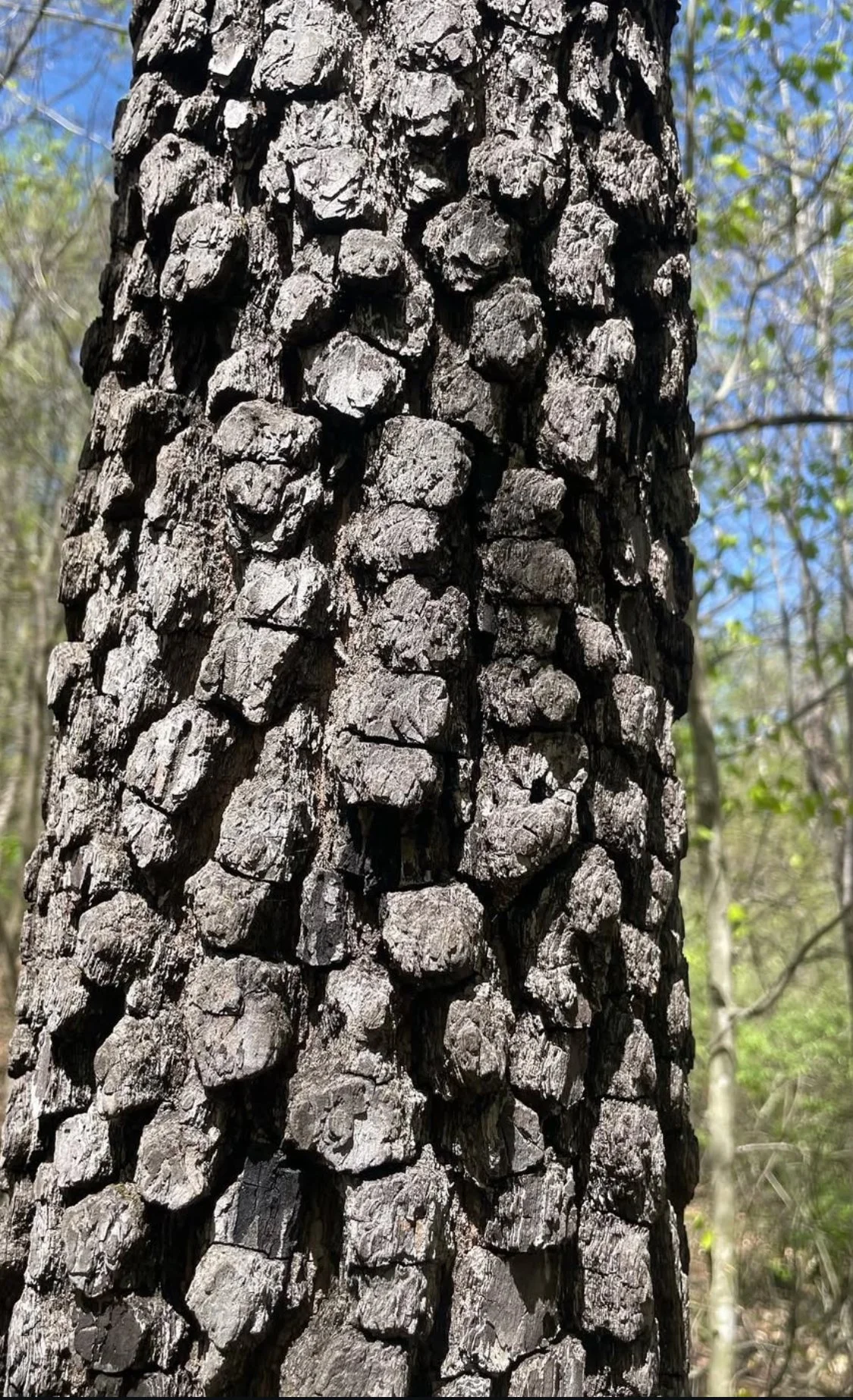
If you’re not hip to our native persimmon already, here’s the scoop - persimmon (Diospyros virginiana) is a medium sized tree generally reaching heights of 40 to 50 feet with a slender oval to rounded crown. The leaves are a nice dark green throughout the growing season and turn yellow to reddish purple in the Fall. The bark on mature trees is dark grey to black and is easy to recognize by its unique pattern of squarish blocks. In Ohio, I typically find persimmon trees growing naturally at the edges of woods or in old farms/fields transitioning into woods. Persimmon trees perform well in a wide range of soil types, can tolerate a fair amount of shade, perform well in the urban landscape, and have little pest or disease problems (although they can get black spots on their leaves in shady sites with poor air circulation and the occasional Fall webworm). I recommend our native persimmon to anyone looking for a small to medium-sized tree or for a good tree for wildlife. Lastly, persimmon trees are dioecious, which means that separate trees have male flowers and separate trees have female flowers. Female trees produce a yellowish to orange berry about the size of a quarter, which is my favorite part about this tree. Unlike many other fruit trees, you do not need a male tree or separate pollinator to get fruit. Isolated female persimmon trees will produce just fine on their own.
©Russell Tree Experts
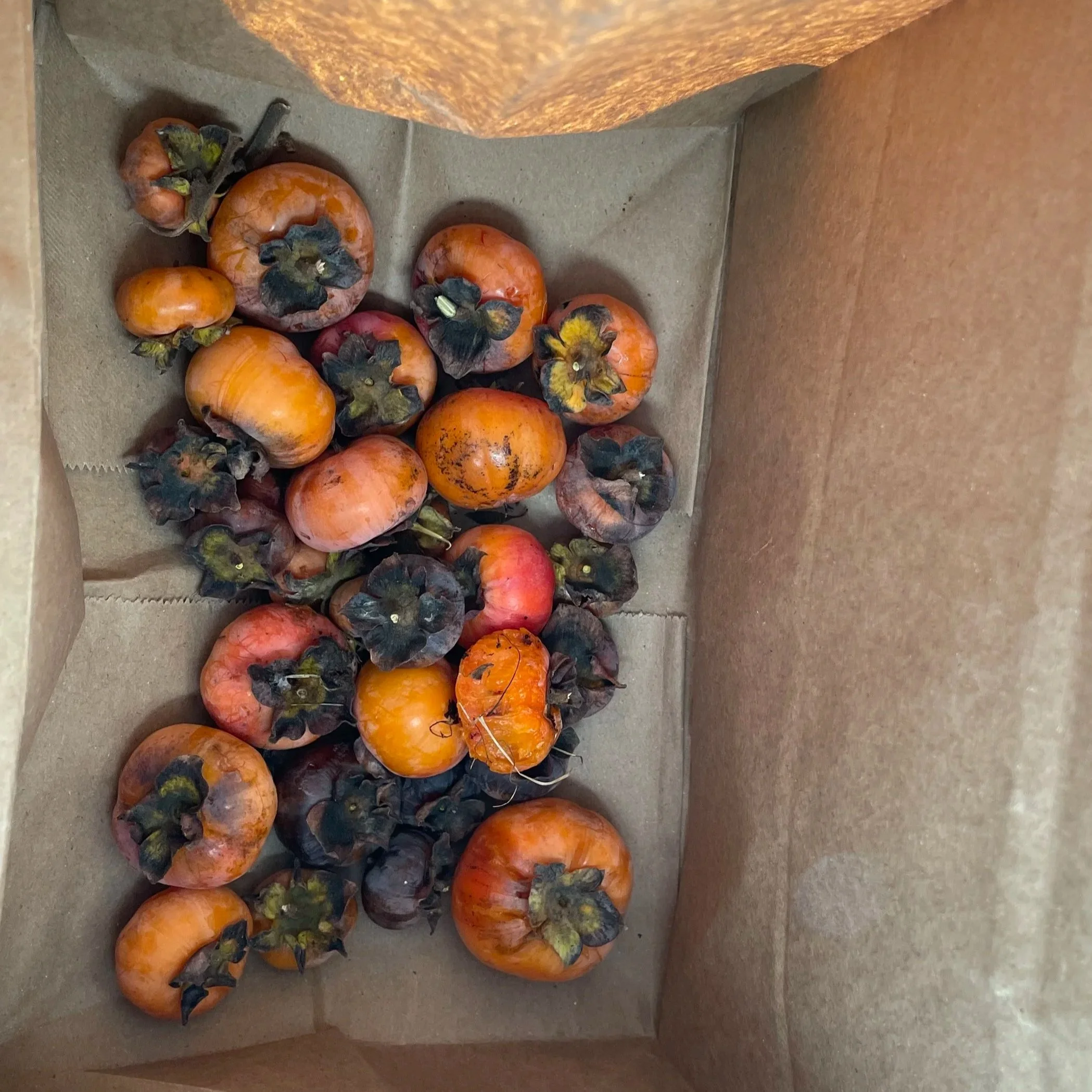
Freshly picked persimmons
More persimmon propaganda: The genus Diospyros, which is the first half of the scientific name of Persimmon, translates from latin to mean “the food of the gods.” Others say it means “divine fruit” but I’m not here to take sides. The fruit is delicious though and it reminds me of a cross between apricot, dates and honey. But here’s the deal - the fruit of our native persimmon does not ripen fully until after it has experienced a hard frost. If you attempt to eat an unripe native persimmon that has not experienced sub freezing temperatures, you’ll likely develop severe dry and numbing sensations in your mouth due to the high tannin levels in the fruit. Ask me how I know.
©Russell Tree Experts
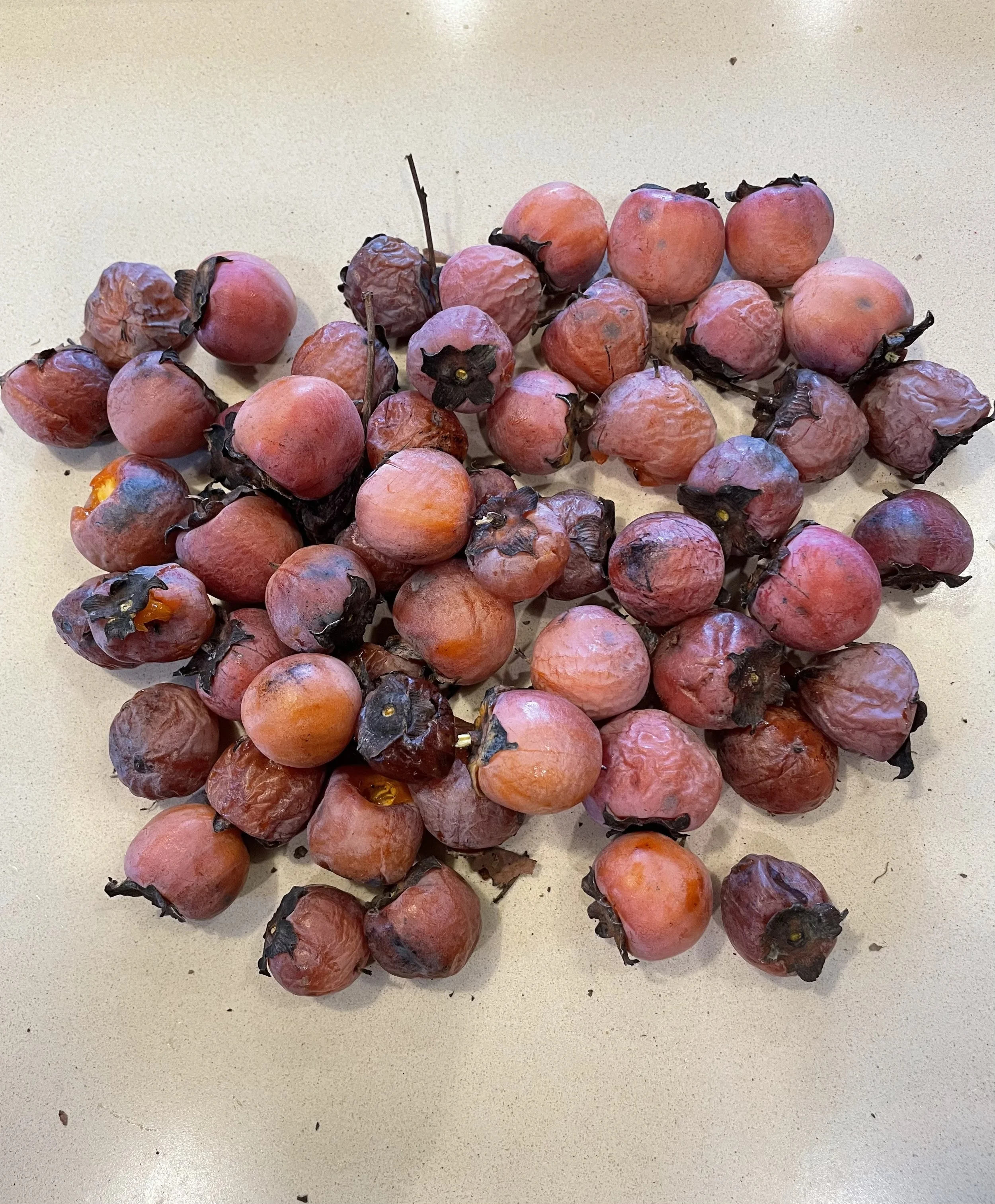
Freshly picked persimmons
Unlike many other fruits, native persimmons will attain their full skin color before they are ripe. This coloring will often cause the uninitiated to try them before they are actually ready to eat. FYI, a persimmon at peak flavor should feel soft and almost jelly-like when ready. Generally, I find that fruit picked off the ground beneath the tree is fully ripe. And in my experience, fruit that comes off the tree with little effort is ready to eat as well. If you have to pull the least bit hard, the fruit is likely NOT ready. You can test this theory, though, by eating it anyway and feeling your saliva ascend onto another plane - LOL - unripe persimmons are definitely Mother Nature’s practical joke.
©Russell Tree Experts
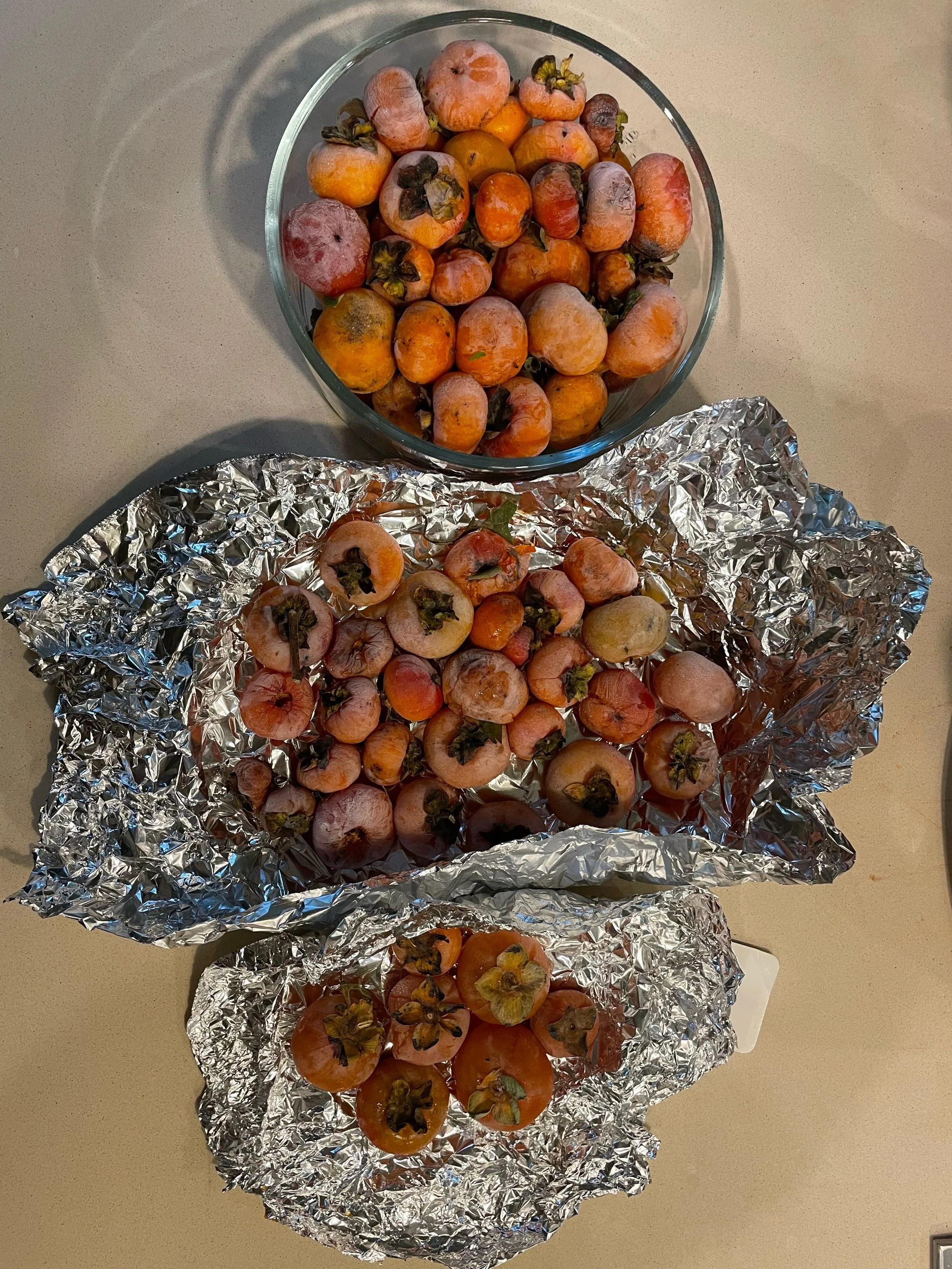
Persimmon fruit thawing before processing
Side note: If you acquire fruit that is close to ripe you can usually finish the ripening process by wrapping the berries in foil and putting them in the freezer for 24 hours. Once they have thawed out on their own, they should be good to eat.
Since growing my original tree from seed I have acquired quite the native persimmon collection. The nursery industry offers many different named female clones and I have them all. Most of these are planted at the forest farm I have with my wife in Zaleski, OH but several have been planted as street trees around our Columbus home as well. There are too many to name, but if you are looking to get into native persimmon trees I recommend the cultivars Yates, Prok, Meader, Barbra’s blush and Early Golden for their flavor, high yield and overall vigor. I’ve also started to collect Asian persimmon trees (which make the persimmon fruits you are likely to see in the fall and winter at the grocery store) but these are not as cold hardy and generally require protection if planted in areas that drop below zero degrees Fahrenheit. More on these perhaps in a future article. Most recently I have added a weeping persimmon, called Scioto weeping (selected in Ohio) and an Asian/native persimmon hybrid called Nikita’s gift (selected in Ukraine) to my collection. I got about half a dozen fruits on my Nikita’s gift this Fall but the squirrels beat me to them.
If you’ve made it this far, let’s jump ahead to the “adventure.” Shortly after my obsession with persimmon began, I received a persimmon cookbook for Christmas. It blew my mind. Persimmon pudding, persimmon cookies, persimmon pie, persimmon ice cream, persimmon pancakes, persimmon cracker roll, persimmon hummus, and persimmon everything in between. I decided I needed to try them all. I only had one problem. I needed lots of persimmon fruit.
The year was 2023, and it became my mission to locate as much native persimmon fruit as possible. At that time, most of my personal persimmon trees were still young and producing little to no fruit, so I started taking notes about everywhere I observed native persimmon growing with the intention of returning in the late Fall to pick some fruit. I found trees in multiple city parks in the downtown area. While working on ODOT jobs in Vinton and Hocking counties, I saved the GPS coordinates of locations where native persimmon trees were growing in the right of way. I explored state forests and native areas along bike paths and walkways. I even managed to find a few persimmon street trees.
I put together a pretty good list. But most of the year I couldn’t tell if I was looking at male or female trees because with our native persimmon, fruit doesn’t start to show up until late in the summer. What I also didn’t know at the time was that in the wild, male persimmon trees outnumber female trees by 10 to 1. Fortunately, I like road trips, so it wasn’t a big deal when I came back from most of my persimmon-gathering travels empty-handed. Persimmon cracker roll would just have to wait a little bit longer.
Ultimately, my persimmon plans were salvaged by a handful of arborist colleagues. I’ve got to give a shout-out to arborists Cat Baumgartner, Jacob Nau, Rew Nagel, Joe Russell, and Shari Russell, who were five steps ahead of me in their affinity for native persimmon and were kind enough to let me visit their trees and get in on their crop when I had hit persimmon rock bottom. I couldn’t have done it without you guys! To make ends meet, I also picked a few Asian persimmons off the shelves of Costco and the Bexley Natural Market.
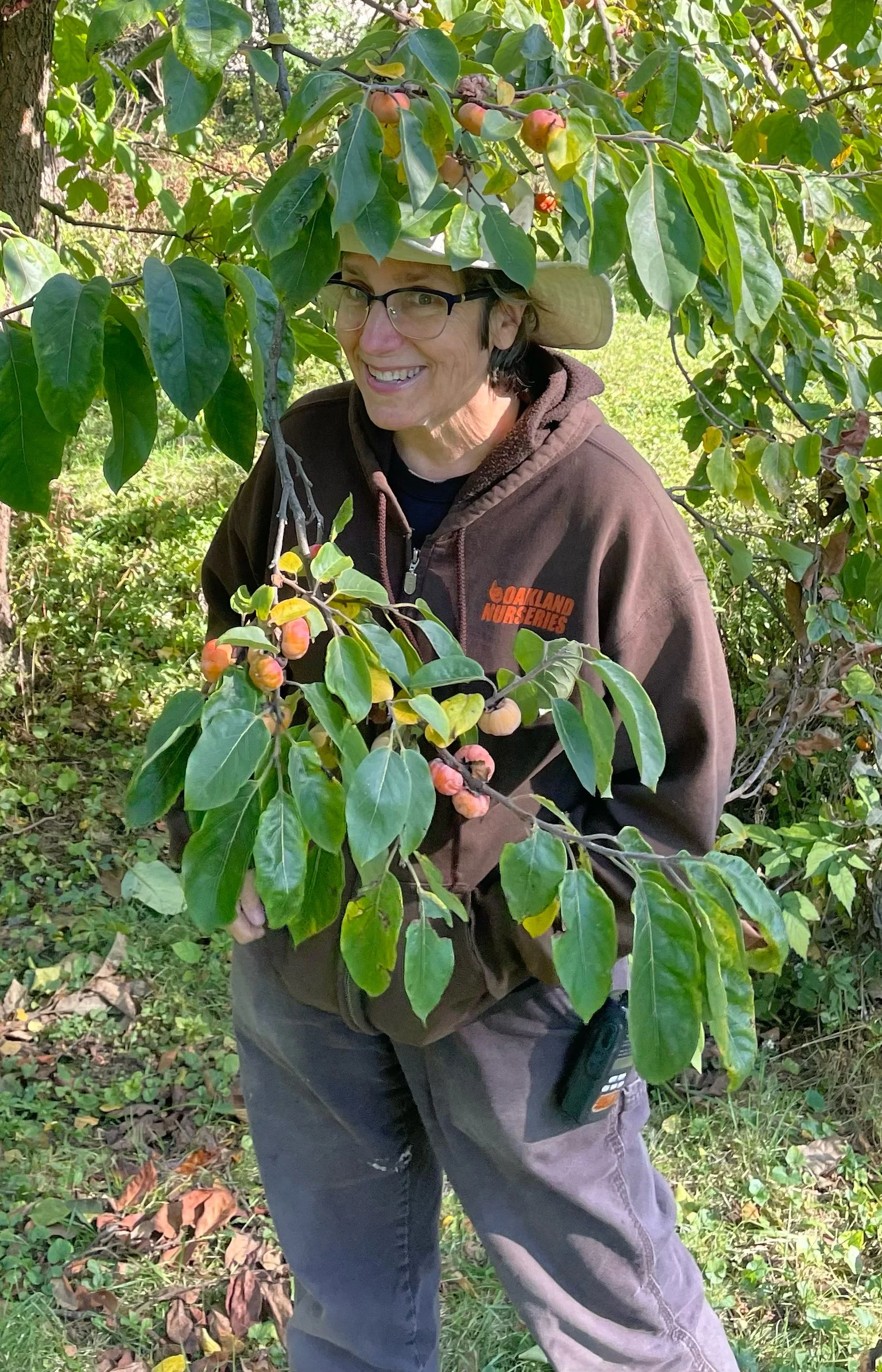
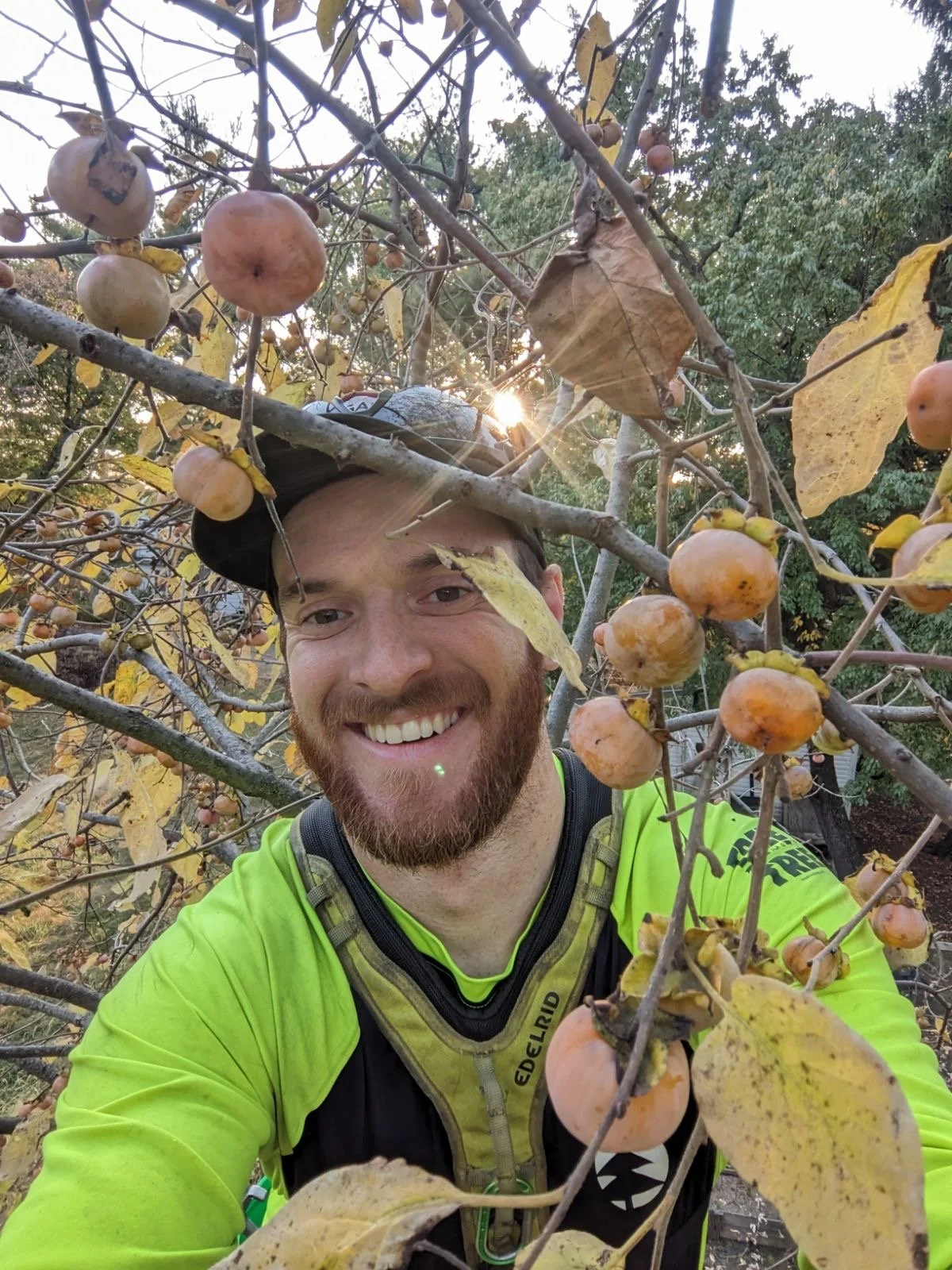
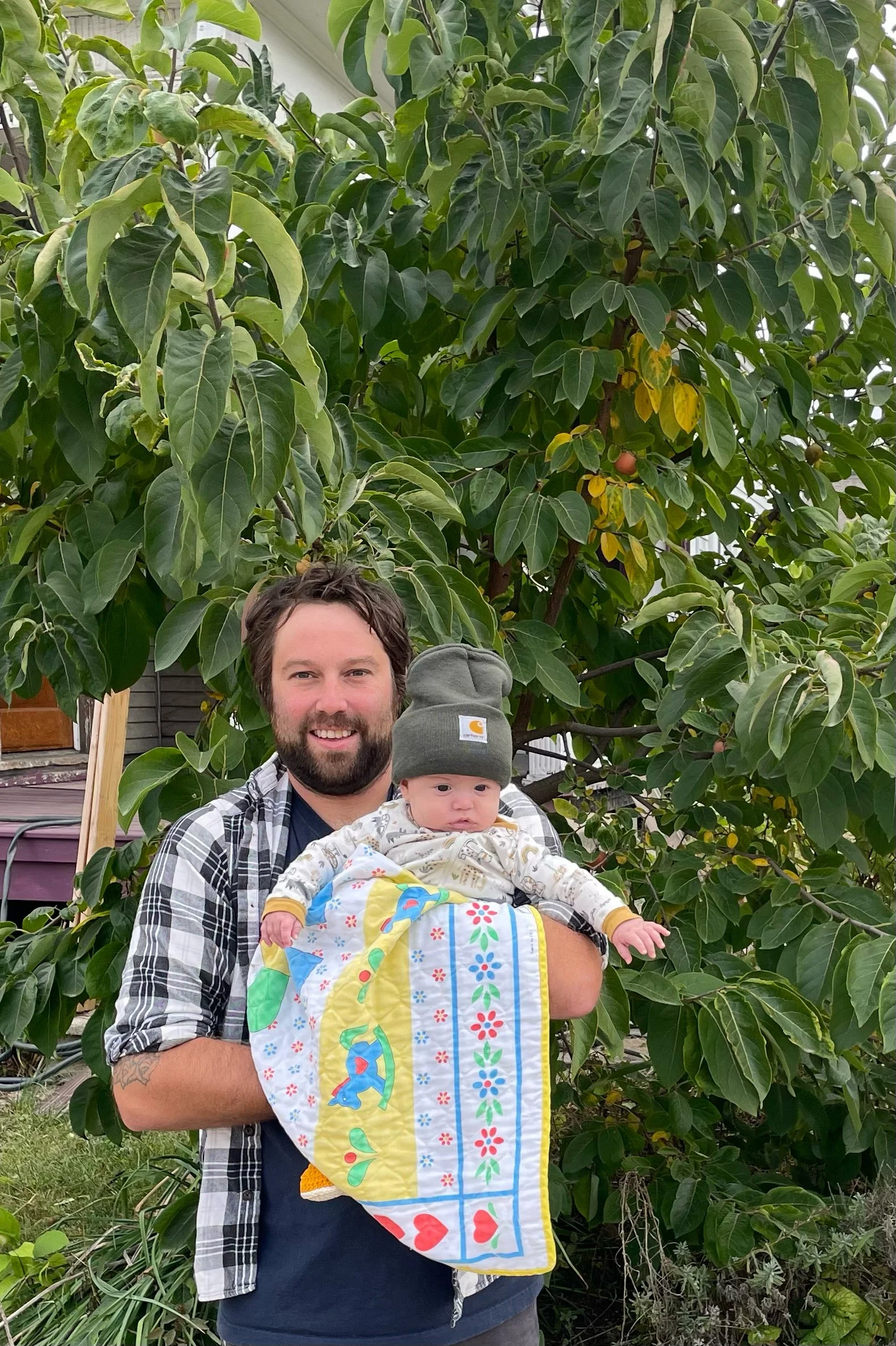
I went through fruit a lot faster than I expected so I didn’t make it to the cracker roll or the hummus. I’m a big dessert guy so I started with the cookies, cakes and pies. I’ve developed a few favorites that I keep making and even today I haven’t made it to everything in the cookbook. But I’m collecting more fruit each year as my trees at home and in Zaleski get bigger and eventually I’ll try everything and follow up with a Persimmon part 2. The following are my top 3 favorite native persimmon recipes. I’ve tweaked them a little bit based on personal preferences.
©Russell Tree Experts
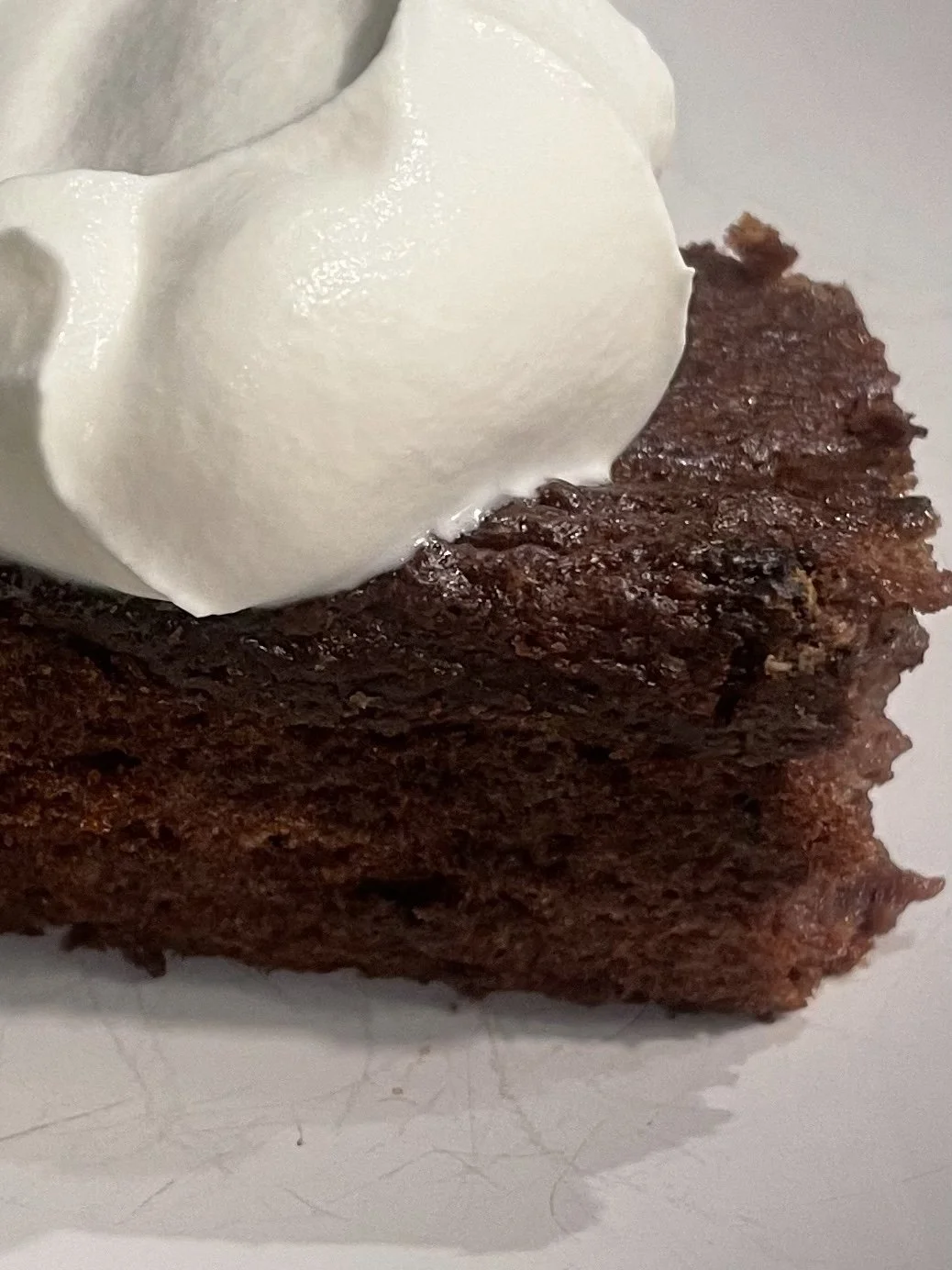
Persimmon Pudding
Persimmon Pudding
2 cups persimmon pulp
1 sweet potato, grated
3 eggs, well beaten
1 ¼ cups brown sugar
2 cups flour
1 tsp. baking soda
½ tsp. salt
1 tsp. cinnamon
1 tsp. nutmeg
½ tsp. ginger, grated
1 ½ cups milk
½ cup butter (or margarine), melted
1 tsp. vanilla
Puree persimmons in a blender or food processor. Mix together persimmon pulp and grated sweet potato. Add eggs and brown sugar to the pulp mixture, mix well. Add flour, baking soda, salt and spices; blend well. Mix in milk, butter and vanilla. Pour into a 9” by 9” baking dish. Bake at 325 degrees for about an hour or until firm. Best served with whipped cream.
For 1 pie or dessert, I mix ½ a pint container of heavy whipping cream with ¼ cup of sugar and 1 teaspoon of vanilla.
The Persimmon pudding is my absolute favorite dessert of all time. Spoiler alert: If I’m coming to your house for dinner in the fall or winter, this is what I’m bringing!
©Russell Tree Experts
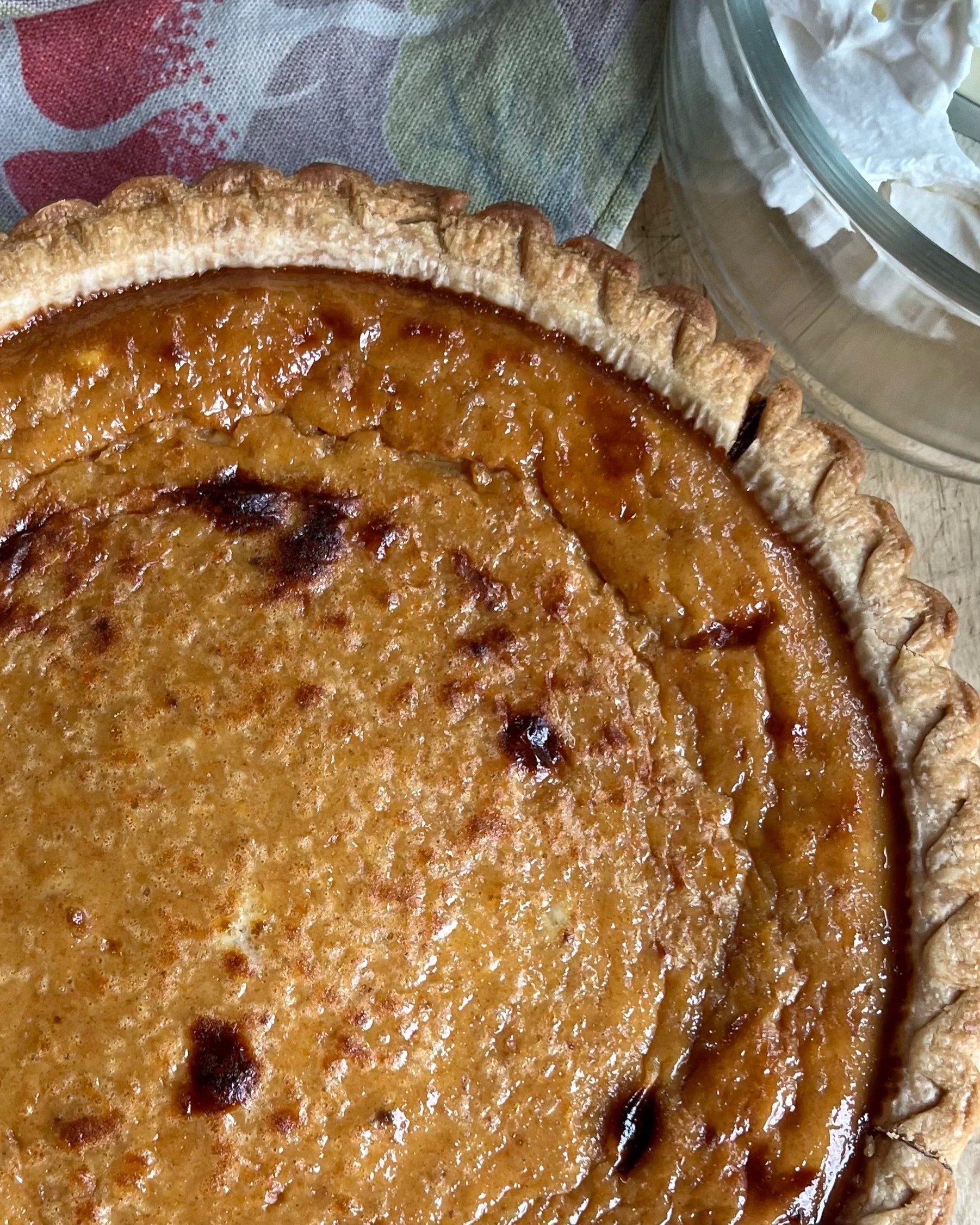
Persimmon Cream Pie
Persimmon Cream Pie
2 eggs, beaten
½ cup sugar
½ tsp. cinnamon
¼ tsp. salt
1 ⅔ cups evaporated milk
1 ½ cups persimmon pulp
1 tsp. lemon juice
1 8” pie crust, unbaked
Mix together the eggs, sugar, cinnamon, and salt. Add milk, pureed persimmon pulp, and lemon juice. Pour mixture into an unbaked pie shell (I like Marie Callender’s). Place in a preheated 425 degree oven for about 40 minutes.
The persimmon cream pie is fast and easy to make. It looks and tastes similar to the classic pumpkin pie. Surprise your family and show them how cutting edge you are when you knock their socks off with this one at Thanksgiving!
©Russell Tree Experts
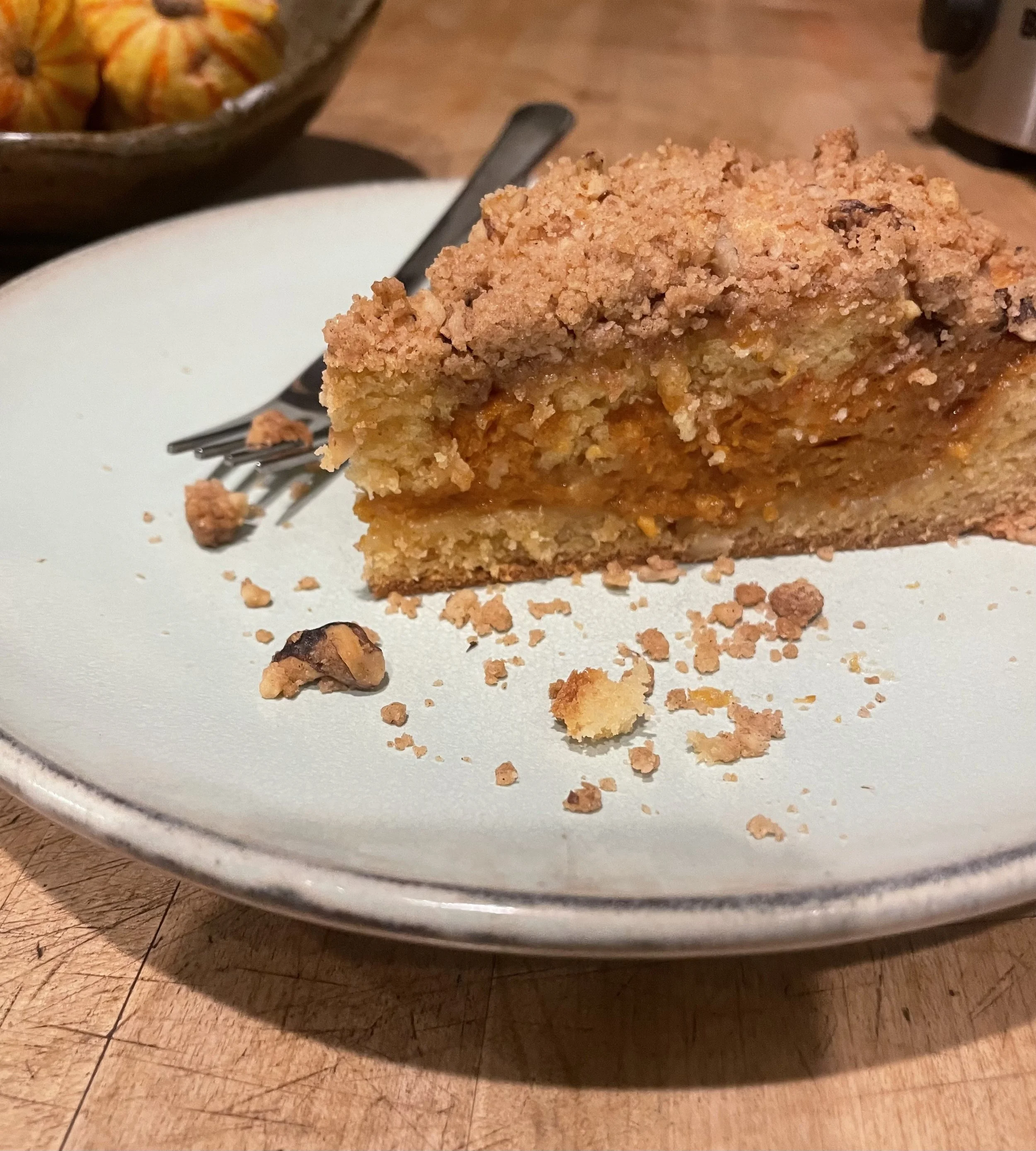
Persimmon walnut coffee cake
©Russell Tree Experts
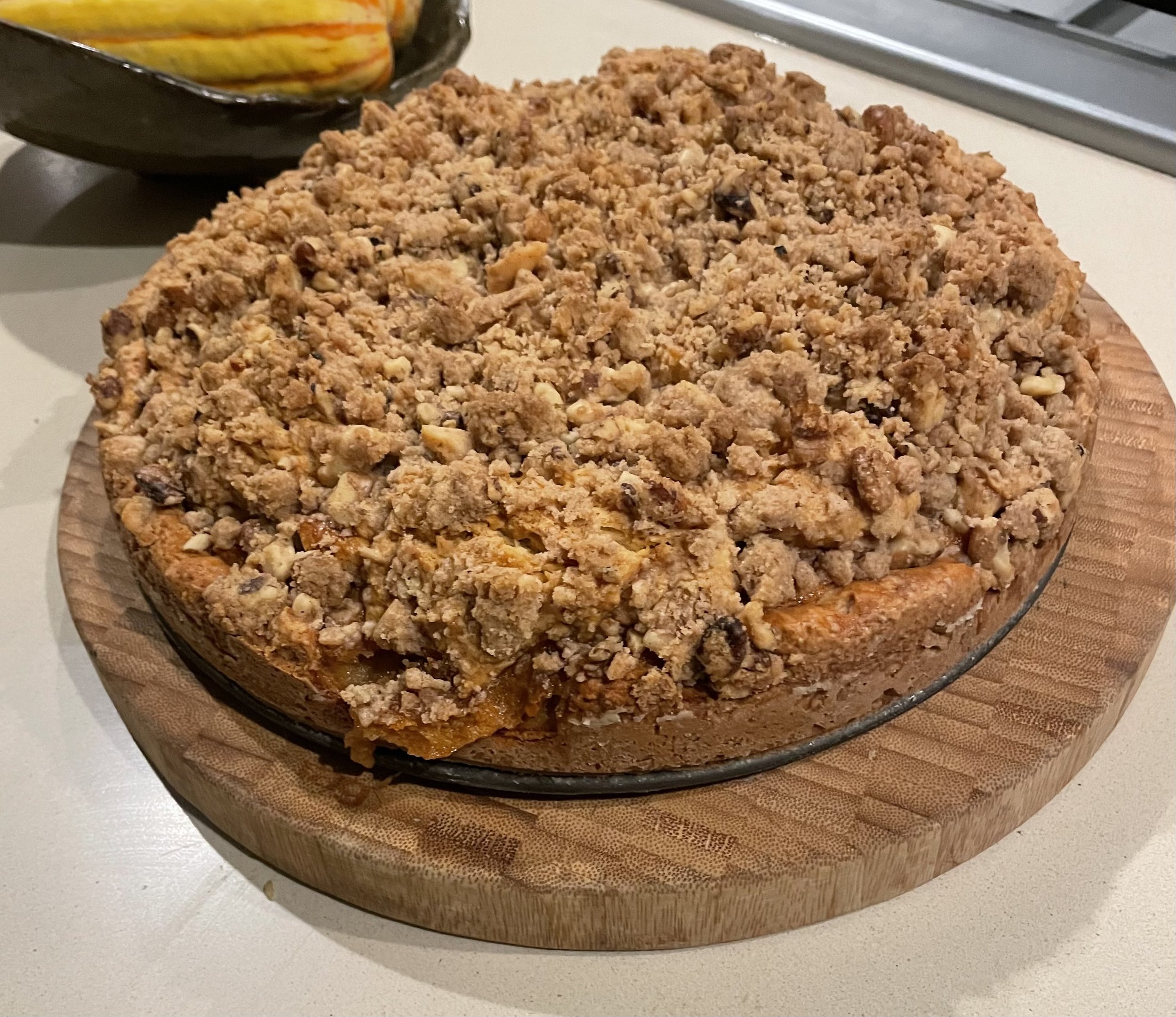
Persimmon walnut coffee cake
Persimmon Walnut Coffee Cake
About ¾ lbs of persimmon pulp
⅓ cup brown sugar
2 cups and 1 tbsp flour
2 tsp. baking powder
½ tsp. salt
½ cup butter, softened
1 cup sugar
1 tsp. vanilla
2 eggs
1 box instant vanilla pudding
8 oz. sour cream
For the Streusel
½ cup flour
½ cup sugar
½ tsp. cinnamon
¼ cup butter
½ cup walnuts, chopped
Grease and flour a 9” by 3” spring form pan. Combine persimmon pulp, brown sugar and 1 tbsp. flour and set aside. Stir together the first three streusel ingredients and then cut in the butter until the mixture resembles coarse crumbs. Stir in walnuts and set aside. In a medium bowl, stir together the remaining 2 cups of flour, baking powder, salt, and baking soda. In a large bowl, beat ½ cup softened butter with an electric mixer for 30 seconds and add 1 cup of sugar and vanilla. Add eggs one at a time. Alternately add flour mixture, sour cream, and vanilla pudding until batter is mixed. Spread half of the batter evenly into the bottom of the pan, building up a 1” rim of batter around the edge. Then spoon persimmon mixture into the center of batter and cover with remaining batter. Sprinkle streusel evenly over the top. Bake for about 1 hour or until a toothpick comes out clean in an oven at 350 degrees. Cool in pan on a wire rack for 10 minutes before loosening and removing sides of pan.
©Russell Tree Experts
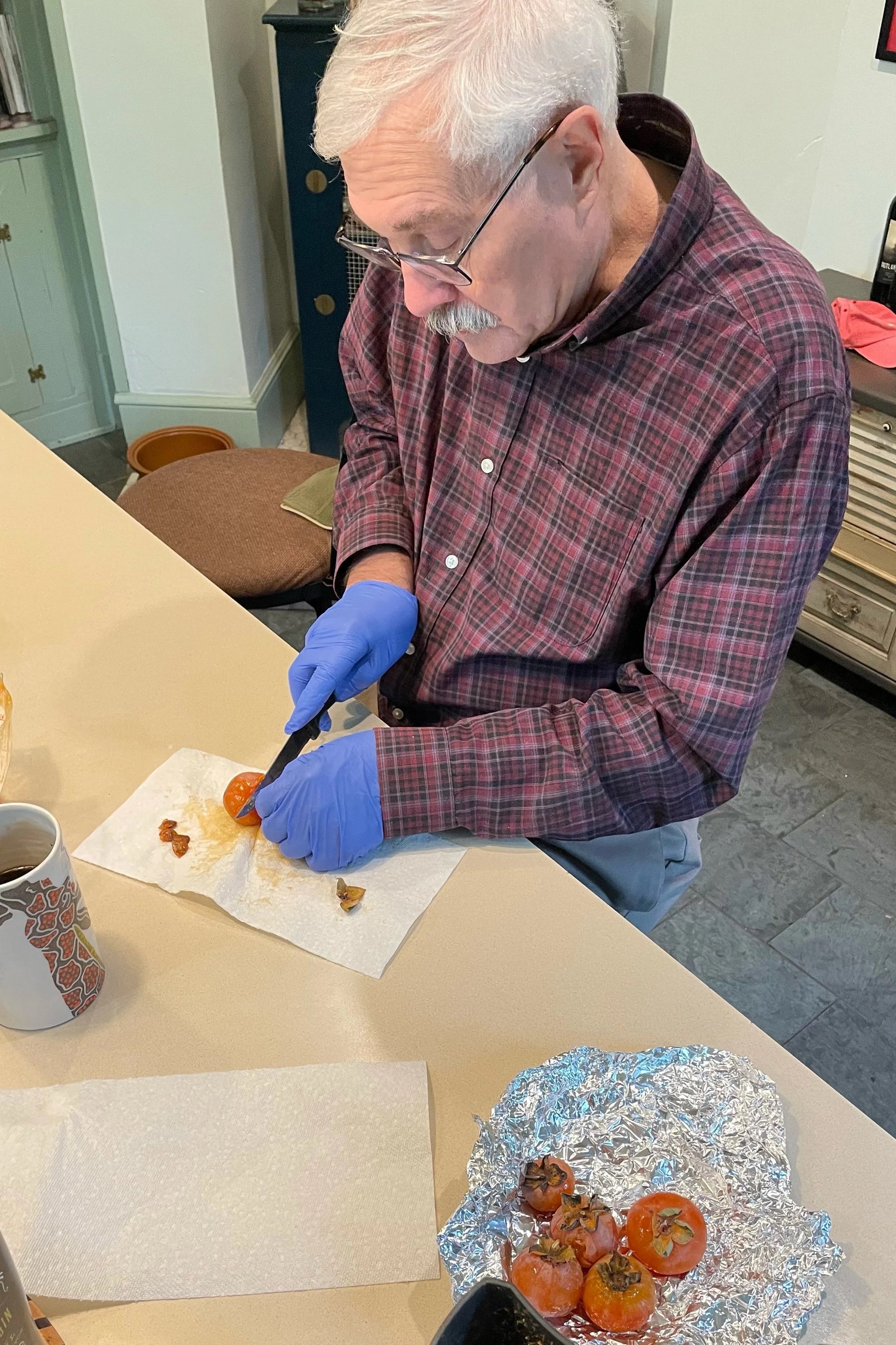
My father removing seeds and stems from persimmon fruit
This Persimmon Walnut coffee cake is a real crowd pleaser and Entenmann’s doesn’t hold a candle to it. Making it is a little more involved so give yourself time. If you show up with this one at the party no one will forget your name.
I hope you enjoy these recipes as much as I do. If you can’t find any persimmon, you can substitute apple sauce but it’s not as much fun. I have to give a shout out to my father who was instrumental in helping me clean and process all of the persimmons for this article. He was also my patient sidekick as we drove and explored countless miles in search of what was often a single digit number of persimmon fruit. He passed away this fall but I will think of him often. He is the reason that I like trees.
ADDITIONAL ARBOR ED™ ARTICLES!


TJ Nagel I Scheduling Production Manager, Russell Tree Experts
TJ joined Russell Tree Experts in 2012 and loves trees. He is an avid gardener and plant collector. TJ graduated from The Ohio State University with a B.S. in Agriculture with a major in Landscape Horticulture and minor in Entomology. TJ is an ISA Board Certified Master Arborist® and well versed in plant pathology and tree ID.
