
9 Signs It’s Likely Time to Remove a Tree
By Enrique Arayata
ISA Certified Arborist® OH-7252A
February 5, 2026
Tree companies can have a bad reputation or stigma around them as a harmful business that negatively impacts the environment by unnecessarily removing trees. Well, before you swipe, tap, click, or scroll away and dismiss this as tree-cutting propaganda, hear me out for a second! Russell Tree Experts provides a plethora of plant healthcare and tree preservation services such as insect and disease management, tree pruning, nutrient fertilization, lightning protection, root zone invigoration, tree bracing, and more. As much as we love trees, tree removal is a service we offer because sometimes, it is the best solution.
Invasive Species
©Russell Tree Experts
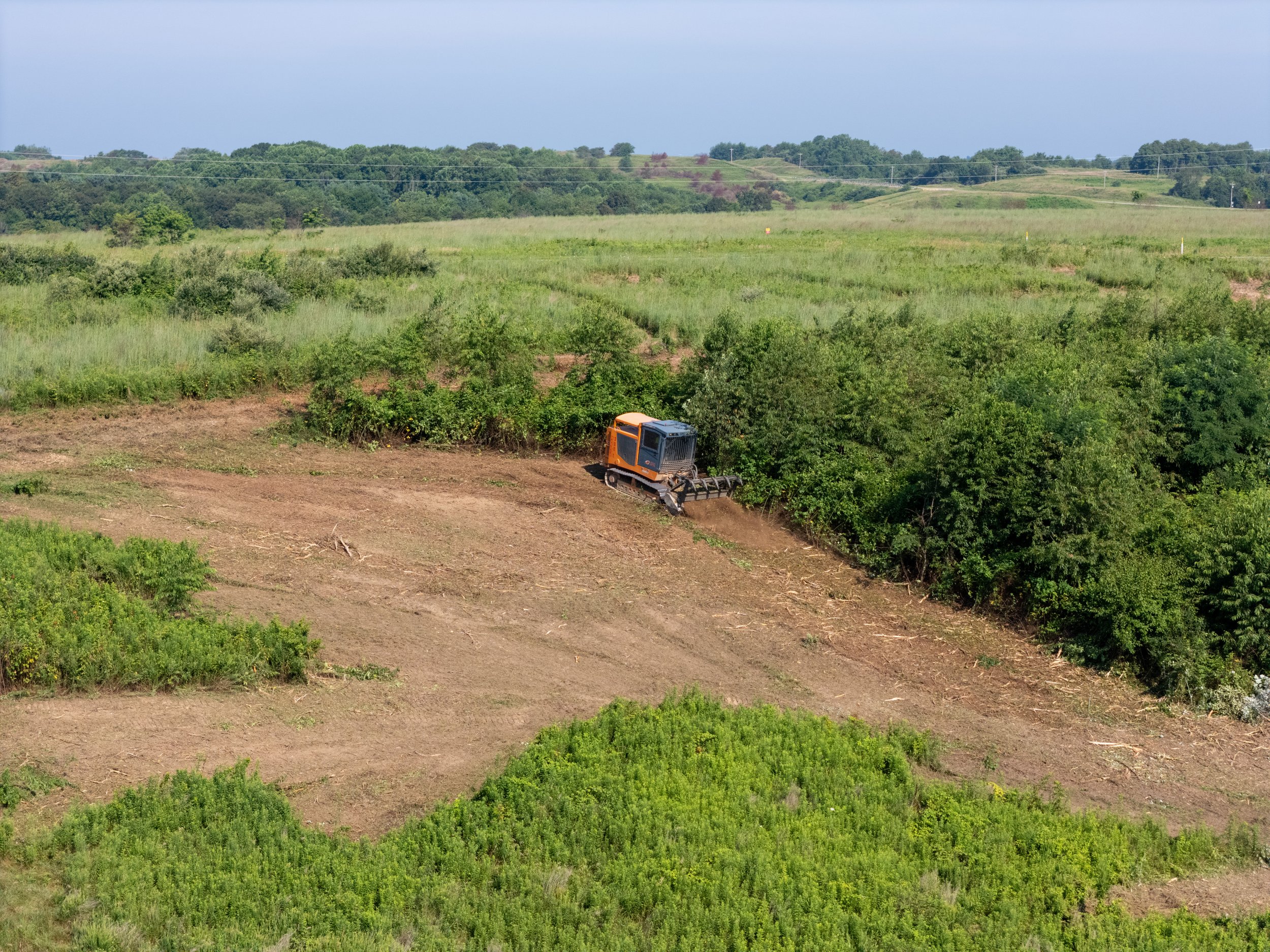
Clearing invasive species at Woodbury Wildlife Area in Coshocton, OH to make room for native grasses and trees
There are numerous trees that are legally invasive in Ohio such as callery pear (Pyrus calleryana), tree-of-heaven (Ailanthus altissima), amur honeysuckle (Lonicera maackii), and autumn olive (Elaeagnus umbellata). These trees are not native to Ohio and contribute to a decline in species diversity. Invasive species tend to grow quickly and spread rapidly, resulting in these trees outcompeting native trees for resources like physical space, water, sunlight, soil nutrients, and more. They contribute to a monoculture and offer less ecosystem value such as nuts, fruit, flowers, and more compared to native trees. For these reasons, tree removal is recommended.
Spread of a Disease or Pest
One argument against tree removal is to keep the decayed tree on site to provide a habitat for animals or to help enrich the surrounding soil as it decomposes. Although this is true, a tree that has decayed due to a disease or pest may benefit the environment more by being removed rather than by being left standing. For example, spotted lanternfly is an invasive pest that will destroy native Ohio plants and agriculture crops, particularly grapevines. A preferred host tree for spotted lanternfly is tree-of-heaven. So whether you have a healthy tree-of-heaven or one with a hollow cavity, it should be removed regardless to minimize the spread of spotted lanternfly. Depending on the jobsite and tree material, we sometimes leave the brush on the ground for the benefit of microorganisms, insects, and wildlife such as at metro parks.
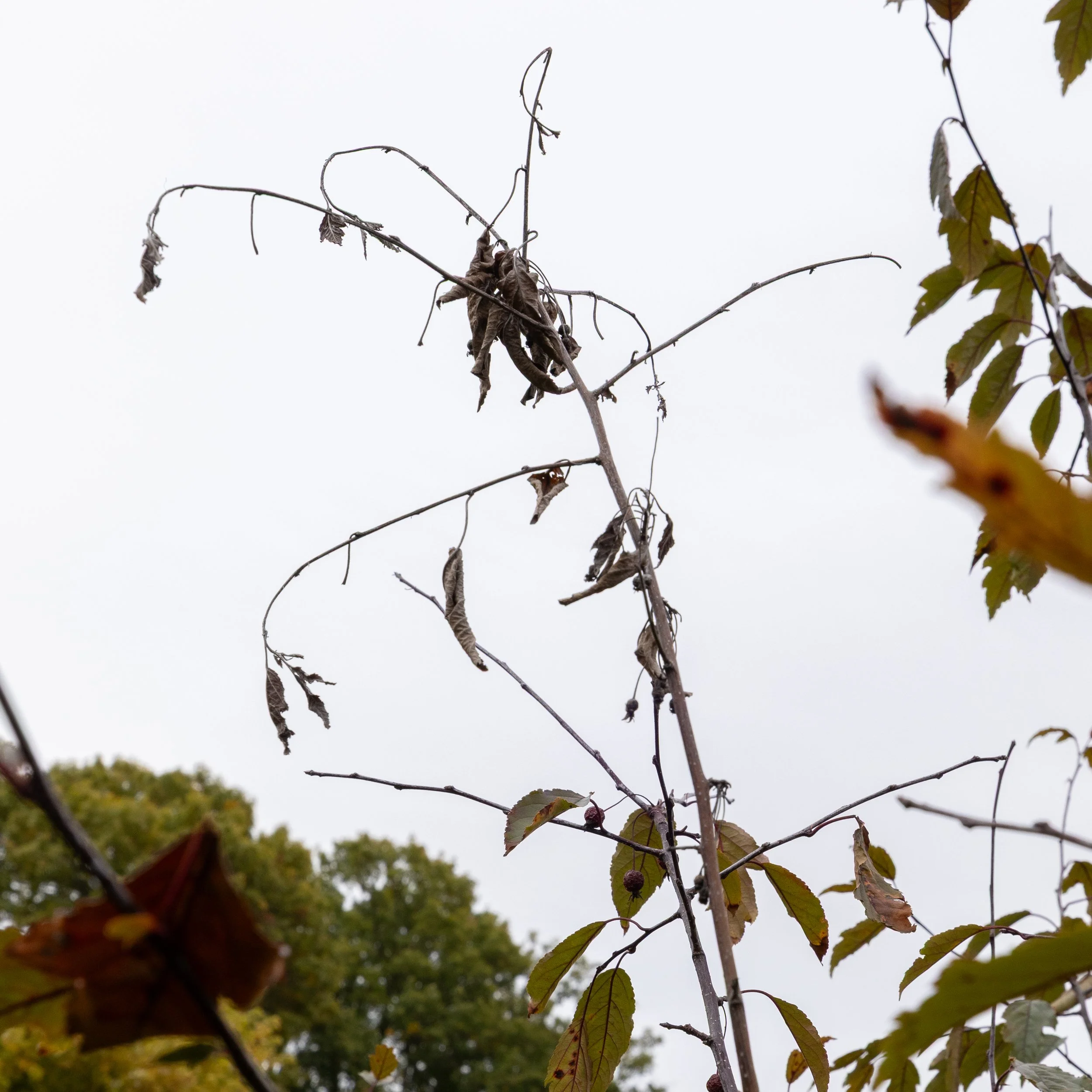
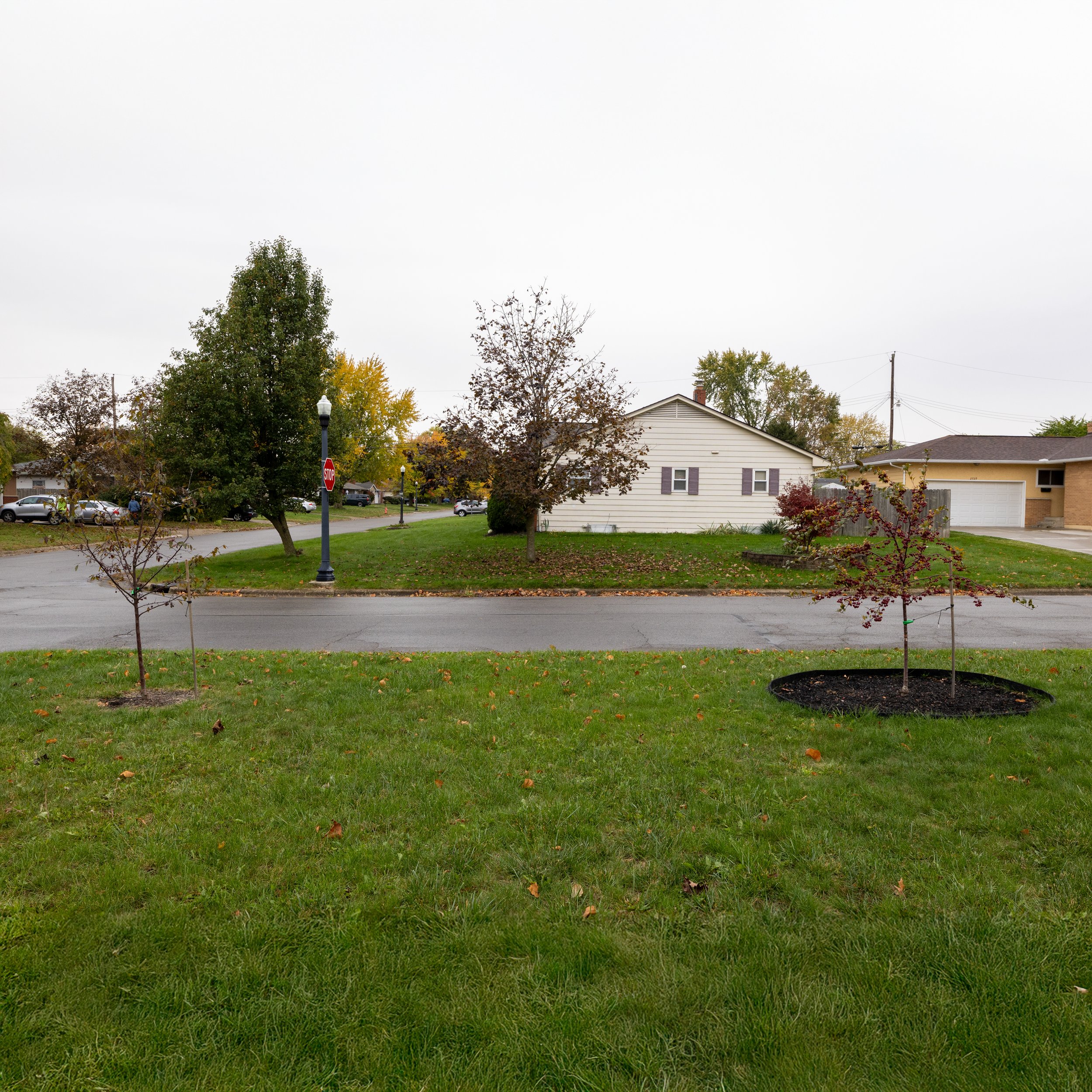
When it comes to tree diseases, one example is rhizosphaera needle cast: a terminal fungal disease harmful to the Colorado blue spruce (Picea pungens) when left untreated. It results in discolored needles, premature needle drop, and eventual death of the tree. If left standing, the disease can spread to nearby Colorado blue spruce trees. In the case of certain pests and diseases, tree removal is sometimes the best option to minimize spread.
Safety Hazard
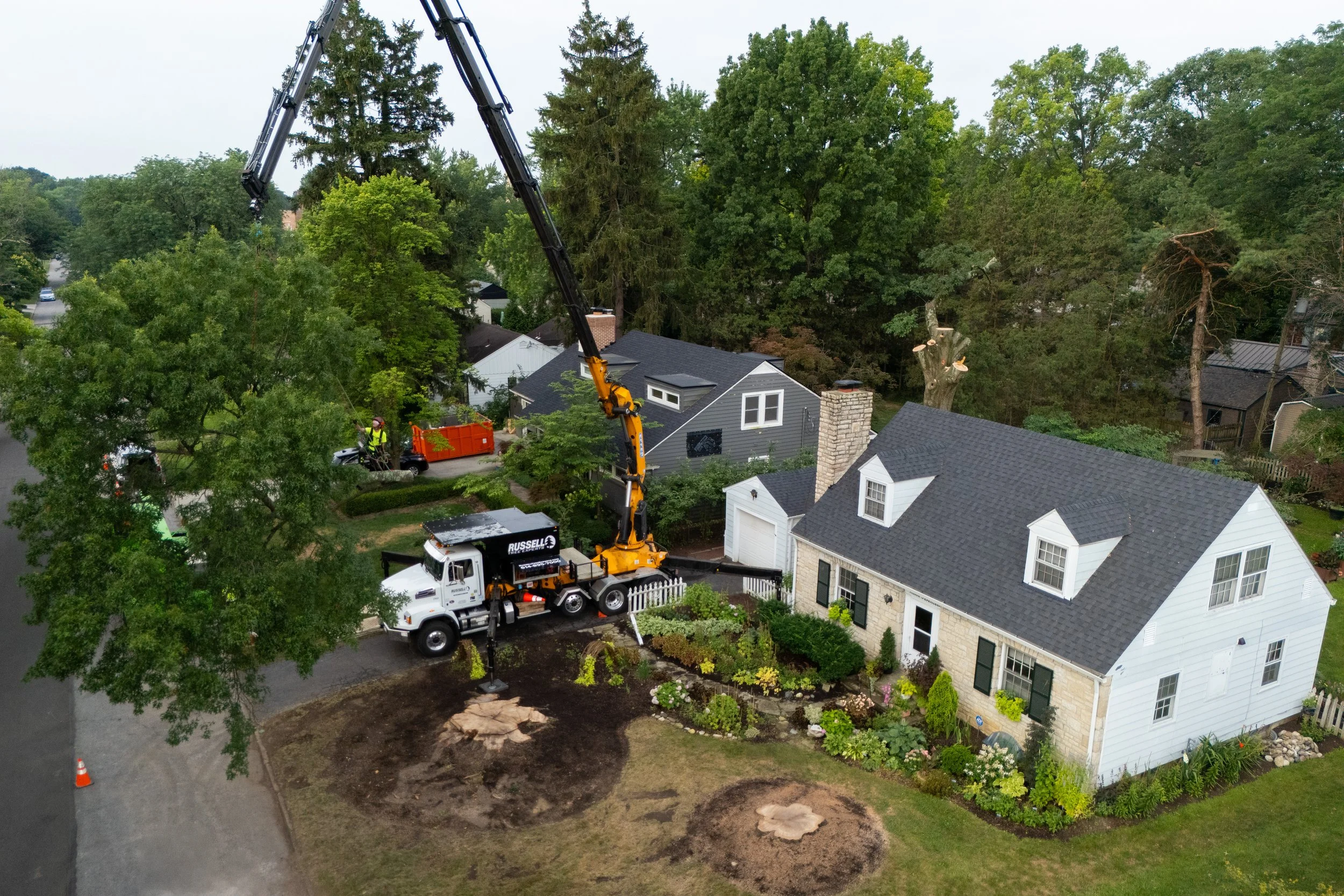
Sometimes trees are unsafe. Decay, poor branching habits, or strong storm events can lead to large limbs breaking off from a tree. Depending on the location, this might mean limbs falling onto houses, cars, sidewalks, or people. If this happens, there are various options to reduce a tree’s hazardous potential such as tree pruning, cabling, bracing, or removal.
©Russell Tree Experts
Removing a tree that already had limbs fail and is at risk of falling on the house
Property Damage
Similarly to trees being a safety hazard, trees can also result in property damage. Oftentimes, we encounter trees that have damaged underground utilities such as drainage lines, septic tanks, and foundations. They can also damage aboveground items like driveways and sidewalks. This issue is a little tricky because sometimes you can work around the tree and relocate these items. However, a common outcome is that the tree was simply planted in the wrong place and will continue to cause problems that can lead to increased costs, headaches, or future safety hazards. This is an instance in which removal could be an option.

©Russell Tree Experts
Removing trees to help with the expansion of Hugh White Honda in Athens, OH
Landscape Development
One reason why we’re hired to remove a tree is to make way for construction like a new building or road. Sometimes we’re hired early enough in the planning phase to contribute to 3 different tree care needs. Firstly, we can determine the fewest number of trees that must be removed to achieve the construction goal. Secondly, we can create a pre-construction tree preservation plan to protect certain trees during construction. Lastly, we can recommend locations and species for new trees to be planted once construction is all said and done.
Public Utilities
To minimize interruptions to a community, another reason we’re hired to remove a tree is because it poses a risk to public utilities such as powerlines, water lines, and gas lines. Damage or interference to public utilities can be very stressful and costly. Sometimes it can be a better alternative to remove a hazardous tree and plant a new one in a different, less intrusive location.


Replacement
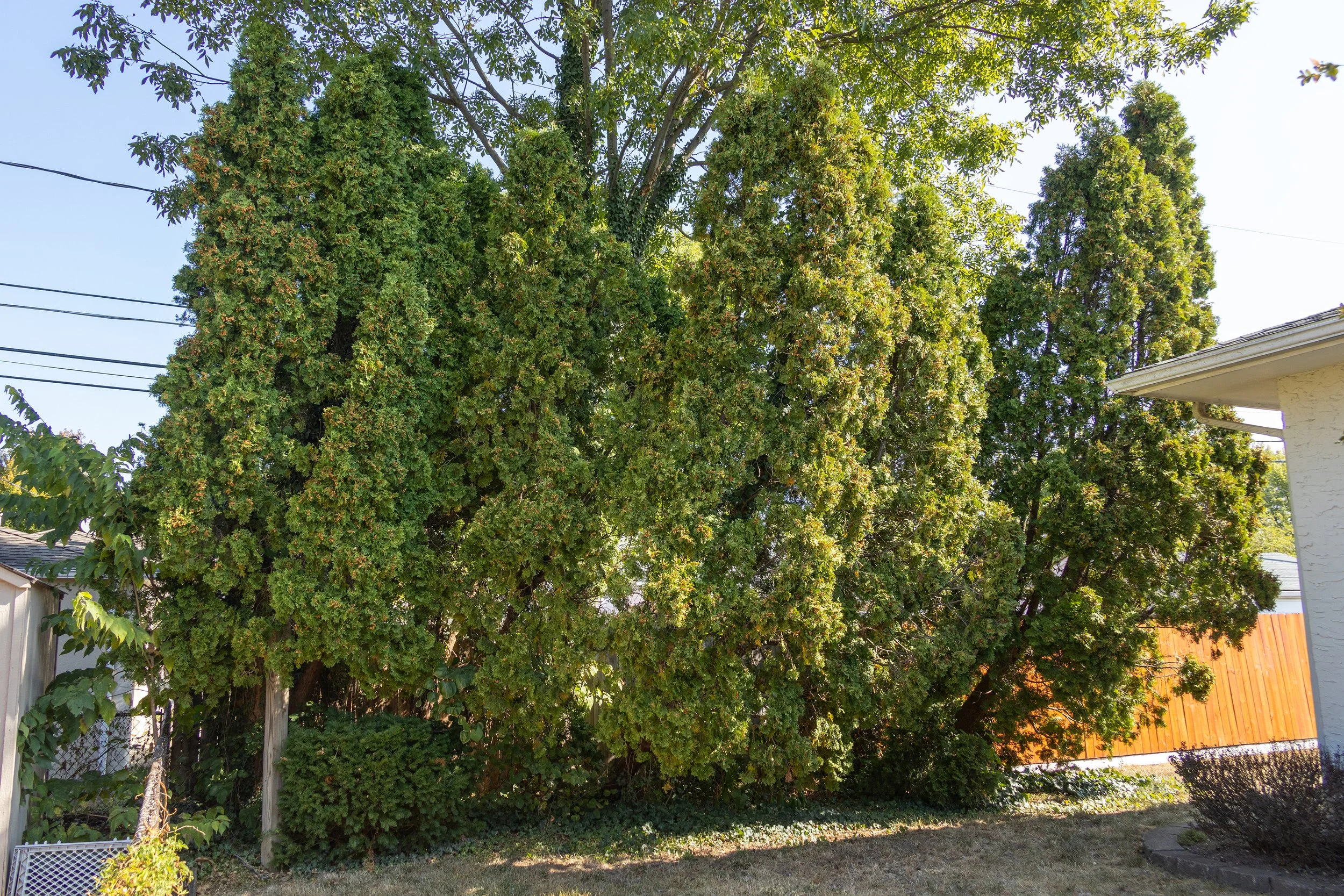
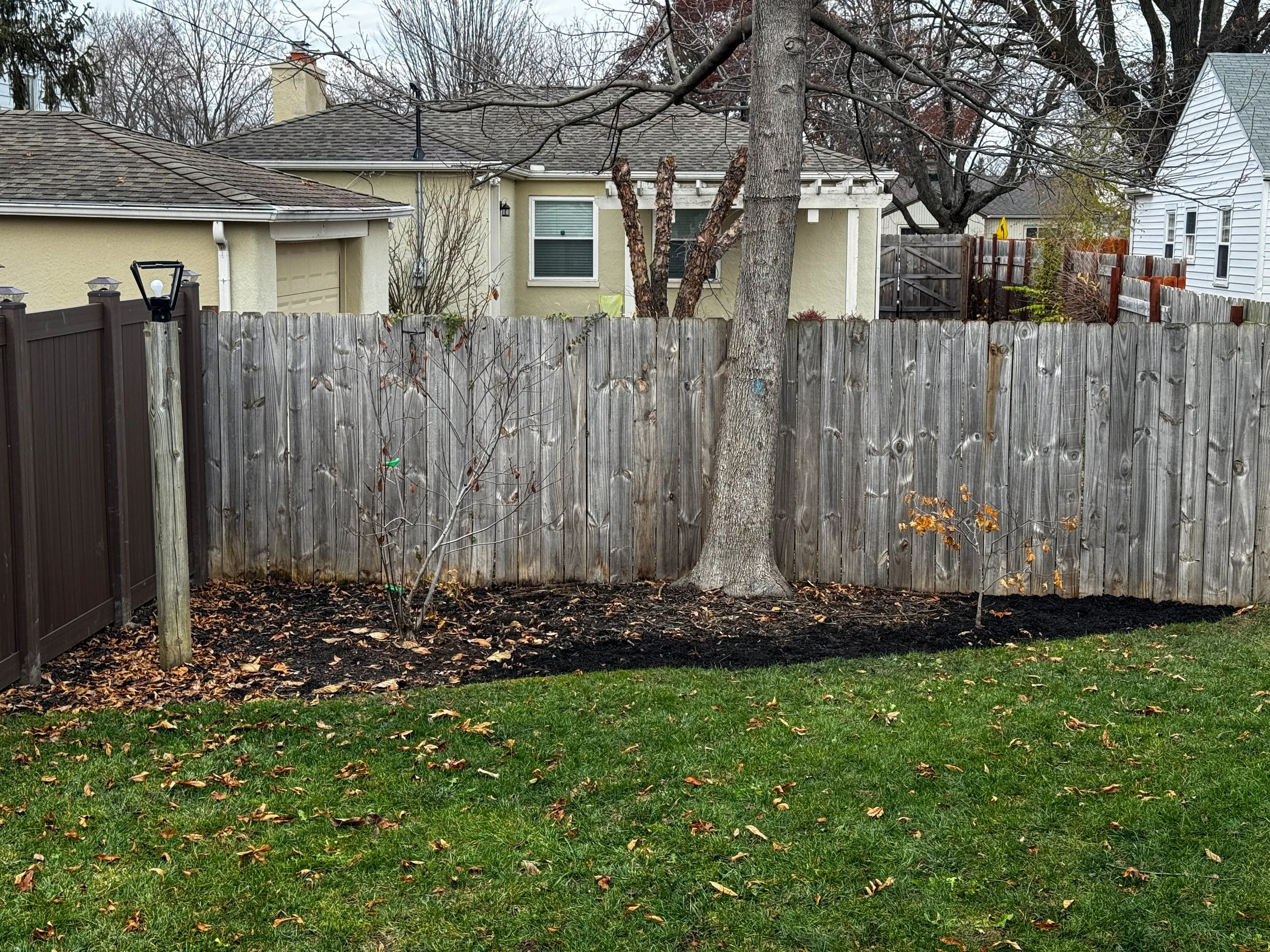
An owner or manager of a tree might want it to be removed to make way for a new replacement tree that will be better for the environment or more suitable for its planting site. If the previous tree was causing property damage, was invasive, or was contributing to the spread of a disease or pest, this is a great opportunity to plant a new tree with more desirable characteristics such as a particular height, width, fall or spring color, etc.
Real Estate Value
A common trope you’ll see in real estate listings is “This house has beautiful curb appeal!” Removing a decayed, hazardous, or unappealing tree can increase a home’s curb appeal, buyer interest level, and real estate value. Keeping that tree can do the opposite and open an invitation for a pre-purchase landscape inspection where the buyer might request a discount to address the tree issues, result in a smaller buyer pool, or take longer to complete the sale.
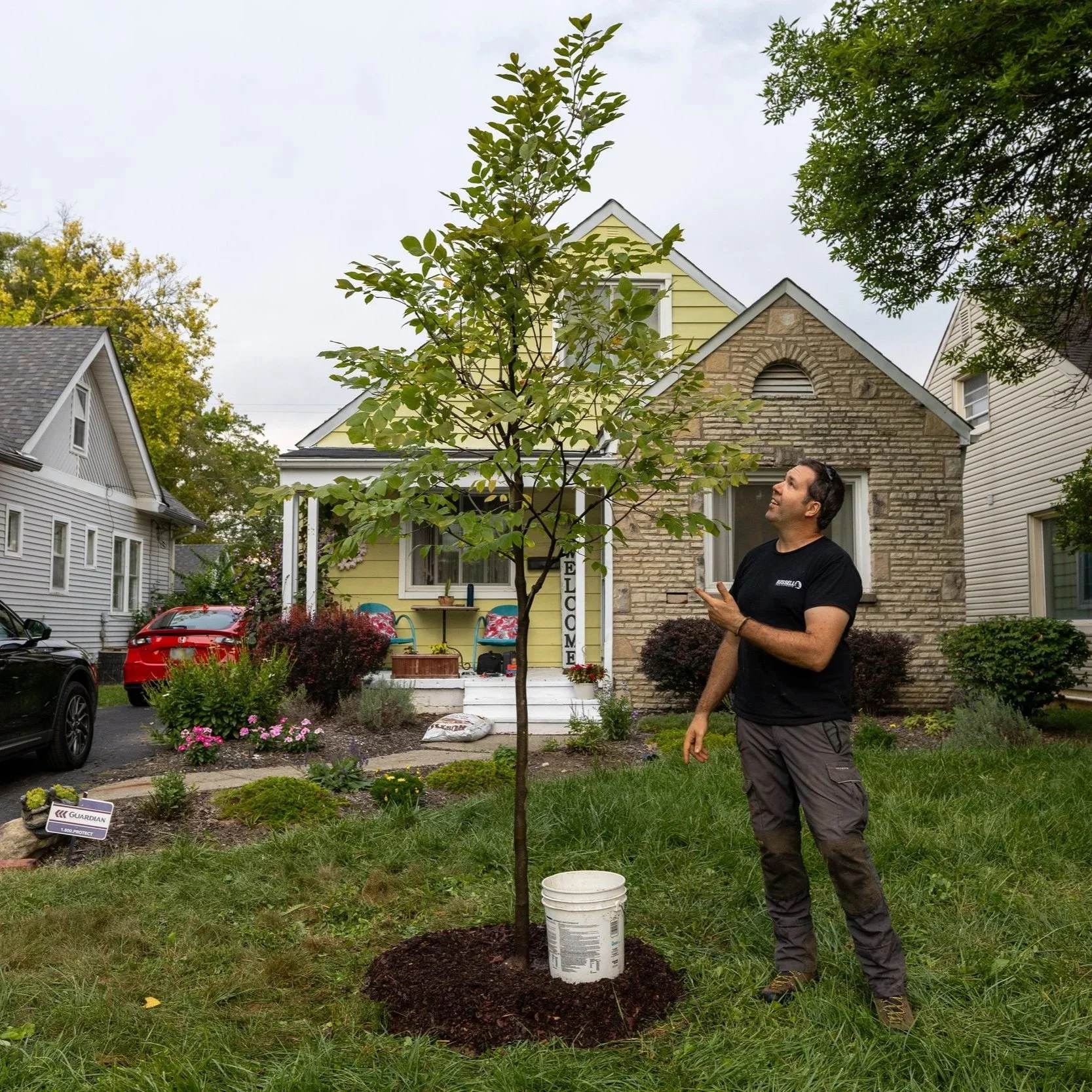
©Russell Tree Experts Planting a tree that should have less less maintenance down the line
Cost Savings
In some cases, a decayed, disease-ridden, or pest-infested tree can be treated with methods such as tree pruning and plant healthcare. However, the time and money spent might outweigh the cost to remove the tree or outweigh the cost of planting a different, healthier tree that will require less maintenance and money.
As much as we’re tree loving arborists who don’t want to remove trees, we also recognize the benefits and the situations when it is the best option to solve a particular problem or issue. Hopefully the reasons above provide insight into the tough and tricky situations we often face when having to recommend a tree to be removed. When we visit your property to inspect a particular tree, we work with you and your desired outcome to figure out what type of tree care is best. For a free tree work quote by 1 of our 25+ ISA Certified Arborists®, visit RussellTreeExperts.com/Quote or speak to our friendly, local office at (614) 895-7000!
ADDITIONAL ARBOR ED™ ARTICLES!



Enrique Arayata I Media Production Manager, Russell Tree Experts
Enrique is an ISA Certified Arborist® and an FAA Certified Remote Pilot. He joined the team in 2019. In his free time, he enjoys working out, hanging out with his family and girlfriend, videography, photography, cars, and cooking. Enrique has a BA in moving image production with a double minor in film studies and studio art specializing in photography from The Ohio State University, and an AA in web graphic design from DeVry University. His favorite tree is the Kwanzan cherry tree.