
TREE FERTILIZATION
Russell Tree Experts offers fertilization services for trees and woody plants to help maintain tree health and vigor and to improve the condition of the soil. Without the proper nutrients, a tree’s health and growth can be stunted and appearances can start to look unsightly. Symptoms of nutrient deficiency may include yellowing chlorotic leaves, brown necrotic leaves, wilted leaves, and leaf scorch. Some nutrient deficiencies can resemble symptoms similar to pest or disease issues, which is why we often recommend a soil, leaf, or plant tissue sample to diagnose the problem and recommend the best management strategy.
At Russell Tree Experts, we fertilize trees in 5 different ways:
Liquid Deep Root Feedings
Basal Drenches
High-Pressure Air Excavation
Systemic Tree Implants
Granular Applications
Liquid deep root feedings use an irrigation lance to inject liquid fertilizer a few inches below ground level to directly target the tree’s feeder roots, minimize water runoff, and to reduce competition from turfgrass or other aboveground plants. A basal drench is performed by dissolving nutrients, typically manganese or iron, into water and slowly distributing the solution around the tree’s base. A systemic tree implant is the drilling of a series of small openings around the circumference of the tree’s trunk and then inserting nutrient cartridges into the holes, typically iron or manganese, to systemically provide nutrients to the tree. The wound is plugged by the cartridge’s head, leaving no exposed openings. Russell Tree Experts also uses an air excavation device to perform root zone invigoration or vertical mulching to break up compacted soil and add high-quality soil amendments around either the tree’s root zone or in a grid-pattern within the canopy drip line. On occasion, we perform granular fertilization by distributing tiny nutrient-filled pellets around the root zone of a tree. These pellets slowly break down over time to provide a sustained supply of nutrients for the tree.
Treatment method, frequency, and timing will depend on the condition and location of the tree. Most trees in urban areas will benefit from annual fertilization in the spring or fall.
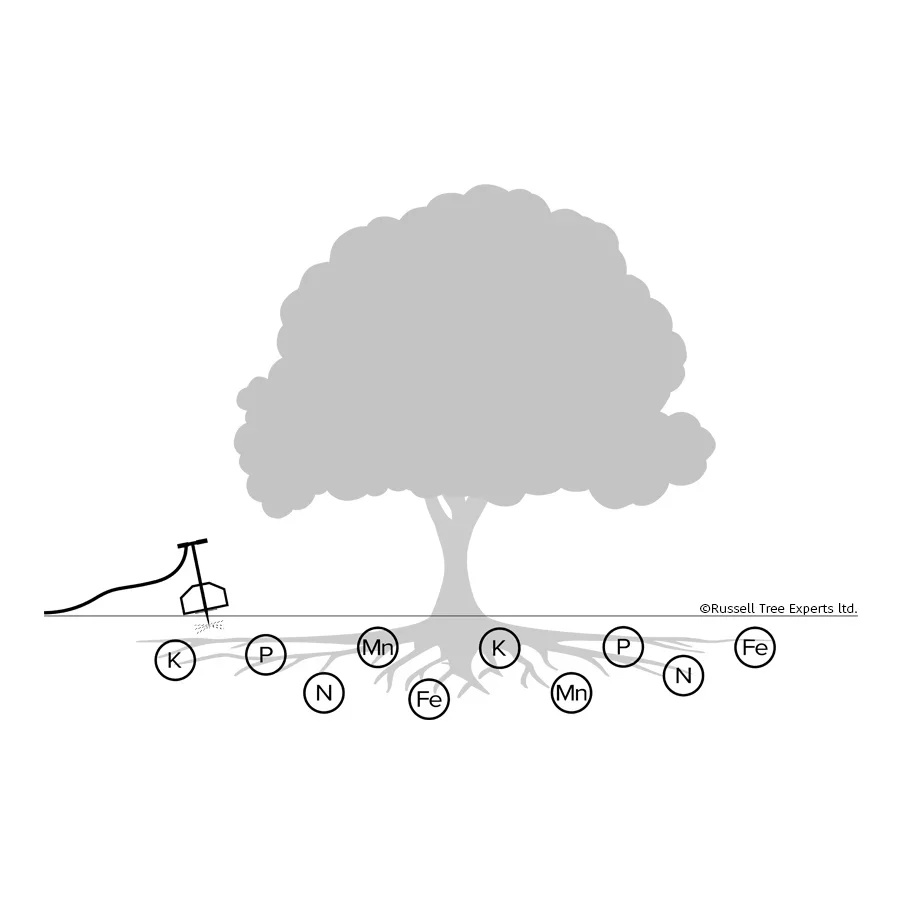
STEP 1
Fertilization
In the spring or fall the soil around the tree will be fertilized with a custom selection of the following: Nitrogen (N), Phosphorus (P), Potassium (K), Iron (Fe), Manganese (Mn), and liquid compost - all essential nutrients for healthy soil and root systems. The goal is to provide the tree with the best soil chemistry possible.
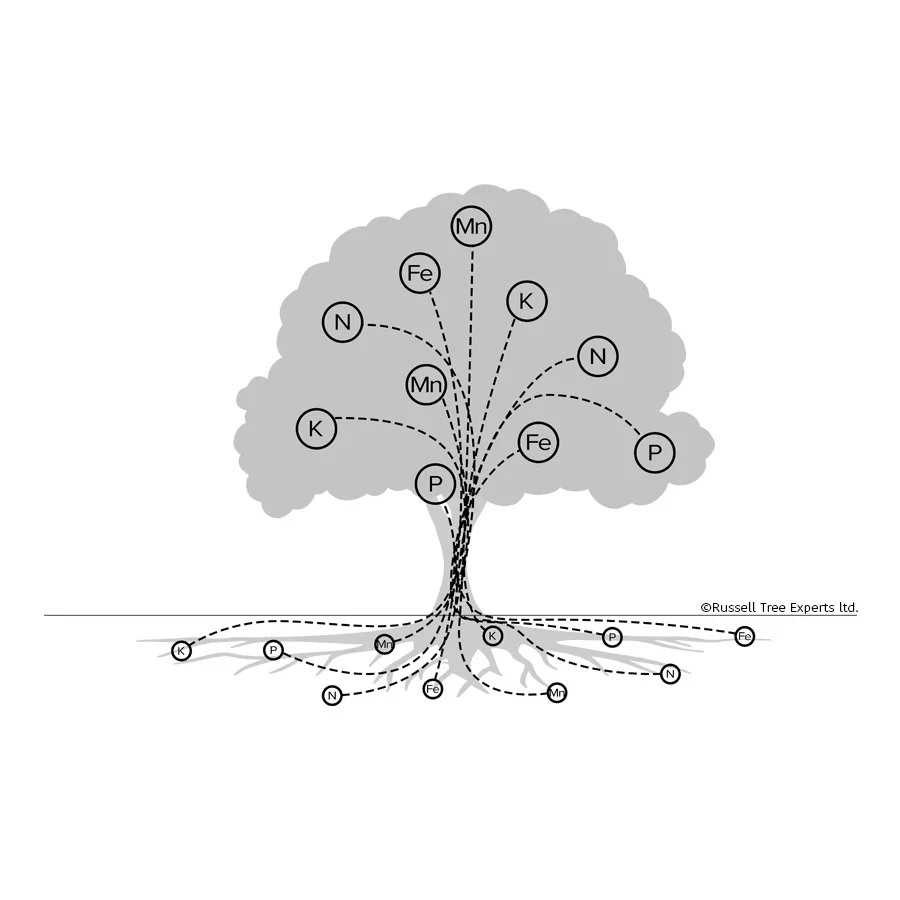
STEP 2
Metabolic Processes
The tree acquires carbon, hydrogen, and oxygen from the atmosphere and from water. Using light energy from the sun (photosynthesis), these are combined to produce glucose. Other essential nutrients are gathered from the soil. The tree uses glucose and essential nutrients for growth, reproduction, and pest/disease resistance.
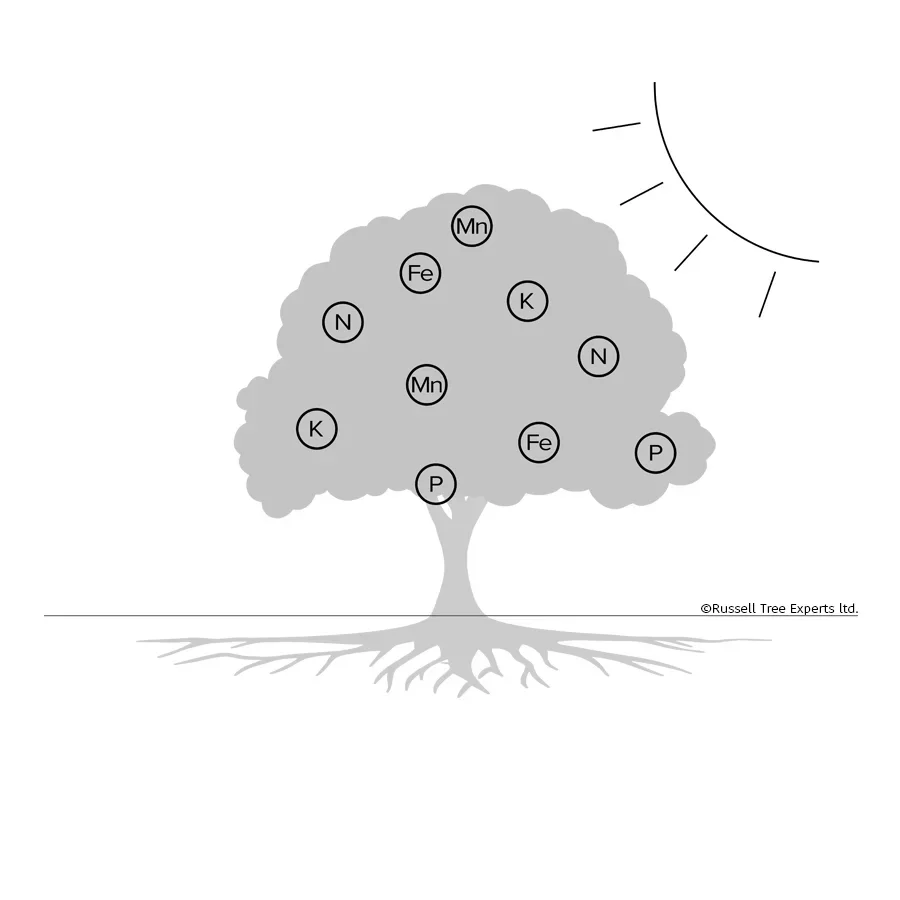
STEP 3
Evapotranspiration
Through this process the tree is able to move nutrients from the soil, up the trunk, and into the outer canopy, carrying them dissolved in water to be used as needed. This process continues throughout the growing season.
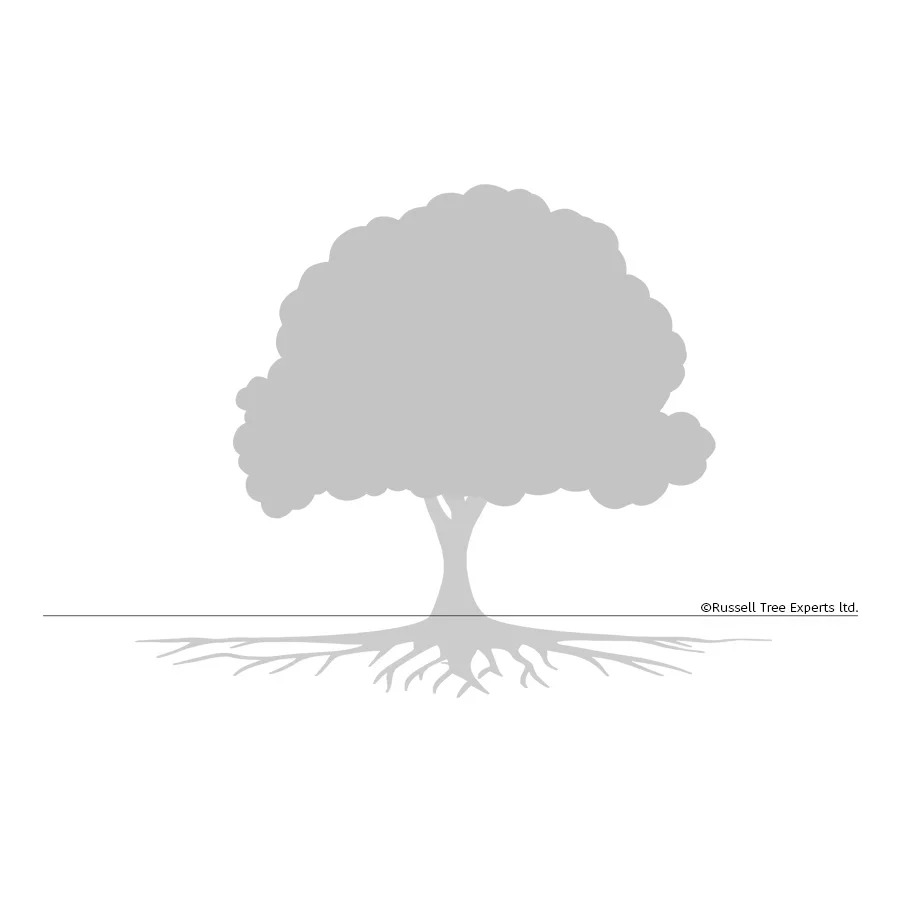
STEP 4
Reduced Nutrient Levels
In urban soils macro and micronutrients can be depleted for several reasons, limiting metabolic processes. Fertilization helps maintain nutrient availability to trees by supplying needed elements that have been used by the tree or leached out of the soil.
BACK TO STEP 1