Magnolia scale
By Mike Wilson
ISA Certified Arborist® OH-6806A
August 20, 2026
———
Magnolia trees are among the most beautiful ornamental trees in Columbus, Ohio, but they are also vulnerable to one of the state's most destructive insect pests: magnolia scale. Understanding how to identify and manage magnolia scale can help homeowners protect their landscape and keep their trees healthy for years to come. If left untreated, this soft scale insect can weaken trees, cause branch dieback, and leave your property covered in sticky honeydew and black sooty mold.
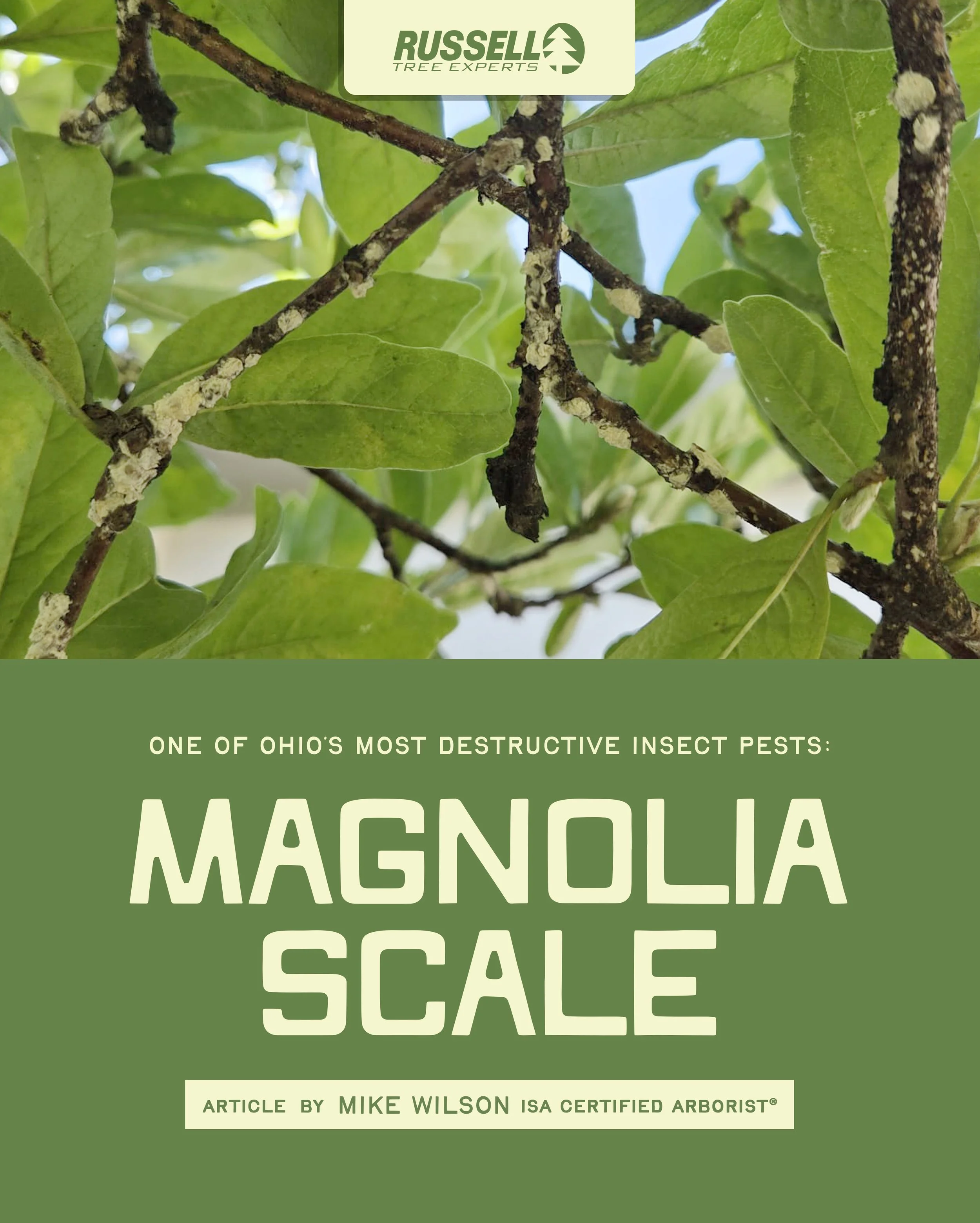
Magnolia scale (Neolecanium cornuparvum) is one of the largest soft scale insects found in Ohio. Adult females can grow to nearly one-half inch in diameter and appear as smooth tan, pinkish, or brown bumps attached to branches and twigs. During certain stages of development, they may also be covered with a white, waxy coating. Unlike many insects, magnolia scale does not chew leaves. Instead, it feeds by inserting its mouthparts into branches and twigs and extracting sap directly from the tree. Saucer, Star, and Lily magnolias are among the most commonly affected species, although magnolia scale can infest nearly any magnolia species or cultivar found in residential landscapes.
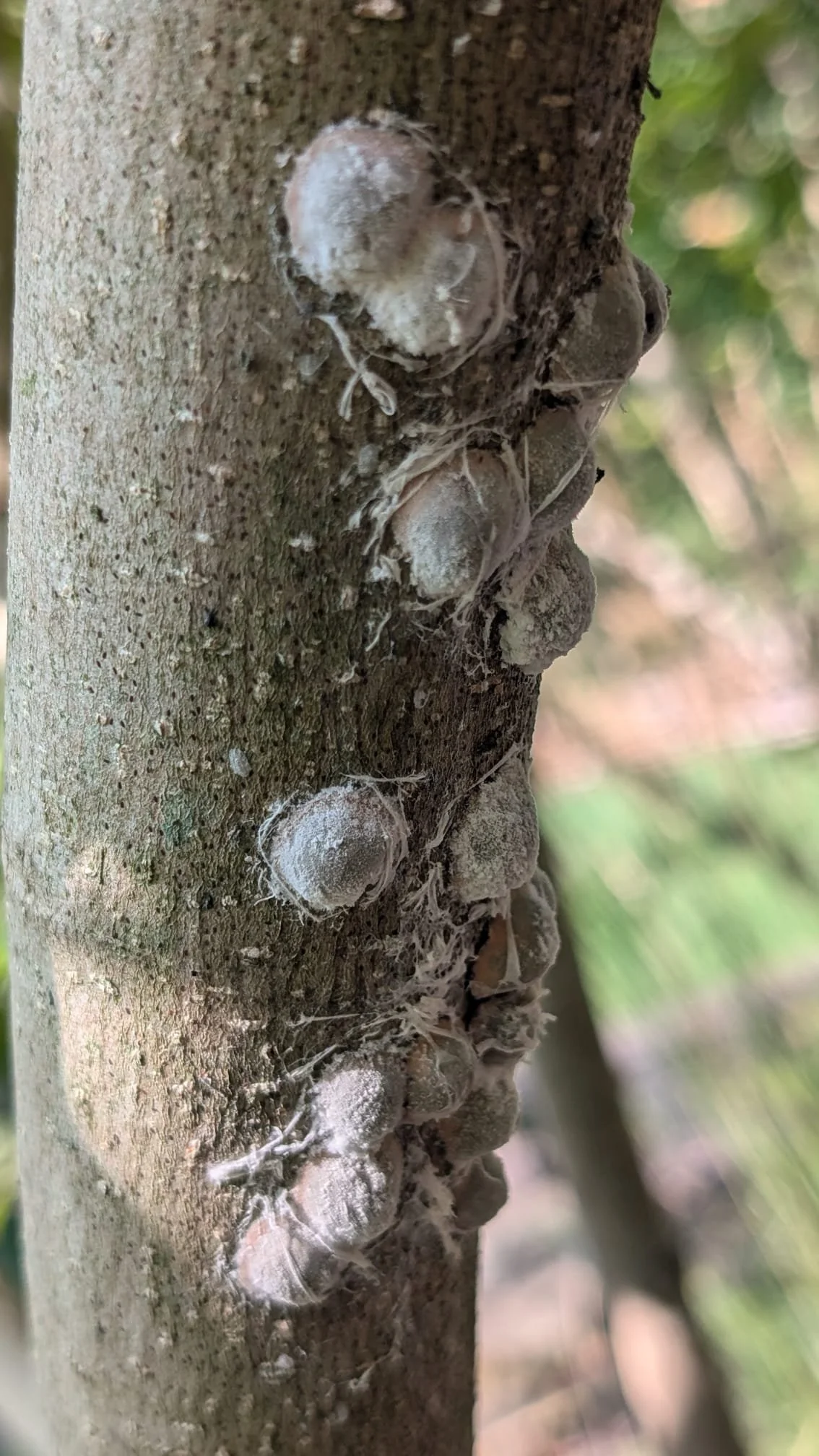
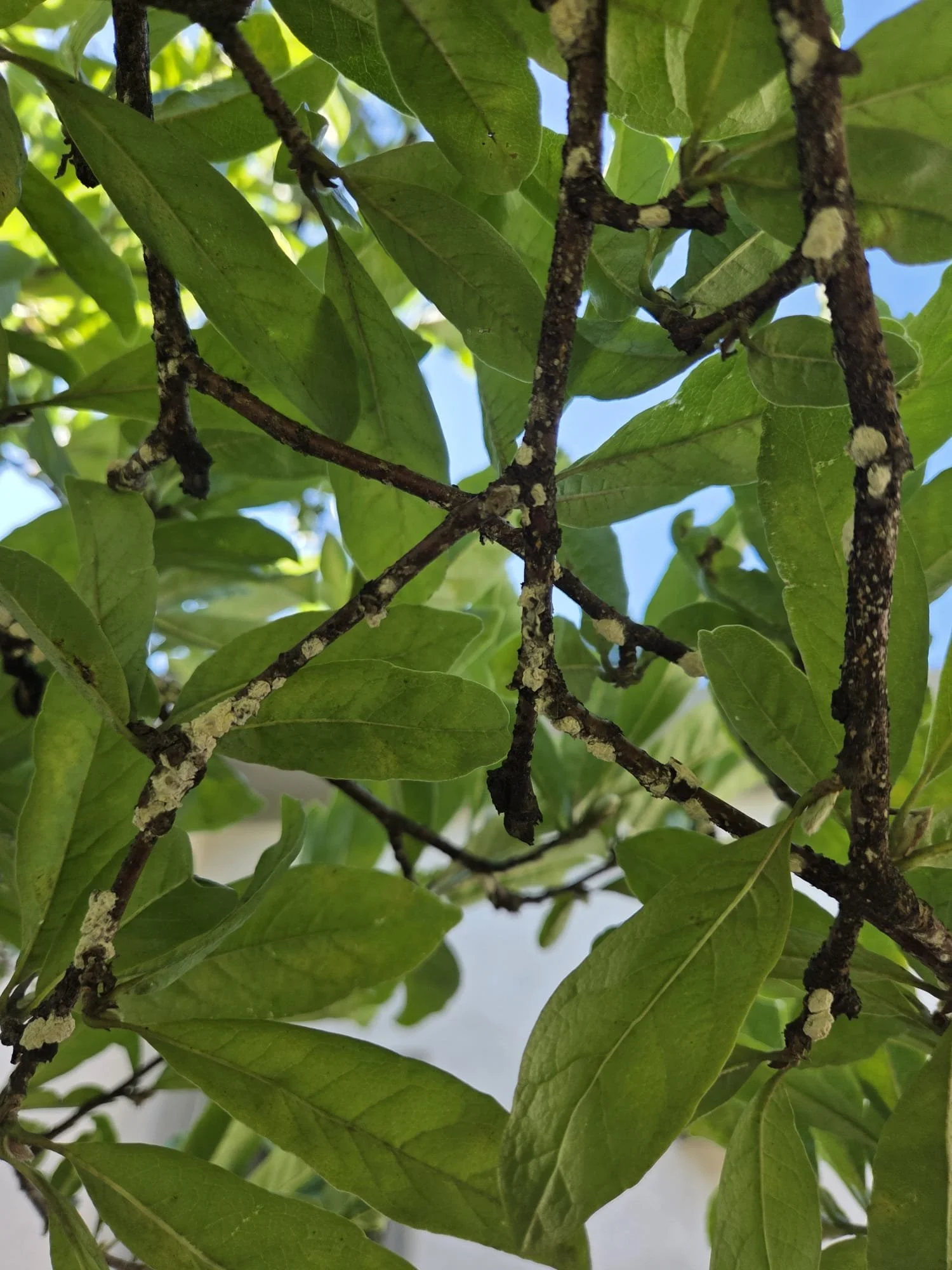
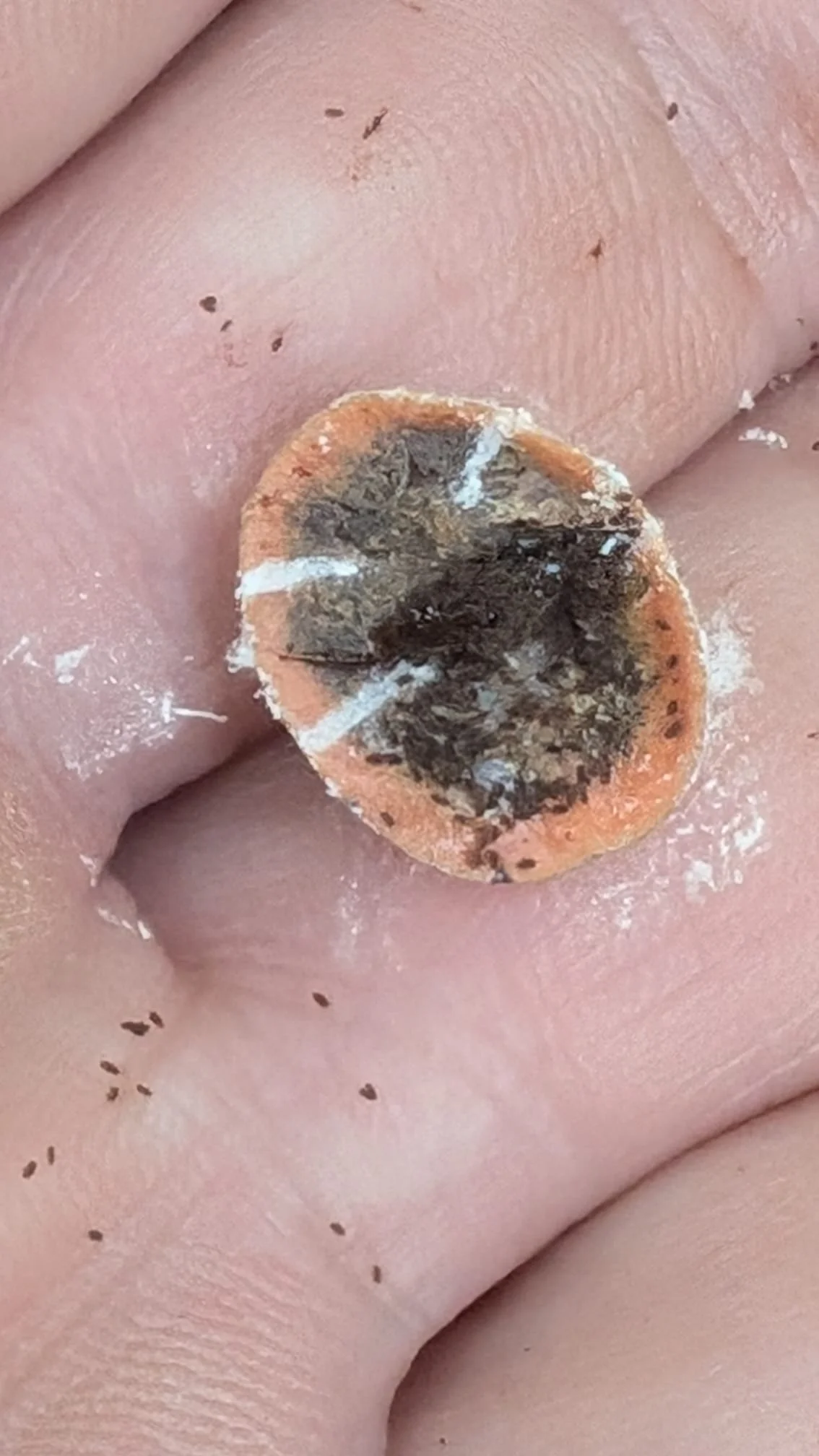
[Images above were taken by ISA Certified Arborist® Krista Harris of Russell Tree Experts on August 19th, 2026]
While the insects themselves can be difficult to spot, the damage they cause is often much easier to recognize. Many homeowners first notice the symptoms before they ever see the insects. Sticky honeydew may accumulate on leaves, patio furniture, decks, vehicles, and other nearby surfaces. As honeydew builds up on foliage and branches, it promotes the growth of a black fungus known as sooty mold. Infested trees may also develop noticeable tan, brown, or white bumps on smaller twigs and branch wounds. Honeydew often attracts bees, wasps, and other insects. As infestations persist, trees may exhibit additional signs of stress, including yellowing leaves, premature leaf drop, thinning canopies, and branch dieback.
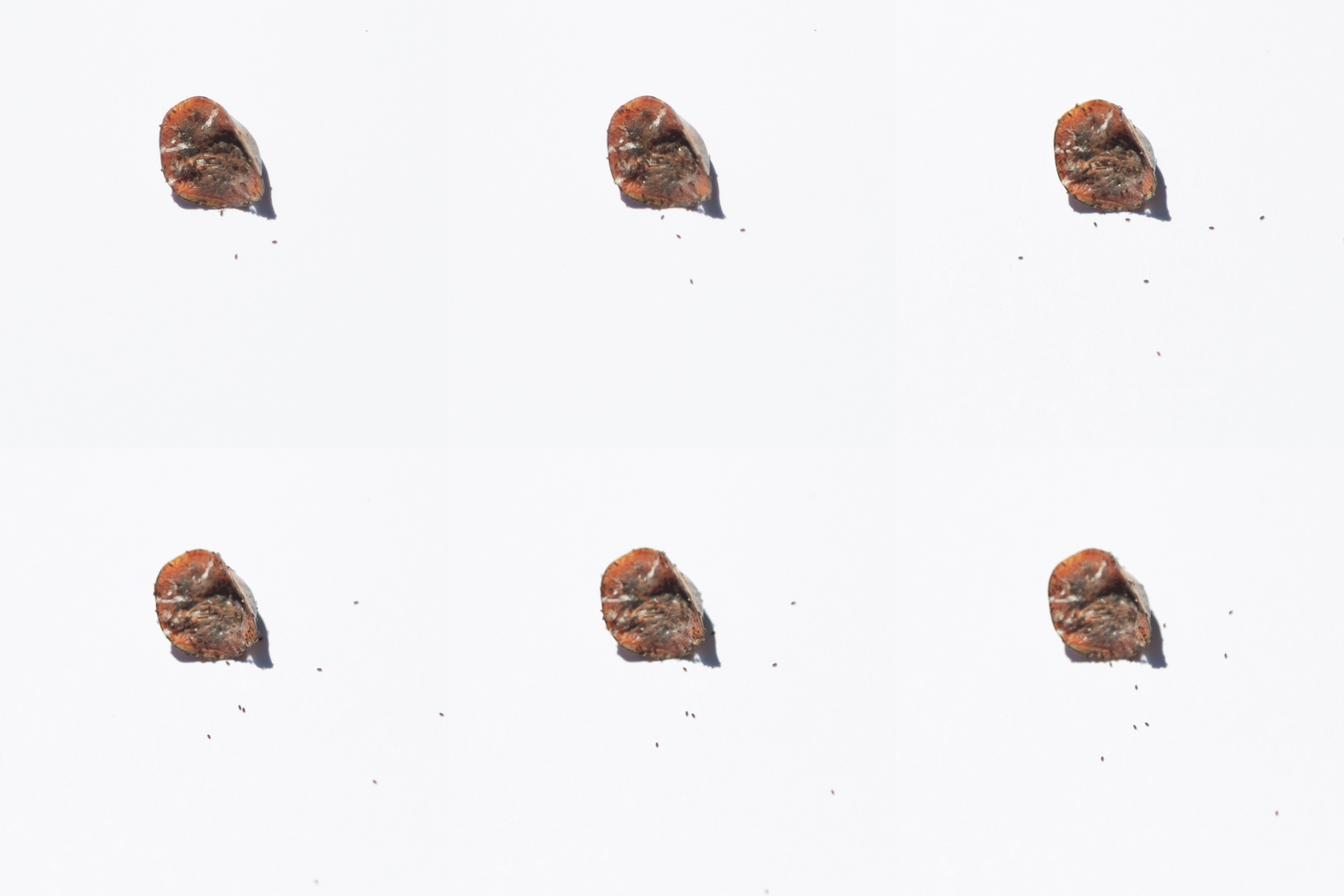
©Russell Tree Experts
If you notice sticky leaves, black sooty mold, or unusual bumps on your magnolia tree, don't wait until the damage becomes severe. Early intervention is key to preserving the beauty and health of your landscape. Soil-applied systemic treatments are often most effective when applied earlier in the growing season. Contact insecticide applications are typically timed to target newly emerged crawlers, which usually appear from late August through September in Ohio.
Regular inspections by one of our ISA Certified Arborists® can identify magnolia scale before significant damage occurs and provide the proactive care your trees need not only to survive, but to thrive for years to come.