
Tree Spotlight: The Ohio Buckeye
By Chris Gill
ISA Certified Arborist® OH-6416A
August 27, 2026
— — —
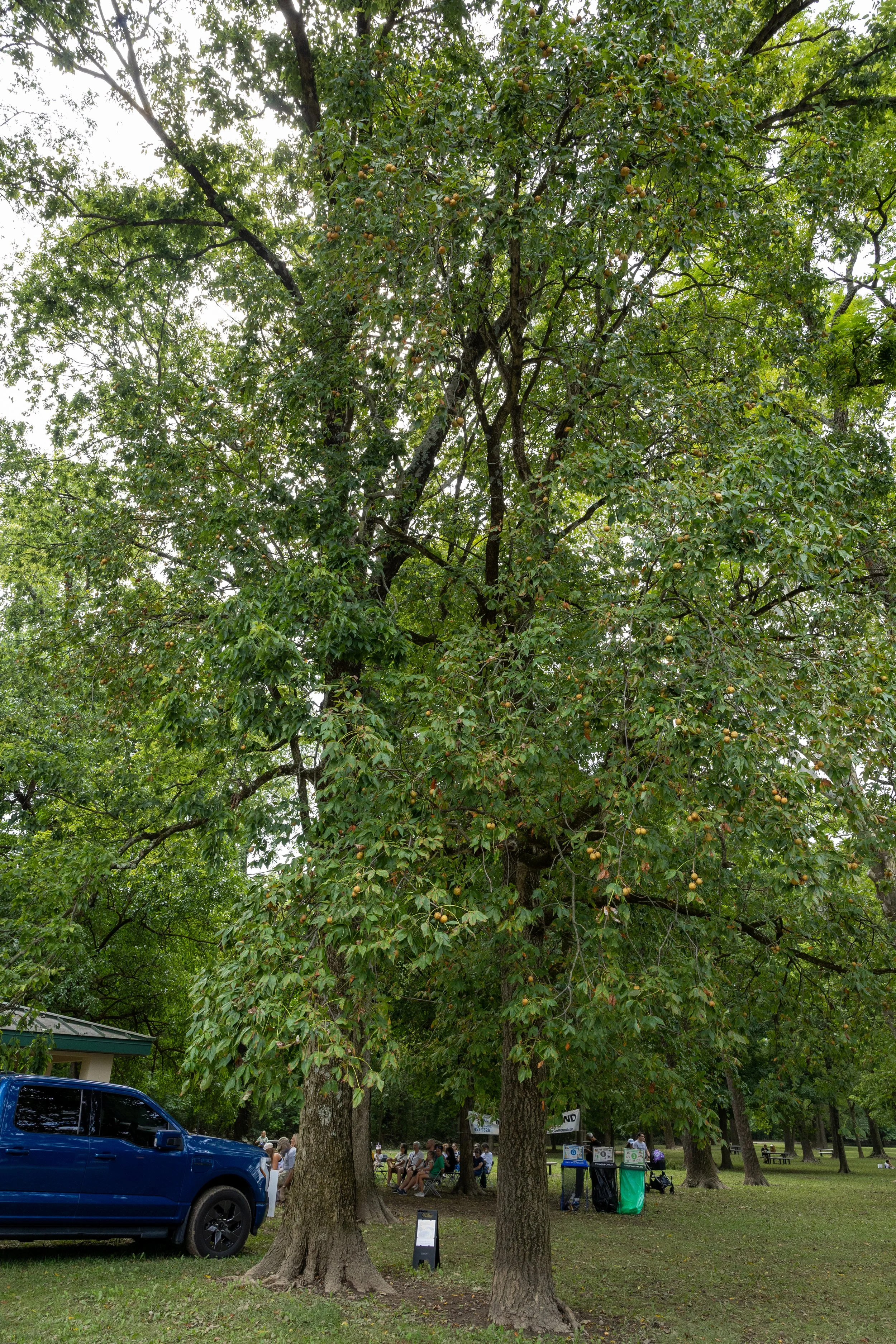
The Ohio buckeye (Aesculus glabra) is one of the most recognizable trees in the Midwest. It is an Ohio native but also grows naturally throughout the Midwest and as far south as Texas. Ohio Buckeye is incredibly hardy and urban-tolerant and is considered a medium-sized tree, typically reaching heights of 30 to 40 feet, although exceptional trees can grow considerably taller under favorable conditions, and I’ve seen a number of specimens much larger over the years.
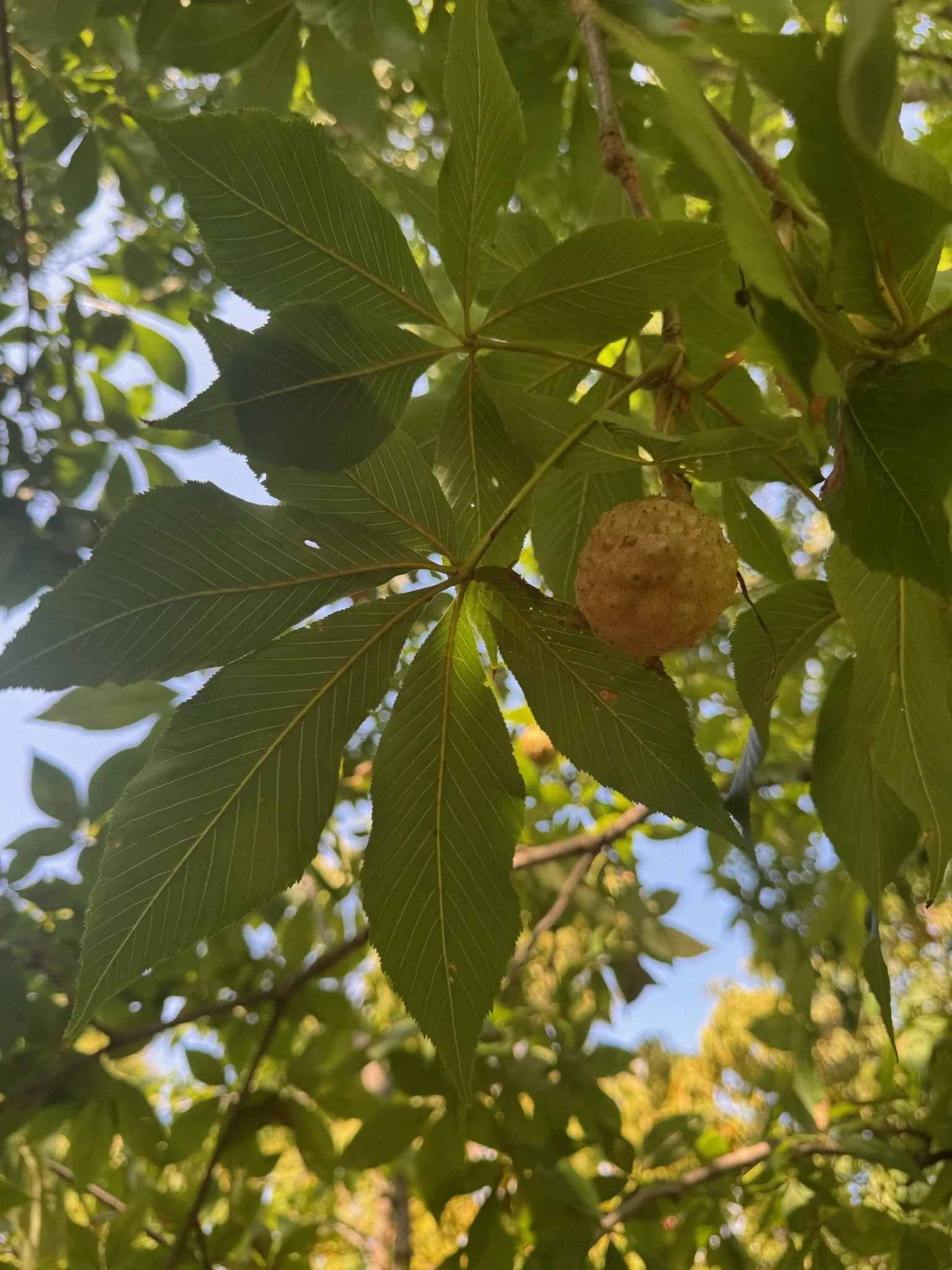
Ohio Buckeye trees form a dense, rounded crown with low-branching limbs that often sweep outward before curving upward at the tips. The trees, however, are most easily identified by their leaves. They are opposite and palmately compound, usually with five (sometimes seven) leaflets radiating from a central point like the fingers of a hand. Each leaflet is elliptical to oblong, finely toothed, and 3-6 inches long. The foliage emerges bright green in spring, deepens to a rich green in summer, and often turns yellow, orange, or reddish brown in late Summer/Fall before dropping early. When crushed, the leaves and twigs release an unpleasant odor, which contributes to one of the tree’s less flattering common names, the stinking buckeye.
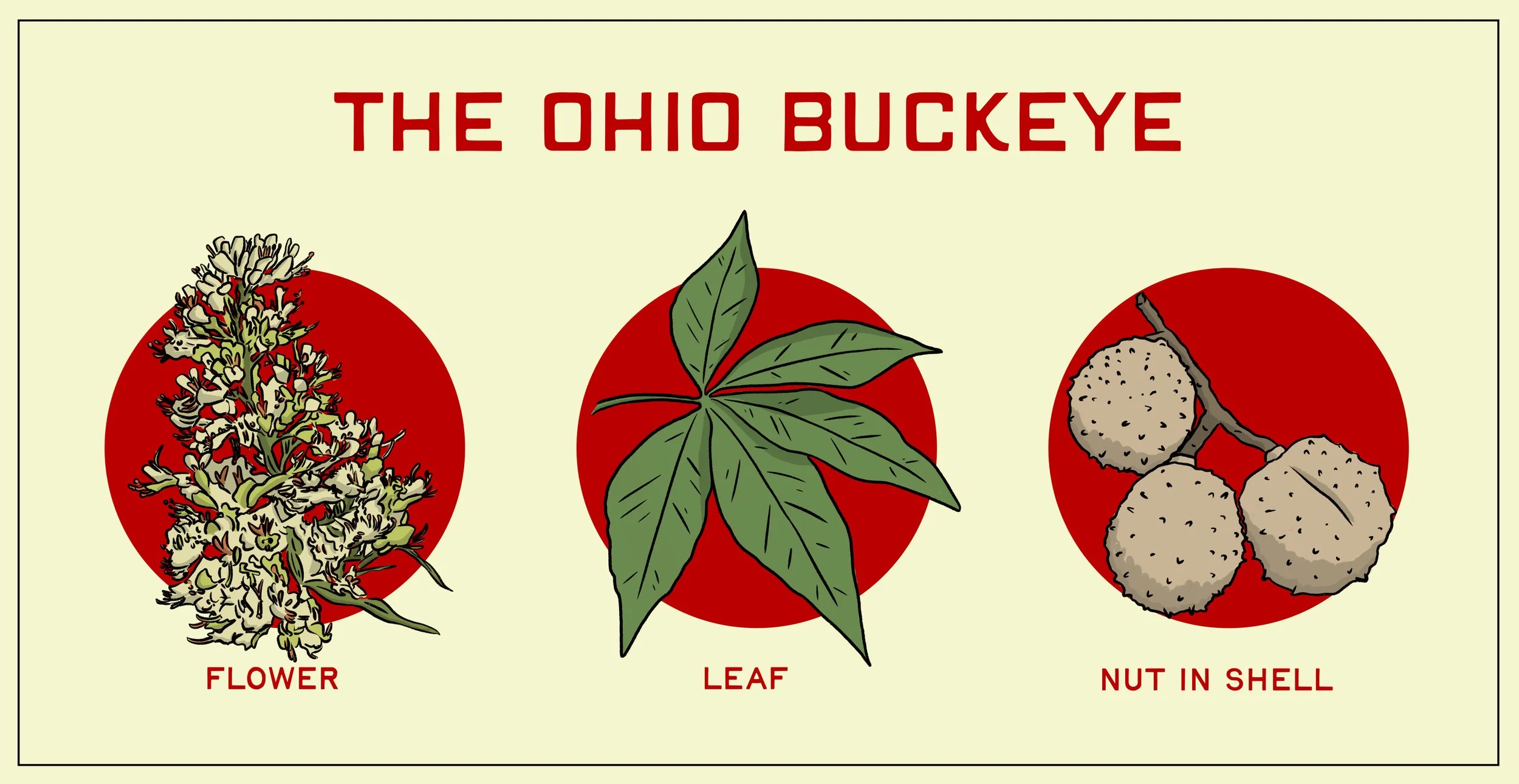
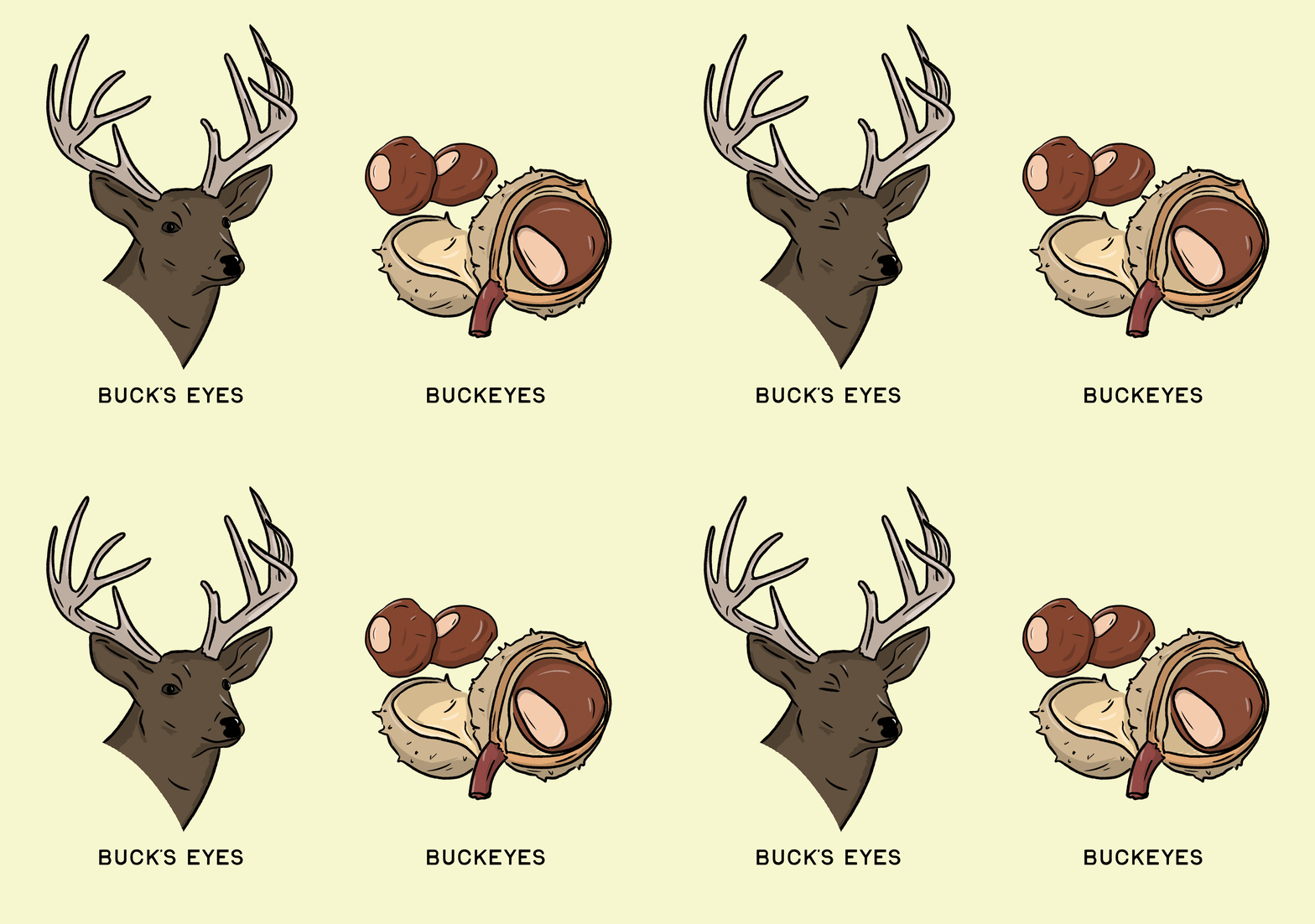
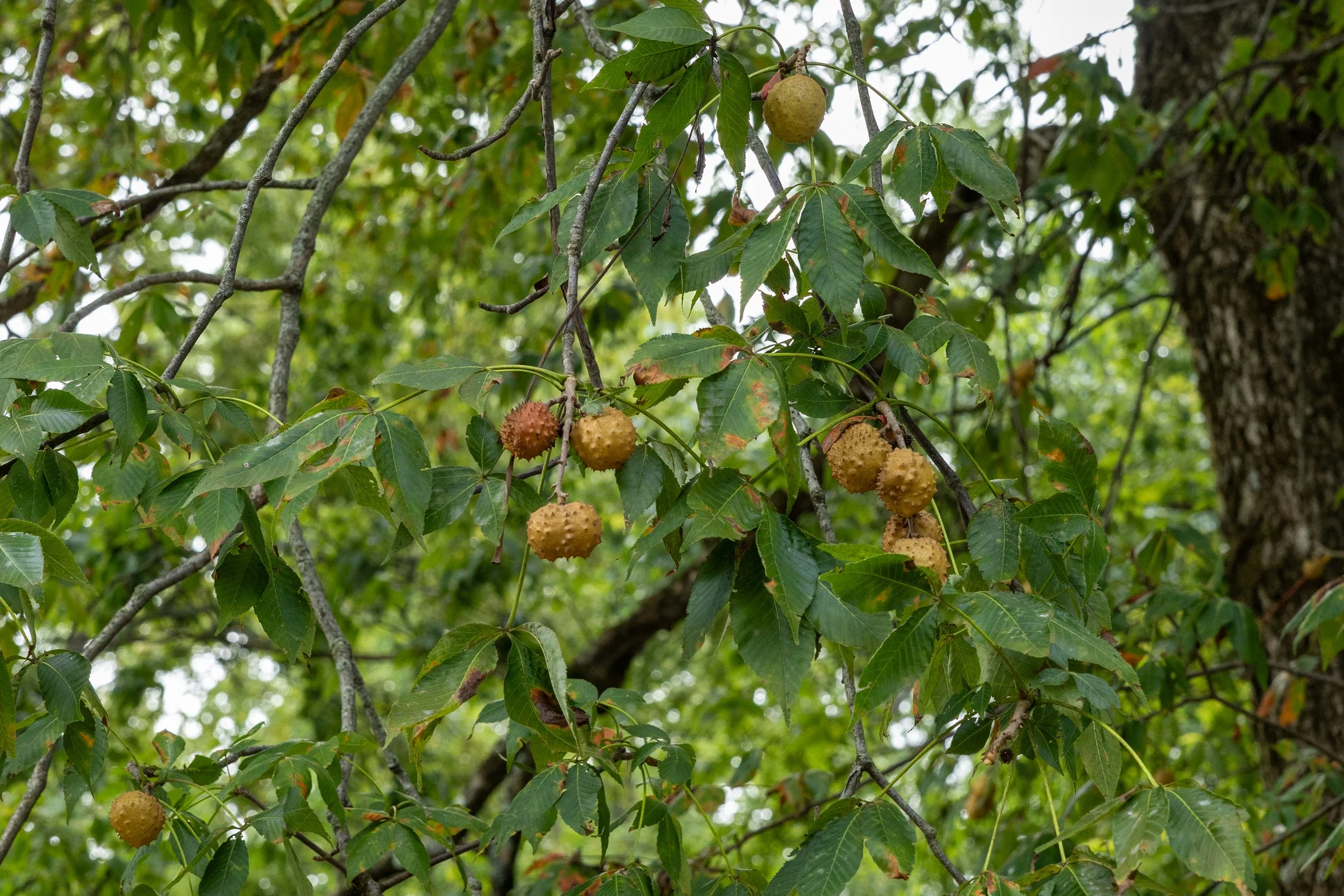
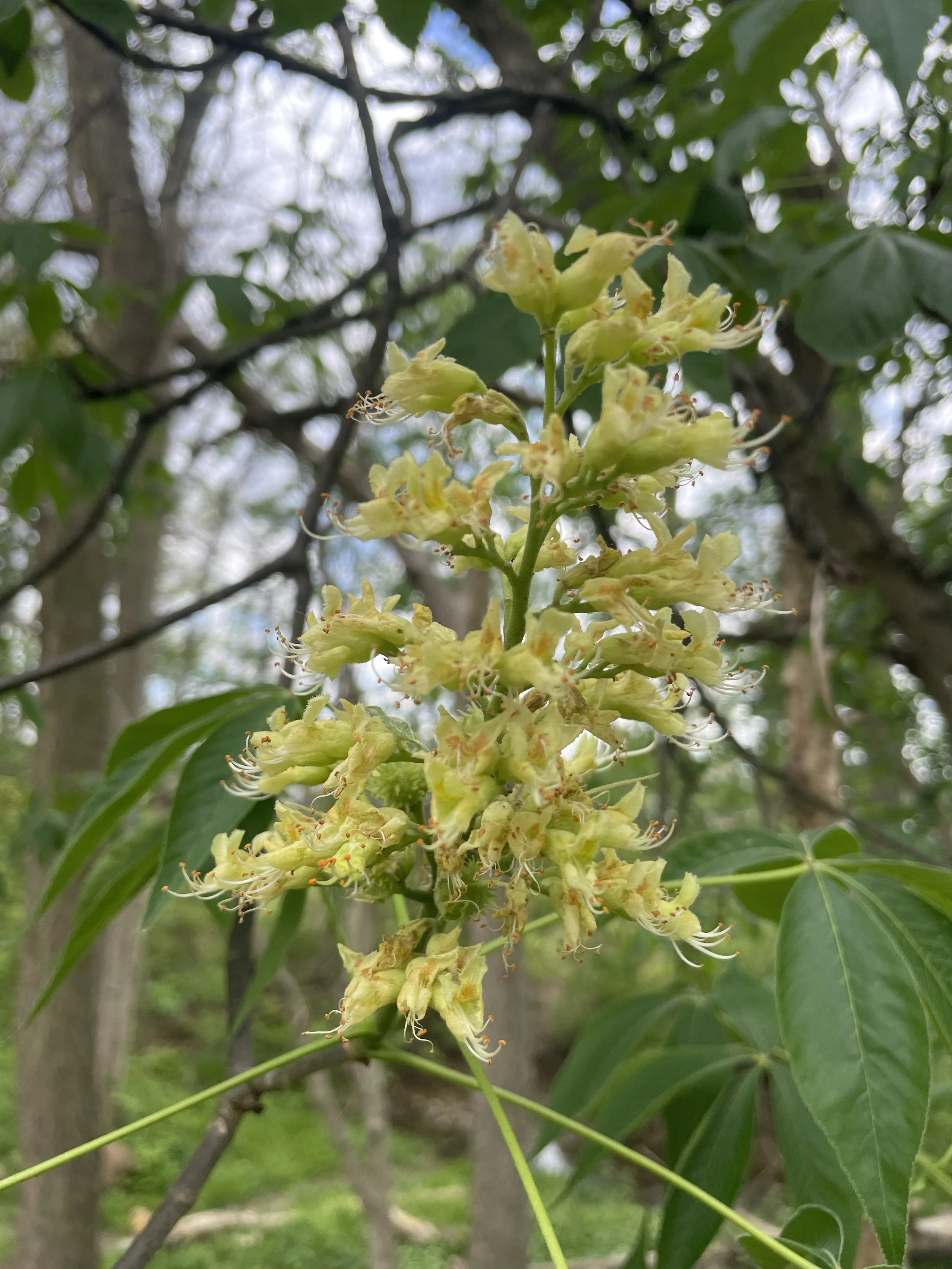
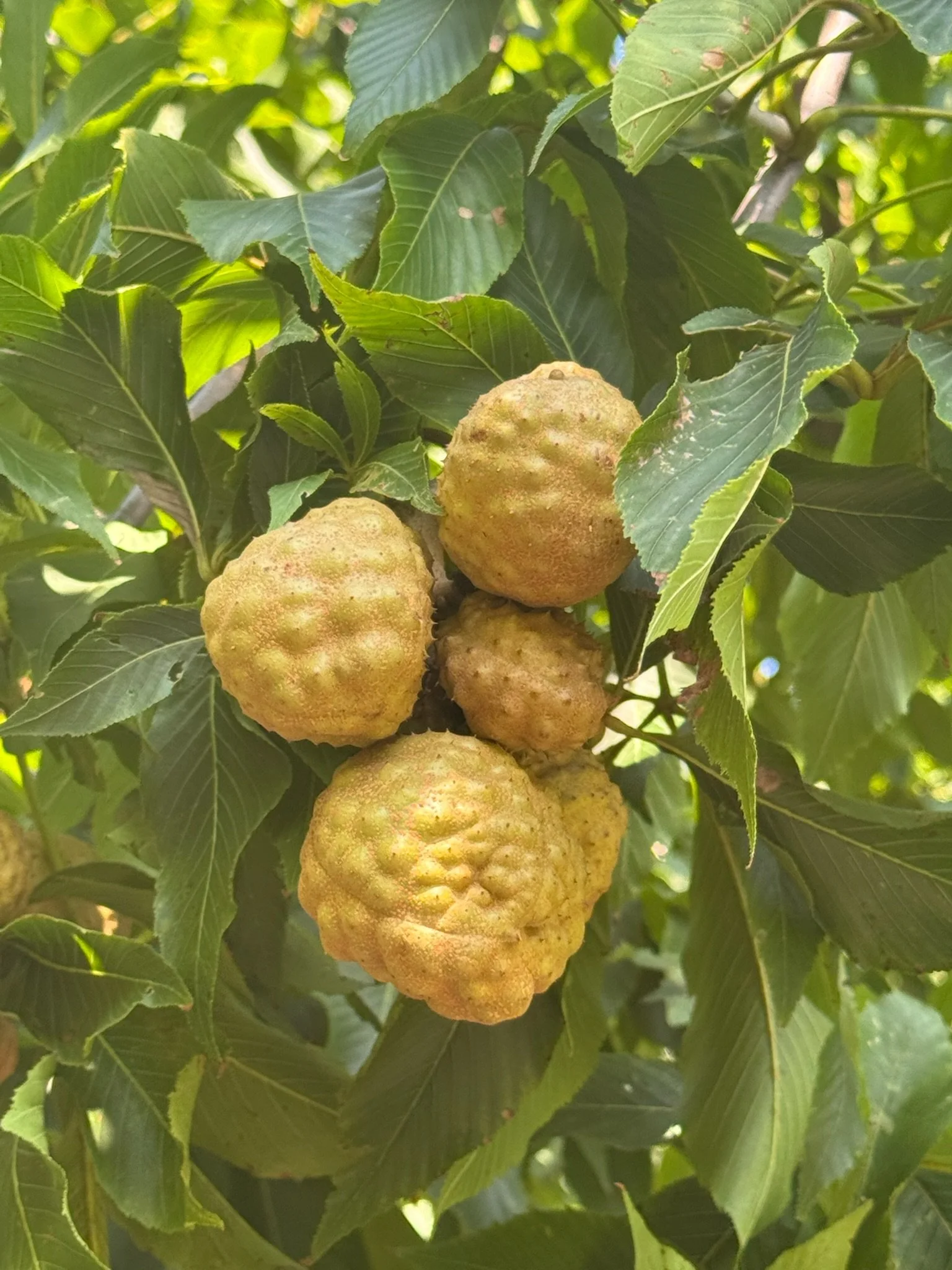
In mid to late spring, the Ohio buckeye produces upright clusters of greenish yellow flowers. These panicles, typically several inches long, contain small four petaled blossoms with prominent stamens and attract a variety of pollinators. By late summer and fall, the tree develops its most familiar feature: rounded, prickly capsules, about 1-2 inches across. When these husks split open, they reveal one to three smooth, glossy, dark brown seeds, each marked by a pale circular scar that resembles the eye of a deer giving rise to the name “buckeye.”
On a side note, several parts of the tree contain toxic compounds, particularly the seeds, bark, young shoots, and foliage. The seeds are poisonous to humans and livestock if eaten raw, although some wildlife, including squirrels, can consume them without harm.
The wood of the Ohio buckeye is soft, light, and close-grained. Historically, it has been used for carving, boxes, furniture parts, woodenware, artificial limbs, and occasionally pulp for paper. Its softness makes it suitable for items that do not require high structural strength.
In the landscape, the tree is often planted as an ornamental for its shade, spring flowers, and fall color, though its large, prickly fruit and susceptibility to leaf blotch, a cosmetic fungal disease, limit its use as a street tree. Ohio Buckeye is best suited to naturalized or informal settings like woodland edges, rain gardens, larger yards, or park-like areas where its seasonal character can be appreciated without concern for fallen fruit.
Beyond its botanical and ecological characteristics, the Ohio buckeye holds a deep place in the cultural identity of the state. Ohio adopted the buckeye as its official state tree in 1953. And the Ohio State University officially adopted “Buckeyes” as its athletic nickname in 1950, and the symbol remains central to the state’s identity today. Next to Ohio Stadium is Buckeye Grove, which features various buckeye trees as a way to honor Ohio State’s All-American athletes throughout the years.


That same nut also inspired one of Ohio’s most beloved confections. Buckeye candy consists of a peanut-butter fudge ball partially dipped in chocolate, leaving a circle of peanut butter visible at the top closely resembling the appearance of the actual seed. Home cook Gail Tabor is widely credited with popularizing the modern version of the candy in 1964. According to one account, an imperfect chocolate dip led her husband to remark that the treat looked like a buckeye. From there, the recipe spread widely across Ohio, becoming especially popular among Ohio State fans and at family gatherings, where it remains a staple treat.
For many families, however, the buckeye is not just history or symbolism; it is memory. Taking my kids over to Grandma’s in the fall has always been one of my favorite traditions. We head outside after the spiny husks have split and hunt for buckeyes scattered beneath the trees. Sometimes we bike down the path through Black Hand Gorge, pedaling past rows of buckeye trees lining the trail, their nuts dropping right onto the ground for us to gather as we ride. Then we come home, dump them out on the table, and the whole family sits together drilling holes and stringing them into necklaces, sometimes with a few beads mixed in, sometimes just the buckeyes on a simple string.
In the end, the Ohio buckeye is far more than a botanical specimen. It is a living emblem of Ohio’s state identity, a source of a beloved regional confection, a subject of folklore and historical memory, and a tree woven into everyday experiences of place and family. Whether recognized for its distinctive “eye,” carried as a token of luck, or simply noticed along a rural fence row, the buckeye continues to root itself firmly in both the landscape and the everyday lives of folks in the midwest.
Additional Reads: