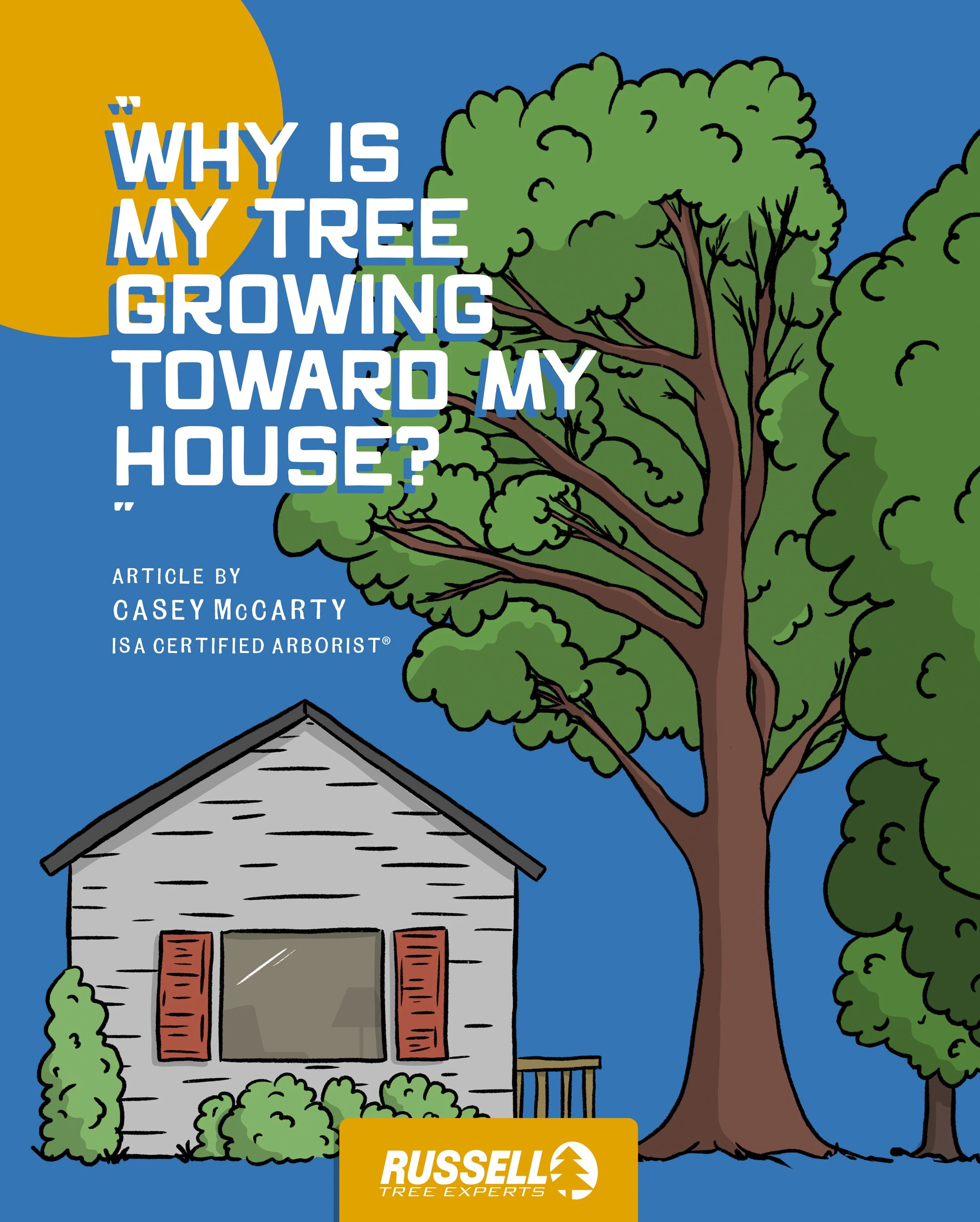
“Why is my Tree Growing Toward my House?”
By Casey McCarty
ISA Certified Arborist® OH-6735A
June 25, 2026
———
One of the most common questions arborists hear is, “Why is my tree growing toward my house?” In most cases, the tree isn’t intentionally growing toward a structure. It’s simply responding to its environment through natural processes called phototropism. Have you ever wondered why a tree’s roots grow downwards and not sideways or upwards? That’s thanks to another natural process called geotropism. Both responses are controlled by a plant hormone called auxin, which regulates growth and directs how trees develop.
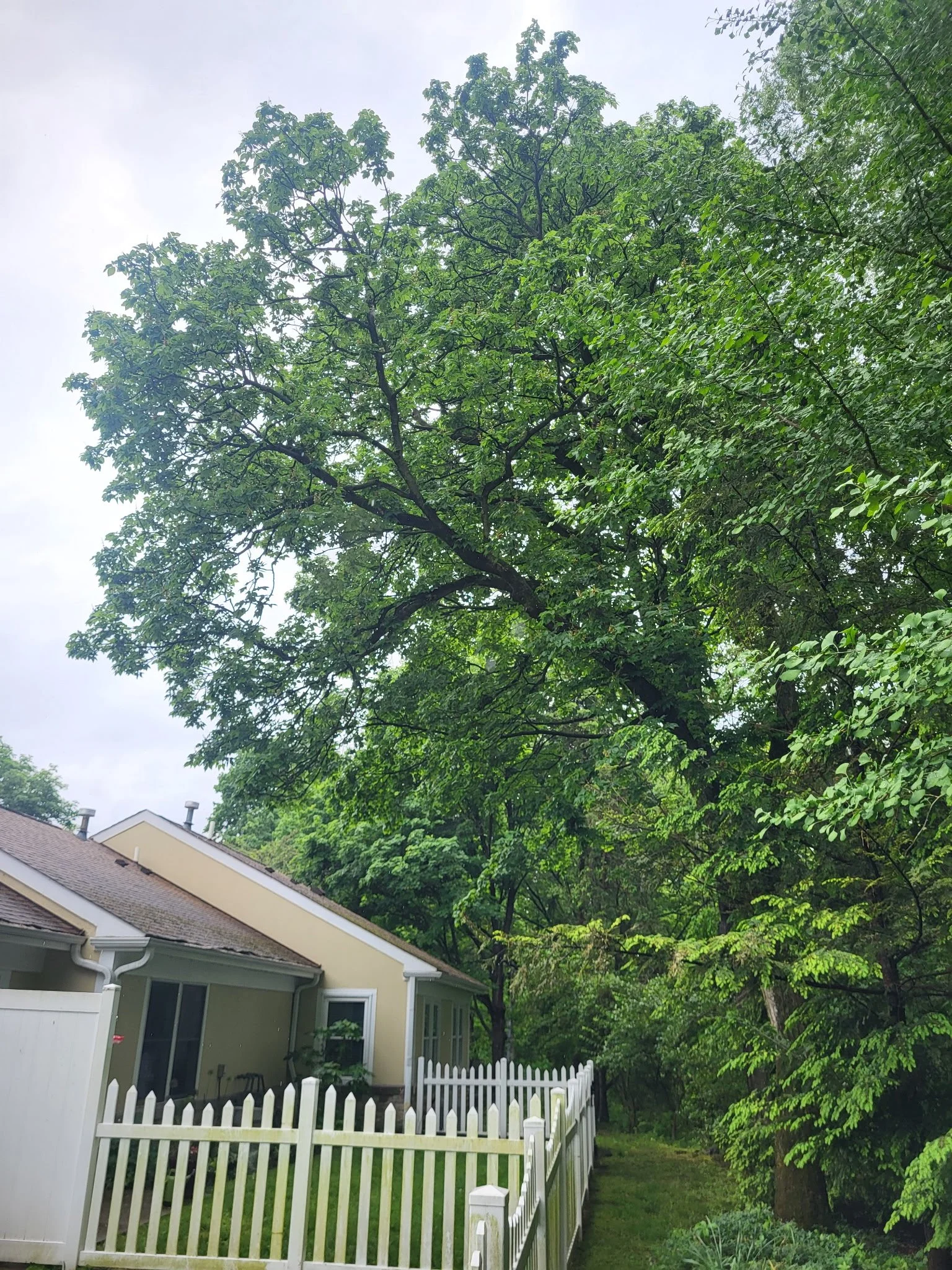
A tree growing towards available light
Phototropism is a tree’s response to light. Because trees rely on sunlight for photosynthesis, they naturally grow toward available light sources. The main source of sunlight is upwards towards the sun. However, when one side of a tree is shaded, auxin accumulates on that side, causing cells to elongate and the stem or branch to bend toward the light. This is why, secondarily, trees often appear to grow toward homes, garages, or other structures. Reflective surfaces such as windows, siding, and roofs can increase available light, encouraging growth in that direction. The tree is not targeting the structure, it is simply maximizing sunlight exposure.
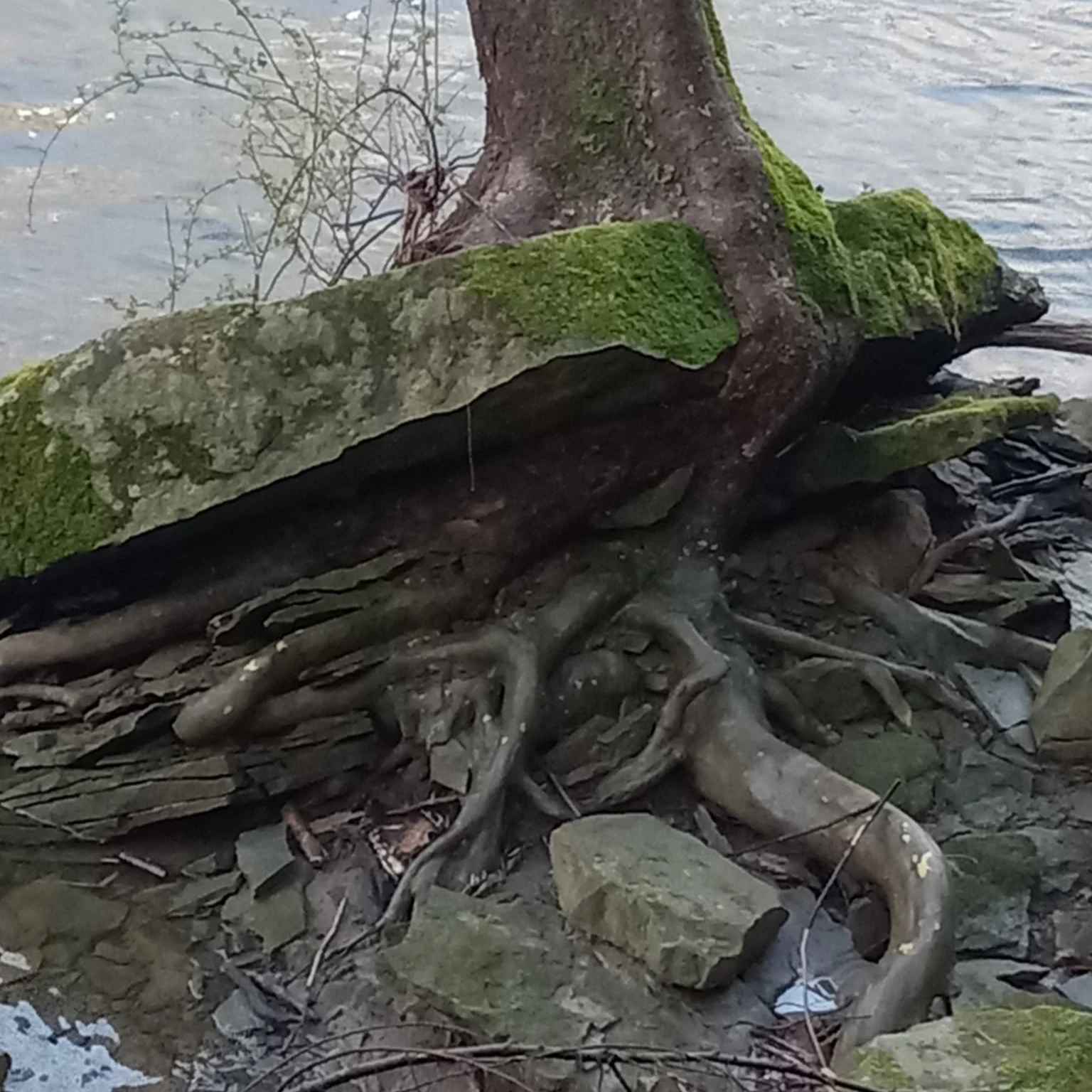
Note how the tree’s roots continue to grow downwards even below the stone
Geotropism is a tree’s response to gravity. Gravity and sunlight are fighting for a tree’s growth direction, which is why roots grow downward, while stems and branches grow upward. Trees sense gravity and orientation through specialized structures called statoliths, which trigger auxin redistribution and guide growth in the proper direction. The roots help the tree maintain stability and balance.
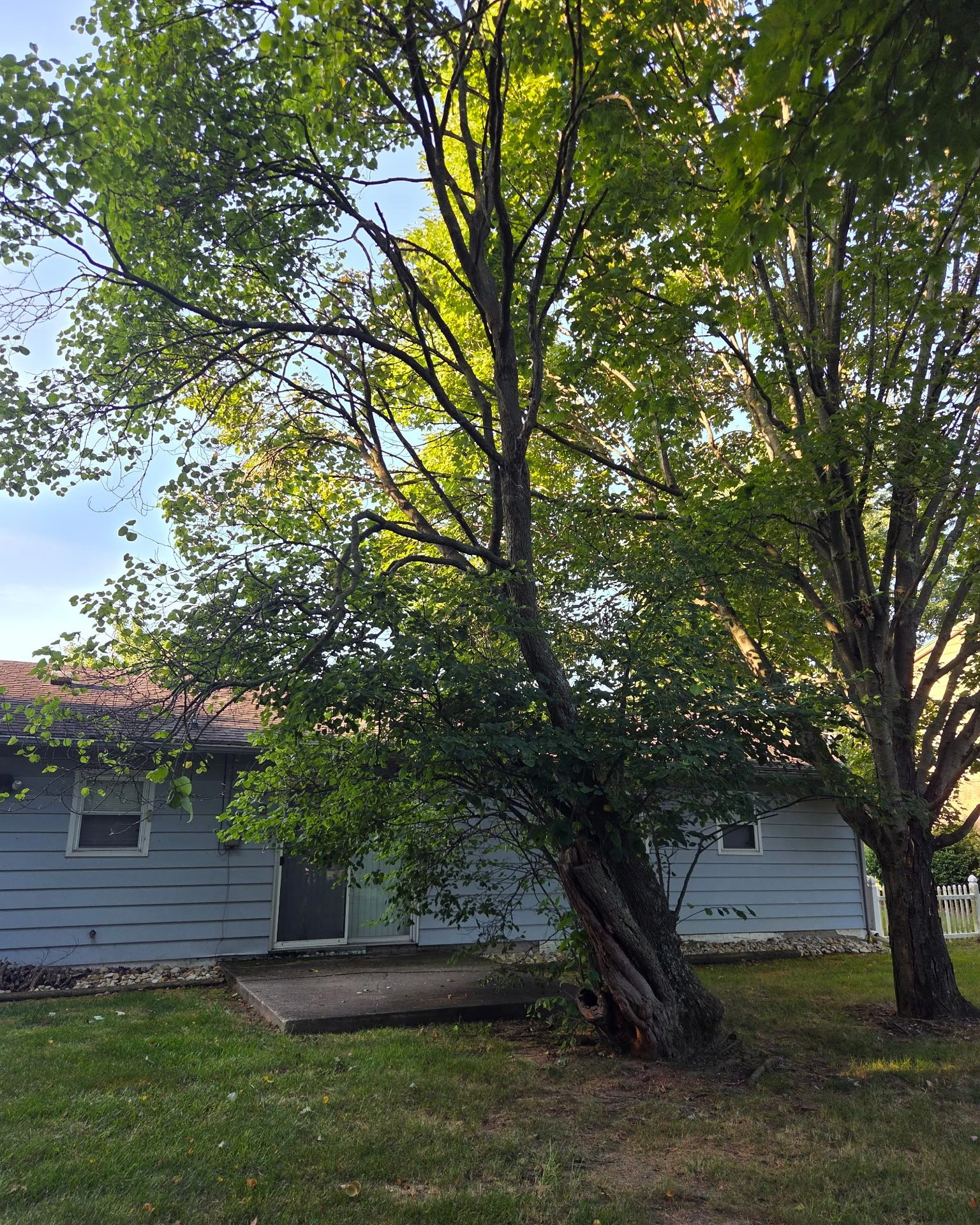
A leaning tree may still be stable due to tension wood
Trees also produce specialized support tissues known as reaction wood to compensate for leaning stems or uneven crowns. Hardwoods form tension wood, while conifers produce compression wood. These tissues help strengthen the tree and distribute mechanical stress. As a result, a tree that appears crooked or leaning is not necessarily defective. Often, it has spent years adapting to its environment and developing the support it needs to remain stable.
Understanding these natural growth responses is one reason proper pruning is so important. Trees develop complex growth patterns over decades, and improper pruning can disrupt these adaptations, reduce energy production, and create long-term structural issues.
If you are concerned about a tree growing toward your home, developing a lean, or showing signs of storm damage, don't guess—have it evaluated by one of our ISA Certified Arborists® by visiting RussellTreeExperts.com/Quote or calling us at (614) 895-7000! The team at Russell Tree Experts has the knowledge and experience to assess tree health, identify potential risks, and recommend the proper course of action.
ADDITIONAL ARBOR ED™ ARTICLES: