
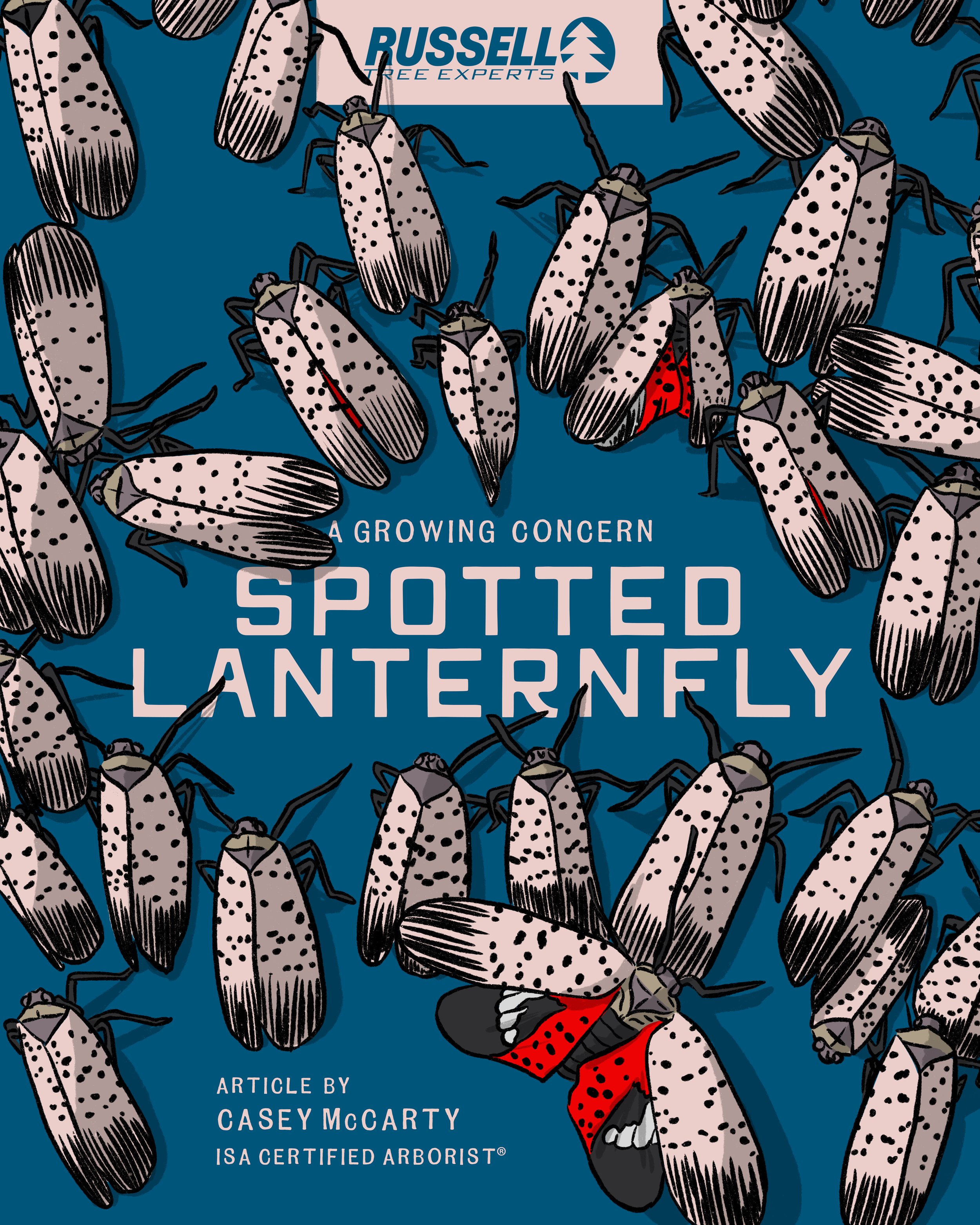
By Casey McCarty
ISA Certified Arborist® OH-6735A
May 21, 2026
———
Since October 2021, the Ohio Department of Agriculture has maintained a quarantine to slow the spread of the spotted lanternfly, an invasive insect that has become a growing concern throughout Central Ohio. First discovered in Pennsylvania in 2014, the pest has continued spreading into nearby states, including Ohio, where it threatens agriculture, forests, vineyards, gardens, and residential neighborhoods by feeding on the sap of trees and plants. The quarantine restricts the movement of materials that may carry the insect, while officials encourage residents to inspect outdoor items, report sightings, and help prevent further spread.
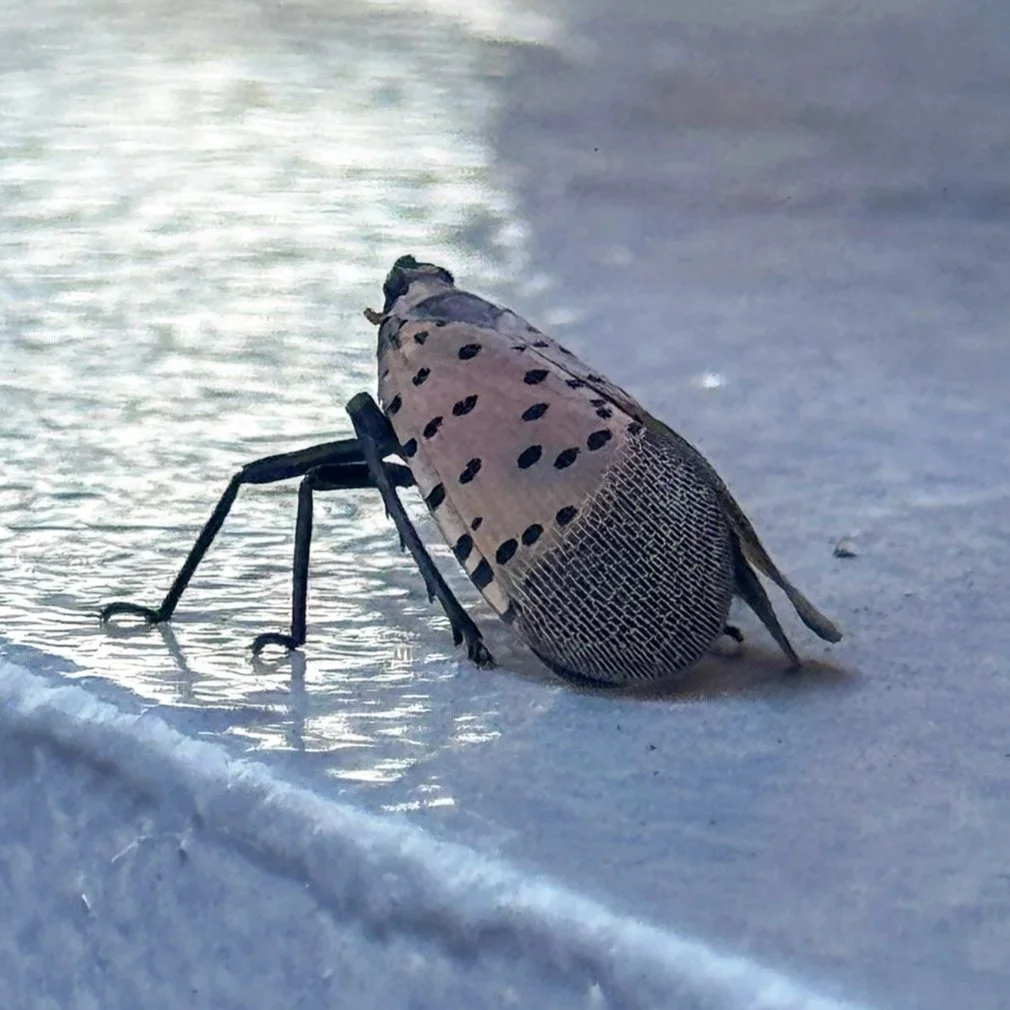
An individual spotted lanternfly
Although the spotted lanternfly is known for its appearance with gray, black-spotted wings and bright red underwings, it can cause serious damage by feeding on the sap of trees and plants. This feeding weakens plants and leaves behind a sticky substance called honeydew, which leads to black sooty mold growth on leaves, patios, vehicles, and all outdoor surfaces. Areas surrounding Columbus are especially vulnerable because the insect spreads easily by laying egg masses on vehicles, trains, trailers, firewood, outdoor furniture, and other surfaces that can be transported from place to place.
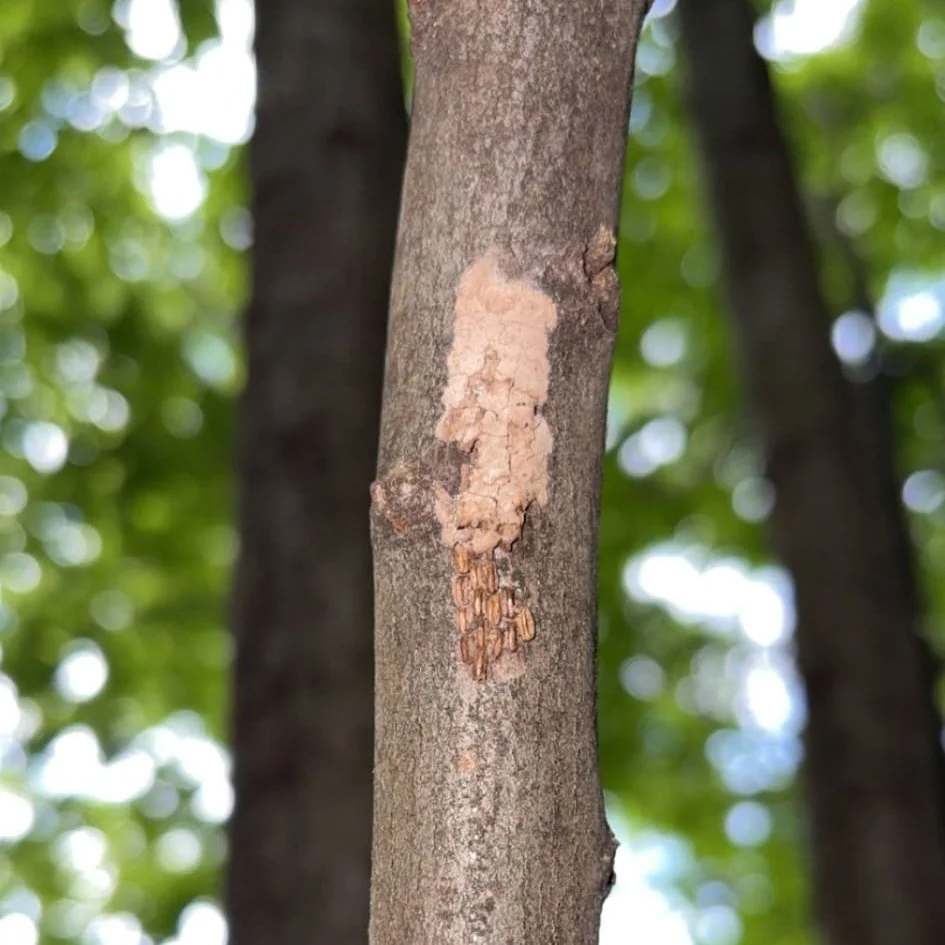
SLF egg mass
While the invasive tree-of-heaven is considered one of its favorite host plants, researchers still do not fully know all the plants the lanternfly may use. Spotted lanternflies have been found on flowers, ornamental plants, shrubs, fruit trees, grapevines, and even vegetable gardens. This wide range of possible hosts makes the insect especially concerning for homeowners, gardeners, and farmers in Central Ohio. Ohio’s grape industry could be especially vulnerable, as heavy spotted lanternfly infestations have the potential to severely weaken grapevines, reduce fruit production, and even kill vines over time.
If populations continue spreading across the state, vineyards and wineries throughout Ohio could face significant economic and agricultural losses. To help control infestations, pest-management professionals often use systemic treatments such as Safari Insecticide, which allows the insecticide to move through the plant as lanternflies feed. Spray treatments including neem oil and products containing Imidacloprid are also commonly used to reduce populations. Russell Tree Experts can also help diagnose trees if you have any concerns and provide both systemic and spray treatment options to help manage infestations and protect tree health.

Homeowners can help slow the spread by checking vehicles and outdoor equipment for egg masses, removing tree-of-heaven plants, and reporting sightings to local ODNR or ODA. Early detection and public awareness will be important in protecting Central Ohio’s environment, landscapes, and agricultural industries from this invasive pest. Stomp them if you see them!
For a free tree work quote by one of our ISA Certified Arborists®, visit RussellTreeExperts.com/Quote or give us a call at (614) 895-7000!
ADDITIONAL ARBOR ED™ ARTICLES!