By Casey McCarty
ISA Certified Arborist® OH-6735A
May 14, 2026
— — —
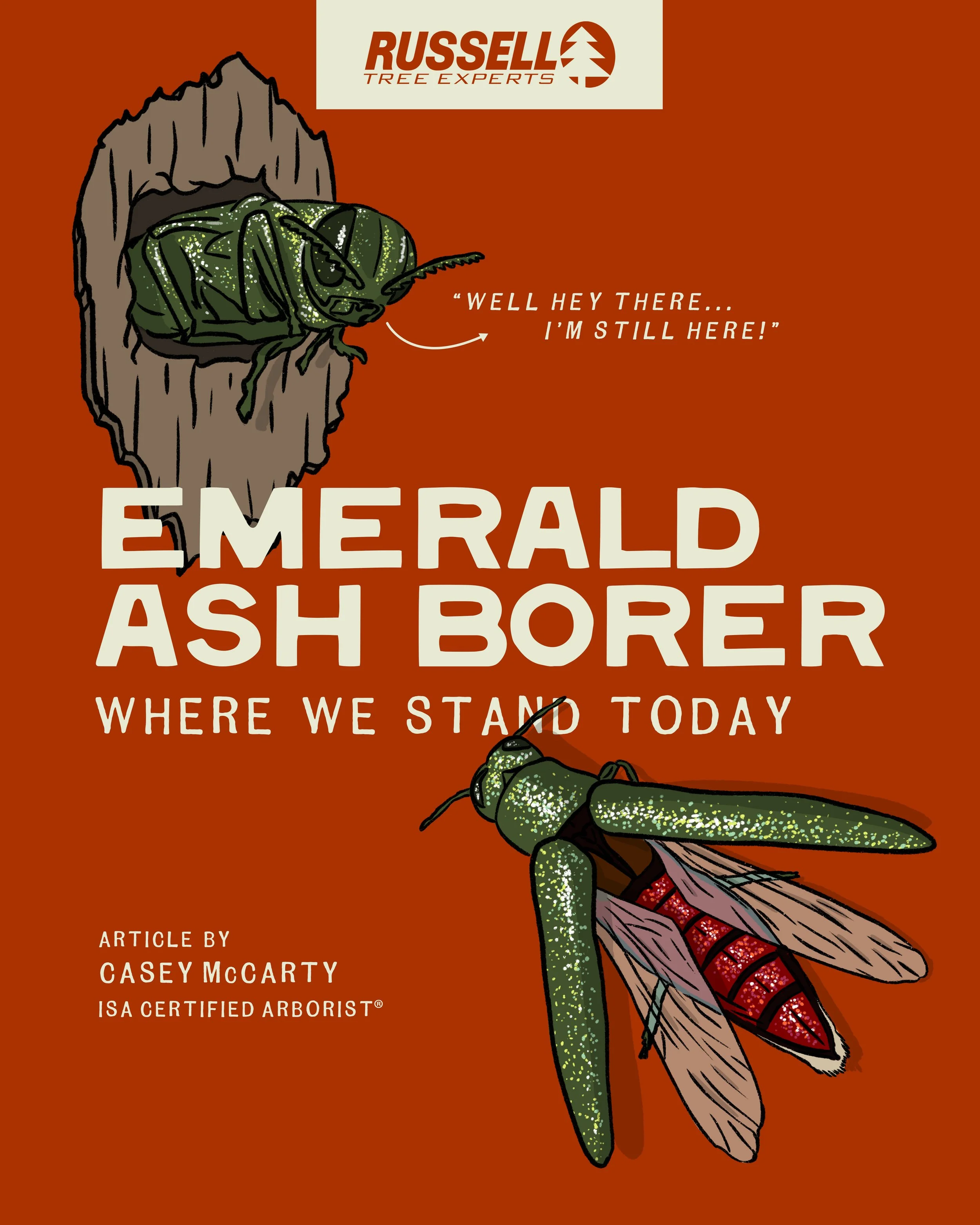
Growing up, ash trees dominated the woods surrounding my family’s property. They were among my favorite trees to climb, and the time I spent beneath their canopy helped inspire my passion for arboriculture. Over the years, however, watching those same trees decline because of the Emerald Ash Borer (EAB) transformed the issue from a distant ecological concern into something deeply personal.
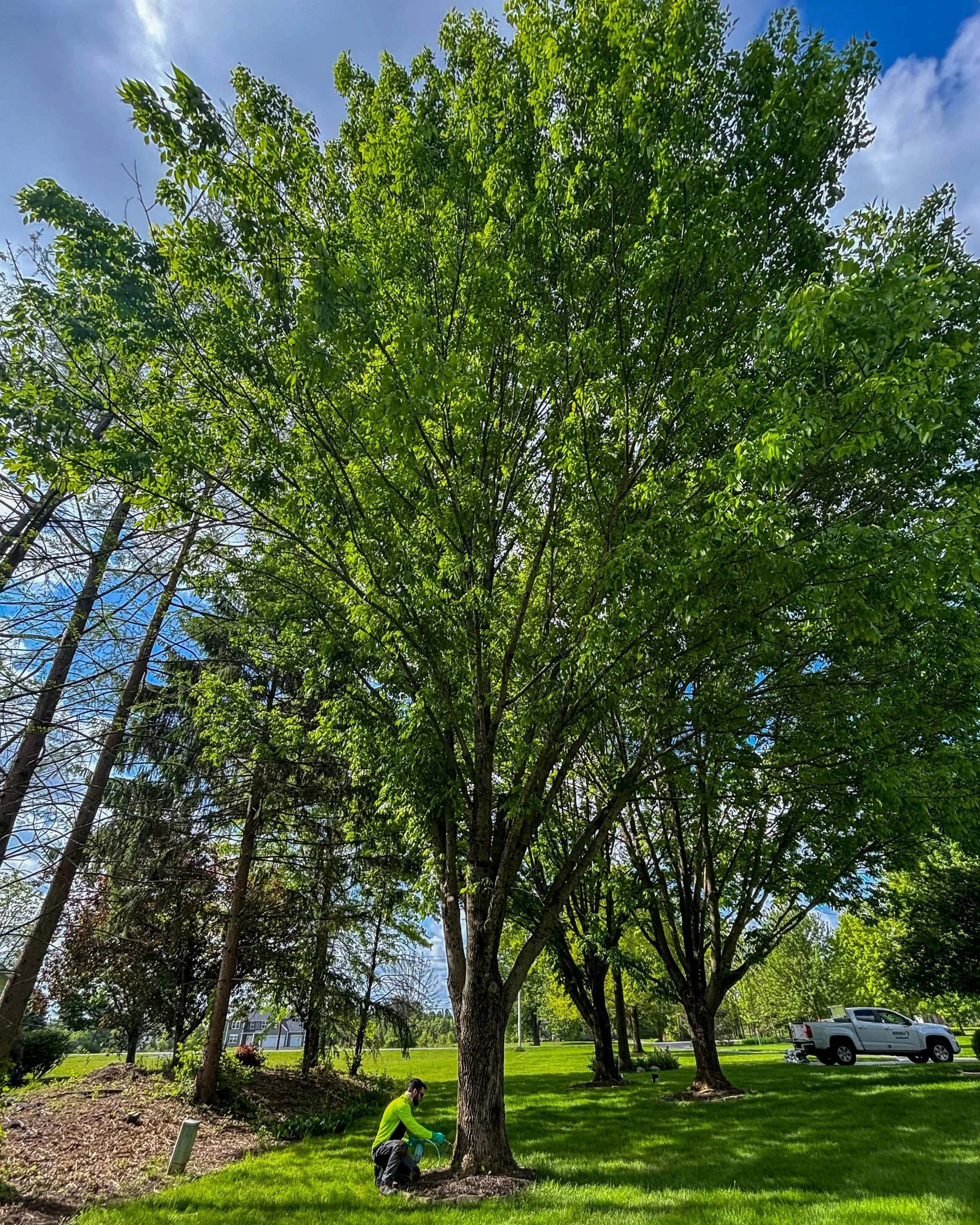
Our team member Steve treating an ash tree with a trunk injection of emamectin benzoate
The EAB is not simply a problem of the past or one limited to older generations. The invasive insect continues to spread throughout the region with no signs of disappearing anytime soon. Since its arrival in North America, emerald ash borer has cost communities millions of dollars in tree removal efforts, replanting programs, research initiatives, and chemical treatments aimed at preserving ash populations for future generations. Native species such as white ash, green ash, and blue ash have been devastated, becoming increasingly rare across much of their natural range.
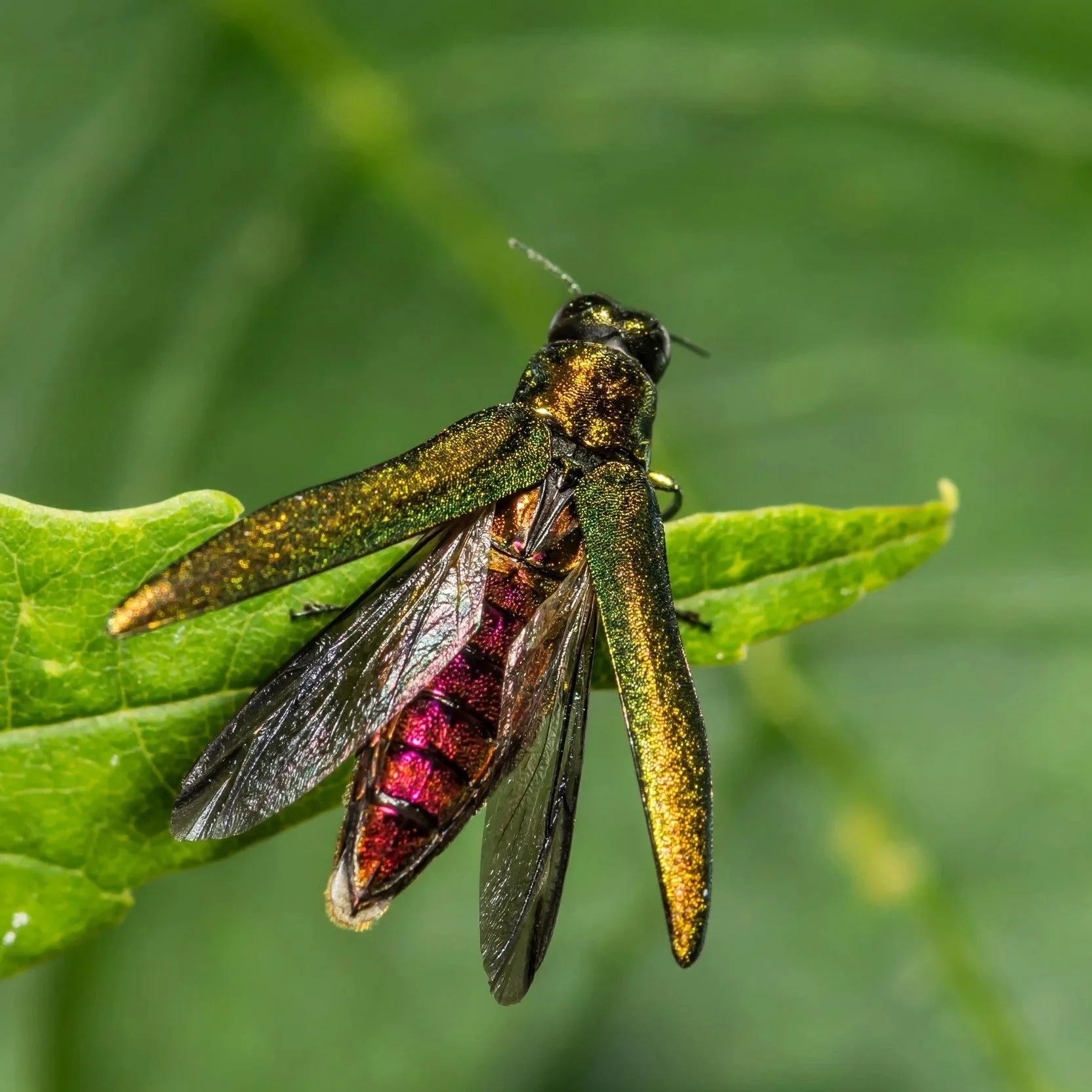
A close-up of emerald ash borer
Despite the widespread destruction, there is still reason for optimism. Through responsible forestry practices, continued treatment efforts, and selective breeding programs, scientists and arborists hope native ash populations may eventually develop resistance to the insect over time. Preserving surviving ash trees and maintaining genetic diversity will be critical if future generations are to continue experiencing these iconic trees in forests, parks, and neighborhoods.
Researchers believe the EAB first arrived in North America in 2002 through infested wooden shipping materials transported overseas in cargo containers. From there, the insect spread rapidly by hitching rides on trains, semi-trucks, and transported firewood throughout the eastern United States. Today, its range extends far beyond its original point of introduction, with recent detections even occurring in Colorado.
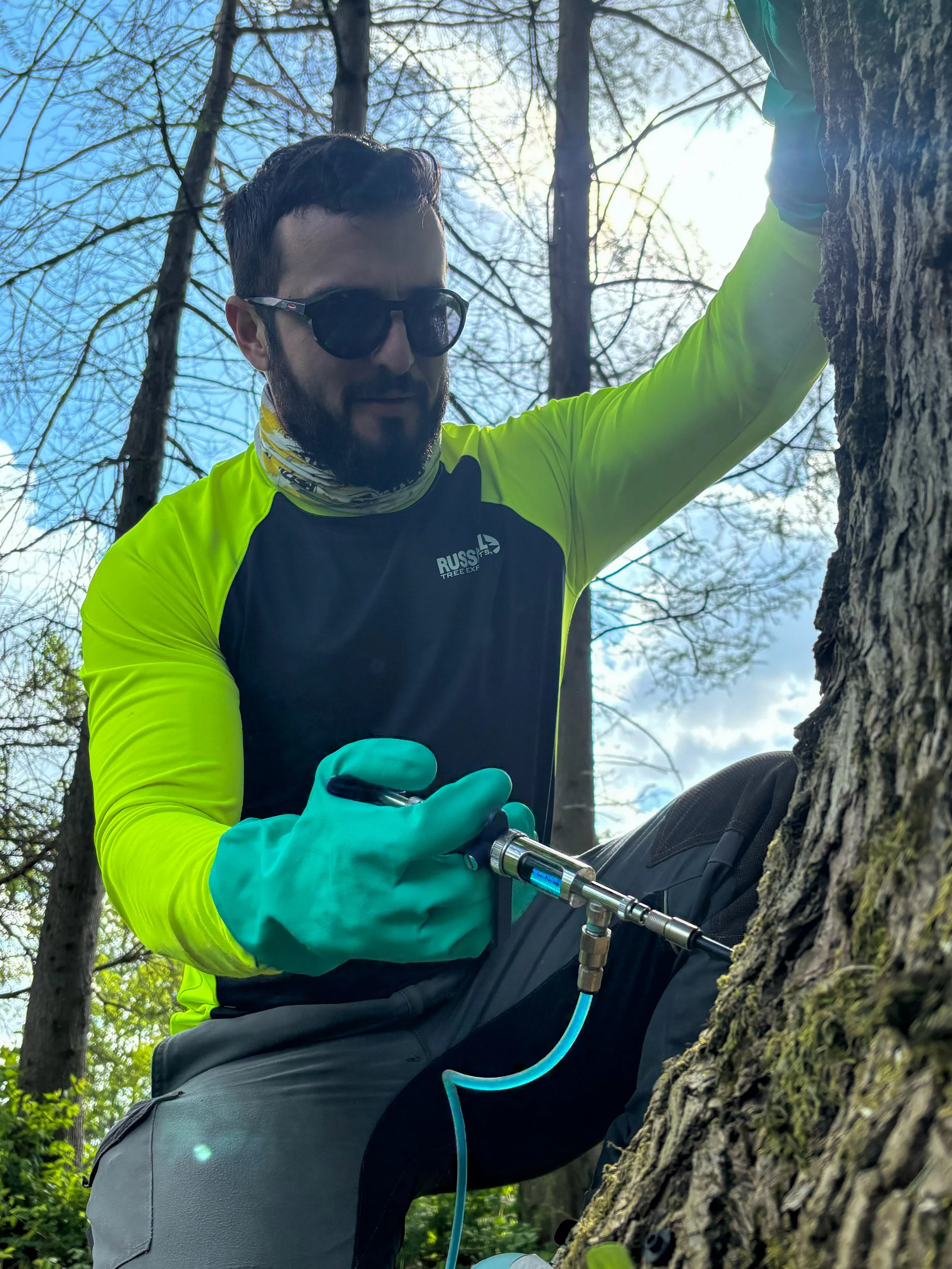
Our team member Steve treating an ash tree with a trunk injection of emamectin benzoate
One reason the infestation became so severe is the heavy reliance many communities placed on ash trees as street trees. Across Ohio and much of the Midwest, ash trees were favored because of their hardiness, tolerance of urban conditions, and ability to thrive in compacted soils and extreme roadside heat. Cities often planted them extensively because their uniform appearance created a sense of symmetry and beauty along streets and neighborhoods.
However, the widespread planting of a single species also created significant vulnerability. When an invasive pest such as the emerald ash borer arrives, entire streets lined with the same type of tree can be lost within only a few years. Mature urban canopies disappear, and natural forests containing large concentrations of ash can be severely damaged. The EAB outbreak serves as a powerful reminder of the importance of biodiversity, both in urban landscapes and within native ecosystems.
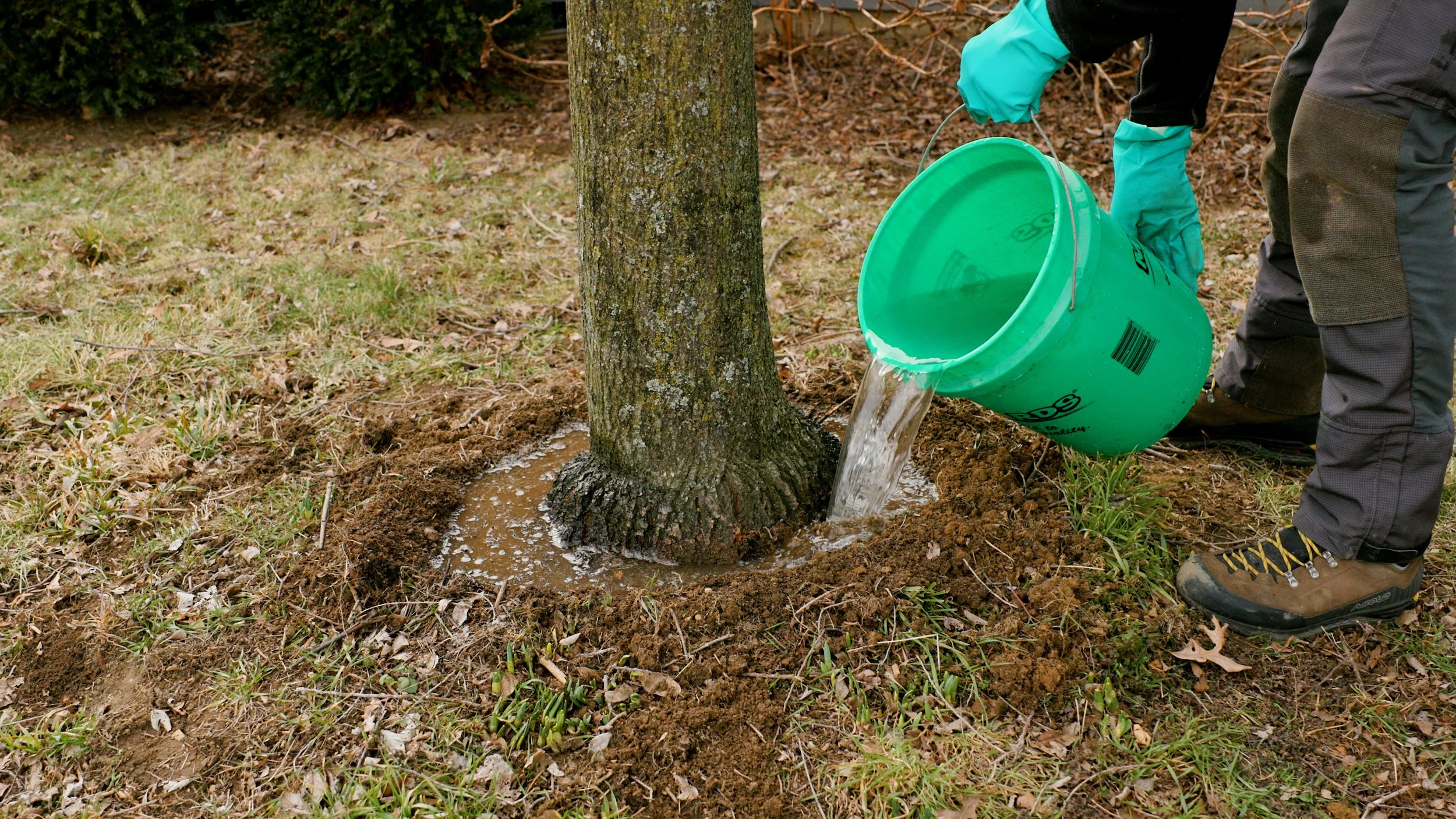
Systemic soil drench of imidacloprid
Emerald ash borer infestations can be effectively managed with treatment options that help protect ash trees from damage. One common method is a direct trunk injection of emamectin benzoate, which is typically applied in mid-to-late spring, and provides protection for 2 to 3 years. Another option is a systemic soil drench using imidacloprid, which is usually applied in the spring or fall and must be repeated annually to remain effective. Russell Tree Experts provides both of these services for trees with issues regarding EAB. For a free tree work quote by one of our ISA Certified Arborists®, visit RussellTreeExperts.com/Quote or call us at (614) 895-7000!
ADDITIONAL ARBOR ED™ ARTICLES!