Poison Ivy: Removal Guide
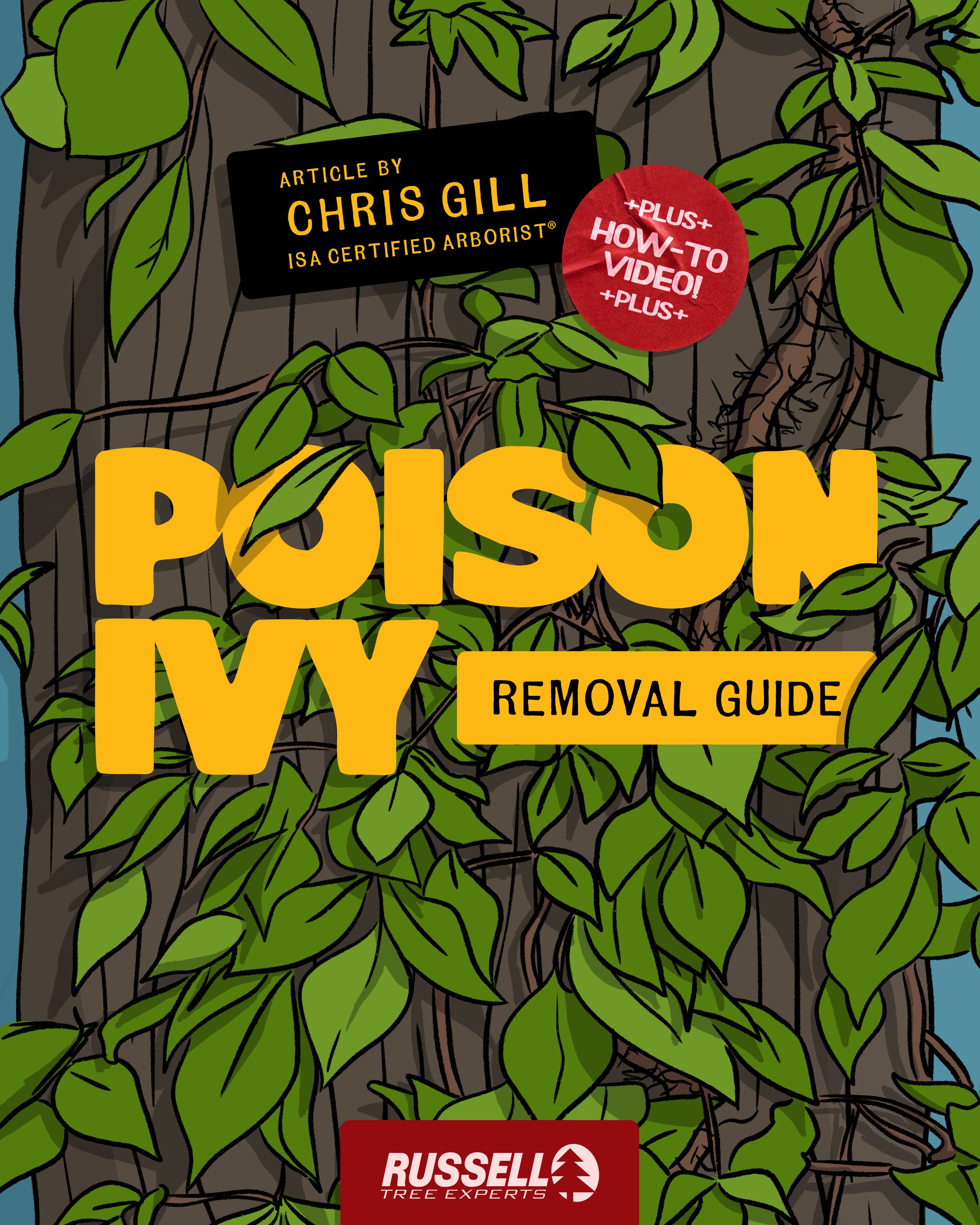
By Chris Gill
ISA Certified Arborist® OH-6416A
June 11, 2026
Poison ivy (Toxicodendron radicans) is a ubiquitous native plant across Ohio, thriving in every county from the urban fringes of Columbus to the rural hills of Hocking County. As a member of the cashew family, it grows as a low ground cover, upright shrub, or high climbing woody vine that uses hairy aerial roots to scale trees and fences. It is especially common in central Ohio landscapes where wooded residential properties, historic neighborhoods, and edges of parks and gardens provide ideal habitat. The plant’s notoriety comes from Urushiol, an oily resin in every part of the plant (leaves, stems, and roots) that triggers an allergic contact dermatitis in roughly 85% of the people who make contact with it. Identification follows the classic rhyme: “Leaves of three, let it be.” Compound leaves feature three leaflets, the center one on a longer stalk. Leaf margins vary from smooth to lobed or notched, and new growth often emerges reddish before turning glossy green. Tiny greenish white flowers give way to clusters of waxy white berries that last through winter. In autumn, poison ivy delivers one of its few redeeming qualities: spectacular early fall color, with foliage blazing in vivid reds, oranges, and yellows that rival any sugar maple (Acer saccharum).
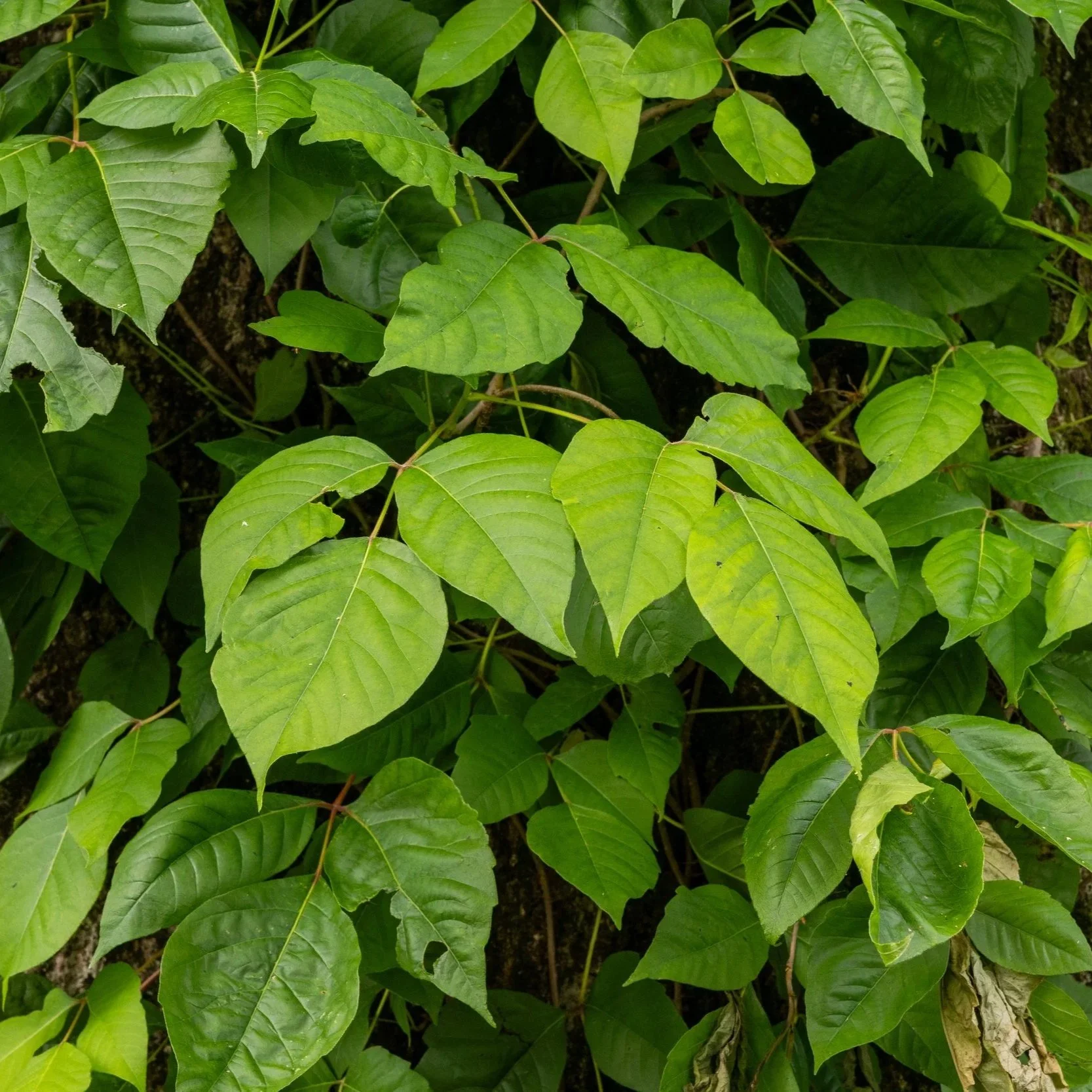
Poison ivy leaves
In the landscape, poison ivy can become a significant problem for homeowners, gardeners, and property managers. It can spread aggressively into lawns, flowerbeds, fencerows, and foundation plantings, often hiding among desirable shrubs or climbing ornamental trees. Once established, its extensive root system makes it difficult to remove completely. The real headache is the rash: urushiol binds to skin quickly, causing intense itching, redness, swelling, and blisters that can persist for weeks. In central Ohio’s leafy suburbs and wooded backyards, it poses a constant risk during mowing, pruning, or yard cleanup. The oil also hitchhikes on clothing, tools, pets, or garden gloves, spreading the misery indoors. Unlike invasive vines, poison ivy is native, but its presence still reduces usable outdoor space and increases maintenance costs for those who want rash-free landscapes.
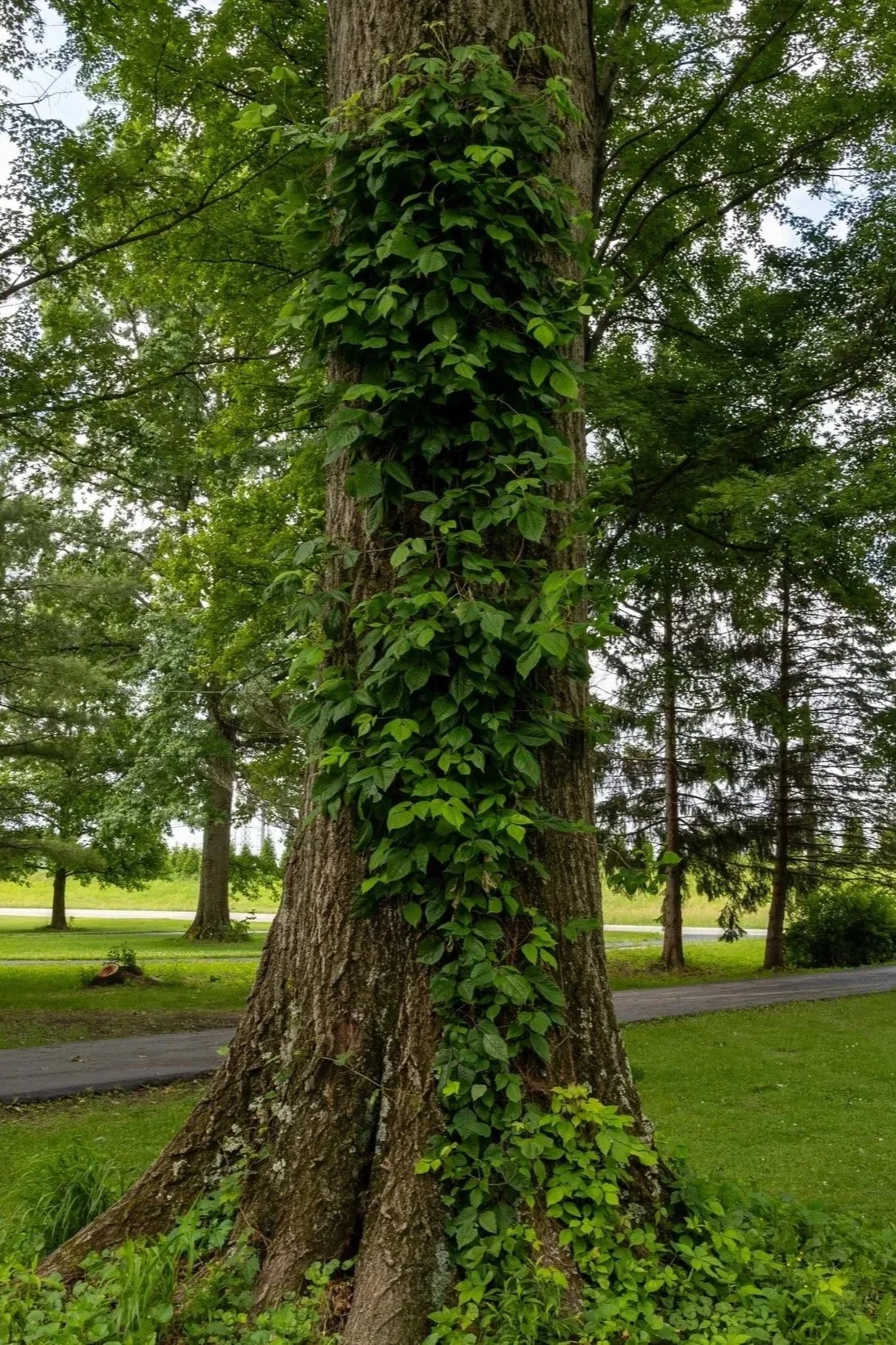
Poison ivy climbing up a tree
As a tree worker, I’ve encountered poison ivy more times than I’d like to admit. Working around mature trees and overgrown areas often means dealing with vines or dense brush where it tends to grow. On one job, I removed a large vine from a tree, and despite wearing protective gear, I still came into contact with it. The resulting rash lasted for days and served as a reminder that staying alert is an important part of the job.
Managing poison ivy in the landscape requires a combination of prevention, mechanical effort, and targeted control. Start with awareness: scout regularly in spring and fall when identification is easiest. Wear protective clothing like long sleeves, long pants, and chemical-resistant gloves when working near suspect areas. For small patches, hand-pull plants when the soil is moist, making sure to remove the entire root system and bag everything for disposal (never compost or burn it). Repeated mowing or cutting back vines can also weaken the plant over time.
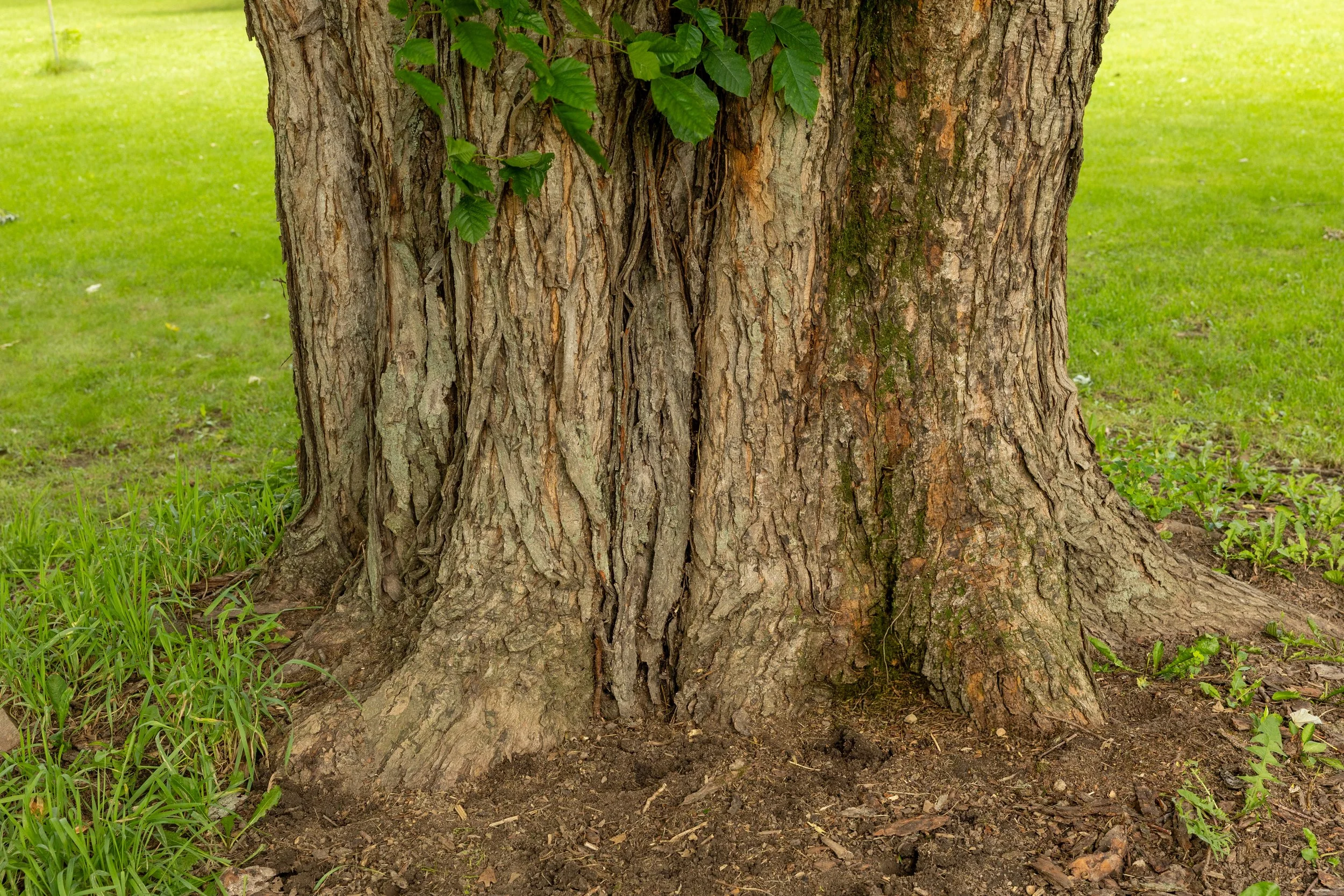
An example of cutting close to the stumps, removing about 1-2 ft of vines, and applying herbicide directly onto the stumps
For larger infestations, systemic herbicides offer the most reliable control. Herbicide products work best on poison ivy when applied to actively growing foliage in late summer to early fall as the plant translocates energy to its roots. Cutting and directly painting the stumps or basal bark applications can minimize drift and protect nearby desirable plants. Always follow label directions, choose calm days, and consider spot treatment rather than broadcast spraying. Check out the video below by my fellow coworker and ISA Certified Arborist® Enrique Arayata to learn how to remove poison ivy from your tree! Professional tree care or landscape services can also help if you aren't comfortable getting close to poison ivy yourself.
If exposure occurs, prompt treatment limits the rash. Rinse skin immediately within 10–15 minutes if possible, with soap and cool water or rubbing alcohol to remove urushiol before it binds. Specialized poison-ivy wipes or dish soap also help. Once the rash appears, cool compresses, calamine lotion, hydrocortisone cream, oatmeal baths, and oral antihistamines soothe itching and inflammation. Avoid scratching to prevent secondary infection. A severe case may even warrant a doctor’s visit.
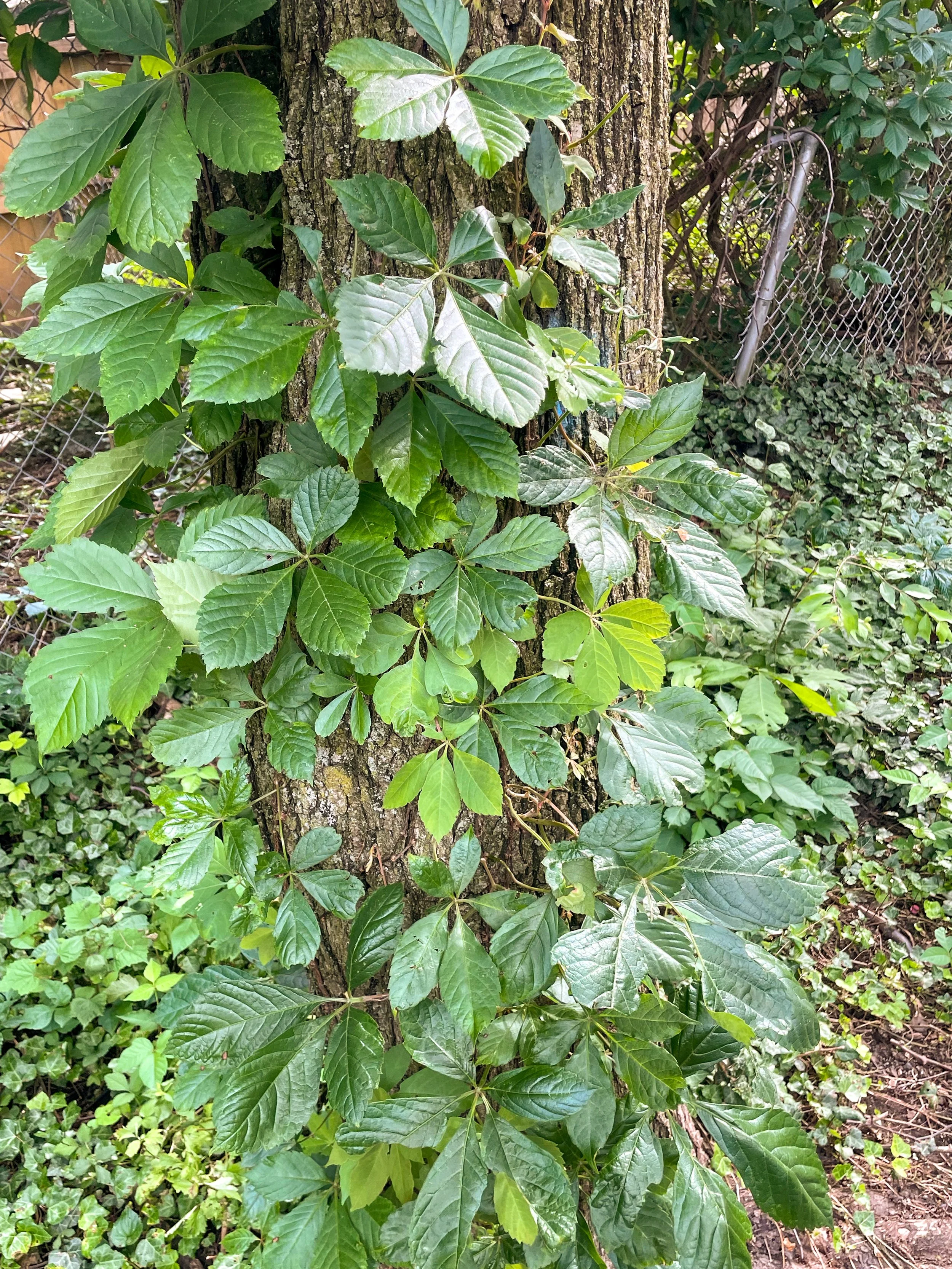
Virginia creeper (Parthenocissus quinquefolia)
Despite its drawbacks, poison ivy does offer some ecological value in the landscape. Its white berries are a critical winter food source for more than 60 bird species, including woodpeckers, warblers, and game birds, when other fruits are scarce. Deer, rabbits, and small mammals browse the foliage, and pollinators visit spring flowers. As a native plant, it stabilizes soil on slopes and provides cover without the aggressive displacement caused by nonnative vines. Its bright fall color adds seasonal beauty to forest edges and backyard borders.
With smart identification, well-timed management, and a respect for its role in local ecosystems, homeowners and professionals can keep it in check while appreciating its contributions. If you’re looking for something similar to plant that is non-poisonous and can climb up a tree without constricting it, look into Virginia creeper (Parthenocissus quinquefolia) or climbing hydrangea (Hydrangea petiolaris)!
Next time those three leaflets appear along your fence line or under a backyard tree, treat it with caution, but remember it also feeds the birds and has great fall color.
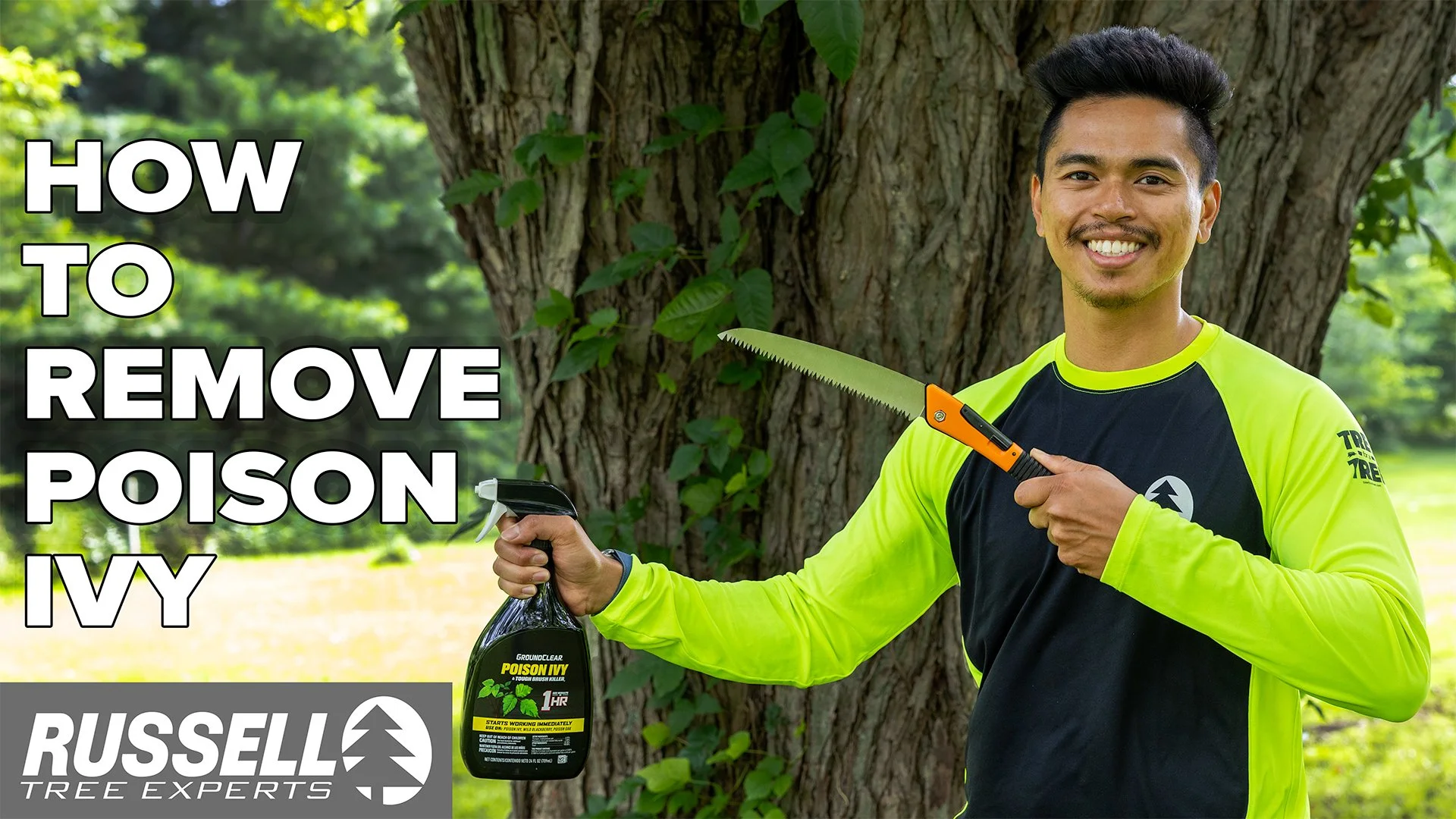
VIDEO: HOW TO REMOVE POISON IVY FROM A TREE!
ADDITIONAL ARBOR ED™ ARTICLES!