Anthracnose: Cause for Concern or no big deal?
By Mike Wilson
ISA Certified Arborist® OH-6806A
July 16, 2026
———
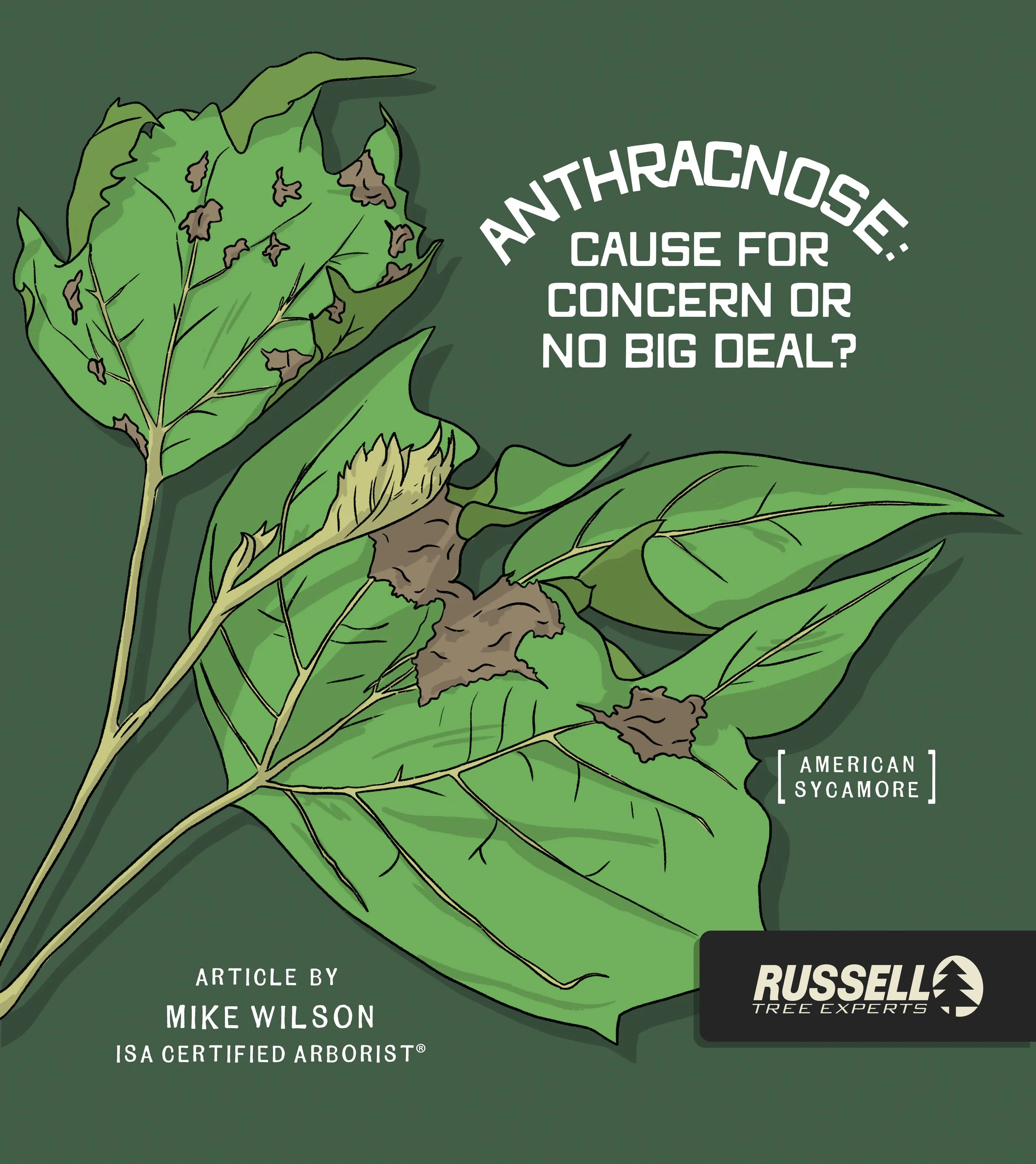
Every year our arborists at Russell Tree Experts are called with concerns that sycamore trees on properties are losing their leaves and “dying.” This is rarely the case, especially if summoned in the spring. The issue is a foliar fungal disease called anthracnose and is one of the most common diseases affecting American sycamore trees (Platanus occidentalis), London plane trees (Platanus x acerifolia), and many other deciduous shade trees (ash, maple, oak, dogwood) commonly found throughout central Ohio. The disease is caused by the fungal pathogen Apiognomonia veneta, which thrives during cool, wet spring weather. While the disease can make trees appear severely damaged, healthy sycamores often recover once warmer, drier conditions arrive. Nevertheless, repeated infections over multiple years can weaken trees and increase their susceptibility to other stresses. Because central Ohio frequently experiences rainy springs with fluctuating temperatures, anthracnose is a recurring concern for homeowners, municipalities, and property managers who care for mature shade trees.
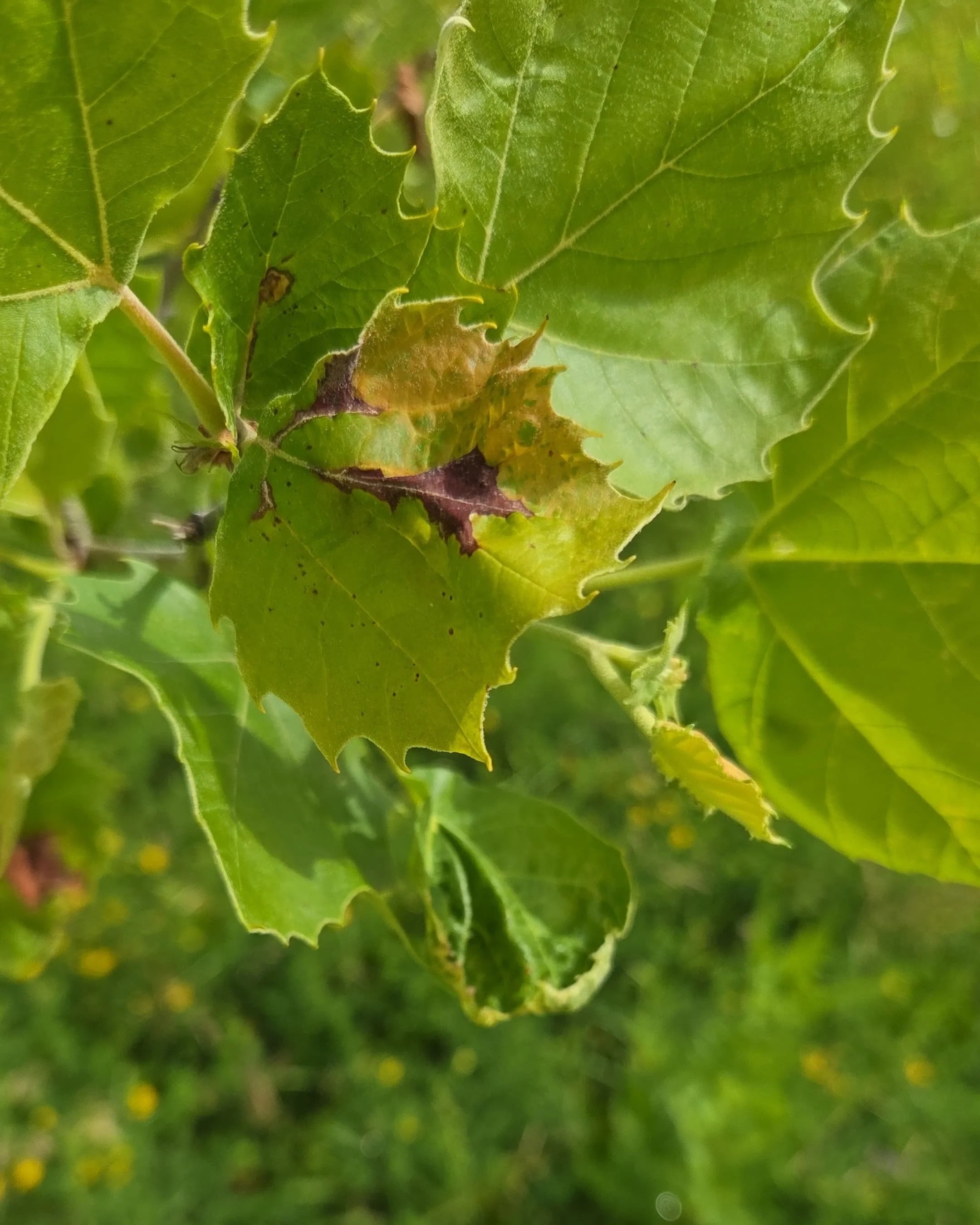
The fungus responsible for this disease overwinters in infected twigs, branches, and fallen leaves. During cool, wet weather in spring, spores are released and spread by rain and wind to newly emerging leaves and shoots. These conditions are common in Columbus during April and May, making infection particularly likely during years with prolonged rainfall and below-average temperatures. American sycamores, which are native throughout Ohio, are especially susceptible. Trees growing in low-lying areas, near streams, or in sites with poor air circulation often experience more severe infections.
The first symptoms typically appear shortly after leaves emerge in spring. Homeowners may notice
Brown or black blotches developing along leaf veins
Curling, wilting, or distorted young leaves
Premature leaf drop in late spring or early summer
Dead shoot tips and twig dieback
Sparse or delayed canopy development
In severe years, affected trees may look nearly dead by May before producing a second flush of foliage later in the season.
Fortunately, for most established sycamores in Columbus, anthracnose is primarily a cosmetic issue. Trees often send out a second flush of growth once temperatures rise and conditions become less favorable for the fungus!
The best defense against anthracnose is maintaining overall tree health. Property owners should:
Water trees during prolonged dry periods
Apply mulch around the root zone while keeping it away from the trunk
Avoid damaging roots through excavation or soil compaction
Correct nutrient deficiencies when identified through testing
Rake and remove fallen leaves in the Fall
Prune dead twigs and branches during dormancy, along with pruning the canopy to help increase air circulation
Dispose of infected debris appropriately
Because mature trees in Columbus can vastly exceed 25 feet in height, preventive foliar fungicide treatments are often impractical or physically impossible. Applications must be made early in the season, before or during bud break, and may require multiple treatments during extended periods of cool, wet weather and cover the entirety of the canopy. In these specific cases, a systemic fungicide may be applied if advised by one of our arborists.
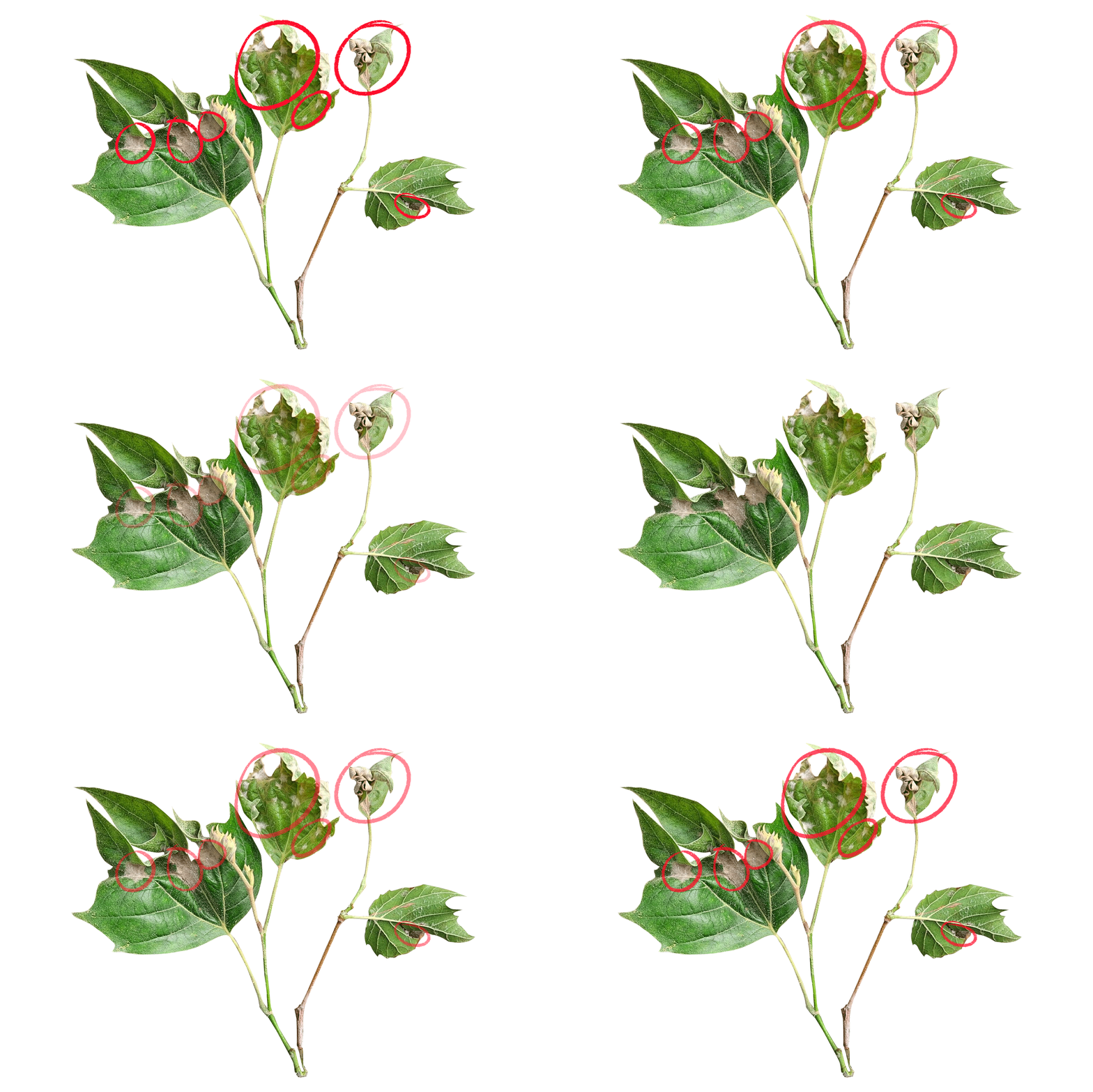
Sycamore anthracnose remains one of the most common fungal diseases affecting sycamore trees throughout Columbus and central Ohio. Characterized by leaf blight, twig dieback, and premature defoliation during cool, wet springs, the disease can significantly impact a tree’s appearance. Fortunately, healthy trees typically recover, and proactive management practices can minimize long-term damage. As always, please reach out to Russell Tree Experts at (614) 895-7000 or by visiting RussellTreeExperts.com/Quote for a free tree work quote by one of our ISA Certified Arborists®. We will be more than happy to help you better understand or manage this pesky disease!
ADDITIONAL ARBOR ED™ ARTICLES!