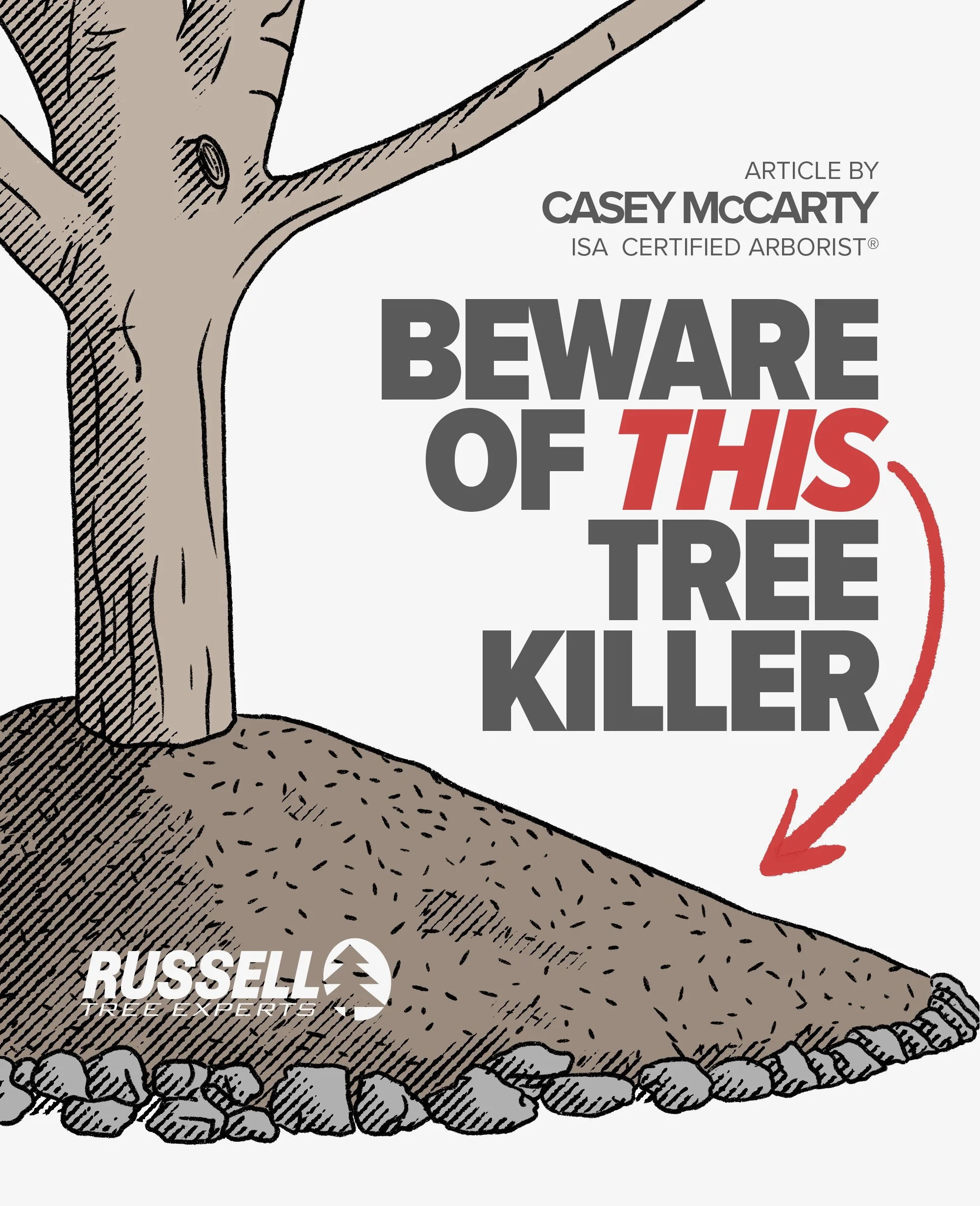
Mulch Rings: Beware of This Tree Killer
By Casey McCarty
ISA Certified Arborist® OH-6735A
February 26, 2026
— — —
As arborists, it is our job to mitigate risk and make sure your trees thrive—not just survive.
©Russell Tree Experts
Today, I’m writing about the dangers of mulch rings, often referred to as “aesthetic tree killers.” When installed and maintained correctly, mulch rings can be a lifeline for your tree. However, the difference between helpful and harmful can be a thin line, sometimes as little as three inches of mulch.
When tree rings are installed properly using the right organic material, they can help fertilize the soil and retain moisture. This supports the many microorganisms that live in a symbiotic relationship with your tree, helping it store energy for growth and aiding in CODIT (Compartmentalization Of Decay In Trees). Proper mulch rings also insulate roots from extreme weather and protect the tree from damage caused by routine yard maintenance, such as mowing or weed eating.
Harmful Impacts of Improper Mulch Rings
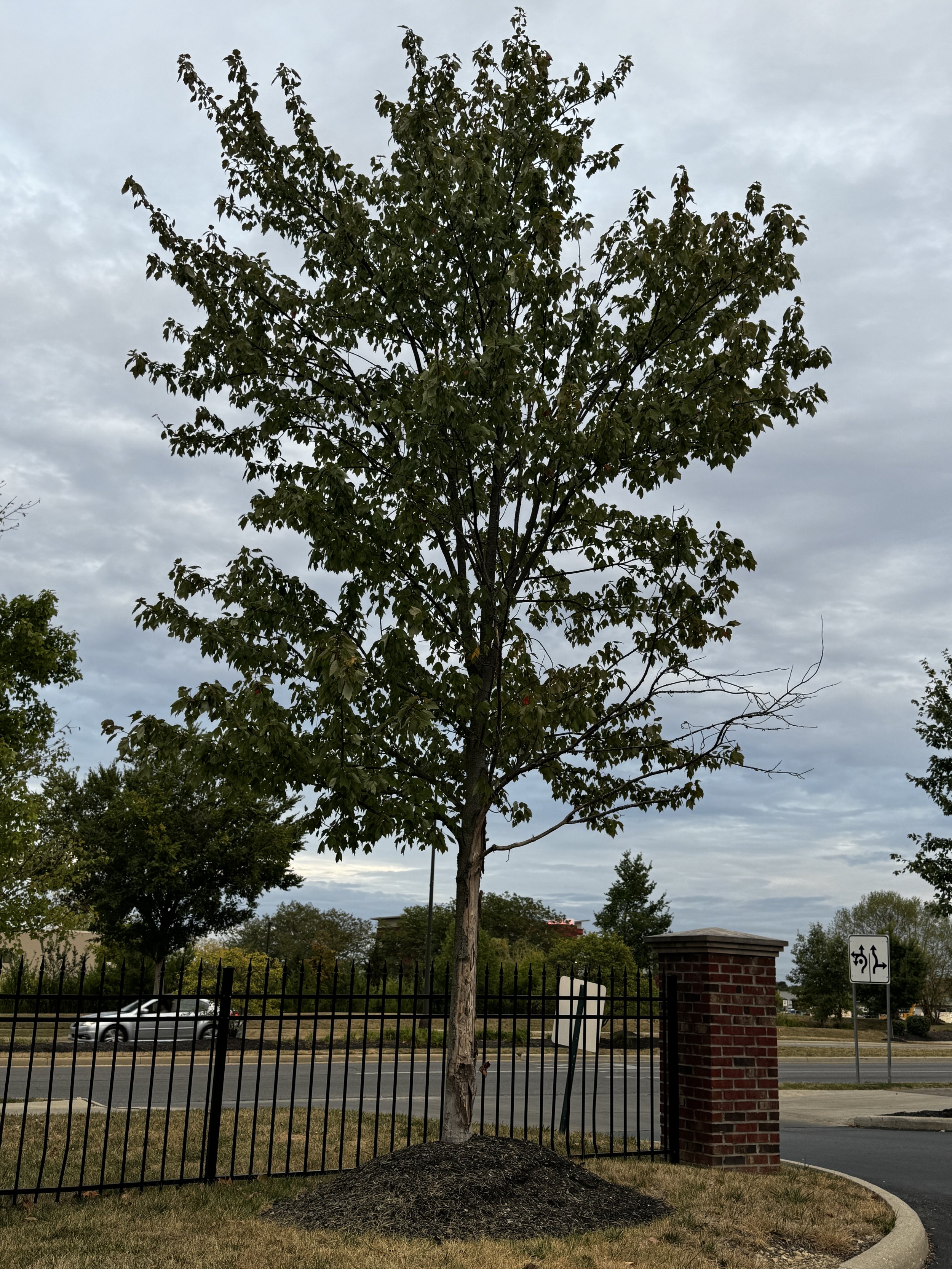
As arborists, we see trees struggling to survive on the daily. Everywhere from new housing developments to local shopping centers, and even in established neighborhoods with newly planted trees. What many of these trees frequently have in common is an issue with a visible root flare.
©Russell Tree Experts
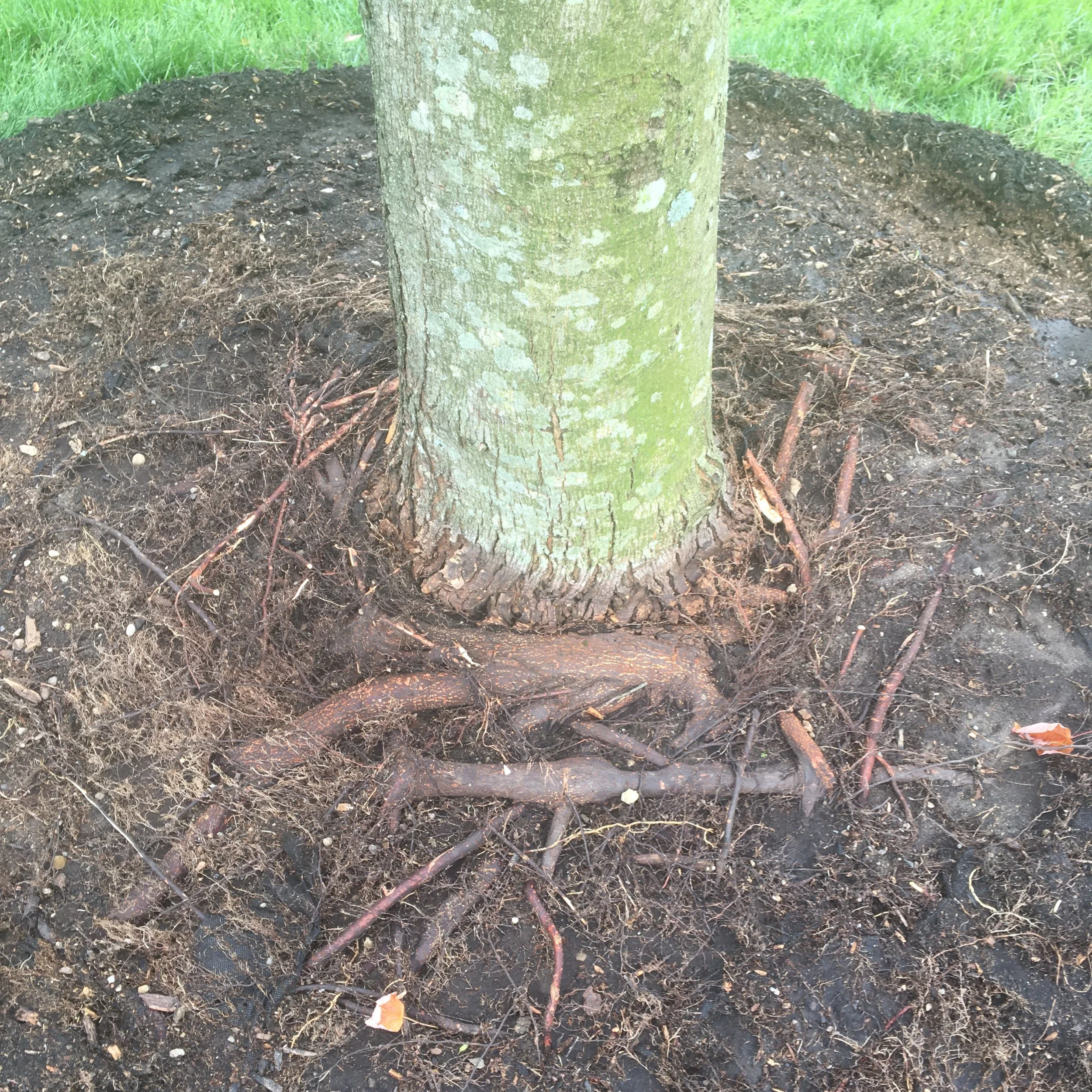
An example of stem girdling roots
The purpose of this article is to spread awareness, so you can help your tree and avoid a common mistake. I often tell people, when in doubt, to always plant high: “Too high will never die; too low will never grow.” Even when a tree is planted correctly and thriving, installing a mulch ring improperly can have negative consequences.
When mulch is piled too high against the trunk, one of the first things to occur are dormant buds being triggered by excess moisture. Because the root flare is part of the trunk, this moisture encourages the growth of adventitious roots, also referred to as stem girdling roots. These roots are no good for the tree because they can wrap around the trunk and restrict the flow of food and water. Depending on the size of these roots, they can be removed with hand pruners, loppers, or a handsaw.
~
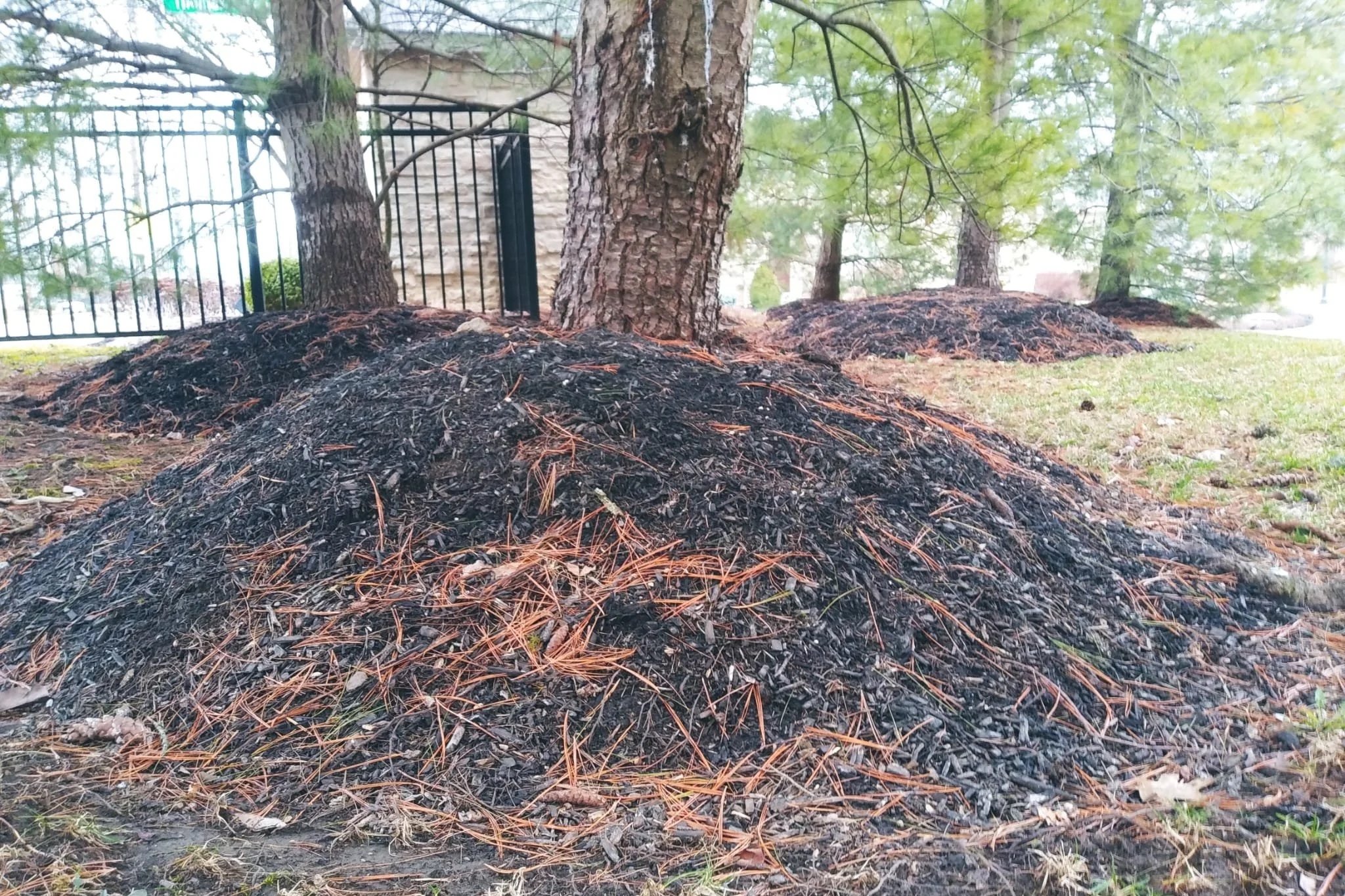
Another common issue is fungal wood decay. When mulch is piled against the trunk, it creates a consistently moist environment that prevents the bark from drying as nature intended. Tree bark is designed to remain dry and exposed to air; constant moisture breaks down its natural defenses.
©Russell Tree Experts
This environment allows decay-causing fungi to colonize the lower trunk and root collar. Once established, these fungi begin decomposing the structural wood responsible for transporting water and nutrients and providing stability. Over time, this decay can compromise the tree’s vascular system and buttress roots, weakening its structural integrity and increasing the likelihood of decline or failure.
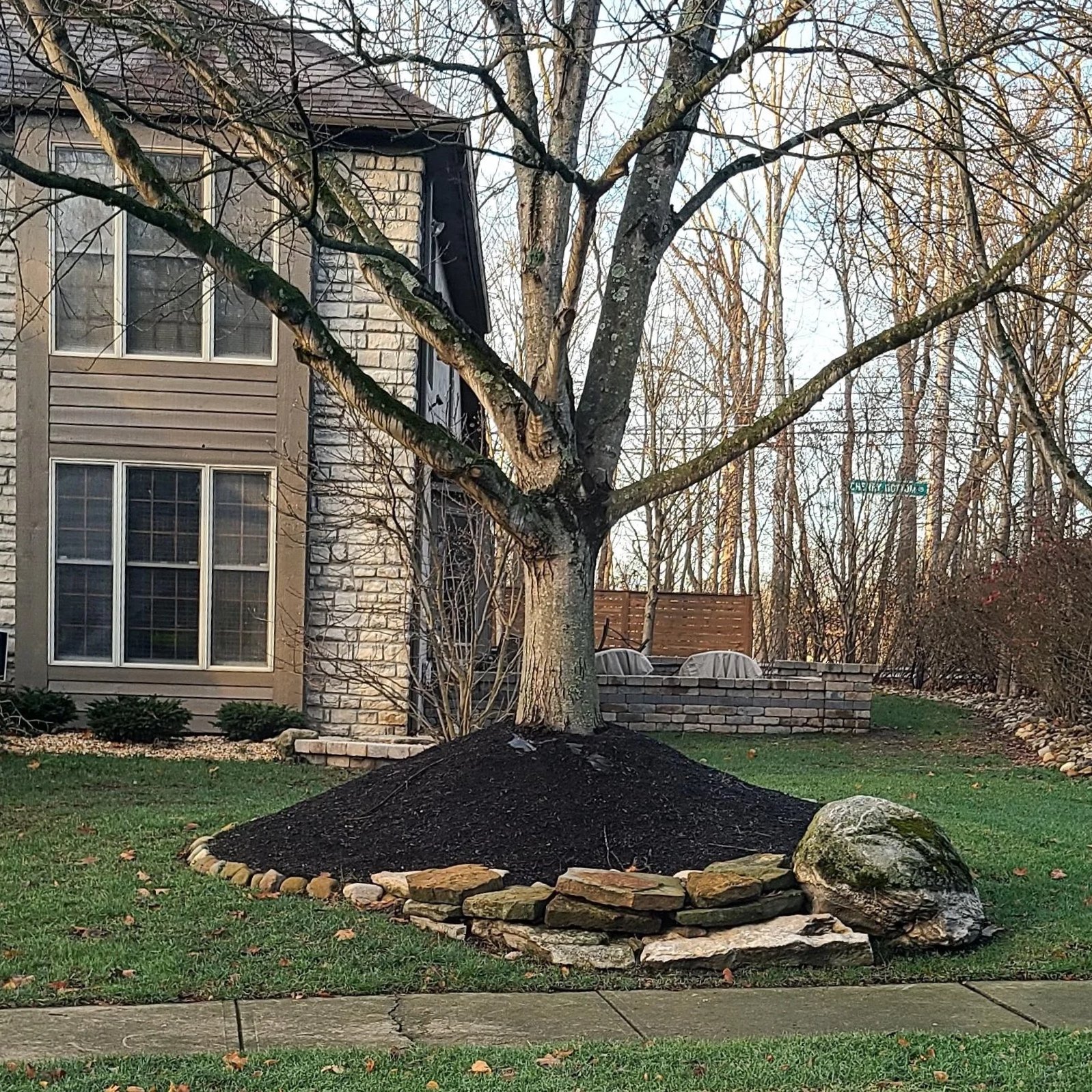
In many cases, fungal decay caused by excessive mulch can be prevented by properly installing a mulch ring, or by correcting the improper installation early enough. If decay is present, it cannot be reversed but it can be managed in an attempt to slow it down. Keeping mulch away from the trunk and exposing the root flare allows the bark to remain dry, oxygen to reach the roots, and the tree’s natural defense systems to function as intended. Preventing fungal decay is far easier, and far less costly than attempting to manage it after it has begun.
©Russell Tree Experts
When issues caused by improper mulching are caught early, a knowledgeable ISA Certified Arborist® can diagnose the problem and develop a treatment and maintenance plan to correct it and improve the longevity of your tree. For example, air excavation allows arborists to expose roots without causing damage. When an arborist performs an air excavation, the root flare can be exposed, underlying issues can be uncovered, and compacted soil can be corrected. Once these corrections are made, your tree can regain the proper environment it needs to thrive.
Take a moment to look at the base of your trees. If the trunk disappears straight into the soil or mulch, it may be worth investigating further. Check out the ARBOR ED™ article down below written by ISA Certified Arborist® Enrique Arayata on how to properly install a tree mulch ring. It contains both written instructions and a how-to video you can follow along to. Early awareness and small corrections can make a lasting difference in your tree’s health and longevity. For a free tree work quote please visit RussellTreeExperts.com/quote or call our friendly, local office at (614) 895-7000!
ADDITIONAL ARBOR ED™ ARTICLES!