
Laura Howell
Russell Tree Experts
October 29, 2026
— — —
As the temperatures drop, the evenings get darker, the apples are ready to be picked, and the leaves begin to change and fall, children and adults alike begin to decorate and prepare to celebrate Halloween. Ghouls, ghosts, and witches start popping up everywhere, prepared to scare and delight all those that come by. In this article, I will give a wide view of Halloween and some of its lore involving trees. The history and lore of Halloween is long and varied by country and time. The foundation of what Halloween has become began over 2000 years ago with the celebration of Samhain in Ireland. Where did the name Halloween come from? The day after All Saints’ Day was originally called All Hallows Eve.
Before the current 12-month calendar, Samhain was originally celebrated on the 11th full moon; with the current calendar, it is always celebrated between nightfall on October 31st and November 1st. Fire, spirits, demons, and new beginnings are all part of the basis for Samhain, now known to most as Halloween. During the night of October 31st, many cultures believe the boundary between the living and the dead is the thinnest of the year. So many traditions have developed to protect the living from the dead, physically and spiritually, and many of these include various trees.
Yew Tree (Taxus baccata)
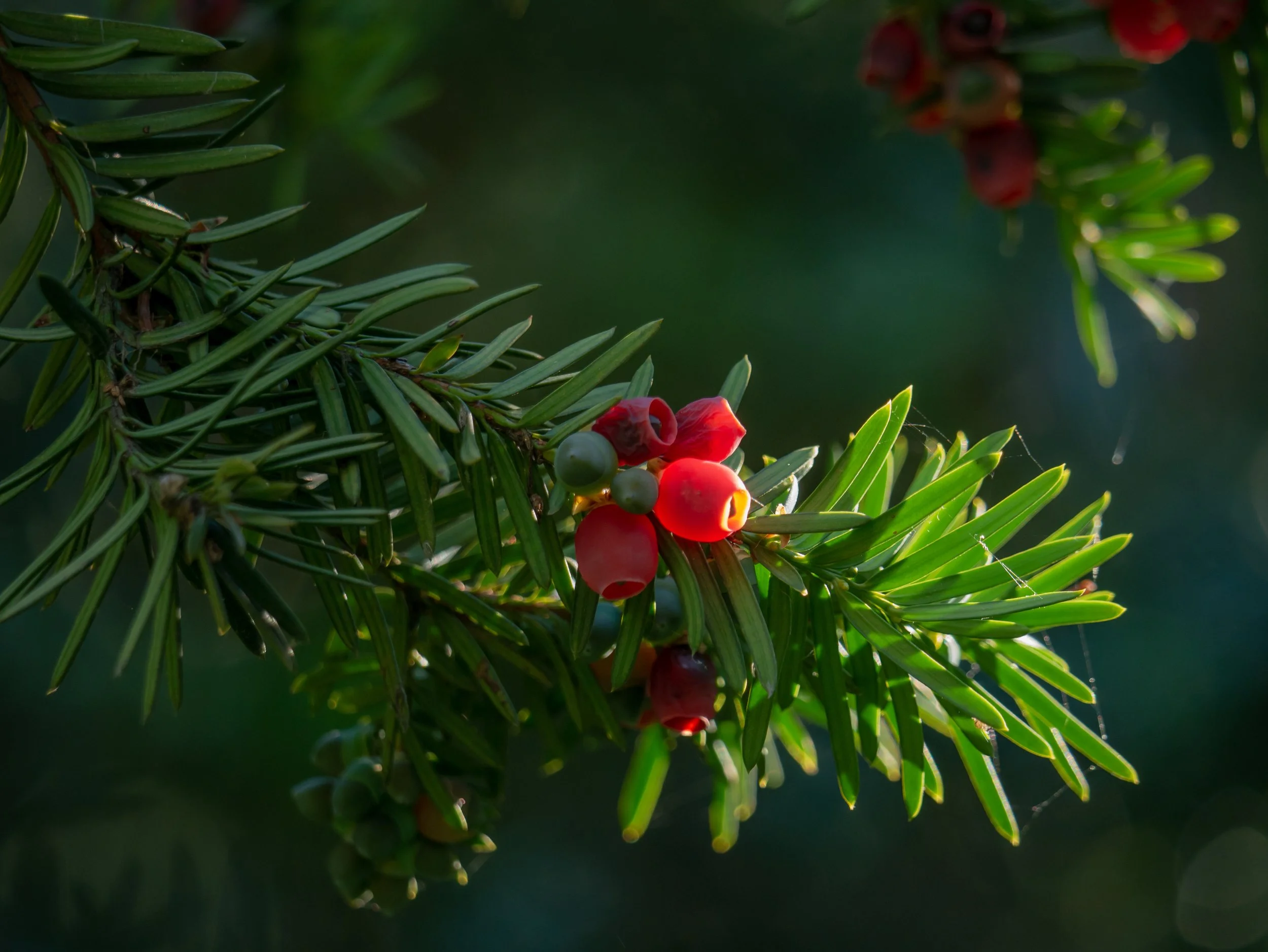
Connected to the traditions of Samhain is the Yew Tree (Taxus baccata) — these trees are unique for many reasons. They are long-lived, up to 5000 years, but that is an estimate because they can utilize epicormic growth, commonly known as suckers. They send suckers down from other branches to grow new trunks while hollowing out older ones. This makes common aging methods like ring counting difficult and inaccurate. The important question: how do these trees connect to Halloween? Yew trees are commonly found in graveyards and have been associated with life and death for millennia. Why are they associated with both life and death? They are green year-round, even through winter, and have long lives. The comparison to death is because the entire tree, from the leaves to the roots to the bark, and the berries except for the skin, is poisonous to humans and animals alike, discouraging graves from being disturbed by animals.
“Witch Tree” (Mountain Ash)
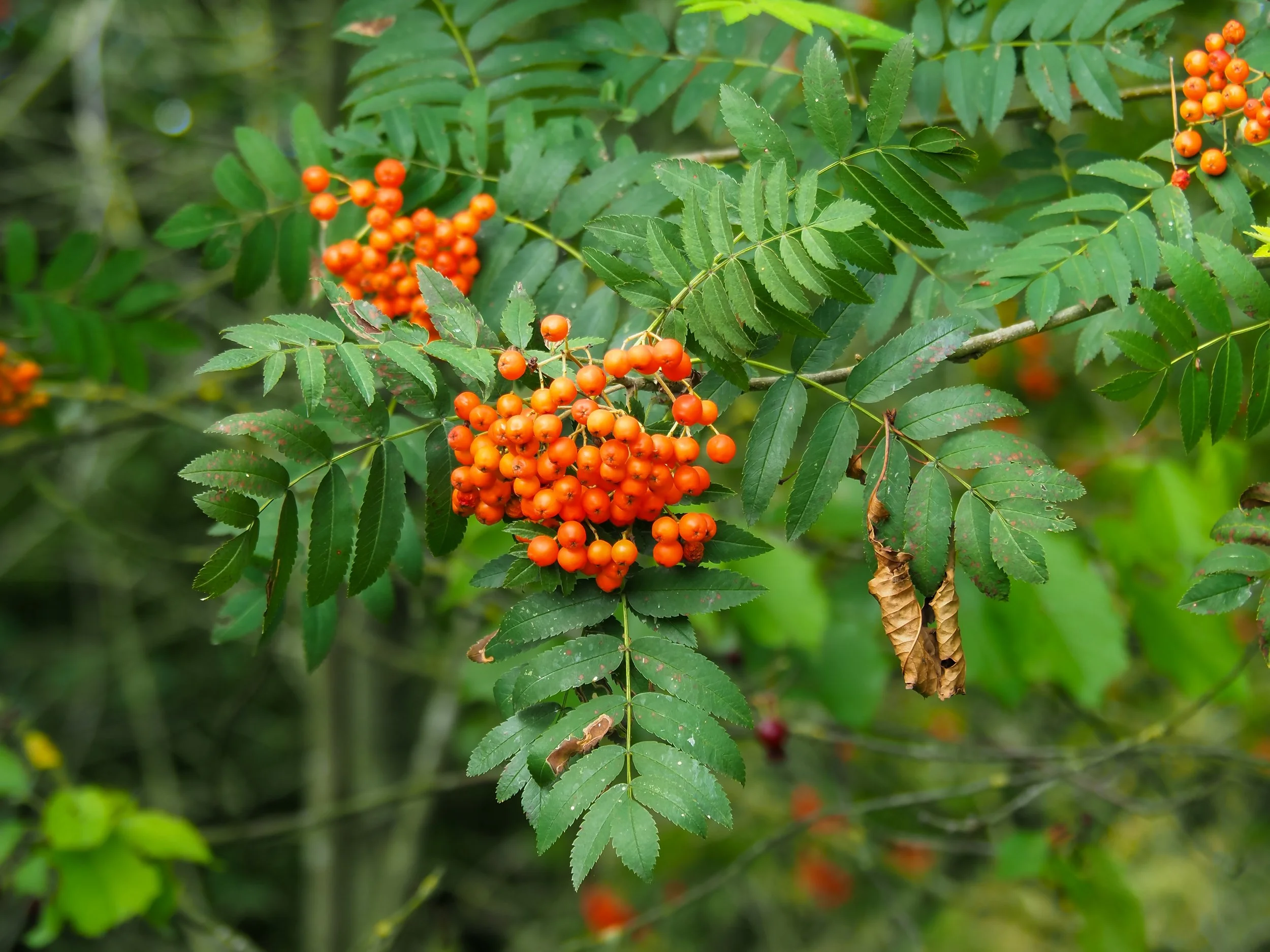
Need to protect yourself from… Vampires? Trees are here to help! But it depends on the folklore that you read, which will tell you which tree you should use. Let’s look at some common trees used to defend oneself from vampires. As many know, you need a wooden stake to protect yourself from vampires. Traditional Eastern folklore tends to prefer Ash or Rowan for the stakes. Ash trees (Fraxinus) were believed to be connected to life and the afterworld. For example, in Norse origin stories, the tree Yggdrasil was an ash tree that was believed to support fate, life, and the end of the world, giving it powers to protect from vampires. Another common stake source is the Rowan (Sorbus aucuparia); this tree is also known as the Mountain Ash or Witch Tree. This was used to ward off bad magic and spirits through beliefs that it was pure or anti-demonic. It is interesting to note that evergreen trees are not recommended for vampire stakes because of their association with life.
“Ghost of the Forest” (American Sycamore)
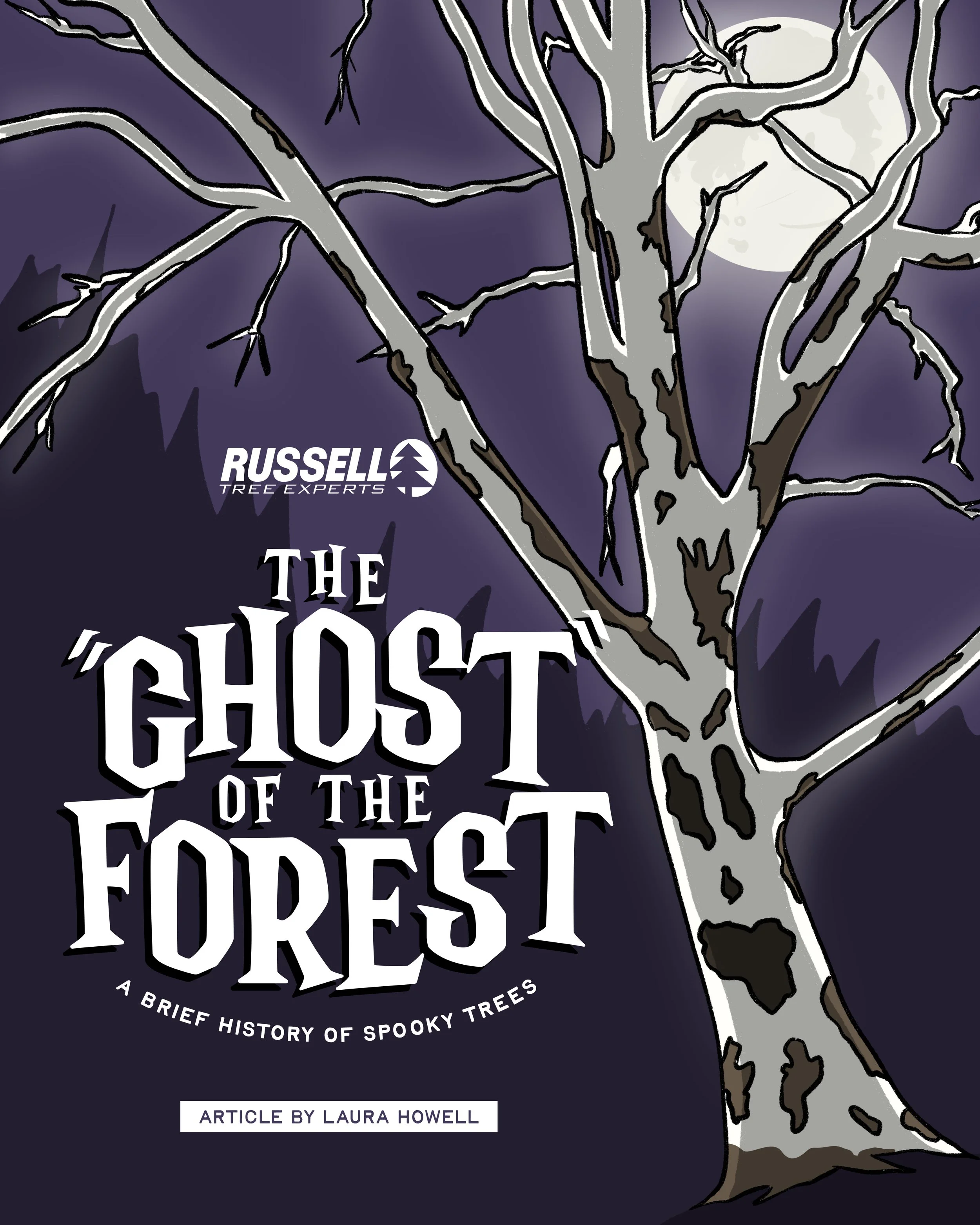
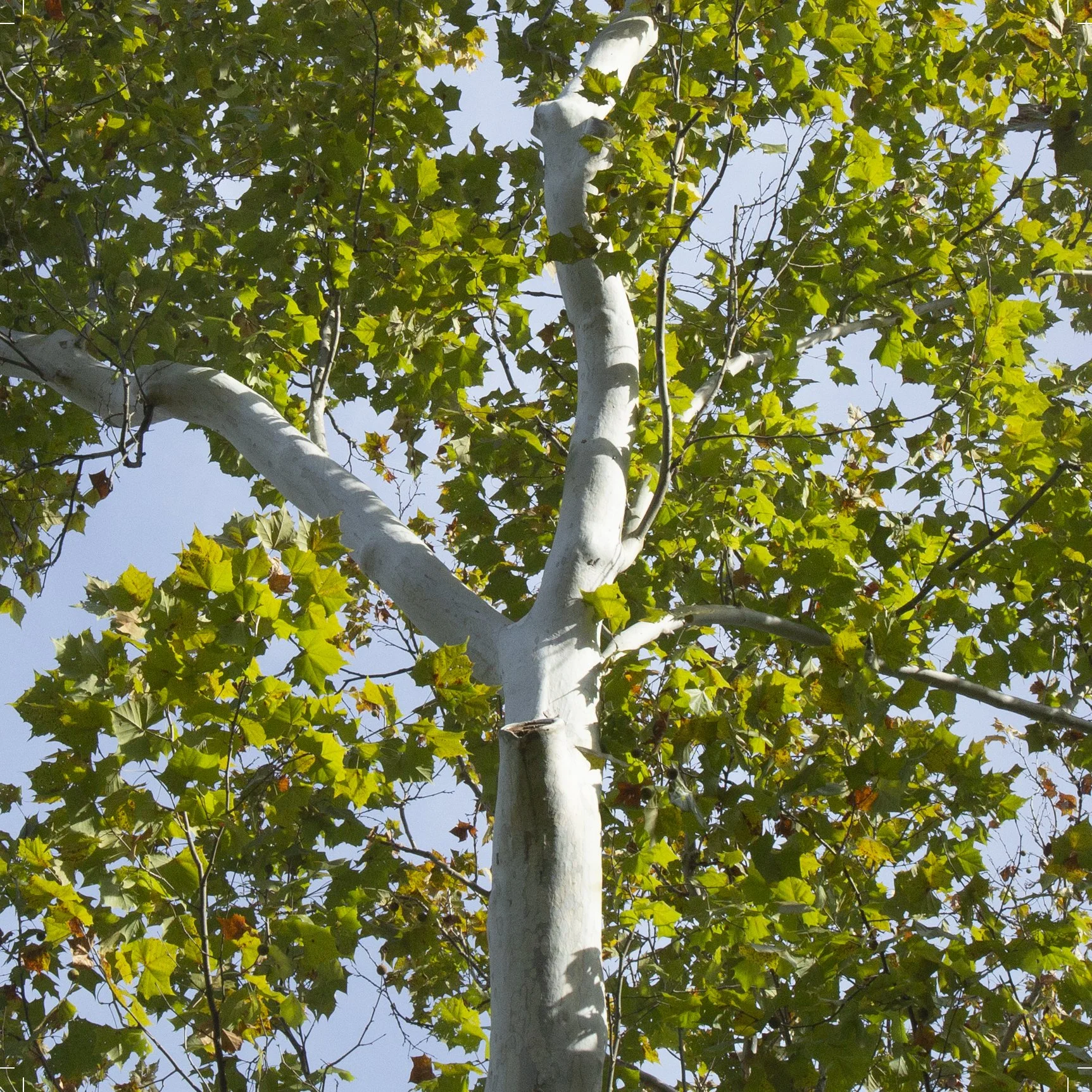
There are many trees all around the world associated with hauntings, fairies, witches, demons, and even ghosts. While brushing up on my Halloween lore and legends involving trees, I came across an interesting one about the American Sycamore (Platanus occidentalis). The American Sycamore carries a few festive nicknames such as the Ghost Tree or the Ghost of the Forest. It got these names because, as the tree bark sheds in patches, it makes the tree appear to be a large ghostly figure at night as the moonlight reflects on its pale inner layer.
Here are a few well-known trees you can see around the USA and abroad:
The Witch Tree (Louisville, KY) — Used by local witches and voodoo citizens as a meeting spot, but cut down for May Day; the local witch coven was upset and allegedly conjured a tornado to retaliate, and the tree regrew. Learn More
The Devil Tree (Basking Ridge, NJ) — Believed by some to be cursed, anyone who tries to cut it down, damage it, or dishonor it will come to bad luck or harm. Some have said it hides the gate to hell, which is why there is no snow around it in the winter.
The Llangernyw Yew (Llangernyw, Wales) — Believed to be haunted by Angelstor, who appears each Halloween to announce who will pass away in the coming year. Learn More
Hoia-Baciu Forest (Cluj-Napoca, Romania) — 55,000-year-old forest believed to be haunted. Reports of rashes, UFOs, and disappearing sheep! Learn More
Have a safe and Happy Halloween!