
Planting Trees for a Purpose
I think we all can agree that our TREE FOR A TREE® program is an awesome idea for replacing the trees that we remove, but as I set in the office watching nature happen outside my window, I started thinking of other reasons to plant trees. Trees provide countless benefits to our environment as well as providing food and shelter for a number of living organisms. Anytime that I am walking through a property I cannot help but notice the birds enjoying all that the trees are providing for them. I decided to write about planting trees that provide shelter and food for birds throughout the year.

I think we all can agree that our TREE FOR A TREE® program is an awesome idea for replacing the trees that we remove, but as I set in the office watching nature happen outside my window, I started thinking of other reasons to plant trees. Trees provide countless benefits to our environment as well as providing food and shelter for a number of living organisms. Anytime that I am walking through a property I cannot help but notice the birds enjoying all that the trees are providing for them. I decided to write about planting trees that provide shelter and food for birds throughout the year.
One of the first types of trees that I would consider would be conifers. Not only do they provide fruit and seed throughout the fall and into winter, but they also provide unmatched cover and nesting sites. The Eastern red cedar would be a favorite for our area as well as White pine and many Spruce species. If you plan to feed the birds, it is always a good idea to have conifers nearby to provide cover for the birds taking advantage of your feeders.
The next type that I would recommend planting for attracting and feeding birds would be a variety of fruit trees. Careful selection of varieties can provide fruit throughout the year. One favorite would be the Mulberry tree, but be careful with placement as the fruit can be rather messy. Other smaller trees would be Serviceberries, Flowering Dogwoods, and Crabapples which can provide fruit from the summer, (Serviceberry) to the fall, and even into the winter with many Crabapples.
Of the large native trees, there are a few that seem to attract a large variety of birds, including wild turkeys. Some would be the White oak, Wild black cherry, and the American beech. They provide nuts, fruit, and the Beech often provides hollow nesting sites as well, often used by Owls.
There are also many vines that are very beneficial to birds. A couple of favorites are wild grape vines which are great for the fruit they provide and the shredding bark is great for nest building material. Another would be the Virginia Creeper vine that provides fruit that can last into winter and as a bonus has brilliant fall color.
One thing to keep in mind when planting to attract birds in our area is to try to use native plant material when possible. There is a large variety of native shrubs as well that are awesome plants with a lot of benefits for birds.
Another idea that I observed recently while visiting a client’s property was a technique they used to attract woodpeckers. They gathered large fallen branches from a wooded area on their property and leaned them against a tree outside their window where they hang their bird feeders. The woodpeckers would come to extract insects from the decaying branches.
In closing, I would like to mention a few quick reminders to keep in mind whenever planting trees and shrubs:
Always identify the root flare on your plant material prior to digging the hole as this will identify how deep to dig the hole.
Dig a broad shallow hole, no deeper than needed to place the root flare at the same height as the surrounding grade, and broad enough to allow proper root expansion.
Firmly backfill around the root ball and only stake when necessary to support the tree.
Water thoroughly and cover the excavated area and tree with 1-2 inches of mulch.
Also, here is a how-to video created by our team. Check it out!

Mike McKee | Regional Manager, Russell Tree Experts
Mike graduated from Hocking College in 1983 with a degree in Natural Resources specializing in urban tree care. He has been a certified arborist since 1991. Mike started his career in the private industry in 1985 before becoming a municipal arborist in1989. He retired after serving thirty years before joining us at Russell Tree Experts in Sept. of 2018. His love of trees has never waned since trying to climb up the ridges of the massive Cottonwood tree in front of his childhood home.
Understanding Conifers
Understanding conifers should begin with a few simple definitions to clarify and classify. A conifer is a plant that bears its seeds in cones. When we hear the word cone, we likely think of pine and spruce trees, two types of coniferous trees that are widely found throughout Central Ohio and beyond. Their cones are obvious when they fall and scatter on the ground surrounding the tree. But did you know that yews (Taxus) and junipers are also conifers?

Avocados can be tricky. You buy them green, and the next day they’re still not ripe. The day after that they’re still not ripe. Then, the day after that they’ve all gone bad! To be clear, avocados don’t come from conifers. But I’m often reminded of avocados when homeowners contact us regarding concerns they have about their conifers. Conifers, like ripening avocados, can also be tricky. A row of ‘Emerald Green’ Arborvitae can appear to be fine, and then seemingly overnight, half of them are DEAD! A mature white pine can appear to “almost die” every second or third year. These issues can be understandably frustrating and can give us the false notion that these plants are hard to grow. Understanding the ways in which they’re different from other plants in the landscape can help in successfully caring for conifers and allowing them to thrive.

Understanding conifers should begin with a few simple definitions to clarify and classify. A conifer is a plant that bears its seeds in cones. When we hear the word cone, we likely think of pine and spruce trees, two types of coniferous trees that are widely found throughout Central Ohio and beyond. Their cones are obvious when they fall and scatter on the ground surrounding the tree. But did you know that yews (Taxus) and junipers are also conifers? Both bear their seeds in a fruit-like structure that is often incorrectly referred to as a berry. These berry-like fruits are actually cones, botanically speaking. Some other common conifers in Central Ohio include arborvitae, hemlocks, and firs. Because the foliage of most conifers is evergreen, meaning it does not fall off each year with the cycle of the seasons, the terms evergreen and conifer are often used interchangeably. Doing so, however, is not completely accurate. It’s important to understand that the term evergreen also refers to some broadleaf plants like rhododendron, holly, boxwood, and others. These plants are evergreens, but not conifers.
Conifers belong to a very ancient classification of plants and are different from non-coniferous plants in a number of ways. Below are a few of their key characteristics that often confuse homeowners (and sometimes even otherwise qualified arborists!). Knowing what to expect and how to care for conifers is the first step in successfully maintaining them in your landscape.
Seasonal Needle Drop

Japanese White Pine experiencing fall foliage
© Russell Tree Experts
Even though most conifers are evergreens, their evergreen foliage still eventually falls off. Some very common conifers in Central Ohio, like pines, yews, and arborvitae, will drop a significant amount of their inner foliage every 2-3 years as part of a natural occurrence of cyclical needle drop. This can be alarming if you’re not familiar with the process. When it happens, the important thing to recognize is that it’s happening uniformly throughout the entire plant, and all of the browning/yellowing foliage is further back on the branch. These are the needles that are 2-3 years old and have reached the end of their life cycle. You might also look around your neighborhood to see if the same tree or shrub in other landscapes is doing the exact same thing, and at the same time. This process will never occur on the tips of the branches. If you have needles that are discoloring and falling off from the very tip or end of the branch, it is likely due to other factors and may indicate a disease, insect, or watering issue.
Delayed Response to Stress

A dead ‘Emerald Green’ Arborvitae due to drought stress
© Russell Tree Experts
Perhaps the most challenging thing about conifers, specifically evergreen conifers, is that they do not give immediate feedback from water-related stress or injury. Herbaceous annuals like impatiens and petunias will let you know almost immediately when they are low on water by wilting excessively. Many deciduous trees, when first planted, will also show signs of wilting foliage relatively quickly when their roots become dry. This type of visual feedback is often what reminds us to get outside and water our newly installed landscape trees or shrubs. Coniferous evergreens, on the other hand, can have a delay of weeks or even months before they show obvious signs of drought stress. The reason this is an issue is simple; by the time we see it, the damage may be too extensive to reverse. It’s important to thoroughly and properly water any newly planted trees or shrubs. Don’t over-rely on in-ground irrigation, which often does not water for a long enough span of time to properly soak the ground, or may not thoroughly cover an area, leading to “dead zones” that receive little to no water at all. Proper watering regimes should be followed for the first season, and supplemental watering may be beneficial in subsequent years during very dry months. Watering in the fall is important too. This helps to keep roots moist once the ground freezes. Inadequate levels of water in the soil during freezing temperatures can rob a plant’s roots of water and lead to winter desiccation. Oftentimes we see this show up late winter or even early in spring.
Limited Regrowth with Pruning
The proper pruning of conifers varies from that of their non-coniferous counterparts. Many landscape shrubs and even a few tree species can be pruned aggressively to maintain a certain size or habit without adversely affecting the health and longevity of the plant. Many conifers, however, are not tolerant of heavy pruning that removes the majority of the foliage from a stem or branch. Junipers provide a classic example of a plant that cannot be pruned back to bare wood. Once this is done, the exposed area will not fill in with new growth. Pine, spruce, and fir are also examples of conifers that will not produce enough new growth on over-pruned parts of the plant. One example of a conifer that is an exception to this rule is the yew. When cut back aggressively, yews can and do generate enough new growth (slowly) on old, bare branches. Knowing how to properly prune conifers requires a good understanding of each plant species’ characteristics and habits, and may be best left to a professional arborist.

Healthy Dawn Redwood trees in the fall
© Russell Tree Experts
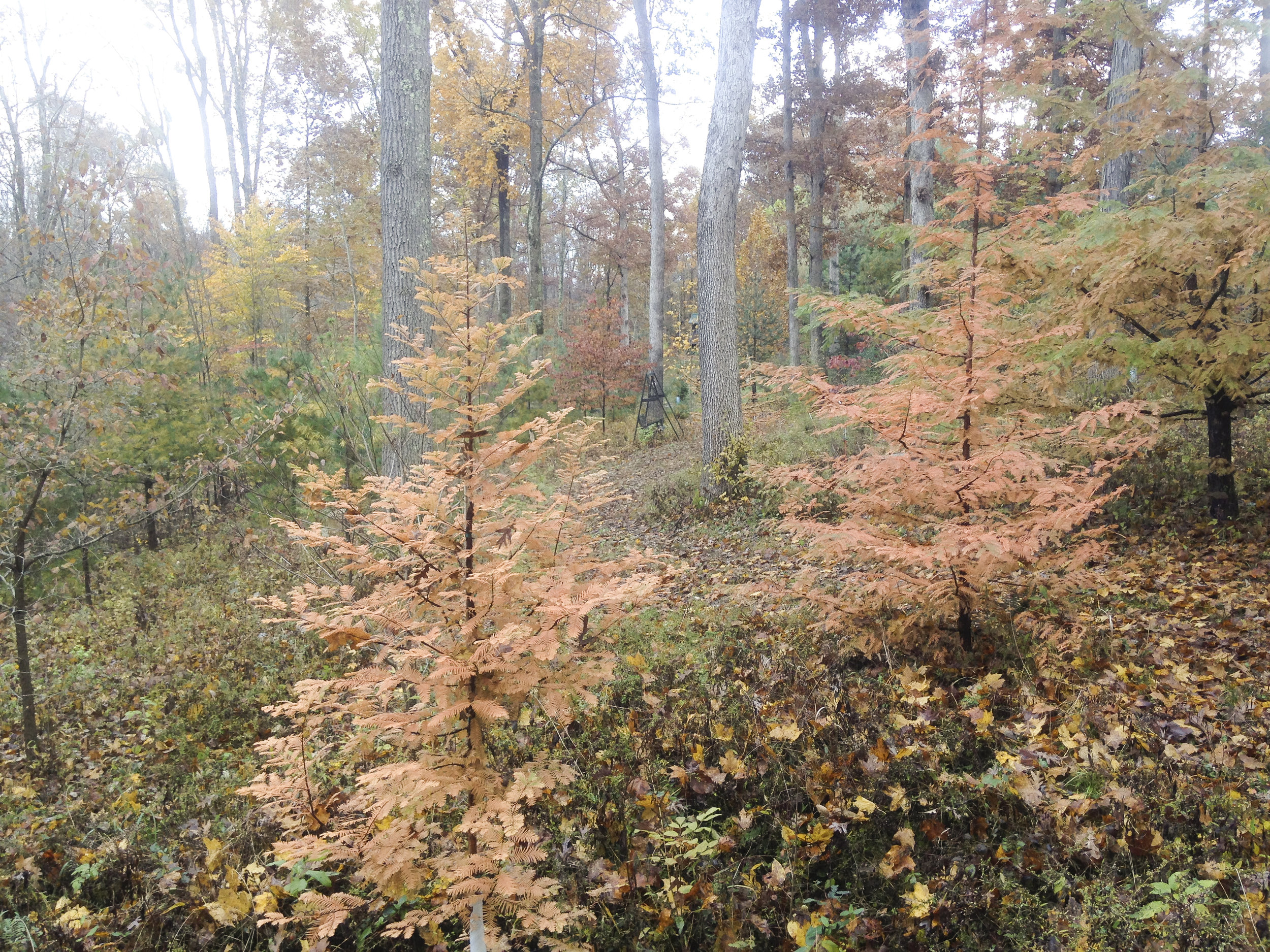
Finally, it’s worth noting that a few types of conifers succeed in inciting worry and confusion whenever a home changes hands and the new owners are unfamiliar with the trees in the landscape. These are of course the deciduous conifers. Two deciduous conifers can be found commonly throughout Central Ohio landscapes- the dawn redwood and bald cypress. These trees will naturally lose their needles every year just like a Maple or Ash loses its leaves. As mentioned previously, most of us equate conifer with evergreen. So to see this occur for the first time and not understand what’s happening, one might assume the tree is dying for some unknown reason.
Conifers do things a bit differently, which can make them a little harder to understand. Answers to your coniferous questions are always just a phone call away at Russell Tree Experts. The unique characteristics mentioned above are just a few of the many reasons you should entrust your trees, all of them, to a qualified professional tree care company. Otherwise, your new neighbor, though his intentions are good, might just tell you to cut down that dawn redwood that keeps “dying” every year.

Walter Reins | Regional Manager, Russell Tree Experts
Walter has been an ISA Certified Arborist since 2003. He graduated from Montgomery College in Maryland with a degree in Landscape Horticulture, and has called Columbus, OH his home for nearly 20 years. Walter appreciates trees for their majesty and the critical role they play in our world.
Don’t Get Fooled by the Fall Color of Conifers!
Every fall I get calls from folks concerned about yellow needles on their evergreen trees. Often times I’m told that the trees are sick or that they appear to be dying from the inside out. There are some disease and insect problems that can cause yellowing and premature loss of needles in conifers but most often what people are reporting is just normal fall color.

By TJ Nagel
ISA Board Certified Master Arborist® OH-6298B
November 13, 2025
Every fall I get calls from folks concerned about yellow needles on their evergreen trees. Often times I’m told that the trees are sick or that they appear to be dying from the inside out. There are some disease and insect problems that can cause yellowing and premature loss of needles in conifers but most often what people are reporting is just normal fall color.
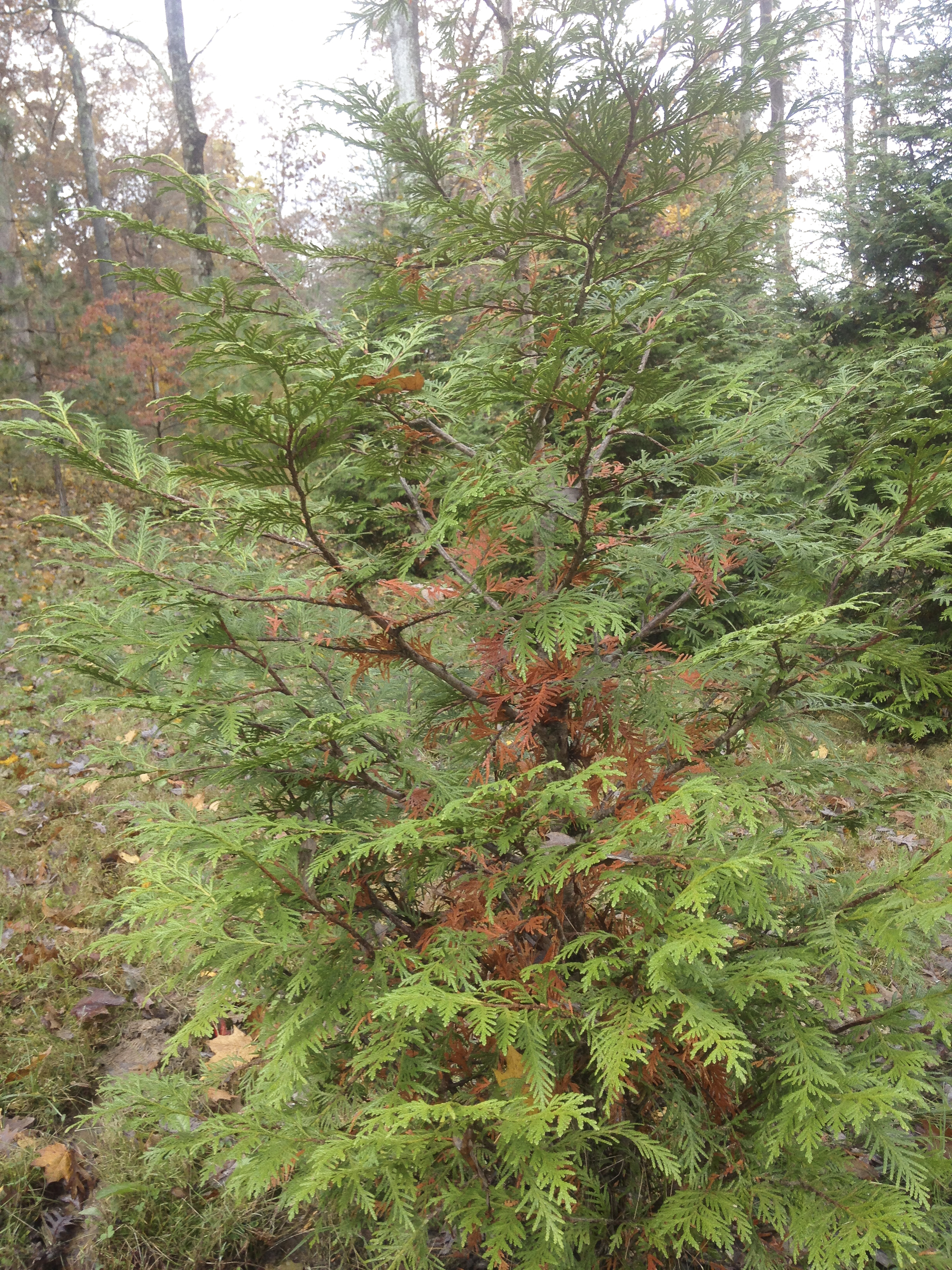
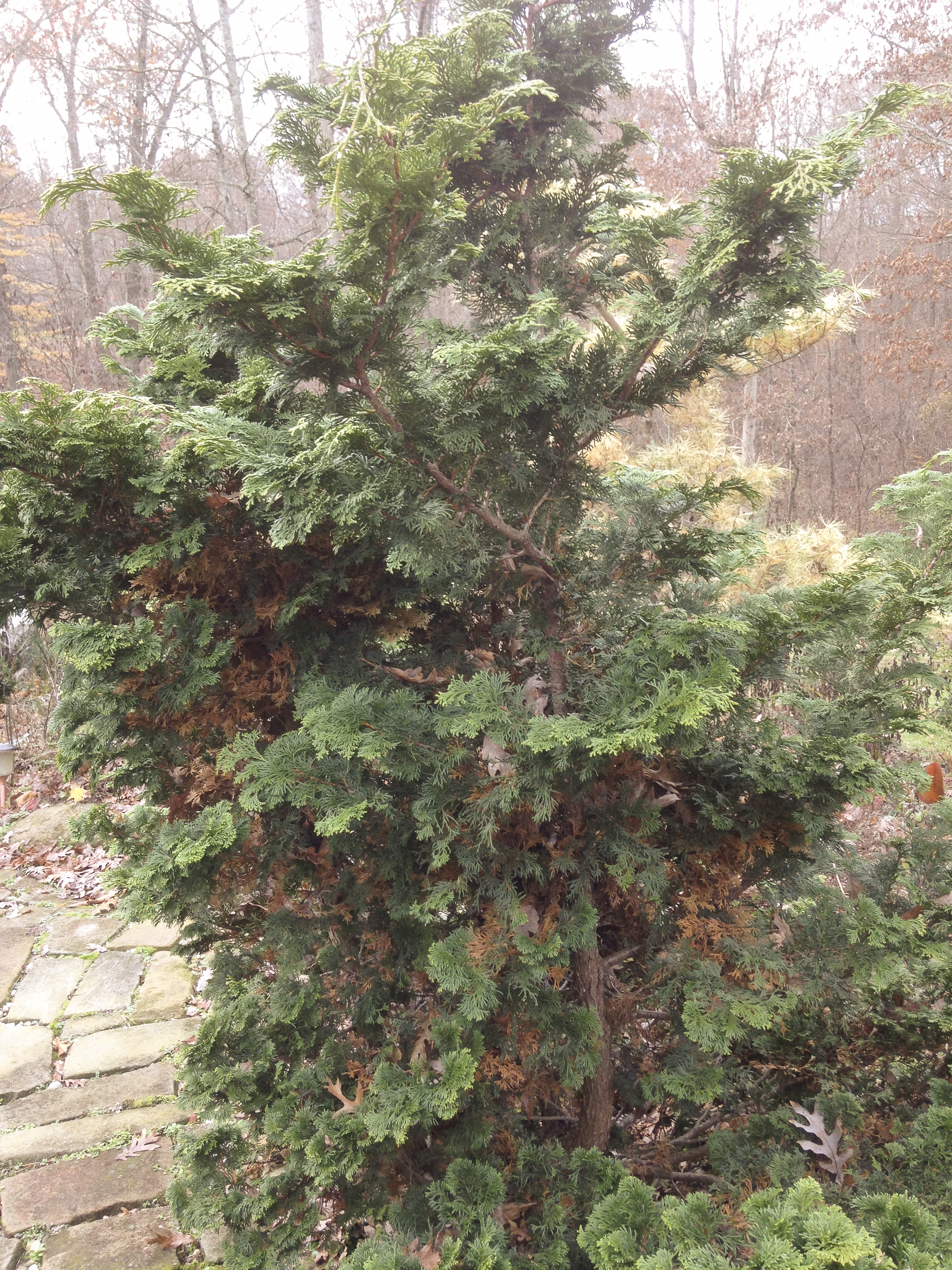
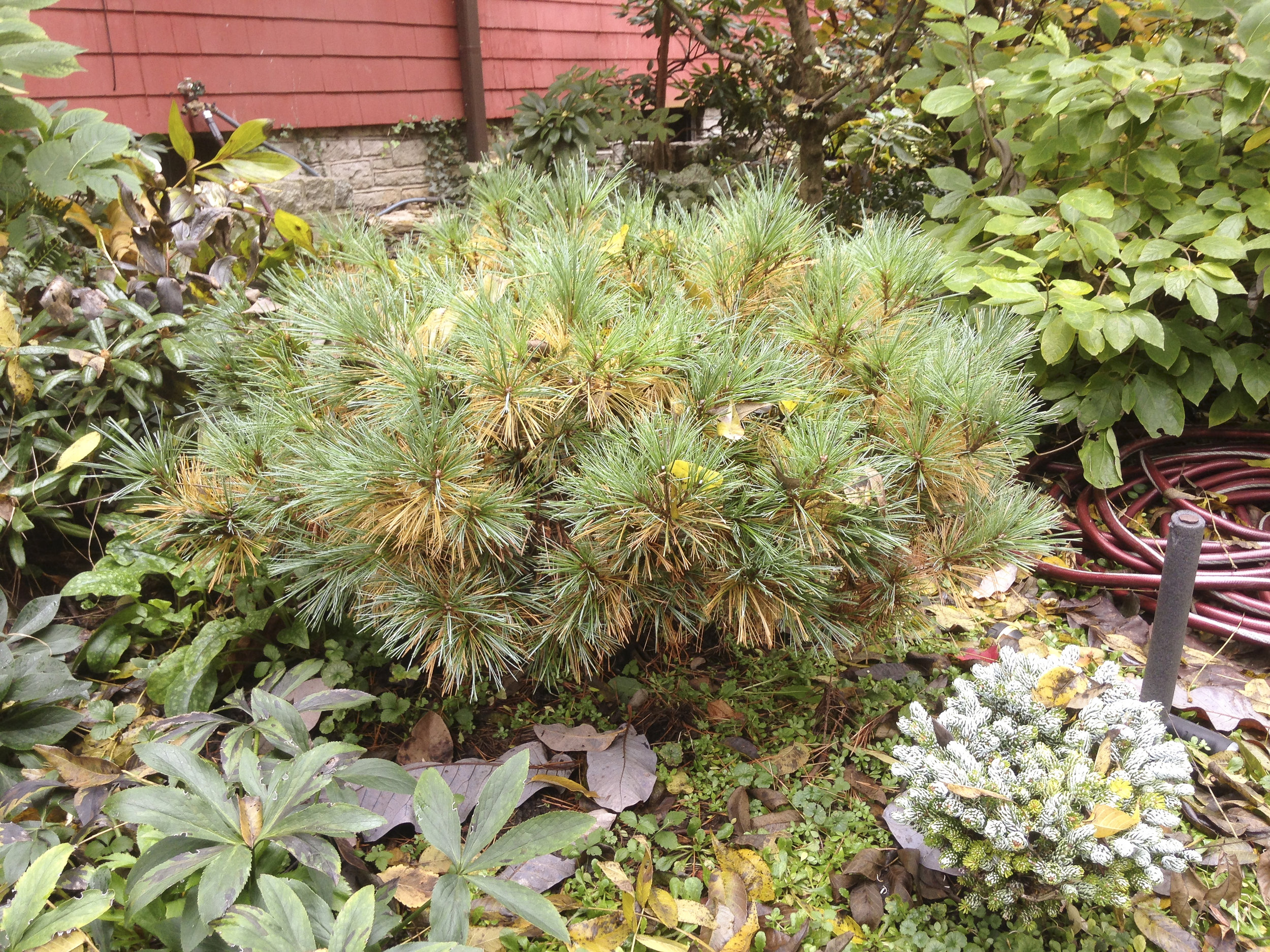
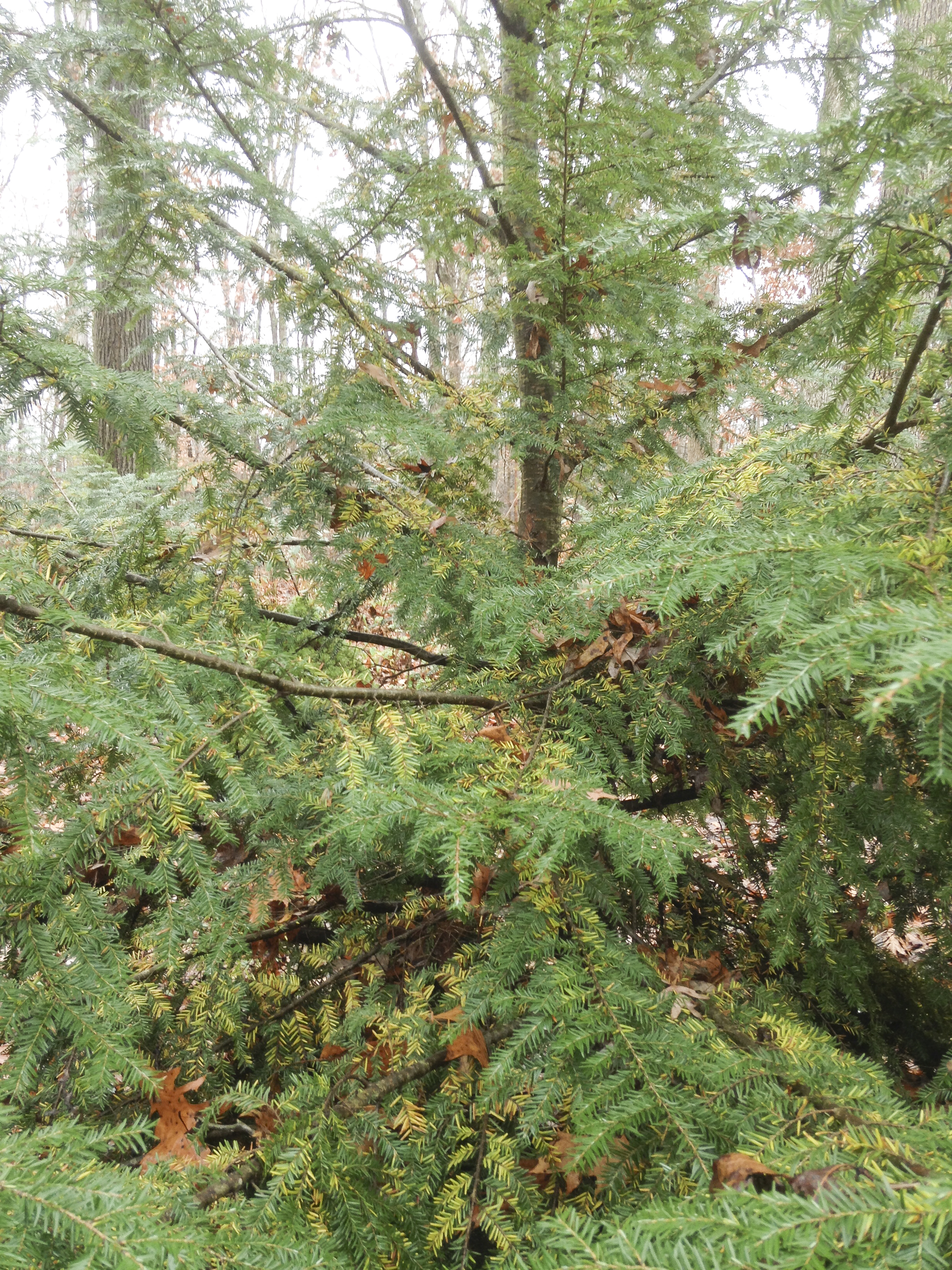
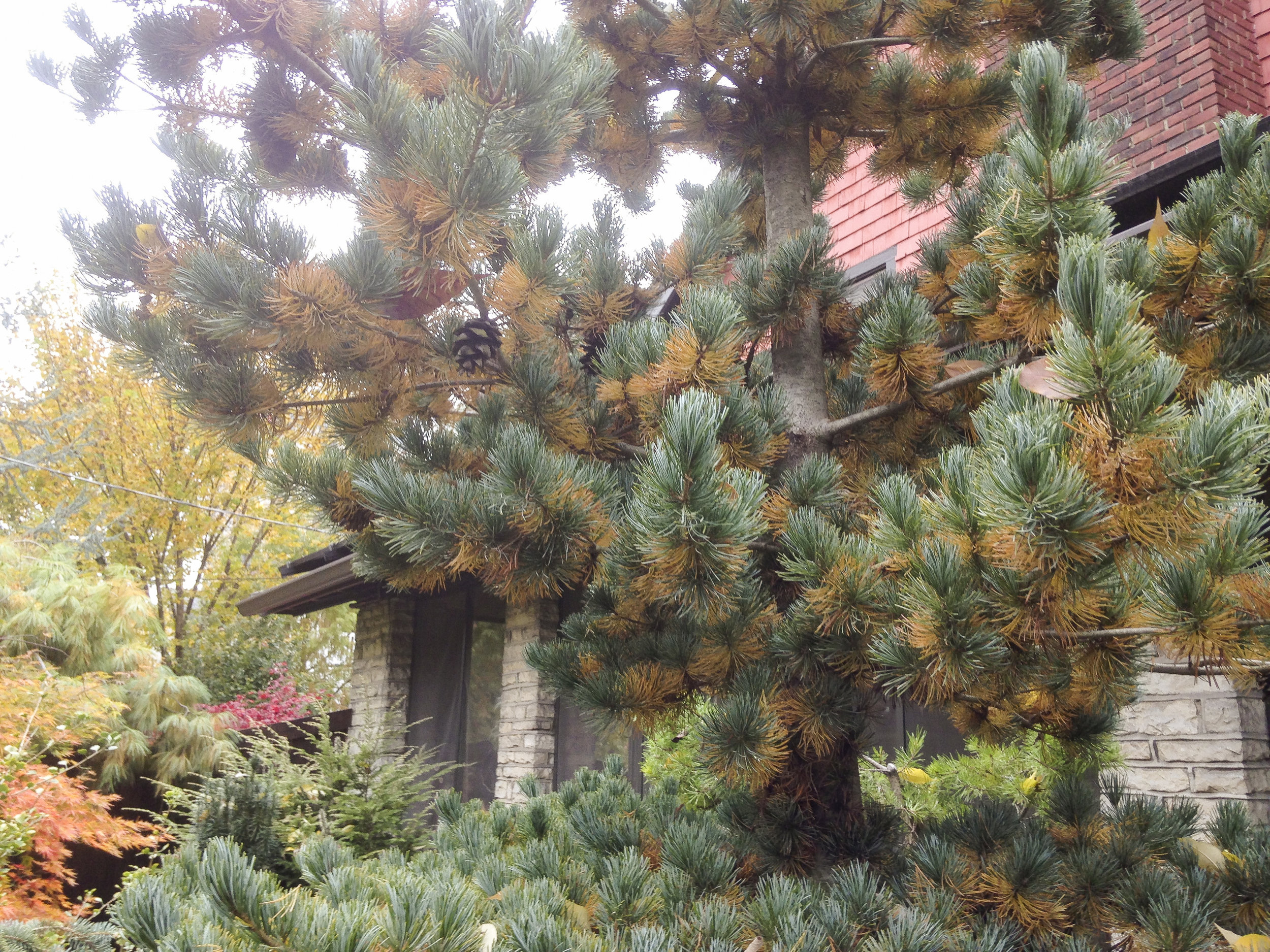
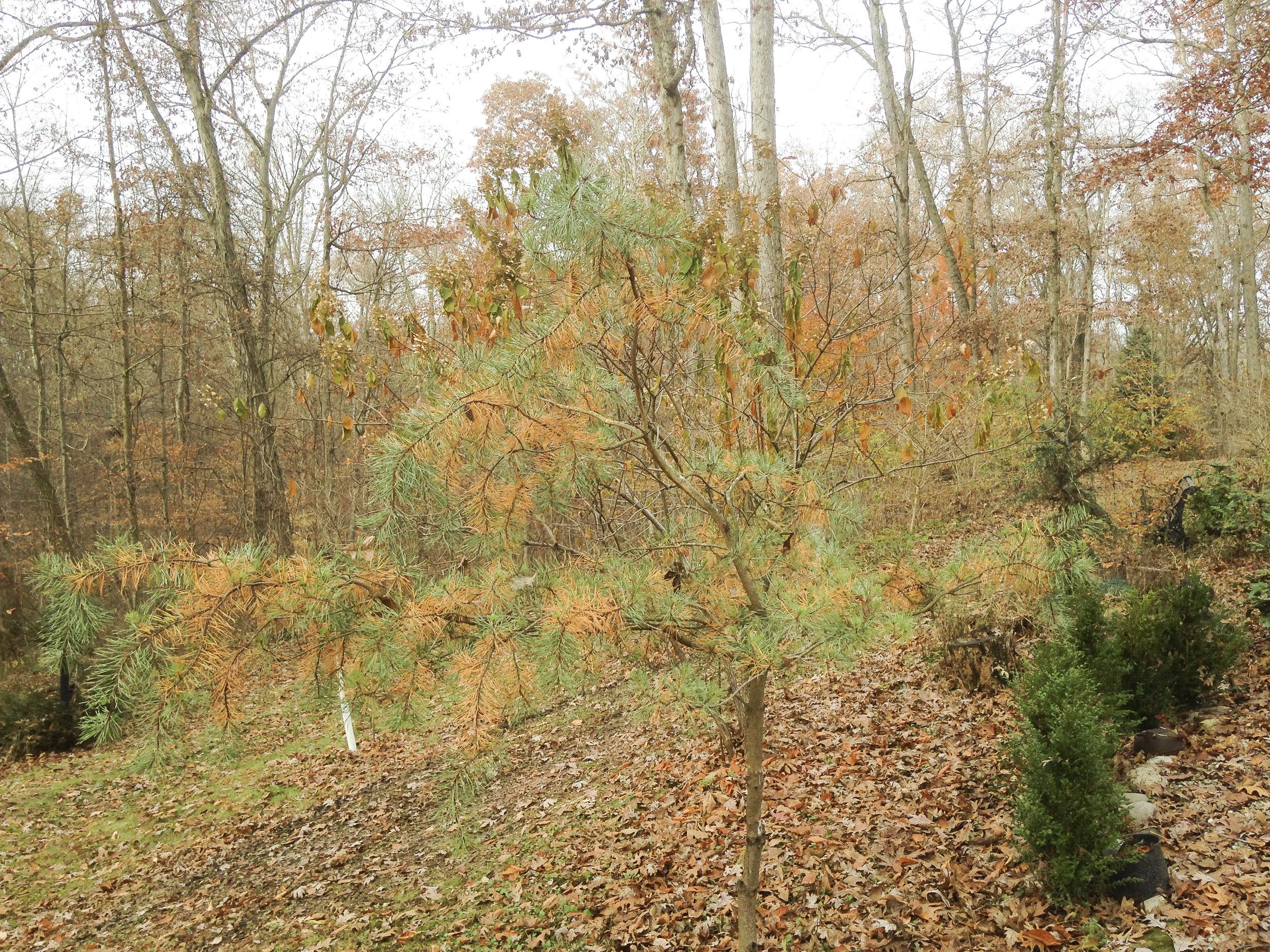
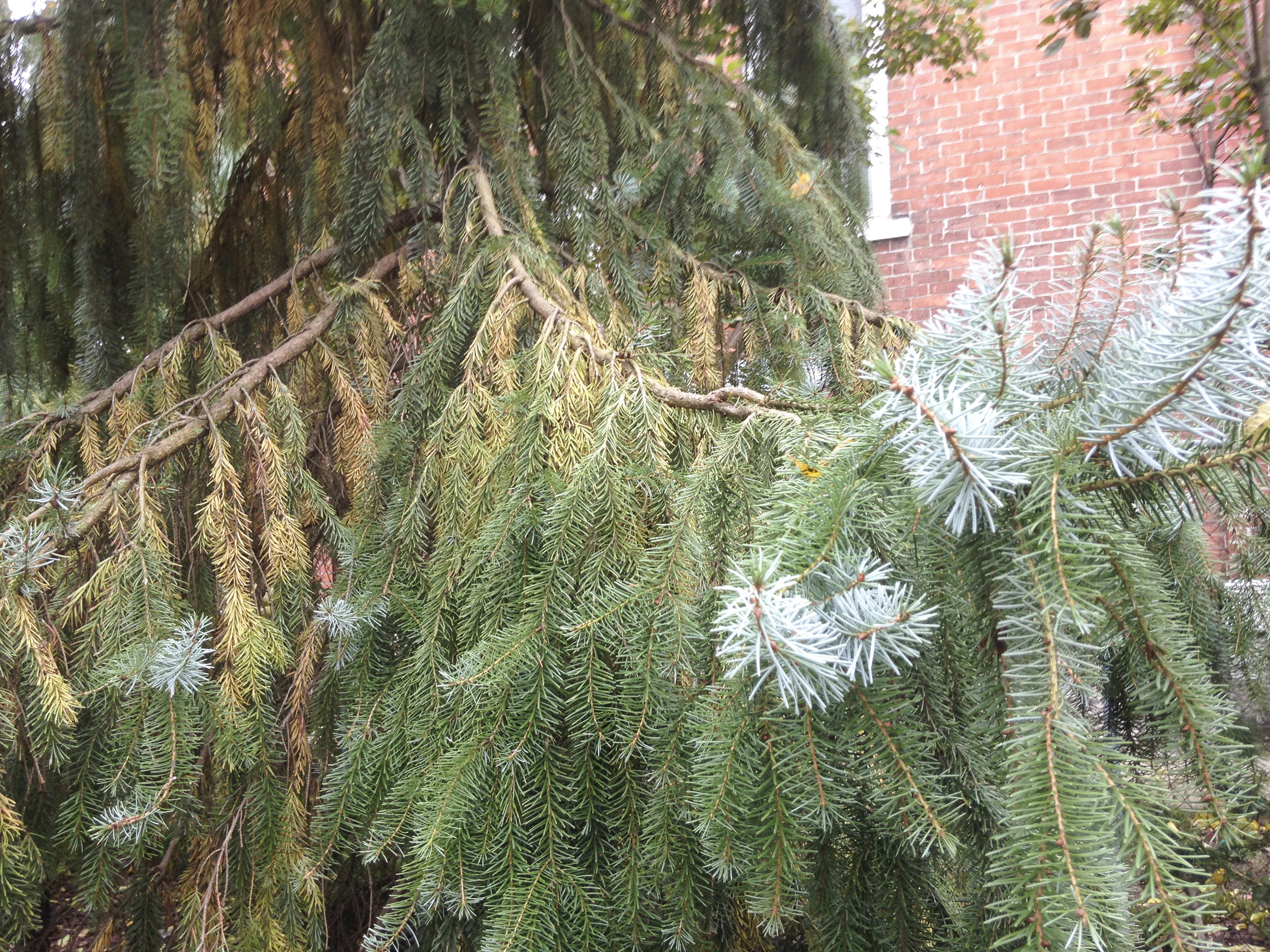
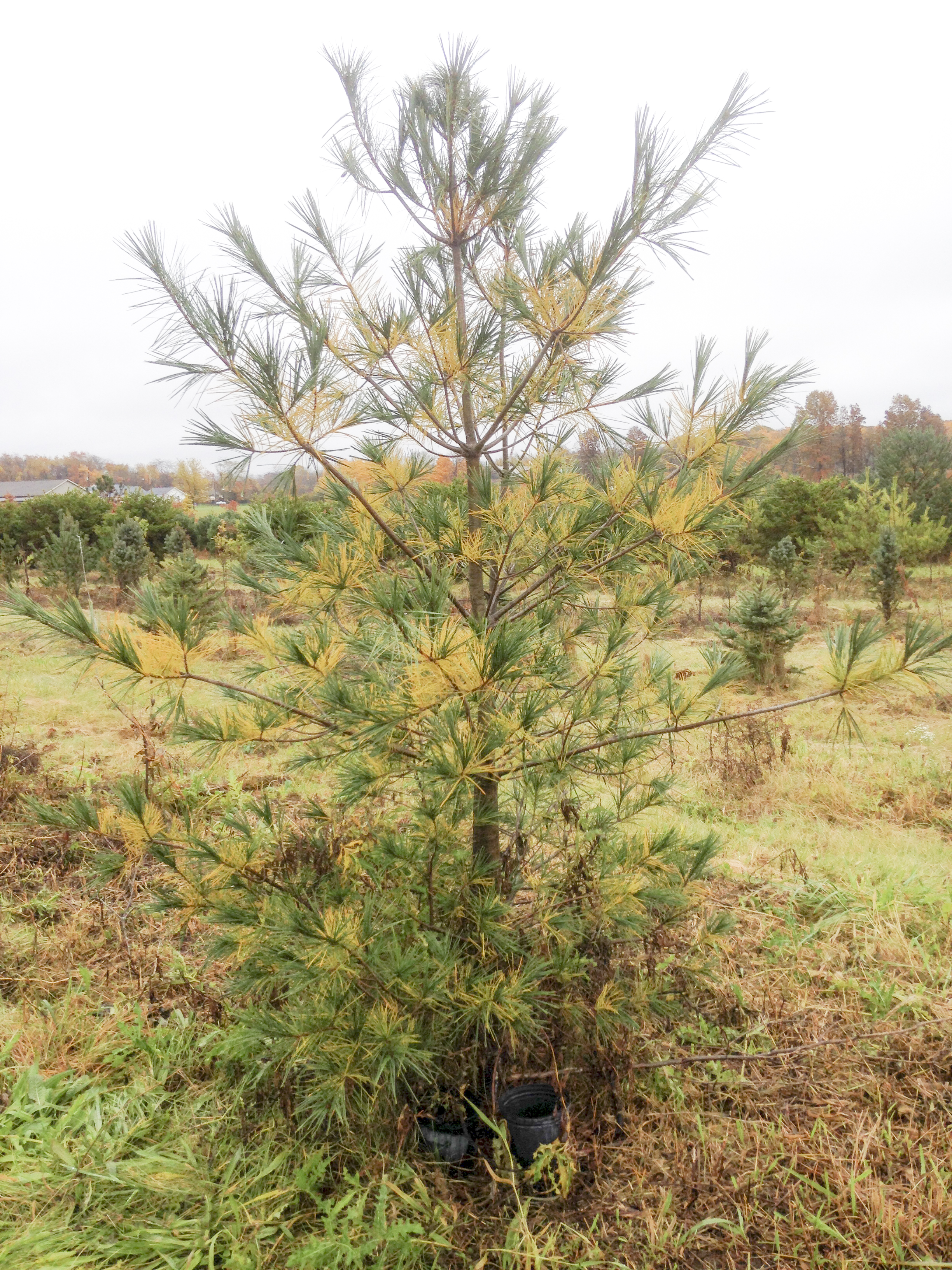
Yellowing and the loss of old needles in the fall is normal for pine, spruce, arborvitae, hemlock and most evergreen conifers in the midwest. Most conifers shed their needles each year starting in late August and continue through November. Older interior needles will turn yellow while needles further out in the canopy and at the tips of branches will stay green. The yellow needles eventually drop off starting at the top of the tree and working their way to the bottom in a uniform fashion. Taxus (also called Yew) is the exception showing it’s “fall color” in mid to late spring.
Most folks understand and look forward to the fall color change in our maples, oaks, hickories and other hardwood trees — fall needle drop in conifers is as normal as leaf drop in deciduous trees.
The change in color and eventual drop of foliage is simply a physiological response to the shorter days and cooler temperatures as trees (both evergreen and deciduous) prepare themselves for the winter.
Pictured below are some of my favorite conifers showing fall color:
Please note: This article was revised on 11/12/25 and originally published on 11/28/18.
ADDITIONAL ARBOR ED™ ARTICLES!



TJ Nagel I Scheduling Production Manager, Russell Tree Experts
TJ joined Russell Tree Experts in 2012 and loves trees. He is an avid gardener and plant collector. TJ graduated from The Ohio State University with a B.S. in Agriculture with a major in Landscape Horticulture and minor in Entomology. TJ is an ISA Board Certified Master Arborist® and well versed in plant pathology and tree ID.
Fear no Weevil (With Fall Systemic Insecticide)
As we prepare for another season of Fall Tree Wellness, another important insect pest to take note of is the White Pine Weevil. White Pine Weevil is a damaging pest to a broad range of conifers, including White, Scotch, Red and Austrian pine as well as Colorado blue, Norway, and Serbian spruce. Douglas-fir can also be attacked.

As we prepare for another season of Fall Tree Wellness, another important insect to take note of is White Pine Weevil. White Pine Weevil is a damaging pest to a broad range of conifers, including White, Scotch, Red and Austrian pine as well as Colorado blue, Norway, and Serbian spruce. Douglas-fir can also be attacked. White pine Weevil does the bulk of its damage to trees in the later part of the Spring, but I mention it now because we get the most successful management of this pest with a Fall application of systemic insecticide. If you have had damage from White pine weevil in the past - now is the time to take corrective action.
Adult white pine weevil spends the winter underneath dropped needles and debris, generally very close to previously infested trees. On warm days in early Spring, the adults travel to the terminal leaders of host trees and begin feeding on terminal branches. Later in Spring the adult females will mate and deposit eggs into feeding wounds. Dozens to hundreds of eggs can be deposited into one terminal leader. Eggs hatch one to two weeks later with larvae feeding downward on the inner bark of the terminal stems. Feeding continues through mid-July at which point larvae pupate in hollowed out chambers inside the stem. New adults emerge in late July - August and feed intermittently on small twigs throughout the canopy of the tree until they move to the base of the tree for overwintering shelter.
The most destructive stage of white pine weevil is the larval feeding stage which produces a conspicuous injury to the host tree by causing the new growth of the tree to wilt and die back. The affected terminal shoots wilt into a “shepherd’s crook” (see below photo) and the needles turn lighter in color before turning brown and eventually falling off. In most cases host trees are not killed. However, feeding injury stunts the growth of the tree and can also cause trees to develop poor structure with multiple new leaders forming beneath damaged areas.
Injury to white pine is generally confined to the previous season’s growth. Damage on Scotch pine and spruce will often extend downward through two or three year’s growth.
Managing The White Pine Weevil
Host plants are most attractive to White pine weevil between 3’ and 20’ in height. In June - July, look for curled or dead terminal leaders that have the appearance of a “shepherd’s crook.” These infested leaders should be pruned out of the tree and destroyed or removed from the site to attempt to eradicate the pest from the host plant.
If you have had infestations of white pine weevil in the past or have host plants in the preferred size range, a well-timed soil drench with an appropriately labeled systemic insecticide works really well at controlling this pest. This application is recommended in the Fall to allow sufficient time for uptake of the insecticide to the terminal shoots of the tree by Spring when larval feeding resumes.

TJ Nagel | Regional Manager, Russell Tree Experts
ISA Certified Arborist® OH-6298A // Graduated from The Ohio State University in 2012, Earned B.S. in Agriculture with a major in Landscape Horticulture and minor in Entomology // Tree Risk Assessment Qualified (TRAQ) // Russell Tree Experts Arborist Since 2010