
10 Boxwood Alternatives
Dear Reader,
My introduction into the horticultural world was working at a small retail nursery in the early 2000s. Back then, when a customer would ask for an easy to grow, low maintenance, no brainer plant, boxwood is what we would often recommend. Fast forward twenty years and today boxwood have to contend with boxwood leaf miner, boxwood psyllid, spider mites, volutella stem canker, winterburn, boxwood blight and most recently, a new disease known as boxwood dieback. Historically, Boxwood have been appreciated in the landscape because they are evergreen, deer proof, compact, easy to manipulate and respond well to pruning/shearing. But they are no longer the maintenance free, easy to grow plants they once were. 2023 was a particularly bad year for boxwood in central Ohio and every arborist, landscaper and plant person I know was overwhelmed with calls from desperate clients willing to try anything to restore their boxwood to how they once looked. Many of the boxwood installations I observed this year are beyond preservation. Others will likely recover over the next two to three growing seasons but may look a little rough along the way. Much of the damage that occurred to boxwood this year is a result of the cold weather event we had just before the holiday season of 2022, where temperatures changed from 40 degrees Fahrenheit into the negatives in less than 12 hours. There is no topical spray or any professional service that can be offered to combat this sort of environmental event. And many of the boxwood that were able to survive the initial cold temperatures succumbed later to disease spreading pathogens seeking a stressed and vulnerable host. Even under normal weather conditions, most boxwood require regular applications of insecticides and dormant oils to protect them from insect pests that have taken advantage of their abundance. The best management strategy for the prevention of disease and insect pests on our plants is to use plants that do not get those diseases and insect pests. So as you are wrapping up your Fall landscape plantings or making plans for next Spring, consider something new for your hedges, accent plants and foundation plantings. Here are 10 suggestions for plants to consider with similar characteristics to boxwood.
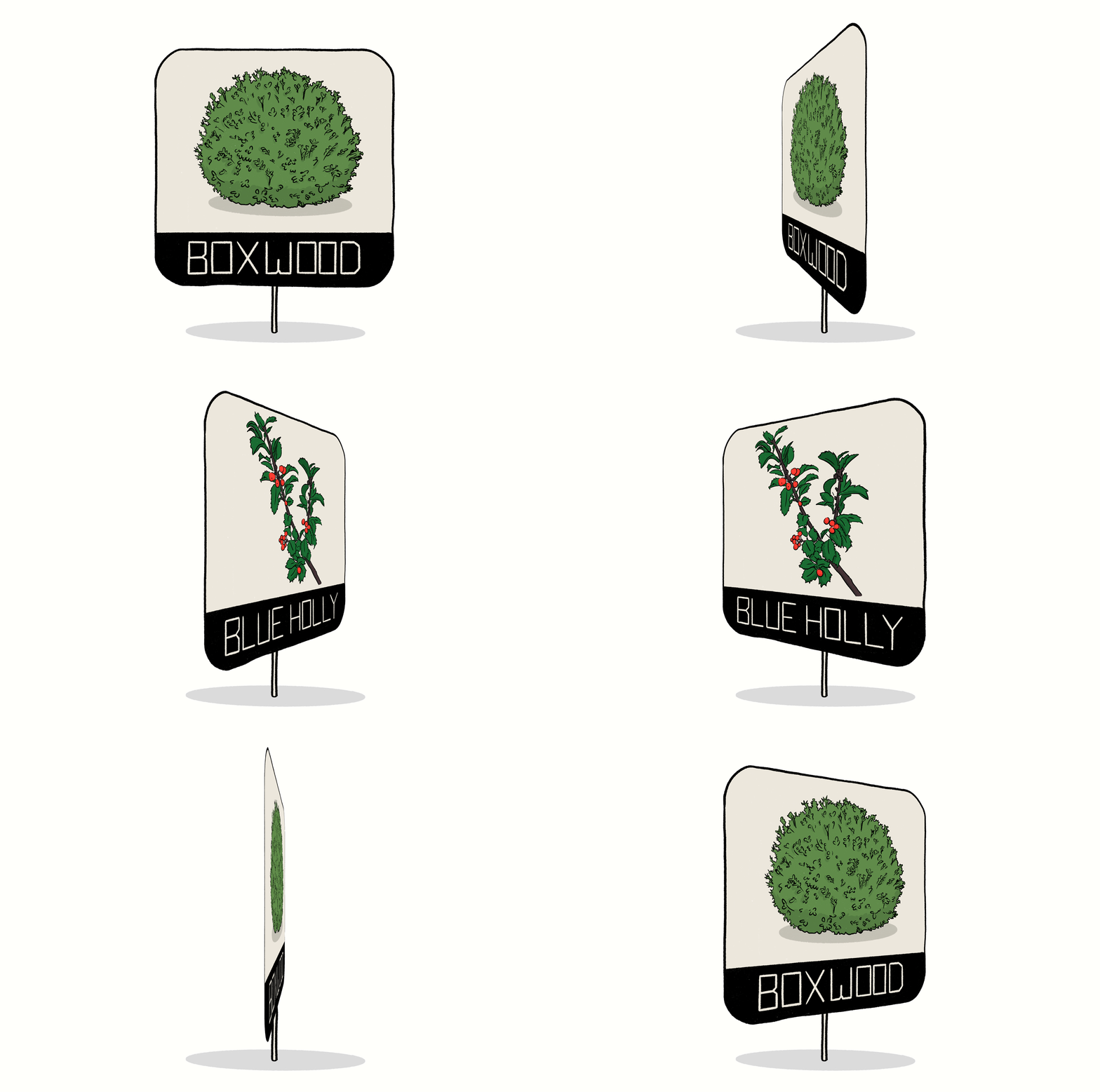
1. Blue Holly
Blue holly (Ilex x meserveae) is a hybrid between the cold hardy Asian prostrate holly (Ilex rugosa) and English holly (Ilex aquifolium). It is one of my personal favorite evergreen shrubs and has lustrous dark green/blue leaves and dark red berries on female plants that ultimately feed the robins and mockingbirds around late winter to early spring. Individual plants form a shrubby upright to pyramidal habit and can grow 8 to 12 feet in height by 6 to 8 feet in width. Blue holly (Ilex x meserveae) can easily be pruned into hedges and can be kept at any height or width with minimal, annual pruning. They are cold hardy to -20 degrees Fahrenheit and adaptable to both full sun or partial shade. Several cultivated varieties of this hybrid exist with my personal favorites being Blue Princess and Blue Prince.
NOTE: Holly plants require a male pollinator to achieve fruit. Make sure to include at least one male plant (like Blue Prince), and possibly more depending on the size of your Holly plantings to improve fruiting.
Negatives: Blue holly (Ilex x meserveae) can have significant leaf burn when temperatures drop below -10 degrees Fahrenheit (although established plants recover quickly in the Spring). They are susceptible to phytophthora (root rot) in poorly drained sites and deer browsing during the winter when snow persists for days at a time.

2. Privet
Privet (Ligustrum spp.) is a densely branched shrub with dark green to yellowish green leaves that can easily be manipulated into rounded plants and hedges. Privet (Ligustrum spp.) is fast growing and adaptable to a wide range of soils and growing conditions; I’ve observed many well kept privet hedges that would give boxwood a run for its money during the spring or summer. The foliage persists late into the fall often turning purple but is not evergreen. There are no serious disease or insect problems and oftentimes plants seem to thrive with neglect. Several different species and many different cultivars exist for a range of size, texture and leaf color.
Negatives: Privet (Ligustrum spp.) is not native to central Ohio and can easily spread by seed into native areas and out compete native species. They are also not evergreen.

3. Wintercreeper euonymus
Until recently I have always considered this species of euonymus to be best used as a ground cover or climber on a tree or trellis. More and more though, I’m seeing it in the landscape pruned into a very small and cute hedge or sculpted into 1 to 2 feet tall and wide mounds looking very similar to boxwood. Euonymus in general is fast growing and adaptable from full sun, to full shade, and to just about any landscape situation that isn’t a swamp. Leaves are evergreen most winters (leaf drop can occur when temps drop below -20 F) and there are dozens of cultivated varieties for leaf size and color. I’m partial to the green and white variegated cultivar ‘Emerald Gaiety.’
Negatives: Wintercreeper euonymus (Euonymus fortunei) is not native and can easily naturalize and take over unmanaged native areas. They can be susceptible to euonymus scale and difficult to treat successfully once a population is established.

4. Spirea
There are several species and dozens of different cultivars of spirea that mimic the compact and rounded habit of boxwood. They can be grown as separate plants, planted in masses or managed as a hedge. Spirea can grow in most landscape situations and will perform well in any soil that is not excessively wet. Spirea are easy to grow, have little insect or disease problems, respond well to pruning and shearing, and are cold hardy and adaptable to full sun and partial shade. Spirea are deciduous but even without leaves, the stems and twigs are so dense that the structure of the plant still provides texture and interest in the winter landscape.
Negatives: Spirea are not evergreen. They can get powdery mildew but it has little impact on the overall health of the plant. Spirea may also be somewhat overused in the landscape but for good reason - it is almost impossible to kill.
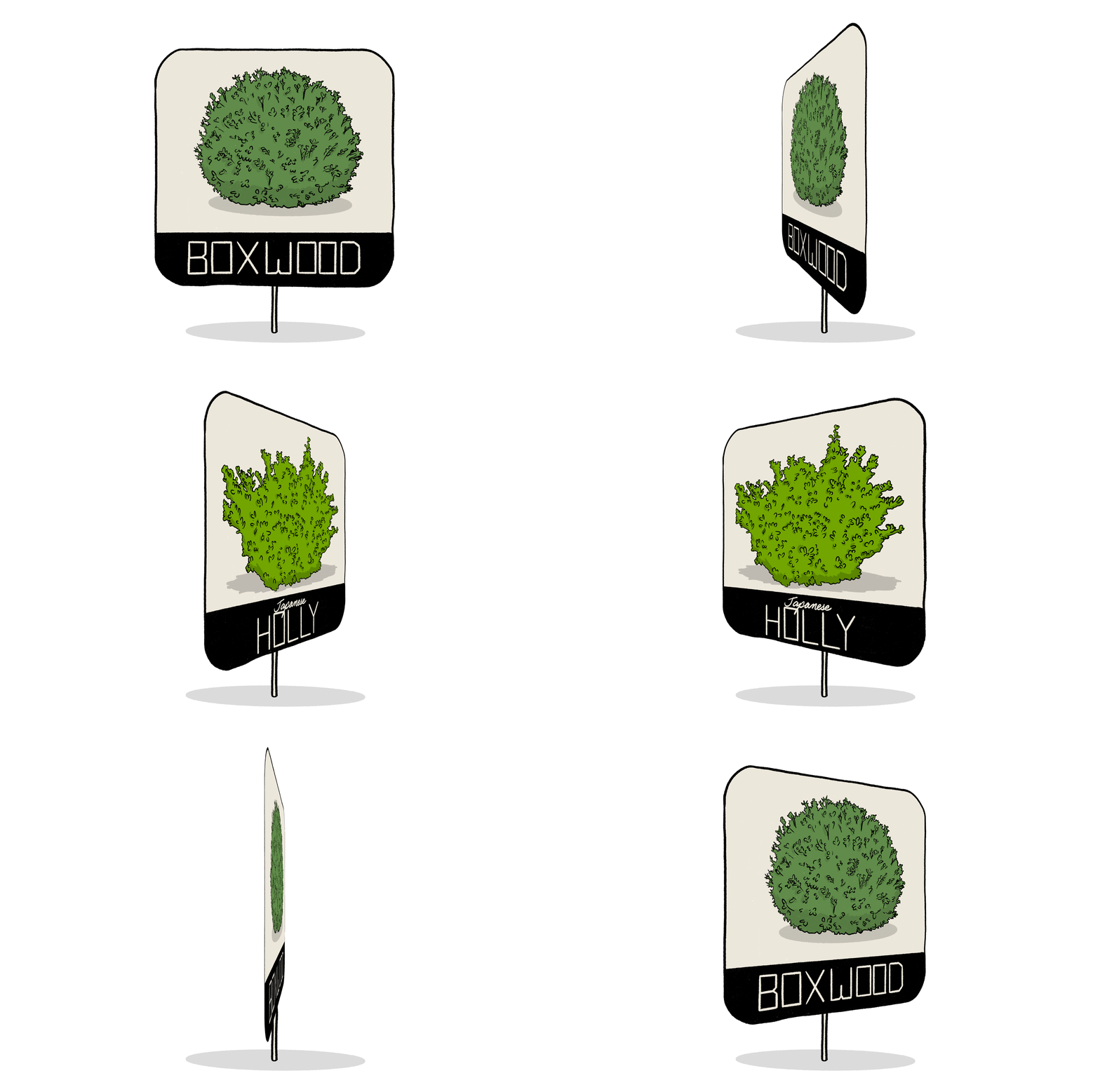
5. Japanese HollY
Japanese holly (Ilex crenata) is another compact evergreen shrub with a rounded habit and dark green foliage through the growing season and through the winter. They can grow 3 to 5 feet in height and width, although I have observed larger plants in arboreta. Japanese holly (Ilex crenata) is cold hardy to - 20 degrees Fahrenheit and adaptable to both full sun or partial shade. They respond well to pruning/shearing and can be used in hedges, foundation plantings, or in masses. Several different cultivars are available for different sizes, colors, and superior cold hardiness.
Negatives: Japanese holly (Ilex crenata) is slow growing and not tolerant of high pH soils. They are a preferred host to spider mites during extended periods of drought. Japanese holly (Ilex crenata) is not well known in Ohio and could be difficult to source. I would avoid using the upright cultivar ‘Sky pencil’ unless in a warmer protected spot with exceptionally well drained soil.

6. Globe arborvitae
Globe arborvitae (Thuja occidentalis ‘Globosa’ or ‘Little Gem’) is a compact and rounded form of our native eastern arborvitae. Its leaves are bright green in the spring and summer but turn more bronze or yellowish green during the winter months. Globosa arborvitae is a dwarf form and matures to only 5 to 6 feet tall and wide. They are very adaptable to different soil types and respond well to pruning and shearing. Globosa arborvitae can be used as a specimen plant or accent plant as well as in hedges or foundation plantings. Little gem arborvitae has essentially the same habit as globosa arborvitae but are smaller, maturing to a height of about only 3 feet tall. Either cultivar will perform well from full sun to partial shade (but they should have at least a half day of sunlight).
Negatives: Deer will eat arborvitae to bare wood when hungry. They are also a preferred host to bagworm and spider mites.
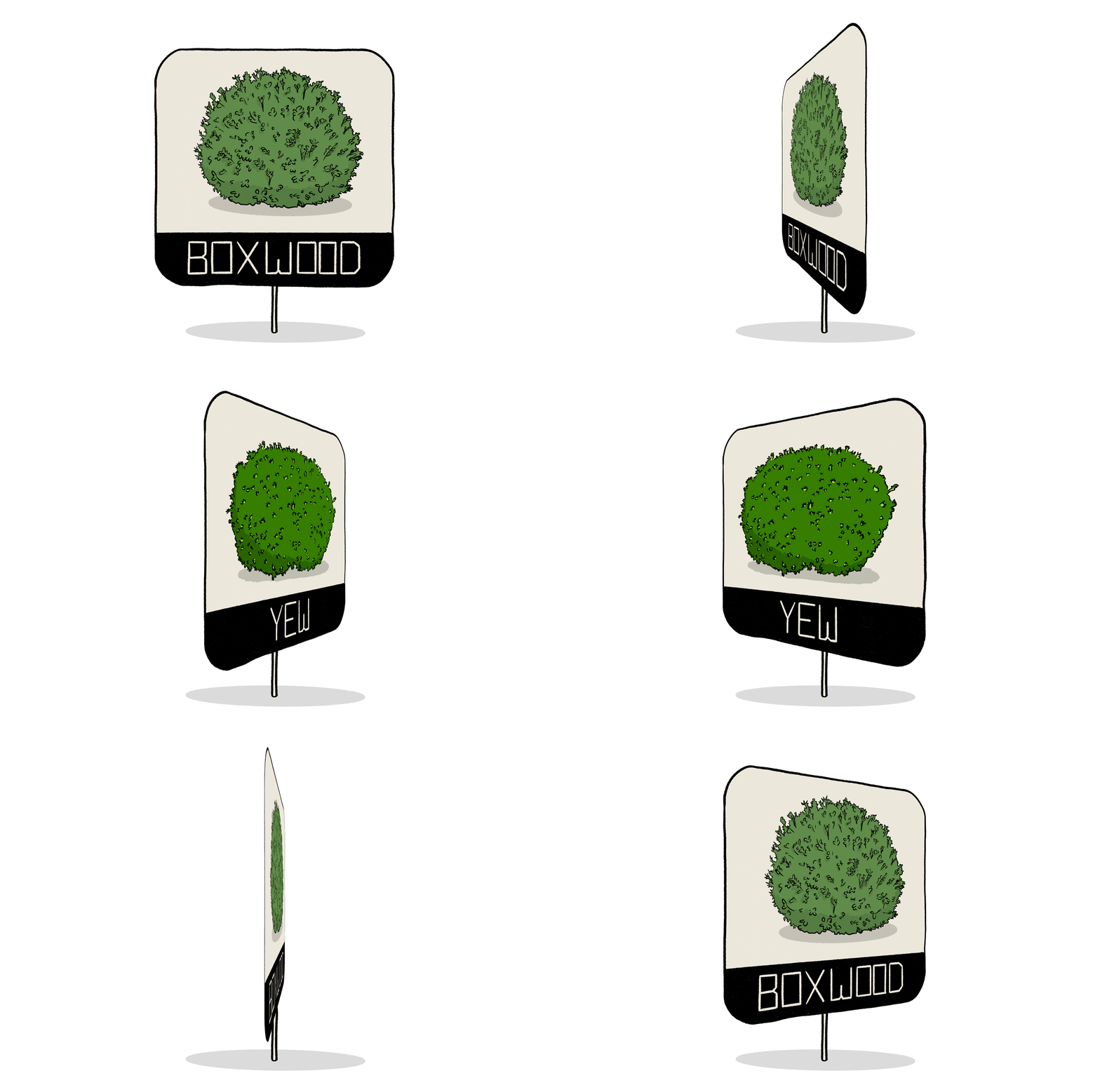
7. Yew
Yew (Taxus spp.) is a hardy and easy to grow evergreen shrub. I use them primarily for screening in the parts of my garden that receive less sun, but they can be easily manipulated and sculpted into tight hedges, mazes, and formal shapes in the same fashion that we often treat boxwood. Yew are very adaptable and urban tolerant and can withstand almost any amount of pruning. They will grow well in sun and shade and have few disease or pest problems. If they are used as an alternative to boxwood, I recommend the cultivars ‘Runyan’ or ‘Densiformis’.
Negatives: Yew are susceptible to deer browsing

8. Japanese Plum Yew
Japanese plum yew (Cephalotaxus harringtonia) is similar to yew, but with longer and glossier needles. I have planted this in more than one rural location and my experience so far is that deer will not touch them. Japanese plum yew (Cephalotaxus harringtonia) should be considered by anyone that likes yew but has given up because of continual deer damage. There are several different cultivars selected for a range of different sizes and habits but ‘Duke Gardens’ is the cultivar I recommend for central Ohio gardens and for anyone wishing to experiment with using Japanese plum yew (Cephalotaxus harringtonia) to replace boxwood. This cultivar matures to approximately 2 to 3 feet in height, approximately 3 to 4 feet in width and is cold hardy to - 20 degree fahrenheit. There are no serious pest or disease problems.
Negatives: Straight species is not cold hardy in true zone 5 winters (winters that reach -20 F). I observed significant winterburn in the plants in my garden from the cold snap we had just before the holiday season of 2022.

9. Inkberry
This is one of the boxwood alternatives that I think has the most potential. Inkberry (Ilex glabra) is native to the east coastal plains of the US and is a compact evergreen shrub with lustrous, dark green leaves during the growing season. Foliage can bronze somewhat during the winter months. Without pruning, inkberry (Ilex glabra) can reach heights of 6 to 8 feet tall with a width of 8 to 10 feet wide. Female plants can produce a small, pea-sized black berry (hence the name inkberry) that is edible to birds. Inkberry (Ilex glabra) performs well from full sun to full shade (foliage density is better with at least 5 to 6 hours of sunlight) and is cold hardy to - 20 degrees fahrenheit; although I have observed winterburn in exposed plants during winters with temperatures that have dropped below zero for extended periods of time. Inkberry (Ilex glabra) responds quite well to heavy pruning or shearing and has strong regenerative growth in established plants. They can easily be used as individual specimen plants or in hedges. I recommend using the cultivars ‘Cape Cod’ or ‘Compacta’ if available. These selections maintain a more rounded and compact habit with less pruning.
Negatives: Inkberry (Ilex glabra) is not tolerant of excessively high pH soils and plants can lose lower leaves and become quite leggy if not well managed. I have observed significant deer browsing during periods of extended snow cover in landscapes with a high deer population.

10. Canadian Hemlock
Canadian hemlock (Tsuga canadensis) is one of my favorite evergreen trees. It is a native and graceful evergreen tree with glossy dark green needles that also responds well to aggressive pruning. When my wife and I moved into our current home in 2008, we planted 36 Canadian hemlock (Tsuga canadensis) on 5 foot centers around the perimeter of our front and side yards. We keep these plants sculpted into a tight 6 feet tall by 3 feet wide pyramidal shaped hedge which we prune once a year in the late spring, approximately a month after new growth has pushed out. This could make an excellent replacement for a tall boxwood hedge.
Negatives: Canadian hemlock (Tsuga canadensis) is susceptible to deer browsing during the winter months with extended periods of snow. They are a preferred host to spruce spider mites when under stress. Canadian hemlock (Tsuga canadensis) also have poor tolerance to drought.
These 10 plants are just the beginning of the conversation regarding boxwood alternatives. There are dozens of other cultivated varieties of chamaecyparis, juniper, spruce, pine, fir, leucothoe, etc that could fulfill the same niche in many of our gardens. I believe there is a perfect substitute out there for every plant. The perfect substitute for your needs will depend on your individual situation and landscape.
Sincerely,

TJ Nagel I Scheduling Production Manager, Russell Tree Experts
TJ loves trees. He is an avid gardener and plant collector. TJ graduated from The Ohio State University with a B.S. in Agriculture with a major in Landscape Horticulture and minor in Entomology. TJ is an ISA Board Certified Master Arborist and well versed in Plant Pathology. TJ joined Russell Tree Experts in 2012.
Illustrations by Kenny Greer, Russell Tree Experts
How to Plant a Balled-and-Burlapped Tree!
Dear Reader,

TJ Nagel and Mike McKee standing in front of a newly planted ginkgo tree.
My friend and colleague Mike McKee (an ISA certified arborist at Russell Tree Experts) and I were discussing recently how rarely we see a properly planted landscape tree. Every day we are out and about talking with folks who have stressed trees that are planted too deep, or that are being girdled by landscape materials or trees that are simply planted in the wrong location. Much of the tree preservation and tree removal work that we perform is a result of trees that were improperly planted.
Russell Tree Experts does not offer tree planting services but Mike and I decided it would be valuable to write this article and make a how-to video on what we believe is the best way to plant a balled-and-burlapped tree (although much of the video can apply to trees growing in containers as well). The goal of this article and video is to empower everyone to be able to plant a tree correctly and to be able to recognize what a properly planted tree is supposed to look like.
The following is a checklist of essential steps that should be followed when installing (or having installed by a contractor) a new balled-and-burlapped tree.
1. Plant the Right Tree
There is a tree out there for every landscape situation. It is important that you choose wisely when you are selecting a tree for your situation. If planting in a low site that regularly experiences flooding or standing water you might consider a bald cypress, willow or sycamore, something that is water loving/tolerant. If planting in an excessively dry area you may consider a ginkgo or some type of elm. If you are planting under overhead utilities, planting a smaller statured tree such as a redbud, will likely help to avoid conflict between the lines and tree in the future. Planting the right tree in the right location is the most important step. You may follow the rest of this checklist flawlessly but if you select the wrong tree, it was all in vain. If you are uncertain of what the right tree is for your situation, it’s worth hiring an arborist for a consultation and I know a few good ones.
2. Plant at the Right Time
Fall is for planting. Early Spring is pretty good too. Planting a new tree during either of these times while the tree is in or approaching a dormant state will improve survivability by avoiding a lot of the initial stresses trees experience during the growing season like heat and drought.
3. Tree Pruning
If a tree could only be pruned once in its life, pruning at planting is the time to do so. The overall goal of pruning at planting is to improve the structure of the canopy, to remove crossing and broken limbs, or to reduce/remove upright limbs that might be competing to be the central dominant leader. Note: It is equally important not to over prune a newly planted tree, as having the appropriate amount of leaf area in the canopy next season is essential to maintaining good health and vigor.
4. Locate the Tree’s Trunk Flare/Buttress Roots
The trunk flare will be found low on the main stem and should be the portion of the tree that gets wider just before ground level. Locating the trunk flare is essential for determining the depth of the hole you are about to dig for the tree.
5. Begin Digging!
Dig a hole that is 1.5 - 2 times the diameter of your root ball to allow loose soil to be backfilled around the rootball, which will be easy for new roots to penetrate. Do not dig the hole any deeper than the distance between the bottom of the root ball and the trunk flare. It is important that the trunk flare is at or slightly above grade once it has been placed in the planting hole. If the trunk flare is below grade, the tree will be planted too deep and will be more prone to stem girdling roots, reduced vigor, and will become more vulnerable to pests and disease. Important Note: Many balled-and-burlapped trees are already too deep within their own root ball. Do not assume that the top of the root ball is the trunk flare. My experience is that more often than not, I have to remove a few inches of soil from above the trunk flare at the time of planting. This can be seen in the video as well. Linked down below is my fellow coworker Chris Gill’s Arbor Ed article on stem girdling roots.
6. Stabilize the root balL
Stabilize the root ball in the hole. After the tree is standing upright in the hole, verify that it is positioned correctly (centered and upright) and add soil around the bottom six to eight inches of the root ball. Tamp the newly added soil to stabilize the root ball and tree while adjustments to the root ball are made.
7. Remove the twine, Top 1/3 of Burlap, and Top 1/3 of Wire Cage
Remove the twine around the trunk, remove the top third of the burlap and remove the top third (approximately) of the wire cage. The purpose of removing these materials is to prevent damage to the trunk and buttress roots as they grow over time. Removing the twine, burlap and wire cage is the subject of much debate amongst landscape contractors, tree producers, and arborists. In an effort to be brief, our recommendation to remove the top third of the wire cage, the exposed burlap (approximately the top third), and the twine is a balance between ensuring root ball stability/new tree survivability and planning for the long term health of the tree over the next hundred years. There may be some instances, like planting new evergreen trees in exposed/windy sites where it may be acceptable to leave the entire wire cage, burlap and twine intact for one full growing season before returning to remove it later.
8. Verify Tree’s PositioninG AND BEGIN BACKFILLING
Verify again that the tree is still positioned correctly. Mix a small amount of compost into the existing soil and begin backfilling the remaining portions of the hole with this mix. Lightly tamp the soil to remove air pockets but be careful not to overly compact soil as pore space is needed for water and oxygen.
Adding compost or a soil amendment to the existing soil is one way to attempt to improve soil structure and nutrient availability. Not every newly planted tree requires soil amendment. If you are planting in a native area where the soils have not been disturbed previously, you likely can backfill with just the existing soil that came from the planting site.
9. Mulch around the tree
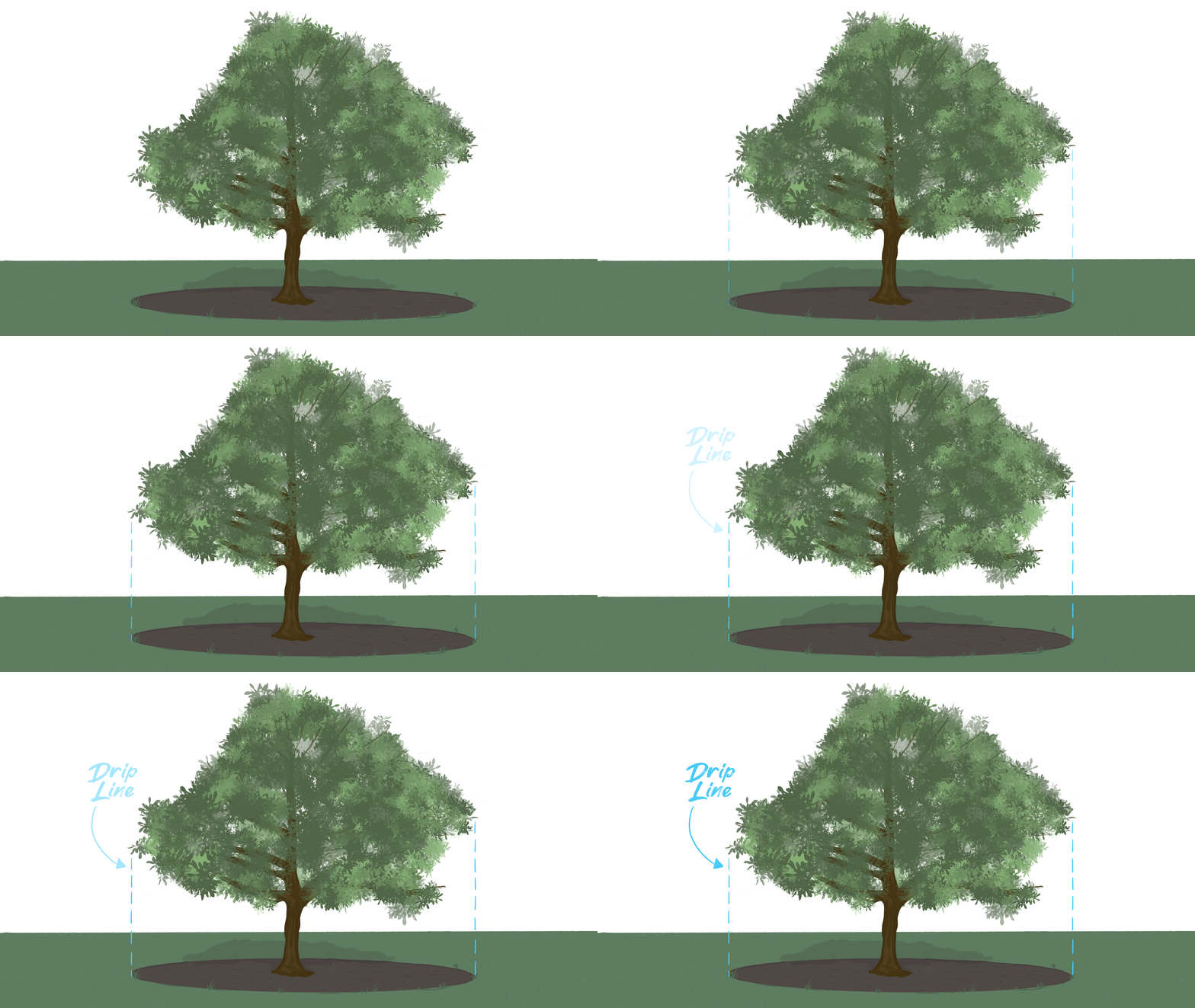
Apply a 1-to-2 inch tall mulch ring around the trunk of the tree that extends out to the canopy drip line.
Mulch correctly around the tree. Once the tree has been planted with the trunk flare just above ground level, it is time to add one to two inches of mulch. It is important that mulch is not over applied or mounded around the main stem. It should be applied evenly around the main stem with a small berm on the outside edge that directs water toward the tree. I generally recommend pine bark or hardwood mulch although I’ve started using pine needle mulch around trees and shrubs that like a more acidic soil. Mulch does a great job of retaining moisture around newly planted trees in addition to reducing competition from weeds, regulating soil temperatures, reducing soil compaction and adding nutrients to the soil. Linked below is my fellow coworker Lindsey Rice’s Arbor Ed article on how to mulch around a tree.
10. Water YOUR TREE
Watering a newly planted tree correctly is as important as selecting the right tree. Watering is the single most important maintenance factor in the establishment and success of planting a new tree. The best way to water a tree is slowly and deeply so that water is trickling down into the root ball of the tree and not washing away into the lawn. A newly planted balled-and-burlapped tree should be watered at the time of planting and then once a week until temperatures are consistently below freezing. Watering in this same fashion should resume when the tree breaks dormancy and leafs out the following Spring. It generally takes 2 - 3 growing seasons before a balled-and-burlapped tree is established and can fend for its own water. Establishment could take longer with larger trees. For more information on watering, see my previous Arbor Ed article and video on how to water a tree linked down below.
11. Protect YOUR TRee!

Ginkgo biloba with deer protection. ©Russell Tree Experts
Protect your tree from mechanical damage. This step may not be necessary for every newly planted tree. If you live in an urban area without deer and have large generous planting beds free of turf, you can likely skip this step. When planting in rural areas, I often recommend using some sort of deer protection to protect the trunk of trees until they have surpassed eight to ten inches in diameter. I like to use a 4 foot tall wire fencing cut into a 7 - 8 foot length and then wrapped around the tree. In addition to protecting the trunk, the fencing also makes it more difficult for deer to feed on lower limbs. Trunk guards or corrugated drain pipe can also work to protect tree trunks, but they must be removed before the heat and humidity of the summer. I also recommend trunk protection for folks that have trees in areas where turf is tightly managed with large and fast moving mowers and string trimmers.
12. ENJOY!
Your new tree is now planted! Enjoy it! If there are any tags on the tree, you can remove them now if you have not done so already. I hope you enjoyed this article and the video below. Please reach out if you have any questions, happy planting!
Check Out These Related Arbor Ed Articles!



Sincerely,

TJ Nagel I Scheduling Production Manager, Russell Tree Experts
TJ loves trees. He is an avid gardener and plant collector. TJ graduated from The Ohio State University with a B.S. in Agriculture with a major in Landscape Horticulture and minor in Entomology. TJ is an ISA Board Certified Master Arborist and well versed in Plant Pathology. TJ joined Russell Tree Experts in 2012.
I Speak for the Trees
“I am the Lorax, I speak for the trees. I speak for the trees for the trees have no tongues.” As a representative of a tree company based out of Central Ohio, I feel that I have the responsibility to speak for the trees. Much like my friend the Lorax, written into this world by Dr. Seuss…

“I am the Lorax, I speak for the trees. I speak for the trees, for the trees have no tongues.”
As a representative of a tree company based out of Central Ohio, I feel that I have the responsibility to speak for the trees. Much like my friend The Lorax, written into this world by Dr. Seuss, someone needs to “speak for the trees, for the trees have no tongues.” What is our environmental responsibility as humans? To protect the environment we live in for future generations to be able to enjoy and thrive. One way to do this is to promote plant diversity which ensures we do not experience the devastation of wiping out all plant material with one fell swoop of a disease or pest. We have already seen things come through such as Dutch elm disease and the Emerald Ash Borer which wiped out thousands of elm trees and ash trees across the area. Amazingly, from these events, we saw an emergence of resistant species which is such a great example of how Mother Nature perseveres!
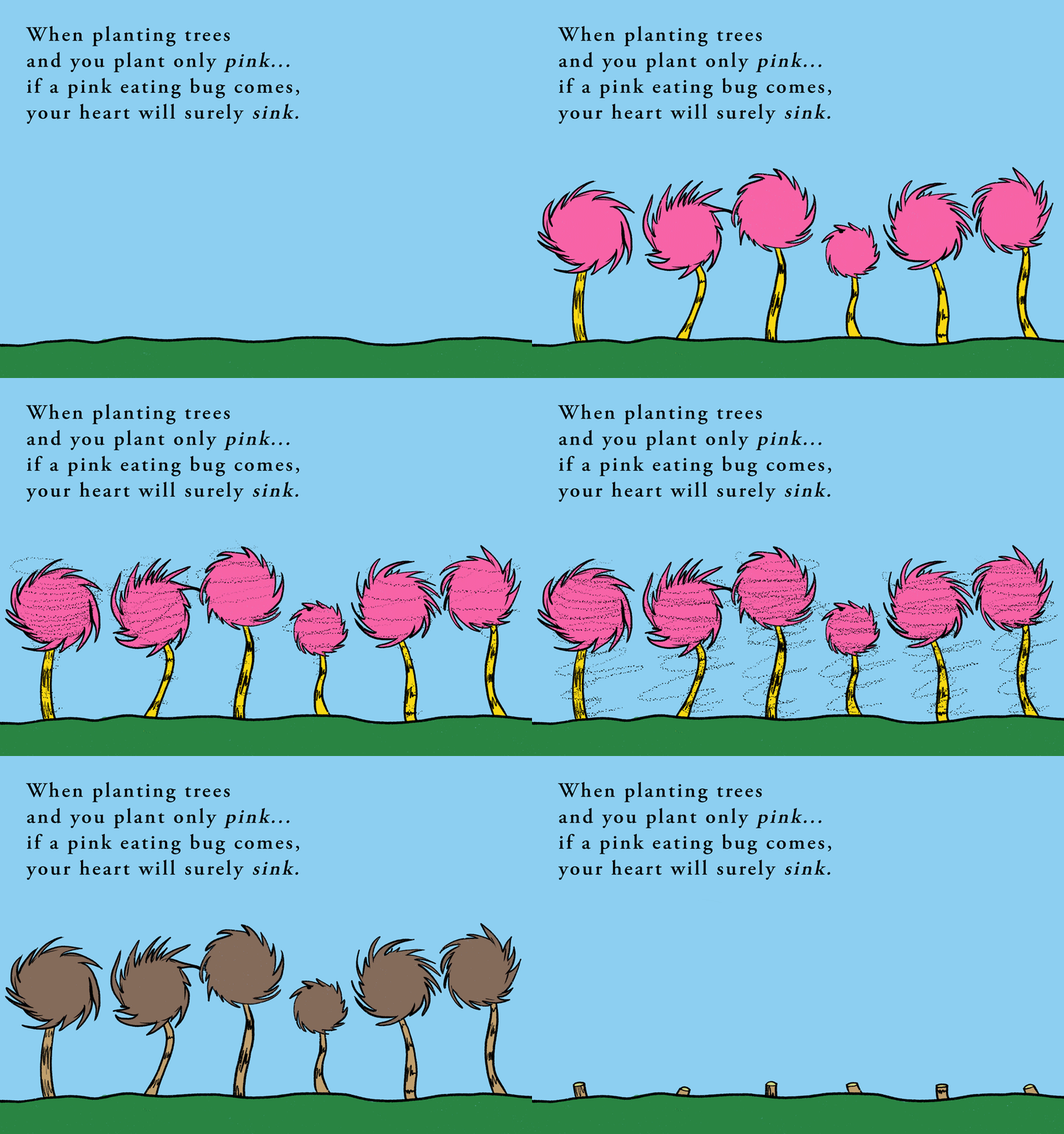
Illustration & text by Russell Tree Experts (Inspired by Dr. Seuss, of course!)
Humans have an Earthly responsibility to help Mother Nature — we are just a guest in her house and we need to treat it as such. By cultivating a variety of plant species, in both urban and rural settings, we can aid Mother Nature in replenishing her home with beautiful foliage and ensure that it isn’t all wiped out with one disease or pest. If we as a society decided to only plant trees in one family, a pest or disease could come along that affects only that species and suddenly, all of our landscapes are devastated. By planting more trees, and a variety of them, we can ensure their length of life is optimized while simultaneously aid in combating the toxins released by daily human activity. Each day we make several choices to either help or turn a blind eye. We live in a world where it is easy to forget the environmental impact of our actions because we do not see and perhaps will never see the consequences of our actions.

Illustration & text by Russell Tree Experts (Inspired by Dr. Seuss, of course!)
In January of 2020, my family and I made a 1-month commitment to removing all animal products from our diet for both health and environmental reasons. My cholesterol was through the roof, particularly when I was pregnant with my second daughter, and I had recently learned that the animal agriculture industry is responsible for about half of all worldwide greenhouse gas emissions. Also, producing 1 pound of meat requires approximately 50 times more water than producing a pound of plant-based nutrients in the way of fruits, vegetables, and grains. During that one-month commitment, I felt so much better; my energy levels, my mood, and I just felt generally healthier. I decided to keep my commitment going and my cholesterol numbers came down to within a normal range. Beyond that, I also felt like I was doing more for the environment and doing my part to be a good house guest to Mother Nature. It felt good making these health changes that impacted both me and my surroundings.
Human intervention is infamously detrimental to the world we live in; pollution, carbon emissions, urban monocultures, and the list goes on. Everyone should be conscious of their impacts and we should do our best to lessen the strain on Mother Nature and promote a more symbiotic relationship. One way Russell Tree Experts works to help the environment is with our TREE FOR A TREE® program; for every residential tree we remove, we plant another in its place at a local park or nominated location. We focus on a diverse selection of trees that are native to the area such as Bur Oak, Sycamore, and Red Bud.
Like my friend The Lorax, I speak for the trees, and more specifically, my environment. At Russell Tree Experts, we do our best to do what we can for Mother Nature to ensure she will be around for years to come.

Lindsey Rice | Office Manager, Russell Tree Experts
Lindsey joined Russell Tree Experts in 2015 with a B.S. in Agribusiness and a minor in Horticulture from The Ohio State University. Growing up in Northwest Ohio, she participated in various sports, band, and FFA which ultimately inspired her love for the tree industry. She loves to spend her free time outdoors with her husband and daughters.
Recap: Arbor Day 2021
Hello! Arbor Day was last Friday (April 30th, 2021) — Check out the above video to see why it’s our favorite day of the year!Hello! Arbor Day was last Friday (April 30th, 2021) — Check out the above video to see why it’s our favorite day of the year! We'd also like to give a HUGE KUDOS (!!!) to everyone involved in making Arbor Day 2021 a success! It was a joy to share our love for trees with so many wonderful people!
Free Trees to Celebrate Arbor Day!
Arbor Day is tomorrow (!!!) and to celebrate we are giving away 300 tree saplings! Stop by our office (directions below) today (April 29th) starting at 10AM for a contact-free pick up of a bundle of 5 trees!

Arbor Day is tomorrow (!!!) and to celebrate we are giving away 300 tree saplings! Stop by our office (directions below) today (April 29th) starting at 10AM for a contact-free pick up of a bundle of 5 trees!
Then tomorrow (Arbor Day!!!) plant your new saplings to celebrate the greatest holiday ever PLUS check us out on Instagram (@RussellTreeExperts) as our entire crew will be joining forces to plant 5,000 trees at Walnut Woods Metro Park for our TREE FOR A TREE® program!
Arbor Day is the greatest day, right?!
0 BUNDLES REMAINING!
Pick-Up Location
To pick up your free trees, visit our office (address below) and pull into the front parking lot. The trees will be available on the table in front of our office door. Please only take one bundle per household. Enjoy! Address: 3427 E Dublin-Granville Rd Westerville, Ohio 43081
Tree TYPES
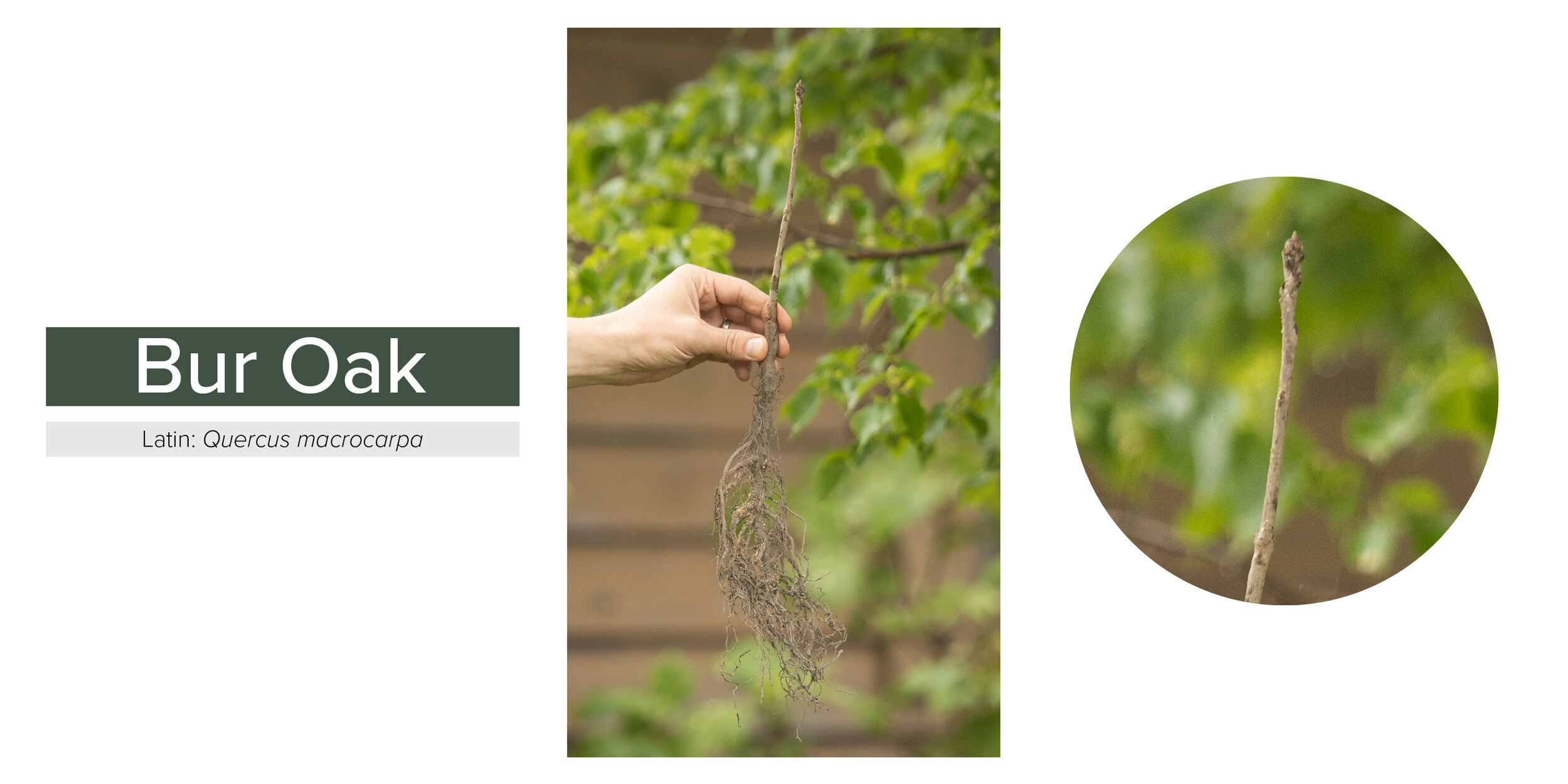
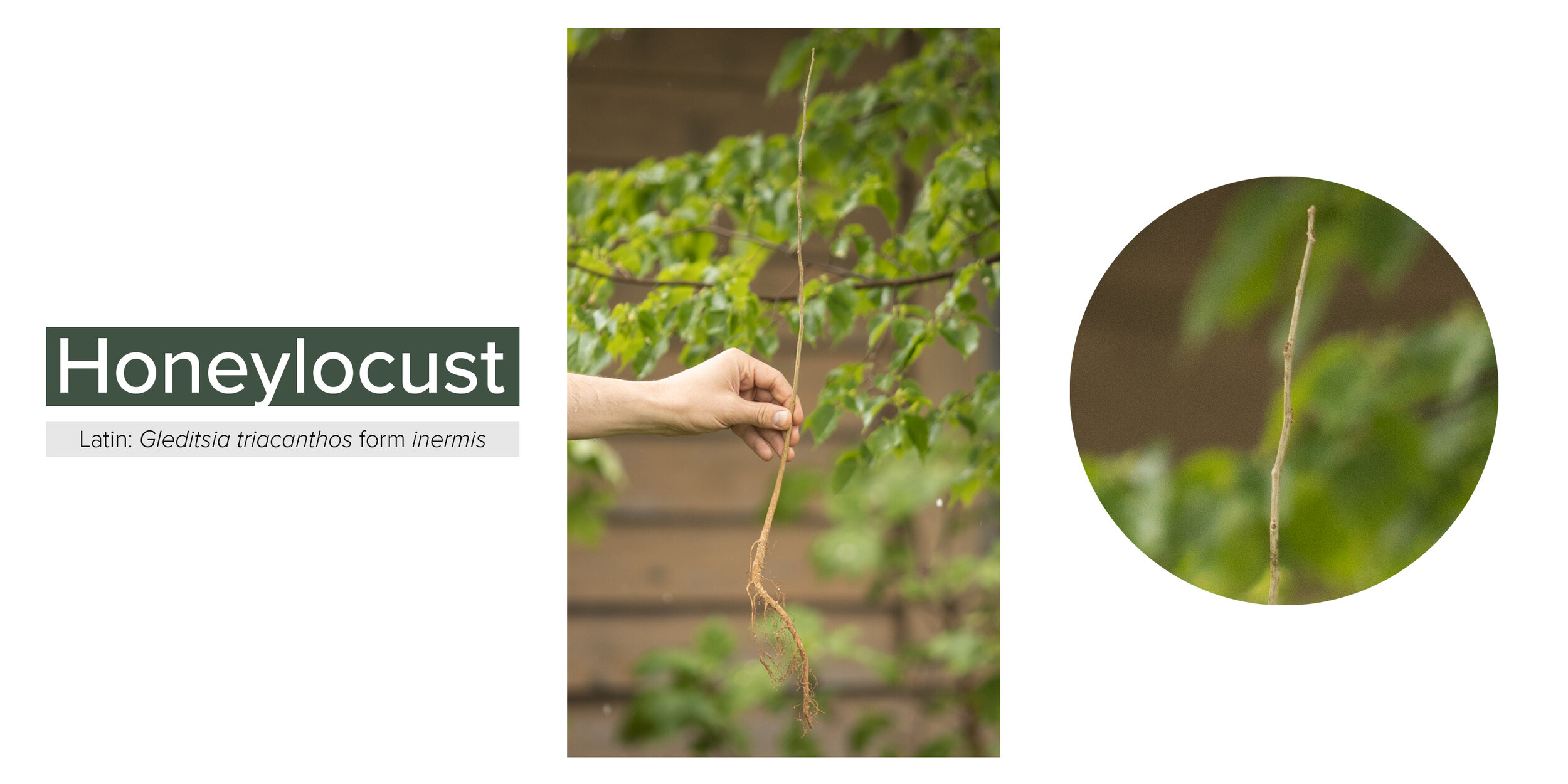
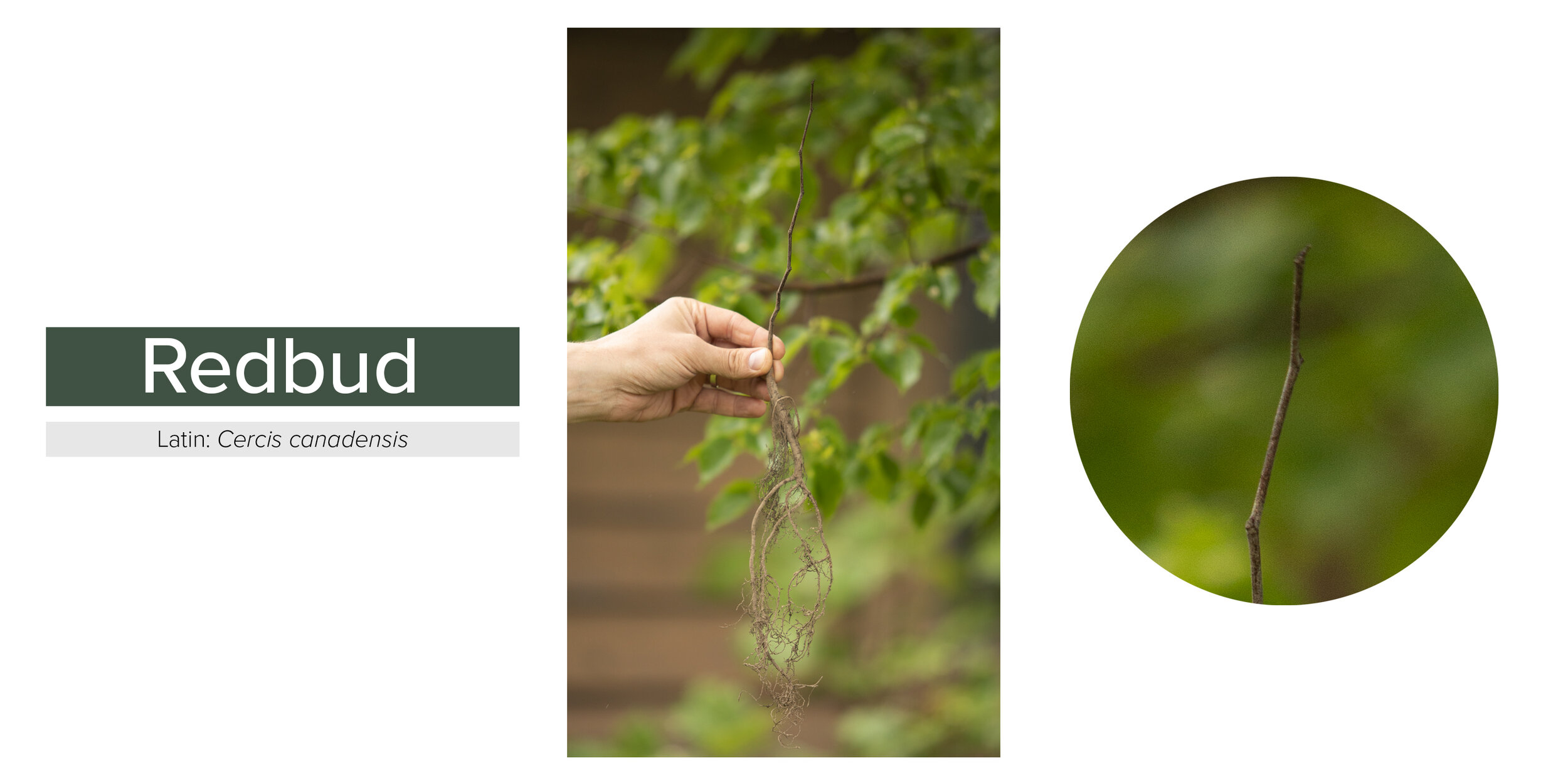
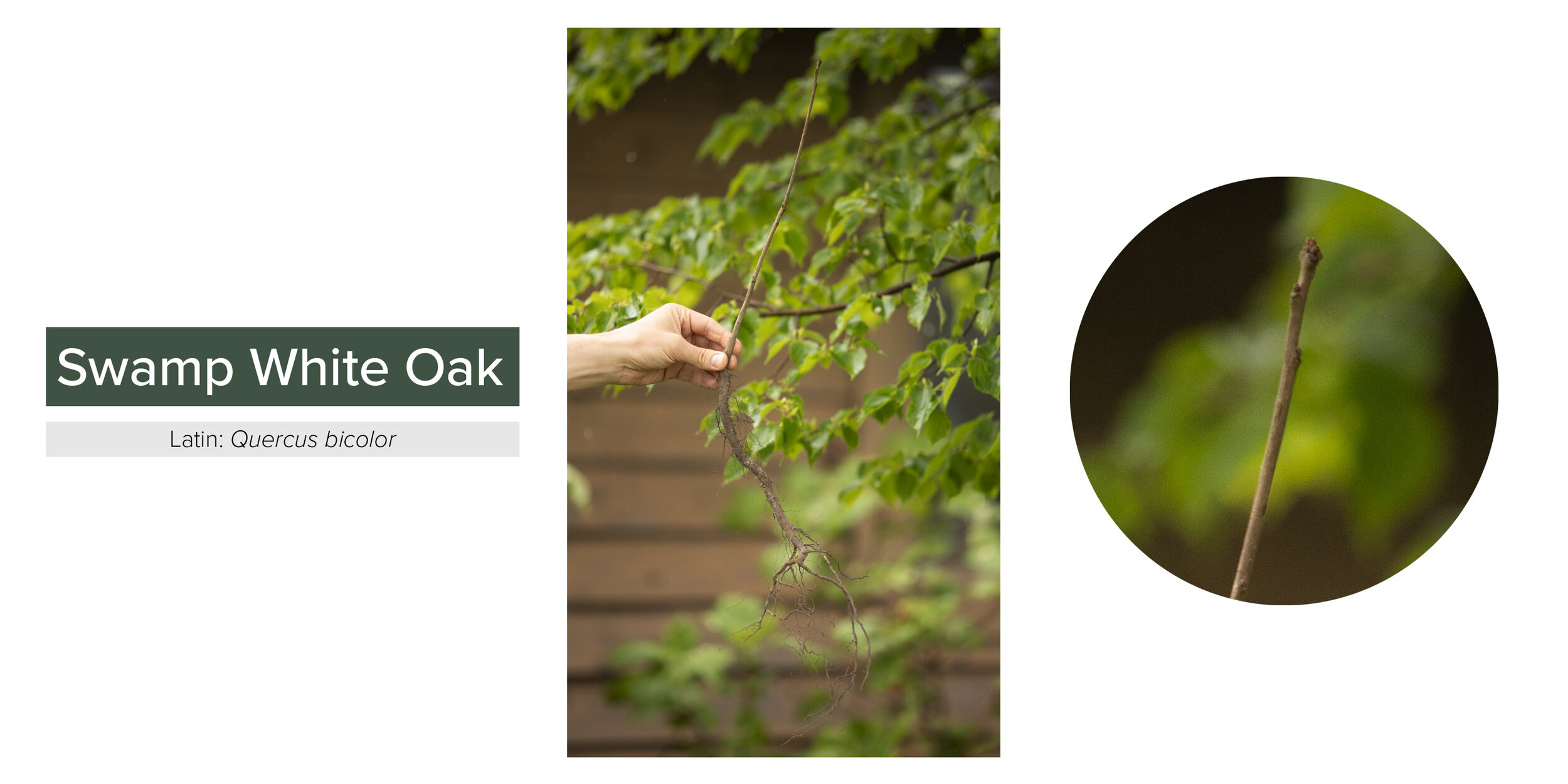
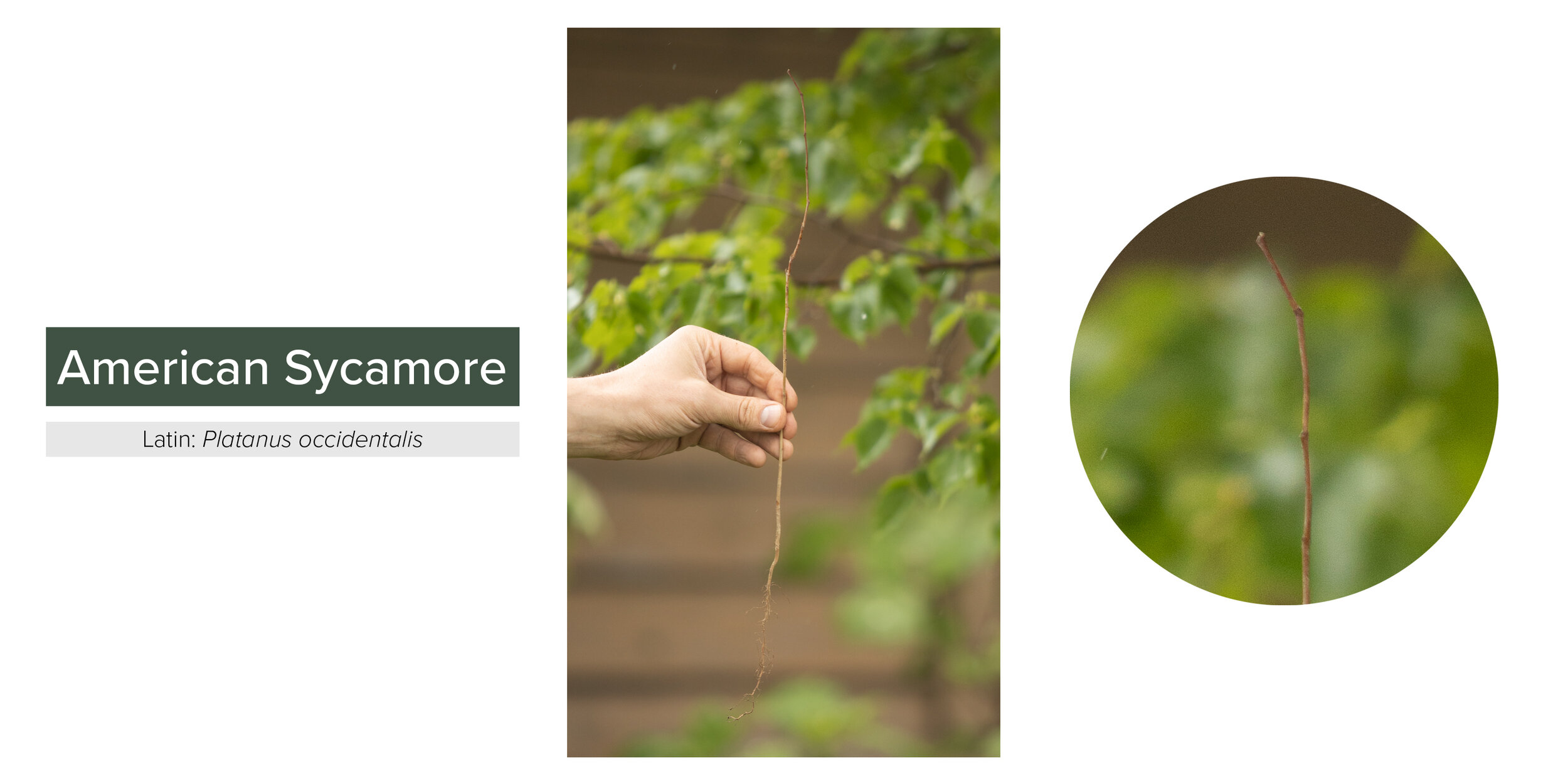
Each bundle includes five tree saplings: Bur Oak, Redbud, Swamp White Oak, Sycamore, and thornless Honeylocust. Please note, these are tree saplings that range from 6-24 inches tall.
How to Plant Your Trees!
STEP 1
Soak your tree sapling in water for 5 to 7 minutes to thoroughly moisten the sapling’s root system.
STEP 2
Select your tree planting site. Avoid planting your sapling within 5 to 10 feet of any large obstructions such as mature trees or buildings.
STEP 3
Measure the sapling’s base of the root to its root flare to determine the depth of your hole.
STEP 4
Dig your hole!
STEP 5
Ensure that your hole is the appropriate depth. To do so, place your sapling in the hole and ensure that the root flare is equal with the surrounding soil level.
STEP 6
Make adjustments to the hole’s depth if necessary.
STEP 7
Fill in your hole with the dug-up soil. Lightly compact the soil as you begin to reach ground level.
STEP 8
Ensure the root flare is fully exposed to oxygen and not mounded with soil.
STEP 9
Take a picture and tag @RussellTreeExperts on Instagram & Facebook! You are now finished planting your tree sapling!
STEP 10
Learn more about the TREE FOR A TREE® program!
Free Trees! (Update: ALL GONE!)
We are giving away bundles of tree saplings! Just stop by our office during the times listed below for a contact-free pick up of a bundle of 5 trees plus a "Keep Ohio Green" tote! There are only 100 bundles so get here before they are all gone!
WOW! We are blown away by the excitement for these trees! 100 bundles of tree saplings (500 trees in total!) were all picked up within 4 hours! We weren’t expecting them to go THAT quickly!

If you were one of the lucky ones that receive a bundle, please plant the trees AS SOON AS POSSIBLE and check out this video on how to plant! If you weren’t able to get here before all the trees were claimed, keep an eye on your email next spring — we will be doing this again! :)

Thank you all for your support in our mission to KEEP OHIO GREEN and check out TREEFORATREE.com to learn more about our tree planting program!
0 BUNDLES REMAINING
(as of 11/19/20 @ 4:15PM)
Pick-Up Location
To pick up your free trees, visit our office (address below) and pull into the front parking lot. The trees will be available on the table in front of our office door. Please only take one bundle per household. Enjoy!

Address:
3427 E Dublin-Granville Rd
Westerville, Ohio
43081
Tree TYPES
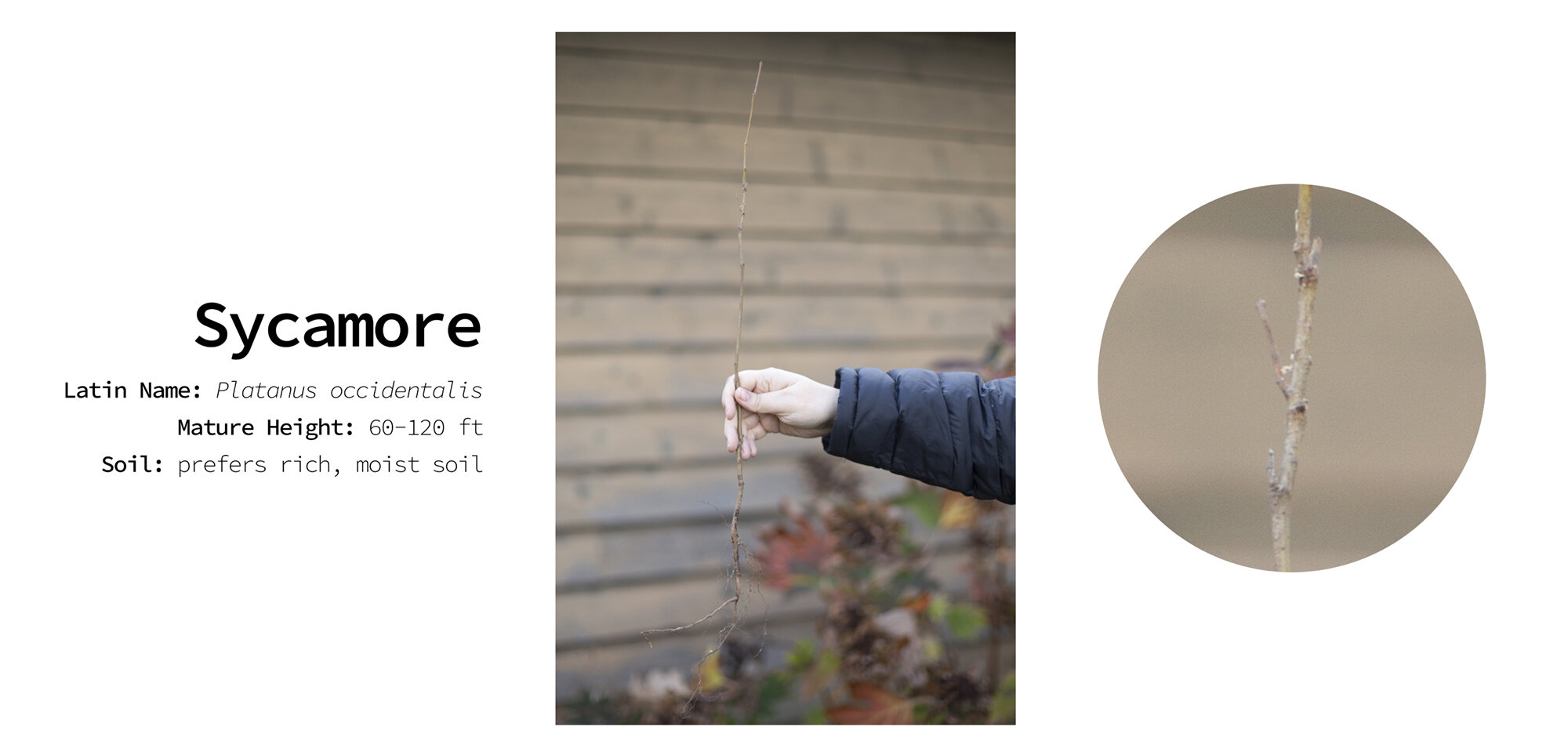
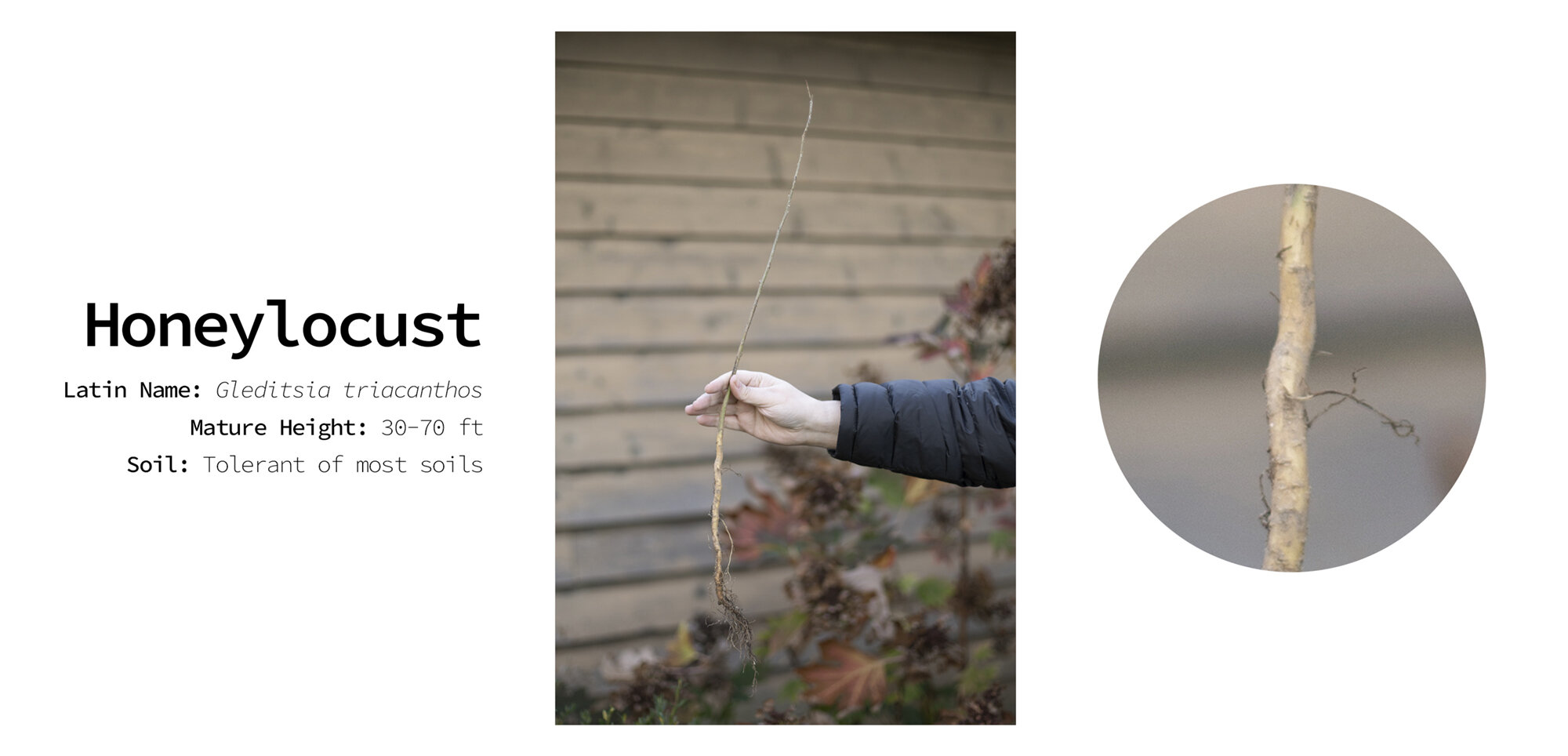
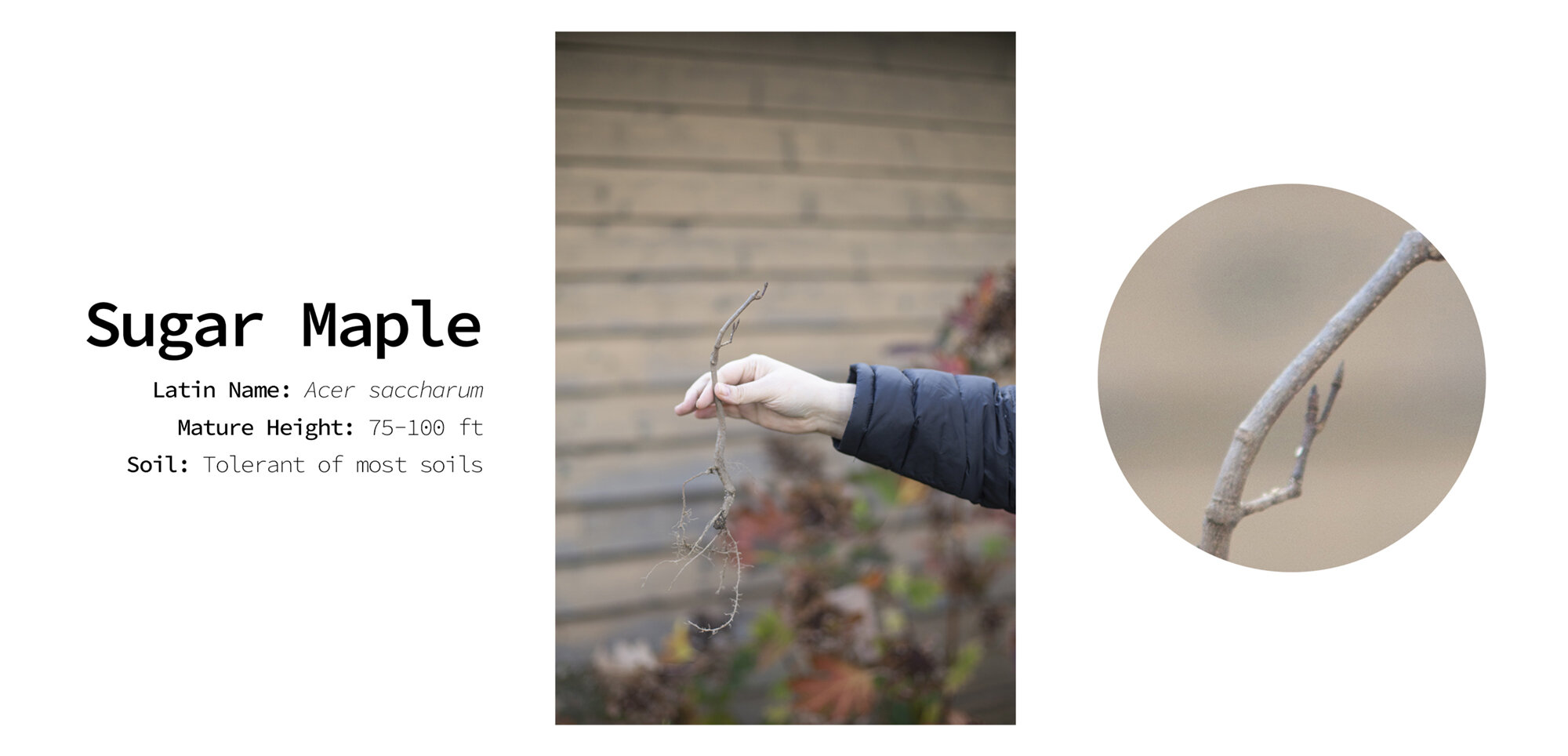
Each bundle of will include five trees. The species of trees you will receive will vary from bundle to bundle however the trees you could receive are Sycamore, Hackberry, Honeylocust, and/or Sugar Maple. See the below photos to help identify your trees! Please note, these are tree saplings so they are smaller, ranging from 6"-24".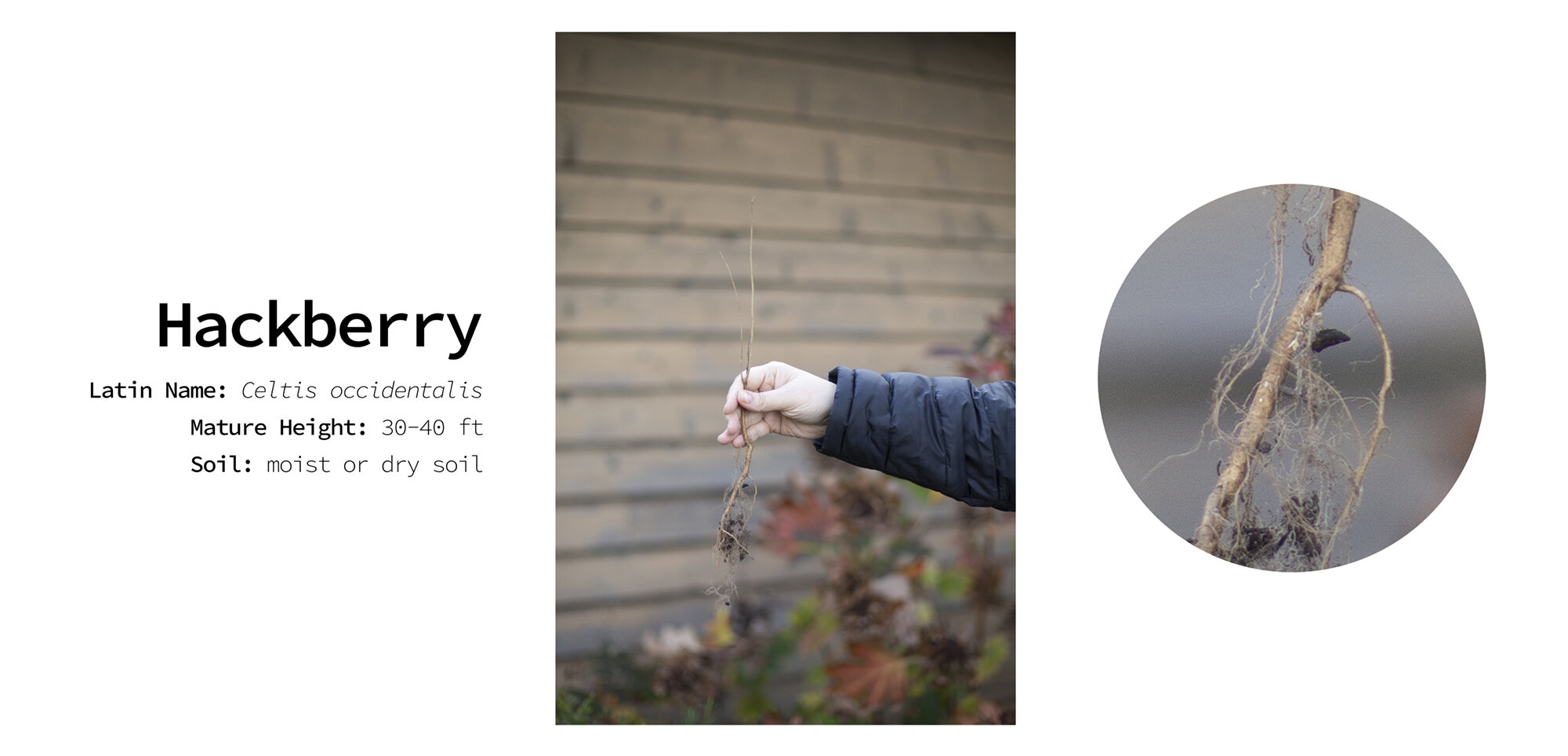
How to Plant Your Trees!
STEP 1
Soak your tree sapling in water for 5 to 7 minutes to thoroughly moisten the sapling’s root system.STEP 2
Select your tree planting site. Avoid planting your sapling within 5 to 10 feet of any large obstructions such as mature trees or buildings.STEP 3
Measure the sapling’s base of the root to its root flare to determine the depth of your hole.STEP 4
Dig your hole!STEP 5
Ensure that your hole is of the appropriate depth. To do so, place your sapling in the hole and ensure that the root flare is equal with the surrounding soil level. STEP 6
Make adjustments to the hole’s depth if necessary.STEP 7
Fill in your hole with the dug-up soil. Lightly compact the soil as you begin to reach ground level.STEP 8
Ensure the root flare is fully exposed to oxygen and not mounded with soil.STEP 9
Take a picture and tag @RussellTreeExperts on Instagram & Facebook! You are now finished planting your tree sapling!STEP 10
Learn more about the TREE FOR A TREE® program!5000 Trees Planted in One Day!
Last Friday all of our employees took the day off from their normal duties and came together to plant 5,000 trees at Pickerington Ponds Metro Park for our TREE FOR A TREE® program! The initial idea of this program was simple, plant a tree for every tree that we remove — Flash forward almost 3 years and we are very happy to see this program continue to grow as we have now planted over 12,000 trees at 16 different sites in central Ohio.

Happy Arbor Day!
Today (April 24th, 2020) is Arbor Day so let’s celebrate by learning about the history of this wonderful day and watch a video of the beautiful trees of Central Ohio!
Today (April 24th, 2020) is Arbor Day so let’s celebrate by learning about the history of this wonderful day and watch a video of the beautiful trees of Central Ohio!5,000 Trees Planted!
Last Friday (April 26th, 2019) was Arbor Day and to celebrate, all of us at Russell Tree Experts teamed up to give back to the central Ohio environment by planting 5,000 trees (via our TREE FOR A TREE® program) at Scioto Grove Metro Park. The section at Scioto Grove Metro Park that received the trees is a donated addition that park managers are actively working to reforest. For decades the land was used for farming crops; in the future, the area will be a lush forest to be enjoyed by the community.

©Russell Tree Experts
Last Friday (April 26th, 2019) was Arbor Day and to celebrate, all of us at Russell Tree Experts teamed up to give back to the central Ohio environment by planting 5,000 trees (via our TREE FOR A TREE® program) at Scioto Grove Metro Park. The section of Scioto Grove Metro Park that received the trees is a donated addition that park managers are actively working to reforest. For decades the land was used for farming crops; in the future, the area will be a lush forest to be enjoyed by the community.

A breakdown of the 5,000 trees planted at Scioto Grove Metro Park on April 26, 2019 (Arbor Day)
It was an awesome experience seeing our team come together on Arbor Day. Our typical work days consist of operating in small teams of 2-3 people while on Arbor Day we had the majority of our employees (including our field and office staff) working together at one location! #TeamBuilding!
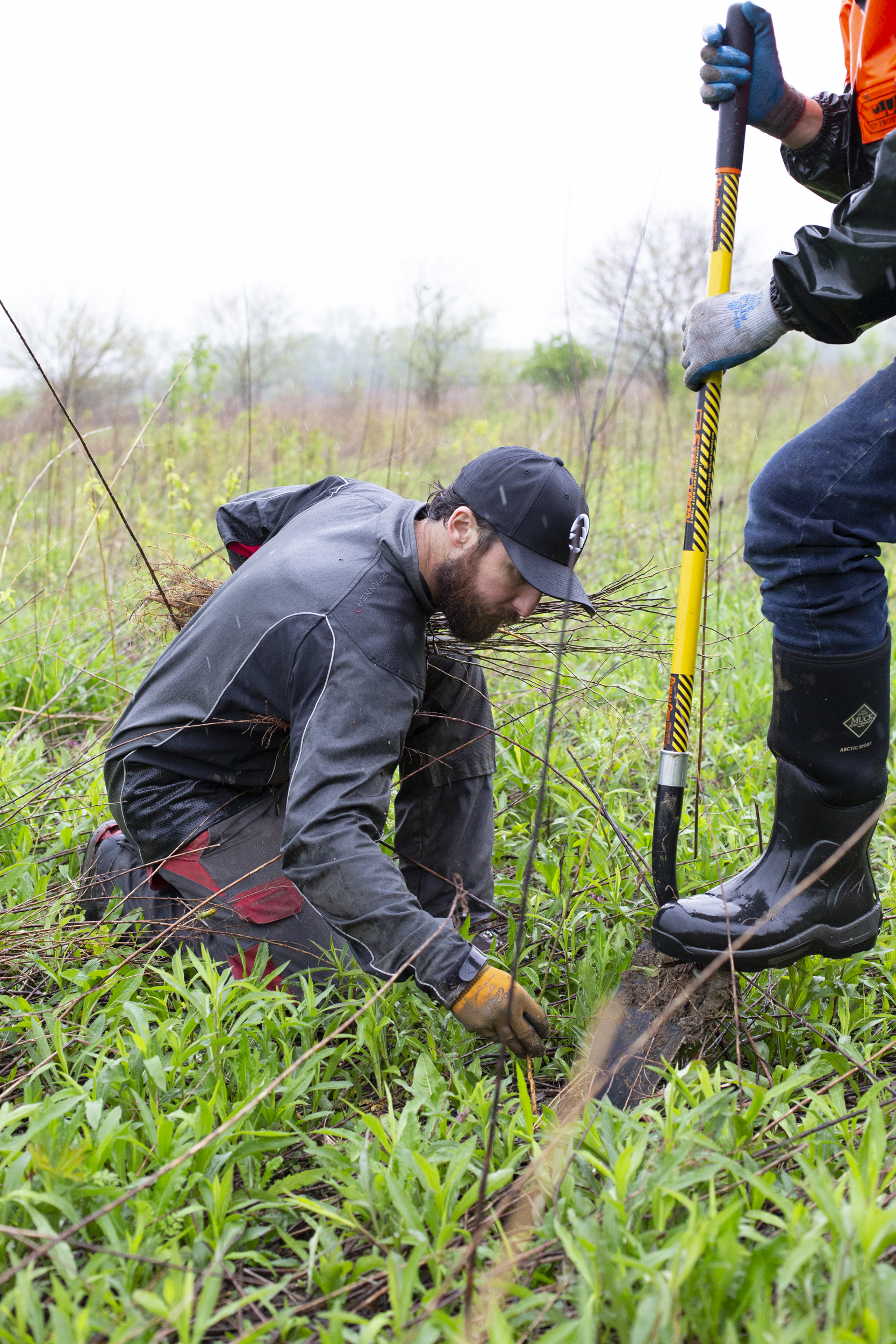
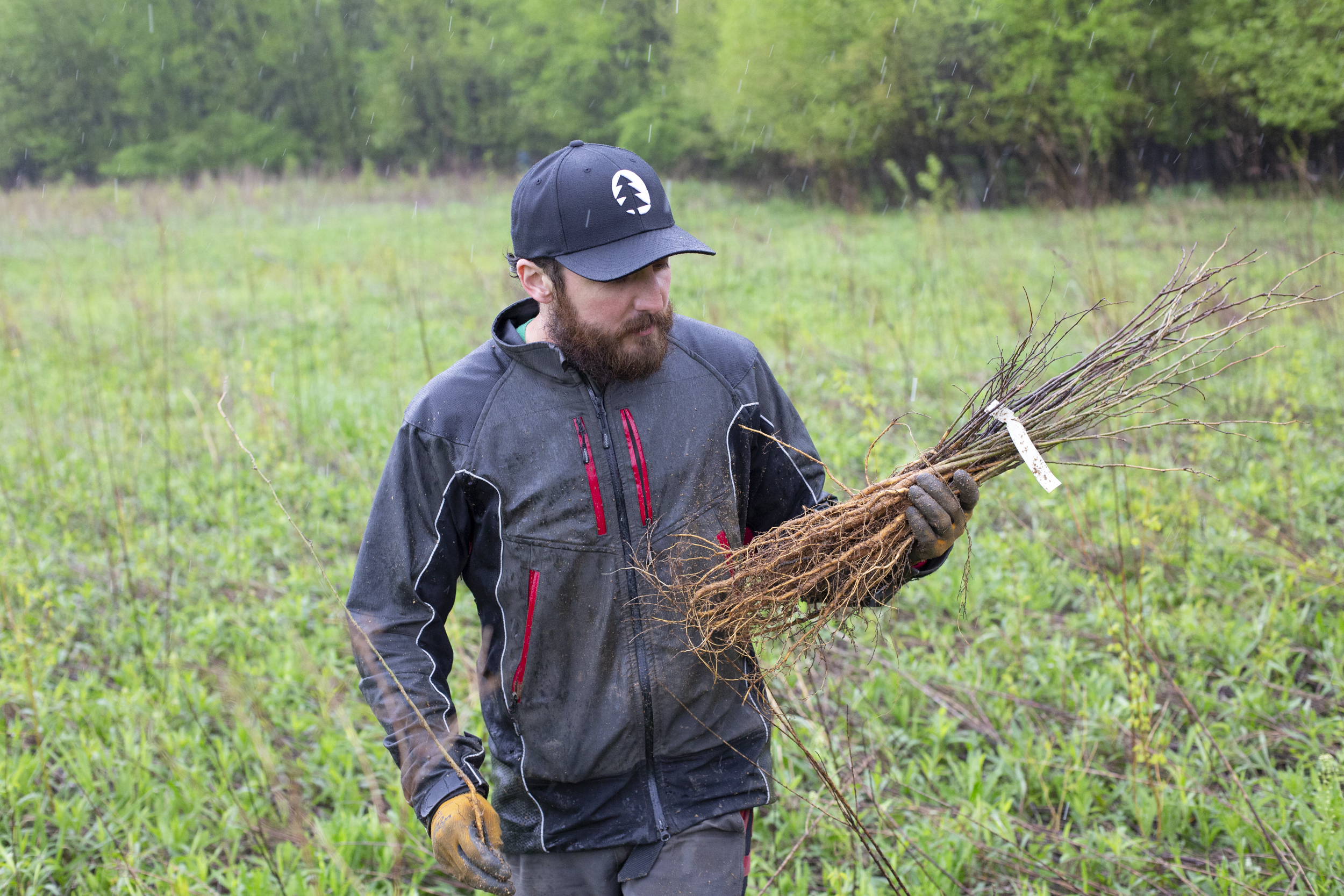
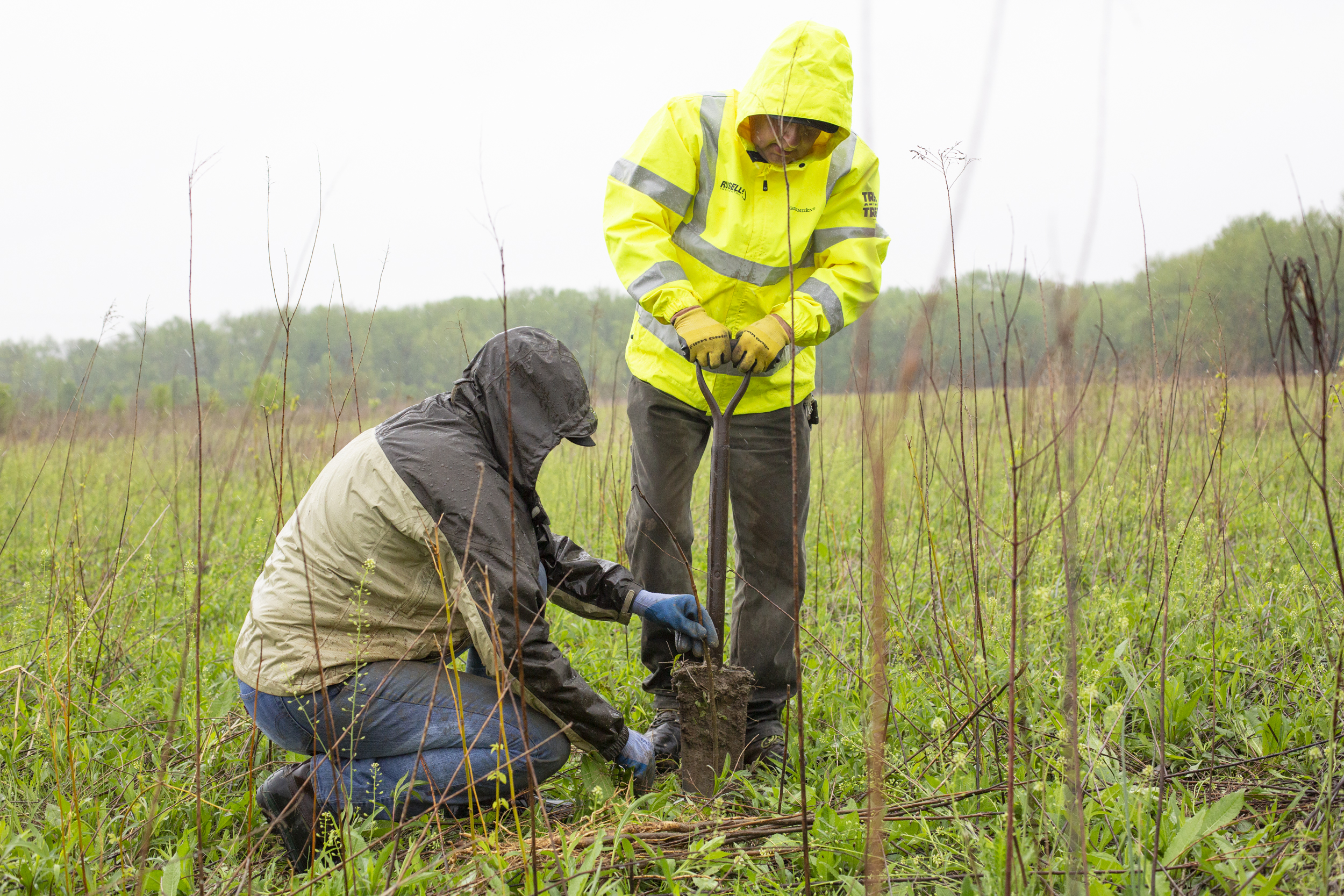
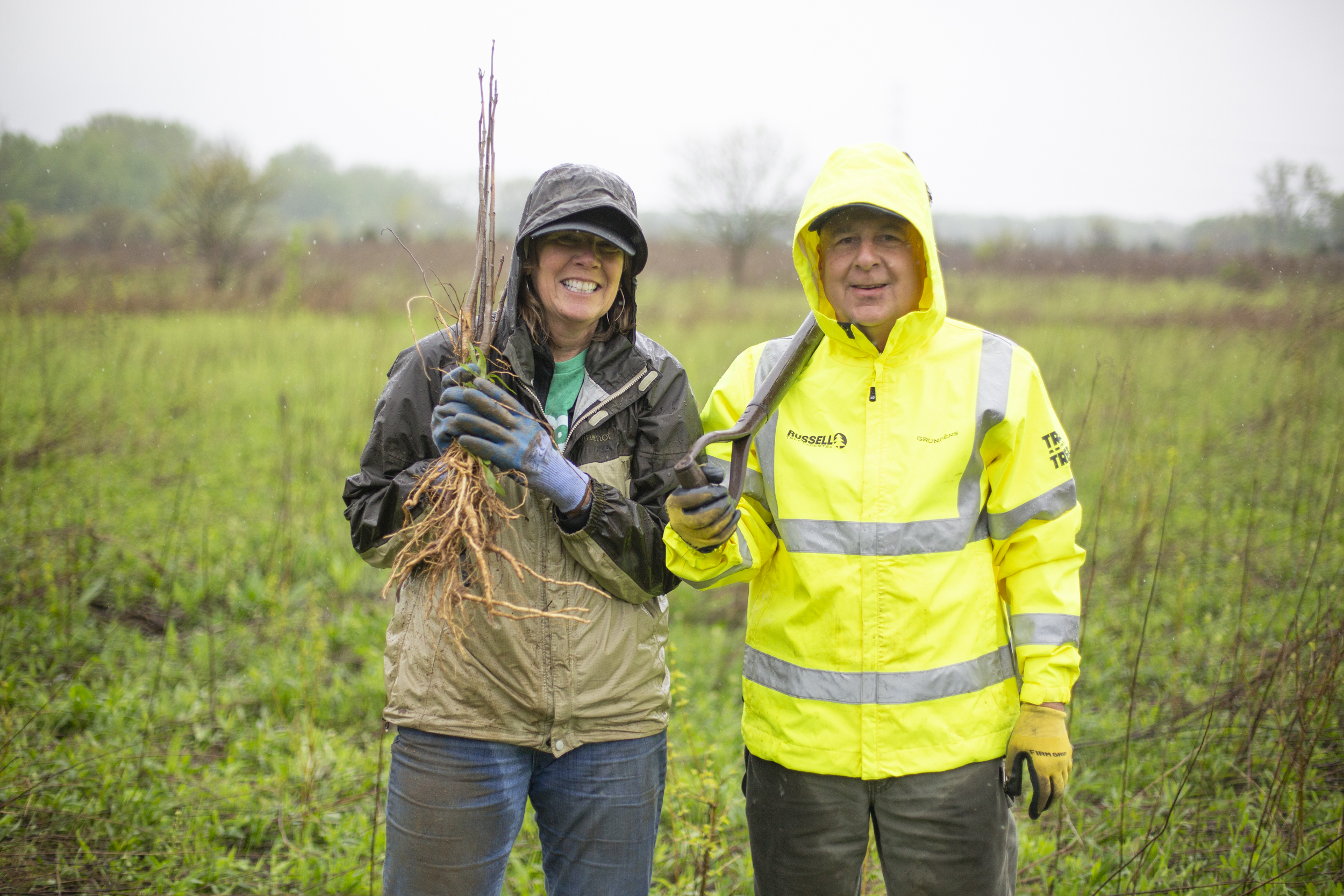
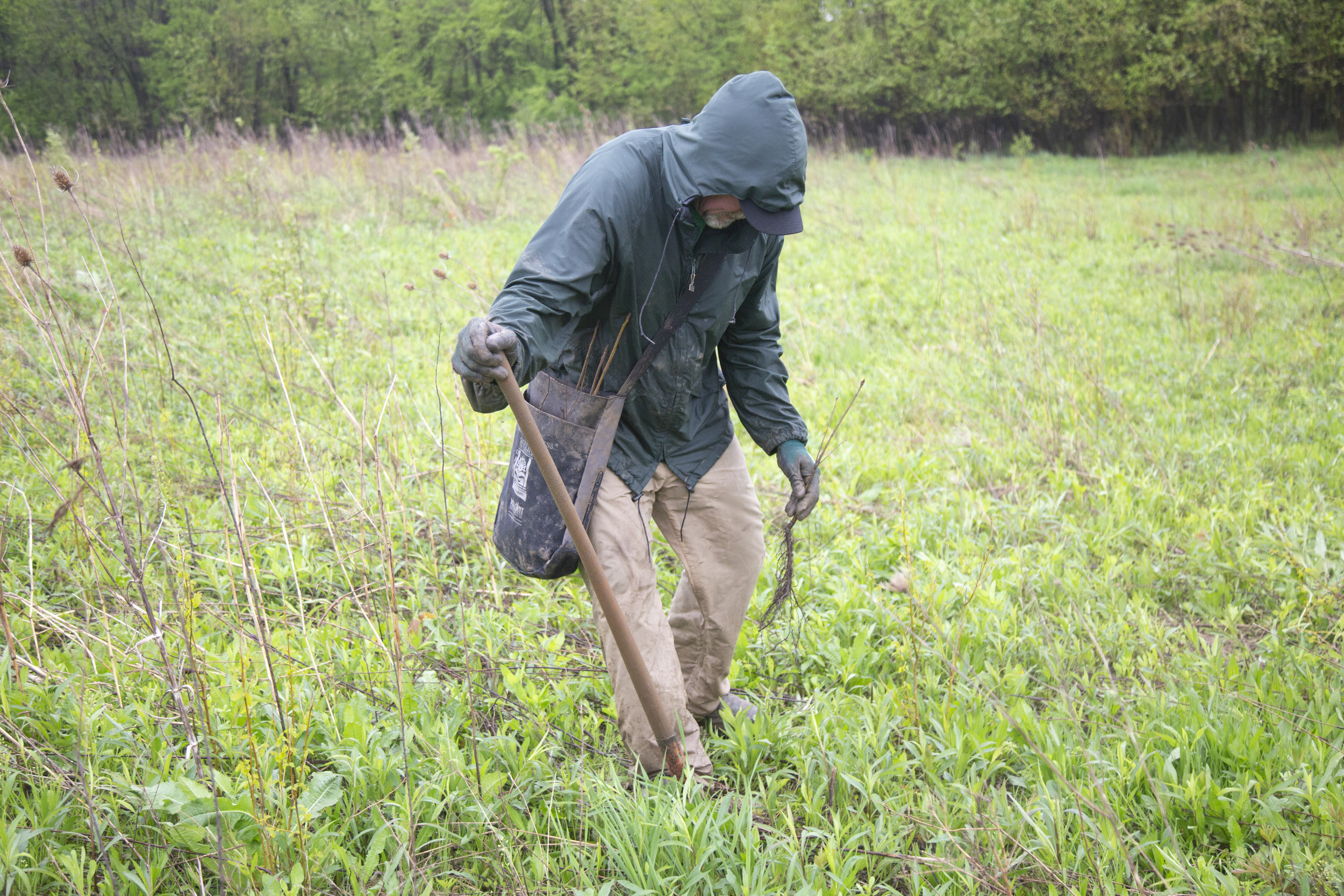
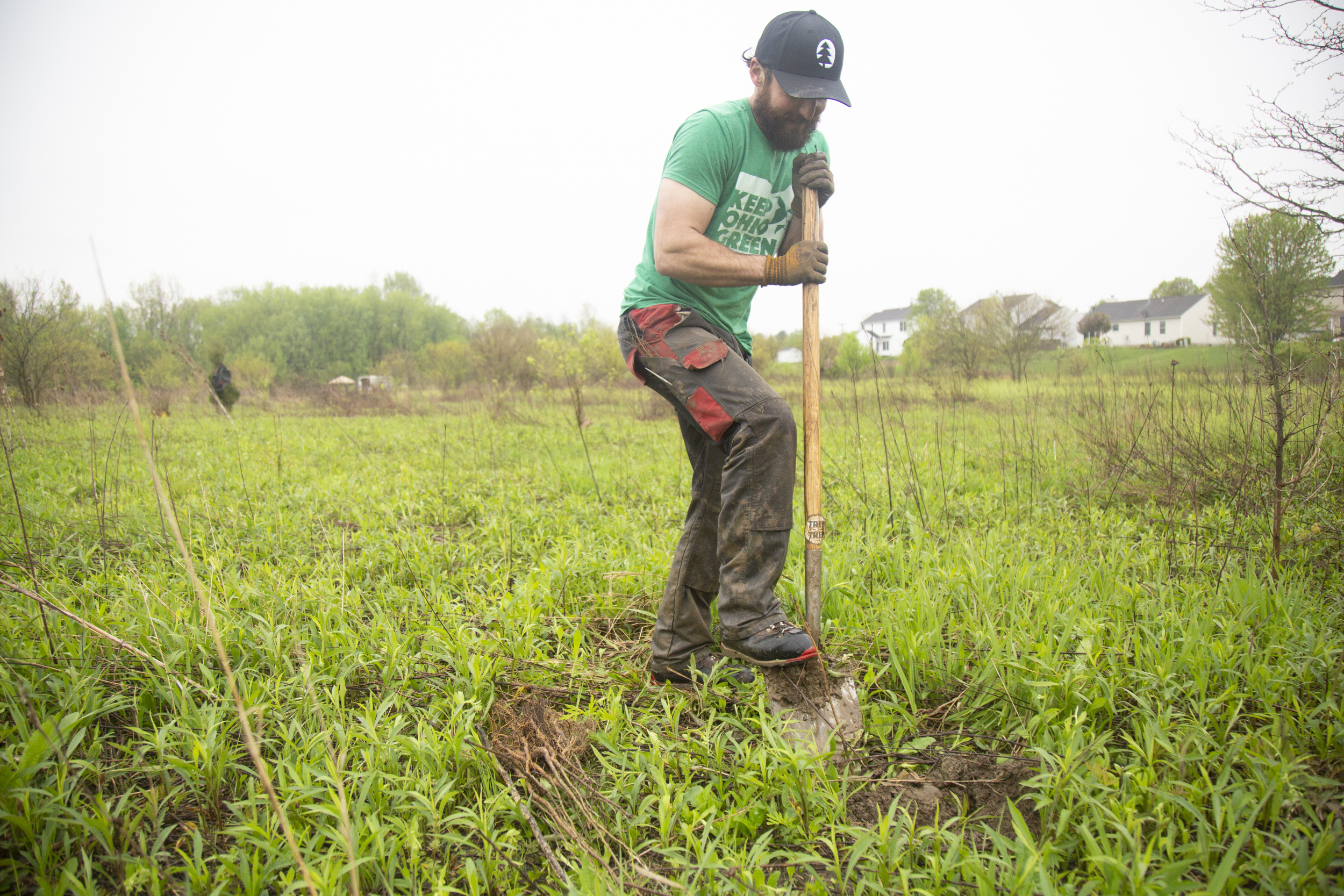
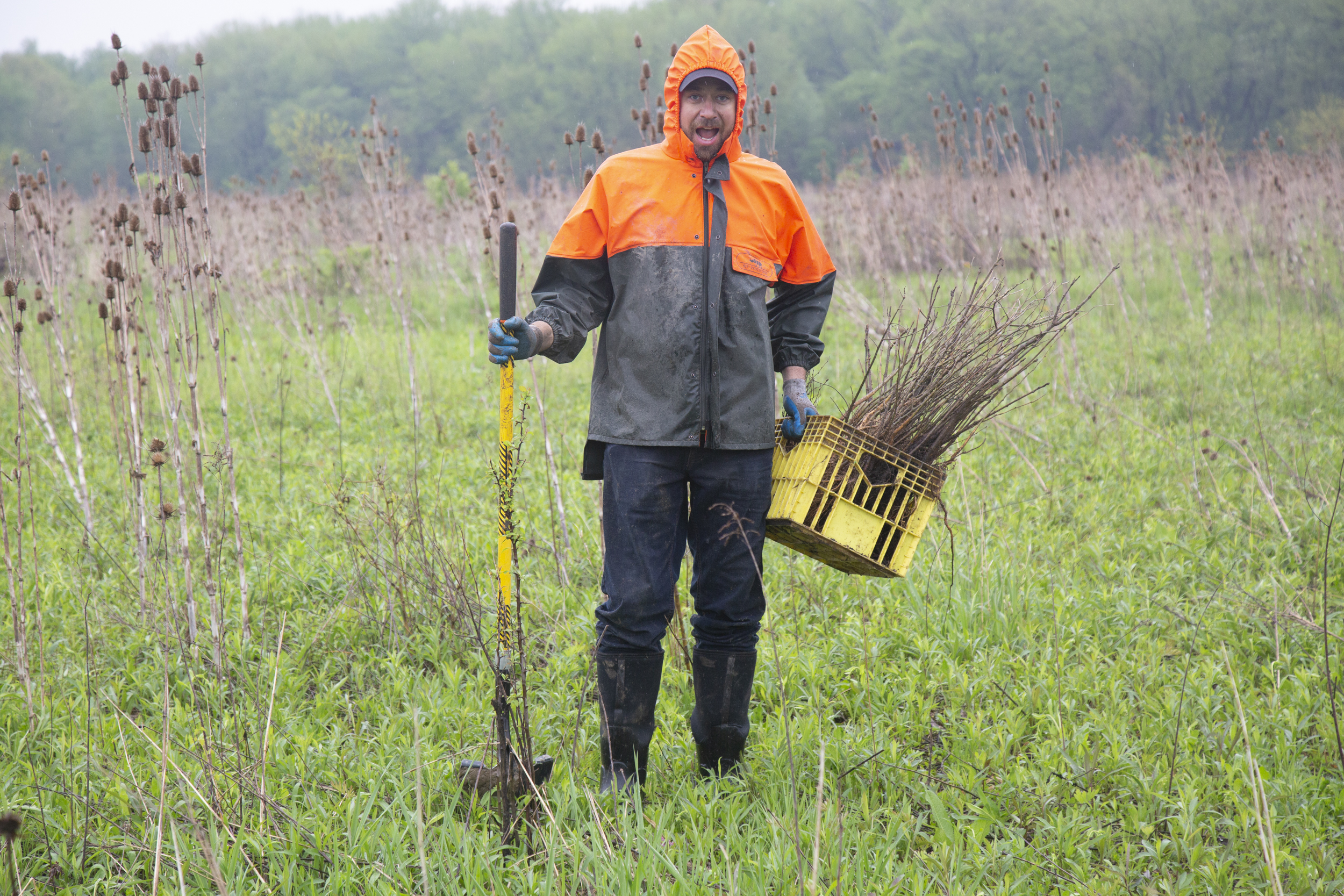
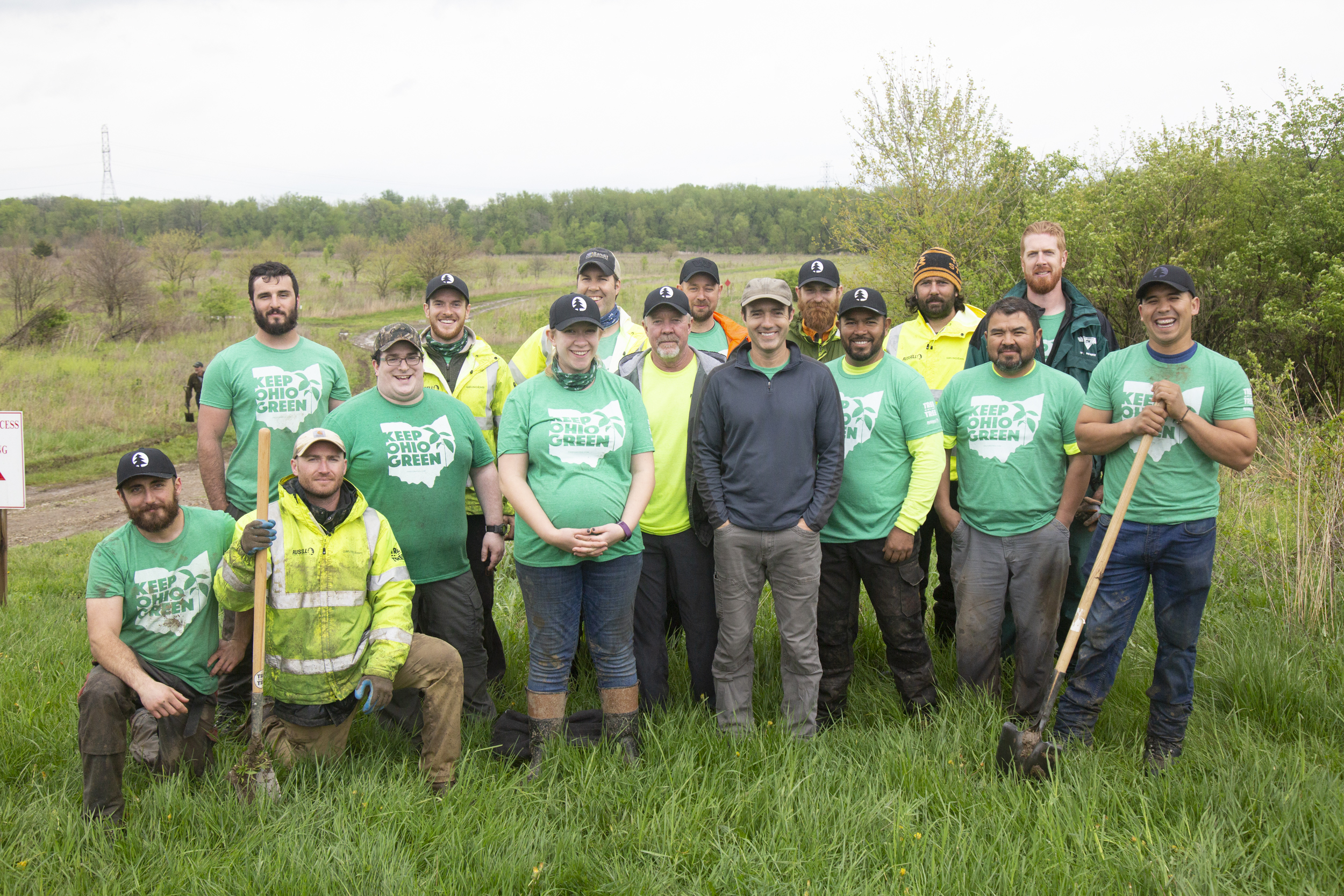
We created the TREE FOR A TREE© program in the winter of 2017 — as a result of our company wanting to offset the many trees we remove each year. It’s an unfortunate but necessary part of the tree service industry that many trees need to be removed each year, therefore, we decided that creating this program where we plant a tree for every tree we remove would be a great way to “KEEP OHIO GREEN” (see t-shirt).
Visit treeforatree.com to learn more about the program. You can nominate a planting location, sign-up to be a planting volunteer, see an interactive map of our planting locations, and more!
Thank you! Comment below with any questions you may have!

Kenny Greer | Marketing Director, Russell Tree Experts
Kenny graduated from The Ohio State University with a BFA in Photography. He enjoys photography, graphic design, improv comedy, movies (except for the scary ones), and spending time with his wife and 2 kids.