
Root Zone
Management
Root zone
Management
Root Zone invigoration
Russell Tree Experts’ Root Zone Invigoration service is performed using a supersonic air tilling tool that alleviates soil compaction around mature trees and shrubs. The result is a greatly improved environment for your trees to thrive - beautifully tilled soil with all critical fibrous roots still intact! (This can’t be done with a conventional tiller!)
-
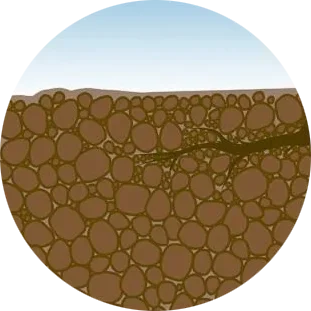
Before
When soil is compacted, water and oxygen cannot reach the vital root system of the tree. Water will collect on the surface and evaporate since it is unable to penetrate the soil. Seeing as trees need water and oxygen to live, compacted soil can quickly and severely impact the health of a tree.
-
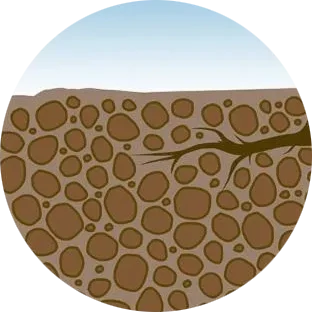
After
After Root Zone Invigoration is performed, the soil is adequately porous, allowing water and oxygen to reach the root system of the tree.

Root Collar Excavation
Unfortunately, more and more trees are “growing up” in unnatural environments that force their root systems into confined spaces which leads to the formation of girdling roots. From the start of a tree’s life, girdling roots may be forming. Trees grown in nurseries are forced to grow in small containers. This practice encourages the binding and tangling of roots AKA pot-bound. Poor nursery practices and poor planting practices are the two most common ways girdling roots are introduced into landscapes.
-
Unfortunately, more and more trees are “growing up” in unnatural environments that force their root systems into confined spaces which leads to the formation of girdling roots. From the start of a tree’s life, girdling roots may be forming. Trees grown in nurseries are forced to grow in small containers. This practice encourages the binding and tangling of roots AKA pot-bound. Poor nursery practices and poor planting practices are the two most common ways girdling roots are introduced into landscapes.
How it works

Vertical Mulching
Russell Tree Experts provides vertical mulching services to improve the health of your tree suffering from soil compaction or nutrient deficiency. Vertical mulching is a soil amendment process in which an air tilling tool is used to create dozens of 6-to-18-inch deep holes in a pattern around a tree’s root zone. This pattern will vary from tree to tree. The holes are then backfilled with compost, manure or other specific soil amendments.
-
The final product is an improved soil system that promotes tree growth, increased vigor, and a healthier, local soil food web. Using an air tilling tool is a non-invasive way of removing soil that will minimize the impact to a tree’s root system. This leaves a tree’s fibrous roots intact and unharmed. Backfilling the holes with a porous material like compost will de-compact the soil and increase soil aeration. This will primarily improve soil structure, thus enhancing water infiltration and gas exchange for the root system and allow more nutrients to become available for the tree to uptake. Additionally, due to the compost being deposited 6-to-18 inches deep into the ground, this will make more nutrients available specifically for the tree and minimize the chance of turf grass leaching the nutrients.
Deep Root Irrigation
-
Russell Tree Experts provides deep root irrigation services to water trees suffering from inadequate hydration. Using an irrigation lance, we penetrate the surface of the soil and inject water 6 to 8 inches below ground level. This minimizes water runoff and reduces the amount of water being taken by grass and surrounding, above-ground plants. This directly targets the root zone of the tree for optimal, efficient watering. The water is delivered out of a lance in 4 separate streams with approximately 200 psi of pressure. An additional benefit of this watering method is that some, minor soil decompaction will occur. This adds valuable pore space back into the soil for future root growth, increases the rate of water infiltration, and improves gas exchange.
-
All trees need water, but trees that will benefit most from deep root irrigation are:
Newly planted trees in landscapes whose owners are away during the hot or dry seasons. A 2 week gap in watering is all it takes for a tree to dry out and cause significant damage and heat stress.
Newly planted trees not close to a watering source (ex: park trees, street trees or trees inaccessible by watering can)
Established trees in restricted root zones (ex: parking lots or sidewalk cutouts)
Trees that recently experienced soil compaction or root disturbance events (ex: construction or grade change)
Trees that have recently received a root zone invigoration
Trees experiencing stress from insect infestation or disease. Deep root irrigation is unlikely to cure the insect or disease issue, but could be an indicator of inadequate irrigation.
Mature trees beginning to decline
Established trees during extreme periods of drought
-
Watering is essential to newly planted trees during most of the growing season from approximately May through October. The amount of recommended water for a tree will vary depending on the particular tree’s size, level of establishment, and planting site. Depending on your particular needs or specific tree, multiple deep root irrigation visits may be needed for optimal results.