
Comparing Conifers of Central Ohio
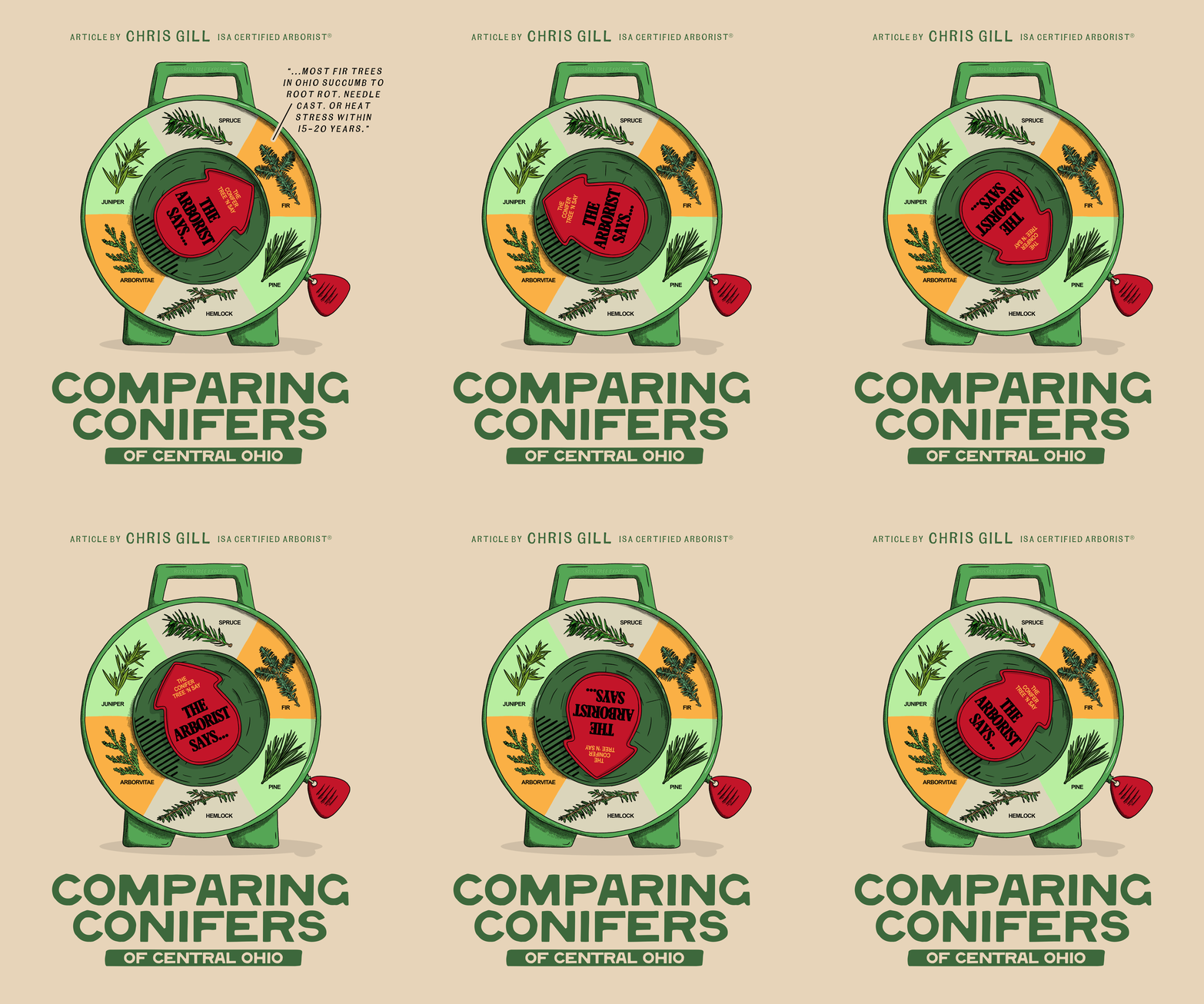
By Chris Gill
ISA Certified Arborist® OH-6416A
December 18, 2025
Every December my family bundles up and heads to our favorite local tree farm. We wander the rows of evergreens until we find the perfect tree, usually a Fraser fir (Abies fraseri) or Canaan fir (Abies balsamea var. phanerolepis) because nothing else matches that incredible citrus-pine fragrance, the soft flat needles that don’t shed the moment you look at them, and the strong limbs that will support many ornaments. The kids run ahead, my wife and I drag the sled behind us, and for that one afternoon everything smells like Christmas. Even if fir trees don’t love growing in my yard year-round, they will always be our favorite Christmas tree. There’s nothing like the smell of a real tree in the living room.
Yet, once the holidays are over and we’re thinking about evergreens that actually have to survive in Central Ohio’s hot summers, humid nights, heavy clay, and hungry deer, the choices narrow quickly. Central Ohio can be a tough transition zone for many conifers. Here’s a practical breakdown of the most commonly planted genera of evergreen trees and how they really perform in our area.
1. FIR (ABIES SPP.)
True fir trees especially Canaan fir, Fraser fir, and to a lesser extent concolor fir (Abies concolor) are the gold standard for Christmas tree farms in Ohio, and with good reason. They have soft, flat needles, excellent fragrance, and strong branches. As landscape trees however, they can be short-lived here. Most succumb to root rot, needle cast, or heat stress within 15–20 years. Canaan and concolor fir are the most adaptable and are occasionally used in yards, but even they prefer cooler, shadier microclimates.
2. Spruce (Picea SPP.)
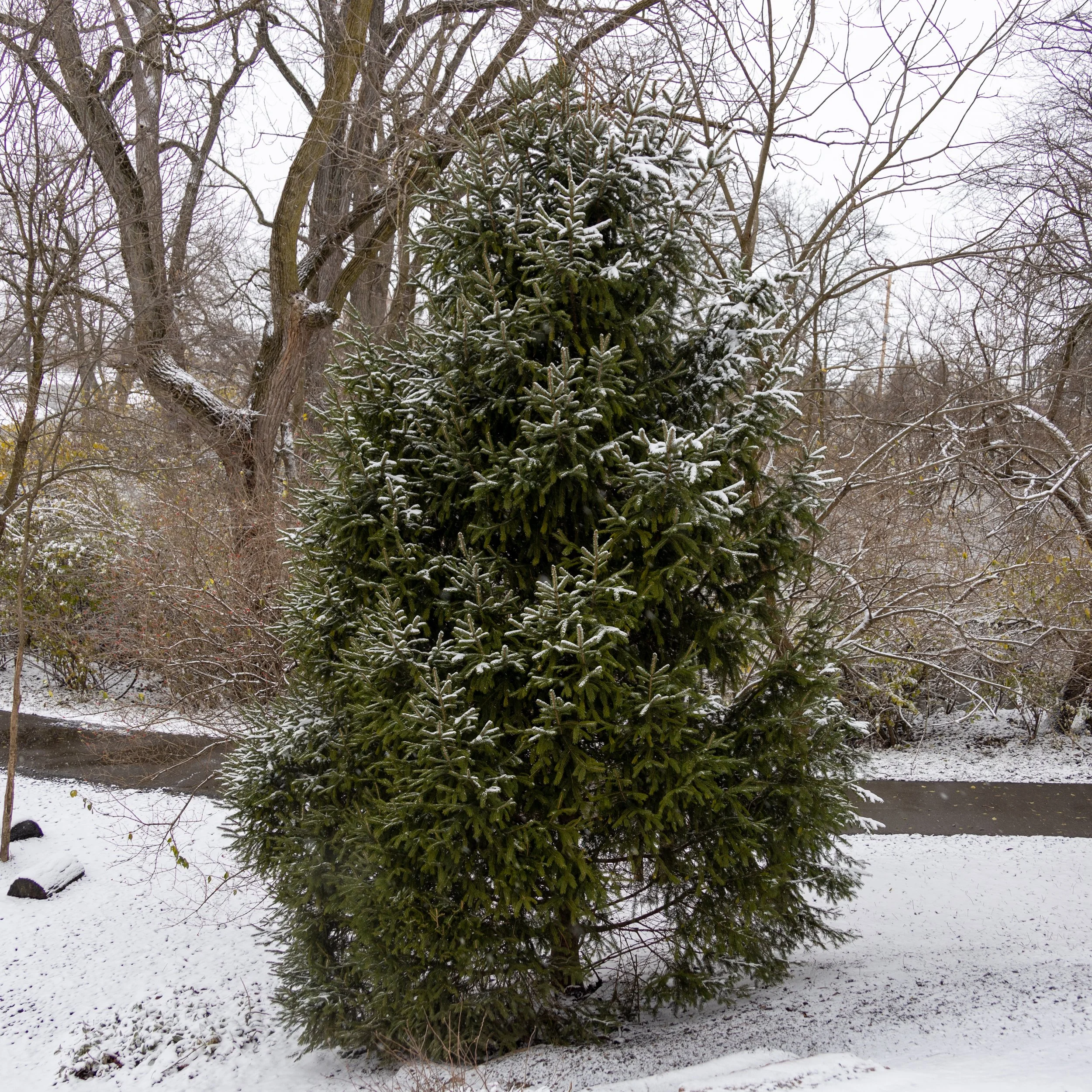
Norway spruce (Picea abies) and Colorado blue spruce (Picea pungens) are the two most common landscape spruce trees. Norway spruce grows fast, tolerates wet clay soil well, and can make for a decent windbreak. It can eventually reach 60–80 ft tall and often outgrows small or dense residential lots. Blue spruce, despite its stunning color, does not perform well in central Ohio as our wet springs and humid summers make them prone to rhizosphaera needle cast and cytospora canker. Most specimens planted in the 1980s and ’90s are now dead or dying. Another spruce to consider is Serbian spruce (Picea omorika). Serbian spruce trees can grow tall to a mature height of 50-60 ft, but is much narrower in width, making it more appropriate for backyards with limited space.
©Russell Tree Experts
Norway spruce (Picea abies)
3. Pine (Pinus SPP.)
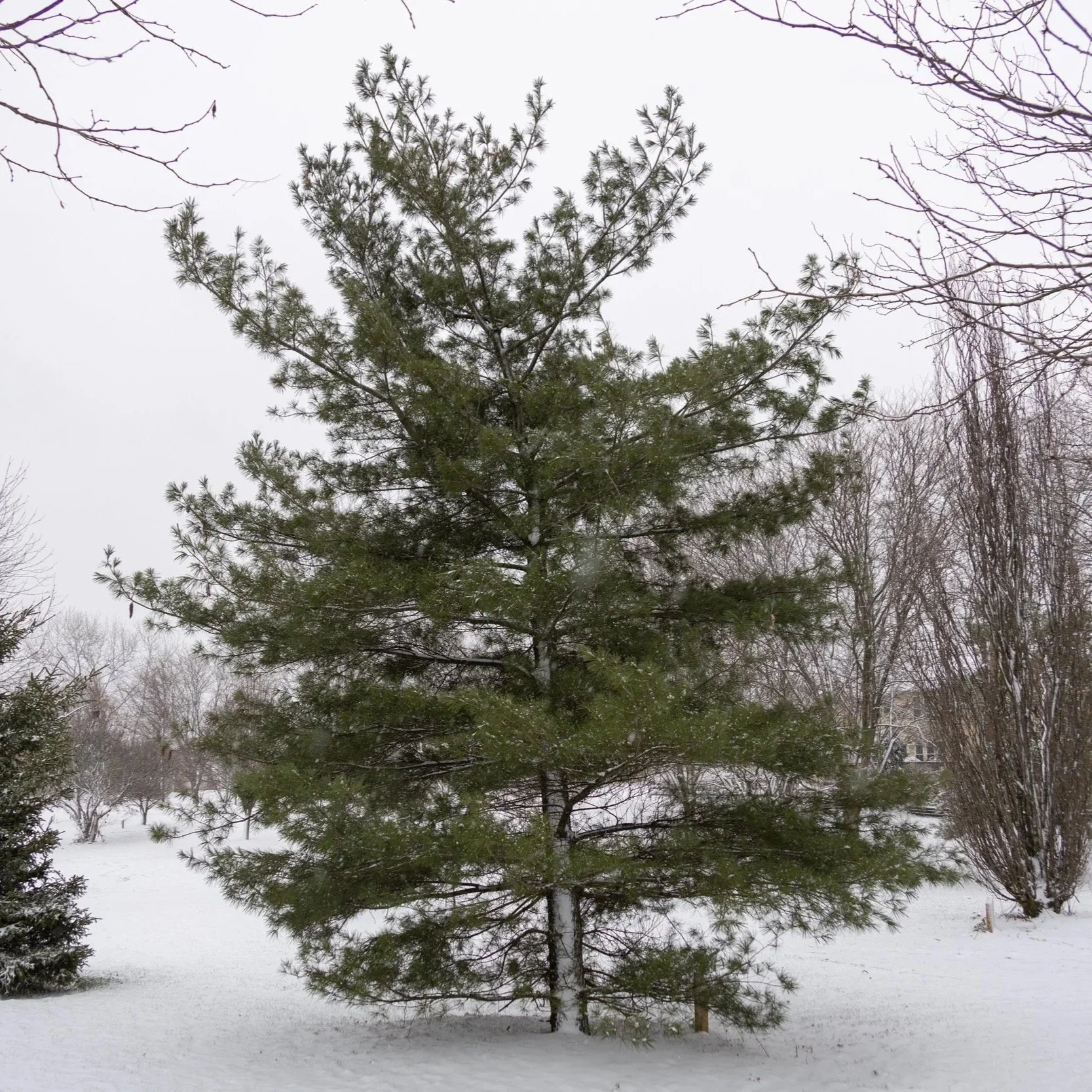
Eastern white pine (Pinus strobus) grows quickly and has a soft, graceful look but is prone to white pine weevil and nutrition issues when planted in poor sites. Austrian pine (Pinus nigra) and Scotch pine (Pinus sylvestris) were once the default evergreen screen, but diplodia tip blight and dothistroma needle blight have wiped out entire rows along highways and in neighborhoods since the early 2000s. I recommend avoiding these two species (Austrian and Scotch pine) when selecting pine trees for central Ohio.
©Russell Tree Experts
Eastern white pine (Pinus strobus)
4. Hemlock (Tsuga SPP.)
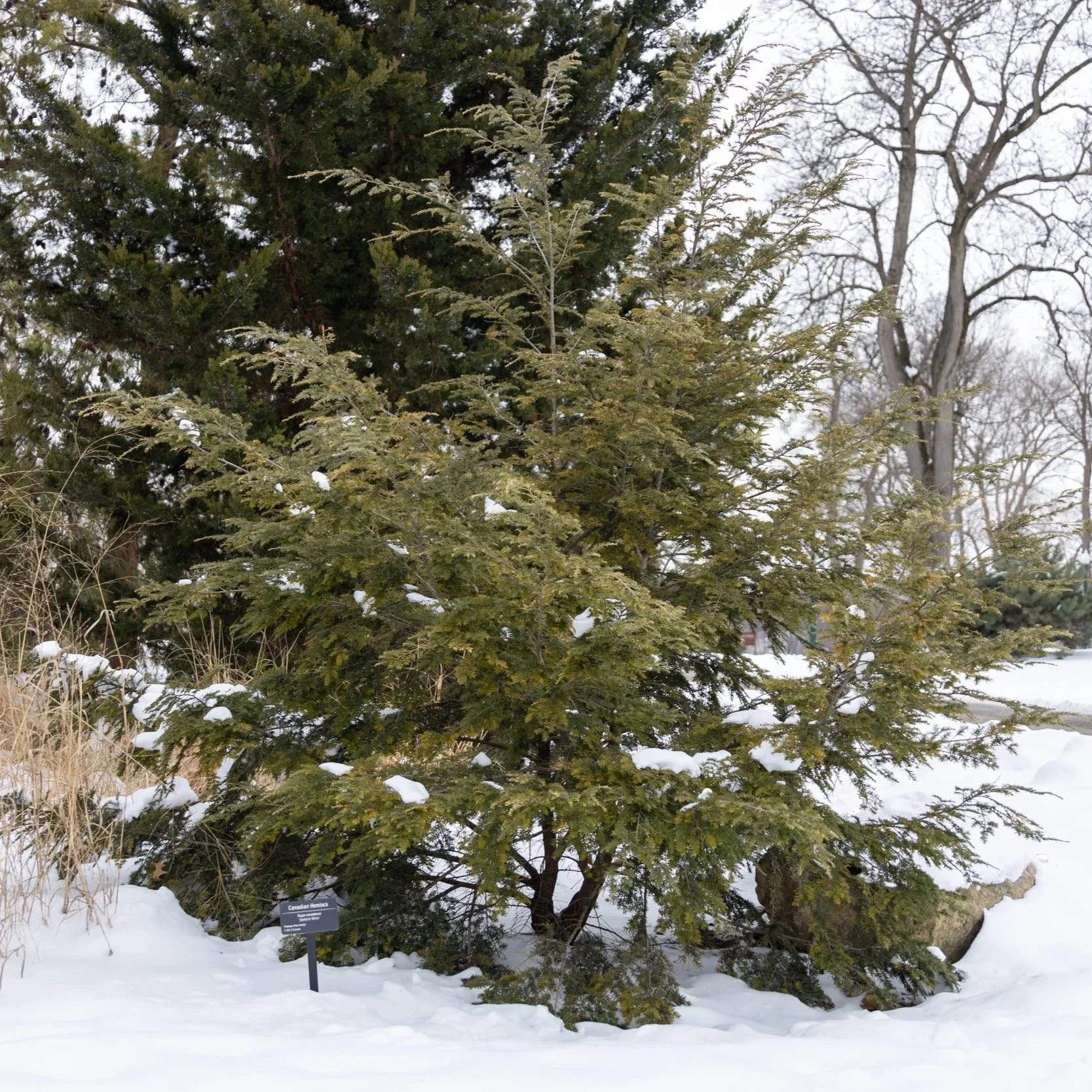
Eastern hemlock (Tsuga canadensis), also known as Canadian hemlock, is a beautiful native tree with delicate needles and a graceful, drooping habit. It thrives in cool, moist ravines like Hocking Hills, but does not care for hot, open suburban lawns. Add the advancing hemlock woolly adelgid in southern Ohio, and new plantings are risky unless you’re prepared to treat them regularly.
©Russell Tree Experts
Canadian hemlock (Tsuga canadensis)
5. Arborvitae (Thuja SPP.)
Arborvitae remains the workhorse for privacy screens. Emerald green arborvitae (Thuja occidentalis ‘Smaragd’) is narrow and widely available tree, but can brown badly in winter and is a favorite of whitetail deer. Green giant arborvitae (a hybrid, often listed as Thuja ‘Green Giant’ or Thuja plicata × standishii), however, is one of the true success stories: fast growing (3–5 ft per year when young), heat and drought-tolerant once established, decent clay soil tolerance, and much better deer resistance. For a tall, reliable screen in central Ohio, Green giant arborvitae is usually my top pick.
6. Juniper (Juniperus SPP.)
Older upright junipers like Hetzii juniper (Juniperus chinensis ‘Hetzii’) and Hollywood juniper (Juniperus chinensis ‘Torulosa’ or ‘Kaizuka’) have largely been killed by Phomopsis and Kabatina blights in our wet springs. Newer cultivars like Taylor juniper (Juniperus virginiana ‘Taylor’), Spartan juniper (Juniperus chinensis ‘Spartan’), and grey owl juniper (Juniperus virginiana ‘Grey Owl’) are far more resistant. Once established, junipers handle drought, poor soil, and deer pressure with ease.
Recommendation Summary for Central Ohio
• Tall screen: Green giant arborvitae or Norway spruce (with space)
• Medium screen: Taylor juniper or Serbian spruce (with caution)
• Best native landscape tree: Eastern white pine (with caution)
• Avoid entirely: Colorado blue spruce, Austrian pine, most true fir trees (except Canaan or concolor in cool spots), and hemlocks in full sun
In the end, there is no one perfect conifer in central Ohio. It is important to match a tree with a suitable planting site that will complement its growing needs. With that said, green giant arborvitae, disease-resistant junipers, and carefully sited natives like eastern white pine can provide decades of evergreen beauty with minimal headaches. Choose wisely, give them decent drainage, and take good care of them for the first few years, and you’ll have living privacy and winter structure that actually survives our midwest extremes.
PUT YOUR CONIFER TREE ID SKILLS TO THE TEST!
COMPLIMENTARY CHRISTMAS TREE DROPOFF (FOR RECYCLING!)
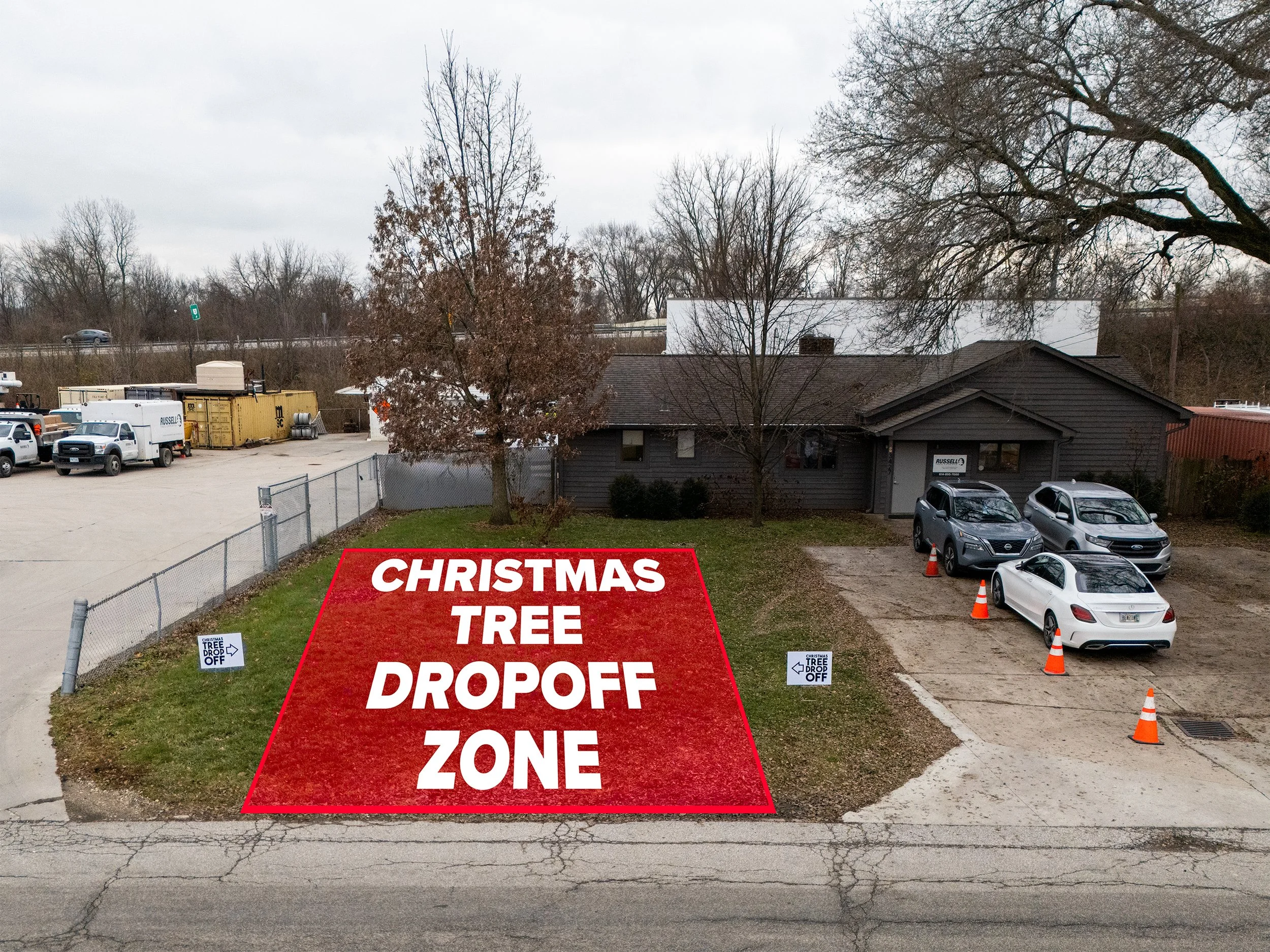
For those who live in a home where it is difficult to dispose of your tree, you can drop off and dispose of your old Christmas tree for free anytime at Russell Tree Experts (3427 E Dublin Granville Road Westerville, OH 43081) between Friday, December 26th 2025 and Friday, January 9th 2026. The drop-off zone will be at the front yard of our office with marked cones and signage! If you need any assistance, you can knock on our front door between 8:30 AM to 4:30 PM from 1/5/26 to 1/9/26 and one of our friendly staff members will lend a hand! We’ll ensure that your Christmas tree gets reused to become mulch or compost!
ADDITIONAL ARBOR ED™ ARTICLES!



Chris Gill I Regional Manager, Russell Tree Experts
Chris joined Russell Tree Experts in 2015 and has been in the green industry for over 15 years. When not at RTE, he enjoys spending time with wife & son, wakeboarding, and hunting. His favorite trees are the white oak & sugar maple for their beauty and uses beyond the landscape. Chris is an ISA Certified Arborist®, EHAT certified, CPR and first aid certified, holds an ODA commercial pesticide license, and holds a tree risk assessment qualification (TRAQ).