
Eight Plants for Natural Screening
By Mike Wilson
ISA Certified Arborist® OH-6806A
February 12, 2026
Creating privacy in Central Ohio without sacrificing beauty or environmental harmony has never been more important. While fences and walls offer quick solutions, many homeowners and gardeners are turning to a more natural, sustainable alternative: living privacy screens made from plants. These green barriers not only shield your space from prying eyes but also enhance the landscape with texture, color, and life. Luckily, a wide variety of trees and shrubs can provide effective year-round or seasonal privacy while also supporting wildlife and reducing noise. Here are eight of my favorite plants for natural screening!
1. Bottlebrush Buckeye (Aesculus parviflora)
The Bottlebrush buckeye is most known for its long, upright, white flower clusters that emerge in early July. It is commonly used as an understory plant but can also thrive in full sun along with well-drained soils. This woody shrub can grow to a size of approximately 8-15’ tall and wide. It is a “Suckering” shrub due to its ability to spread and form colonies, so give this plant ample space or prune new sprouts to help contain its size.
2. Norway Spruce (Picea abies)
This is a tree conifer meant for larger spaces. Avoid Colorado blue spruce trees due to increased fungal issues commonly found throughout Central Ohio. The Norway spruce has a mature height of 40-60’ and a spread of 25-30’ at the base. It prefers full sun and does not tolerate extended dry soils. There are many cultivars that come in a wide variety of sizes and shapes that may be best suited to your landscape.
3. Hicks Yew (Taxus x media 'Hicksii')
This is one of my top contenders for my own backyard based on its size, preferences, and ease of maintenance. Taxus shrubs are known for their dark green, soft, flat, dense needles. They are easily maintained to specific size and shape through annual pruning. The yew is unique in that it thrives in shade as well as sunny landscapes and grows to a variety of sizes based on specific cultivars. The Hicks yew grows to approximately 10-15’ tall and 3-4’ wide.
4. Winterberry (Ilex verticillata)
Winterberry holly is a slow-growing deciduous plant that is notorious for its showy red berries that draw much attention in the winter when everything else is defoliated. The berries also serve as a vital food source for birds and other small mammals during this period. This plant grows in medium to wet acidic soils and does best in partial shade or full sun. It can grow to 3-15’ tall and wide, however it comes in smaller sizes depending on the cultivar.
5. Juniper (Juniper spp.)
There are many different varieties of Juniper that range from 2-50’ tall. These trees prefer full sun and well-drained soil (DOES NOT TOLERATE WET FEET). Many are extremely drought tolerant. The Spartan juniper for example grows in a narrow form up to 15’ tall. Spacing needs to be considered when planting this tree to attain proper screening.
6. Viburnum (Viburnum spp.)
Another strong contender for my own backyard! There are over 150 different species of viburnum that range in size, color, and shape. The Arrowwood (Viburnum dentatum) and Blackhaw (Viburnum prunifolium) are native to Ohio. These woody shrubs can grow 15’ tall and 6-8’ wide. Many include vibrant flowers in a variety of colors for different pollinators and berries that attract birds. Most viburnum are deciduous and lose their leaves in the winter, however there are some that hold their foliage to help create lasting privacy through the cold months. Two examples of this evergreen variety include Leatherleaf and Prague viburnums.
©Russell Tree Experts
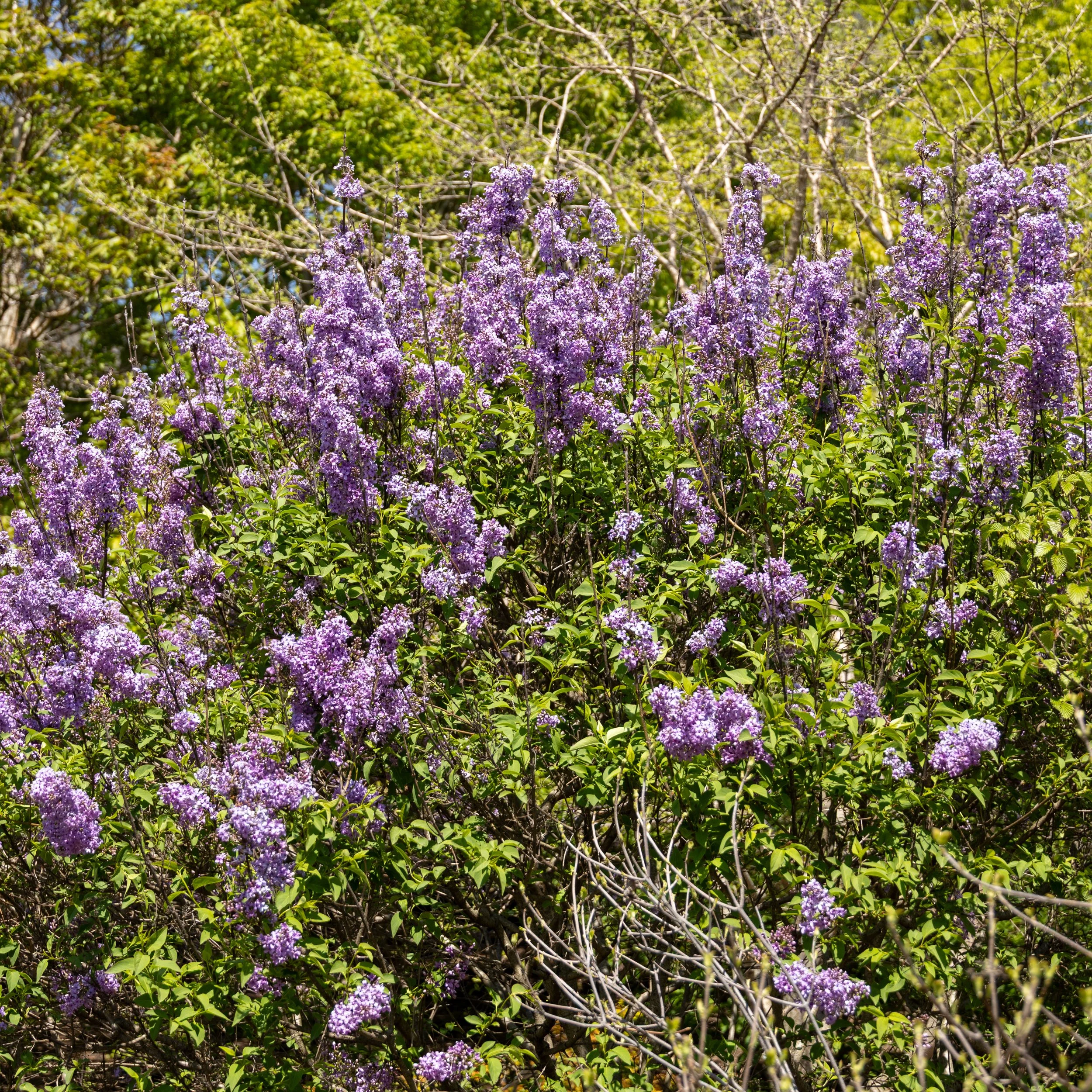
Chinese Lilac (Syringa x chinensis ‘Red Rothomagensis’)
7. Lilac (Syringa spp.)
The lilac shrub is known for its fragrant and showy blooms of purple, pink, or white. Size typically ranges from 8-15’ tall and wide. Although they have multiple woody stems, they’re not as dense as some of the other evergreen species mentioned and they lose their foliage annually. This plant prefers full sun and well-drained soil. Once established this hardy, long-lived plant will provide lasting blooms with proper care and timing of pruning.
8. Ninebark (Physocarpus opulifolius)
One of the less commonly used woody deciduous shrubs, the Ninebark can grow to approximately 5-10’ tall and wide. Cultivars may grow to different sizes and colors of foliage. A personal favorite of our ISA Board Certified Master Arborist® TJ Nagel is the “Summer Wine” Ninebark (Physocarpus opulifolius 'Seward'). The white/pink flower clusters emerge in late spring and attract a variety of pollinators. This shrub tolerates partial shade, however, will be most colorful in full sun and tolerates a variety of soil conditions.
By choosing the right plants and allowing them to flourish, homeowners can enjoy a sustainable, attractive, and long-lasting solution that blends functionality with beauty. In the end, a thoughtfully designed green screen doesn’t just hide what you don’t want to see; it elevates what you do, transforming your property into a more peaceful and inviting retreat. I hope you find these eight options helpful in creating the landscape of your dreams. Contact Russell Tree Experts for more information or a maintenance plan to keep your investments happy and healthy!
ADDITIONAL ARBOR ED™ ARTICLES!


Mike Wilson I Regional Manager, Russell Tree Experts
Mike joined Russell Tree Experts in 2013 and has been in the green industry for 15+ years! He is an ISA Certified Arborist® and a graduate of Oregon State University. Mike is an outdoor enthusiast and a US Army Medic Veteran!