Winter Reading List

By Mitch Lippencott
ISA Certified Arborist® OH-6715A
December 11, 2025

For me, Thanksgiving marks the end of lawn and garden work for the year. It’s time to get to work on the indoor tasks I’ve neglected all summer. It’s time to get back to the gym. It’s time to catch up on some reading.

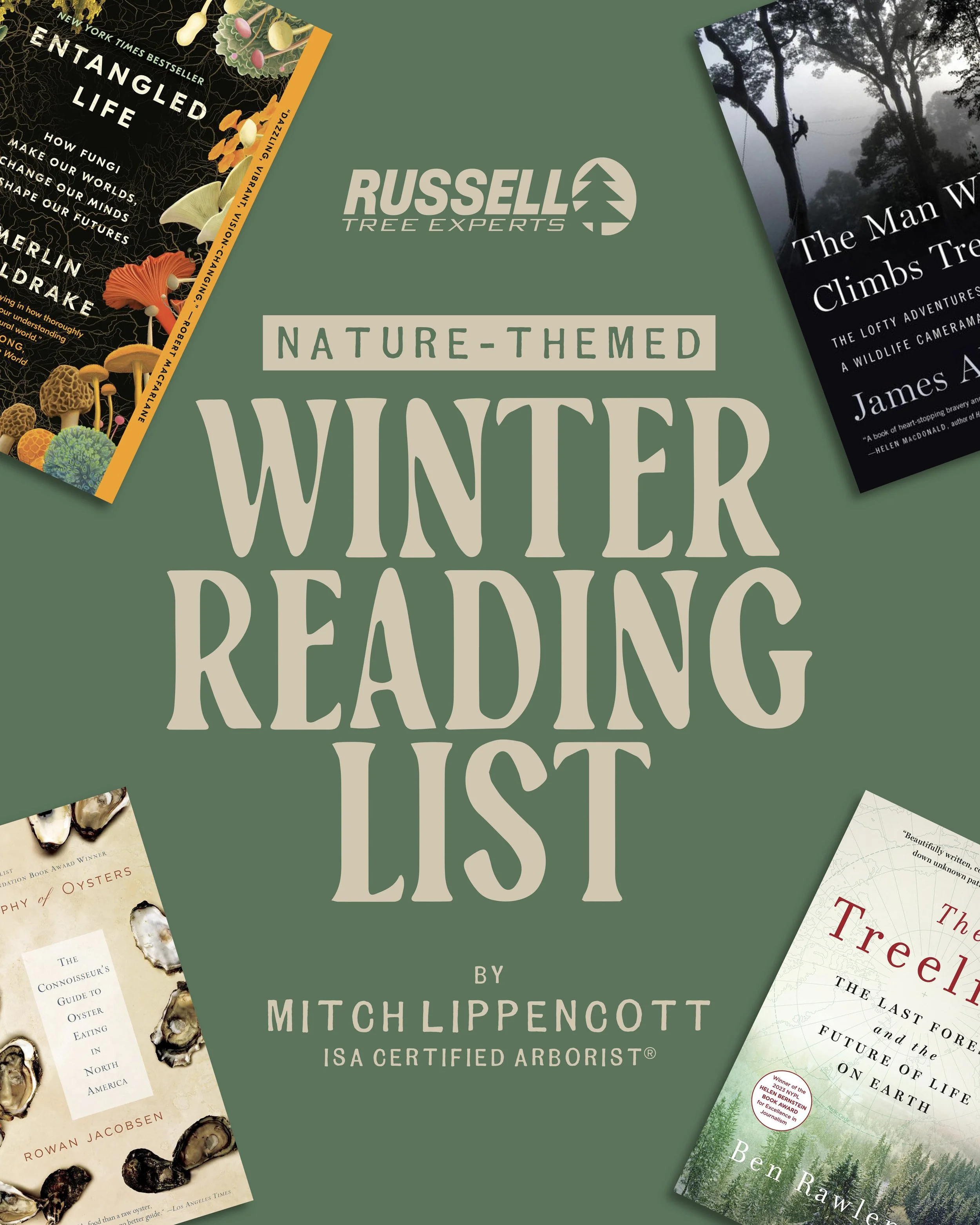
Here are four of my favorite nature books, plus two others I’ve enjoyed recently that are only partially nature-themed.


1) The Man Who Climbs Trees (James Aldred, 2017)

Not only my favorite nature book—my favorite book, period.

In it, wildlife cameraman James Adlred recalls his travels to the world’s most untamed locations and his climbs in the the planet’s largest trees, as he pioneered techniques to film exotic animals for National Geographic and the BBC.

His concise writing style and matter-of-fact outlook keep the tempo fast and the adventures harrowing.

As another man who climbs trees, I’m profoundly jealous Mr. Aldred found a much cooler way to put our shared skill set to use!


 2) Entangled Life (Merlin Sheldrake, 2020)

The science will be too science-y for some, but the facts Mr. Sheldrake presents here are fascinating! Fungi are among the most adaptable, industrious, and dare I say, intelligent? life forms on the planet. We are only beginning to scratch the surface of their capabilities and potential benefit to humanity.

Once you get pulled into this one, you’ll have trouble putting it down. You’ll also annoy your friends and family reciting all the incredible things you’ve learned!


3) The Treeline (Ben Rawlence, 2022)

As our planet continues to warm, the boreal forests of the Arctic Circle march rapidly northward. In this book, environmentalist Ben Rawlence traveled to Greenland, Canada, Alaska, Scotland, and Siberia  to see these forests, meet the people they impact, and learn from the scientists studying there.

It takes a while to get moving, and the tempo is much slower than The Man Who Climbs Trees. Stick with him, though, because his concluding statement on climate change is profound!


4) The Light Eaters (Zoë Schlanger, 2024)

I listened to this on audiobook. Between the author’s fascinating content and pleasant reading, I found myself hoping for red lights.

Much like Entangled Life, this one is science-heavy but mind-blowing! While she never goes so far to suggest sentience, Ms. Schlanger makes a strong case plants can feel, hear, communicate, remember, and even plan ahead.


5) The Drunken Botanist (Amy Stewart, 2013)

Do you like plants and booze?

Me too! And we’re not alone.

In this best-seller, Ms. Stewart details how humans of all eras and all locations have been turning fruits, nuts, seeds, grains, herbs, trees, mushrooms, and just about anything else we can find into hooch. She even shares cocktail recipes and plant growing guides.

While the descriptions are entertaining and easy to digest, this book’s format reads more like a reference than a page-turner…I suspect you’ll find yourself pulling it off the shelf more than myother recommendations but will likely never read it cover-to-cover.


6) A Geography of Oysters (Rowan Jacobsen, 2007)

Rowan Jacobsen is another author I enjoy reading but am envious of! He has turned his passion for food and the places it comes from into a James Beard Award winning career.

Here, he travels the oyster-farming regions of North America, highlighting how their shape, color, and flavor are tied directly to the environment they are grown in. Yes, it’s more about food than nature, but this book’s emphasis on terroir will leave you hungry to travel our continent’s coasts and protect its waterways.

—-

So there you have it! – four of my favorite nature books and two more I enjoy that are nature-adjacent. I hope this winter finds you diving into one or more of them – ideally with a cocktail or plate of bivalves at your side! 

Books Available at Birdie Books

COMPLIMENTARY CHRISTMAS TREE DROPOFF (FOR RECYCLING!)

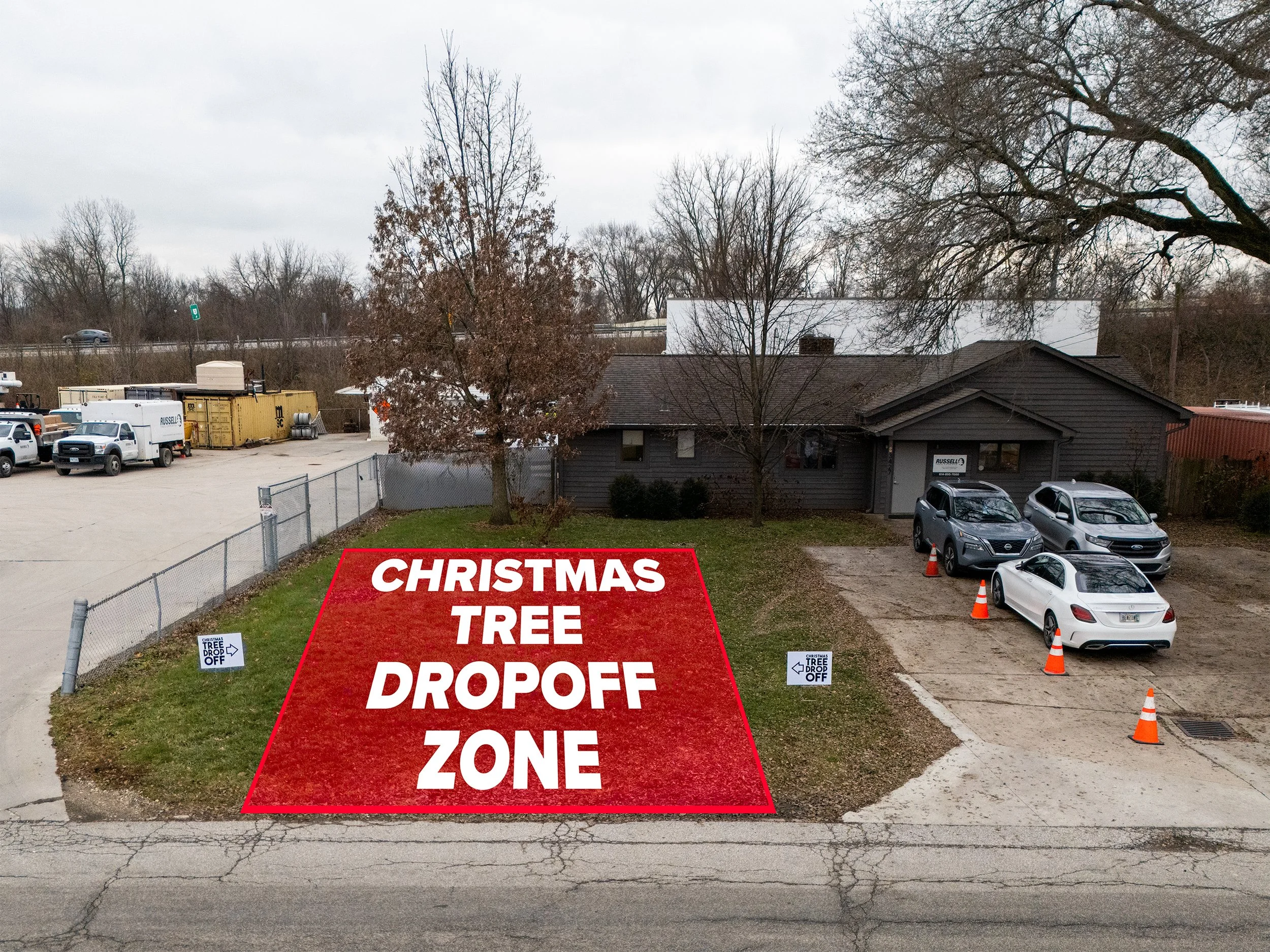
For those who live in a home where it is difficult to dispose of your tree, you can drop off and dispose of your old Christmas tree for free anytime at Russell Tree Experts (3427 E Dublin Granville Road Westerville, OH 43081) between Friday, December 26th 2025 and Friday, January 9th 2026. The drop-off zone will be at the front yard of our office with marked cones and signage! If you need any assistance, you can knock on our front door between 8:30 AM to 4:30 PM from 1/5/26 to 1/9/26 and one of our friendly staff members will lend a hand! We’ll ensure that your Christmas tree gets reused to become mulch or compost!
ADDITIONAL ARBOR ED ARTICLES!
Mitch Lippencott I Regional Manager, Russell Tree Experts

Mitchell Lippencott joined Russell Tree Experts in 2020. With past experiences ranging from a landscape design company, a retail garden center, and two municipalities, he has accrued more than 20 years in the green industry. Mitch is a graduate of the Ohio State University, a licensed pesticide applicator, a qualified tree risk assessor, and an ISA Certified Arborist®. Outside of work, Mitch plays guitar and banjo poorly. 

Read More
Featured, Tree Tips Andy Bartram Featured, Tree Tips Andy Bartram

How to Beat the Winter Blues

I look out the window gazing upon the barren winter landscape. I miss the vibrant green leaves on my fragrant viburnums. I miss the beautiful red flowers on my roses. I even miss watching the bees in search of nectar dancing from one pesky dandelion to the next. Most of all I miss the sun and spending my evenings cultivating a new season’s garden. I feel safe to say I have succumbed to the winter blues…
200305-winter-blues.jpg

I look out the window gazing upon the barren winter landscape. I miss the vibrant green leaves on my fragrant viburnums. I miss the beautiful red flowers on my roses. I even miss watching the bees in search of nectar dancing from one pesky dandelion to the next. Most of all I miss the sun and spending my evenings cultivating a new season’s garden. I feel safe to say I have succumbed to the winter blues.

It happens to me this time every year. I survive through January and February only to be teased by March. We have a nice day here, a nice day there, and all the middle filled with what seems like more never ending winter. I stop at a local garden store dreaming of a sea of color, annuals and perennials as far as the eye can see, only to find out their nursery stock is only still beginning to arrive. What am I to do? I am ready to make my way out into the landscape but it appears winter is still here!

Have no fear, I have found the answer. These occasional beautiful March days aren’t to be wasted; they are the perfect opportunity to prepare your landscape for spring. Over the years I have developed a few ways to help “scratch” that itch from spring fever:

  1. Pruning your shrubs and trees during dormancy are much appreciated by your plants. Pruning before bud break allows your plants to use its energy in areas you are encouraging as opposed to wasting it in areas you are going to be removing. It is also helpful in reducing the spread of certain pest and diseases.

  2. Cut back and clean up your perennials. March is a great time to cut back your grasses to make way for the new year’s sprouts. Cut back any woody perennials such as butterfly bush or bluebeard to strong stems to prevent floppy plants the following year. Clean up any old foliage from the previous year. This will allow new buds to push through easier and help prevent the spread of pests and disease. Cleanliness is a key factor in reducing many problems in the landscape.

  3. Weed preventer can also be applied in March. This can vary in timing between years but a weed preventer can save you many hours of weeding from just one application.

  4. Start thinking about grass seed. Winter over seeding allows for the seed to germinate early in the season taking advantage of spring rain. Remember, do not apply a crabgrass preventer when over seeding as it can prevent germination of your grass seed.

These are just a few ideas for how I enjoy those warm March afternoons and I am happy to have shared my antidote to the winter blues with all of you. Hopefully you find its effects as fruitful as I have. Although none of these items need to be done right now, they are the perfect little jobs to fill up those randomly beautiful and sunny March days. I know I will be out there and hopefully you will be too.

190109_rte_portraits_0003.jpg

Andy Bartram | Crew Production Manager, Russell Tree Experts

Read More
Featured TJ Nagel Featured TJ Nagel

TJ's Top 10 Natural Bird Feeders (in Winter)

I happened across a Hawthorn downtown this past weekend who’s dormant canopy was alive with several dozen robins gorging themselves with its fruit. The birds seemed so happily preoccupied in their feast that they hardly took notice of me. When I arrived home a few minutes later, I noticed a Mockingbird cleaning out the last of the fruit on our holly outside the kitchen window. Later, when I shared these details with my wife, she informed that February is National Bird Feeding Month.  Shame on me - I had no idea. 

210204-bird-feeders-v2.jpg

Please note: This article was originally published on 2/28/2019 and was republished on 2/4/2021.

I happened across a hawthorn downtown this past weekend whose dormant canopy was alive with several dozen robins gorging themselves with its fruit. The birds seemed so happily preoccupied in their feast that they hardly took notice of me. When I arrived home a few minutes later, I noticed a mockingbird cleaning out the last of the fruit on our holly outside the kitchen window. Later, when I shared these details with my wife, she informed that February is National Bird Feeding Month. Shame on me - I had no idea.

So in honor of our feathered friends, the following is a list of my top 10 native trees, shrubs, and vines that help to provide birds with nutrition during the winter months when food is scarce.

Thanks for reading my article. I hope to see you at my winter walk, March 16th at Jeffrey Mansion Park.  Tickets are going fast so get yours before they’re sold out!

Hackberry blue bird.jpg

Hackberry

Celtis occidentalis

This large urban tolerant shade tree produces a small dark red to purple rounded fruit with a date-like flavor that ripens late summer/fall but is also winter persistent. The fruit is is sought after by sapsuckers, mockingbirds, cedar waxwings, robins, and bluebirds as well as small mammals. In more rural areas hackberry fruit can attract pheasant, quail, grouse and wild turkey.

American holly robin.jpg

American Holly

Ilex opaca

This large shrub to small/medium sized tree produces showy red fruit on female plants that are sought after by mockingbirds, thrashers, robins, wrens, warblers and woodpeckers.

Bayberry with warbler.jpg

Bayberry

Myrica pensylvanica

This medium sized semi-evergreen shrub produces silvery-gray berries that persist year around and that are cherished by chickadees, bluebirds, catbirds, red bellied woodpeckers and warblers.

east-red-cedar-juniperus virginiana crow.jpg

Eastern Red Cedar

Juniperus virginiana

The female of this tough and under utilized evergreen species produces a small berry-like cone that lasts late into the winter and early spring. I have observed mockingbirds, blue birds, robins and cedar waxwings taking advantage of this fruit when most other food resources are exhausted.

oak with blue jay.jpg

Oak

Quercus spp.

This stately group of trees provide winter persistent acorns feeding bluejays, woodpeckers, nuthatches, pigeons, ducks, grouse and wild turkey. Also a great food source for small mammals and white tailed deer.

Staghorn sumac with chickadee.jpg

Staghorn Sumac

Rhus typhina

This shrub/small tree produces spikey clusters of red berries in the fall that persist into the winter and early spring and are relished by chickadees, bluebirds, cardinal, flickers, towhees and many others

viburnum prunifolium.jpg

Viburnum

Viburnum spp.

Most species of viburnum produce edible fruit for birds. Our Ohio native Viburnum prunifolium, Viburnum acerifolium and Viburnum lentago have tasty fruit in the fall that is winter persistent and sought after by many overwintering birds and a early spring migrants.

virginia-creeper-berries.jpg

Virginia Creeper

Parthenocissus quinquefolia

Virginia creeper is vigorous, adaptable and urban tolerant vine with winter persistent fruit that attracts thrushes, robins, catbirds, cardinals, warblers woodpeckers and many other bird species. Also has great scarlet fall color in the foliage.

winterberry holly mockingbird.jpg

Winterberry Holly

Ilex verticillata

This female of this medium sized shrub produces dense clusters of scarlet fruit that are irresistible to woodpeckers, robins, bluebirds and cedar waxwings.

hawthorn fruit cedar waxwing.jpg

Hawthorn

Crataegus spp.

This small to medium sized ornamental produces ¼” - ½” edible red fruits late summer/early fall that persist through the winter. Is a favorite late winter food source to robins, chickadees, mockingbirds and titmice.

171220_rte_tj_nagel_0007-small.jpg

TJ Nagel | Regional Manager, Russell Tree Experts

ISA Certified Arborist® OH-6298A // Graduated from The Ohio State University in 2012, Earned B.S. in Agriculture with a major in Landscape Horticulture and minor in Entomology // Tree Risk Assessment Qualified (TRAQ) // Russell Tree Experts Arborist Since 2010


Read More
Featured TJ Nagel Featured TJ Nagel

Winter Tree Walking

There is something special about the Winter season that helps me to slow down and notice the details in plants that I have overlooked before. If you had the fortune of catching José Fernández’s beautifully poetic article last week, you’ll understand my choice for brevity and pictures 😄.

There is something special about the winter season that helps me to slow down and notice the details in plants that I have overlooked before. If you had the fortune of catching José Fernández’s beautifully poetic article last week, you’ll understand my choice for brevity and pictures 😄.

Below are some high points of a walk I took this weekend in the near east side neighborhood of Woodland Park. If you enjoyed this (digital) walk today, join me in person for a winter identification walk at Jeffrey Mansion on Saturday March 16th at 11AM. Click here to learn more and get your ticket(s)!

IMG_1901.jpg

Witchhazel

The snow-covered flowers of the Winter blooming Jelena Witchhazel, ​Hamamelis x intermedia ‘Jelena.’

IMG_1903.jpg

Horstmann’s Silberlocke Korean Fir

The upside-down new growth of Horstmann’s Silberlocke Korean Fir, ​Abies koreana ‘Horstmann’s Silberlocke.’

IMG_1870.jpg

Lacebark Pine

The camo-pattern in the bark of Lacebark pine, ​Pinus bungeana.

IMG_1877.jpg

Golden Rain Tree

The seed pods of Golden rain tree, ​Koelreuteria paniculata.

IMG_1878.jpg

Sapsucker Damage

Yellow-bellied sapsucker damage on the trunk of Cucumber magnolia, ​Magnolia acuminata.

IMG_1871.jpg

Persian Parrotia

The bark of Persian parrotia, ​Parrotia persica, a member of the Witchhazel family, native to the Middle-East, and an excellent four-season tree that deserves more use in the landscape.

IMG_1884.jpg

Lichen

Lichen (that stuff on trees) on the bark of Shagbark Hickory, ​Carya ovata.

IMG_1873.jpg

Japanese Stewartia & Echo

​The beautiful apricot underbark of Japanese stewartia, ​Stewartia pseduocamellia (framing my best friend Echo).

FullSizeRender-1.jpg

English Boxwood

The variegated foliage of English boxwood, ​Buxus sempervirens ‘Variegata.’

IMG_1902.jpg

Holly & Birch

The bright fruit of Red Sprite winterberry holly, ​Ilex verticillata ‘Red Sprite’ and the silvery white stems of Royal Frost birch, ​Betula x ‘Royal Frost.’

Paperbark Maple

The magnificent exfoliating bark of Paperbark maple, ​Acer griseum.

IMG_1897.jpg

Shelf Fungi

Shelf fungi on the buttress roots of White Ash, ​Fraxinus americana.

IMG_1891.jpg

Skylands Oriental Spruce

The green and yellow variegated foliage of Skylands Oriental spruce, ​Picea orientalis ‘Skylands.’

IMG_1904.jpg

Coral Bark Japanese Maple

The red bark of the Coral bark Japanese maple, ​Acer palmatum ‘Sango-kaku.’ I couldn’t get the sunlight to cooperate with me for this picture but this tree is a looker and the bright young stems really stand out on a grey winter day.

IMG_1876.jpg

American Holly

The glossy green leaves and bright red fruit of American Holly, ​Ilex opaca.

FullSizeRender.jpg

Hackberry

The close-up view of Hackberry bark, ​Celtis occidentalis. This picture reminds me of the Grand Canyon. When I look at it, I can imagine tiny people on little pack mules traveling along the ridges.

Click here to learn more and get your ticket(s) for my upcoming winter identification walk at Jeffrey Mansion on Saturday March 16th at 11AM.

171220_rte_tj_nagel_0007-small.jpg

TJ Nagel | Regional Manager, Russell Tree Experts

ISA Certified Arborist® OH-6298A // Graduated from The Ohio State University in 2012, Earned B.S. in Agriculture with a major in Landscape Horticulture and minor in Entomology // Tree Risk Assessment Qualified (TRAQ) // Russell Tree Experts Arborist Since 2010

Read More