
Bells in the Park
Tree climbing competitions have been around since the 1970’s and are currently orchestrated by the International Society of Arboriculture. This is the same professional group who many in the industry receive their Certified Arborist credential from each chapter within the ISA, both state-side and international, in turn have their own chapter-wide tree climbing competitions each year.

You find yourself taking a pleasant walk in the local park on a warm and sunny weekend morning. You breathe in deeply and relish in knowing that Spring is here and the trees are beginning to push out new leaves for the year. A calm, warm breeze blows in behind you and suddenly you see an unusually large gathering of people up ahead. You wonder if you missed that there was some sort of art or music festival in the park today, or perhaps some sort of outdoor service… but today is Saturday and that would be a bit rare.
You continue to come closer and you’re met with some bizarre noises. The ringing of what sounds like bells, intermittent clapping… oh it must be an outdoor wedding… but it is oddly accompanied by members yelling “Watch your tail, watch your tail!” and “Stay light, stay light!” and finally a “Watch your slack, climber!”
Ohio Tree Climbing Competition spectators
Intrigued and curious to see what all the commotion is, you pick up the pace and begin to observe that it is not just a single group of people, but multiple groups of people milling about and seemingly gathered around these large trees with caution tape surrounding them, fluttering in the breeze.
You come upon the largest of these groups and only then do you suddenly realize that they aren’t just admiring the large trees, but they are observing and cheering on the individuals that are climbing around and in them! Is this some kind of new sport? How did these people manage to get themselves into these trees? What on earth is going on? You implore the couple closest to you for some answers and they delightfully tell you that this is a tree climbing competition.
Now, I would imagine that this just about sums up most folks' first-time interactions with a tree climbing competition. You won’t find them being aired on ESPN or at the Olympics (one can only dream!) but most will find themselves stumbling upon them just by being in a park at the right place and the right time, or perhaps by catching a short story about them on the evening local news. If you have never observed a tree climbing competition, allow me to indulge you.
International Tree Climbing Championship (ITCC) logo
Tree climbing competitions have been around since the 1970’s and are currently orchestrated by the International Society of Arboriculture. This is the same professional group who many in the industry receive their Certified Arborist credential from each chapter within the ISA, both state-side and international, in turn have their own chapter-wide tree climbing competitions each year. These chapter competitions usually range from about 30-50 male and female climbers, in which each male and female winner would then represent that chapter at a regional climbing competition like the North American Tree Climbing Championship (NATCC), European Tree Climbing Championship (ETCC) or the Asian Pacific Tree Climbing Championship (APTCC). Those chapter winners would also get a chance to represent their chapter at the International Tree Climbing Championship (ITCC), the pinnacle competition!
2018 ITCC group photo
Columbus had the fortune of hosting the ITCC in 2018 at Franklin Park. I remember walking around the competition as a spectator, only having a handful of climbing competitions under my belt at the time, and being overjoyed while watching some of the best tree climbers from all over the world gather in what felt like my backyard! It was a treat to be sure, and fueled my passion for tree climbing competitions even further.
ITCC rule book
So how does a tree climbing competition function? If you want the complete answer you would need to get ahold of the 70+ page rulebook that is freely available on the ISA’s website, but I will spare you the search and give you a shortened breakdown of ISA-sanctioned tree climbing competitions below.
ISA tree climbing competitions currently function on a point-total basis. They consist of five preliminary events, the Work Climb event, Aerial Rescue event, Throwline event, Ascent event, and the Belayed Speed Climb event.
Work Climb Event
The Work Climb event puts the climber’s ability to gracefully move around the tree on display. It is generally the most popular event to spectate and is the most valuable in terms of points, of the five preliminary events. This event requires a climber to start at a predetermined position at the top of the tree’s crown and then make their way to five individual bells spread out amongst the crown. Each bell presents its own challenge that a climber must complete for points (and bonus points), all while showing climbing tact and efficiency. The event is timed and the climber finishes the event by swinging to the ground to land on a target. The quicker the event is completed (among other rulings) the more points the climber scores!
Jacob Nau during the work climb event in 2022
Aerial Rescue Event
The Aerial Rescue event imitates the need for a climber to rescue another climber that has been involved in an incident in the crown of the tree. This event is frequently the most technical and mentally taxing of the preliminaries (only five minutes for a rescue!). A sand-filled dummy is commonly used as the stand-in climbing victim and, depending on what scenario the judges have come up with, the climber can be subject to a whole host of differing scenarios ranging from a chainsaw wound to an allergic reaction and so on!
Jacob Nau (on the left) during the aerial rescue event with Harry Carter judging (on the right)
Throwline Event
The Throwline event asks for precision with a very common tool for tree climbers. Each climber will step into the event and be presented with two trees that have four different branch unions, of which the climber chooses one from each tree to throw their throwballs through and hoist up their climbing ropes for time. The higher the branch union chosen the more points the climber will receive, but you only receive five minutes for the event and there are plenty of ways to receive point penalties in this one!
Jacob Nau manipulating the throw line during the throw line event in 2022
Ascent Event
The Ascent event displays the climber’s ability to ascend a pre-installed rope up to a determined height, for speed. Think of drag racing from point A to point B but in the vertical! There are a number of methods to complete this task and it seems that each year, climbers will manage to squeeze out another tenth of a second with a new piece of gear or technique. Climbers will certainly need to catch their breath for this one as the height of the bell may be as tall as 82 feet, higher than a seven-story building!
Ascent event from 2022
Belayed Speed Climb Event
Lastly, the Belayed Speed Climb event requires the climber to physically climb a predetermined route up a tree to a 60 ft. bell without the aid of a climbing rope, for time. I often refer to this event as the closest to rock climbing we will get in a tree climbing competition. This can be quite challenging when the tree is still wet from the previous day's rain or the morning dew, but is nonetheless what some childhood dreams are made of!
Once every competitor has completed each of the five preliminary events, a short break for lunch and point tallying occurs, and competitors and spectators shuffle their seats and belongings to gather around and find the best seat for the final event of the competition, the Masters Challenge.
Belayed speed climb event example
Masters Challenge Event
The Masters Challenge event is a culmination of several preliminary events. The top male and female climbers, as determined by the sum point totals from the preliminary events, will be given a clean slate in points and a beautiful, mature tree to display their climbing abilities in, while they compete for the top places in the competition in front of the whole crowd and other competitors!
This is normally a 20-30 minute event, per climber, and asks much of them! A climber must give a verbal visual tree assessment to the judges prior to installing their ropes and climbing systems in the tree from the ground, navigate their way through the crown of the tree to four bells on the outer edges of the crown (think of a more advanced Work climb event) with their own bell-specific challenges, and then finally descend out of the tree and remove all of their equipment from the tree, for time.
Masters challenge event from 2021
Once the Masters Challenge is complete, the award ceremony begins in the early evening and the top competitors from each event and the overall winners of the competition are announced!
Scoring system example from 2022
Tree climbing competitions have certainly changed in their format from the 1970s, but the purpose of the competitions has largely remained the same: “promote safe working practices, demonstrate improvements and innovations in equipment and techniques, and provide industry recognition to the public” as quoted from the ISA’s ITCC Rule Book.
Jacob Nau, Hunter Pinyerd, and others at TCC in 2019
One of the great joys in my life is tree climbing, and it is an amazing gift and opportunity to share this passion with other tree climbers and peers from around the chapter. While I certainly enjoy the competitive aspect of the climbing competitions, the camaraderie among the competitors and the people in any of these competitions is almost second to none and I find it wonderfully unique to think that the arboricultural industry is able to offer these experiences. Whether you are a lover of all things trees, a veteran climbing arborist, or someone who is just getting started in this field, tree climbing competitions will always offer new techniques, ideas and establish fantastic relationships with industry professionals and peers alike.
So, if you happen to have made it this far in my tree climbing competition revelry, I would happily like to invite you one! If you are in the central Ohio area, the 2023 Ohio ISA Chapter Tree Climbing Championship is going to be held at American Legion Park in Marysville, Ohio on Saturday May 6th at 8:00am. Every competition is free to the public and you can stay or go as you please. A kids climb, Arbor Fair and food vendors will also be available! Myself, Mac McGuire and Hunter Pinyerd will be representing Russell Tree Experts in what I believe will be our 8th, 3rd and 2nd competition’s, respectively. I hope you can come join us for a great day in the trees!
2023 Ohio Tree Climbing Competition Flyer

Jacob Nau I Training & Development Manager, Russell Tree Experts
Jacob joined RTE in 2015 and has been involved in tree care for just over 10 years. He enjoys climbing trees recreationally (in addition to professionally) and spending lots of time with his family.
ISA Certified Arborist® OH-6797A
Certified Treecare Safety Professional #04338
ISA Tree Risk Assessment Qualified
NCCER Certified #89430
BS in Natural Resource Management, The Ohio State University
EHAP Certified
CPR & First Aid
Why is Tree Pruning Important?

By Enrique Arayata
ISA Certified Arborist® OH-7252A
June 26, 2025
Tree care comes in many forms: insect and disease management, fertilization, cabling, lightning protection, removal, and last but not least, pruning! Today, let’s talk about the importance of tree pruning and the various reasons why a tree may need pruned.
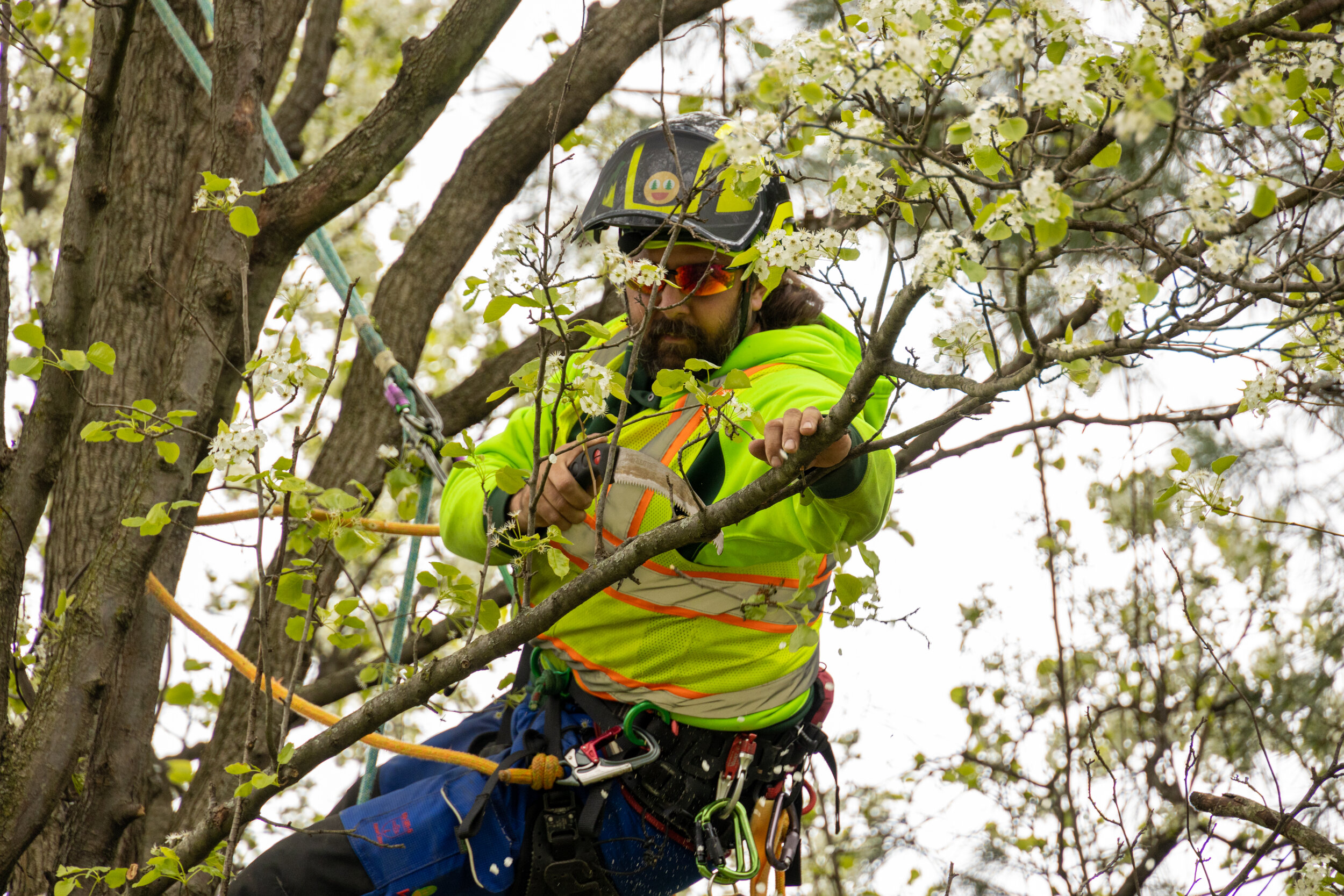
ISA Certified Arborist Andy Bartram making a tree pruning cut! ©Russell Tree Experts
Tree pruning is the selective removal of branches from a tree with the general goal of improving the overall quality of the tree, whether it be for safety, health, structure, fruit and flower production, aesthetic appearance, and more. Some may view pruning as unnecessary as there are hundreds of thousands of beautiful, healthy, and unpruned trees out in the world that have grown successfully without human intervention. Although this is true, there are also many trees out in nature that are dead, dying, or unpleasant to look at. A native volunteer tree out in nature grew naturally from one of hundreds of seeds and competed with all the surrounding trees for resources. They are tough and independent and do not need any human assistance. However, the same cannot be said for a single tree or sapling planted by a human in a site where that tree might not have ever grown there naturally. These human planted trees often need extra care like watering, mulching, and fertilization in order for them to be vigorous, healthy, or aesthetically appealing.
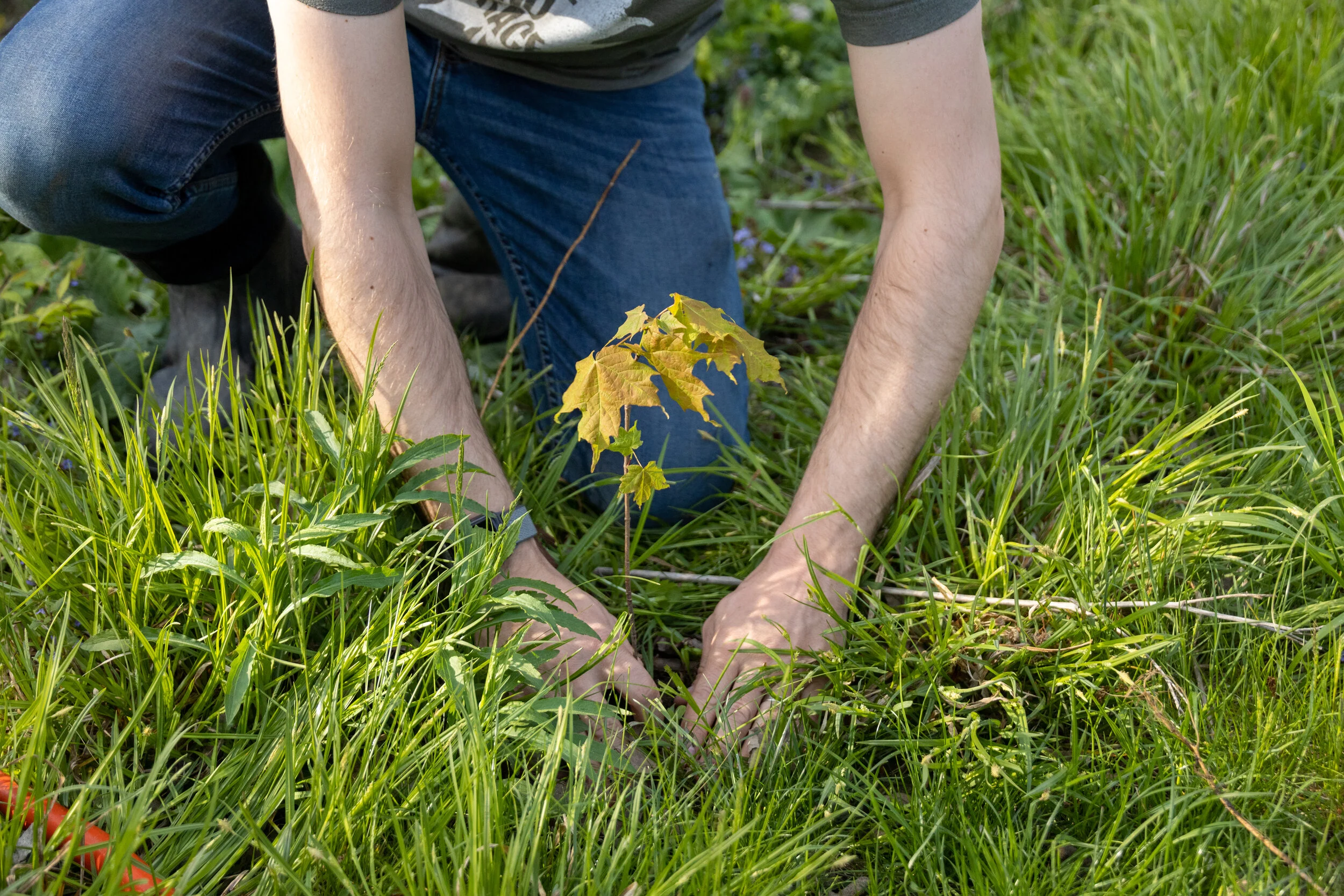
A tree sapling planted during one of our TREE FOR A TREE® tree planting community events! ©Russell Tree Experts
“Pruning” differs from “trimming” as pruning prioritizes a tree’s health and structure. Only the necessary limbs are removed and aesthetic appearance is a byproduct. With “trimming”, plants, shrubs, hedges, and trees are trimmed with the goal of improving their appearance. Depending on the individual trimmer, health and structure may be sacrificed in order to attain a certain look. Trimming can also cause problems as limbs might not be cut back to a spot conducive for compartmentalization and may invite pests or diseases to invade the tree.

Our team member Andrew making a tree pruning cut! ©Russell Tree Experts
A tree may need to be immediately pruned if it poses a safety concern, such as in the event of storm damage. If there’s a large or dead limb overhanging something significant such as a house, car, sidewalk, or valuable lawn ornament, that limb may need to be preemptively removed as it could be hazardous during a storm. Additionally, codominant stems, two stems with a tight V-shaped attachment at the union, are an example of limbs with safety concerns as this can lead to included bark, lead to uneven growth in a tree, and also be a structurally weak point in a tree that may fail in high wind, snow, or ice events.
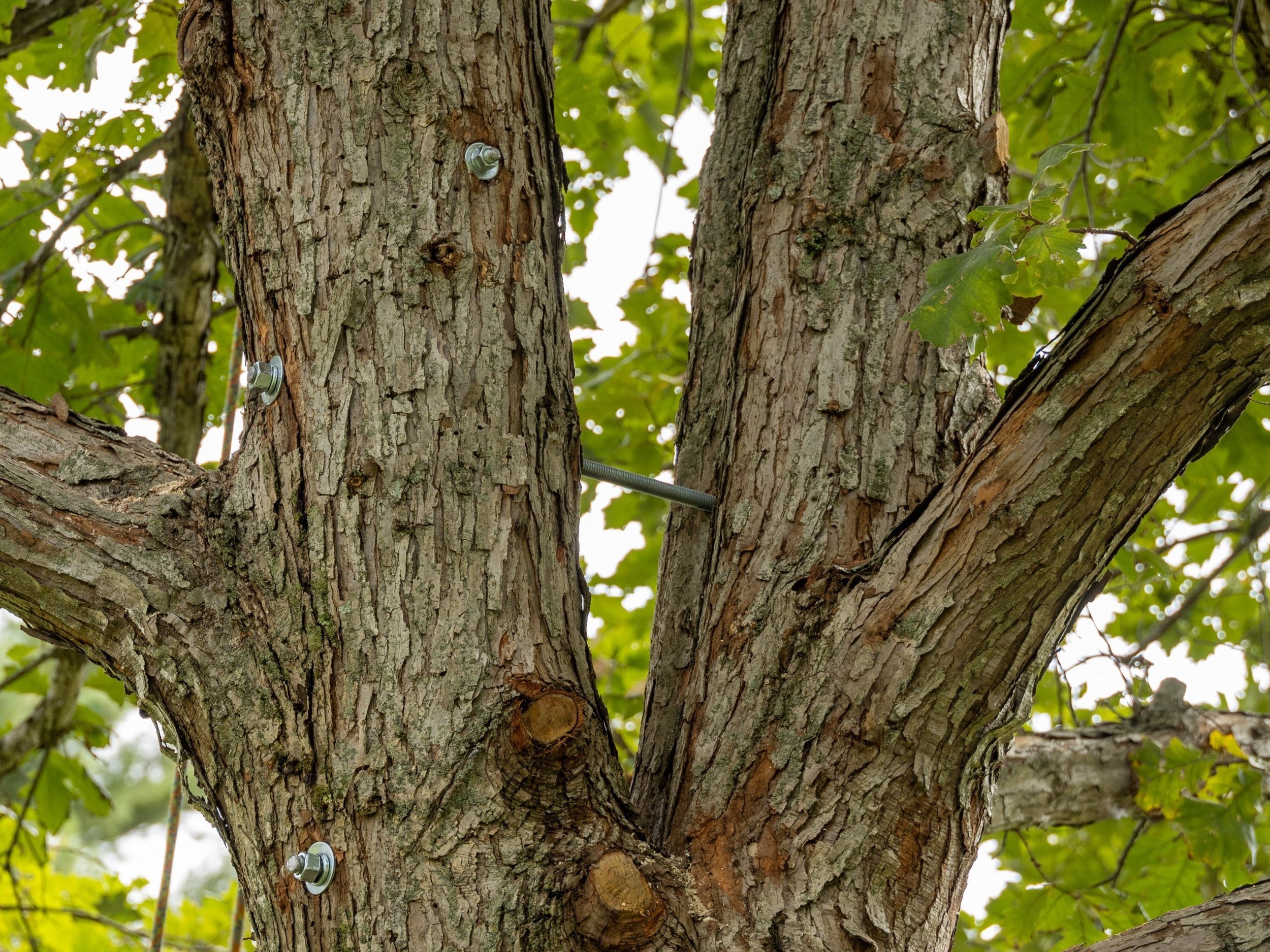
An example of a mature codominant limb. Instead of pruning it at this stage of the tree’s life, the owner decided to have brace rods installed to add additional support to this union. ©Russell Tree Experts
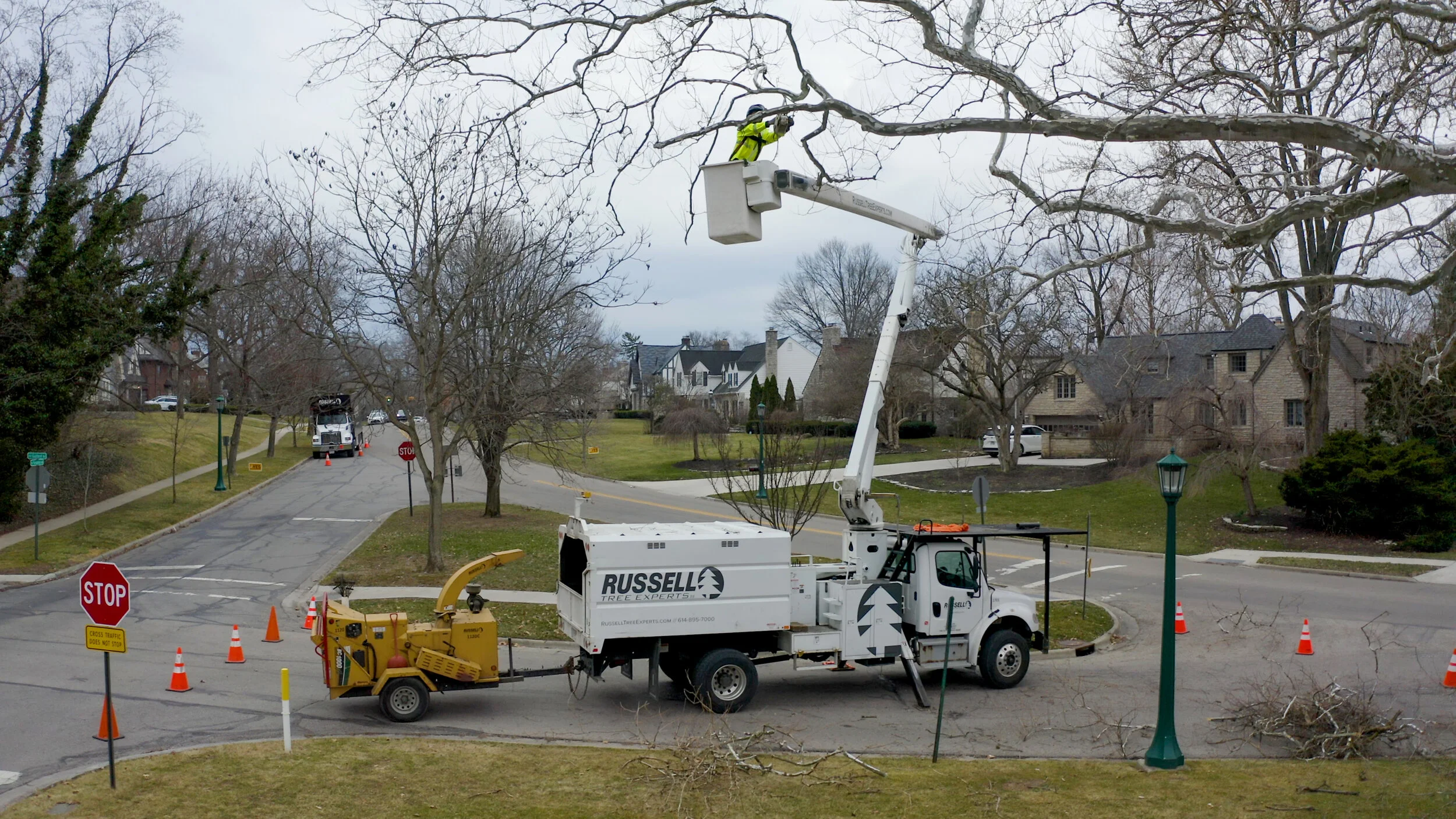
Our team member Mac pruning a dead limb overhanging a busy road.
©Russell Tree Experts
If there are any limbs with clearance issues, it may also need to be removed. This applies to limbs that are touching any house siding or utility lines or any low hanging limbs that impede lawn activities or pulling into a driveway.
Another important aspect of tree pruning is for health and structural reasons. A tree’s overall health and structure will increase by removing any dead, dying, damaged, disease-infected, codominant, or crossing limbs. Removal of these limbs promotes new growth and increased flower and fruit production. When a tree is pruned, nearby trees, shrubs, plants, and grass can also benefit by receiving more resources like sun, water, and air. These additional resources can improve aesthetic appearance and promote new growth. If the pruned tree was also close to a window you may even have a better view from inside your house or more sunlight coming in during the day!
As mentioned earlier, tree pruning can improve aesthetic appearance. Pruning does not focus on looks but removing dead, dying, broken, weak in structure, or clearance-issue limbs generally makes trees look neater, cleaner, and overall better. The pruned tree may not have a specific shape desired by an individual, but it will be healthier and safer. Another factor to consider is property value. An unmaintained tree can look unpleasant, unruly, and unsafe which can hurt the curb appeal and value of a property. When it comes time to sell, having a beautiful, healthy, and pruned tree can potentially increase property value, making it an easy worthwhile investment!
So now that you have read about the various reasons for tree pruning, you may be wondering when a tree should be pruned, how often should a tree be pruned, or how much of a tree should be pruned? The short answer is… it depends! Some trees are best pruned during a specific season and some may have no preference. For example, oak trees are not recommended for pruning from roughly April to October due to the risk of oak wilt. A sugar maple can generally be pruned any time of the year, but it is recommended to prune a sugar maple tree during the summer rather than winter to avoid sap leakage from pruning wounds, which does not pose any significant problem to the tree’s health.
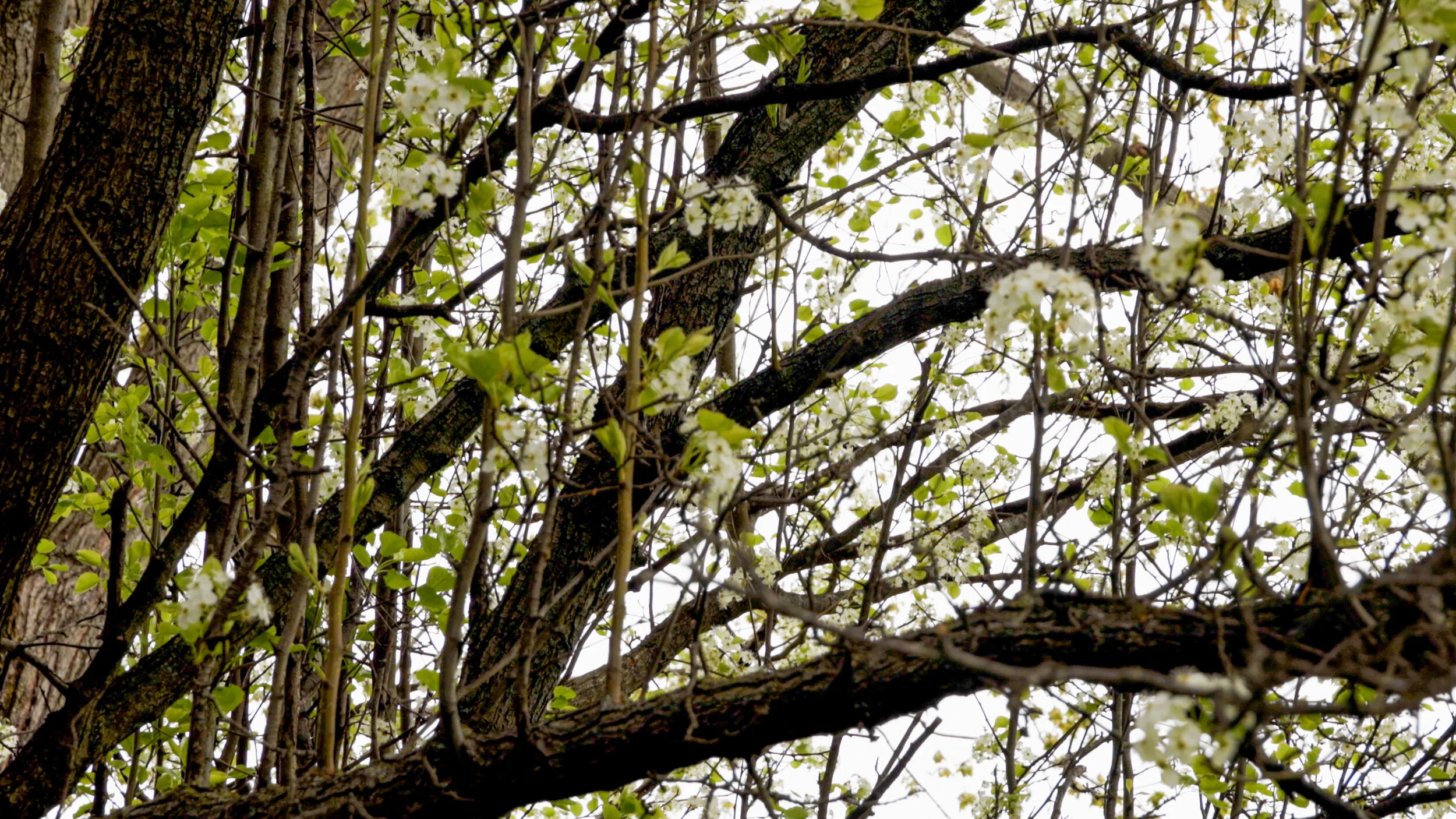
Multiple water sprouts shooting straight up from a larger branch due to stress.
©Russell Tree Experts
In terms of frequency, younger trees may need to be pruned every two to three years while more mature trees may need to be pruned every three to five years. The specific timing can fluctuate and vary based on planting site, climate conditions, potential insect and disease issues, and more. In terms of how much to prune, there should be no specific goal. Only remove the necessary branches. However, a general guideline is that no more than 25% of a canopy should be removed at one time as the tree may “go into shock” and grow watersprouts in an attempt to replace the stored energy lost from the removed branches.
If you decide to have your tree pruned, two common, incorrect methods of pruning that Russell Tree Experts strongly advise against and do not perform are tree topping and lion’s tailing. Tree topping is pruning to create a rounded canopy that often requires cutting through a stem at an improper location. Lion’s tailing is the removal of many, if not all, secondary or tertiary branches from the interior of the crown, leaving most of the foliage at the edge or top of a canopy. Although the look of both of these tree pruning methods may be desired by a specific individual, they do not improve the overall health or quality of a tree and can actually shorten its lifespan and promote decay.
Tree pruning is a very large and vast subject with much to cover. Someone could write a novel about tree pruning and still not cover every single detail. The goal of this article was to discuss the many reasons for tree pruning, not necessarily to teach someone how to become a tree pruning expert. However, we do have an article and a video on the 3 cut method that will be linked down below for anyone interested in learning how to safely and effectively remove a limb! Additionally, more tree pruning-related articles are also down below including 6 harmful tree pruning methods! (You already know 2 of them from reading this article!) As always, if you’re interested in a free tree work quote by one of our 20+ ISA Certified Arborists®, visit RussellTreeExperts.com/Quote or speak to our friendly, local office at (614) 895-7000!
Please note: This article was originally published on 1/12/2023 and was revised on 6/26/2025.
Interested in Pruning Your Own Tree?
ADDITIONAL ARBOR ED™ ARTICLES!



Enrique Arayata I Media Production Manager, Russell Tree Experts
Enrique is an ISA Certified Arborist® and FAA Certified Remote Pilot. In his free time, he enjoys working out, hanging out with his family and girlfriend, video production, photography, cars, technology, and cooking. Enrique has a BA in moving image production with a double minor in film studies and studio art specializing in photography from The Ohio State University, and an AA in web graphic design from DeVry University. His favorite tree is the Kwanzan cherry tree.
Are Hickory nuts better than Pecans?

Are Hickory nuts better than Pecans? A Journey by T.J. Nagel
We have six native species of Hickory in Ohio: Bitternut hickory (Carya cordiformis), Pignut hickory (Carya glabra), Red hickory (Carya ovalis), Mockernut hickory (Carya tomentosa), Shagbark hickory (Carya ovata) and Shellbark hickory (Carya lacinosa). Some folks believe that Pecan (Carya illinoinensis), another hickory, is also native to the Southwestern portions of Ohio. Others maintain that it has only naturalized. I personally am indifferent.
In any case, I’ve recently become interested in learning more about the subtle differences between these seven species. I want to be able to confidently identify them by their habit, bark, nuts, and buds, regardless of the season. As I have researched and explored the woods for these different trees I have decided that Shellbark Hickory is my favorite. I could elaborate further but the goal of this article is to tell you about Shellbark Hickory pie so I’m going to skip ahead.
Shellbark Hickory (sometimes called Kingnut Hickory) is a slow-growing and long-lived shade tree reaching heights of 70 - 80’ at maturity with a spread of about 40’. In Ohio, I find it naturally in bottomlands and floodplains although I’ve observed it performing well in parks and landscapes as well. It has large, 1 - 2’ long pinnately compound leaves that are dark yellow-green turning a nice golden yellow color in the Fall. The bark is shaggy, almost identical to the bark of its relative, Shagbark hickory, and the two species can be quite difficult to distinguish from one another. The two trees are so similar that I’ve noticed many folks will erroneously refer to their Shellbark Hickory as a Shagbark. I also realized recently that many of the “Shagbark hickory” I have grown up with are in fact Shellbark.
In a nutshell (pun intended), there are 3 subtle differences I use now to be able to tell the Shellbark and Shagbark hickory apart:
A Shellbark hickory leaf generally has 7 leaflets compared to the 5 leaflets of a Shagbark hickory leaf.
The terminal bud of Shellbark hickory is significantly larger than that of Shagbark Hickory
The nut of Shellbark hickory is also much larger than Shagbark, measuring 2 ½ - 3” in diameter compared to the 1 ½ inch diameter of Shagbark.
A few more interesting facts: Shellbark hickory is also a great tree for wildlife. The nuts are sweet and edible and are relished by deer, fox, rabbit, squirrel, wild turkey, ducks, and bears. Interesting side note: my dogs also love Shellbark hickory nuts. The flowers, although inconspicuous, provide nutrition for bees in the Spring as well. And historically, early settlers used Shellbark hickory nuts as a source of food as well as the tree itself for making furniture, tool handles, lumber, and fuelwood. This reminded me of the history of the American chestnut and really got me excited.

My girls this summer at the site of my best producing Shellbark hickory - note all the nuts ready for harvest in the driveway.
©Russell Tree Experts
As I read more and spoke with more people about the merits of Shellbark hickory, I found that a lot of folks preferred this nut over the flavor of pecan. Some even claimed that Shellbark hickory was a far superior nut and that Pecan had become famous only because it has a thinner husk and thinner shell and is an easier nut to clean. Now, this is a bold statement. Folks in Texas might even consider these fighting words. I knew that I needed to form my own opinion. I decided I would make Shellbark Hickory pie for Thanksgiving.
This pie-making project started with identifying a stand of Shellbark hickory in the woods near my office in Westerville. Between mid-August and mid-October, my father, dogs and I made several weekend trips to this stand of trees to collect Shellbark hickory nuts. Most of the nuts we collected from the ground but some we picked from the trees with a pole pruner. Over the course of 2 months, we collected approximately 20 gallons of Shellbark hickory nuts. This coincided with paw paw season (Asimina triloba) which made our walks in the woods even more rewarding (next year I’m making paw paw hickory pie).
By mid-October Dad and I knew we would need to start cleaning our bounty if we were to have pies by Thanksgiving. The art of cleaning Hickory nuts by hand is a slow art and rushing will only ensure that you eat lots of shells.
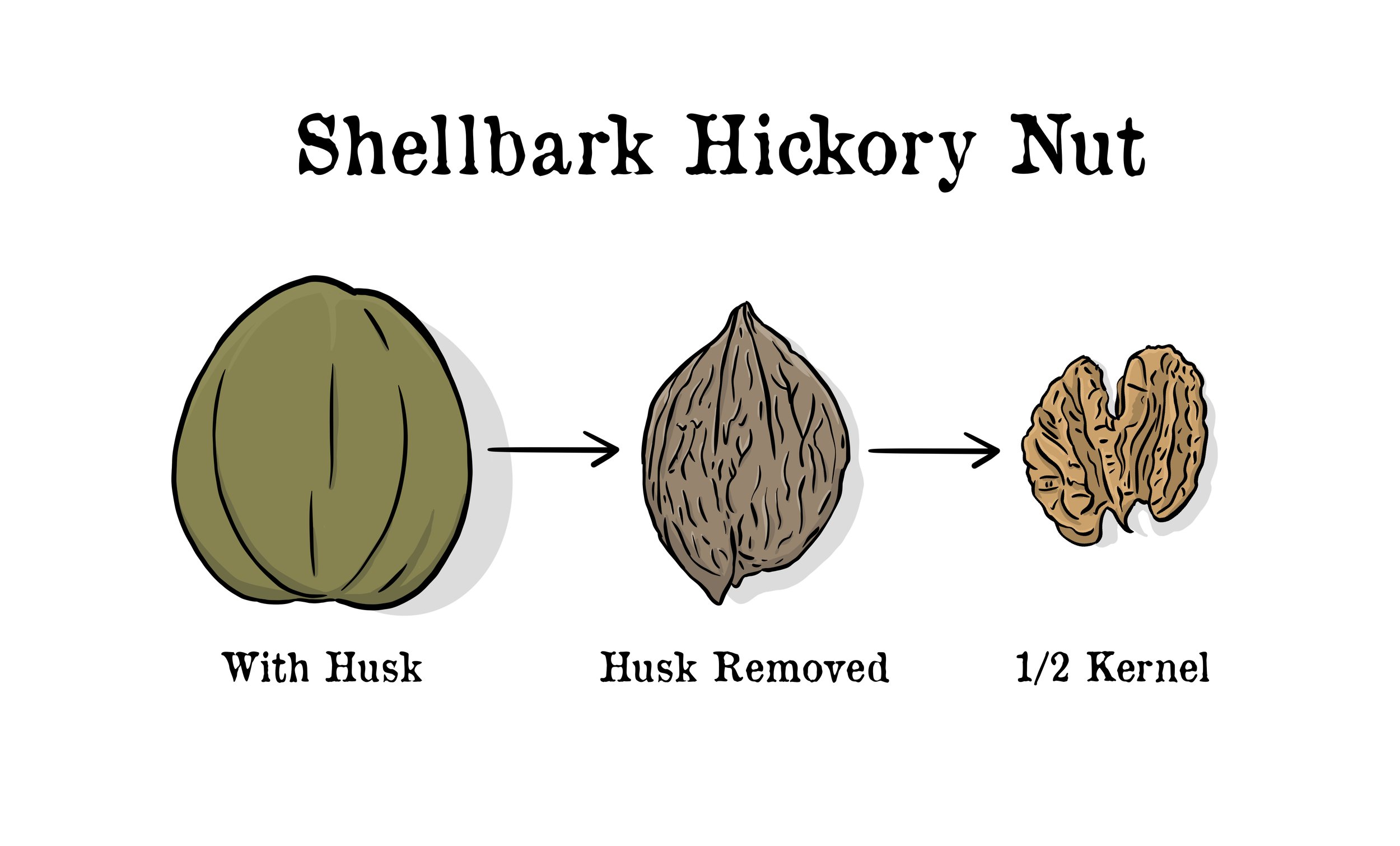
Our Hickory nut cleaning process was simple - Dad used a screwdriver and a hammer to remove the hickory nuts from the husk and I used the Cadillac of nutcrackers I purchased on Amazon to crack the shells. From here we used pliers, vice grips, and even dental tools to get the kernel (the edible part of the nut) out of the grooves and different crevices of the shell. We spent 3 separate weekends perfecting our nut-cracking skills and in hindsight, I wish I had kept time so I could compare our speed to next year. The process was at least as long as three OSU games and the entire Cat Stevens discography.


Approximately one-third of our hickory nut kernels were either dried up, infested with weevil larvae, or rotten. These went to the compost. Most of the remaining kernels went into a couple of mason jars and were placed in the freezer until we had time to bake. Anything questionable was set aside for the squirrels. From our original 20 gallons of nuts, we scored about 6 cups of edible Shellbark hickory kernels. This would be enough to make 4 pies.
The following is my recipe for Shellbark hickory pie:

On Thanksgiving day I arrived at my inlaw’s table with two freshly baked Shellbark Hickory pies. I was delighted to see that my sister-in-law had also brought a homemade Pecan pie. I realized that this was the moment I had been waiting for. Today all my questions would be answered. After two helpings of the usual thanksgiving fixings, I made my way to the dessert table and cut myself two equal-sized pieces of pie. One Shellbark Hickory and one Pecan. I covered both with equal amounts of whipping cream and returned to the table. First I had a bite of Pecan. I chewed it slowly and swallowed and then took a sip of water to cleanse my palate. Then I had a bite of Shellbark Hickory. Rinse and repeat a dozen or so times and here are my final thoughts.

I like pie
My sister-in-law’s Pecan pie was prettier than my Shellbark hickory pie with all of the perfectly formed pecans laid out on the surface in a perfect basket weave configuration.
Despite our best efforts, the Shellbark Hickory pie had more shell pieces in it than the Pecan pie.
The flavor of the Shellbark Hickory Pie and Pecan pie was very similar - so much so that most folks would probably not be able to distinguish one from the other if they were not eating them simultaneously.
I think I preferred the flavor of the Shellbark hickory pie but I could be biased after everything we've been through together.
Pecan pie was a delicious and worthy opponent and I mean no disrespect to my sister-in-law or her pie-making abilities.
In all seriousness, I think what really makes Shellbark Hickory superior to Pecan for me is its local proximity (to me), having a knowledge of and a relationship with the trees that the nuts have come from, and all of the memories of my father and I together picking them.
I am in the early stages of my Hickory infatuation and still have lots to learn. If any of you possess any hickory stories, fun facts, or recipes please share them with all of us - you can do so at the bottom of this article. I have one last interesting Hickory side note to share:
I randomly stopped at Watts Restaurant in Utica, OH this Fall while working in the area. If you haven’t had the pleasure of dining there, I encourage you to do so. Watts restaurant is a staple in the Utica community. It has been around for over a hundred years and survived two pandemics so they must be doing something right. They make a number of tasty and authentic family-style country recipes and serve a number of home-baked goods including Hickory nut pie. I bought a Hickory nut pie from them to take home and decided within a couple of bites that it was better than mine. I decided I would go back to Watts Restaurant and ask more questions. I wanted to know primarily (1) what species of hickory they were using in their pie and (2) where were they sourcing their hickory nuts. Might they be from local trees or were they buying them from a faraway land?
When I returned to Watts recently to ask about their Hickory nut pie I discovered that most of their baked goods are actually brought in from Hershberger’s Bake Shop, an Amish wholesale bakery in Danville, OH. For the record, Watts Restaurant does make all of its own cream pies in-house and they are equally delicious! But I still had unanswered questions so I decided to drive to Danville and make a visit to Hershberger’s Bake Shop.
I arrived at Hershberger’s Bake Shop on a cold afternoon this week but received a warm welcome from Naomi Hershberger and two of her colleagues who definitely were not expecting to see a Russell Tree Experts truck come down their driveway. I shared with them my love of Hickory trees and affinity for Hickory pie and that I had happened across their Hickory pie in Utica and that it was better than mine. They were patient with me and answered all of my questions and this is what I learned:
The Hershberger’s are far better at baking delicious pies than tree identification and had no idea what species of hickory nut they were using in their Hickory nut pie (after careful dissection I believe it is a mix of Shagbark and Shellbark).
The hickory nuts are collected locally from native trees in Knox and Holmes counties, Ohio.
They make Hickory nut pie most of the year.
They deliver new pies to Watts Restaurant in Utica every Tuesday and Friday but only a couple of Hickory nut pies each time.
So if you want to try Hickory pie but don’t have time to collect and clean the nuts make a trip this Winter to Watts Restaurant, 77 S. Main St. Utica, OH 43080. I recommend the chicken and noodles over mashed potatoes and a Hickory nut pie to go.

TJ Nagel | Scheduling Production Manager, Russell Tree Experts
ISA Board Certified Master Arborist® OH-6298A // Graduated from The Ohio State University in 2012, Earned B.S. in Agriculture with a major in Landscape Horticulture and minor in Entomology // Tree Risk Assessment Qualified (TRAQ) // Russell Tree Experts Arborist Since 2010
How to Plant a Tree
By Enrique Arayata
ISA Certified Arborist® OH-7252A
November 15, 2022
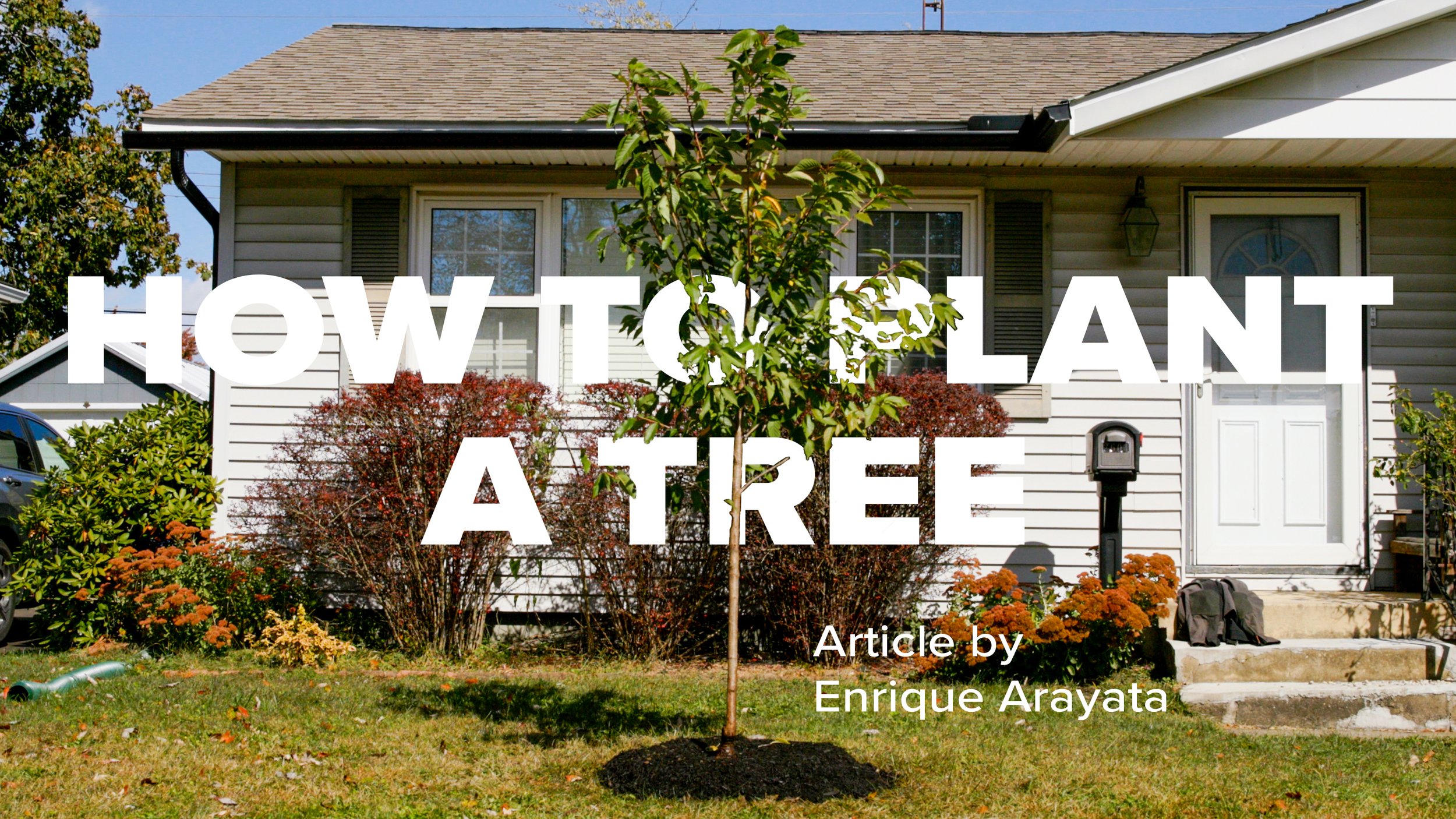
Today I would like to discuss step-by-step how ISA Board Certified Master Arborist® TJ Nagel plants a tree! He very kindly planted a kwanzan cherry tree for me at my house that was donated by him, Cindy, one of our office managers, and Mark, our fleet manager! At the bottom of this article is a YouTube video where you can visually follow along!
THE STEPS
First, pick out a tree! TJ and I went to Oakland Nursery and selected a kwanzan cherry tree. To help in the planting process, we brought mushroom compost, mulch, a trowel, a shovel, and a pickaxe. Mushroom compost will help enrich the soil. Mulch will help with water retention, temperature regulation, protection from lawn mowers, and curb appeal. A trowel, a shovel, and a pickaxe will help in the digging process.
Choose a tree planting site! We chose in front a picture window in the front yard for viewing pleasure and as it was a few feet away from any obstructions such as my neighbor’s driveway, the sidewalk, my front porch steps, and nearby plants. We also knew that we were not planting directly on top of any pipes or water lines.
Dig your hole! The hole should be slightly wider but just a few inches shallower than the size of the tree’s pot. You will want a couple extra inches around the circumference of the root ball to pack in compost and dirt. We also like to plant most trees a few inches above the surrounding ground level as the tree could settle over the next couple of years, which is why the hole can be a few inches shallower than the depth of the root ball.
Take the tree out from the pot and cut 4 straight lines across the root ball. This will break up and loosen both the dirt and roots which will help minimize the risk of stem girdling roots. Optionally, you can also clean up and remove any small or entangled surface roots.
Test fit your tree and check if the hole’s depth is adequate. As mentioned earlier, you will want a few extra inches of space around the circumference of the tree and you will want the tree to sit a few inches above the surrounding ground level. Make adjustments to your hole if needed.
Mix up the mushroom compost with the existing, dug up soil with an approximate 1:1 ratio to help enrich the soil and promote growth. You can break up any chunks of dirt to obtain a fine, well blended mixture. If a few grass blades end up in the mixture, it is okay as it will decompose and help enrich the soil with nutrients. As long as there is no significant sod or roots on the surface, there should be no significant risk of weeds. To further minimize the risk of weeds and for aesthetic purposes, we will be placing mulch over top of the soil.
Place your tree in the the hole and fill it with your blended soil mixture! Be sure to keep your tree straight and upright while filling in your hole. You will want to lightly compact the soil mixture so that way the tree is stable during windy weather and does not lean or fall over.
Water the soil!
Apply a couple inches of mulch on top of the soil! Keep the trunk exposed and not covered with soil and also avoid creating a mulch volcano in order to minimize the risk of stem girdling roots. We shaped a small, subtle and almost unnoticeable moat around the perimeter of the elevated soil level to help water flow and soak towards the trunk.
Water the mulch!
And voila, your tree is now planted! Or in this case, this beautiful kwanzan cherry tree is now planted! If there are any tags on the tree, you can remove them now if you have not done so already. Optionally, TJ also made a few minor pruning cuts but this is not always necessary.
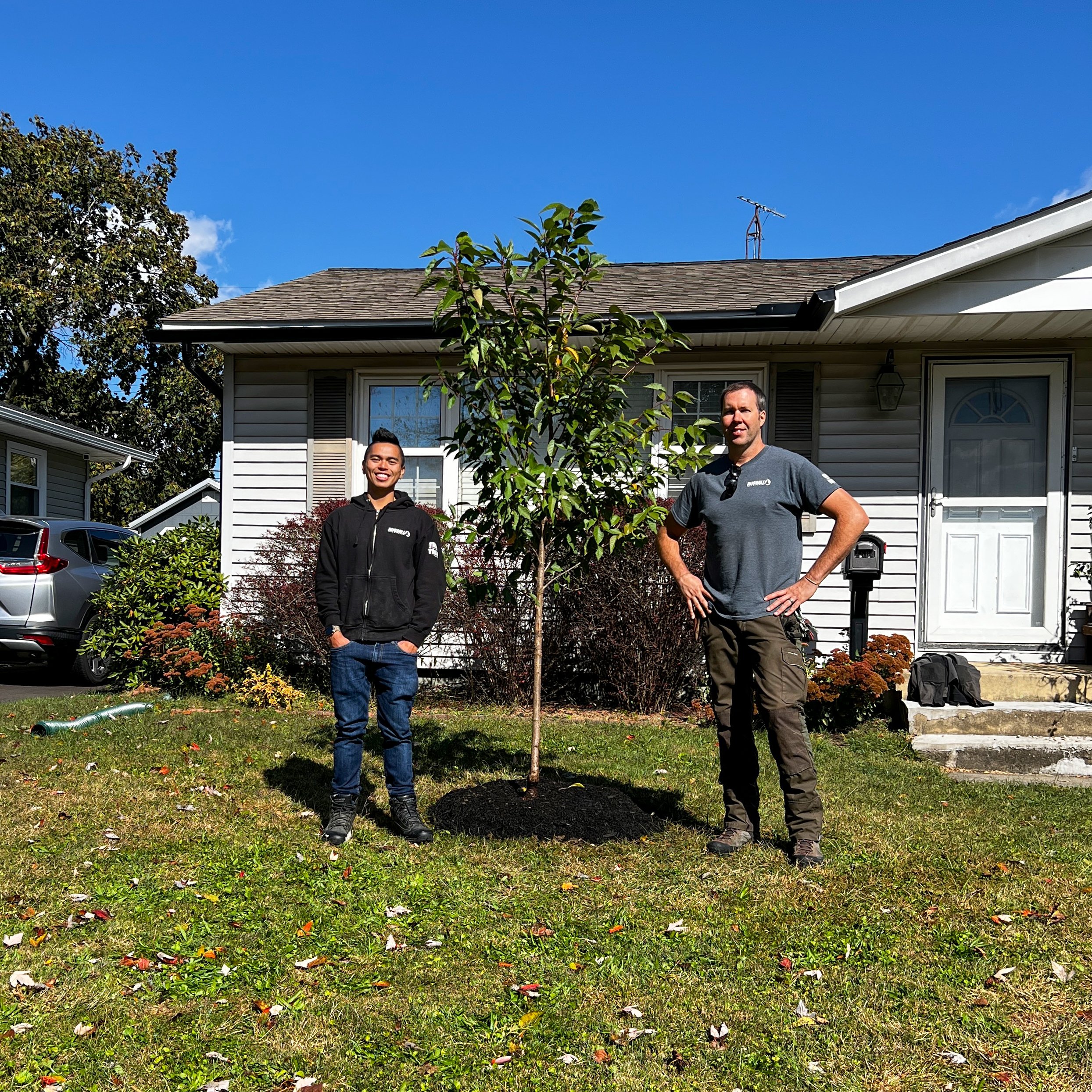
The first year is vital for a newly planted tree’s survival so make sure that it does not lean over, that it does not get chewed on or rubbed by any animals like deer, and that it gets properly watered, which can be once to twice per week depending on the season, your local climate, and the way the tree is packaged. You can optionally use a tree trunk guard or posts to help protect your tree and keep it straight but it may not be necessary depending on where you live.
I personally would like to give the hugest shoutout to TJ, Cindy, and Mark for donating and planting this tree. Earlier this year, my sister passed away and she loves kwanzan cherry trees. She loves their spring colors, has posters and images of them in her room and on her phone, and uses the Japanese cherry blossom scent for all her Bath & Body Works products. This sentiment is incredibly touching and meaningful and I cannot be more appreciative.
As mentioned earlier, linked down below is a step-by-step YouTube video you can follow along with as well as a few related tree planting articles! Hopefully you found this article educational and entertaining!
HOW TO PLANT A TREE BY AN ISA BOARD CERTIFIED MASTER ARBORIST
ADDITIONAL READS
“How to Mulch Around a Tree”
by Enrique Arayata
“10 Trees with Amazing Fall Color… And One You Should Avoid!”
by TJ Nagel
“Why Can’t I Plant a Tree Just Anywhere?”
by Enrique Arayata
“Planting Trees for a Purpose”
by Mike McKee
Sincerely,

Enrique Arayata I Media Production Manager, Russell Tree Experts
Enrique is an ISA Certified Arborist® and FAA Certified Remote Pilot. In his free time, he enjoys working out, hanging out with his family and girlfriend, video production, photography, cars, technology, and cooking. Enrique has a BA in moving image production with a double minor in film studies and studio art specializing in photography from The Ohio State University, and an AA in web graphic design from DeVry University. His favorite tree is the Kwanzan cherry tree.
TJ X BCMA®
We are thrilled to announce that our own TJ Nagel recently earned the ISA Board Certified Master Arborist® (BCMA) certification! This is no average feat and we're so impressed by TJ's drive and dedication to earn the top certification in our industry!

TJ X BCMA®
We are thrilled to announce that our own TJ Nagel recently earned the ISA Board Certified Master Arborist® (BCMA) certification! This is no average feat and we're so impressed by TJ's drive and dedication to earn the top certification in our industry!
“The ISA Board Certified Master Arborist® credential is the highest level of certification offered by ISA. This credential recognizes ISA Certified Arborists® who have reached the pinnacle of their profession. In addition to passing an extensive scenario-based exam, candidates must abide by a Code of Ethics, which ensures quality of work. Fewer than two percent of all ISA Certified Arborists® currently hold this certification.”
- International Society of Arboriculture
COMMENT BELOW TO congratulate TJ!
↓ ↓ ↓
The Double Tree of Casorzo
Between Casorzo and Grana in Piemonte, a region in northwest Italy, there is a cherry tree growing healthily on top of a mulberry tree with branches spreading over 5 meters long. This tree, or should I say, these trees, are known as the Double Tree of Casorzo (Bialbero de Casorzo in Italian) or the Grana Double Tree.

By Enrique Arayata
ISA Certified Arborist® OH-7252A
May 11, 2022
Today I want to talk about a rare and interesting sight: the Double Tree of Casorzo. Before anyone asks, no I am not referring to a DoubleTree hotel in Casorzo. Between Casorzo and Grana in Piemonte, a region in northwest Italy, there is a cherry tree growing healthily on top of a mulberry tree with branches spreading over 5 meters long. This tree, or should I say, these trees, are known as the Double Tree of Casorzo (Bialbero de Casorzo in Italian) or the Grana Double Tree.
As you may already know, it is not common by any means to see a tree on top of another tree, but somehow, someway, this cherry tree managed to find its home on top of this mulberry tree. It is unclear how exactly this double tree grew to be, but one popular theory is that a bird dropped off a cherry tree seed on top of the mulberry tree. The cherry tree seed then spread its roots down through the hollow trunk of the mulberry tree and found a connection to the soil where it can absorb nutrients. The relationship between the two trees does not appear to be parasitic or harmful to one another. It is fascinating to see that the mulberry and cherry trees are able to share water, sunlight, soil nutrients, and most importantly space without outcompeting one another and growing just fine.
Plants growing non-parasitically on top of other plants are not uncommon and are known as epiphytes. Common examples of epiphytes include some species of ferns, orchids, and bromeliads, which can attach themselves to trees or other plants and absorb some nutrients from rain and air along with any other nearby debris or soil they can access; all while not harming its host. What makes the Double Tree of Casorzo unique is that most epiphytes either are small in size or have a short lifespan due to lack of space and humus. However, as you can see in the photo within this article, this cherry tree is quite tall and healthy!

I talked to ISA Certified Arborist Andy Bartram (Crew Production Manager, Russell Tree Experts) about these trees to get his thoughts and opinions. Without seeing the tree in person, he believes the bird seed theory is plausible and he’s interested to know what the cherry tree’s root system looks like. As mentioned earlier, the cherry tree’s roots could be spreading down through the hollow trunk of the mulberry tree to get its nutrients, but there is also a chance that some grafting between the cherry tree and the mulberry tree’s root system could be occurring. The cherry tree could also be receiving nutrients from any available rain and mulberry leaves. I asked Andy about the tree’s health and longevity. In terms of treatment, if the trees have been growing healthily without any human interference, then they should be left untouched. If needed, watering during dry periods or seasonal fertilization could also aid in their health and growth. On a final note, Andy was curious about the structural rigidity of the Double Tree of Casorzo. With the cherry tree’s root system being higher off the ground (or potentially grafted to the mulberry tree), it may pose a hazard during windy days for visitor safety. If so, the fence surrounding the trees is definitely necessary and may even need to be extended as the trees continue to grow.
So if you ever take a trip to Piemonte, Italy, visit this tree and feel free to share any photos or videos you take! This Double Tree of Casorzo is definitely something you do not see every day!


Enrique Arayata I Media Production Manager, Russell Tree Experts
Enrique is an ISA Certified Arborist® and FAA Certified Remote Pilot. In his free time, he enjoys working out, hanging out with his family and girlfriend, video production, photography, cars, technology, and cooking. Enrique has a BA in moving image production with a double minor in film studies and studio art specializing in photography from The Ohio State University, and an AA in web graphic design from DeVry University. His favorite tree is the Kwanzan cherry tree.
Asian Trees for the Ohio Landscape [Part 3]
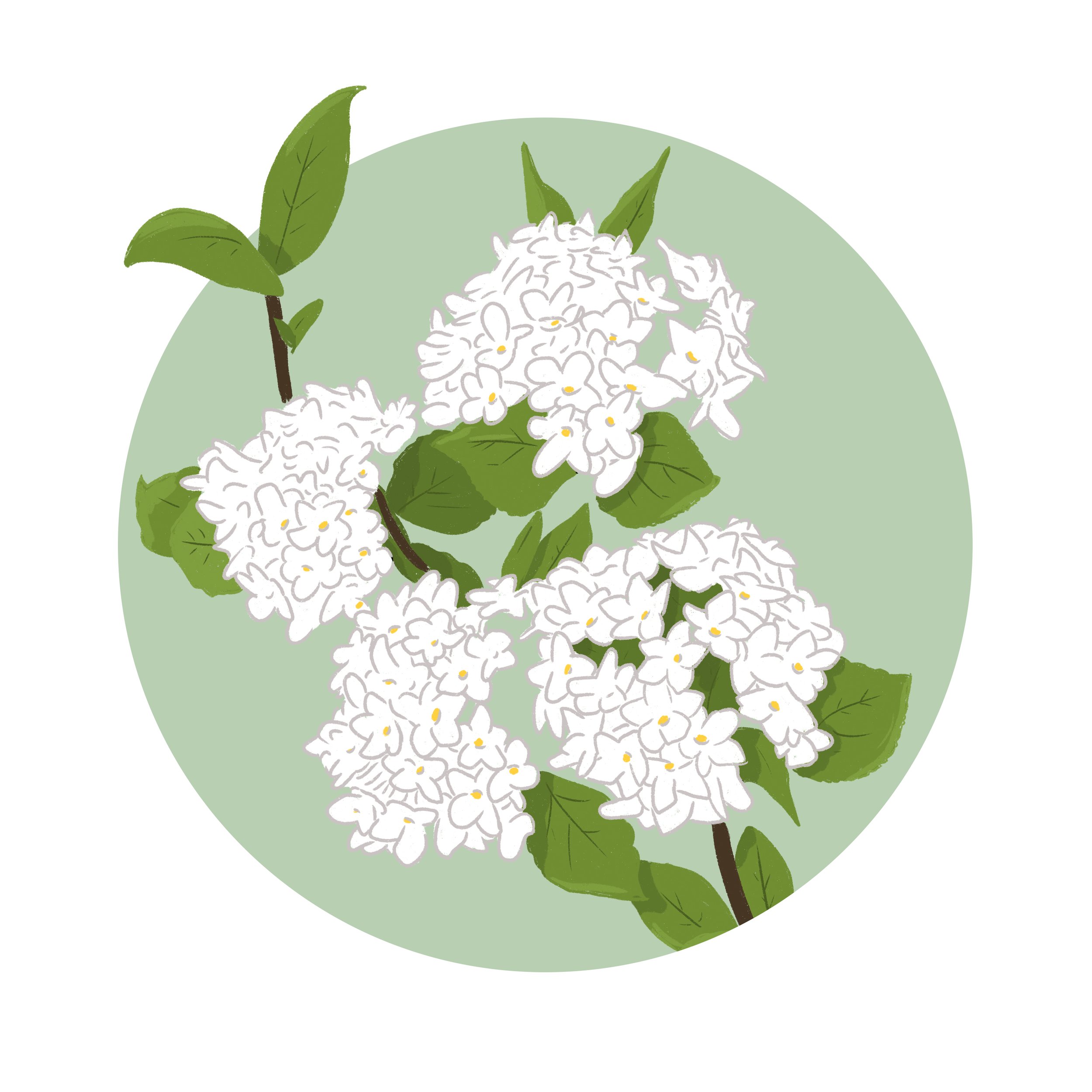
In this third installment of “Asian trees for the Ohio landscape”, we’re switching gears and discussing a shrub that can make for an excellent addition to your landscape – the Korean spice viburnum (Viburnum carlesii).

In this third installment of “Asian trees for the Ohio landscape”, we’re switching gears and discussing a shrub that can make for an excellent addition to your landscape – the Korean spice viburnum (Viburnum carlesii). If you’re looking for a non-native tree option instead, check out parts 1 & 2 of this series where we discuss the Japanese katsura tree and the Japanese tree lilac.
The Korean spice viburnum is native to Korea and Japan. It is a shrub-like plant, typically growing to 4-6’ in height and width, and possibly larger (to 8’) under ideal growing conditions. When maintained at a smaller size, it makes a wonderful shrub for group plantings along borders or home foundations, but can also be planted individually as a specimen plant among other landscape trees and shrubs.
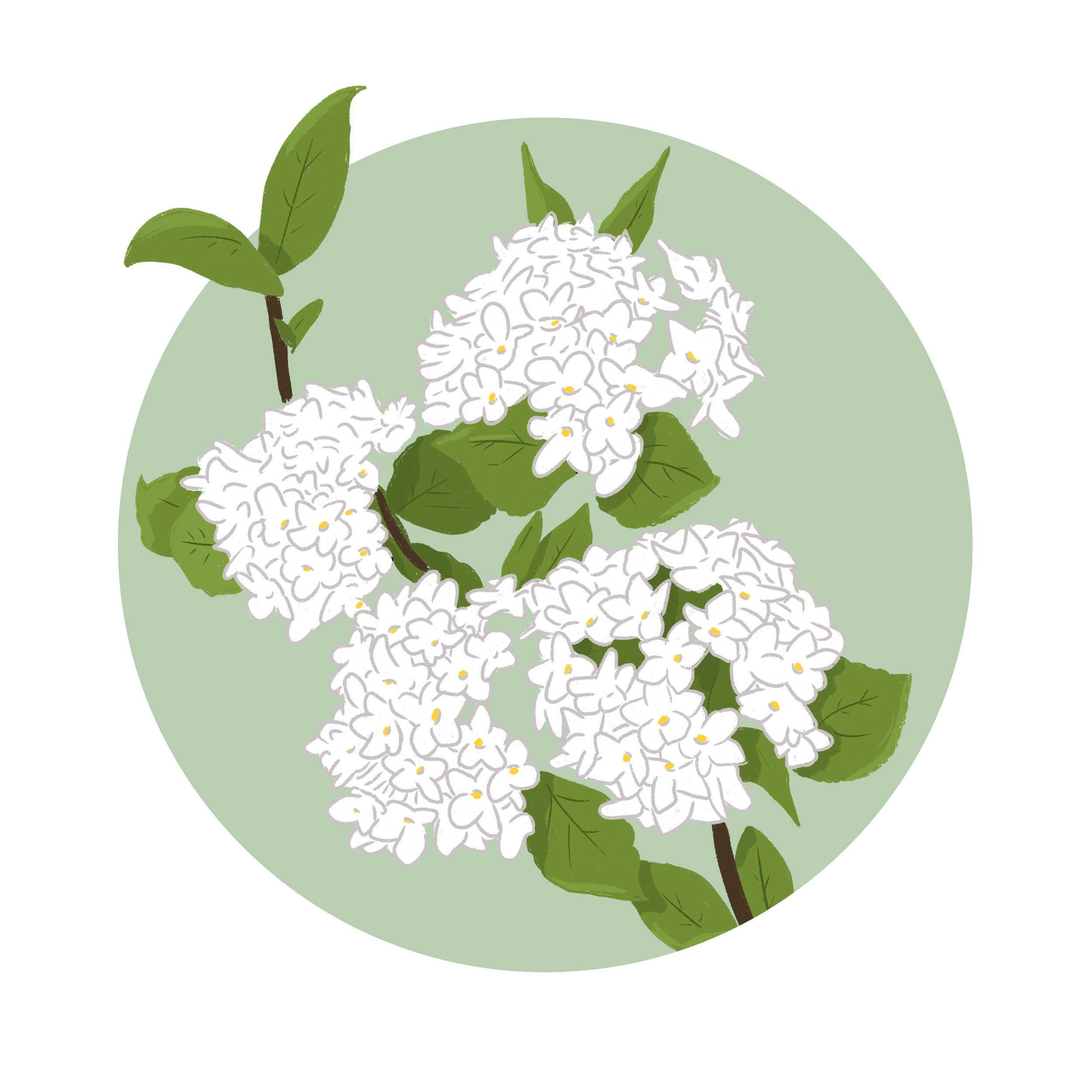
The Korean spice viburnum produces pink to white flower clusters around mid-spring, with an outstanding fragrance that rivals that of the most fragrant lilacs. For this reason, consider planting this shrub as a grouping in a location where you can enjoy the fragrance, such as near a front walkway or backyard patio. As a deciduous shrub, its foliage generally turns varying shades of red in the fall before dropping. To maximize flowering, it should be planted in full sun but will tolerate light shade. Pruning to maintain size and habit should be performed after flowering.

Average size of the Korean spice viburnum
The Korean spice viburnum will tolerate higher pH levels (more alkaline) and the clay soil often found in central Ohio, but prefers acidic, moist, well-drained soil. Care should be taken to not plant this shrub in poorly drained, consistently wet areas. Interestingly, even though it is a non-native shrub, it tolerates being planted in closer proximity to Black walnut, a native tree that produces a natural toxin that adversely affects some landscape plants.
If searching for a Korean spice viburnum at the nursery, make sure you select the right plant. Many species of Viburnum are available for use in the Ohio landscape, and they can vary greatly in size and habit. A common cultivar of the Korean spice viburnum that you may find available in the nursery that would make a suitable substitute is the Burkwood viburnum (Viburnum x burkwoodii), though it will tend to reach a slightly larger size in maturity.
The Entire 3-Part Series:

Walter Reins | Regional Manager, Russell Tree Experts
Walter has been an ISA Certified Arborist since 2003. He graduated from Montgomery College in Maryland with a degree in Landscape Horticulture, and has called Columbus, OH his home for nearly 20 years. Walter appreciates trees for their majesty and the critical role they play in our world.
Asian Trees for the Ohio Landscape [Part 2]
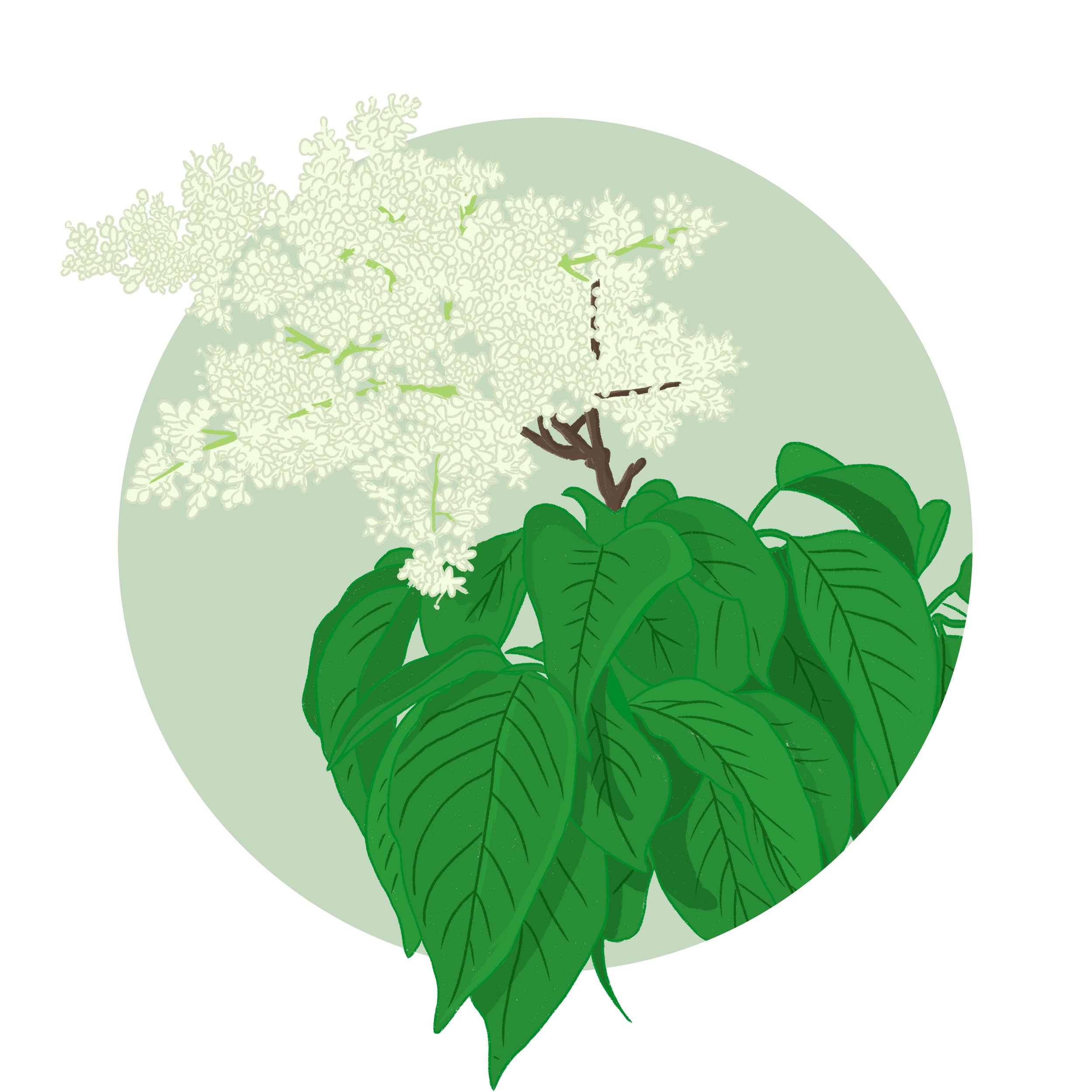
In this second part of our “Asian trees for the Ohio landscape” series, we’re taking a closer look at the Japanese tree lilac (Syringa reticulata subsp. reticulata), a small to medium-sized tree that is suitable for many locations in the landscape

In this second part of our “Asian trees for the Ohio landscape” series, we’re taking a closer look at the Japanese tree lilac (Syringa reticulata subsp. reticulata), a small to medium-sized tree that is suitable for many locations in the landscape. If you’re interested in a larger shade tree for your yard, check out part 1 of this article series here, where we discuss the Japanese katsura tree.
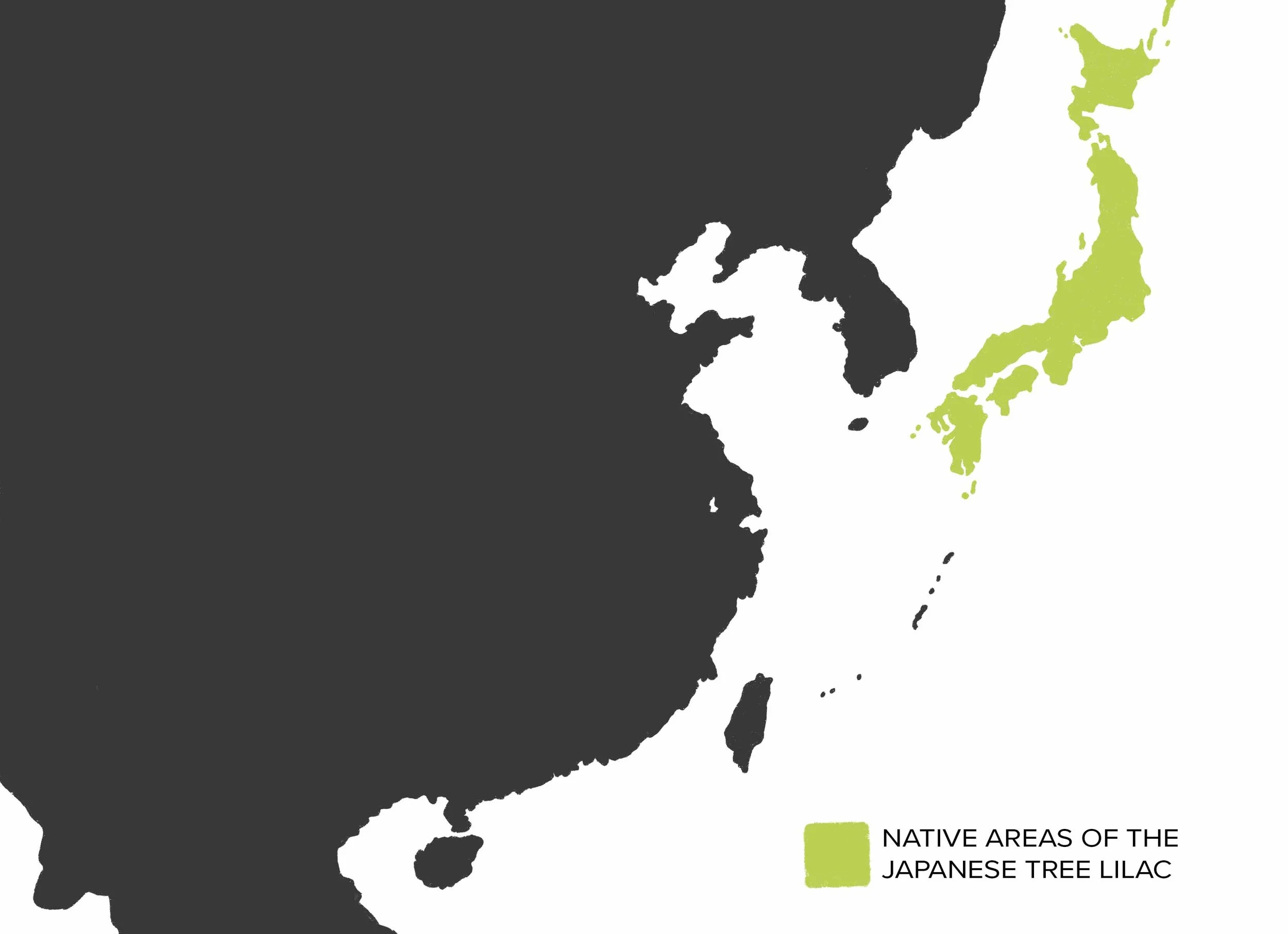
The Japanese tree lilac is native to Japan. It is in the same genus as shrub-type lilacs, but as the name implies, has a tree-like form that provides for a different application in the landscape. With a mature height of 20-30’ and width of 15-20’, it’s a great choice for smaller spaces near patios or closer to homes, or when used in group plantings along a large driveway. It is also an appropriate option for a street tree, as it can be easily maintained to clear streets and sidewalks with a more upright, rounded canopy.
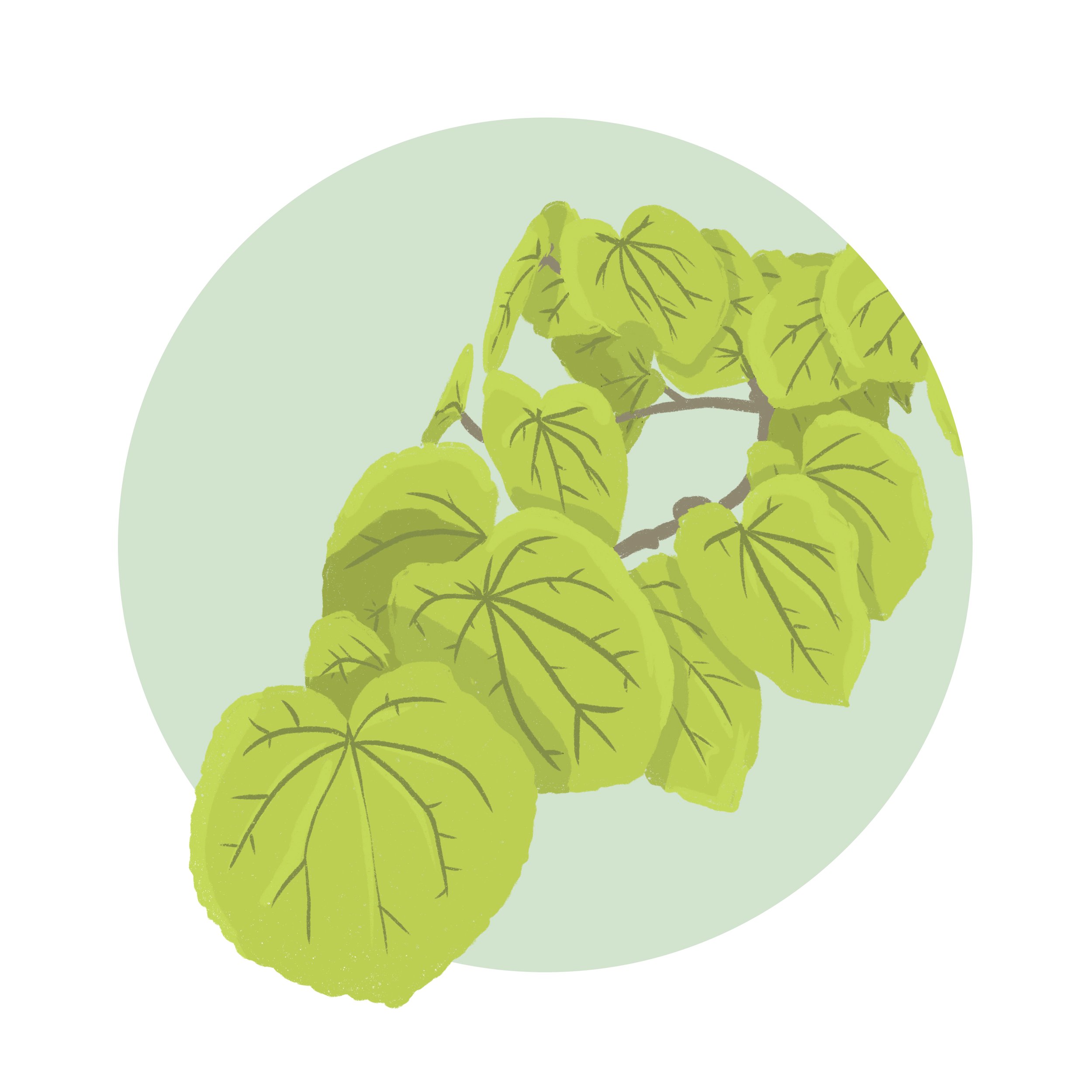
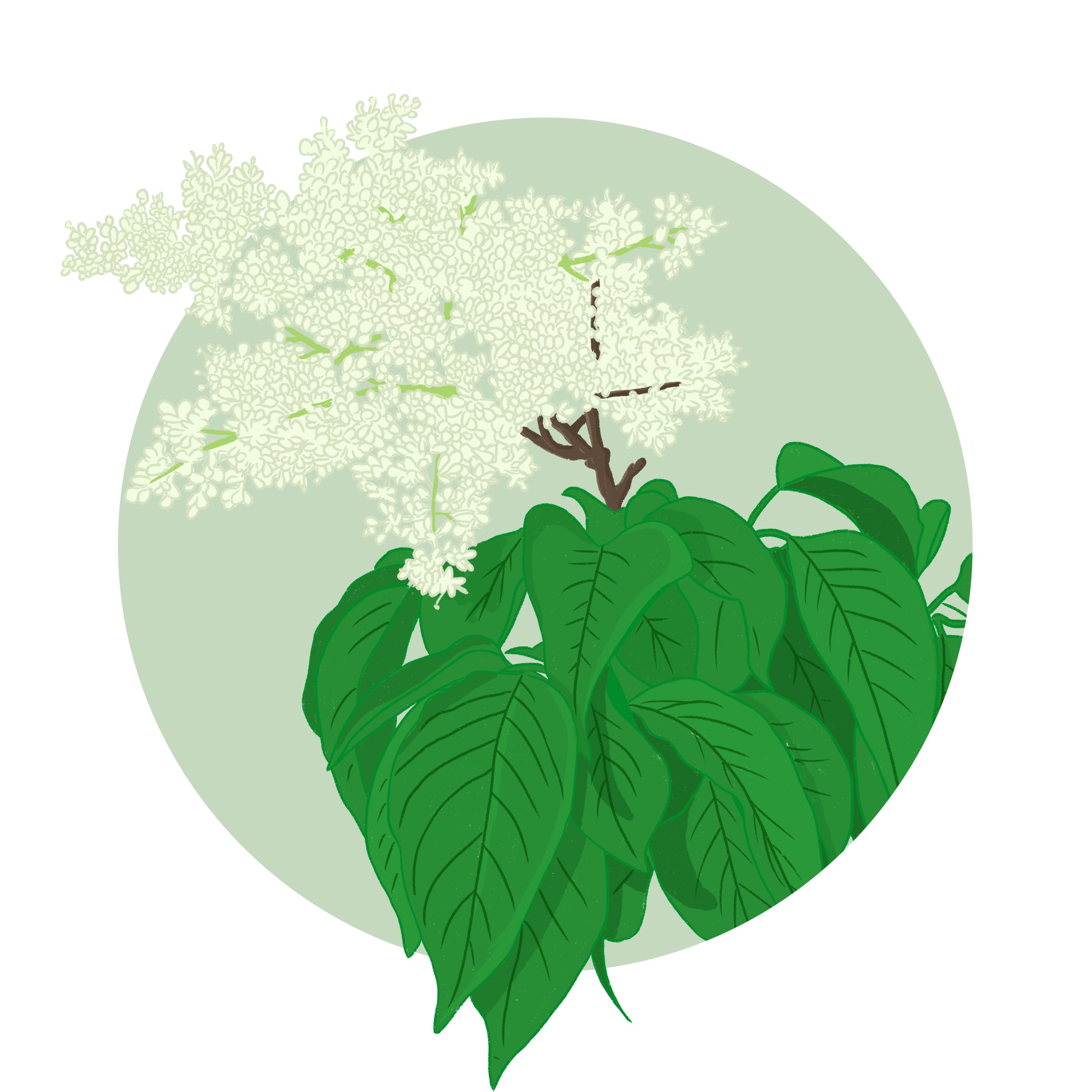
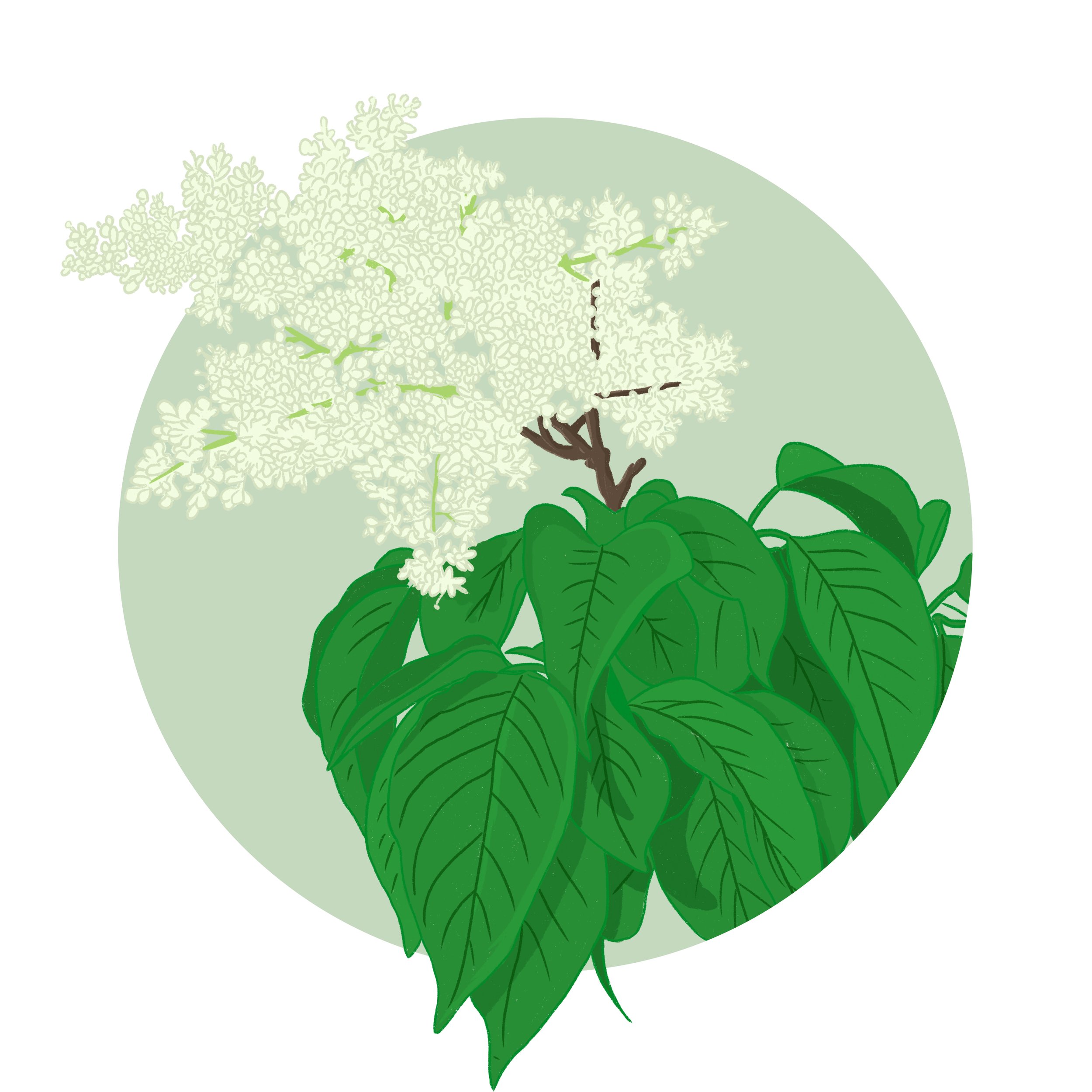
When selecting shrub-like lilacs for the landscape, homeowners often do so for the beautiful and aromatic flowers that emerge each spring. The Japanese tree lilac makes no exception in this manner, producing large clusters of white, fragrant flowers in early summer. Its foliage is similar in shape to that of a common flowering lilac, with no particularly notable fall color before leaf drop. Its bark has distinctive markings (lenticels), closely resembling that of a cherry tree.
When planting a Japanese tree lilac, be sure to select a location that gets plenty of sun throughout the day. It will tolerate less than ideal soil conditions including compact and dry sites, but thrives in well-drained, moist and fertile soils. As is the case with virtually all trees, proper amendment of the soil when planting the tree and proper after-care (watering and fertilization) will set it up for success in subsequent years.
The Japanese tree lilac has a medium growth rate. It is susceptible to a few insect and disease issues if growing in a stressful environment, but is widely considered to be the most pest-free lilac. A popular variety of Japanese tree lilac that can be found in local nurseries is ‘Ivory Silk’, a cultivar that matures to approximately 20’ in height and flowers at a young age.
The Entire 3-Part Series

Walter Reins | Regional Manager, Russell Tree Experts
Walter has been an ISA Certified Arborist since 2003. He graduated from Montgomery College in Maryland with a degree in Landscape Horticulture, and has called Columbus, OH his home for nearly 20 years. Walter appreciates trees for their majesty and the critical role they play in our world.
Asian Trees for the Ohio Landscape [Part 1]
In Ohio and much of the Midwest, many of the non-native trees and shrubs that can be found in the landscape are Asian in origin, due to the similar climate we share with that region of the world. This gives us a great opportunity to expand our options beyond native trees and shrubs when selecting suitable replacements or additions to our yards.

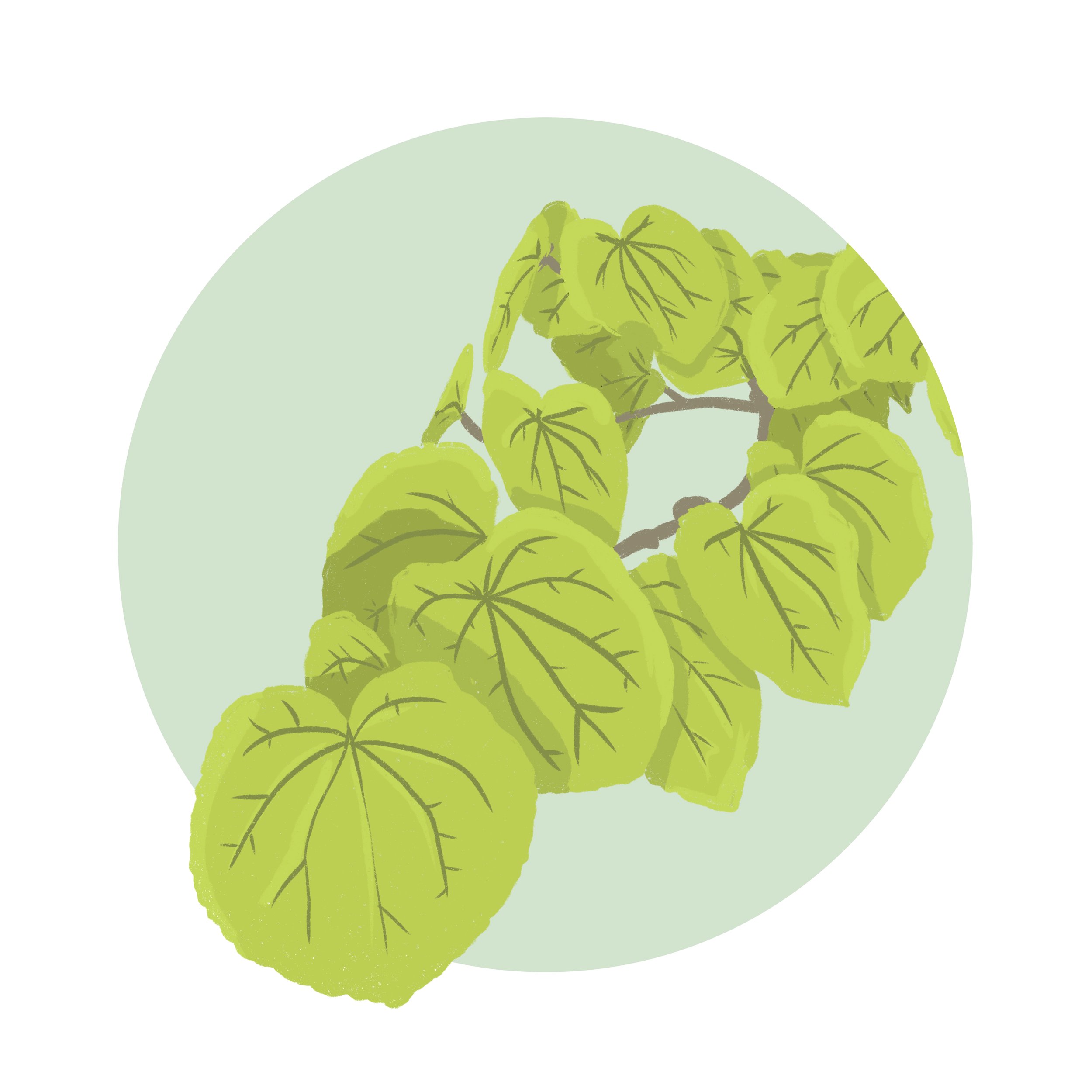
In Ohio and much of the Midwest, many of the non-native trees and shrubs that can be found in the landscape are Asian in origin, due to the similar climate we share with that region of the world. This gives us a great opportunity to expand our options beyond native trees and shrubs when selecting suitable replacements or additions to our yards. Some non-native trees, such as Japanese maples, have become staples in our landscapes. In this article, we’ll discuss the Japanese katsura tree (Cercidiphyllum japonicum), a medium to large tree in maturity that is largely underutilized in the midwestern landscape, but might just be the perfect tree for your property.
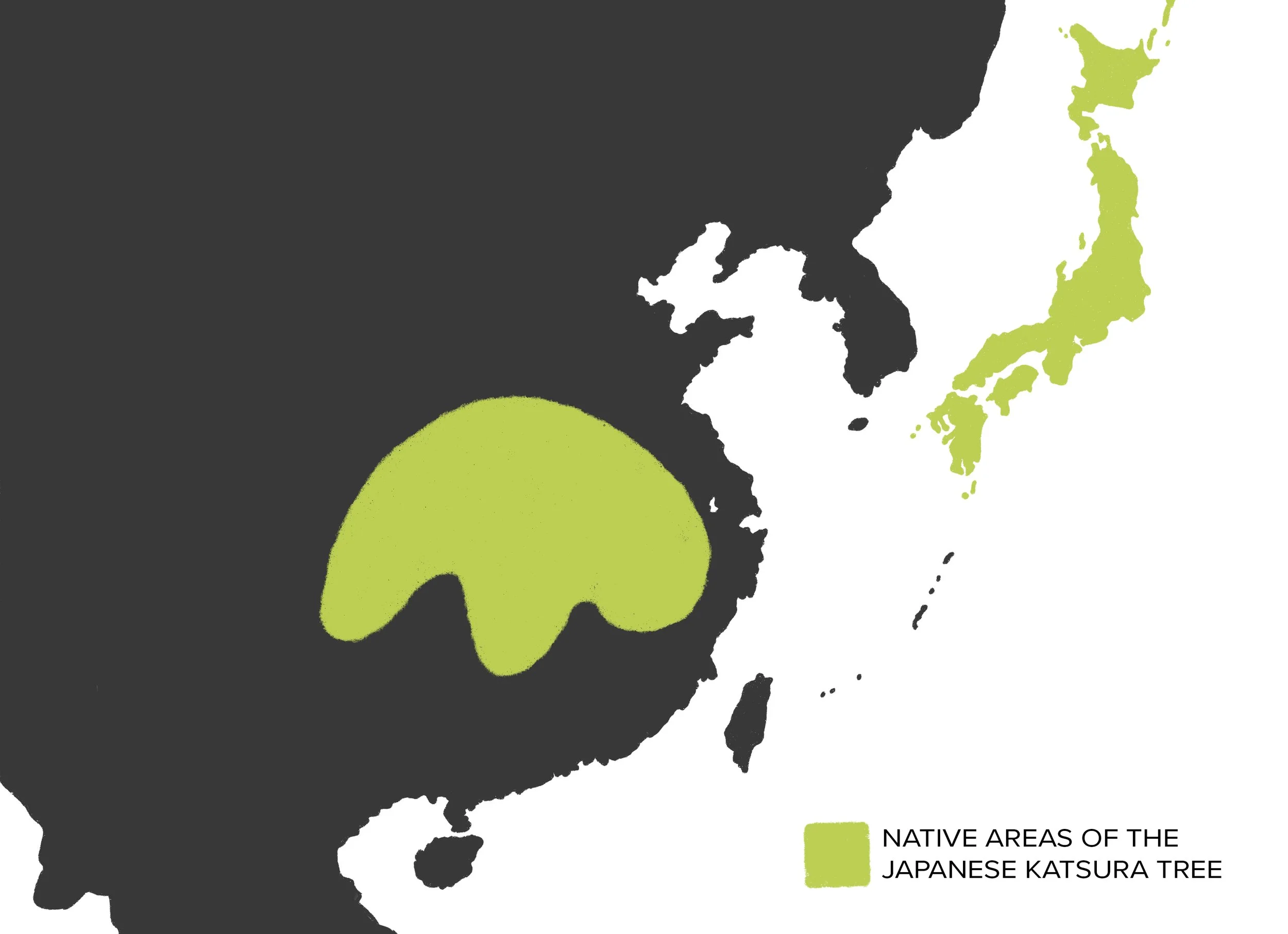
The Japanese katsura tree is native to Japan and parts of China. Though it can grow to more than 100’ in height in its native wild habitat, it will generally reach 40-60’ in a landscape setting. Because of its larger size, the Japanese katsura tree should be planted in a location where it has room to grow and eventually become a shade tree.
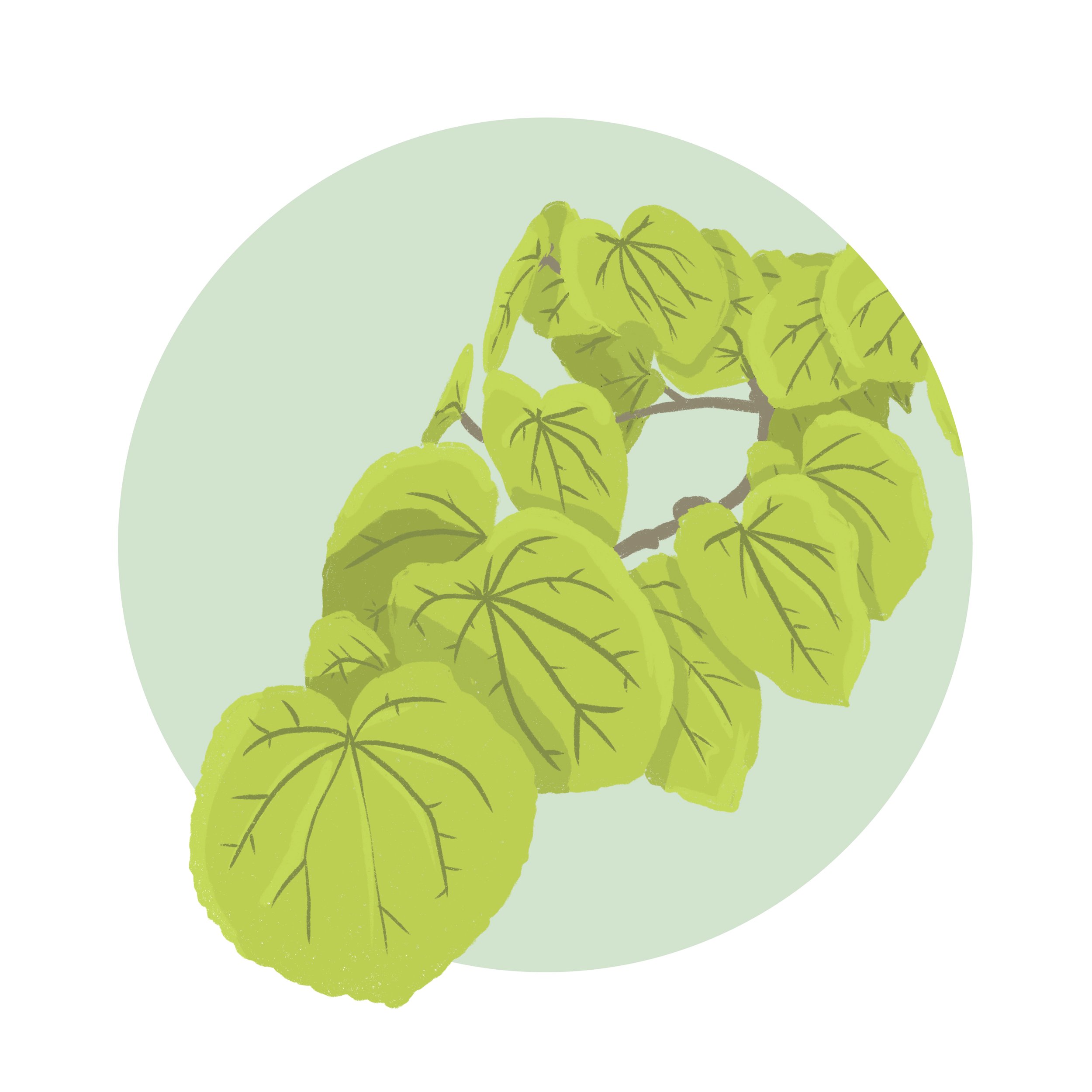
The Japanese katsura tree has rounded, heart-shaped leaves and is deciduous (dropping its leaves in autumn). It has a wonderful yellow to slightly orange fall color that is accompanied by a distinctive smell, often described as burnt brown sugar or cotton candy, when the leaves begin to fall and decay. It prefers full sun but some protection from the wind, is generally insect and disease-free, and has a medium to fast growth rate under ideal conditions. It has a pyramidal shape when young, but matures into a more rounded canopy, reaching 30-40’ in width.
The Japanese katsura tree will tolerate the alkaline and clay soils often found in central Ohio, but it does prefer consistently moist and well drained soils (as do many trees!). For this reason, it’s important to give the tree a great start in the landscape with proper planting and after care for the first 1-2 years.
When younger, the Japanese katsura tree does have thinner bark, so it's trunk should be protected if you tend to have deer activity in your yard, as the antler rubbing from male whitetail deer in the late summer and early fall can severely damage or kill a tree. Also, care should be taken to maintain a mulch ring or landscape bed around the tree, as thinner barked trees are generally more susceptible to mechanical damage from mowers and string trimmers.
Overall, the Japanese katsura tree is a great choice for a central Ohio landscape. If you’re looking to plant a tree this year, be sure to do so in the spring or fall when temperatures and soil moisture are favorable, and give the Japanese katsura tree some consideration. It’s a great alternative option to our native shade trees, and will add wonderful form, color, and variety to your landscape.
The Entire 3-PArt series:
Walter Reins | Regional Manager, Russell Tree Experts
Walter has been an ISA Certified Arborist since 2003. He graduated from Montgomery College in Maryland with a degree in Landscape Horticulture, and has called Columbus, OH his home for nearly 20 years. Walter appreciates trees for their majesty and the critical role they play in our world.
Right of Way: Understanding City-Owned Trees
Many people assume that they are responsible for the trees located in their lawns in front of their homes. In many cases, this is not true.

Many people assume that they are responsible for the trees located in their lawns in front of their homes. In many cases, this is not true.
Many cities and municipalities maintain what is called a “right of way” in front of your property and sometimes in the back as well. I have worked for three different communities over my career, and all three had different policies regarding “street trees”, as they are usually called.
Many communities simply create an ordinance passing that responsibly to the property owner, but in central Ohio, there are several communities that have created forestry departments that maintain trees located in the city “right of way.” That’s where the tricky part comes in as there are many different approaches in how each department operates. We (Russell Tree Experts) are currently completing several tree pruning contracts for different communities in central Ohio at this time. Some communities have arborists on staff to complete their work and contract some as well.
Most communities in central Ohio allow the property owner to maintain their city-owned trees if it is completed without harming the tree and completed in a professional manner. Some communities require that a tree company working on city trees must be registered with the city and have a certified arborist on staff. In most cases, removing a city-owned tree is not allowed without prior approval and it can be quite costly (fines) if you remove a city tree without permission.
Finding out what the “right of way” is prior to any work is always a good idea. Most communities can provide that info over the phone. Another good resource in Franklin County is the auditor site. If you pull up your address you can go into mapping where you can determine the right of ways associated with your property.

In the above example, the red line is property line. Trees outside of these lines would likely be the city’s responsibility - depending on the city’s rules. [the above is a screenshot for the Franklin County Auditor Site.]
Most people do not realize that in some cases the right of way can extend well beyond the sidewalk. If you have an alley behind your property, there may be some easement associated with that as well. In the communities that I have worked for, the alley “right of way” was only the width of the pavement. If your property is a corner lot or surrounded by streets, you may not be responsible for near as many trees as you once thought.
In closing, I would highly recommend that you identify which trees you are responsible for prior to hiring an arborist. This could save you a lot of money in the long run. Not only if you are not responsible, but so you don’t cut down or improperly prune a city-owned tree, and get fined.
Questions? Comment below and we’ll get back to you.
What to learn more? Check out the article “Tree Law: Who Owns This Tree?” written by Shari Russell which details who owns a tree when it grows on a property line.

Mike McKee | Regional Manager, Russell Tree Experts
Mike graduated from Hocking College in 1983 with a degree in Natural Resources specializing in urban tree care. He has been a certified arborist since 1991. Mike started his career in the private industry in 1985 before becoming a municipal arborist in 1989. He retired after serving thirty years before joining us at Russell Tree Experts in Sept. of 2018. His love of trees has never waned since trying to climb up the ridges of the massive Cottonwood tree in front of his childhood home.
Spotted Lanternfly: They Are Getting Close!
If you are among those of us in the tree or insect world, you’ve likely heard of the Spotted Lanternfly (SLF). This pest showed up in the Southeastern region of our neighboring state of Pennsylvania in 2014. This is an invasive sap sucking insect that has the potential to disrupt a variety of industries.

If you are among those of us in the tree or insect world, you’ve likely heard of the Spotted Lanternfly (SLF). This pest showed up in the Southeastern region of our neighboring state of Pennsylvania in 2014. This is an invasive sap sucking insect that has the potential to disrupt a variety of industries. The preferred host is the infamous Tree of Heaven which initially may sound like good news; let’s have an invasive insect wipe out an invasive plant! (See TJ’s article about Tree of Heaven). However, Tree of Heaven is not its only target. If Tree of Heaven isn’t around, it will simply jump onto the nearest tree until it finds something it likes. SLF has been documented feeding on over 100 different species of plants. The most susceptible, other than Tree of Heaven, is Grapevine, apple and peach trees, hops, blueberries, Black Walnuts, and Maples, but again, this pest doesn't discriminate! Another reason why it is so invasive is that it doesn’t have any natural predators. The flashy color on the Spotted Lanternfly warns potential predators that “I don’t taste good!”
The OSU Extension office is currently researching best treatment options. Unfortunately, so far, they do not have any recommendations but we are watching the situation closely and when we have more information, we will give everyone an update. For now, it’s important to be aware of the potential infestation in your area and monitor. If you see any suspected SLF activity, report it to the OSU Extension office and they will confirm.
What can we do to slow the spread?
Known areas of infestation in Pennsylvania have a quarantine mandate requiring to go through a checklist before traveling or moving within or out of the quarantined area. In Ohio, the Department of Agriculture has put together this checklist to help slow the spread of this pest.
If eggs are found, you can scrape the eggs into a bag to seal them/crush them or kill them in an alcohol solution. During these early stages of spread, it is important to document anything you find; please take pictures of any suspected Spotted Lanternfly or collect a sample if possible and send it to the OSU Extension office along with the location you collected the sample.
So far, six populations of Spotted Lanternfly in been confirmed in Ohio:
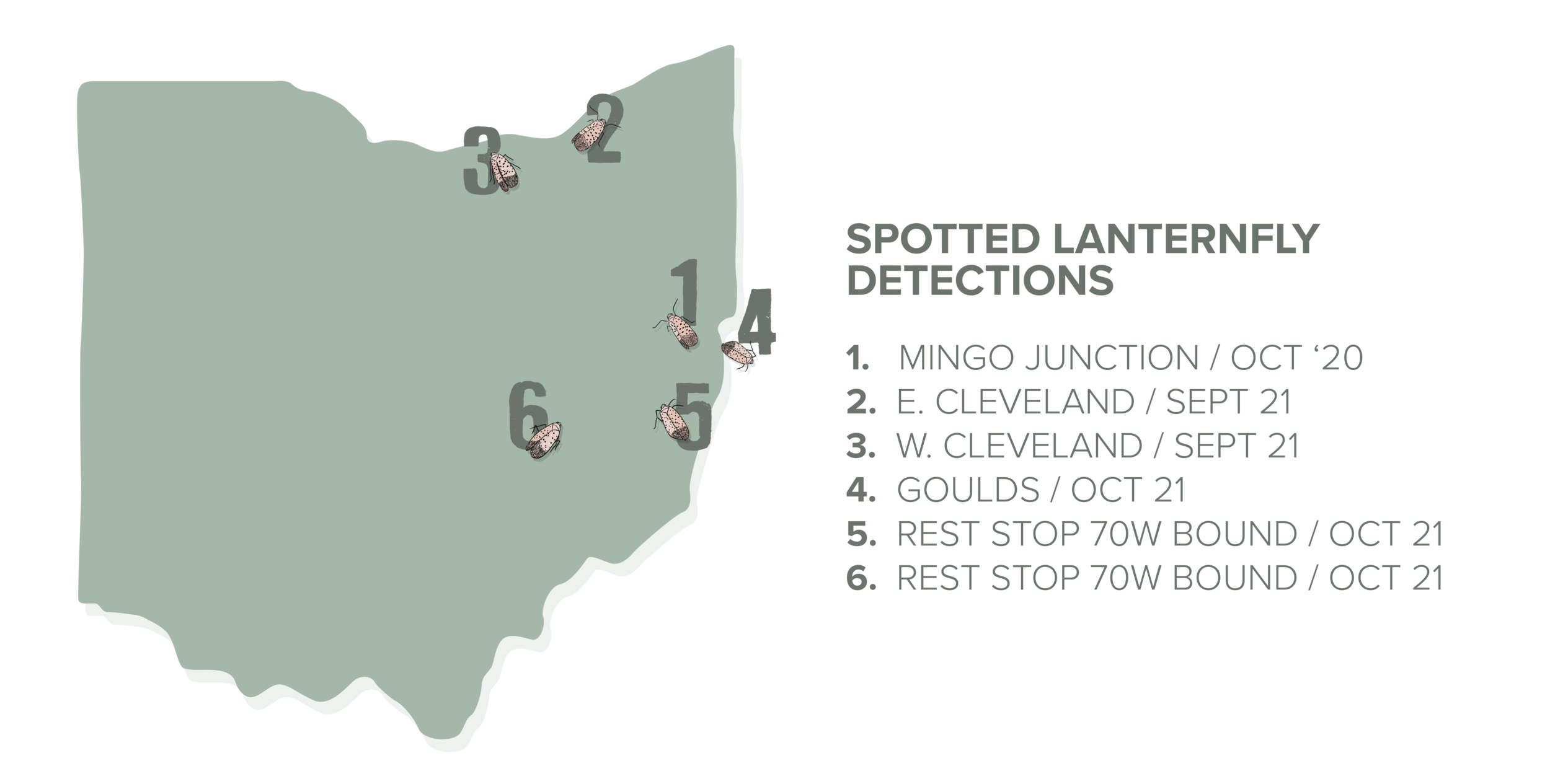
To do now:
Look for egg masses. They lay eggs from September-December and are hard to see but we need to search and destroy them! The eggs will start hatching this spring, likely around May (GDD 270).
Late spring/early summer:
When they start hatching, they will look like little black insects with white spots, and they will not turn red until about mid-summer. Watch out for the combination of honeydew/black sooty mold/wasp swarms around your trees, because it could be an indicator of an invasion.
In Review
To review, Spotted Lanternfly is an invasive insect that is on the move and we need to try and stop the spread. Its primary host is Tree of Heaven but it can feed on the sap of over 70 different species of plants. When travelling and vacationing this summer, please be diligent in inspecting your vehicles, camping equipment, and basically anything that is exposed and stationary for more than a couple of hours, especially in known outbreak areas. If found, please report it to the OSU Extension office so we can help better understand this insect. We will keep everyone up to date (check our ARBOR ED™ section) on any new information and let you all know if we receive any news about confirmed populations in our area.
[Images courtesy of Ohio State University Extension, New Jersey DOA, Pennsylvania DOA / Drawings by Kenny Greer, Russell Tree Experts]
Lindsey Rice | Office Manager, Russell Tree Experts
Lindsey joined Russell Tree Experts in 2015 with a B.S. in Agribusiness and a minor in Horticulture from The Ohio State University. Growing up in Northwest Ohio, she participated in various sports, band, and FFA which ultimately inspired her love for the tree industry. She loves to spend her free time outdoors with her husband and daughters.
The 3 Cut Method
There are times when the professionals at Russell Tree Experts should be utilized, although I realize there may be situations when removing a single branch is something very achievable by you, the homeowner.

By Mike Wilson
ISA Certified Arborist® OH-6806A
February 13, 2025
[Please note: This article was revised and republished on 2/13/25 from its original publish date of 6/30/21]
There are times when the professionals at Russell Tree Experts should be utilized, although I realize there may be situations when removing a single branch is something very achievable by you, the homeowner. I feel it's safe to assume if you're reading this article, you have a bit of a green thumb and you like to get your hands dirty by maintaining as much of your landscape as possible. This article isn't to dive deep into the various pruning techniques or strategies we use in the field, rather, it's to help homeowners make proper pruning cuts on trees throughout their property. Keep in mind, even though you may have seen us swinging about your trees like monkeys, we're trained to do so in the safest manner possible and I discourage you from putting yourself in harm’s way pruning your tree(s).
The reasons for pruning a branch or limb from a tree are vast. Whether it's removing a pesky branch that keeps slapping you in the face during weekly lawn maintenance to getting rid of that one dead branch that you see every time you look out your window, I'm here to help you make a cut that will ultimately compartmentalize naturally.
Trees have a natural response known as CODIT (Compartmentalization of Decay in Trees) which allows them to wall-off or seal wounds to help prevent decay or entry of harmful diseases. Cuts that are too flush with the parent stem (or left too long) are unlikely to seal properly and could potentially degrade the health of your tree.
key branch landmarks

So, now, let's get into the nitty-gritty of proper pruning cuts. It's critical to be able to identify key branch landmarks that help guide where your final cut will be: the 'Branch Bark Ridge' and the 'Branch Collar'. The branch bark ridge can be seen as the raised strip of bark on top of the branch where it joins with the main parent stem or trunk of the tree. The branch collar is the slightly raised or swollen portion around the sides and bottom of the branch, this portion may or may not be distinguishable. The imaginary line connecting these two landmarks determines where the final cut should be made.
Step by step: The 3 Cut Method
To begin, whether using a handsaw/polesaw/chainsaw, I'll teach you how to remove a branch using the 3 cut method:

1st Cut / Bottom cut
Create a cut on the underside (undercut) of the branch roughly 1/3 of the way through. This is a crucial step in the branch removal process as it eliminates the risk of the branch peeling down and further harming the tree.

2nd Cut / Top Cut
Next is a second distal cut on top of the limb (further from the trunk) to remove the limb (topcut).

3rd Cut / Final cut
Now, with only a stub remaining, is when you should identify that imaginary line I described above. This will be the site for your final cut that will eventually seal properly as long as the tree is healthy and capable.
How-to Video: The 3 Cut Method
I’m not the biggest fan of being on camera so I’ve asked Kenny Greer (Our marketing guy at Russell Tree Experts) to demonstrate the 3 Cut Method in the below video! Check it out!
proper pruning results
A proper final cut will become a minor blemish guarding your tree against decay and harmful organisms. Here are some beautiful examples:


Please Note — In the past, it was believed that paint would help seal fresh wounds, although this has since been proven to only slow down the natural CODIT process. Can any of you guess when we would apply this "wound paint?" If you'd like to find out, I encourage you to read Lindsey Rice’s ARBOR ED™ article on oak wilt and dutch elm disease, my fellow coworker and ISA Certified Arborist®!
Questions? Comments? Leave them below and we will get back to you as soon as possible! Thanks for reading and watching! As always, if you’re interested in a free tree work quote from one of our 20+ ISA Certified Arborists®, give us a call at (614) 895-7000 or visit RussellTreeExperts.com/Quote!
ADDITIONAL ARBOR ED ARTICLES!


Mike Wilson | Regional Manager, Russell Tree Experts
Mike joined RTE in 2013 and has been in the green industry for over 12 years! He is an ISA Certified Arborist® and a graduate of Oregon State University. Mike is an outdoor enthusiast and a US Army Medic Veteran!
What's Wrong with my Sycamore & Maple?
"Why does my beautiful maple have ugly black spots on its leaves?" "Why is my American sycamore bare this year” …To answer these questions, we need to go back to a chilly, wet evening 5 weeks ago. On May 5th, the temperature dropped overnight to 41 degrees just after an early morning shower that day. We continued this cool, wet trend for 10 lousy days, and…
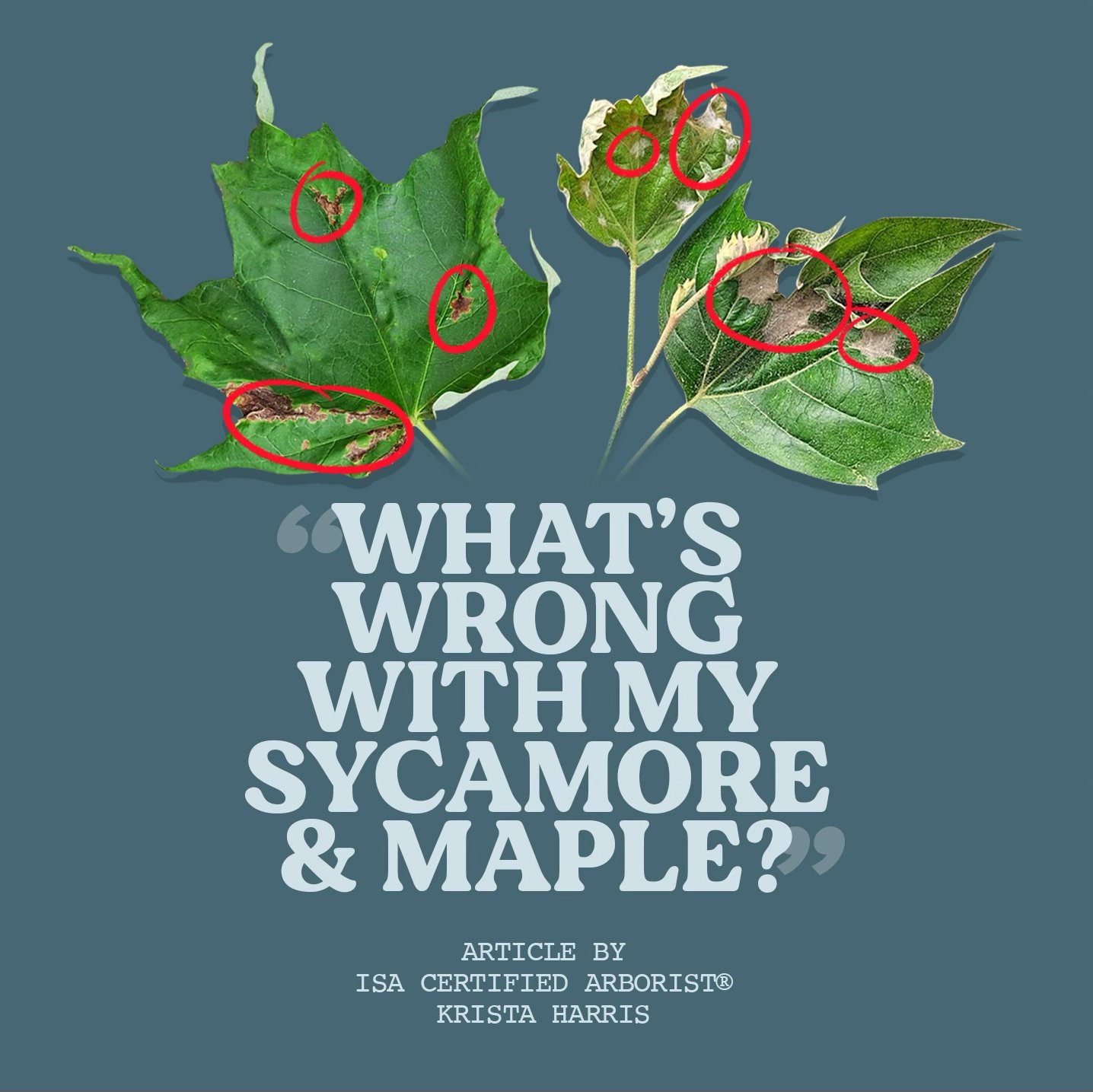
©Russell Tree Experts
"Why does my beautiful maple have ugly black spots on its leaves?""Why is my American sycamore bare this year?"By Krista Harris
ISA Certified Arborist® OH-6699A
May 22, 2025
Anthracnose fungus attacks newly emerging leaves in the spring when the weather is just right for disease development. The symptoms vary from host to host, but typically infected leaves will have irregular dark spots along veins. Eventually, the leaf will curl, die, and fall. In the case of the sycamore, often the leaf buds are killed before they have even had a chance to emerge.
[Sugar Maple leaf before and after anthracnose fungus]
©Russell Tree Experts
Anthracnose fungus affects many deciduous trees and seems to be most noticeable this year on sycamore and maple in our area. I have had at least 10 customers per week concerned that their beloved trees were dying due to this fungus. I have also been driving by my favorite American sycamores around my home, only to find them very sparsely leafed and struggling. This includes Upper Arlington's oldest tree, an amazing 3 stemmed beauty that our team pruned a few months ago.

©Russell Tree Experts
[American Sycamore leaves with anthracnose fungus]Thankfully, I have wonderful news for the stewards of these afflicted trees. Anthracnose is a cosmetic disease for the majority of trees! If the tree is otherwise healthy and well established, it will be just fine. It will replace those lost leaves in July when conditions no longer favor anthracnose development.
How can you help trees with this seasonal infection?
Water your trees during our hot, dry summers! Concentrate the water at the ground level only, do not splash the leaves. All trees will appreciate the extra water, but those that have lost their leaves and are attempting to replace them will relish it! ARTICLE: HOW TO WATER YOUR TREES
Prune your trees for better air circulation and light penetration. This will help the leaves dry faster and it will be harder for the fungus to spread.
Dispose of affected leaves so that the spores are not hanging around next year to re-infect your tree.
Consider fertilizing your trees in the spring so that they have the needed nutrients to stay healthy (and possibly put on 2 sets of leaves if it is another good year for anthracnose infection).
Above all, do not panic! We cannot control the weather or the fungus. Just concentrate on overall tree health and by mid-summer, the trees will have recovered and this disease will be just a bad memory. For a free tree quote by one of our 20+ ISA Certified Arborists®, visit RussellTreeExperts.com/Quote or speaker to our friendly, local office staff at (614) 895-7000!
Please note: This article was originally published on 6/14/2021 and was revised on 5/22/2025.
ADDITIONAL ARBOR ED™ ARTICLES!


Krista Harris | Journeyperson, Russell Tree Experts
Krista grew up in the central Ohio area and became an ISA Certified Arborist® in 2017. She graduated from The Ohio State University with a Bachelor of Science in Crop Science and a minor in Plant Pathology in 2000 and has been in the green industry ever since. Her favorite trees are the American sycamore, American beech, and giant sequoia. [BS in Horticulture Crop Science, The Ohio State University / ISA Certified Arborist® OH-6699A / ODA Comm. Pesticide Lic. #148078]
Understanding Conifers
Understanding conifers should begin with a few simple definitions to clarify and classify. A conifer is a plant that bears its seeds in cones. When we hear the word cone, we likely think of pine and spruce trees, two types of coniferous trees that are widely found throughout Central Ohio and beyond. Their cones are obvious when they fall and scatter on the ground surrounding the tree. But did you know that yews (Taxus) and junipers are also conifers?

Avocados can be tricky. You buy them green, and the next day they’re still not ripe. The day after that they’re still not ripe. Then, the day after that they’ve all gone bad! To be clear, avocados don’t come from conifers. But I’m often reminded of avocados when homeowners contact us regarding concerns they have about their conifers. Conifers, like ripening avocados, can also be tricky. A row of ‘Emerald Green’ Arborvitae can appear to be fine, and then seemingly overnight, half of them are DEAD! A mature white pine can appear to “almost die” every second or third year. These issues can be understandably frustrating and can give us the false notion that these plants are hard to grow. Understanding the ways in which they’re different from other plants in the landscape can help in successfully caring for conifers and allowing them to thrive.

Understanding conifers should begin with a few simple definitions to clarify and classify. A conifer is a plant that bears its seeds in cones. When we hear the word cone, we likely think of pine and spruce trees, two types of coniferous trees that are widely found throughout Central Ohio and beyond. Their cones are obvious when they fall and scatter on the ground surrounding the tree. But did you know that yews (Taxus) and junipers are also conifers? Both bear their seeds in a fruit-like structure that is often incorrectly referred to as a berry. These berry-like fruits are actually cones, botanically speaking. Some other common conifers in Central Ohio include arborvitae, hemlocks, and firs. Because the foliage of most conifers is evergreen, meaning it does not fall off each year with the cycle of the seasons, the terms evergreen and conifer are often used interchangeably. Doing so, however, is not completely accurate. It’s important to understand that the term evergreen also refers to some broadleaf plants like rhododendron, holly, boxwood, and others. These plants are evergreens, but not conifers.
Conifers belong to a very ancient classification of plants and are different from non-coniferous plants in a number of ways. Below are a few of their key characteristics that often confuse homeowners (and sometimes even otherwise qualified arborists!). Knowing what to expect and how to care for conifers is the first step in successfully maintaining them in your landscape.
Seasonal Needle Drop

Japanese White Pine experiencing fall foliage
© Russell Tree Experts
Even though most conifers are evergreens, their evergreen foliage still eventually falls off. Some very common conifers in Central Ohio, like pines, yews, and arborvitae, will drop a significant amount of their inner foliage every 2-3 years as part of a natural occurrence of cyclical needle drop. This can be alarming if you’re not familiar with the process. When it happens, the important thing to recognize is that it’s happening uniformly throughout the entire plant, and all of the browning/yellowing foliage is further back on the branch. These are the needles that are 2-3 years old and have reached the end of their life cycle. You might also look around your neighborhood to see if the same tree or shrub in other landscapes is doing the exact same thing, and at the same time. This process will never occur on the tips of the branches. If you have needles that are discoloring and falling off from the very tip or end of the branch, it is likely due to other factors and may indicate a disease, insect, or watering issue.
Delayed Response to Stress

A dead ‘Emerald Green’ Arborvitae due to drought stress
© Russell Tree Experts
Perhaps the most challenging thing about conifers, specifically evergreen conifers, is that they do not give immediate feedback from water-related stress or injury. Herbaceous annuals like impatiens and petunias will let you know almost immediately when they are low on water by wilting excessively. Many deciduous trees, when first planted, will also show signs of wilting foliage relatively quickly when their roots become dry. This type of visual feedback is often what reminds us to get outside and water our newly installed landscape trees or shrubs. Coniferous evergreens, on the other hand, can have a delay of weeks or even months before they show obvious signs of drought stress. The reason this is an issue is simple; by the time we see it, the damage may be too extensive to reverse. It’s important to thoroughly and properly water any newly planted trees or shrubs. Don’t over-rely on in-ground irrigation, which often does not water for a long enough span of time to properly soak the ground, or may not thoroughly cover an area, leading to “dead zones” that receive little to no water at all. Proper watering regimes should be followed for the first season, and supplemental watering may be beneficial in subsequent years during very dry months. Watering in the fall is important too. This helps to keep roots moist once the ground freezes. Inadequate levels of water in the soil during freezing temperatures can rob a plant’s roots of water and lead to winter desiccation. Oftentimes we see this show up late winter or even early in spring.
Limited Regrowth with Pruning
The proper pruning of conifers varies from that of their non-coniferous counterparts. Many landscape shrubs and even a few tree species can be pruned aggressively to maintain a certain size or habit without adversely affecting the health and longevity of the plant. Many conifers, however, are not tolerant of heavy pruning that removes the majority of the foliage from a stem or branch. Junipers provide a classic example of a plant that cannot be pruned back to bare wood. Once this is done, the exposed area will not fill in with new growth. Pine, spruce, and fir are also examples of conifers that will not produce enough new growth on over-pruned parts of the plant. One example of a conifer that is an exception to this rule is the yew. When cut back aggressively, yews can and do generate enough new growth (slowly) on old, bare branches. Knowing how to properly prune conifers requires a good understanding of each plant species’ characteristics and habits, and may be best left to a professional arborist.

Healthy Dawn Redwood trees in the fall
© Russell Tree Experts
Finally, it’s worth noting that a few types of conifers succeed in inciting worry and confusion whenever a home changes hands and the new owners are unfamiliar with the trees in the landscape. These are of course the deciduous conifers. Two deciduous conifers can be found commonly throughout Central Ohio landscapes- the dawn redwood and bald cypress. These trees will naturally lose their needles every year just like a Maple or Ash loses its leaves. As mentioned previously, most of us equate conifer with evergreen. So to see this occur for the first time and not understand what’s happening, one might assume the tree is dying for some unknown reason.
Conifers do things a bit differently, which can make them a little harder to understand. Answers to your coniferous questions are always just a phone call away at Russell Tree Experts. The unique characteristics mentioned above are just a few of the many reasons you should entrust your trees, all of them, to a qualified professional tree care company. Otherwise, your new neighbor, though his intentions are good, might just tell you to cut down that dawn redwood that keeps “dying” every year.

Walter Reins | Regional Manager, Russell Tree Experts
Walter has been an ISA Certified Arborist since 2003. He graduated from Montgomery College in Maryland with a degree in Landscape Horticulture, and has called Columbus, OH his home for nearly 20 years. Walter appreciates trees for their majesty and the critical role they play in our world.
When and How to Prune Lilacs
Common lilacs (Syringa vulgaris) are a favorite landscape shrub here in Ohio and beyond, with flowers that provide beauty and an unmistakable fragrance every spring. Other cultivars of lilacs offer different habits and uses in the landscape, but provide the same display of flowers that we all love. In order to ensure you get the most flowers on your lilac year after year, it’s important to know when and how to prune them.
By Walter Reins
ISA Certified Arborist® OH-5113A
March 6, 2025
Common lilacs (Syringa vulgaris) are a favorite landscape shrub here in Ohio and beyond, with flowers that provide beauty and an unmistakable fragrance every spring. Other cultivars of lilacs offer different habits and uses in the landscape, but provide the same display of flowers that we all love. In order to ensure you get the most flowers on your lilac year after year, it’s important to know when and how to prune them.
When To Prune
As a general rule for all lilacs, they should be pruned immediately after they’re done flowering in the spring. Since lilacs set next year’s flower buds right after the current year’s flowers have faded, pruning later in the summer or fall will result in cutting off many or all of next year’s flowers. This rule of timing applies to the larger common lilacs as well as the cultivars that are shorter or more “shrub” like. While the “when” of pruning lilacs is fairly straightforward, the “how” gets a little trickier. To keep things simple for now, we’ll think of lilac pruning as either maintenance pruning or rejuvenation pruning.
How To: Maintenance Pruning
For any lilac shrubs that have not outgrown their space or are still producing vibrant flowers each year, regular pruning can simply consist of any shaping that you choose to do along with removal of dead, diseased, or broken stems. You can also remove spent flowers from your lilacs to help encourage a cleaner growth habit and appearance. It’s always better to do this type of pruning by hand, rather than shearing. When making cuts, try to cut back to an outward facing bud. A good pair of hand pruners is the perfect tool for this and makes for much better pruning cuts than hedge shears.
How To: Rejuvenation Pruning
If you’ve ever had an older common lilac in your landscape that went unpruned for many years, you’re probably familiar with their overgrown, unruly habit when left alone. Many people mistakenly believe that these shrubs have stopped flowering at this point. Oftentimes what’s actually happening is the flowers are being produced on just the upper portions of the shrub where the plant has reached a taller height and is exposed to sunlight. Once they’ve reached this stage, we’re often left to stare at bare, woody branches at eye level and below. For these overgrown shrubs, we can remove entire older canes or stems that are 2” in diameter or larger to encourage a rejuvenation of the shrub. We want to apply the rule of thirds when doing this type of pruning - Remove approximately one third of the older canes or stems each year for 3 years. This gives the shrub a chance to slowly transition back to a fuller, shorter shrub with more new growth filling in from the bottom. If you decide to drastically prune the entire shrub this way all at once rather than just a third of it, a little extra care like fertilization and watering will be important to encourage new growth. Note that this “all at once” approach is generally not recommended for the health of the shrub.
Your lilac flowers can be influenced by many things, including the temperature, soil conditions, even disease and insect problems, but proper pruning goes a long way to ensuring they put on a great show every spring. And remember, if you have specific questions about pruning or anything tree and shrub related, your dedicated Russell Tree Experts arborist is only an email or phone call away.
*New* Video!
To accompany the above article, Walter Reins demos how to prune lilac trees in this new video! Click below!
Please note: This article was originally published on 4/6/2020 and was republished on 3/6/2025.
ADDITIONAL ARBOR ED ARTICLES!


Walter Reins | Regional Manager, Russell Tree Experts
Walter became an ISA Certified Arborist® in 2003 and has a degree in landscape horticulture. He has 25 years of experience in the tree and landscape industries and originally began working at Russell Tree Experts in 2011. Walter is also the owner/operator of Iwakura Japanese Gardens, a small design/build/maintenance firm specializing in Japanese-style gardens, and also offers responsible tree planting for all landscapes.
Don’t Get Fooled by the Fall Color of Conifers!
Every fall I get calls from folks concerned about yellow needles on their evergreen trees. Often times I’m told that the trees are sick or that they appear to be dying from the inside out. There are some disease and insect problems that can cause yellowing and premature loss of needles in conifers but most often what people are reporting is just normal fall color.

By TJ Nagel
ISA Board Certified Master Arborist® OH-6298B
November 13, 2025
Every fall I get calls from folks concerned about yellow needles on their evergreen trees. Often times I’m told that the trees are sick or that they appear to be dying from the inside out. There are some disease and insect problems that can cause yellowing and premature loss of needles in conifers but most often what people are reporting is just normal fall color.
Yellowing and the loss of old needles in the fall is normal for pine, spruce, arborvitae, hemlock and most evergreen conifers in the midwest. Most conifers shed their needles each year starting in late August and continue through November. Older interior needles will turn yellow while needles further out in the canopy and at the tips of branches will stay green. The yellow needles eventually drop off starting at the top of the tree and working their way to the bottom in a uniform fashion. Taxus (also called Yew) is the exception showing it’s “fall color” in mid to late spring.
Most folks understand and look forward to the fall color change in our maples, oaks, hickories and other hardwood trees — fall needle drop in conifers is as normal as leaf drop in deciduous trees.
The change in color and eventual drop of foliage is simply a physiological response to the shorter days and cooler temperatures as trees (both evergreen and deciduous) prepare themselves for the winter.
Pictured below are some of my favorite conifers showing fall color:
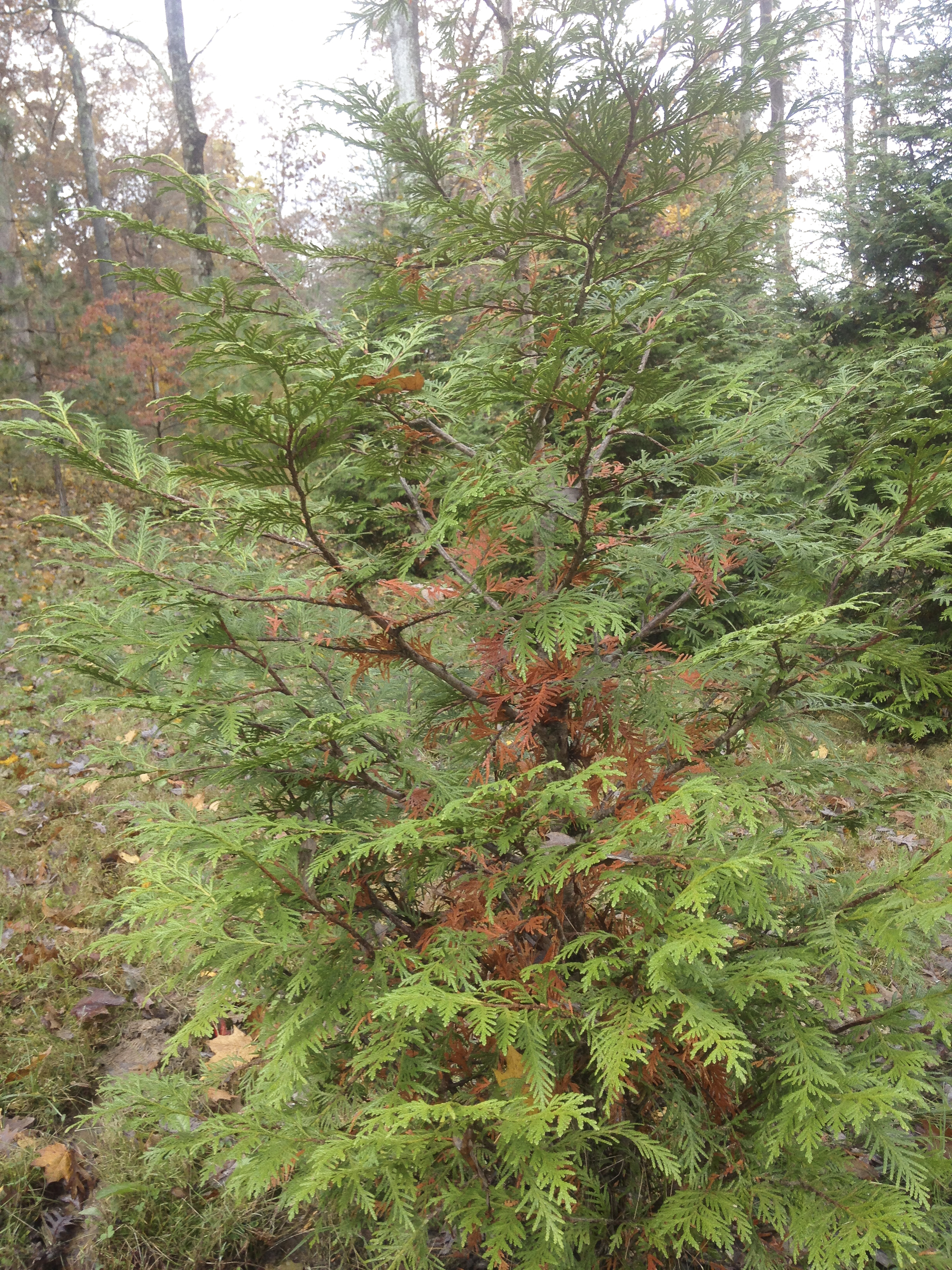
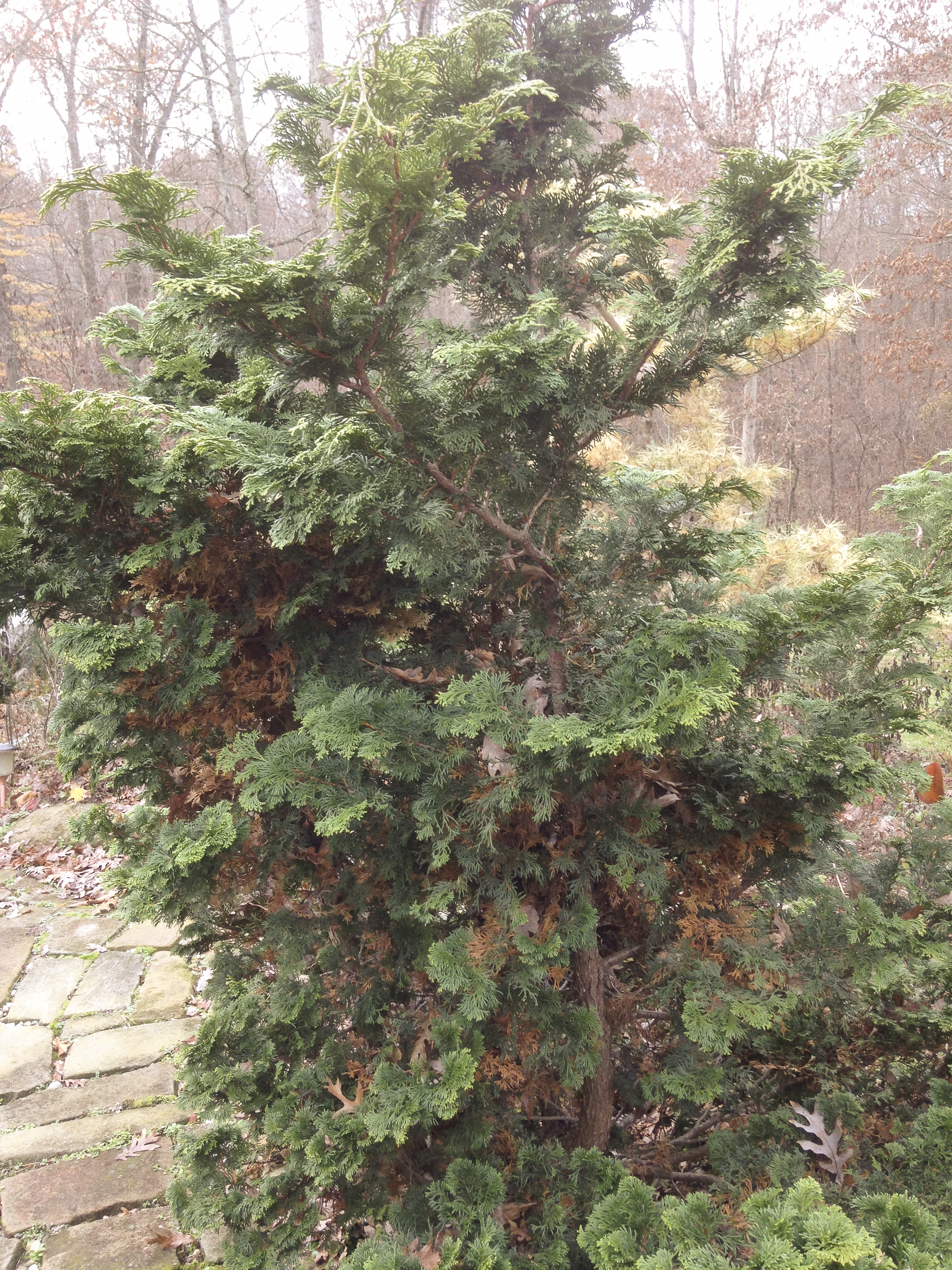
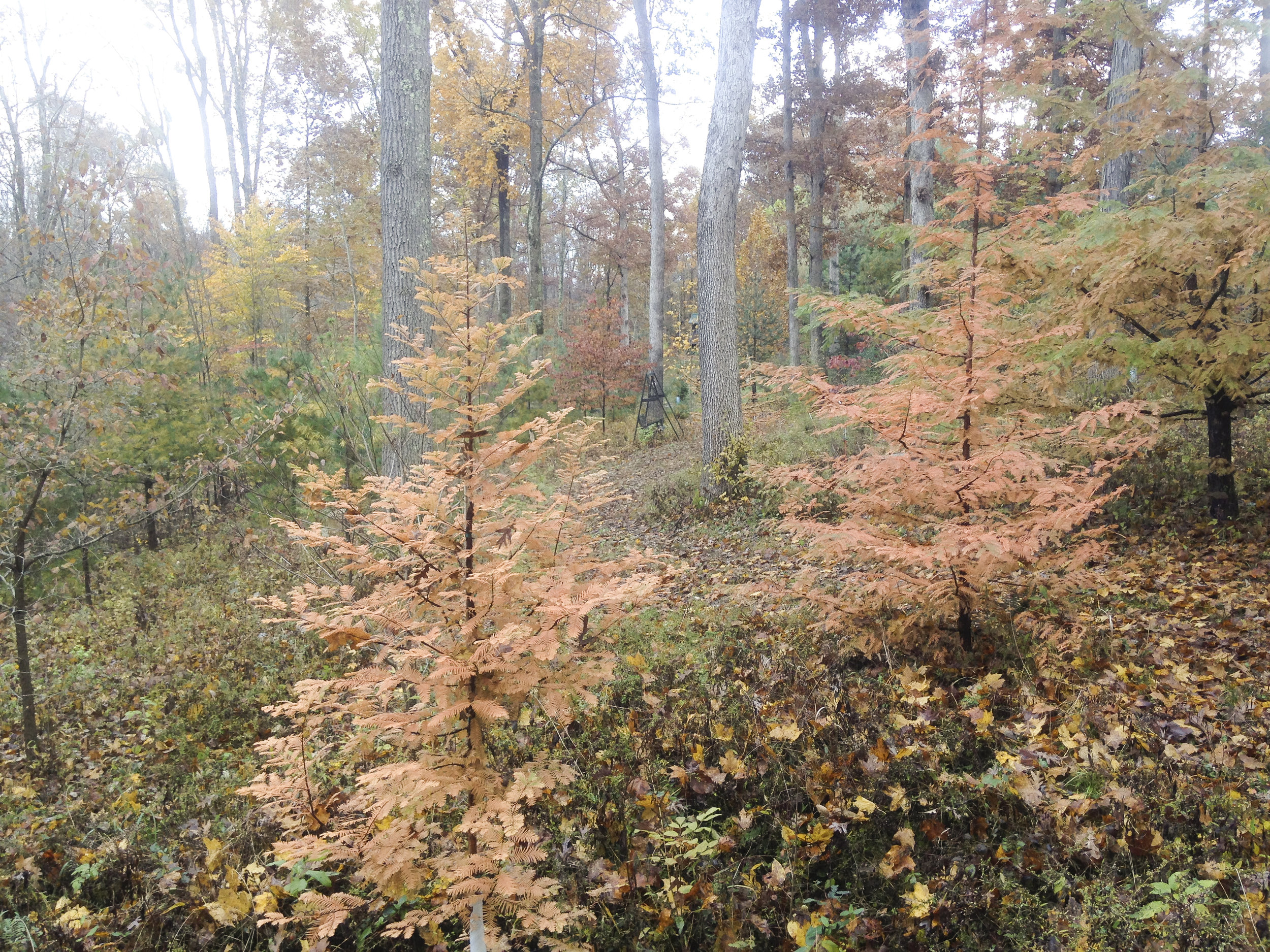
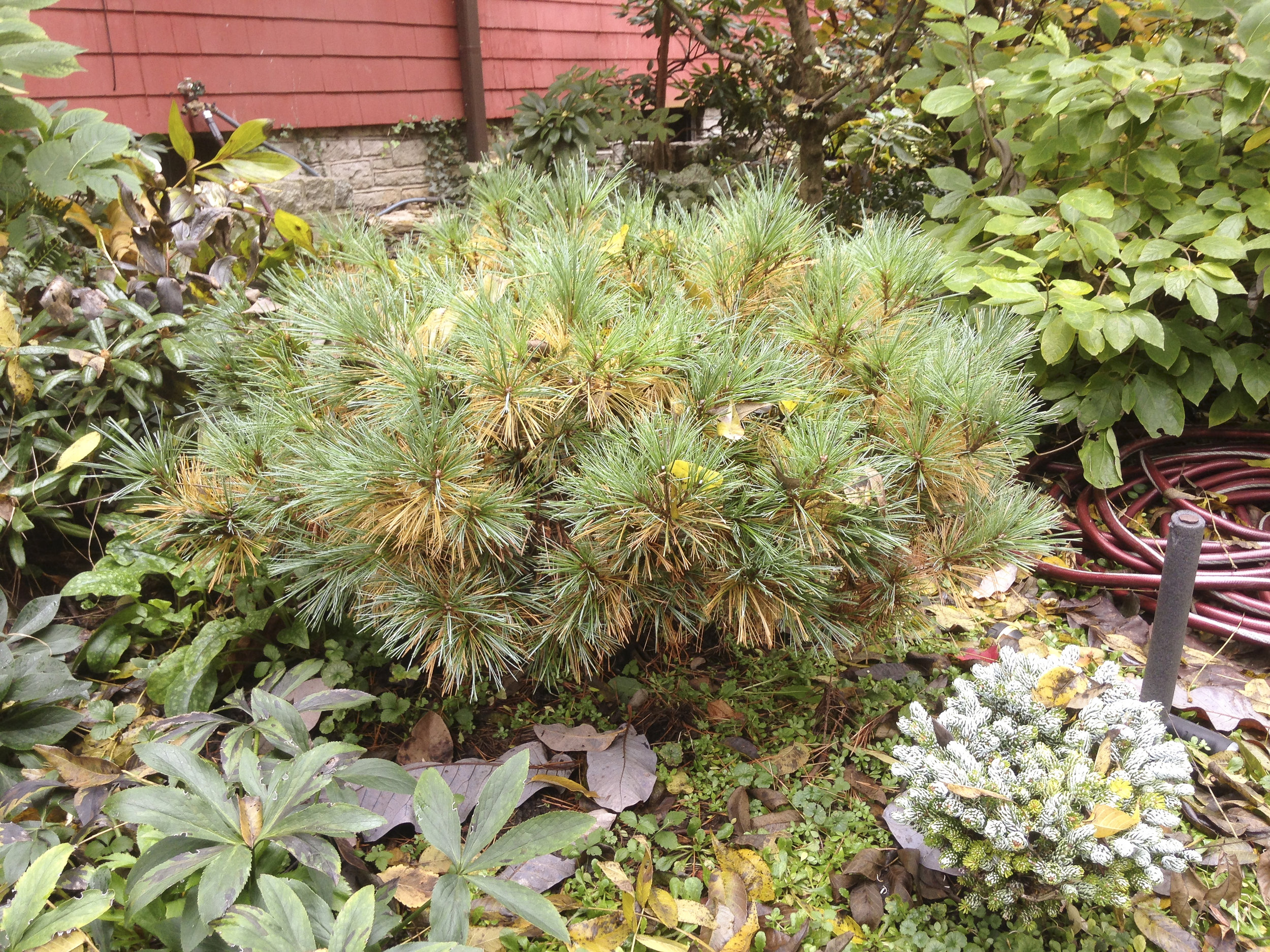
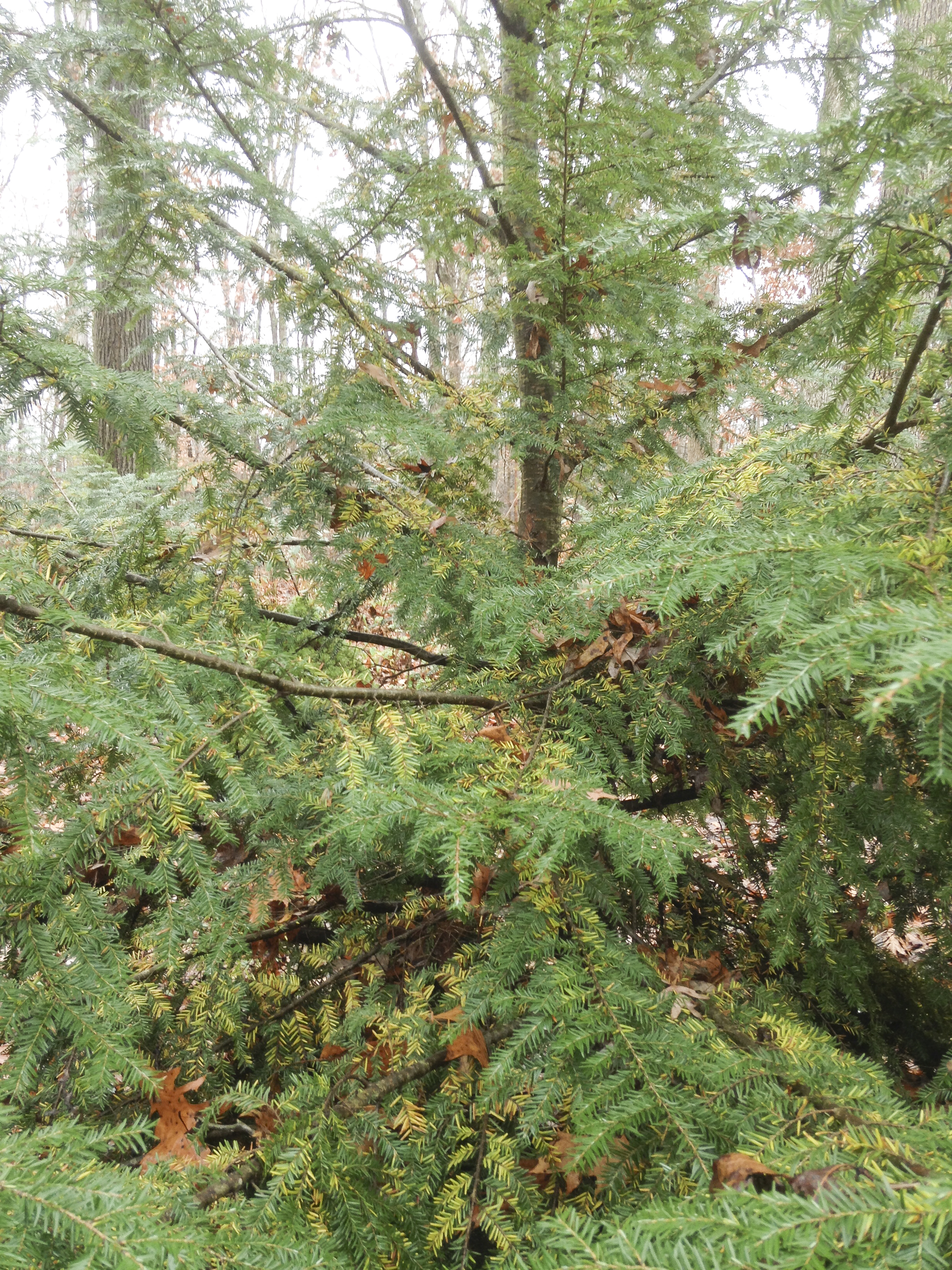
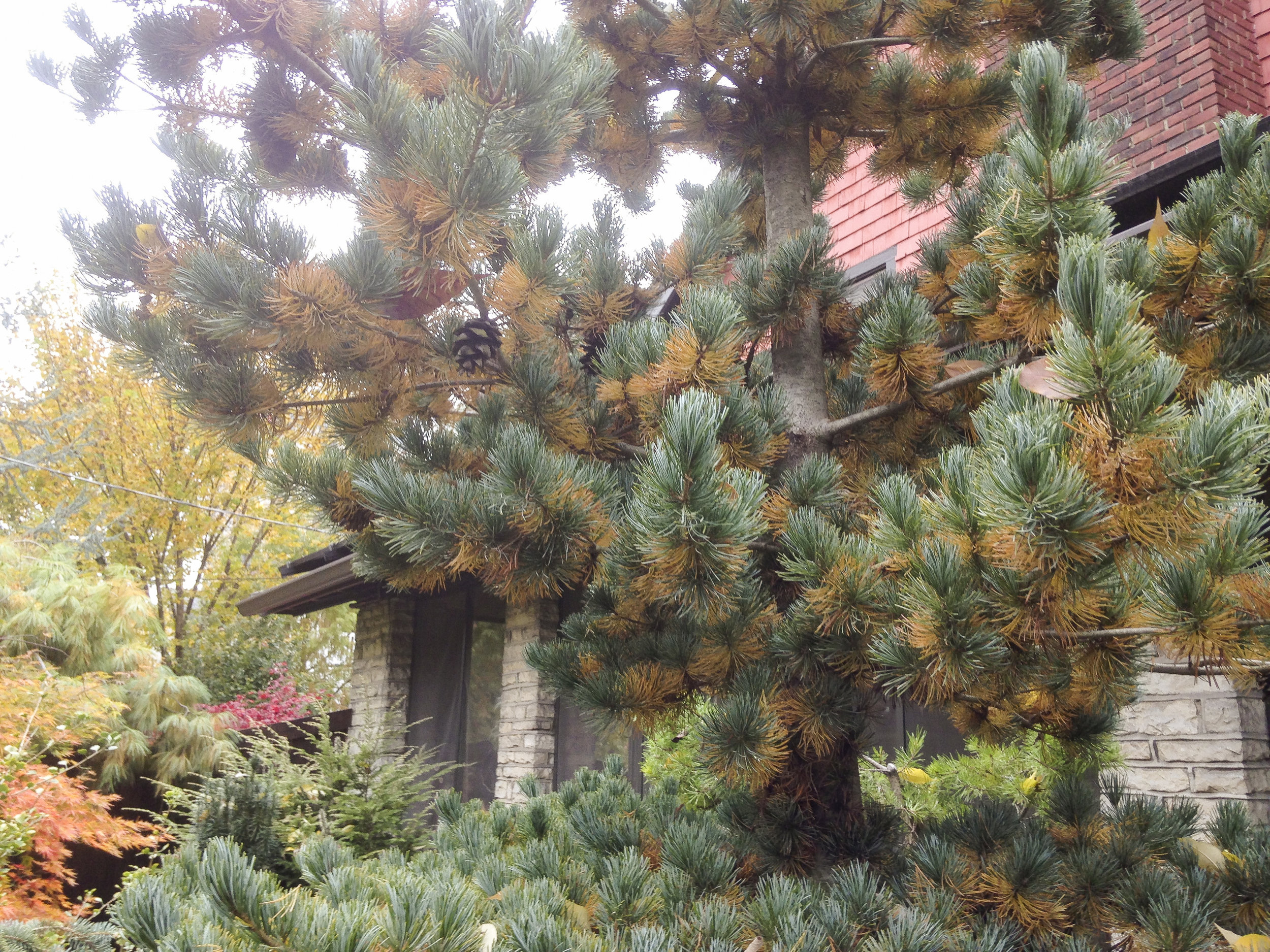
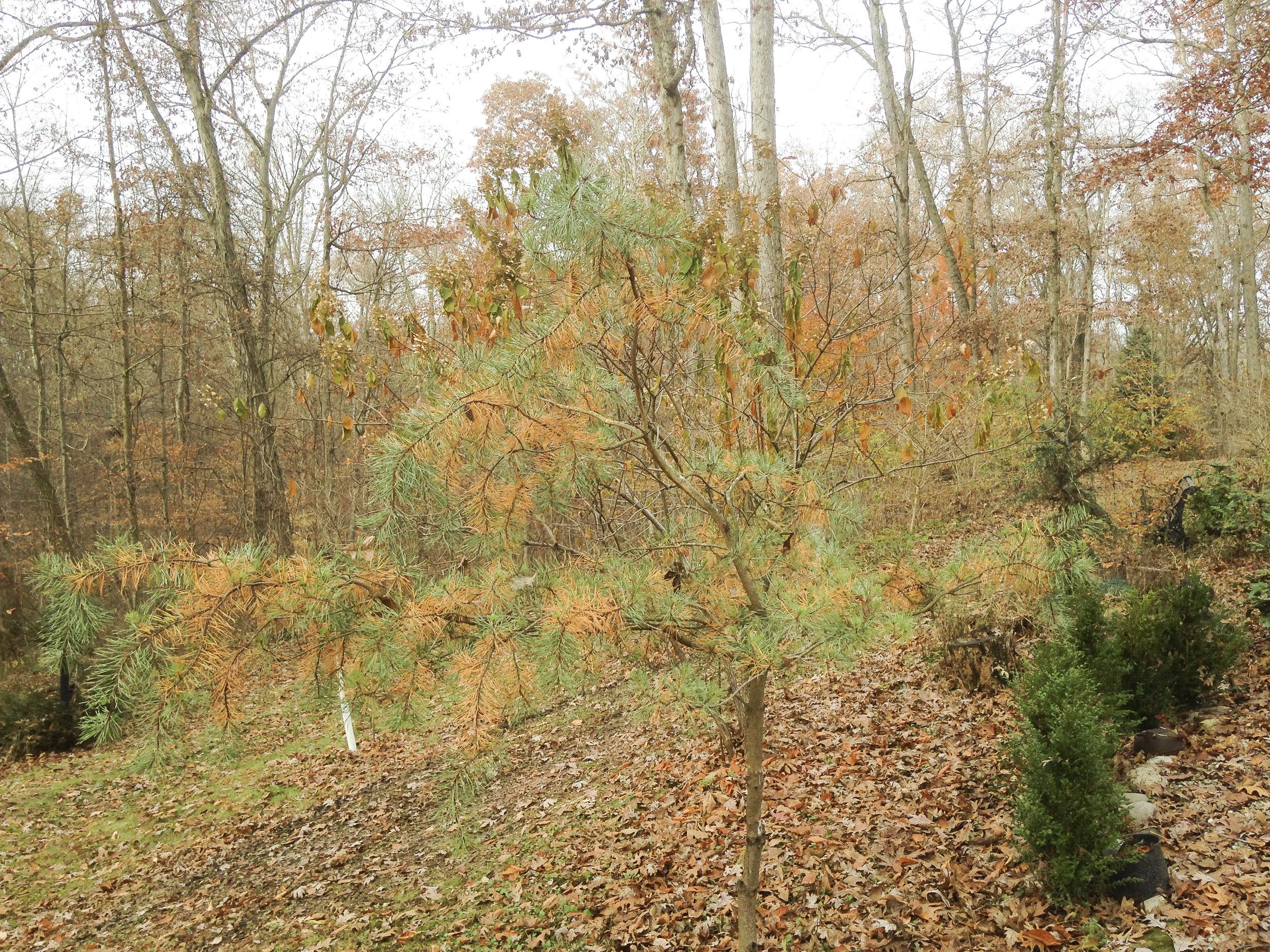
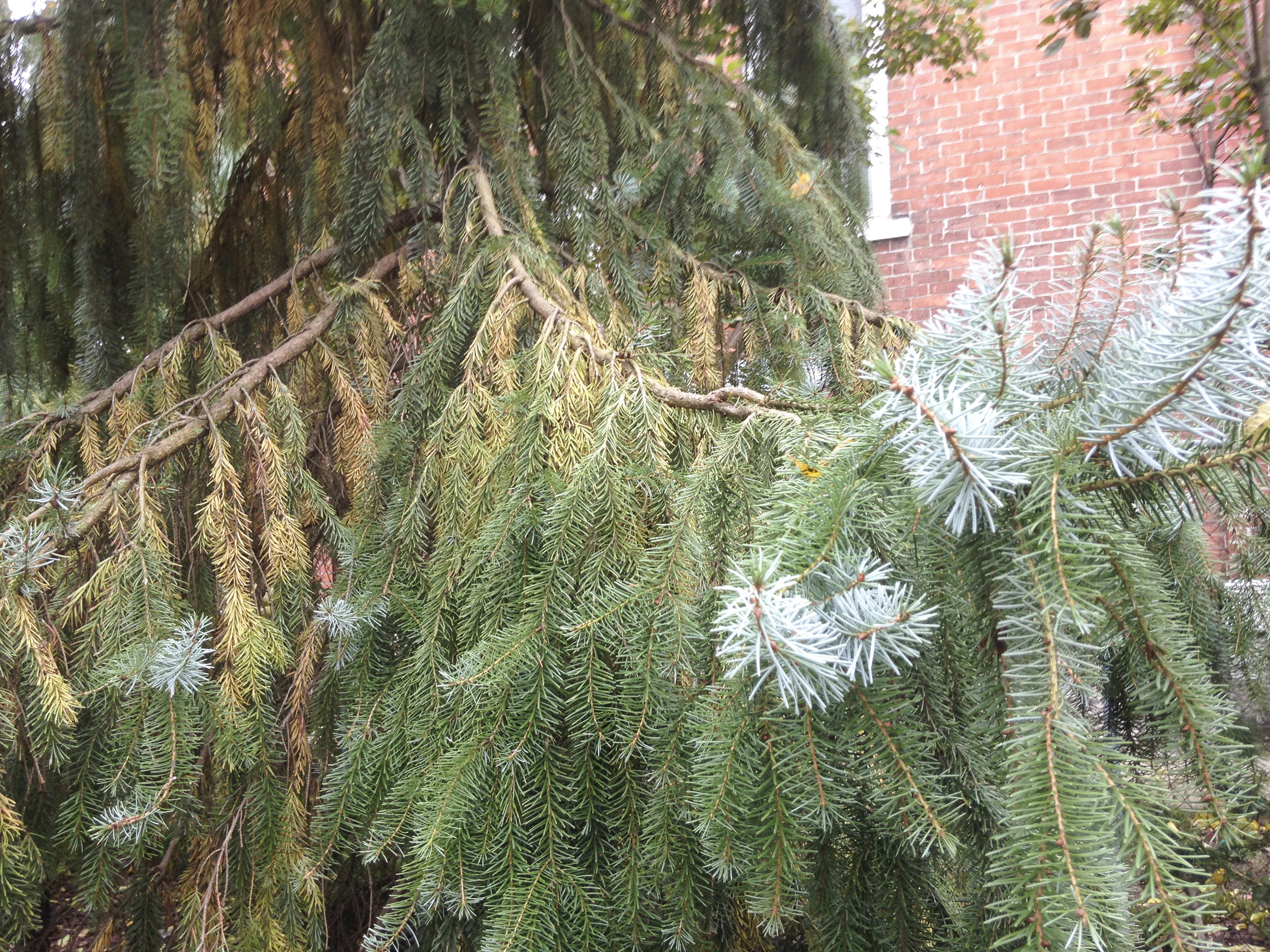
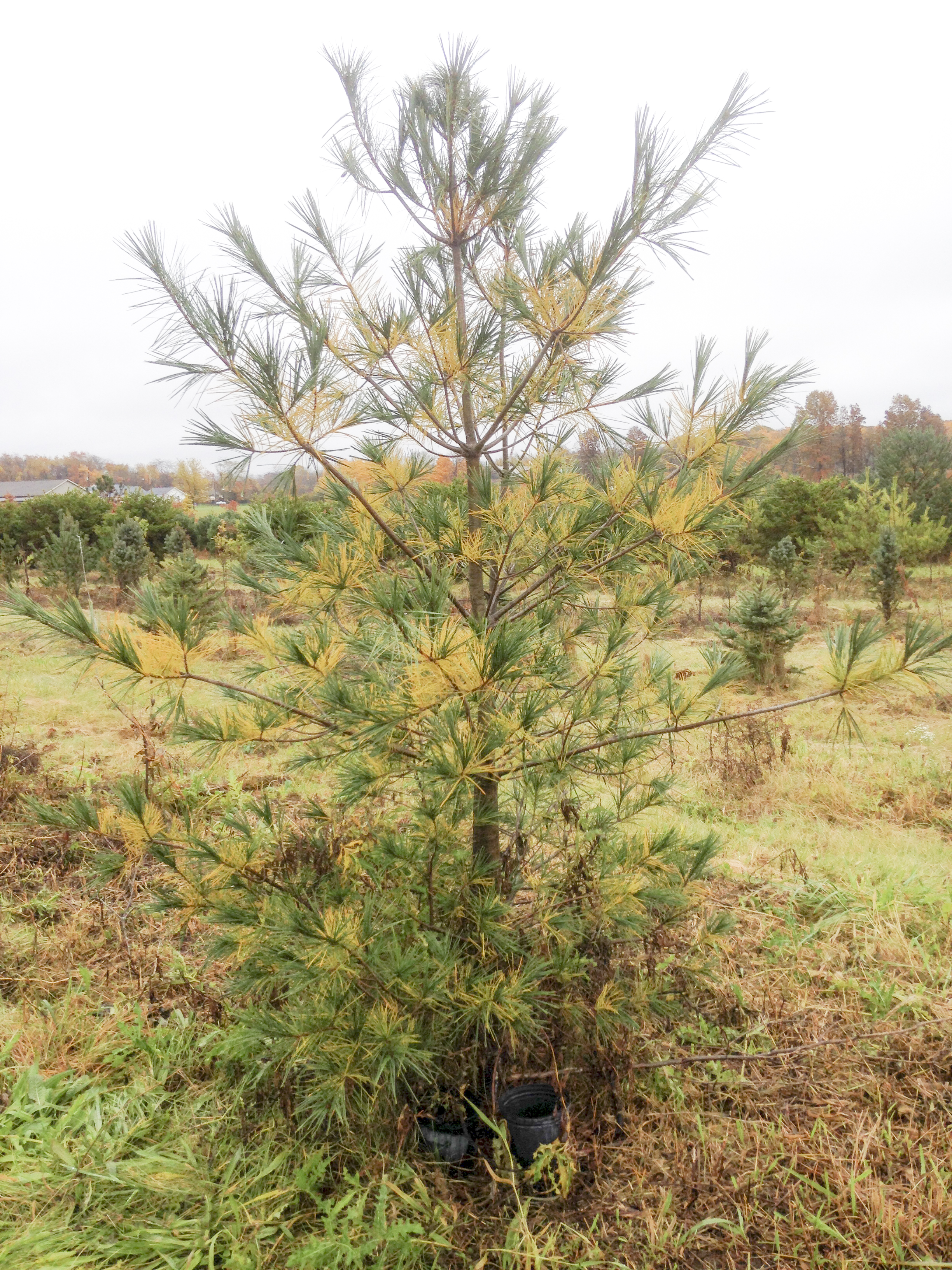
Please note: This article was revised on 11/12/25 and originally published on 11/28/18.
ADDITIONAL ARBOR ED™ ARTICLES!



TJ Nagel I Scheduling Production Manager, Russell Tree Experts
TJ joined Russell Tree Experts in 2012 and loves trees. He is an avid gardener and plant collector. TJ graduated from The Ohio State University with a B.S. in Agriculture with a major in Landscape Horticulture and minor in Entomology. TJ is an ISA Board Certified Master Arborist® and well versed in plant pathology and tree ID.