
“Lichen? Moss? Why are you on my tree?”
Andrew Hendricks
ISA Certified Arborist® OH-7089A
January 15, 2026
On a winter hike at your local park or preserve you notice small green circles on the trunks of nearby trees. Upon closer inspection you notice leaf-like structures in a circular fashion. Congratulations, you have just found the Common Greenshield Lichen (Flavoparmelia caperata). A quick glance around reveals more lichen and mosses covering parts of trees all along the trail. Now you ask yourself “Are these benevolent acquaintances or are they treacherous foes trying to slowly devour our beloved trees?” Let’s break down the facts of these little suspicious growths: What are they exactly, where do they come from and do they hurt trees?
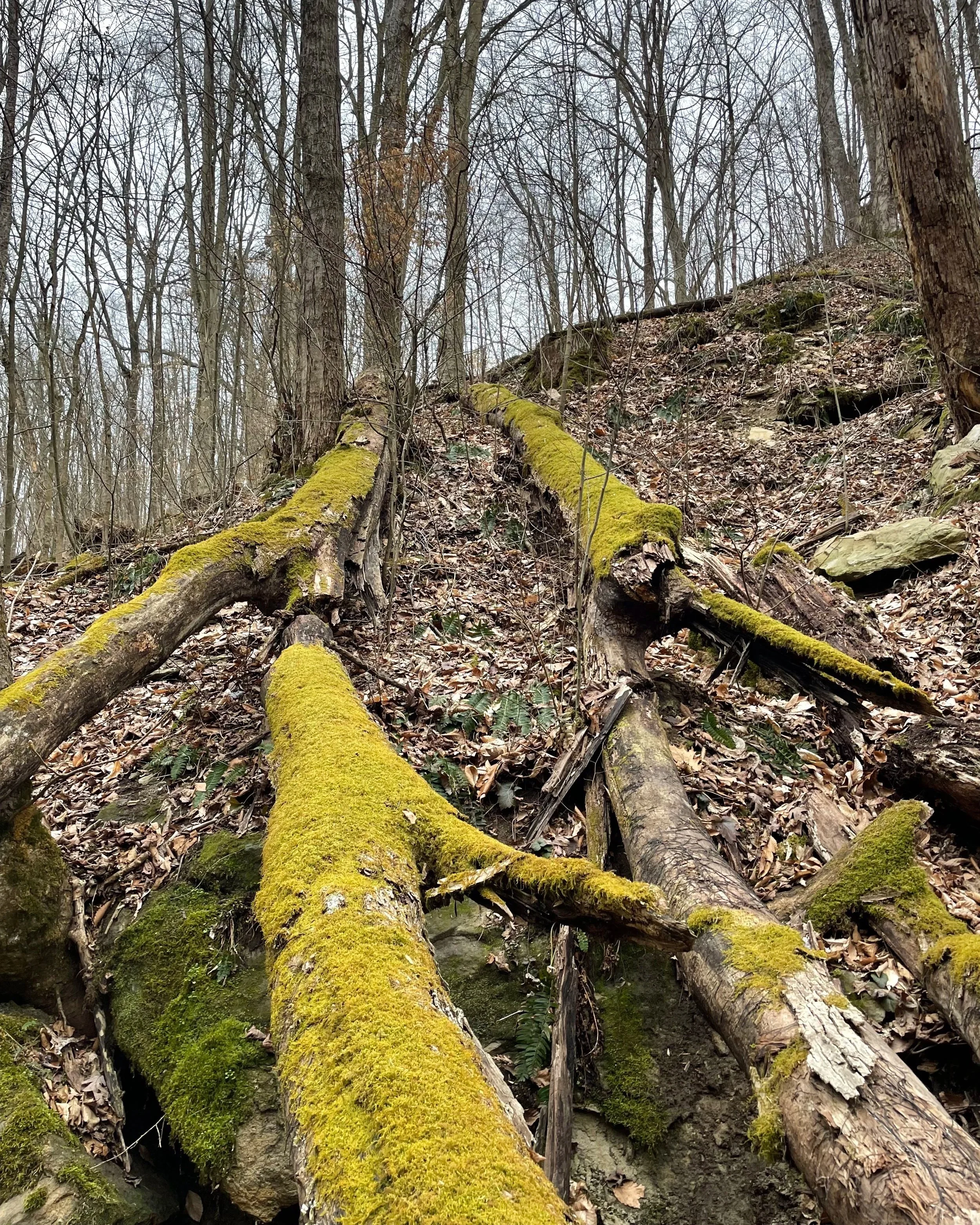
©Russell Tree Experts
Moss growing on a tree.
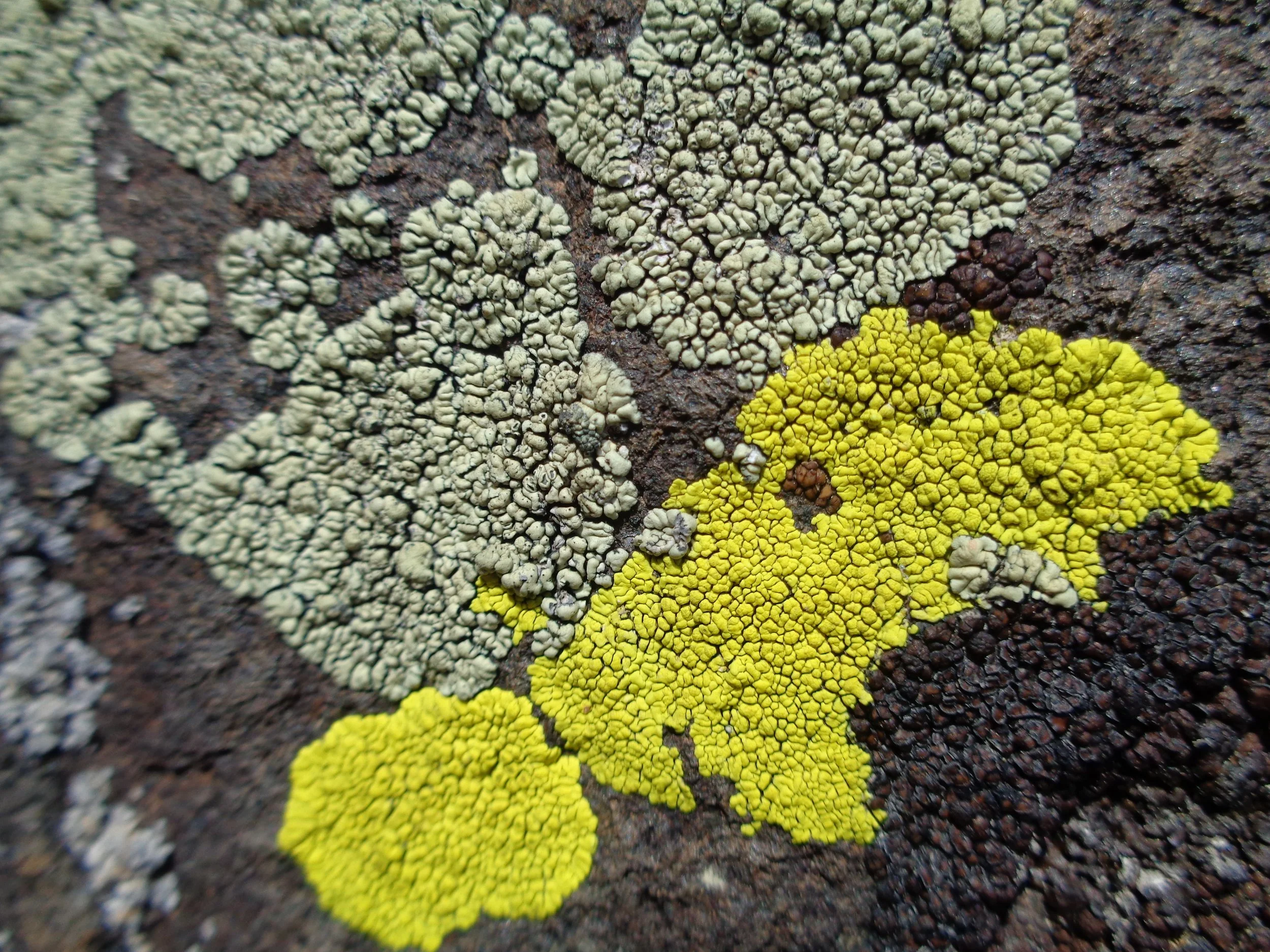
Lichen are fascinating organisms not only because of their symbiotic relationship between fungi and algae, but also for the fact that there can be multiple fungi partnering with multiple algae in one specimen! Fungi give the structure of the overall organism, while algae provides sustenance for both through photosynthesis, “Lichens are a case of fungi that have discovered agriculture” -Trevor Goward, Naturalist. Lacking formal training in biology, Trevor Goward, a citizen scientist, has contributed to the scientific community through his observations in Wells Gray Provincial Park. One notable contribution was in 2016 his research led to the discovery of lichens containing a second fungal partner.
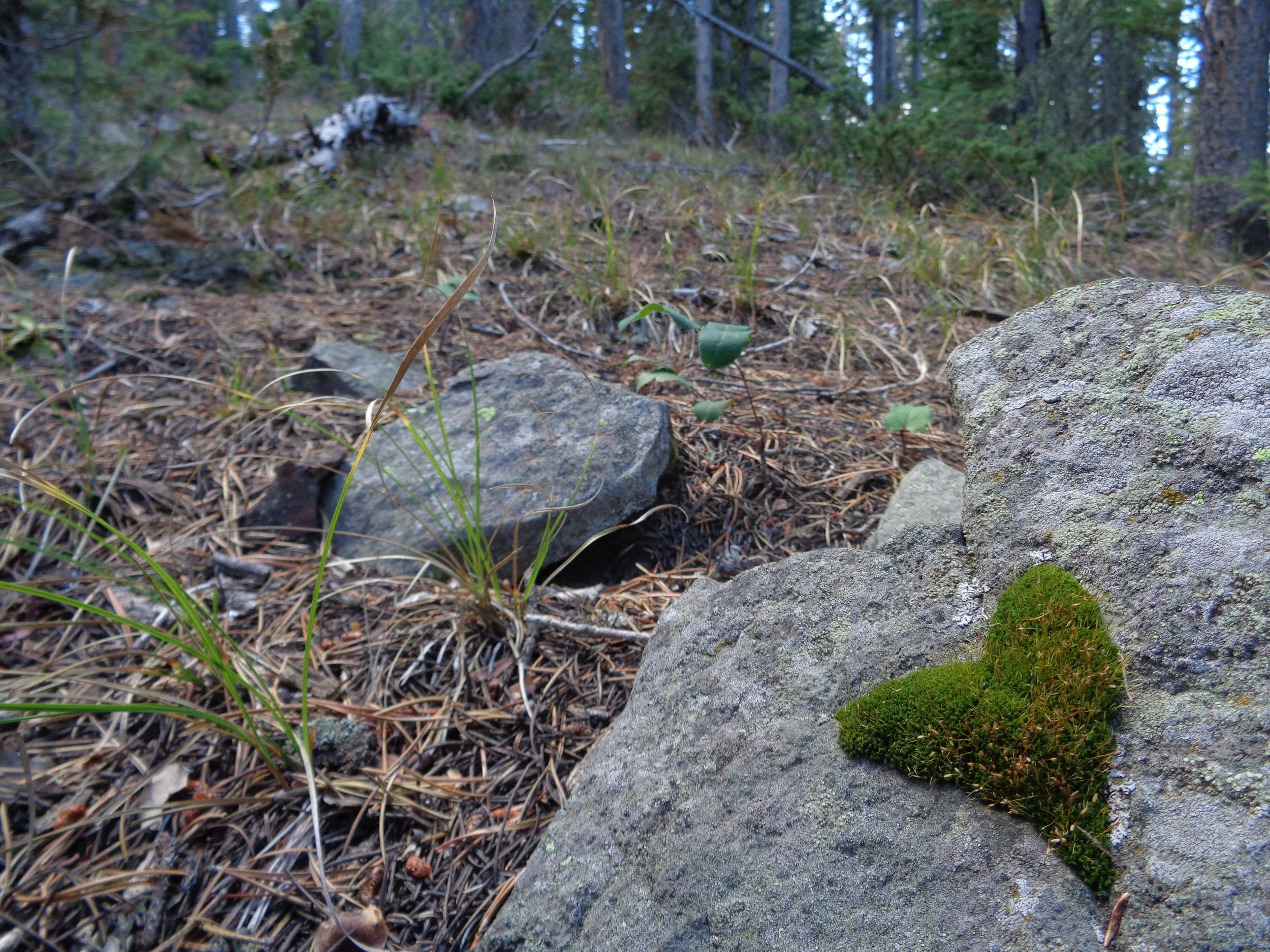
©Russell Tree Experts
Moss growing on a rock (in the shape of a heart!)
Mosses on the other hand, are similar to trees in that they produce their own energy through photosynthesis but lack true vascular tissues. Lacking flowers is another trait of the mosses otherwise known as bryophytes to the scientific community.
Ecologically speaking, lichens are a pioneer species; meaning they’re the first organism to colonize rocks and help build soils for higher forms of life like mosses. Lichen and moss can both spread across the landscape by spores or vegetatively, where small pieces break off and start anew. Wildlife, such as birds, will utilize different lichens or mosses in building nests. For example, the water-ouzel comes to mind from reading John Muir books; these lovely little birds make their nests near the edge of creeks almost entirely of moss. “These are deftly interwoven, and felted together into a charming little hut; and so situated that many of the outer mosses continue to flourish as if they had not been plucked” notes John Muir. Closer to home and a bit smaller are the Ruby-throated Hummingbirds, they will weave lichen into their nests to camouflage from predators.
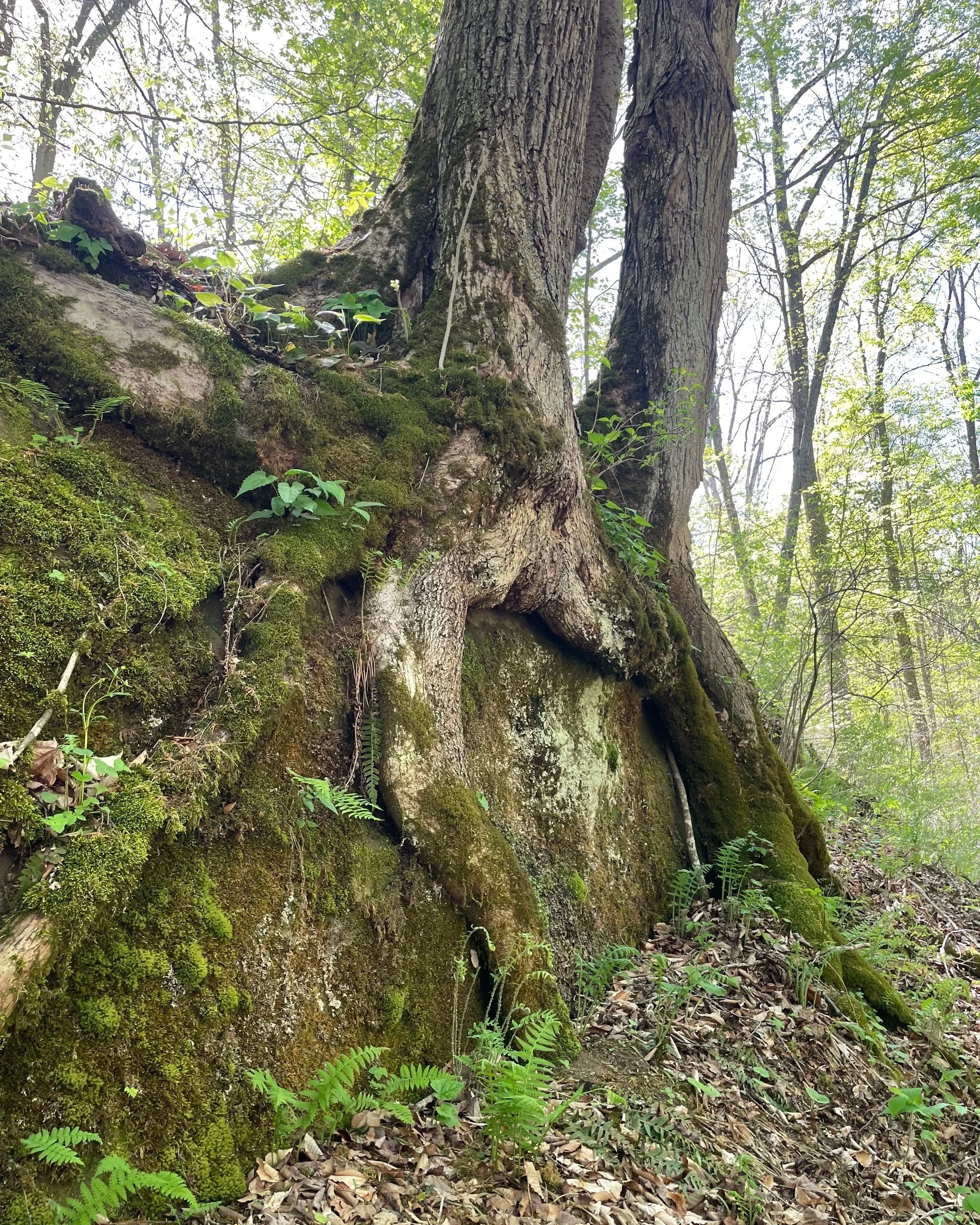
©Russell Tree Experts
Mostly moss (green) growing on a tree with some lichen (light blue-ish gray) on the rock and tree.
Mosses and lichen are epiphytic (non-parasitic) plants using other plants as growing sites. They prefer moist locations such as swamps or high humidity areas. Looking in our yards, we can find lichen in undisturbed sites exposed to sunlight and most important of all, clean air. I can find some lichen and moss on the redbud tree in front of our house; these are of no concern. A common belief is that lichen and moss kill trees because they are the ones present when a homeowner notices a dead tree in their yard. That is similar to blaming smoke for a fire instead of the match that started it. A surplus of lichens or mosses may be signs of a stressed tree due to a thinning of canopy and not the cause of your declining tree. Signs of a declining/stressed tree include but are not limited to browning or yellowing leaves, dead branches and smaller than average leaves. Causes for this may be environmental such as drought stress, poor soil fertility or extreme temperature changes. Other causes could be due to pests or diseases; lichens and mosses however are not stressors rather they are taking advantage of an increase in light due to a thinning canopy. The best thing for your trees is to provide a healthy environment that is stress free so they can do what they do best and keep reaching for the light. The only thing lichen and mosses are killing is time. Sit back and relax while marveling at our little neighbors as they come together in partnerships, exploring new sites, challenging the way we think about them and all the while building precious soil.
©Russell Tree Experts
Close up of lichen
For more in-depth reading on lichens, check out chapter 3 of Entangled Life (Merlin Sheldrake, 2020) from our Winter Reading List ARBOR ED™ article by my coworker and ISA Certified Arborist®, Mitch Lippencott! For incredible up close photos, I recommend Ways of Enlichenment, a website started by Trevor Goward located in British Colombia. For something more local visit the Ohio Moss and Lichen Association website to learn more about our very own lichen and mosses of Ohio or by joining one of their forays in search of our little friends.
ADDITIONAL ARBOR ED™ ARTICLES!



Andrew Hendricks I Regional Manager, Russell Tree Experts
Andrew joined Russell Tree Experts in 2021 but has been in the tree care industry since 2018. He is certified in first aid, CPR, and RTE TREES, is an ISA Certified Arborist® and has his commercial applicator license. Andrew’s favorite tree is the eastern redbud (Cercis canadensis). In his free time, you might be able to spot him hunting or eating his favorite food: spaghetti with zucchini noodles!