
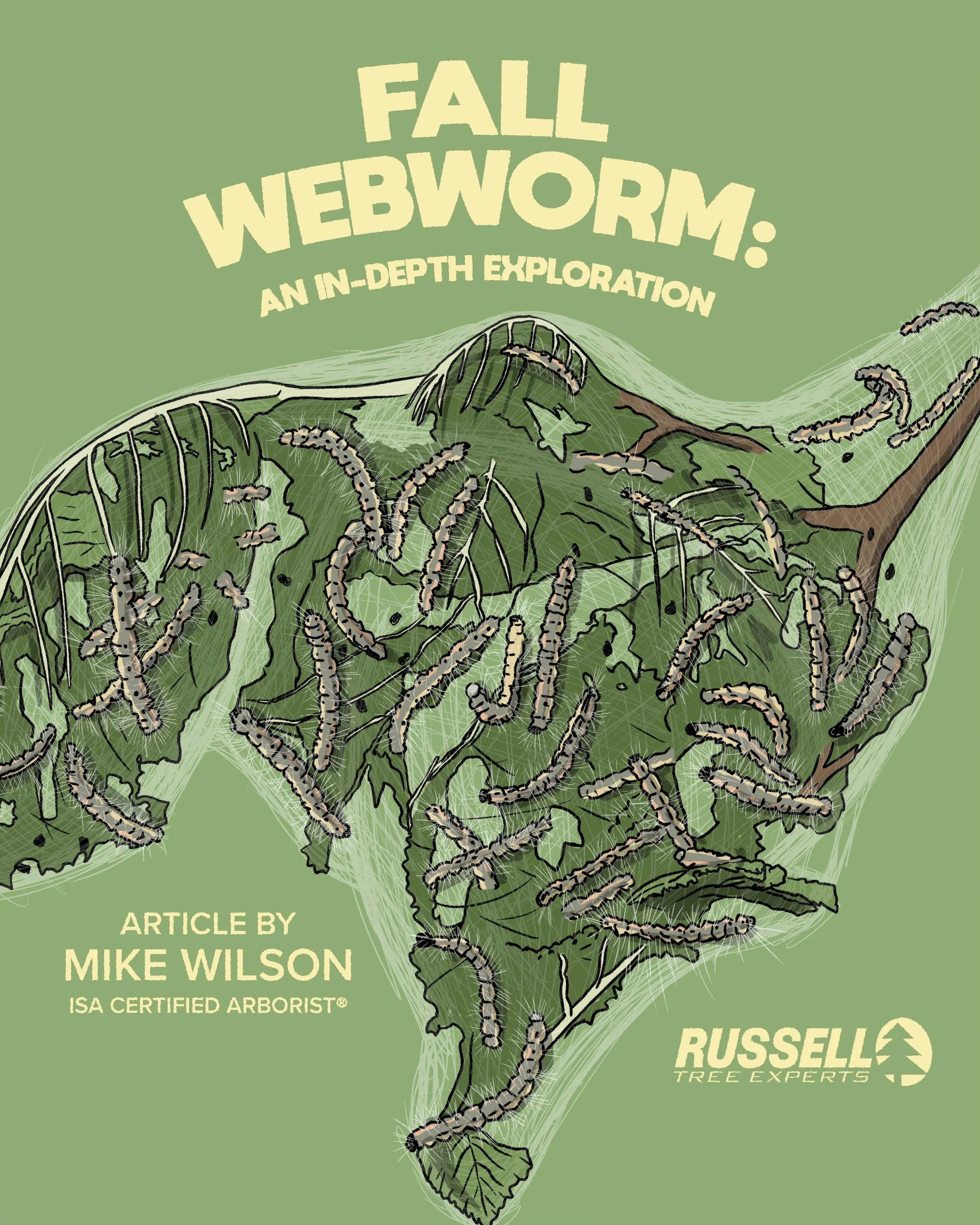
Fall Webworm: An In-Depth Exploration

By Mike Wilson
ISA Certified Arborist® OH-6806A
August 14, 2025
As a regional manager here at Russell Tree Experts, I have been hearing many concerns from homeowners about fall webworm over the last few weeks and have seen even more in landscapes throughout central Ohio. Fall webworm (Hyphantria cunea) is a species of moth known for its distinctive and conspicuous webs, which are commonly found on a wide variety of trees across North America. While not considered a major threat, fall webworm can cause significant defoliation in late summer and early fall, leading to reduced vigor and unsightly trees.
Life Cycle of the Fall Webworm

The life cycle of fall webworm is a fascinating process that begins with the emergence of adult moths in late spring or early summer. The adult moths, characterized by their white wings often dotted with black spots, are nocturnal and are seldom seen during the day. After mating, the female moth lays her eggs on the underside of leaves. These eggs are small, white, and laid in clusters, often numbering several hundred.
Within a week or two, the eggs hatch into larvae, which are the most destructive stage of the fall webworm life cycle. The caterpillars are initially light green or yellow with two rows of black spots along their bodies. As they mature, they develop long, silky hairs. The larvae immediately begin to feed on the leaves of the host tree, creating a communal web that serves as both a shelter and a feeding ground. As the larvae grow, the web expands to cover more of the tree's branches. This feeding occurs from late spring to mid-summer. By late August, they typically stop feeding.
The larvae go through several instars (or developmental stages) over the course of four to six weeks. Once they reach maturity, they leave the webbing to pupate in the soil or under loose bark, where they remain until the following spring.
Habitat and Distribution
Young fall webworm insects are highly adaptable caterpillars that feed on a wide variety of plants, including more than 100 species of deciduous trees. Some of their preferred hosts include hickory, walnut, cherry, and persimmon trees.

The webs of the fall webworm are commonly found in late summer and early fall, which is how the species earned its name. These webs can cover entire branches and, in severe infestations, can even envelop small trees entirely.
Ecological Impact
While fall webworm is a pest and nuisance, its overall impact on the urban forest is generally minimal. Most healthy trees can withstand the defoliation caused by these caterpillars, and the damage is typically more cosmetic than lethal. The webs themselves, though unsightly, do not cause direct harm to the tree. The unsightly webs can diminish the aesthetic value of ornamental trees, leading to concerns among tree managers.
Management and Control
Controlling populations of fall webworm can be challenging due to the species' high reproductive rate and wide host range. However, several management strategies can help reduce their impact.

Mechanical Control: One of the simplest methods is physically removing the webs from affected trees. This can be done by pruning infested branches or tearing open the webs to expose the caterpillars to predators.
Biological Control: Natural predators and parasitoids can help keep fall webworm populations in check. Birds, spiders, and wasps are all natural enemies of fall webworm. In some cases, introducing or encouraging these predators can be an effective control measure.
Chemical Control: In severe infestations, insecticides may be used to reduce fall webworm populations. We generally only recommend this if the infestation is extreme or if the tree is of high aesthetic value.
Cultural Control: Maintaining healthy trees through proper watering, fertilization, and pruning can help them better withstand defoliation. Additionally, removing fallen leaves and other debris from around the base of trees can reduce overwintering sites for pupae.
Conclusion
In conclusion, although the presence of fall webworm can be unsightly and concerning, they are generally not a serious threat to the overall health of trees. We generally do not recommend treatment of this pest unless populations are excessive, or if a young tree is infested to the point where serious defoliation is a concern. Should chemical or physical treatment be warranted, one of our 25+ ISA Certified Arborists® can provide a free tree quote and determine the best care for your trees at RussellTreeExperts.com/Quote or at (614) 895-7000!
[Please note: This article was revised and republished on 8/14/25 from its original publish date of 9/10/24]
ADDITIONAL ARBOR ED™ ARTICLES!


Mike Wilson I Regional Manager, Russell Tree Experts
Mike joined RTE in 2013 and has been in the green industry for over 14 years! He is an ISA Certified Arborist® and a graduate of Oregon State University. Mike is an outdoor enthusiast and a US Army Medic Veteran!
The Root of Many Plant Problems in Central Ohio: Soil pH

By Walter Reins
ISA Certified Arborist
January 16, 2025
[Please note: This article was revised and republished on 1/16/25 from its original publish date of 4/24/24.]
You’ve probably heard the term pH. You may even think “I know this one - it means something is either acidic, neutral, or alkaline”, and that wouldn’t be wrong. But what does that mean and why does it matter? What determines the pH of soil, water, or even the human body? Like the periodic table of elements, pH may be something that reminds you of high school chemistry class, something you’ve filed away under the “when am I ever going to use this?” section of your brain, long ago forgotten and collecting dust ever since it was put there. While pH is far from being an endorphin-producing topic, it does significantly influence plant growth and overall health in your landscape. Let’s discuss the role that soil pH plays in nutrient availability, soil chemistry, and even microorganism activity, and why it matters for your plants.
pH and How It’s Influenced
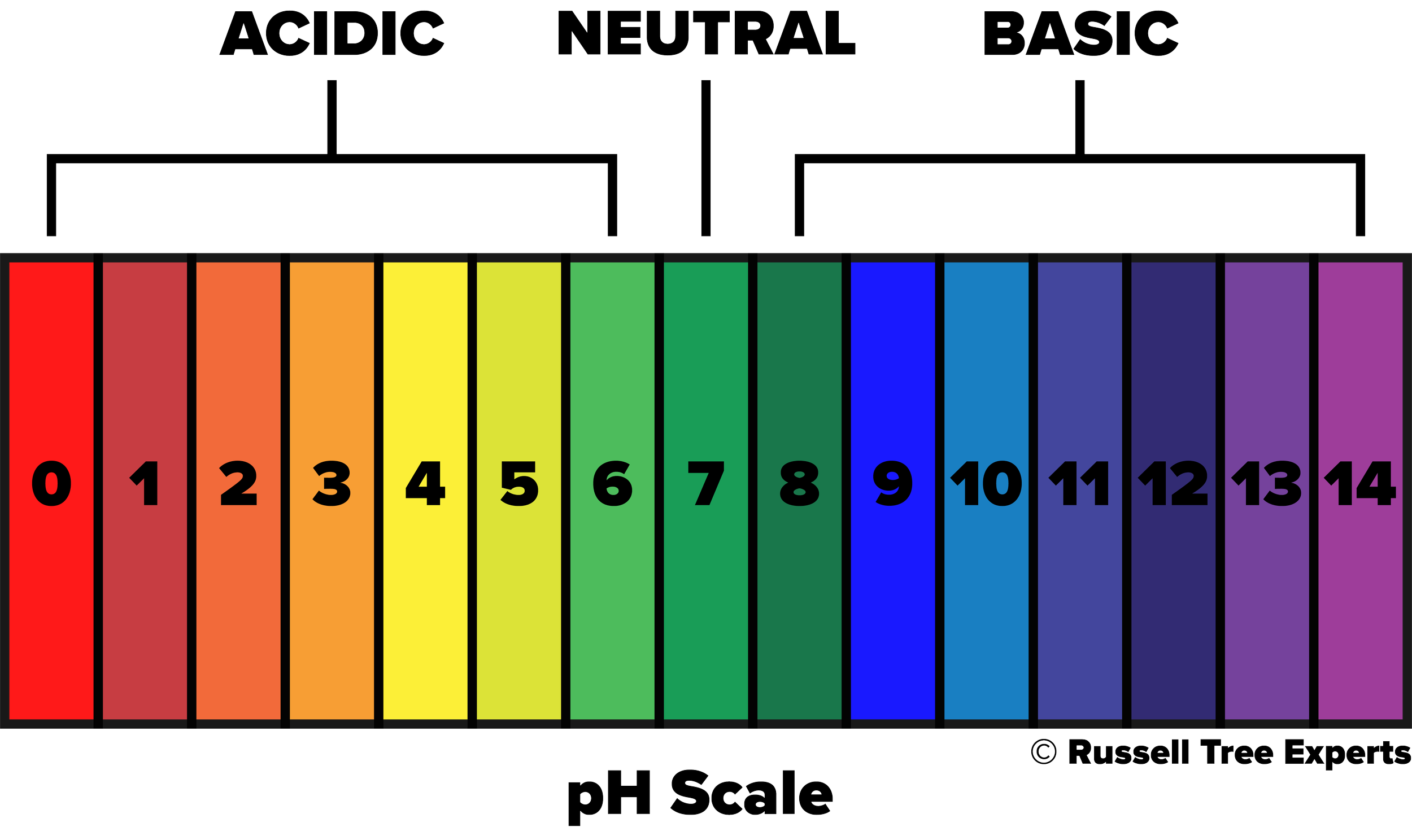
pH stands for “potential of hydrogen”, and is a measure of the acidity or alkalinity of a solution, ranging from 0 to 14 with 7 being neutral. A value below 7 is considered acidic while a value above 7 is considered alkaline (or basic). This scale represents the concentration of hydrogen ions present, with acidic solutions having a greater number of ions and alkaline solutions having fewer ions. In soils, that concentration of hydrogen ions is influenced by things such as the parent rock material that originally formed the soil, human activity, climate, and the presence or lack of organic matter. In turn, the resulting pH will influence the availability of nutrients essential for plant growth, microbial activity that helps with nutrient absorption, and soil chemistry that influences the breakdown of soil particles into more usable forms. Of the influencing factors mentioned above, parent rock material and the presence or lack of organic matter often go hand in hand and are the most significant influencers in our central Ohio landscapes. Central Ohio largely consists of limestone bedrock, which naturally has a higher pH than what’s preferable for most plants. So you might ask “Well, how is it then that any plants can be healthy and thrive in central Ohio?”. The answer is organic matter. In an undisturbed, natural environment like the forest, years and years of organic matter have formed on top of the infamous “Ohio clay” subsoil that we encounter in our backyards. The source of this organic matter comes from falling leaves, dead branches and trees, and dying organisms just to name a few, that collect on the forest floor year after year, decade after decade. These are all things we tend to remove from our landscapes to keep them tidy, which results in a lack of organic matter formation over time. For more on how to address this topic, check out our Arbor Ed article “Leave those Leaves!”

Nutrient Availability

Chlorosis in a pin oak tree in Bexley, Ohio
pH influences the availability of essential nutrients in the soil by changing their level of solubility. This simply means that pH will determine whether or not these nutrients are in a form that can be absorbed by the tiny roots and roots hairs of plants. Most plants will prefer growing in soil with a pH range between 6-7, slightly acidic to neutral. When the pH is out of its optimal range for a particular plant (generally too high in central Ohio), the plant’s growth may slow, it may lose overall health and vigor, or conditions like chlorosis can develop because that plant isn’t getting the nutrients it needs to carry out essential functions for growth. Chlorosis, or yellowing of leaf tissue, is a very common condition in central Ohio and can be seen most often with trees like pin oak, red maple, white pine, and river birch. It’s interesting to note that these are trees that are either native to Ohio or an adjacent region. In their natural habitats where organic matter is abundant, soil pH is lower and nutrients are readily available for uptake. The parent material, derived from limestone and having higher pH levels, does not affect the trees since the absorbing roots are largely growing in the organic layer above it. In our backyards however, carpeted with lawn but cleared annually of leaves, higher pH levels can quickly cause issues even with otherwise healthy trees.

Chart showing availability of essential elements at various pH levels
Microbial Activity
pH affects the activity of microorganisms in the soil. These microorganisms are essential for plant health, helping plants to absorb certain nutrients, or aiding in the breakdown of organic matter into available forms for your plants. Certain fungi, bacteria, or insects that benefit a particular plant will naturally thrive in the same pH that is ideal for that plant. Encouraging the proper pH for your plants in turn helps to foster a healthier population of these important helpers in the soil. In the same way that our own bodies are influenced by the health of our gut bacteria, plants rely on microbial activity in the soil. Without it, they can struggle to carry out essential functions for proper growth and overall health.
Soil Chemistry
Similar to nutrient availability, pH can affect the chemistry of the soil and determine whether or not the available nutrients will be absorbed by roots. It also influences the composition of the soil, helping certain minerals to break down into smaller molecules, ultimately affecting the charge of soil particles and the ability for the soil to hold on to essential elements that could otherwise be removed from the soil. A good example of this would be a soil’s ability to retain certain nutrients by preventing them from getting washed out of the soil by irrigation or rainfall. Acidic soils tend to be better at retaining more of these charged nutrients. It's no coincidence then that most plants prefer acidic or slightly acidic soils, as the lower pH makes those soils richer in nutrients and more “user friendly” for plants.
~
Soil pH plays a significant role in the overall health of trees, shrubs, and other plants in our landscape. A little bit of knowledge can go a long way in helping to understand the unique issues you may have in your central Ohio landscape. Below is a list of a few things you can consider in determining what’s best for your yard.
Have a soil sample from your yard submitted for analysis to help determine if there is a pH issue or nutrient deficiency.
If you know that you have higher pH levels, consider planting trees and shrubs that are more tolerant of alkaline soils.
Try incorporating more organic matter into your soil by allowing leaves to decompose in landscape beds over the winter, and consider enlarging groundcover or mulch beds around trees (less lawn)
Have root zone invigoration work done for trees that are struggling with nutrient deficiencies and/or soil compaction.
Apply pH lowering products to landscape beds with particularly sensitive trees or shrubs (note that this is something that generally needs done annually, as permanently lowering the pH of soil with additives is next to impossible).
As always, one of our 20+ ISA Certified Arborists® are happy to provide a free tree quote by giving us a call at (614) 895-7000 or by visiting RussellTreeExperts.com/Quote
Additional Tree Preservation Articles!


Walter Reins I Regional Manager, Russell Tree Experts
Walter became an ISA certified arborist in 2003 and has a degree in landscape horticulture. He has 25 years of experience in the tree and landscape industries and originally began working at Russell Tree Experts in 2011. Walter is also the owner/operator of Iwakura Japanese Gardens, a small design/build/maintenance firm specializing in Japanese-style gardens, and also offers responsible tree planting for all landscapes.
Tree Bracing 101

By Enrique Arayata
ISA Certified Arborist® OH-7252A
February 27, 2024
Trees adorn our landscapes, offering shade, beauty, and a connection to nature. However, ensuring their structural integrity and stability is vital for their longevity. Common tree preservation services that you may be familiar with are tree pruning and mulching. Other uncommon services could be cabling or trunk injections depending on the specific tree. However, throughout my 4+ years of working at Russell Tree Experts, one service that I have not heard of up until this year is tree bracing! Let's delve into the world of tree bracing to understand the process and benefits!
What is Tree Bracing?
Tree bracing? I couldn’t initially picture what this meant when first hearing it. Let’s first break down tree bracing into two words. Tree. Bracing. Tree: A woody, perennial plant typically having a single stem. I know what that is. Brace: To make (something) stronger or firmer, or to prepare for something difficult or unpleasant. So would it be a solid guess that tree bracing is the process of making a tree stronger? Yes! That’s exactly what it is!
Tree bracing is a tree preservation service to reduce the risk of two or more stems from splitting apart or to fasten a split or cracked union together, thus improving the overall structure of your tree. This is achieved through the installation of brace rods to prevent select tree unions from spreading or twisting apart or to prevent a split or cracked union from worsening.
This sounds great! Let’s start bracing every single tree to improve their overall structure! Well, not so fast. Only certain trees will stand to benefit from tree bracing. Just like fertilizing trees with manganese or iron to treat a manganese or iron deficiency, this service is only recommended for trees that need it, otherwise there would be either no noticeable effect or even a decrease in structural rigidity. Just like with pruning, which involves removing (or “wounding”) the tree’s crown of undesired parts, bracing is a semi-invasive procedure that involves installing large threaded steel rods into the trunk of the tree, so we only want to install brace rods when the net result is positive and beneficial.
What Trees Should Be Braced?
So what trees should receive tree bracing? Well, as mentioned earlier, trees with a split or cracked union could benefit from brace rod installation. A split or cracked union should be easy to spot, especially in the winter in the case for deciduous trees as there is little to no foliage. A limb can split or crack due to various reasons like included bark (bark that is partially or fully embedded into the tree’s wood), improper pruning, disease, and storm damage from adverse weather like lightning, heavy winds, rainstorms, and thick layers of ice just to name a few. A split or cracked union can also occur from structural defects like large, long, horizontally growing limbs and codominant stems. If the limb is large and long and growing more horizontal rather than vertical, there could be a lot of weight-related stress near the union that could cause it to split if the limb is not supported properly or if end-weight reduction pruning does not occur. Codominant stems are two similarly sized stems originating from the same point of the tree and growing in the same, general direction. They can be characterized as having a tight “V” shape near the union or by both of the limbs competing to be the central leader of the whole structure. This is not ideal for a tree’s structure as they are prone to splitting during adverse weather conditions. In scenarios where removal of the branch or tree is not viable or preferred, tree bracing serves as a beneficial solution or alternative.
What Are the Benefits to Tree Bracing?
Tree bracing can be beneficial for a tree as they can minimize movement, ensuring the splits or cracks do not occur or worsen, especially during strong weather. A tree with poor structure or a split or cracked union may not want to be removed by the owner as it is a specimen tree (a tree chosen as a point of focus in a landscape) that provides aesthetics, shade, real estate value, or more. For some trees, it may also be unnecessary to remove them simply because of one or two weak, treatable unions that could even be healed over time. Tree bracing aims to improve the tree’s structure at a choice union and to give its owner more peace of mind that a union or limb has a decreased chance of failing, which would potentially end the tree’s life, or to keep it from falling onto something like a house, car, driveway, or anything else near the tree.
The Tree Bracing Process
Here at Russell Tree Experts, we use the ANSI A300 Tree Support System Best Management Practices to help guide us! With that said, before tree bracing begins, we typically prune the tree's crown to reduce weight and then install one or more cables in the crown to support the suspect union(s) from above. Once these initial steps are complete, we install a specified size and quantity of brace rods in your tree in accordance with the ANSI A300 Tree Support System Best Management Practices. The size and quantity is determined by factors such as the tree’s diameter below the union, number of limbs or unions being cared for, and whether or not there is or is not a split or crack present. To install the brace rods, holes are drilled straight through the tree near the union. The threaded brace rods are then fully inserted and will have excess rod on both ends. The brace rods are then secured with one or more washers, a lock washer, and a nut on both ends. The connections are then tightened as firmly as possible. Afterwards, the excess length of threaded rod is cut off close to the nuts and subsequently peened off to prevent any movement of the nuts. And voila! The end result is a tree with increased structural integrity and a reduced chance of failing!
I talked with my coworker Jacob, our Training & Development Manager and an ISA certified arborist, read through the ANSI A300 Tree Support System Best Management Practices, and looked at other resources online to see if it was an acceptable practice to drill holes through a tree to install brace rods. After considering a variety of sources, the general consensus is that the overall impact is minor because almost all of the drilled wounds are filled with threaded steel rod (except a 1/32'' gap), allowing the tree to compartmentalize the wounds rapidly, and that tree bracing should be done on trees that have a bigger concern to worry about, such as two codominant stems or a split union.
Professional assessment is imperative to determine the necessity of bracing for a tree. Signs such as co-dominant stems or split or cracked unions should prompt owners to get an opinion from an ISA certified arborist. After researching, observing, recording, and photographing various trees being braced, I felt empowered and motivated to share my newfound knowledge on this not-so-commonly heard of tree preservation service! The main purpose of this Arbor Ed article is to educate and share my findings, but Russell Tree Experts does provide tree bracing services should you want or need it! Our regional managers are all ISA certified arborists and can provide a free inspection and quote! Below are some videos about tree bracing!
Learn More About Tree Bracing!

Enrique Arayata I Media Production Manager, Russell Tree Experts
Enrique is an ISA Certified Arborist® and FAA Certified Remote Pilot. In his free time, he enjoys working out, hanging out with his family and girlfriend, video production, photography, cars, technology, and cooking. Enrique has a BA in moving image production with a double minor in film studies and studio art specializing in photography from The Ohio State University, and an AA in web graphic design from DeVry University. His favorite tree is the Kwanzan cherry tree.
Root for Your Roots!
By Mitch Lippencott
ISA Certified Arborist® OH-6715A
October 30, 2025
A tree is only as healthy as its roots. Luckily, Russell Tree Experts offers a variety of root-health services! The powerhouse of our root-health services is the air spade. This excavating tool, when attached to a powerful air compressor, is capable of removing soil without damaging tree roots. (Full disclosure and fun fact: air spading is my very favorite type of tree care to perform!)
Root Collar Excavation
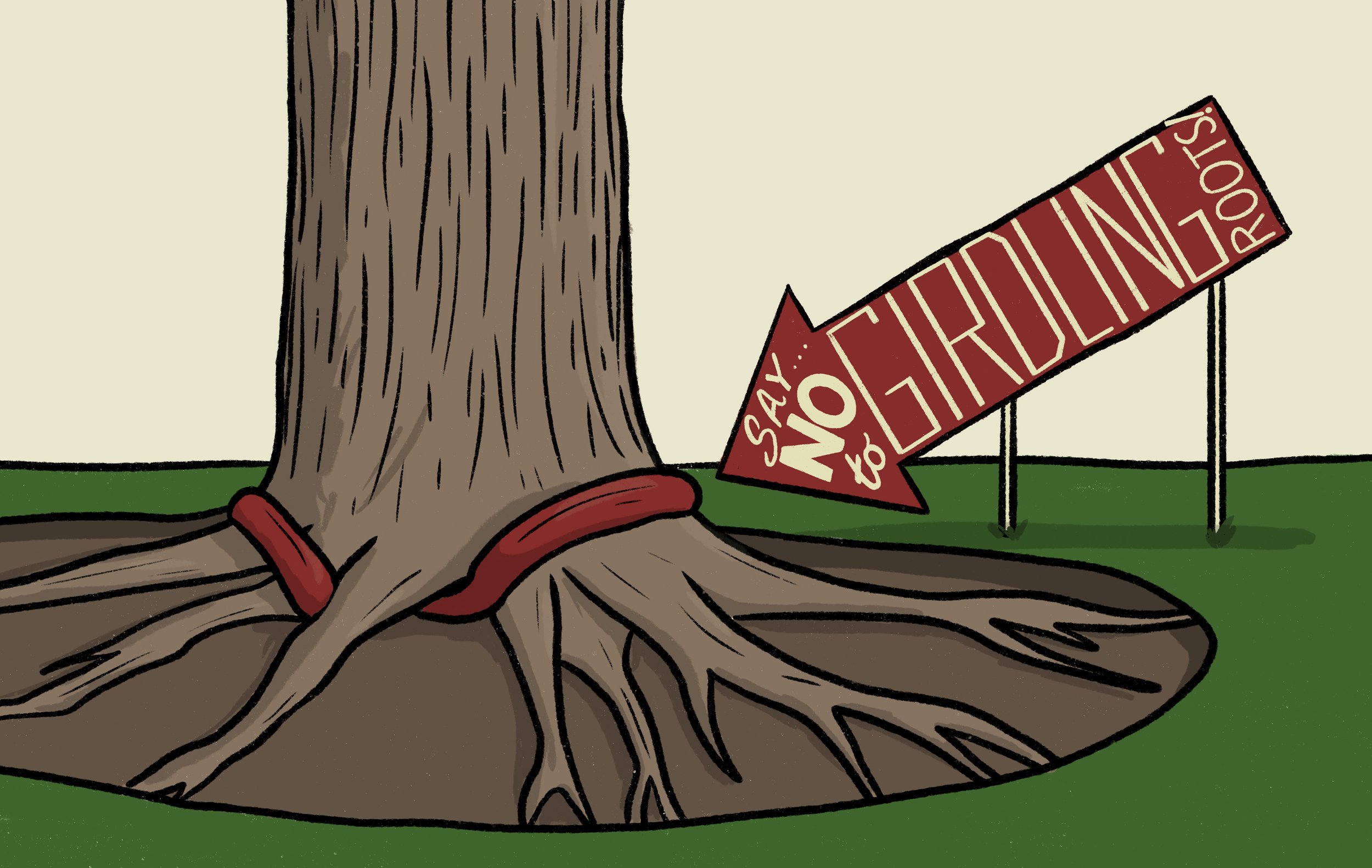
“Say NO to Girdling Roots!”
The most common root-health service is root collar excavation. In this procedure, our technician begins at the tree's trunk and removes soil approximately a foot outwards to reveal the root system closest to the tree. From here, roots that are squeezing the trunk or each other can be selectively removed, thus improving the passage of water and nutrients from the roots to the leaves. Once the soil near the trunk is removed, additional improvements can be made such as removing twine, burlap, or other nursery products left during planting, or correcting the soil depth of trees planted too deep. In my experience, this is the single most beneficial process to long-term tree health. Maples and sweetgums are especially prone to girdling roots. Stem girdling roots are no good because they inhibit the flow of water and nutrients for a tree. Signs of trunk girdling in other trees include lack of flare at the base (which indicates the tree is planted too deep), flat spots in the otherwise round trunk, early fall color and leaf drop, and excessive stress during summer drought. Root collar excavations should be performed in winter when trees are dormant, but when the ground is not frozen.
In limited quantities, roots can also be exposed and pruned to prevent damage to patios, driveways, or underground utilities. This method of root removal is far less damaging to tree health than traditional shovel/backhoe techniques. An ISA Certified Arborist® should always be consulted before this type of work is performed because excessive root removal can cause instability and rapid tree death. Air spade trenching and root removal can be performed year-round except in the case of some trees that may be highly stressed or experiencing severe drought conditions.
Even when a tree is planted at the proper depth, has plenty of soil space, and with no girdling, the trunk can still benefit from root-health services. We offer three related, but progressively more intensive options to treat the entire root zone and not just the area around the trunk.
Vertical Mulching

Vertical Mulching
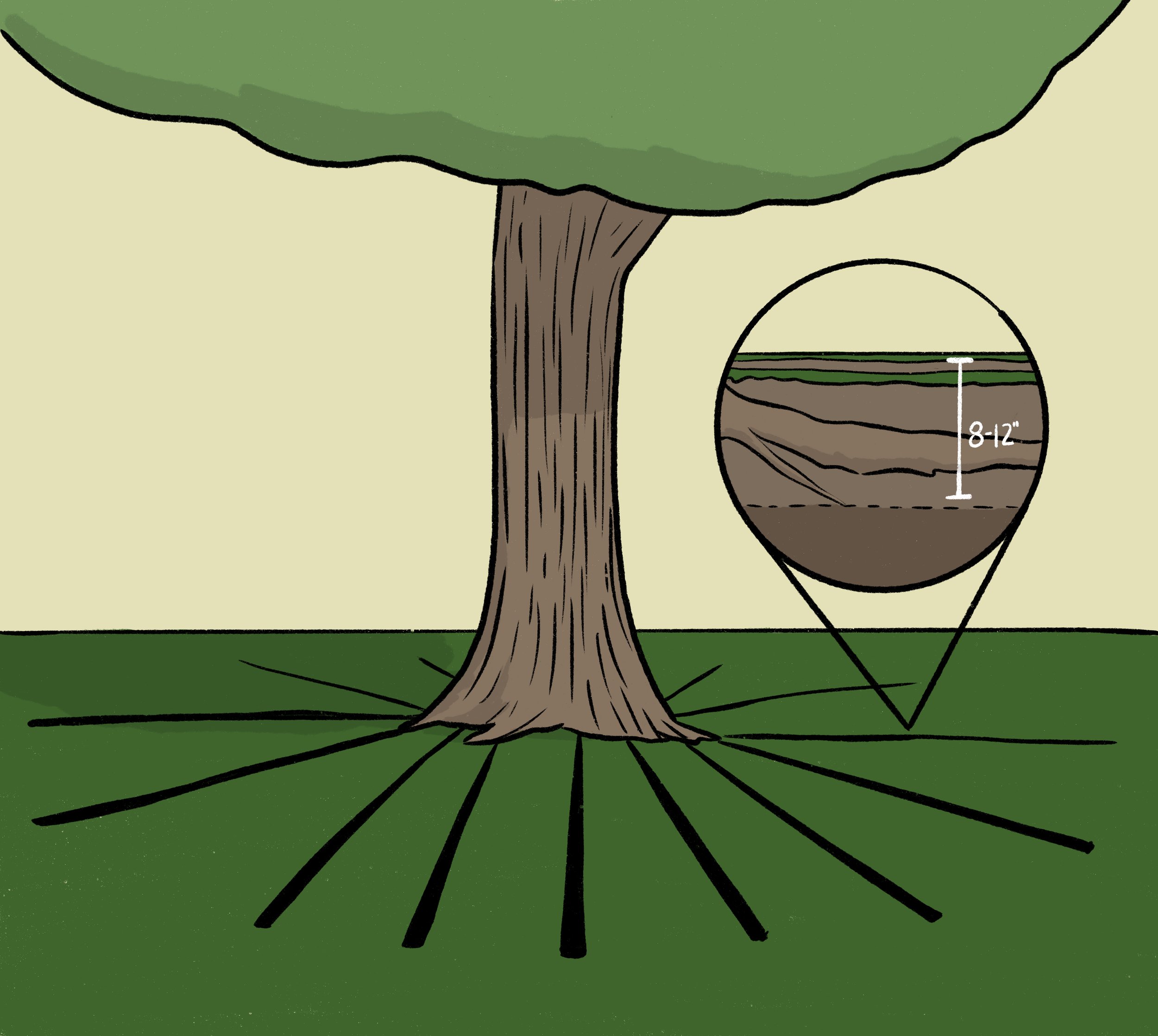
The first is vertical mulching, in which the technician removes soil in small bursts radiating outward from the trunk and extending the entire drip-line of the tree. The small but 8-12 inch deep cavities are then replaced with a porous and nutrient-rich compost blend. The result is a looser, more aerated soil structure for new roots and beneficial microorganisms to expand into. This service can be provided almost year-round (frozen ground/drought excluded) and is my go-to for mature trees on undisturbed sites that are beginning to lack vigor.
Radial Trenching
Radial Trenching
One step up, radial trenching is a similar procedure, but instead of small bursts, the soil is removed in continuous lines radiating outward the length of the canopy. I prefer this technique for new builds and areas with recent compaction, urban sites, and situations where old trees are beginning to decline. This is another almost year-round service.
Root zone Invigoration
The most extensive of entire root zone services we offer is root zone invigoration. In this technique, we use the air spade to remove all the grass, soil, or competing plants sitting on top of the tree's root system. We then correct any girdling and planting depth problems. Finally, we replace the entire space with our compost blend. This is a big, messy, expensive procedure but often the best solution when a valued small to medium-sized tree is being damaged by mowers, vandalism, or when there is an especially dense or aggressive plant growing above the root zone. I prefer this service to occur during winter dormancy, but in extreme cases, it can be performed any time roots are too restricted to function properly.
It’s easy to forget about your trees while they're sitting leafless in winter - but late fall and winter can be an incredibly opportune time to give them attention. Caring for your tree's roots is often more beneficial than pruning, spraying fungicides, or almost any other plant health care service. For a free tree work quote from one of our 25+ ISA Certified Arborists®, visit RussellTreeExperts.com/Quote or call us at (614) 895-7000!
Please note: This article was originally published on 1/29/2024 and was revised on 10/30/2025.
ADDITIONAL ARBOR ED™ ARTICLES!



Mitch Lippencott I Regional Manager, Russell Tree Experts
Mitchell Lippencott joined Russell Tree Experts in 2020 and has been in the green industry for over 20+ years with a diverse background ranging from working for a landscape design company, a retail garden center, and two municipalities! Mitch is an alum from The Ohio State University, a licensed pesticide applicator, a qualified tree risk assessor, and an ISA Certified Arborist®. Outside of work, he enjoys traveling, cooking, and gardening.
Tree Work in the Winter?
By Mike McKee
ISA Certified Arborist®
January 2, 2026
“Can we get this work scheduled before winter kicks in?” “Do you complete tree work during the winter?” These are questions that I am often asked as the hibernal or winter soltice has arrived. In many cases, winter is the only time we can complete certain projects. This is due to the fact that many diseases and insects are not active, canopy visibility is increased, impact on landscapes is lessened due to winter’s colder conditions, and wildlife regulations are not in effect. Winter can be the perfect time for tree work.


Nitidulid beetles can transmit oak wilt between March 31st and October 15th, making this an unideal time to prune oak trees. On the flip side, October 15th to March 31st is the preferred time prune oak trees as nitidulid beetles will not be actively feeding in the Midwest, thus reducing the risk of oak wilt.
Winter is an opportune time for tree pruning to minimize the risk of insect and disease issues. For oak trees and elm trees, oak wilt and Dutch elm disease respectively are two devastating diseases that are be transmitted by insects (and root grafts) attracted to fresh pruning cuts. (Learn more here!) These insects are typically not active during the winter months, thus making approximately October 15th to March 31st the preferred time to prune oak and elm trees. If pruning cuts are required outside of this time window due to reasons such as storm damage, we highly recommend painting the cuts to minimize the risk of attracting the insects that can spread these diseases. Other trees that can benefit from winter pruning is the Rosaceae family which includes apples, pears, plums, and other fruit-bearing trees. The pathogens that infect many of these trees with diseases such as fire blight and black knot are typically not active during the winter months. Black knot is also much easier to see and prune out when the leaves are not present on our plum trees. Sanitation between cuts and proper disposal of these branches is imperative to slow down the spread of this disease.


Another reason for performing tree work during the winter months is the minimization of turf impact. Winter typically provides an absence of perennial and annual plants that are often planted under trees. Clients also tend to store their yard art, furniture, and other items that could be damaged during pruning and removal operations. This allows for our crews to be more efficient as less time is spent preparing the drop zone and moving items to a safe location prior to beginning any tree work. Thirdly, the winter months tend to be colder which provides a harder, sturdier ground that is more resilient to damage from limbs or equipment. As always, we do place mats on the ground if turf impact is a concern regardless of the time of year. Therefore, winter pruning becomes much more productive since there are fewer items that could be damaged otherwise.
Certain job sites such as golf courses, public parks, and street tree pruning, just to name a few, are performed during the winter months as there tends to be less pedestrians, allowing for better focus, less interference, minimized risk, and overall a more efficient and safe work zone.

With the absence of leaves on the trees, it is much easier for the trained eye to identify structural issues. Some structural issues may require a cable or even brace rods to secure your favorite tree in your landscape. Winter is also a great time to observe decay, fungi, or other pathogens that may not be visible during the summer when leaves are abundant and present. It is also the best time to observe cavities throughout the tree that may not be noticed while leaves are present. Dead, diseased, and broken branches are also much more visible when the leaves are not present in the winter months. Our arborists are trained to be able to identify the difference between dead and live branches even during the winter months. This time also allows the arborist to make quick decisions on improving the structure of the tree while pruning in the most efficient time of the year.


One example of projects that must be completed during the winter is anything that falls under federal bat tree regulations. This typically includes public property projects where large trees need to be removed or the removal of any tree that could be a nesting site for bats. These regulations are intended to protect the Indiana Bat and the Northern Long-eared Bat, which are both currently endangered species. The importance of bats in our ecosystem is a story in itself. Bats typically overwinter in caves but move out to their nesting sites as early as April, therefore removal of possible nesting sites is regulated from March 31 through October 1. This is the main reason that the majority of our clearing operations and trail creation projects are completed during the winter months. To learn more about endangered bats in Ohio, read here!
As you can see, there are many beneficial reasons and scenarios to have tree work performed in the winter! Every day can be a good day for tree care. Check out the video below to learn more. To request a free tree work quote by one of our 25+ ISA Certified Arborists®, visit RussellTreeExperts.com/Quote or give us a call at (614) 895-7000 to speak with our friendly, local office staff!
[Please note: This article was revised and republished on 1/2/26 from its original publish date of 1/10/24.]
ADDITIONAL ARBOR ED™ ARTICLES!



Mike McKee | Regional Manager, Russell Tree Experts
Mike graduated from Hocking College in 1983 with a degree in Natural Resources specializing in urban tree care. He has been an ISA Certified Arborist® since 1991. Mike started his career in the private industry in 1985 before becoming a municipal arborist in 1989. He retired after serving thirty years before joining us at Russell Tree Experts in September 2018. His love of trees has never waned since trying to climb up the ridges of the massive cottonwood tree in front of his childhood home.
The Year of the Ugly Boxwood

Dear Reader, My good friend and arborist colleague Cat Baumgartner wrote the below article for the Inniswood Garden Society’s quarterly member newsletter (known as The Image). As soon as I read it, I knew that I wanted to share it with all our readers. Cat does a thorough job of describing the most serious problems we have had with boxwood this year and she explains them well and in simple terms. She has generously agreed to let us republish it. Photos within the body of Cat’s article are courtesy of Joe Boggs, OSU extension educator for Hamilton County.- TJ Nagel, Russell Tree ExpertsThe Year of The
Ugly Boxwood
by cat Baumgartner, Oakland Nursery
I don’t have a simple answer. Or there are multiple answers, and your boxwood might have one, or several of the problems at once.
I’ll go over the likely suspects for this year- including winter damage, or ‘winter burn’, Boxwood Leafminer, Volutella Blight, and THE Boxwood Blight.
I’ll start with winter burn. Boxwood store a lot of their energy in their leaves through the winter. When we get extreme cold and wind in the winter, the leaves will lose more moisture. If the ground is frozen or dry (or worse, both), the leaves lose moisture faster than the roots can replace it, and we get the ‘burn’, where they turn a straw color and die, staying attached to the stem. It wasn’t noticeable until early spring, because evergreens have a delayed reaction to stress. It’s why we can cut down trees for Christmas and they don’t immediately turn brown, often lasting months. We did have greater than normal rainfall last year, but the three months leading up to late December were on the dry side. So, the ground was dry leading up to the extreme cold event that hit in late December creating a Double Whammy. There was a lot more winter burn this spring than I’ve seen in decades. It looks like straw-colored sections in the shrubs, often in a random pattern.

Photo courtesy of Joe Boggs, OSU extension educator for Hamilton County.
Next, there are different blights out there that can affect boxwood. ‘Blight’ is a general term for a plant disease, typically caused by a type of fungus. Most of them are less common and less damaging than the blight striking fear in the hearts of gardeners that is Calonectria pseudonaviculata, called simply “Boxwood Blight”. There have been some isolated cases in the Greater Columbus area. The main symptom though is defoliation. You’ll have green leaves, then they’ll start looking funny, and rapidly progress and fall off the stem. In a matter of weeks, you can go from a healthy-looking plant to one with sections with completely naked stems. Definitive identification requires lab testing. Other blights can show similar symptoms, but since some are more treatable, confirming which type of blight your boxwood might have is recommended before removing plants. If you do have “Boxwood Blight,” replanting with more boxwood is not recommended, so confirmation of what kind of blight you have will also tell you what you can plant in that spot. Most of the damage we’ve been seeing is NOT “Boxwood Blight.”

Photo courtesy of Joe Boggs, OSU extension educator for Hamilton County.
Volutella Blight or Pseudonectria Canker (Pseudonectria buxi) can be damaging but is not necessarily a death sentence often just affecting individual stems and not whole portions of the plant. Symptoms can be seen if the stem is sliced into, showing dark brown streaking just under the bark. Most twigs infected with Volutella blight will turn straw colored and die. In most cases dead stems from Volutella canker can be easily pruned out and the remaining portions of the boxwood will fill in slowly over time.
This year we also had frost damage in May. If leaf buds are still tight, frost is not a problem. If the new leaves have emerged, but have ‘hardened off’, it is also not a problem. But if the new growth is timed so that it is new, fresh and tender, and then we have a late freeze, the new growth is damaged, turns that sad straw color, and is aesthetically at least, a problem. A healthy shrub can put out another round of growth, and it is not a long-term problem. Trimming off the burnt new growth is all that needs doing.
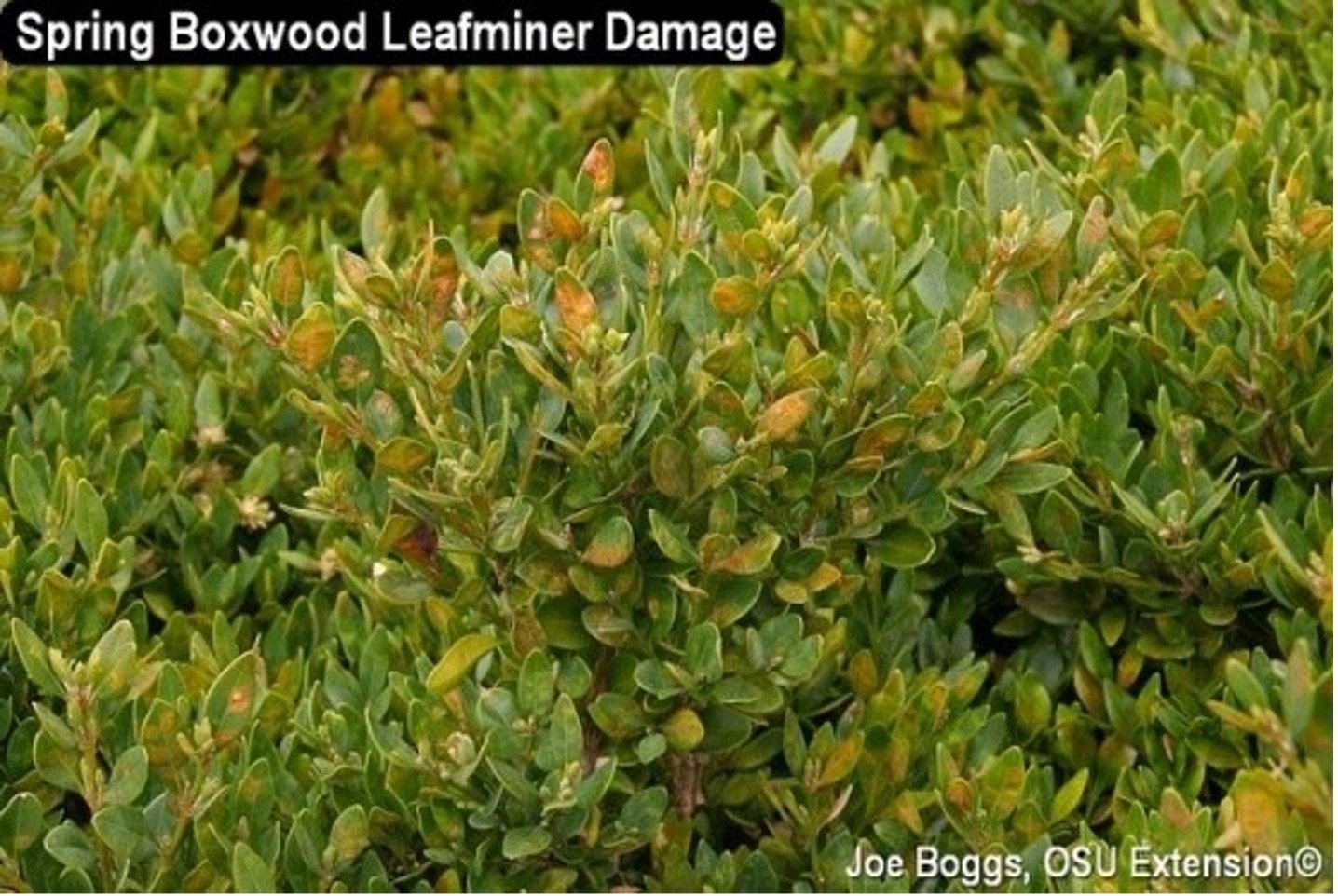
Photo courtesy of Joe Boggs, OSU extension educator for Hamilton County.
Boxwood Leafminer, an insect pest, is an ongoing problem. The damage from leaf miner is more generalized, an ‘all-over’ bad look rather than the chunky sections dying back. The adults lay eggs in the new growth in mid-spring, and as the larval stage hatches and begins to feed on the interior tissues, the leaves start looking bad, often having a blistered or bubbled effect, usually easier to see from the bottom of the leaf.
Preventative sprays can thwart adult leafminers from laying eggs in the new growth, but need to be applied as you see the new growth. Systemics applied in the Fall or Spring can also provide control but know that boxwoods are insect pollinated.
If you don’t have Boxwood blight, you have two options. Cut out the dead branches and let the plants regrow which may take three years or more to totally restore, in good condition, or replace the plants.
A Final Note…
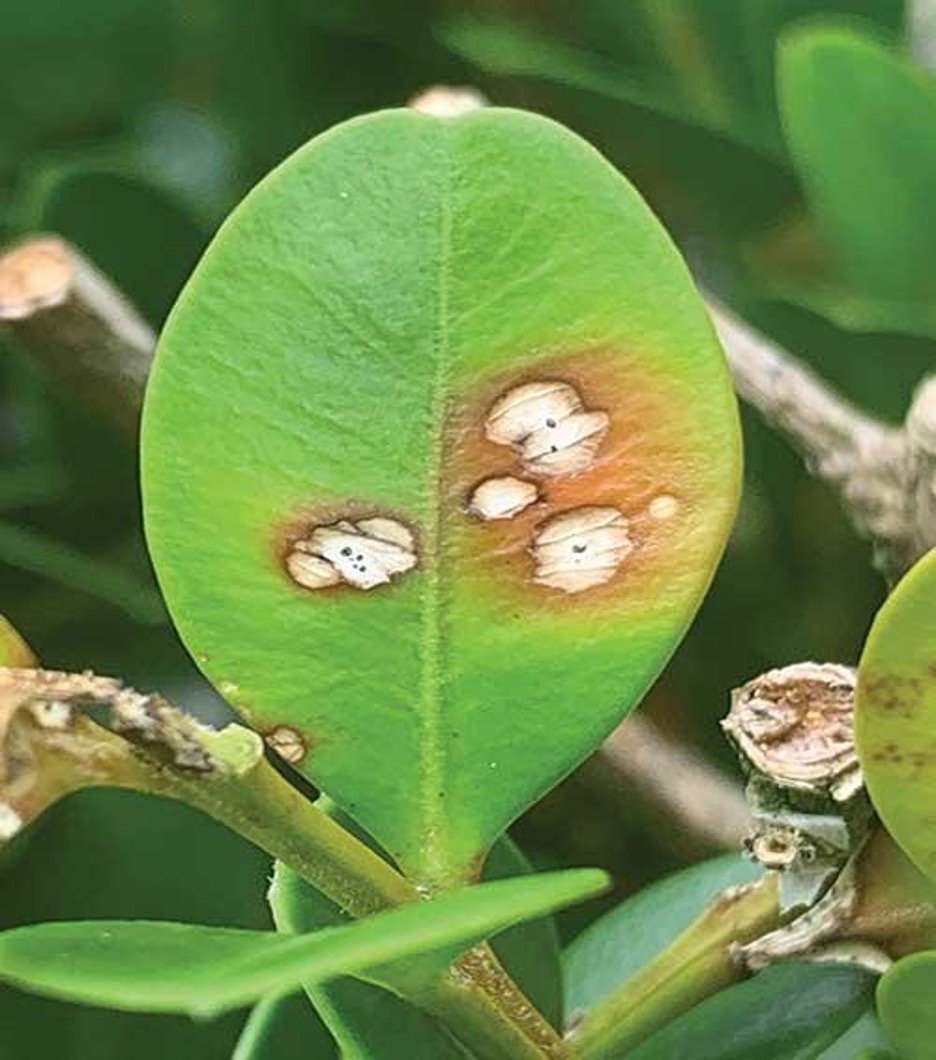
Since Cat wrote her article, we have had several boxwood shrubs test positive for yet another disease, Colletotrichum theobromicola (also referred to as boxwood dieback). This is a new disease for central Ohio and symptoms look similar to other blight diseases with the random dieback of twigs and straw-colored foliage. However, in addition to twig dieback, the pathogen also causes leaf spots that appear white in the center surrounded by dark brown margins as well as a bright black discoloration just beneath the bark along the twigs. The jury is still out on the best way to attempt to manage this disease but for now, good cultural practices such as removing symptomatic plants and sterilizing pruning tools between pruning different plants are the best-known strategies. Fungicides might also be helpful, but efficacy has not been determined. Laboratory testing should be used to confirm boxwood dieback because it can easily be misdiagnosed as other blight diseases.

As we continue to have more problems in the landscape with boxwood, it may be time to consider alternative plants that can achieve a similar function. Stay tuned for my boxwood replacement article later this Fall.
Sincerely,

TJ Nagel I Scheduling Production Manager, Russell Tree Experts
TJ loves trees. He is an avid gardener and plant collector. TJ graduated from The Ohio State University with a B.S. in Agriculture with a major in Landscape Horticulture and minor in Entomology. TJ is an ISA Board Certified Master Arborist and well versed in Plant Pathology. TJ joined Russell Tree Experts in 2012.
The Oak Wilt Defense
The fall season is approaching, and cooler weather is hopefully just right around the corner. With changing temperatures, all our trees are going to be going through a change as well. As we enter the dormant season, we will be gifted with…

By Lindsey Rice
ISA Certified Arborist® OH-6739A
November 6, 2025
Fall and cooler weather is here! With changing temperatures, all our trees are going to be going through a change as well. As we enter the dormant season, we will be gifted with vibrant leaf colors on all our deciduous trees. The dormant season doesn’t just refer to leaf senescence and the weather getting colder; disease-carrying insects also enter the stage in their lifecycle where they do not pose as big of a threat to our landscape. In recent studies it has been found that by October 15th (previously October 1st), the Nitidulid beetles that spread Oak Wilt disease will not be actively feeding in the Midwest, thus reducing the risk of infection with the fungal disease. Nitidulid beetles are insects that feed on the sap of trees. When a beetle feeds on the sap of an infected tree, it can move to a new susceptible oak tree and spread the disease. These beetles are most attracted to fresh open wounds, such as a new pruning cut.
All oak species are susceptible to the disease, but oak wilt is most damaging to the red oak group. The fungal infection causes xylem vessels to clog, leading the host of the disease to wilt and then die as quickly as within one growing season. Thus far, we have been unable to treat any infected oak tree with any success. We have treated some healthy trees in the area with a preventative fungal application, especially those close to a confirmed case of the disease.
Unfortunately, these beetles are not the only way that this disease is spread. It is also spread via root grafts of neighboring infected trees. Root grafts can connect oak trees underground and transmit the disease from more than 50 feet away. When there is a known infected tree in the vicinity of other oak trees, root disruption may be recommended, even after the infected tree and stump have been removed.
What can you do if you have Oak trees on your property? Be sure to have them pruned during the appropriate time of year between October 15th and March 31st. If you must prune an Oak tree outside of this window, ensure the wounds are sealed with latex paint to limit the beetles' ability to transmit the disease. If you suspect any of your trees have this disease, please call us, and we can advise you on the next step to confirm a diagnosis. Note that this is the same pruning window for Elm trees as well, so we may help limit the spread of Dutch Elm Disease.

Recently, we had ISA Board Certified Master Arborist® José Fernández, an oak wilt expert and a former RTE employee, visit our office and give a presentation on oak wilt disease to our arborists. Check it out down below!
Enjoy the colorful autumn season! For a free tree work quote by one of our 25+ ISA Certified Arborists®, visit RussellTreeExperts.com/Quote or call our friendly, local office staff at (614) 895-7000!
Please note: This article was updated on 11/6/2025, but originally published on 9/28/2023.
ADDITIONAL ARBOR ED ARTICLES!


Lindsey Rice | Operations Manager, Russell Tree Experts
Lindsey joined Russell Tree Experts in 2015 with a B.S. in Agribusiness and a minor in Horticulture from The Ohio State University. Growing up in northwest Ohio, she participated in various sports, band, and FFA which ultimately inspired her love for the tree industry. In her free time she loves to spend it outdoors with her husband and daughters.
———
Additional Resources & Sources for this Article:
“New Disease Control Measures for Oak & Elm Trees” Article (2021)
“Oak Wilt in Franklin County” Article (2017)
Anatomical Upgrades for Your Trees!

When you think of anatomy, what comes to mind? I think of humans specifically, and learning about the wonderful bone and organ systems in our body in middle school science class. You may think about the anatomy of various animals and how there is an abundance of variety depending on where you are in the world, but how often do we consider the anatomy of trees?

Surely trees are just trees, right? They grow without us even considering how or why they may grow in the ways that they do. We may be blissfully unaware of their anatomy or structure until we are confronted by the reality of a winter ice storm or a summer thunderstorm. Oftentimes, we may find trees with less-than-desirable structure having taken damage after these events, or worse, having caused property damage along with their own demise!

Two examples of trees with codominant stems
You may be asking yourself, what does poor tree anatomy look like? The answer to that question deserves its own article, however a majority of tree structural problems can be narrowed down to codominance, and that is what I want to address in this article. Codominance is when a tree has two or more similarly-sized trunks emerging from the same location and forming a distinct “V” shaped union. There are varying reasons as to why a tree may be codominant, and some species have natural habits that lend themselves to becoming codominant.

Visual representation of codominance by Jacob Nau
To give you a visual representation of codominance, bring your elbows together in front of your chest, with your palms facing you. Now, spread your wrists apart, keeping your elbows together to form a distinctive V shape. Opening up your fingers you can picture the crown of a tree. Seems like an awkward, weak position to be in, right? Now, imagine adding the weight of tree branches, leaves, rain and 15-50 mph wind gusts, etc. (trees can go through a lot!), while you strain to keep your elbows together, and you can begin to imagine why a codominant union (V-shaped union) in a tree is not anatomically advantageous.
So what can be done to fix, or even prevent, codominant structure in a tree? The answer to this question largely depends on the age of the tree. If your tree is young and generally under the age of approximately 20 years, then a structural pruning plan can be performed to help guide the tree out of its codominance over the next 5-10 years.
However, if your tree is large and mature, there are a number of services that can be used to help support your tree's anatomy. Those services include:
End-Weight Reductions
Reduce the length of long, lateral branches in the tree’s crown to reduce the weight and levering effect on the codominant union below. Typically performed before or with a cabling support system.

Jacob Nau performing an end-weight reduction on a tree.
Cabling Support System
Install a single, or multiple, static steel cable(s), or dynamic rope cable(s) in the tree’s crown to support the codominant union below.
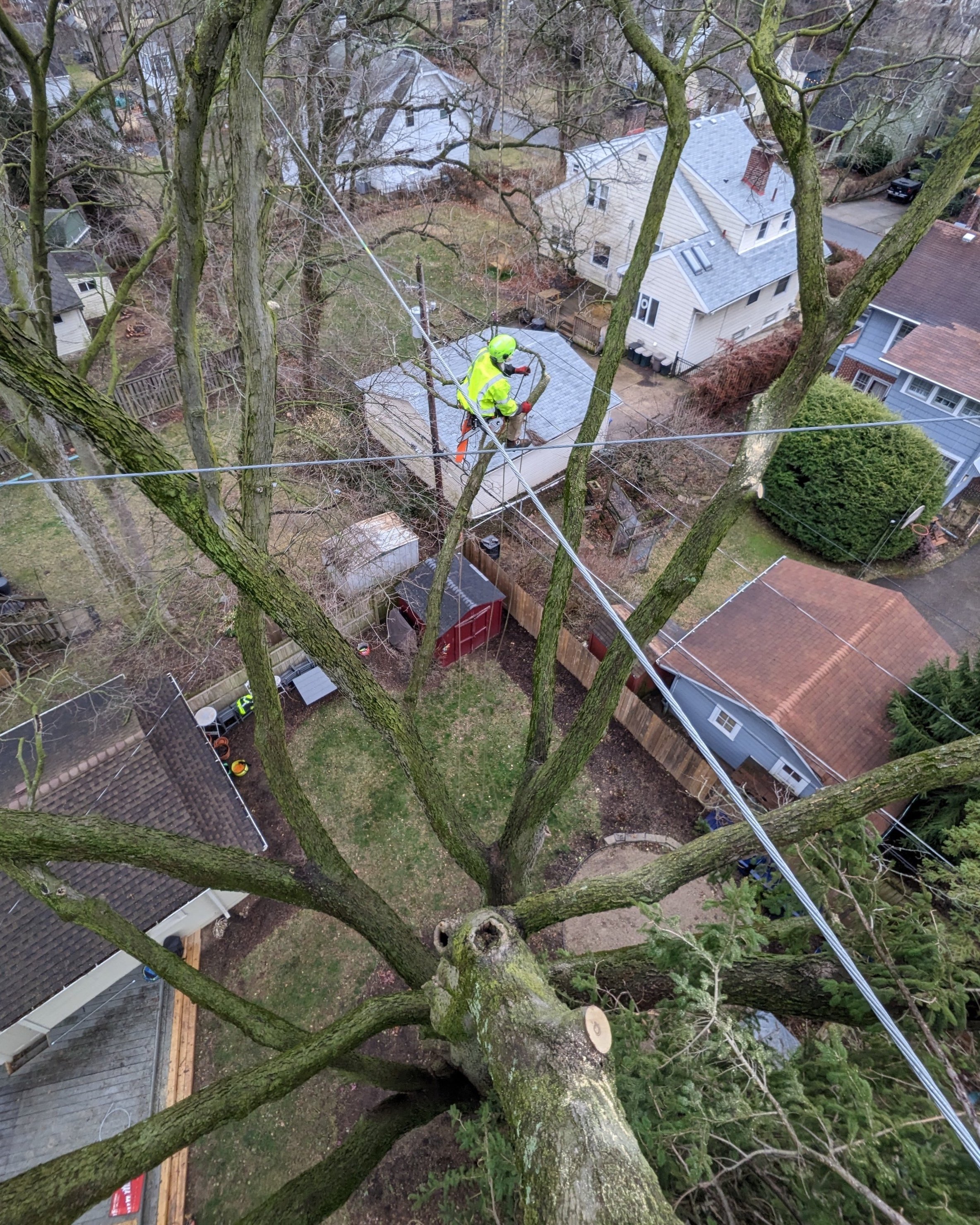
A static cabling system in a Hackberry tree in Clintonville, Ohio.
Through-Brace Support System
Install a system of steel threaded rods into the codominant union to strengthen that area of the trunk. This is usually performed in-tandem with a cabling support system.

Top Left: Final result of a brace rod installation. Top Right: Close-up of a singular, installed brace rod. Bottom Left: Side profile of two installed brace rods. Bottom Right: A brace rod about to be inserted.
Propping Support System
Install a single, or multiple, semi-permanent wood prop(s) to support a lower, large lateral limb to ease the strain on a codominant union. This is a more unique way to support the tree's anatomy, specifically for low, long, and lateral limbs that are difficult to support with a cabling system.

A tree prop supporting a limb from the Angel Oak tree in South Carolina.
All of the services listed above, including the young-tree structural pruning, are services we perform at Russell Tree Experts. I highly encourage you to look out your window and consider your tree's anatomy! Can they be supported? Is it time for an anatomical upgrade? If so, give our local office a call at (614) 895-7000 and we will happily connect you with one of our Regional Managers to assist you in determining the best course of action for your trees!
Sincerely,

Jacob Nau I Training and Development Manager, Russell Tree Experts
Jacob is an ISA certified arborist and joined RTE in 2018. He has been involved in tree care for over 10 years. He enjoys climbing trees both recreationally and professionally and in his free time, he loves spending time with his family.
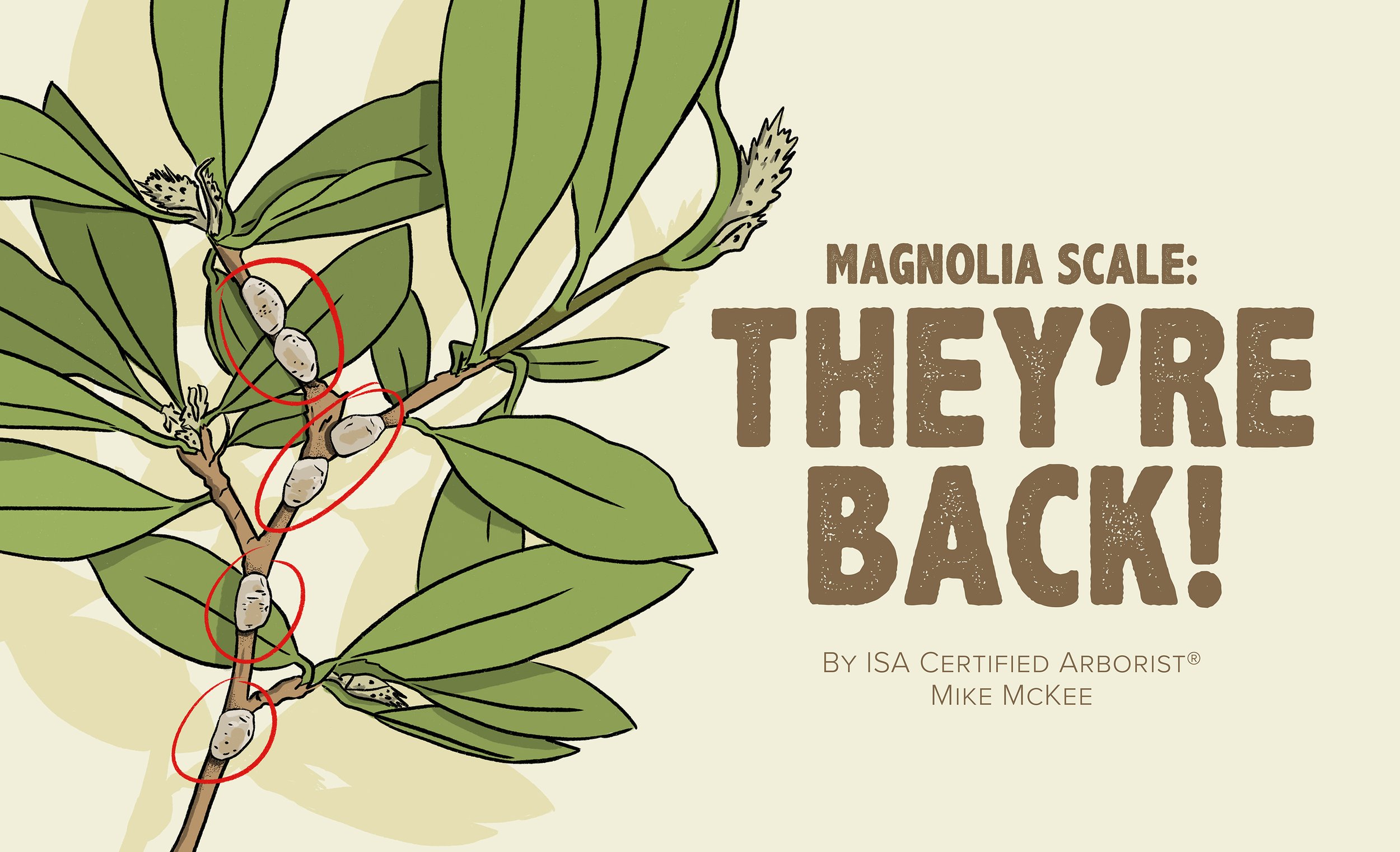
Magnolia Scale: They're Back!
By Mike McKee
ISA Certified Arborist®
August 7, 2025
Is your magnolia tree turning black? Is it attracting ants, flies, bees and wasps? Is there a sticky substance covering the leaves and everything under the plant? If you look closely, you will also see white blotches on the twigs throughout the tree.
Over the last few years, this recent invasion of magnolia scale in central Ohio has been intense and unlike what I have observed back in the 2010s. They happen to thrive in warm summers with abundant moisture. The population is building and is very apparent this year.

The insect overwinters on twigs and is inconspicuous to the untrained eye until it starts feeding and producing honeydew. Honeydew is the very sweet, sticky substance secreted by the insect that in turn coats the leaves and anything under the plant. This is what attracts other insects to the plant. Eventually the insect covers itself with a waxy coating that protects it while feeding. These are the white blotches we are now seeing on the plants starting early summer through August.
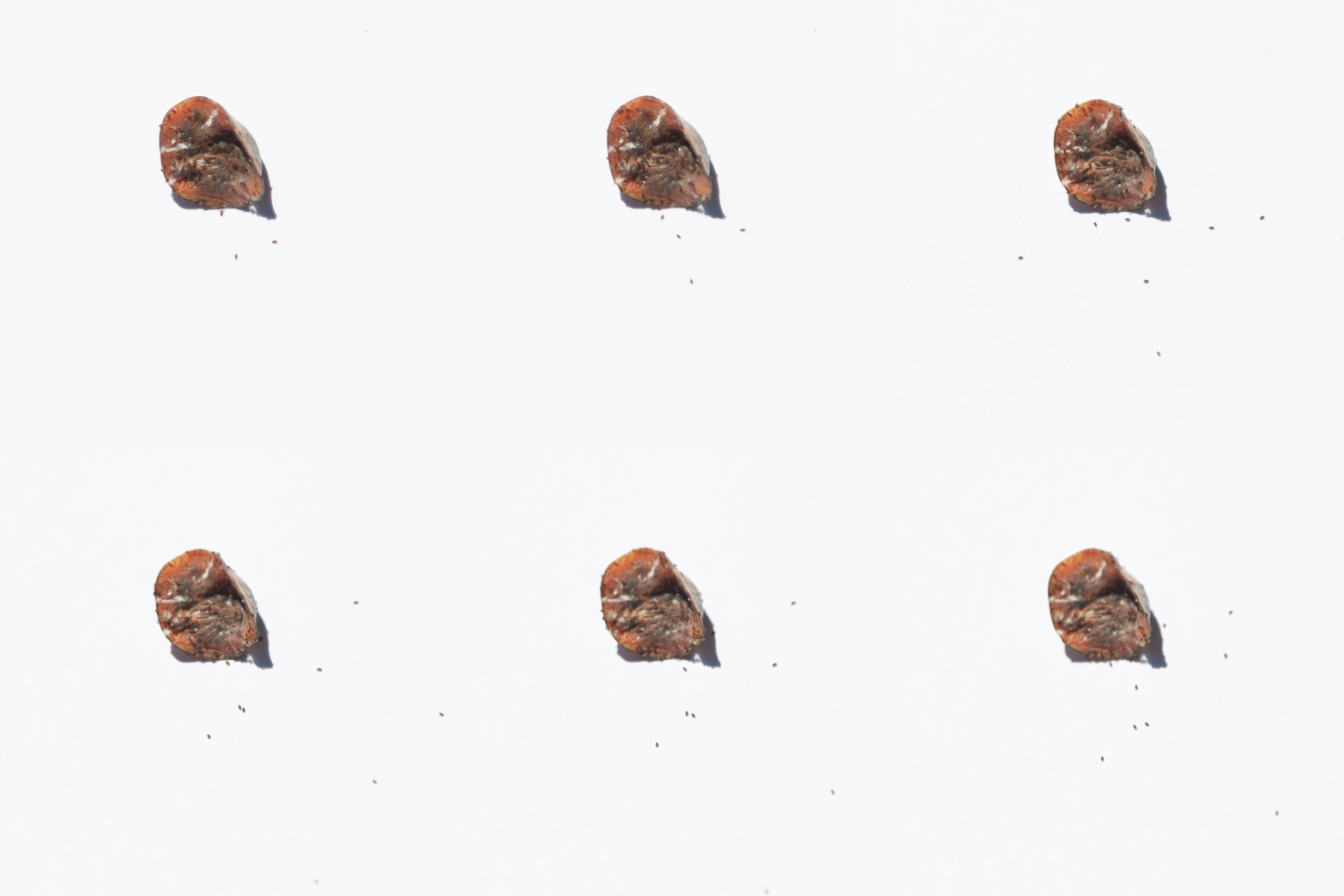
Nymphs emerging from a recently plucked adult Magnolia Scale
The juvenile stage of magnolia scale emerges from these waxy coatings (the adults) in mid to late August through September as crawlers. This is when scale are most vulnerable to insecticides and we attempt to control their population. We typically recommend 2 to 3 topical insecticide sprays during this period spaced a couple weeks apart for the best control of the insect due to the extended emergence. During seasons with larger infestations, it is unlikely that insecticide sprays will completely eliminate this insect. The overall goal of plant healthcare is to keep the population at a threshold that minimizes damage and maintains aesthetics of the host tree.
If the tree’s owner is concerned about the population of magnolia scale before the appropriate window for insecticide applications is open, there are a few DIY options that can be done. First, the insects can be scrubbed off from branches and leaves in June and July. This is when the adults are visible before the hatch begins. You could also prune out heavily infested Interior branches to help reduce numbers. Be sure to completely dispose of any pruned branches as the insect will still hatch. Spraying the trees with a medium pressure garden hose can also eliminate some insects as well as reduce the honeydew on the plants.
The insects feed by sucking sap out of the tree. If left untreated the scale population can grow to levels that will cause decline and eventual death in your tree.
Another issue with magnolia scale is the occurrence of sooty mold which is a byproduct of the honeydew produced by the scale. It is a black fungal growth which is what most people notice first. Although this generally does not harm the tree, it is very unsightly.
In closing, if you suspect your magnolia tree has magnolia scale, give us a call at (614) 895-7000 or visit RussellTreeExperts.com/Quote and one of our 25+ ISA Certified Arborists® will visit your property to come out and complete an inspection! From there, we can recommend the best management strategy for your magnolia tree. Timing is everything.
Please note: This article was originally published on 8/9/2023 and was revised and republished on 8/7/2025.
ADDITIONAL ARBOR ED™ ARTICLES!



Mike McKee | Regional Manager, Russell Tree Experts
Mike graduated from Hocking College in 1983 with a degree in Natural Resources specializing in urban tree care. He has been an ISA Certified Arborist® since 1991. Mike started his career in the private industry in 1985 before becoming a municipal arborist in 1989. He retired after serving thirty years before joining us at Russell Tree Experts in Sept. of 2018. His love of trees has never waned since trying to climb up the ridges of the massive Cottonwood tree in front of his childhood home.
English Ivy: the Silent, Selfish Assassin

By Krista Harris
ISA Certified Arborist® OH-6699A
February 20, 2025
English ivy climbing the trunks of your trees can look so natural and attractive in the landscape. It is a lovely and effortless groundcover with glossy, emerald, evergreen foliage. However, English ivy is also a non-native species in the US and will clamber defiantly into your tree’s canopy, threatening the tree’s ultimate survival. You may be tempted, as I have been, to allow this beautiful European invader to engulf the scaffold limbs of your defenseless trees, but please do not be misled by this aggressive charmer. English ivy seeks to deprive your trees of water and nutrients at first, and over time, envelop the tree’s crown and hinder its ability to create food for itself through photosynthesis. The tree is ultimately outcompeted by the vine and slowly declines, while the ivy thrives on its new framework, acquiring all the water, soil nutrients and sunlight for itself.
English ivy can be a very heavy burden for your tree to bear. It can ascend 100’ and achieve 12” diameter stems. The sheer weight can weaken limb attachments, causing failure of limbs or entire trees, especially in wind or snow events. Vigorous vines can block natural air and sun penetration to the bark and encourage pest and disease development. When bark is thickly concealed by vines, tree decay and diseases are also very difficult to observe and can go unnoticed.

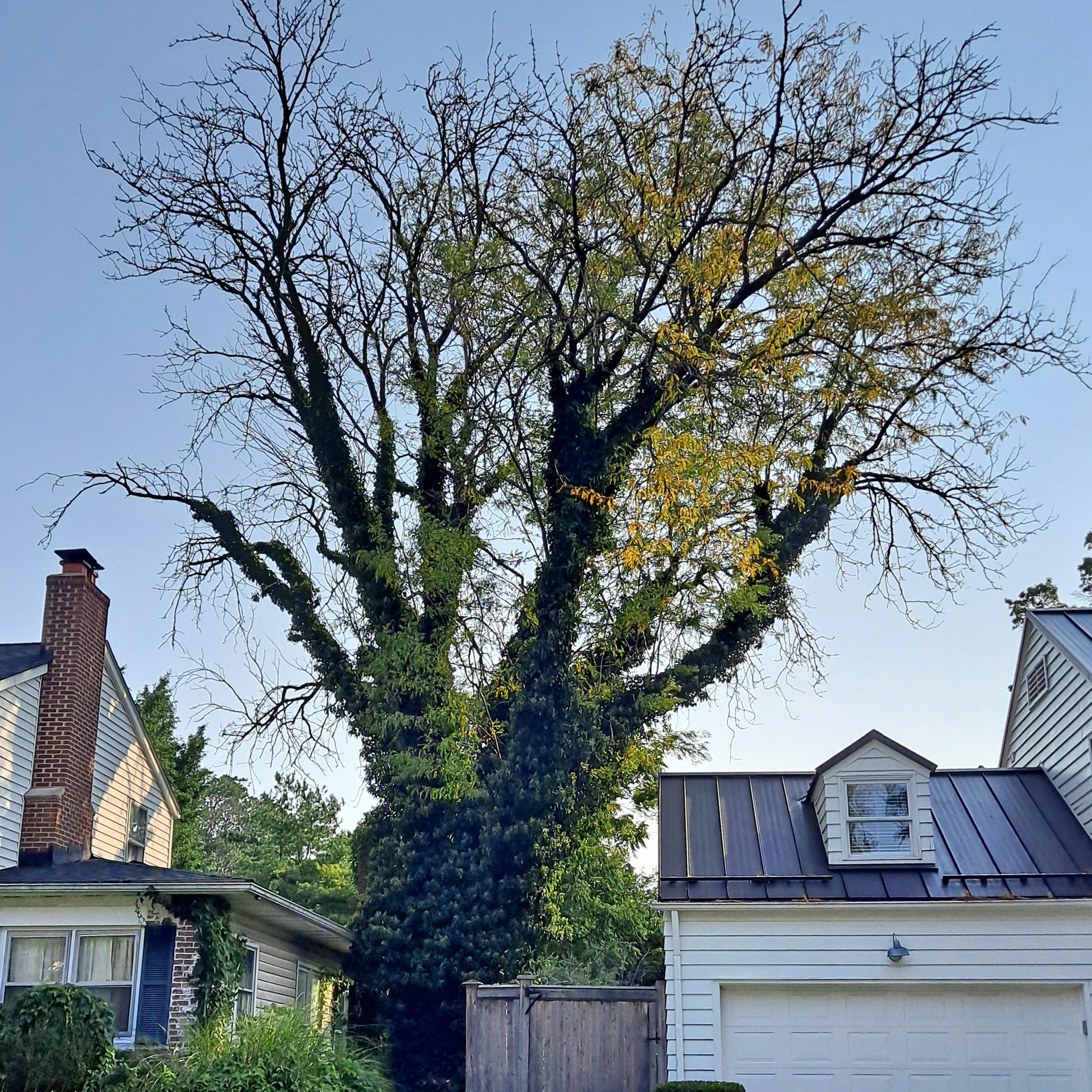
If you have unwittingly endangered your trees by allowing English ivy to establish itself on their bark, take action now to exterminate this clingy aggressor. The vines should be cut at the base of the tree, removing a 2-3” section from each stem. Repeat this process at 4-5’ up the trunk. Carefully spraying or painting the section still attached to the roots with herbicide will help ensure the ivy does not regrow. Maintaining all English ivy 3-4’ away from the trunk is also a great habit. Do not attempt to remove the severed vines from the tree’s bark. This very grippy greenery is firmly attached using modified stem roots called “hold fasts” and removing the vine will remove the tree bark as well. The remaining, now dead, vines can be safely removed without causing damage to the bark in 2-3 years, if you find them unsightly.

Process to abate English ivy from a tree

4 weeks after Russell Tree Experts abated the English ivy on a large American sycamore specimen
For a free tree quote from one of our 20+ ISA Certified Arborists®, please give our local office staff a call at (614) 895-7000 or visit RussellTreeExperts.com/Quote! One of our skilled arborists can tackle this important, tree life-saving task or any other tree care needs! Your trees will express their gratitude with many more years of healthy, unrestricted growth!
[Please note: This article was revised and republished on 2/20/25 from its original publish date of 3/10/23]
ADDITIONAL ARBOR ED ARTICLES!


Krista Harris | Journeyperson, Russell Tree Experts
Krista grew up in the central Ohio area and became an ISA Certified Arborist® in 2017. She graduated from The Ohio State University with a Bachelor of Science in Crop Science and a minor in Plant Pathology in 2000 and has been in the green industry ever since. Her favorite trees are the American sycamore, American beech, and giant sequoia. [BS in Horticulture Crop Science, The Ohio State University / ISA Certified Arborist® OH-6699A / ODA Comm. Pesticide Lic. #148078]
Why is Tree Pruning Important?

By Enrique Arayata
ISA Certified Arborist® OH-7252A
June 26, 2025
Tree care comes in many forms: insect and disease management, fertilization, cabling, lightning protection, removal, and last but not least, pruning! Today, let’s talk about the importance of tree pruning and the various reasons why a tree may need pruned.
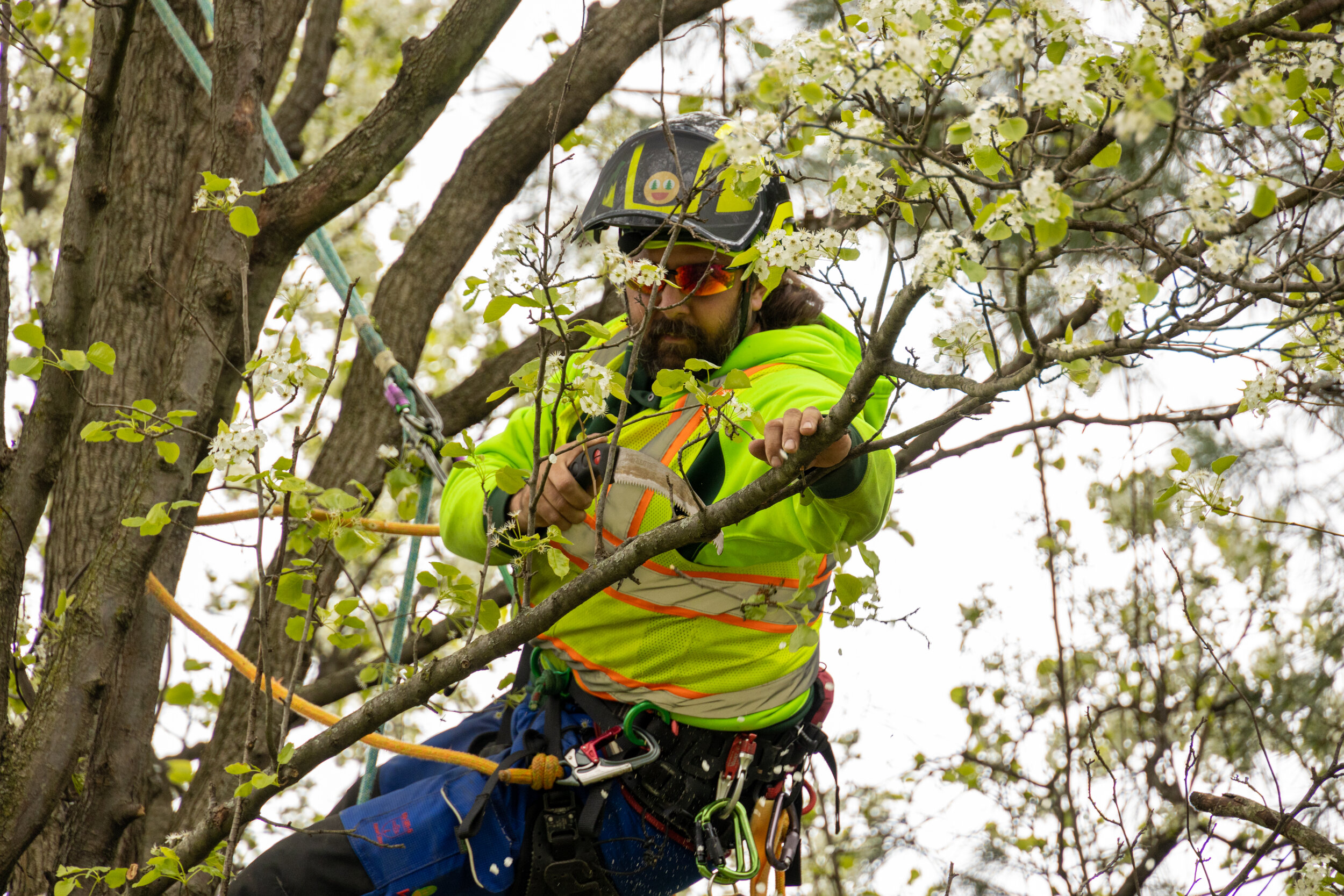
ISA Certified Arborist Andy Bartram making a tree pruning cut!
Tree pruning is the selective removal of branches from a tree with the general goal of improving the overall quality of the tree, whether it be for safety, health, structure, fruit and flower production, aesthetic appearance, and more. Some may view pruning as unnecessary as there are hundreds of thousands of beautiful, healthy, and unpruned trees out in the world that have grown successfully without human intervention. Although this is true, there are also many trees out in nature that are dead, dying, or unpleasant to look at. A native volunteer tree out in nature grew naturally from one of hundreds of seeds and competed with all the surrounding trees for resources. They are tough and independent and do not need any human assistance. However, the same cannot be said for a single tree or sapling planted by a human in a site where that tree might not have ever grown there naturally. These human planted trees often need extra care like watering, mulching, and fertilization in order for them to be vigorous, healthy, or aesthetically appealing.
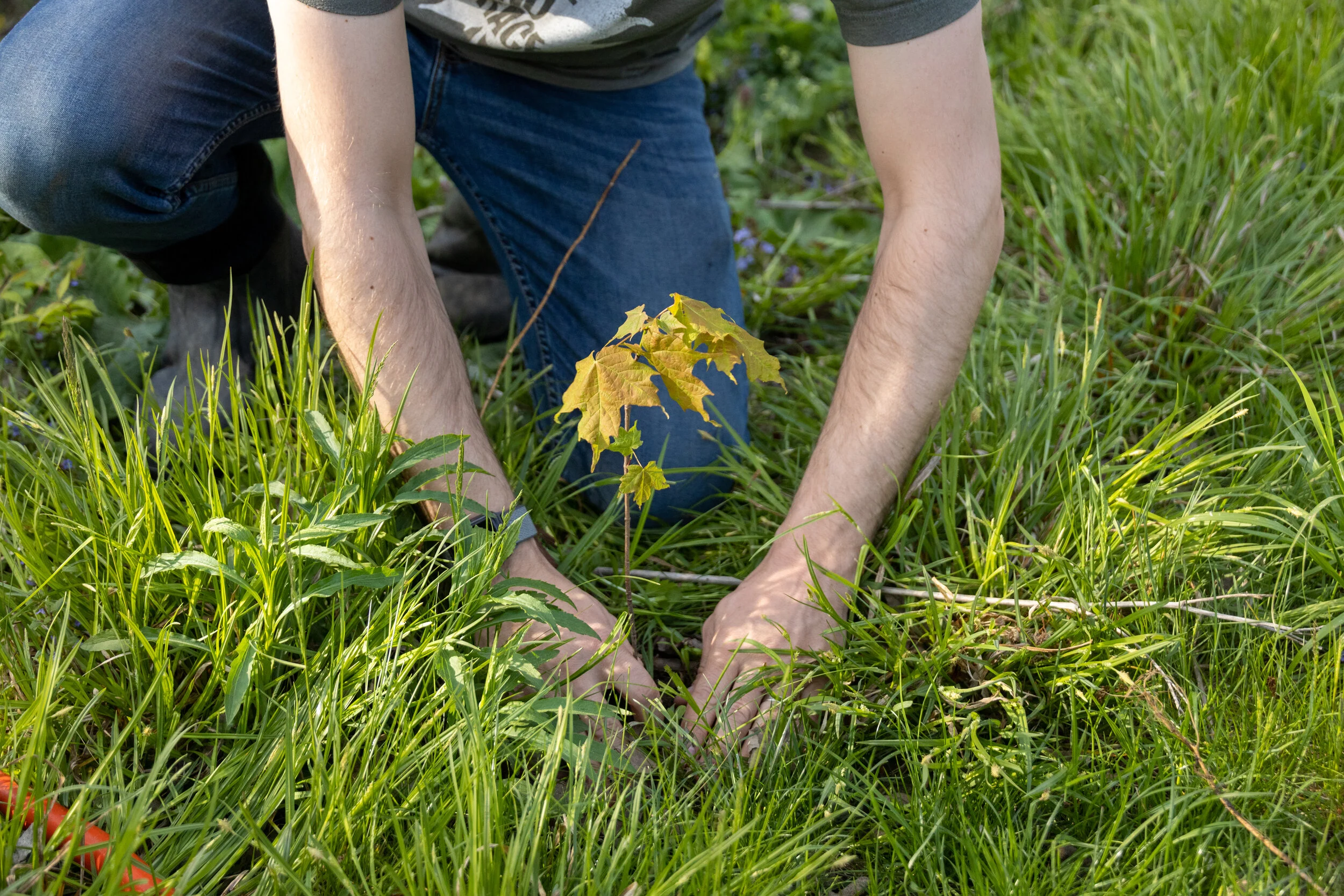
A tree sapling planted during one of our TREE FOR A TREE® tree planting community events!
“Pruning” differs from “trimming” as pruning prioritizes a tree’s health and structure. Only the necessary limbs are removed and aesthetic appearance is a byproduct. With “trimming”, plants, shrubs, hedges, and trees are trimmed with the goal of improving their appearance. Depending on the individual trimmer, health and structure may be sacrificed in order to attain a certain look. Trimming can also cause problems as limbs might not be cut back to a spot conducive for compartmentalization and may invite pests or diseases to invade the tree.

Our team member Andrew making a tree pruning cut!
A tree may need to be immediately pruned if it poses a safety concern, such as in the event of storm damage. If there’s a large or dead limb overhanging something significant such as a house, car, sidewalk, or valuable lawn ornament, that limb may need to be preemptively removed as it could be hazardous during a storm. Additionally, codominant stems, two stems with a tight V-shaped attachment at the union, are an example of limbs with safety concerns as this can lead to included bark, lead to uneven growth in a tree, and also be a structurally weak point in a tree that may fail in high wind, snow, or ice events.
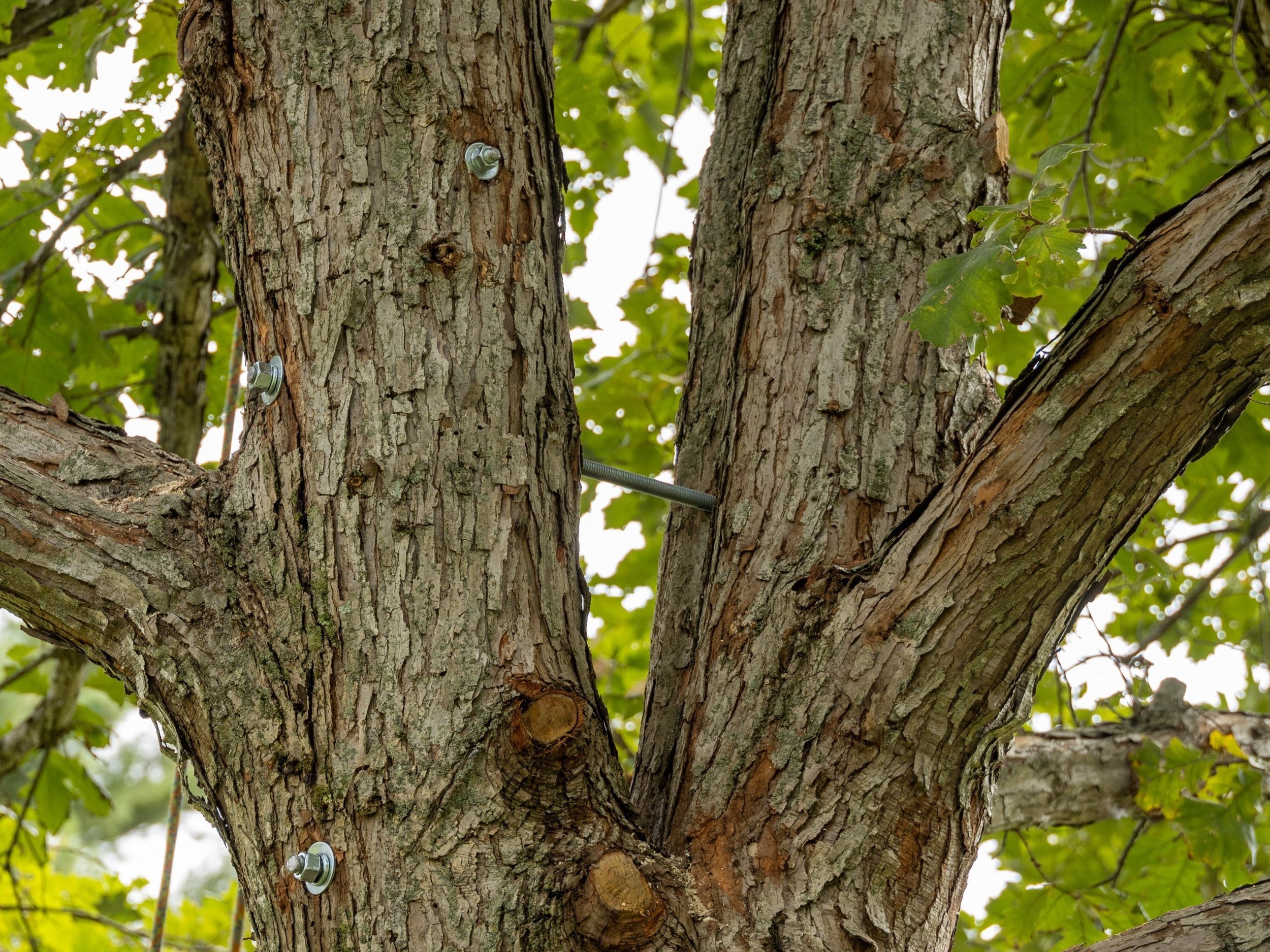
An example of a mature codominant limb. Instead of pruning it at this stage of the tree’s life, the owner decided to have brace rods installed to add additional support to this union.
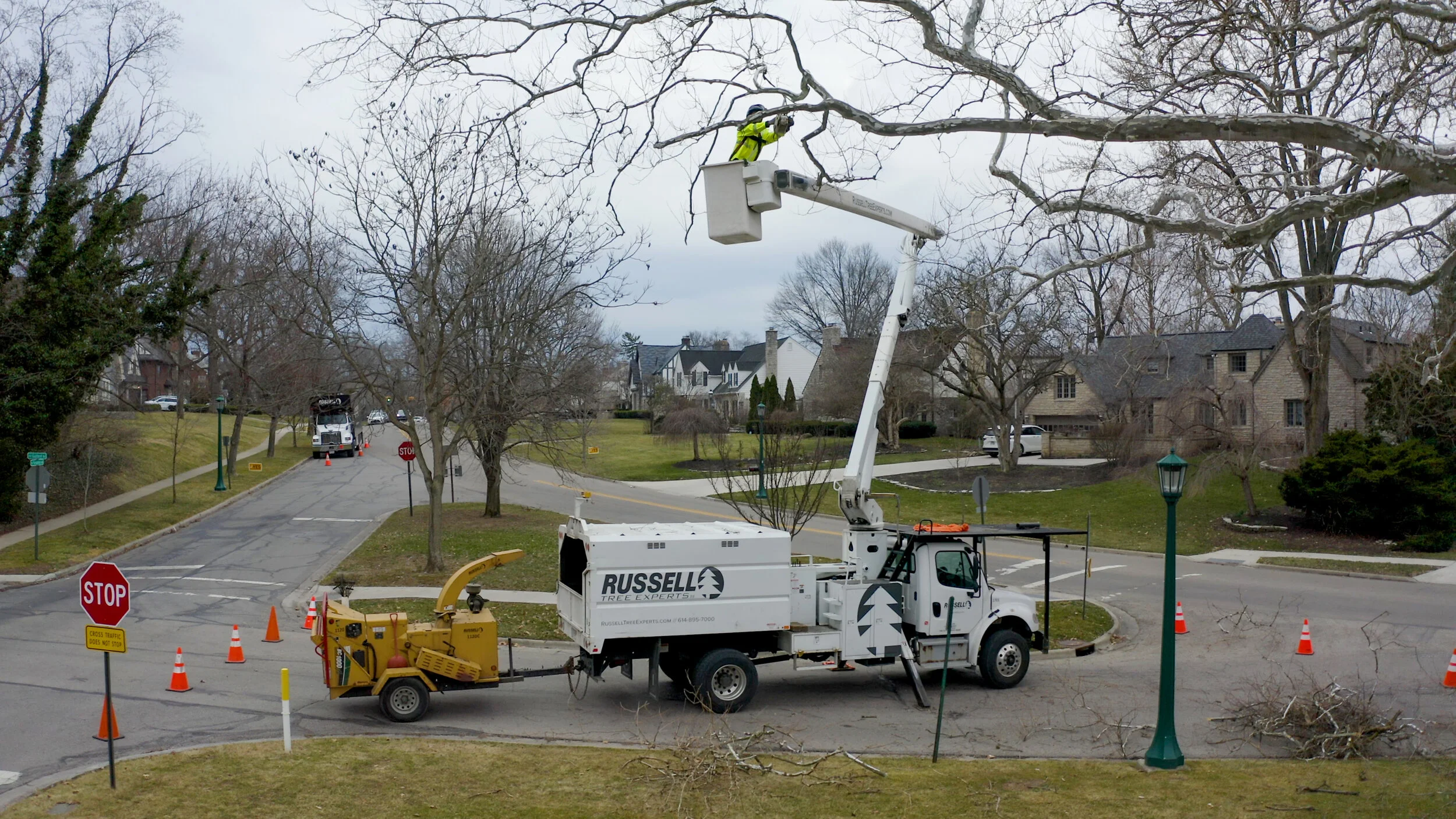
Our team member Mac pruning a dead limb overhanging a busy road.
If there are any limbs with clearance issues, it may also need to be removed. This applies to limbs that are touching any house siding or utility lines or any low hanging limbs that impede lawn activities or pulling into a driveway.
Another important aspect of tree pruning is for health and structural reasons. A tree’s overall health and structure will increase by removing any dead, dying, damaged, disease-infected, codominant, or crossing limbs. Removal of these limbs promotes new growth and increased flower and fruit production. When a tree is pruned, nearby trees, shrubs, plants, and grass can also benefit by receiving more resources like sun, water, and air. These additional resources can improve aesthetic appearance and promote new growth. If the pruned tree was also close to a window you may even have a better view from inside your house or more sunlight coming in during the day!

Unruly lilacs in need of pruning.
As mentioned earlier, tree pruning can improve aesthetic appearance. Pruning does not focus on looks but removing dead, dying, broken, weak in structure, or clearance-issue limbs generally makes trees look neater, cleaner, and overall better. The pruned tree may not have a specific shape desired by an individual, but it will be healthier and safer. Another factor to consider is property value. An unmaintained tree can look unpleasant, unruly, and unsafe which can hurt the curb appeal and value of a property. When it comes time to sell, having a beautiful, healthy, and pruned tree can potentially increase property value, making it an easy worthwhile investment!
So now that you have read about the various reasons for tree pruning, you may be wondering when a tree should be pruned, how often should a tree be pruned, or how much of a tree should be pruned? The short answer is… it depends! Some trees are best pruned during a specific season and some may have no preference. For example, oak trees are not recommended for pruning from roughly April to October due to the risk of oak wilt. A sugar maple can generally be pruned any time of the year, but it is recommended to prune a sugar maple tree during the summer rather than winter to avoid sap leakage from pruning wounds, which does not pose any significant problem to the tree’s health.
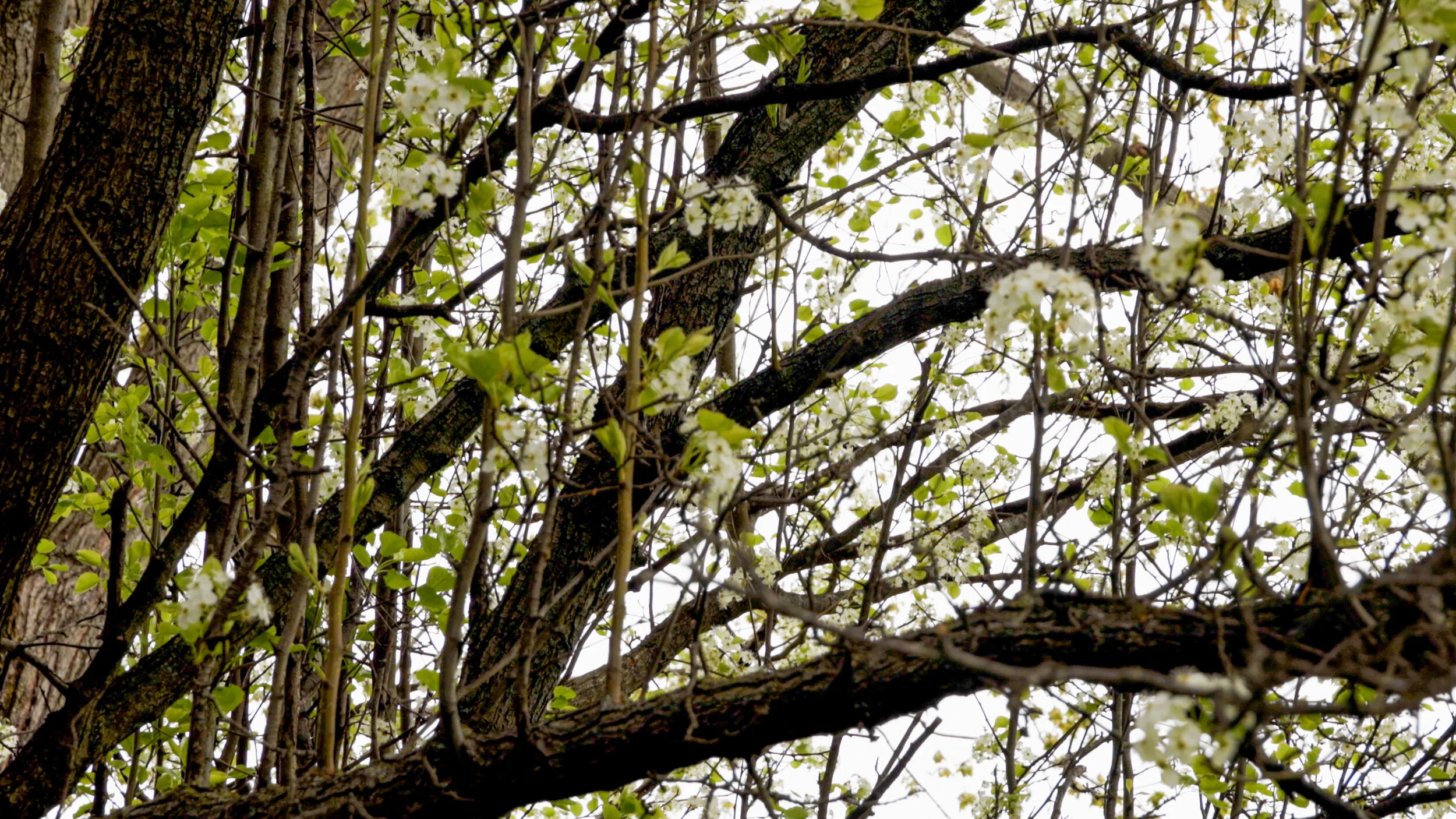
Multiple water sprouts shooting straight up from a larger branch due to stress.
In terms of frequency, younger trees may need to be pruned every two to three years while more mature trees may need to be pruned every three to five years. The specific timing can fluctuate and vary based on planting site, climate conditions, potential insect and disease issues, and more. In terms of how much to prune, there should be no specific goal. Only remove the necessary branches. However, a general guideline is that no more than 25% of a canopy should be removed at one time as the tree may “go into shock” and grow watersprouts in an attempt to replace the stored energy lost from the removed branches.
If you decide to have your tree pruned, two common, incorrect methods of pruning that Russell Tree Experts strongly advise against and do not perform are tree topping and lion’s tailing. Tree topping is pruning to create a rounded canopy that often requires cutting through a stem at an improper location. Lion’s tailing is the removal of many, if not all, secondary or tertiary branches from the interior of the crown, leaving most of the foliage at the edge or top of a canopy. Although the look of both of these tree pruning methods may be desired by a specific individual, they do not improve the overall health or quality of a tree and can actually shorten its lifespan and promote decay.
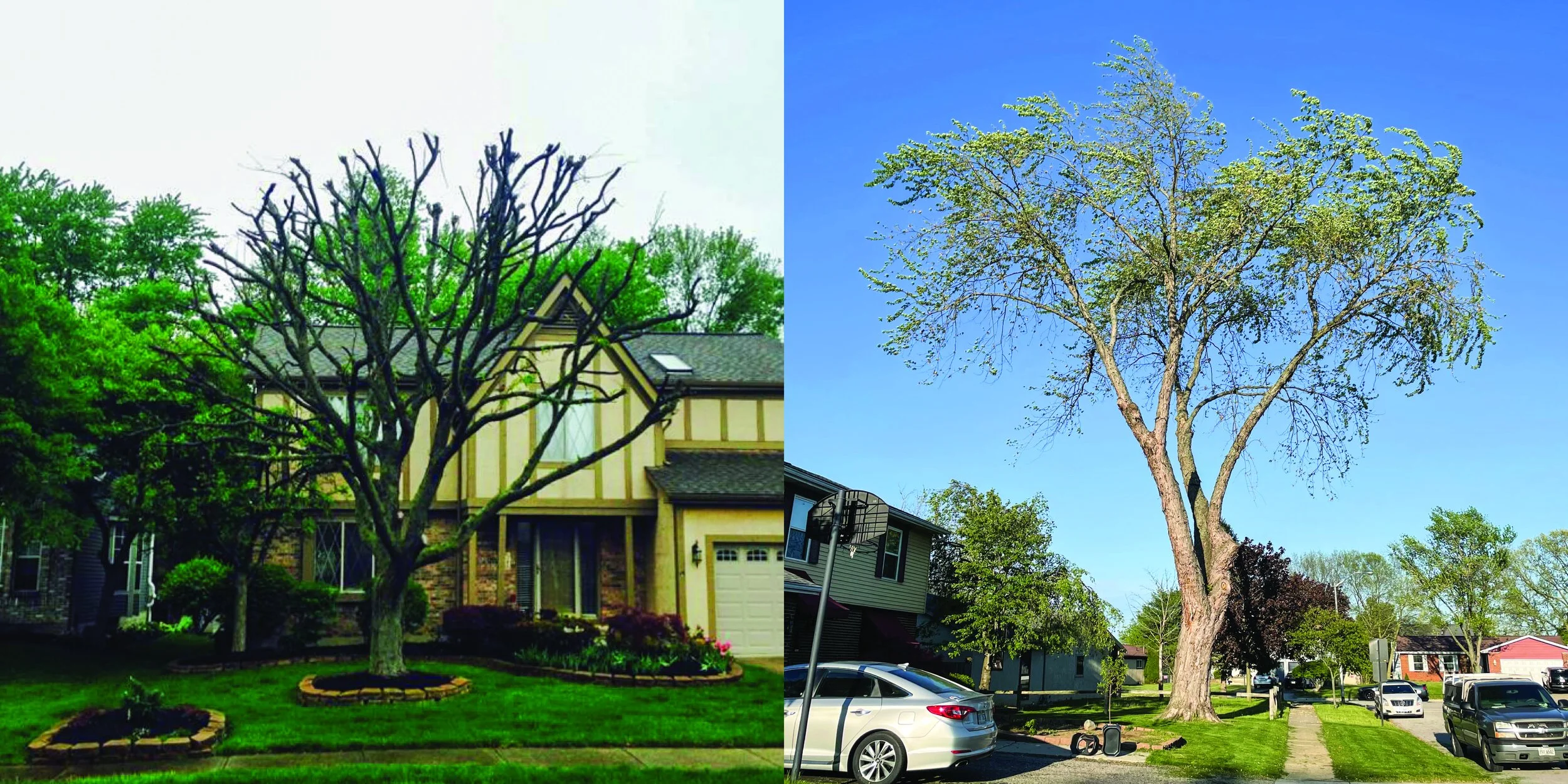
Examples of improper tree pruning: Tree topping (left) and lion’s tailing (right)
Tree pruning is a very large and vast subject with much to cover. Someone could write a novel about tree pruning and still not cover every single detail. The goal of this article was to discuss the many reasons for tree pruning, not necessarily to teach someone how to become a tree pruning expert. However, we do have an article and a video on the 3 cut method that will be linked down below for anyone interested in learning how to safely and effectively remove a limb! Additionally, more tree pruning-related articles are also down below including 6 harmful tree pruning methods! (You already know 2 of them from reading this article!) As always, if you’re interested in a free tree work quote by one of our 20+ ISA Certified Arborists®, visit RussellTreeExperts.com/Quote or speak to our friendly, local office at (614) 895-7000!
Please note: This article was originally published on 1/12/2023 and was revised on 6/26/2025.
Interested in Pruning Your Own Tree?
ADDITIONAL ARBOR ED™ ARTICLES!



Enrique Arayata I Media Production Manager, Russell Tree Experts
Enrique is an ISA Certified Arborist® and FAA Certified Remote Pilot. In his free time, he enjoys working out, hanging out with his family and girlfriend, video production, photography, cars, technology, and cooking. Enrique has a BA in moving image production with a double minor in film studies and studio art specializing in photography from The Ohio State University, and an AA in web graphic design from DeVry University. His favorite tree is the Kwanzan cherry tree.
The 3 Cut Method
There are times when the professionals at Russell Tree Experts should be utilized, although I realize there may be situations when removing a single branch is something very achievable by you, the homeowner.

By Mike Wilson
ISA Certified Arborist® OH-6806A
February 13, 2025
[Please note: This article was revised and republished on 2/13/25 from its original publish date of 6/30/21]
There are times when the professionals at Russell Tree Experts should be utilized, although I realize there may be situations when removing a single branch is something very achievable by you, the homeowner. I feel it's safe to assume if you're reading this article, you have a bit of a green thumb and you like to get your hands dirty by maintaining as much of your landscape as possible. This article isn't to dive deep into the various pruning techniques or strategies we use in the field, rather, it's to help homeowners make proper pruning cuts on trees throughout their property. Keep in mind, even though you may have seen us swinging about your trees like monkeys, we're trained to do so in the safest manner possible and I discourage you from putting yourself in harm’s way pruning your tree(s).
The reasons for pruning a branch or limb from a tree are vast. Whether it's removing a pesky branch that keeps slapping you in the face during weekly lawn maintenance to getting rid of that one dead branch that you see every time you look out your window, I'm here to help you make a cut that will ultimately compartmentalize naturally.
Trees have a natural response known as CODIT (Compartmentalization of Decay in Trees) which allows them to wall-off or seal wounds to help prevent decay or entry of harmful diseases. Cuts that are too flush with the parent stem (or left too long) are unlikely to seal properly and could potentially degrade the health of your tree.
key branch landmarks

So, now, let's get into the nitty-gritty of proper pruning cuts. It's critical to be able to identify key branch landmarks that help guide where your final cut will be: the 'Branch Bark Ridge' and the 'Branch Collar'. The branch bark ridge can be seen as the raised strip of bark on top of the branch where it joins with the main parent stem or trunk of the tree. The branch collar is the slightly raised or swollen portion around the sides and bottom of the branch, this portion may or may not be distinguishable. The imaginary line connecting these two landmarks determines where the final cut should be made.
Step by step: The 3 Cut Method
To begin, whether using a handsaw/polesaw/chainsaw, I'll teach you how to remove a branch using the 3 cut method:

1st Cut / Bottom cut
Create a cut on the underside (undercut) of the branch roughly 1/3 of the way through. This is a crucial step in the branch removal process as it eliminates the risk of the branch peeling down and further harming the tree.

2nd Cut / Top Cut
Next is a second distal cut on top of the limb (further from the trunk) to remove the limb (topcut).

3rd Cut / Final cut
Now, with only a stub remaining, is when you should identify that imaginary line I described above. This will be the site for your final cut that will eventually seal properly as long as the tree is healthy and capable.
How-to Video: The 3 Cut Method
I’m not the biggest fan of being on camera so I’ve asked Kenny Greer (Our marketing guy at Russell Tree Experts) to demonstrate the 3 Cut Method in the below video! Check it out!
proper pruning results
A proper final cut will become a minor blemish guarding your tree against decay and harmful organisms. Here are some beautiful examples:


Please Note — In the past, it was believed that paint would help seal fresh wounds, although this has since been proven to only slow down the natural CODIT process. Can any of you guess when we would apply this "wound paint?" If you'd like to find out, I encourage you to read Lindsey Rice’s ARBOR ED™ article on oak wilt and dutch elm disease, my fellow coworker and ISA Certified Arborist®!
Questions? Comments? Leave them below and we will get back to you as soon as possible! Thanks for reading and watching! As always, if you’re interested in a free tree work quote from one of our 20+ ISA Certified Arborists®, give us a call at (614) 895-7000 or visit RussellTreeExperts.com/Quote!
ADDITIONAL ARBOR ED ARTICLES!


Mike Wilson | Regional Manager, Russell Tree Experts
Mike joined RTE in 2013 and has been in the green industry for over 12 years! He is an ISA Certified Arborist® and a graduate of Oregon State University. Mike is an outdoor enthusiast and a US Army Medic Veteran!
What's Wrong with my Sycamore & Maple?
"Why does my beautiful maple have ugly black spots on its leaves?" "Why is my American sycamore bare this year” …To answer these questions, we need to go back to a chilly, wet evening 5 weeks ago. On May 5th, the temperature dropped overnight to 41 degrees just after an early morning shower that day. We continued this cool, wet trend for 10 lousy days, and…
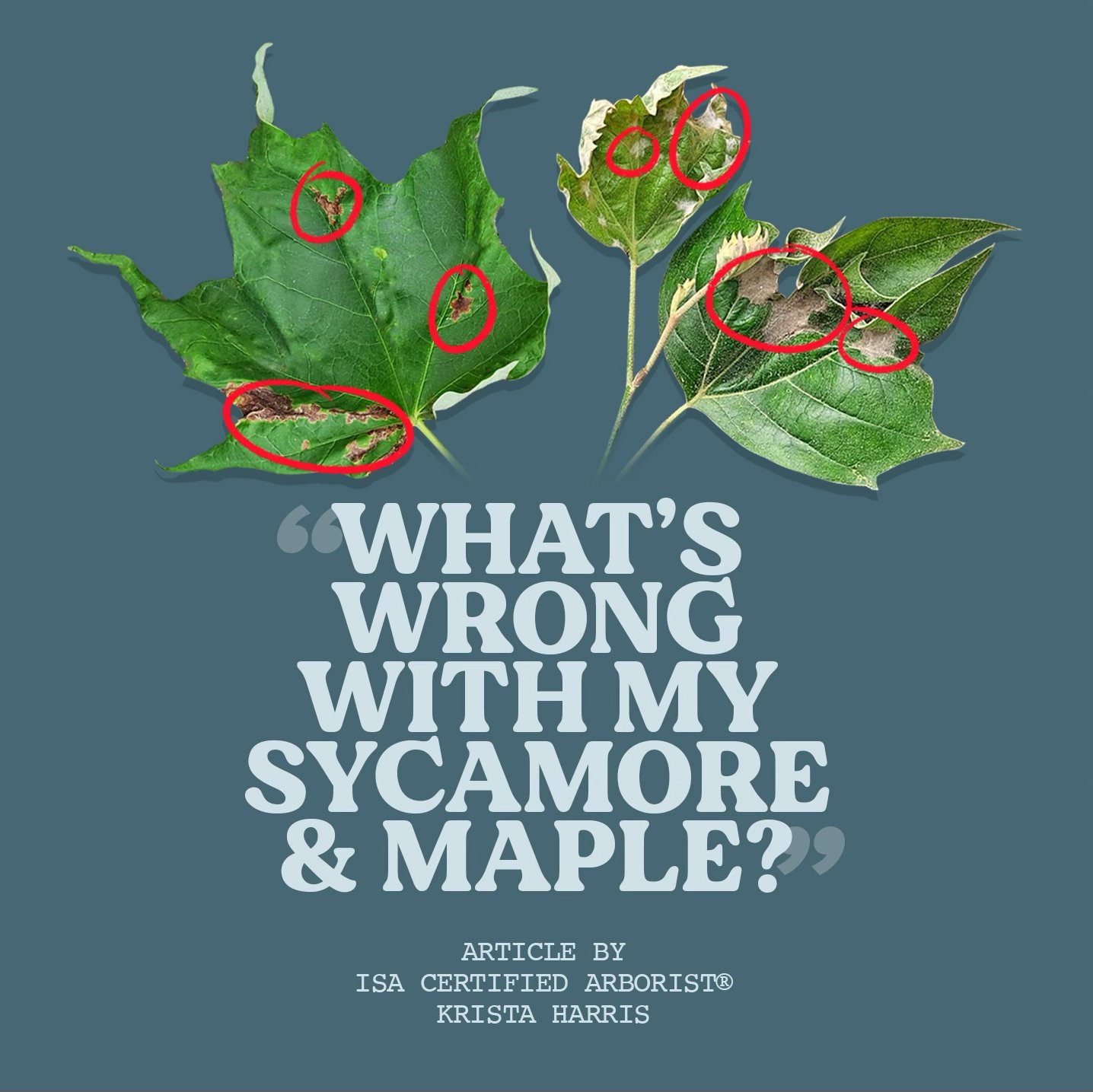
"Why does my beautiful maple have ugly black spots on its leaves?""Why is my American sycamore bare this year?"By Krista Harris
ISA Certified Arborist® OH-6699A
May 22, 2025
Anthracnose fungus attacks newly emerging leaves in the spring when the weather is just right for disease development. The symptoms vary from host to host, but typically infected leaves will have irregular dark spots along veins. Eventually, the leaf will curl, die, and fall. In the case of the sycamore, often the leaf buds are killed before they have even had a chance to emerge.
[Sugar Maple leaf before and after anthracnose fungus]
Anthracnose fungus affects many deciduous trees and seems to be most noticeable this year on sycamore and maple in our area. I have had at least 10 customers per week concerned that their beloved trees were dying due to this fungus. I have also been driving by my favorite American sycamores around my home, only to find them very sparsely leafed and struggling. This includes Upper Arlington's oldest tree, an amazing 3 stemmed beauty that our team pruned a few months ago.

[American Sycamore leaves with anthracnose fungus]Thankfully, I have wonderful news for the stewards of these afflicted trees. Anthracnose is a cosmetic disease for the majority of trees! If the tree is otherwise healthy and well established, it will be just fine. It will replace those lost leaves in July when conditions no longer favor anthracnose development.
How can you help trees with this seasonal infection?
Water your trees during our hot, dry summers! Concentrate the water at the ground level only, do not splash the leaves. All trees will appreciate the extra water, but those that have lost their leaves and are attempting to replace them will relish it! ARTICLE: HOW TO WATER YOUR TREES
Prune your trees for better air circulation and light penetration. This will help the leaves dry faster and it will be harder for the fungus to spread.
Dispose of affected leaves so that the spores are not hanging around next year to re-infect your tree.
Consider fertilizing your trees in the spring so that they have the needed nutrients to stay healthy (and possibly put on 2 sets of leaves if it is another good year for anthracnose infection).
Above all, do not panic! We cannot control the weather or the fungus. Just concentrate on overall tree health and by mid-summer, the trees will have recovered and this disease will be just a bad memory. For a free tree quote by one of our 20+ ISA Certified Arborists®, visit RussellTreeExperts.com/Quote or speaker to our friendly, local office staff at (614) 895-7000!
Please note: This article was originally published on 6/14/2021 and was revised on 5/22/2025.
ADDITIONAL ARBOR ED™ ARTICLES!


Krista Harris | Journeyperson, Russell Tree Experts
Krista grew up in the central Ohio area and became an ISA Certified Arborist® in 2017. She graduated from The Ohio State University with a Bachelor of Science in Crop Science and a minor in Plant Pathology in 2000 and has been in the green industry ever since. Her favorite trees are the American sycamore, American beech, and giant sequoia. [BS in Horticulture Crop Science, The Ohio State University / ISA Certified Arborist® OH-6699A / ODA Comm. Pesticide Lic. #148078]
Pruning Upper Arlington's Oldest Tree
We are honored that The City of Upper Arlington entrusted our arborists to prune their oldest tree - a towering, beautiful American sycamore. This massive tree is around 100 feet tall, 90 feet wide, and likely over
First, check out the above video — then read below! :)
By Enrique Arayata
ISA Certified Arborist® OH-7252A
March 18, 2021
While working on a street tree pruning project with Upper Arlington, Ohio, where we are pruning approximately 2,500 trees, we had the opportunity and pleasure to prune, according to the Upper Arlington, Ohio Tree Commission, the oldest tree in Upper Arlington: an American sycamore tree (Platanus occidentalis) approximately 100 feet tall and approximately 90 feet wide. It is unclear how old this ancient tree is, but when reaching out to my fellow coworker ISA Certified Arborist Walter Reins, he approximated that this tree is likely over a century old. This tree took half a day to prune as ISA Certified Arborist Mac McGuire skillfully pruned this tree using a bucket truck to remove deadwood, diseased limbs, broken branches, and hangers. Elevation pruning was also performed over Cambridge Boulevard to provide proper clearance for vehicles traveling on the road below. Through years of proper care and periodic pruning, this American sycamore has been able to reach its full potential and grow to this enormous size.
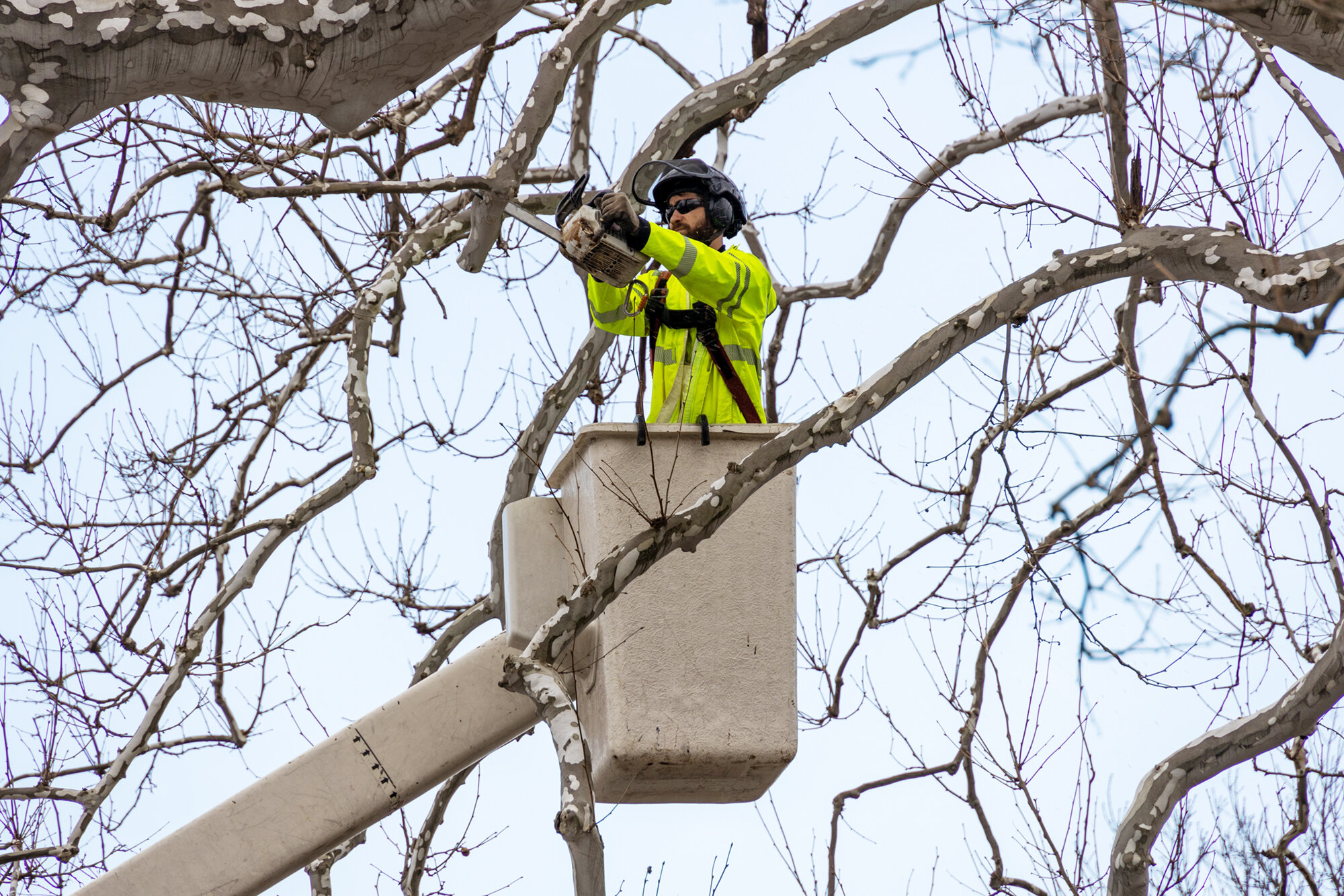
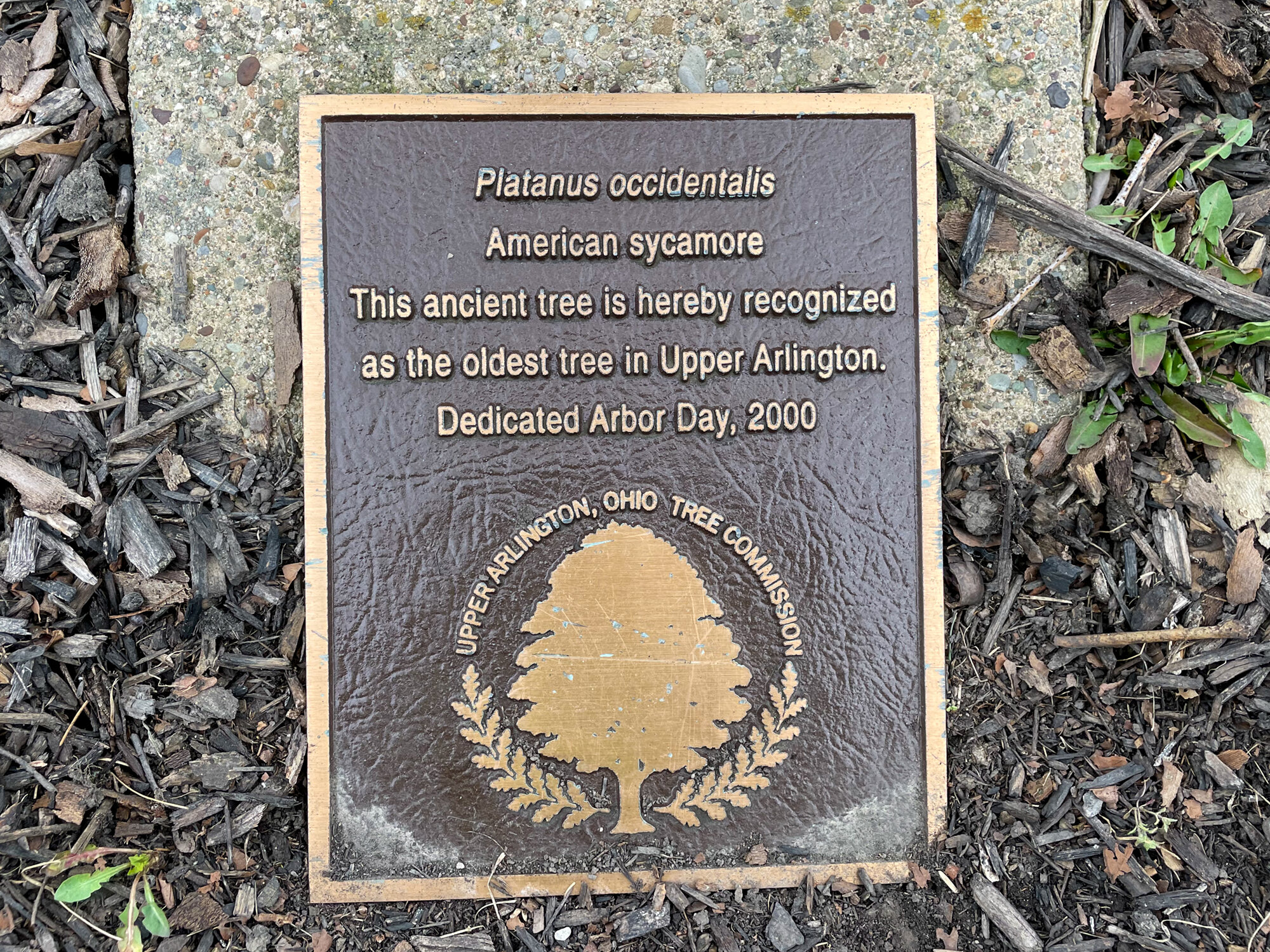
The American sycamore tree (Platanus occidentalis) is native to Ohio and can typically grow to a height and spread of up to 75 to 100 feet. The tree prefers and grows best in partial to full sun and in moderately to well-drained soils. Along with being native to Ohio, the American Sycamore can be natively found anywhere ranging from zones 4 through 9 on the eastern half of the United States (see map below).

Hardiness Zone Map Courtesy of the Arbor Day Foundation
In nature, one can often find this tree along creeks and rivers. They can be identified by their tall height and unique bark, featuring a camouflage-like pattern of green, tan, and white. Its leaves can have truncate or cordate bases with three to five lobes, loosely resembling a maple leaf. Alongside the leaves are round fruit approximately 1.5 inches in diameter that are attractive to birds. Potential issues that arise from the American sycamore are anthracnose, a fungus that can destroy emergent leaves in the spring, hollow trunks that can be prone to storm damage, and overgrowth in tight, urban areas that may call for pruning or removal.
We are honored to help contribute to the long-term health of Upper Arlington Ohio’s oldest tree. We are excited to see what other interesting trees we encounter while continuing on with our street tree pruning project! Check out this amazing tree by visiting the corner of Cambridge Boulevard and Yorkshire Road in Upper Arlington, Ohio!
Sincerely,

Enrique Arayata I Media Production Manager, Russell Tree Experts
Enrique is an ISA Certified Arborist® and FAA Certified Remote Pilot. In his free time, he enjoys working out, hanging out with his family and girlfriend, video production, photography, cars, technology, and cooking. Enrique has a BA in moving image production with a double minor in film studies and studio art specializing in photography from The Ohio State University, and an AA in web graphic design from DeVry University. His favorite tree is the Kwanzan cherry tree.
New Disease Control Measures for Oak & Elm Trees
… I hope everyone is having a great week and enjoying this sunshiny weather! I love being able to get outside with my girls and get some vitamin D and open our windows and get some fresh air. With spring around the corner, I wanted to bring to your attention that Russell Tree Experts is implementing some new Oak tree and Elm tree safety procedures to ensure the health and safety of these types of trees in the Columbus area.
Good afternoon and I hope everyone is having a great week and enjoying this sunshiny weather! I love being able to get outside with my girls and get some vitamin D and open our windows and get some fresh air. With spring around the corner, I wanted to bring to your attention that Russell Tree Experts is implementing some new Oak tree and Elm tree safety procedures to ensure the health and safety of these types of trees in the Columbus area.
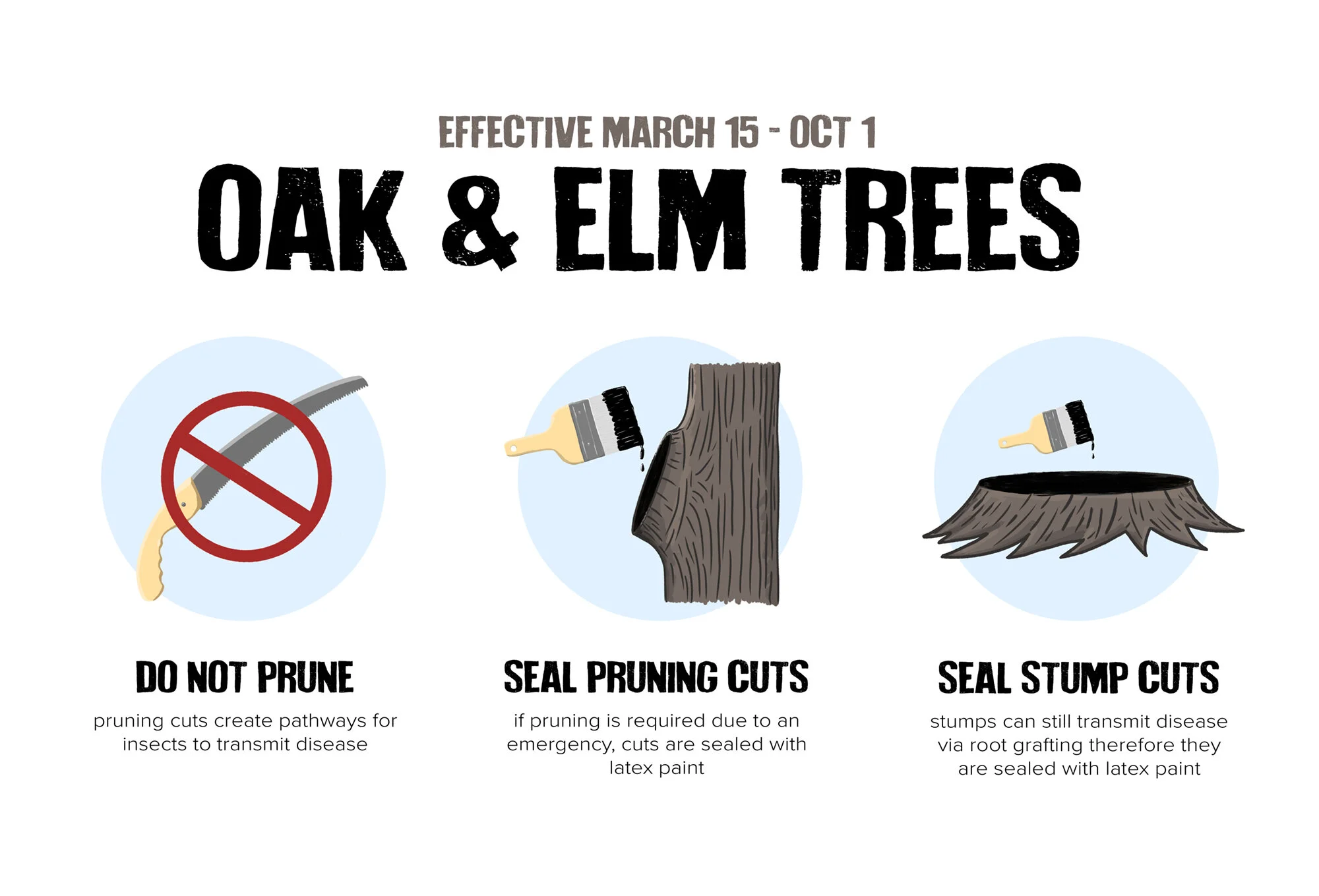
As you may have seen in some of our previous articles, we advise not pruning any Oak trees (or Elm trees) between March 15th and October 1st. If you are a current customer of ours and have Oak trees, you may know that it has taken us most of the winter to work through and complete all of the Oak pruning work we have accumulated over the year. Please note that if you require any future Oak pruning work, it will be done during the pruning window (October 1st - March 15) and despite everyone’s desires (including my own), not everyone’s Oak trees will be able to be pruned the first week of October, because of sheer capacity and manpower. As always, we will do our best to accommodate anyone’s specific situation. If we come across an instance where an Oak or Elm tree MUST be pruned in this window (such as safety concerns), the wounds will be painted with tree paint or wound dressing to help deter the Nitidulid beetles that spread Oak Wilt from entering the tree and ultimately spreading the disease. This is something that we have been doing for the past few years since Oak Wilt became an issue in the area and we became aware of these best practices.
It is vital to seal oak wounds/cuts between March 15 - October 1st to limit the transmission of oak wilt.
[Click to enlarge]
Upon reading up on some neighboring states’ tree removal contracts, I have found that it is also recommended in parts of Michigan to immediately paint any stump from a freshly removed Oak tree so the beetles will not be attracted to this wound as well. In Michigan, Oak Wilt has been more prevalent than here in Ohio but I believe it is necessary to take their findings and apply them to our own situation at home. Painting the stump is an effective mitigation method is because one of the ways Oak Wilt can spread to other trees is by root grafts. Even though the tree has been removed, it is possible the Nitidulid beetles may still enter the stump, carrying the pathogen, and the disease could be spread through the roots of the newly infected tree (or now stump) to a neighboring oak tree through the root grafts, which could be as far as 100 feet away. Although the spread of the disease this way may be unlikely, for the amount of effort it takes to paint a stump, it is an easy way to reduce the risk of spreading such a deadly disease.
Even the stump of an oak can transmit oak wilt therefore stump cuts between March 15 - October 1 will be sealed.
[Click to enlarge]
We are including Elm trees into this new practice as well is because the spread of the infamous Dutch Elm Disease is spread in a similar way.
As always, if you have Oak trees and expect you may have Oak Wilt, please give us a call and our experts would be happy to advise you on next steps and how we can confirm a diagnosis. It is best to try and find out sooner rather than later to try and reduce the spread to neighboring Oak trees.
Have a great rest of the week and be sure to get outside and soak up some rays!

Lindsey Rice | Regional Manager, Russell Tree Experts
Lindsey joined Russell Tree Experts in 2015 with a B.S. in Agribusiness and a minor in Horticulture from The Ohio State University. Growing up in Northwest Ohio, she participated in various sports, band, and FFA which ultimately inspired her love for the tree industry. In her free time she loves to spend it outdoors with her husband and daughters.
Understanding Conifers
Understanding conifers should begin with a few simple definitions to clarify and classify. A conifer is a plant that bears its seeds in cones. When we hear the word cone, we likely think of pine and spruce trees, two types of coniferous trees that are widely found throughout Central Ohio and beyond. Their cones are obvious when they fall and scatter on the ground surrounding the tree. But did you know that yews (Taxus) and junipers are also conifers?

Avocados can be tricky. You buy them green, and the next day they’re still not ripe. The day after that they’re still not ripe. Then, the day after that they’ve all gone bad! To be clear, avocados don’t come from conifers. But I’m often reminded of avocados when homeowners contact us regarding concerns they have about their conifers. Conifers, like ripening avocados, can also be tricky. A row of ‘Emerald Green’ Arborvitae can appear to be fine, and then seemingly overnight, half of them are DEAD! A mature white pine can appear to “almost die” every second or third year. These issues can be understandably frustrating and can give us the false notion that these plants are hard to grow. Understanding the ways in which they’re different from other plants in the landscape can help in successfully caring for conifers and allowing them to thrive.

Understanding conifers should begin with a few simple definitions to clarify and classify. A conifer is a plant that bears its seeds in cones. When we hear the word cone, we likely think of pine and spruce trees, two types of coniferous trees that are widely found throughout Central Ohio and beyond. Their cones are obvious when they fall and scatter on the ground surrounding the tree. But did you know that yews (Taxus) and junipers are also conifers? Both bear their seeds in a fruit-like structure that is often incorrectly referred to as a berry. These berry-like fruits are actually cones, botanically speaking. Some other common conifers in Central Ohio include arborvitae, hemlocks, and firs. Because the foliage of most conifers is evergreen, meaning it does not fall off each year with the cycle of the seasons, the terms evergreen and conifer are often used interchangeably. Doing so, however, is not completely accurate. It’s important to understand that the term evergreen also refers to some broadleaf plants like rhododendron, holly, boxwood, and others. These plants are evergreens, but not conifers.
Conifers belong to a very ancient classification of plants and are different from non-coniferous plants in a number of ways. Below are a few of their key characteristics that often confuse homeowners (and sometimes even otherwise qualified arborists!). Knowing what to expect and how to care for conifers is the first step in successfully maintaining them in your landscape.
Seasonal Needle Drop

Japanese White Pine experiencing fall foliage
Even though most conifers are evergreens, their evergreen foliage still eventually falls off. Some very common conifers in Central Ohio, like pines, yews, and arborvitae, will drop a significant amount of their inner foliage every 2-3 years as part of a natural occurrence of cyclical needle drop. This can be alarming if you’re not familiar with the process. When it happens, the important thing to recognize is that it’s happening uniformly throughout the entire plant, and all of the browning/yellowing foliage is further back on the branch. These are the needles that are 2-3 years old and have reached the end of their life cycle. You might also look around your neighborhood to see if the same tree or shrub in other landscapes is doing the exact same thing, and at the same time. This process will never occur on the tips of the branches. If you have needles that are discoloring and falling off from the very tip or end of the branch, it is likely due to other factors and may indicate a disease, insect, or watering issue.
Delayed Response to Stress

A dead ‘Emerald Green’ Arborvitae due to drought stress
Perhaps the most challenging thing about conifers, specifically evergreen conifers, is that they do not give immediate feedback from water-related stress or injury. Herbaceous annuals like impatiens and petunias will let you know almost immediately when they are low on water by wilting excessively. Many deciduous trees, when first planted, will also show signs of wilting foliage relatively quickly when their roots become dry. This type of visual feedback is often what reminds us to get outside and water our newly installed landscape trees or shrubs. Coniferous evergreens, on the other hand, can have a delay of weeks or even months before they show obvious signs of drought stress. The reason this is an issue is simple; by the time we see it, the damage may be too extensive to reverse. It’s important to thoroughly and properly water any newly planted trees or shrubs. Don’t over-rely on in-ground irrigation, which often does not water for a long enough span of time to properly soak the ground, or may not thoroughly cover an area, leading to “dead zones” that receive little to no water at all. Proper watering regimes should be followed for the first season, and supplemental watering may be beneficial in subsequent years during very dry months. Watering in the fall is important too. This helps to keep roots moist once the ground freezes. Inadequate levels of water in the soil during freezing temperatures can rob a plant’s roots of water and lead to winter desiccation. Oftentimes we see this show up late winter or even early in spring.
Limited Regrowth with Pruning
The proper pruning of conifers varies from that of their non-coniferous counterparts. Many landscape shrubs and even a few tree species can be pruned aggressively to maintain a certain size or habit without adversely affecting the health and longevity of the plant. Many conifers, however, are not tolerant of heavy pruning that removes the majority of the foliage from a stem or branch. Junipers provide a classic example of a plant that cannot be pruned back to bare wood. Once this is done, the exposed area will not fill in with new growth. Pine, spruce, and fir are also examples of conifers that will not produce enough new growth on over-pruned parts of the plant. One example of a conifer that is an exception to this rule is the yew. When cut back aggressively, yews can and do generate enough new growth (slowly) on old, bare branches. Knowing how to properly prune conifers requires a good understanding of each plant species’ characteristics and habits, and may be best left to a professional arborist.

Healthy Dawn Redwood trees in the fall
Finally, it’s worth noting that a few types of conifers succeed in inciting worry and confusion whenever a home changes hands and the new owners are unfamiliar with the trees in the landscape. These are of course the deciduous conifers. Two deciduous conifers can be found commonly throughout Central Ohio landscapes- the dawn redwood and bald cypress. These trees will naturally lose their needles every year just like a Maple or Ash loses its leaves. As mentioned previously, most of us equate conifer with evergreen. So to see this occur for the first time and not understand what’s happening, one might assume the tree is dying for some unknown reason.
Conifers do things a bit differently, which can make them a little harder to understand. Answers to your coniferous questions are always just a phone call away at Russell Tree Experts. The unique characteristics mentioned above are just a few of the many reasons you should entrust your trees, all of them, to a qualified professional tree care company. Otherwise, your new neighbor, though his intentions are good, might just tell you to cut down that dawn redwood that keeps “dying” every year.

Walter Reins | Regional Manager, Russell Tree Experts
Walter has been an ISA Certified Arborist since 2003. He graduated from Montgomery College in Maryland with a degree in Landscape Horticulture, and has called Columbus, OH his home for nearly 20 years. Walter appreciates trees for their majesty and the critical role they play in our world.
When and How to Prune Lilacs
Common lilacs (Syringa vulgaris) are a favorite landscape shrub here in Ohio and beyond, with flowers that provide beauty and an unmistakable fragrance every spring. Other cultivars of lilacs offer different habits and uses in the landscape, but provide the same display of flowers that we all love. In order to ensure you get the most flowers on your lilac year after year, it’s important to know when and how to prune them.
By Walter Reins
ISA Certified Arborist® OH-5113A
March 6, 2025
Common lilacs (Syringa vulgaris) are a favorite landscape shrub here in Ohio and beyond, with flowers that provide beauty and an unmistakable fragrance every spring. Other cultivars of lilacs offer different habits and uses in the landscape, but provide the same display of flowers that we all love. In order to ensure you get the most flowers on your lilac year after year, it’s important to know when and how to prune them.
When To Prune
As a general rule for all lilacs, they should be pruned immediately after they’re done flowering in the spring. Since lilacs set next year’s flower buds right after the current year’s flowers have faded, pruning later in the summer or fall will result in cutting off many or all of next year’s flowers. This rule of timing applies to the larger common lilacs as well as the cultivars that are shorter or more “shrub” like. While the “when” of pruning lilacs is fairly straightforward, the “how” gets a little trickier. To keep things simple for now, we’ll think of lilac pruning as either maintenance pruning or rejuvenation pruning.
How To: Maintenance Pruning
For any lilac shrubs that have not outgrown their space or are still producing vibrant flowers each year, regular pruning can simply consist of any shaping that you choose to do along with removal of dead, diseased, or broken stems. You can also remove spent flowers from your lilacs to help encourage a cleaner growth habit and appearance. It’s always better to do this type of pruning by hand, rather than shearing. When making cuts, try to cut back to an outward facing bud. A good pair of hand pruners is the perfect tool for this and makes for much better pruning cuts than hedge shears.
How To: Rejuvenation Pruning
If you’ve ever had an older common lilac in your landscape that went unpruned for many years, you’re probably familiar with their overgrown, unruly habit when left alone. Many people mistakenly believe that these shrubs have stopped flowering at this point. Oftentimes what’s actually happening is the flowers are being produced on just the upper portions of the shrub where the plant has reached a taller height and is exposed to sunlight. Once they’ve reached this stage, we’re often left to stare at bare, woody branches at eye level and below. For these overgrown shrubs, we can remove entire older canes or stems that are 2” in diameter or larger to encourage a rejuvenation of the shrub. We want to apply the rule of thirds when doing this type of pruning - Remove approximately one third of the older canes or stems each year for 3 years. This gives the shrub a chance to slowly transition back to a fuller, shorter shrub with more new growth filling in from the bottom. If you decide to drastically prune the entire shrub this way all at once rather than just a third of it, a little extra care like fertilization and watering will be important to encourage new growth. Note that this “all at once” approach is generally not recommended for the health of the shrub.
Your lilac flowers can be influenced by many things, including the temperature, soil conditions, even disease and insect problems, but proper pruning goes a long way to ensuring they put on a great show every spring. And remember, if you have specific questions about pruning or anything tree and shrub related, your dedicated Russell Tree Experts arborist is only an email or phone call away.
*New* Video!
To accompany the above article, Walter Reins demos how to prune lilac trees in this new video! Click below!
Please note: This article was originally published on 4/6/2020 and was republished on 3/6/2025.
ADDITIONAL ARBOR ED ARTICLES!


Walter Reins | Regional Manager, Russell Tree Experts
Walter became an ISA Certified Arborist® in 2003 and has a degree in landscape horticulture. He has 25 years of experience in the tree and landscape industries and originally began working at Russell Tree Experts in 2011. Walter is also the owner/operator of Iwakura Japanese Gardens, a small design/build/maintenance firm specializing in Japanese-style gardens, and also offers responsible tree planting for all landscapes.
Don’t Get Fooled by the Fall Color of Conifers!
Every fall I get calls from folks concerned about yellow needles on their evergreen trees. Often times I’m told that the trees are sick or that they appear to be dying from the inside out. There are some disease and insect problems that can cause yellowing and premature loss of needles in conifers but most often what people are reporting is just normal fall color.

By TJ Nagel
ISA Board Certified Master Arborist® OH-6298B
November 13, 2025
Every fall I get calls from folks concerned about yellow needles on their evergreen trees. Often times I’m told that the trees are sick or that they appear to be dying from the inside out. There are some disease and insect problems that can cause yellowing and premature loss of needles in conifers but most often what people are reporting is just normal fall color.
Yellowing and the loss of old needles in the fall is normal for pine, spruce, arborvitae, hemlock and most evergreen conifers in the midwest. Most conifers shed their needles each year starting in late August and continue through November. Older interior needles will turn yellow while needles further out in the canopy and at the tips of branches will stay green. The yellow needles eventually drop off starting at the top of the tree and working their way to the bottom in a uniform fashion. Taxus (also called Yew) is the exception showing it’s “fall color” in mid to late spring.
Most folks understand and look forward to the fall color change in our maples, oaks, hickories and other hardwood trees — fall needle drop in conifers is as normal as leaf drop in deciduous trees.
The change in color and eventual drop of foliage is simply a physiological response to the shorter days and cooler temperatures as trees (both evergreen and deciduous) prepare themselves for the winter.
Pictured below are some of my favorite conifers showing fall color:
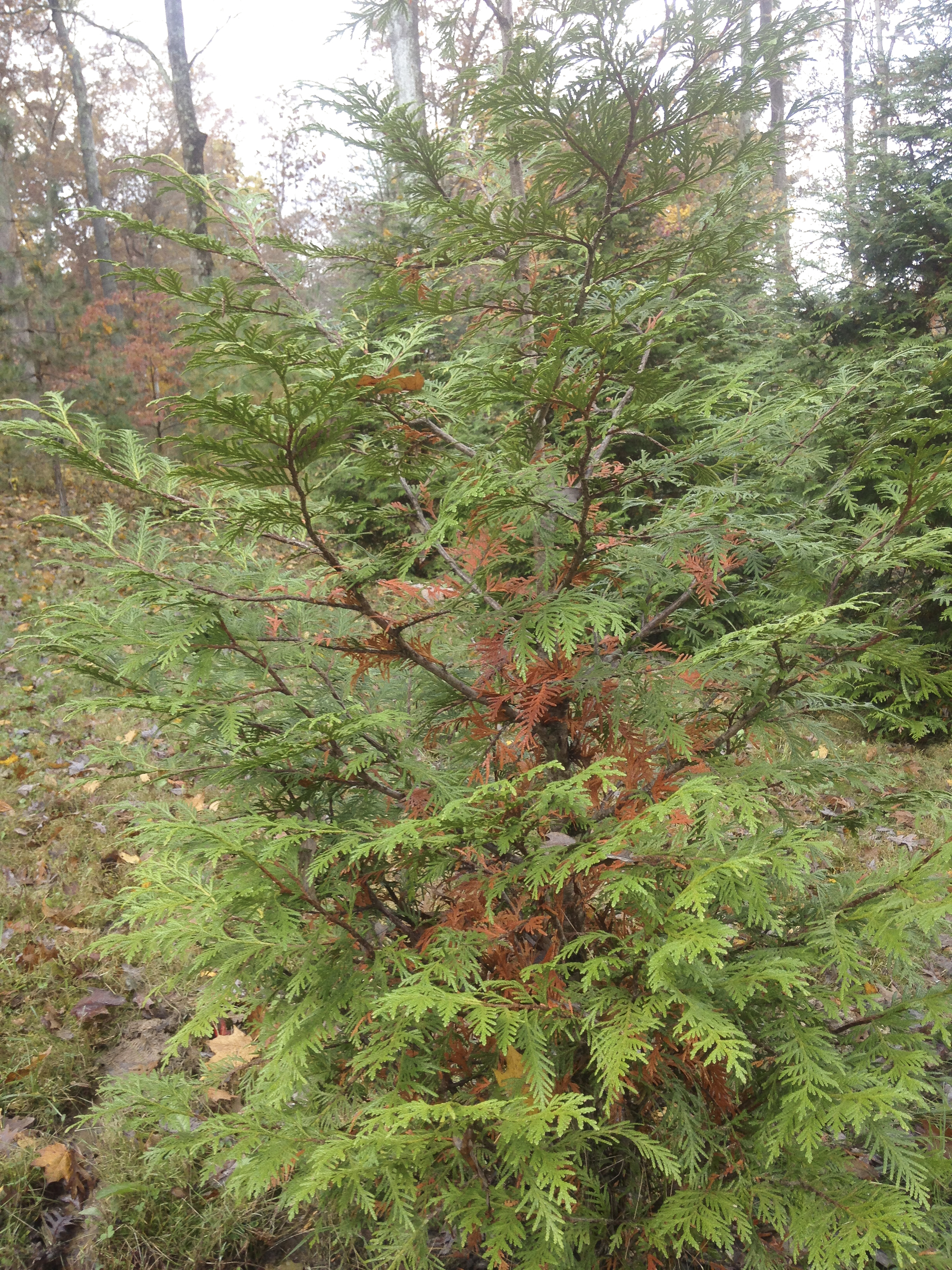
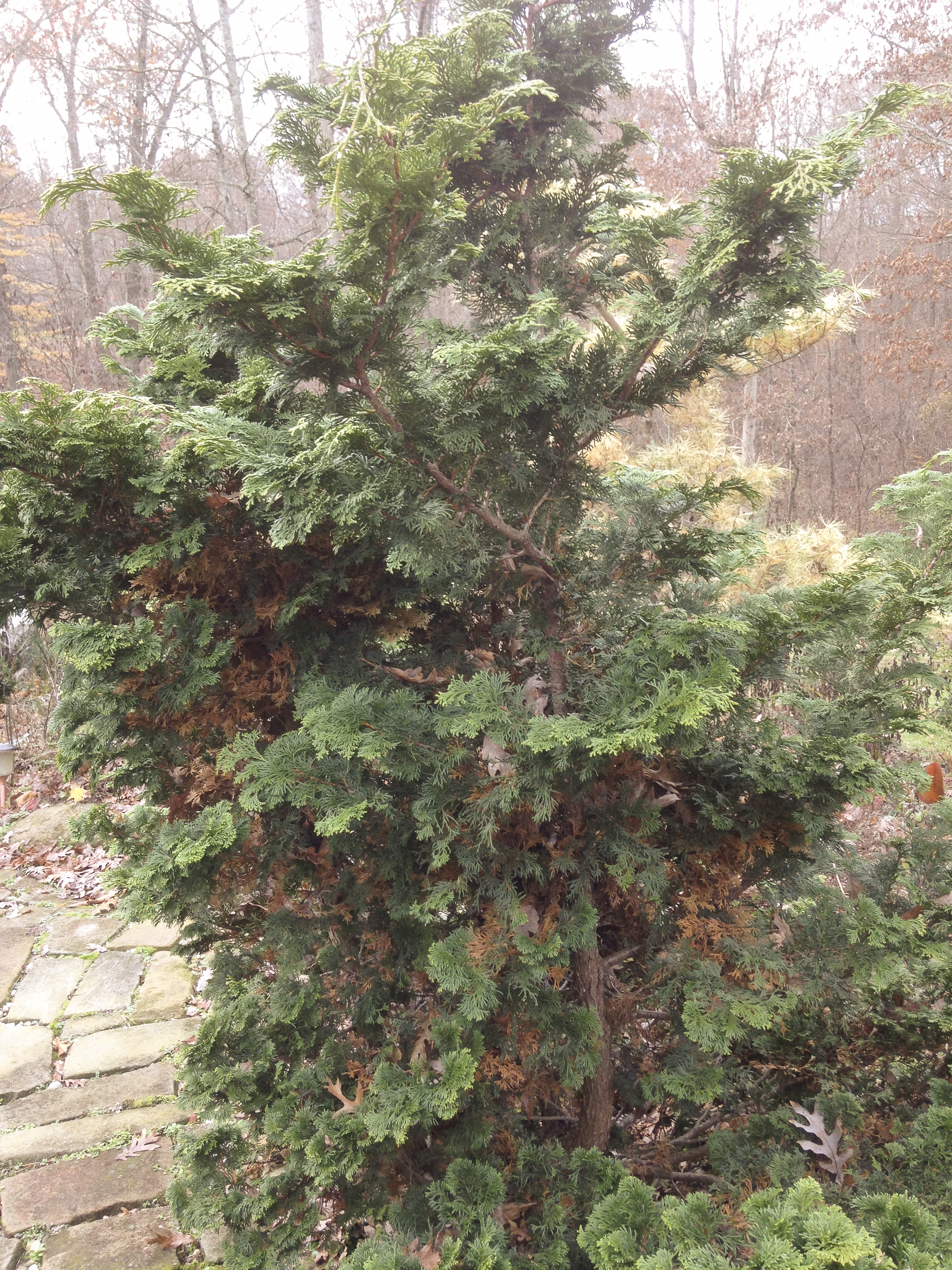
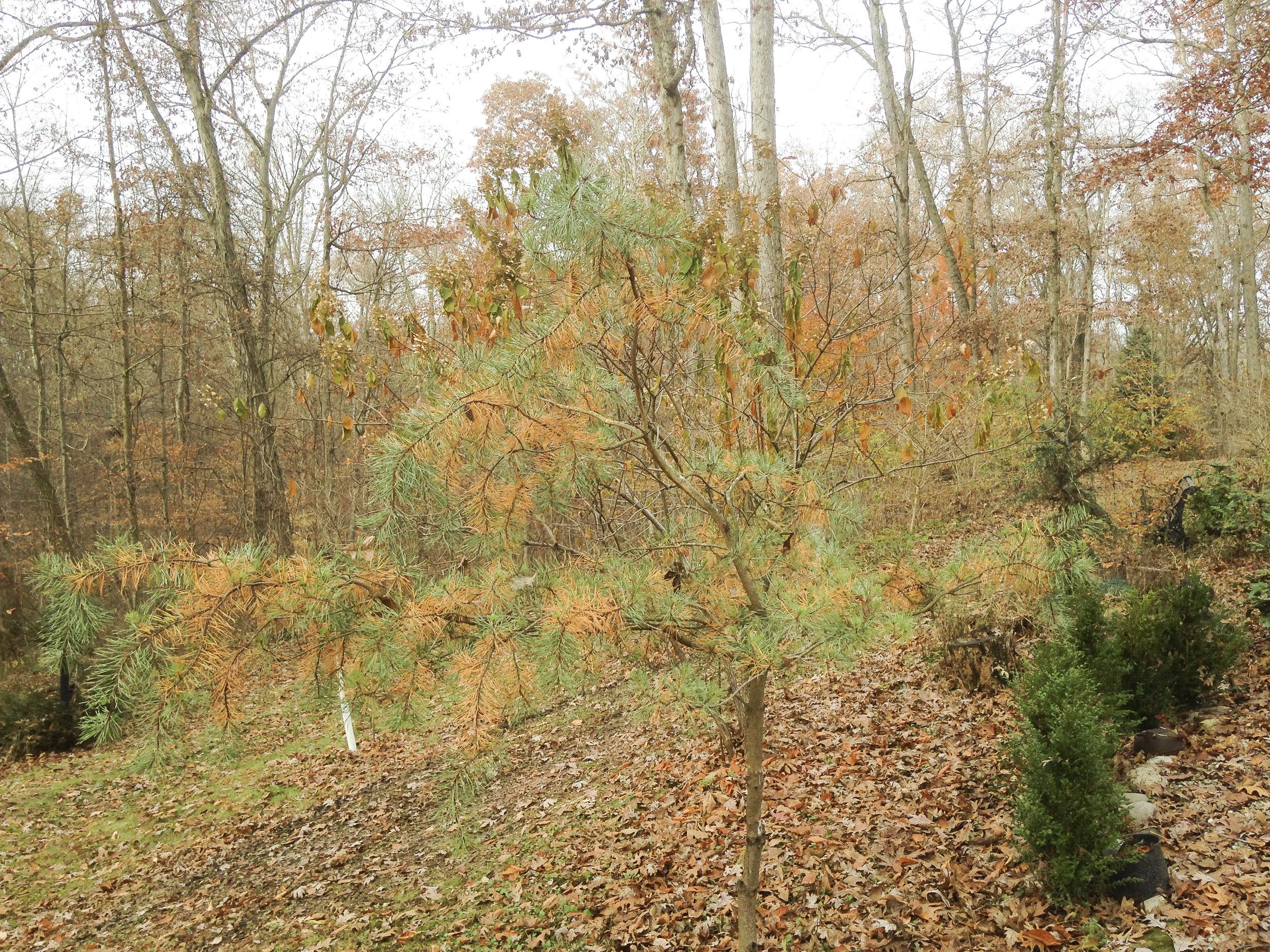
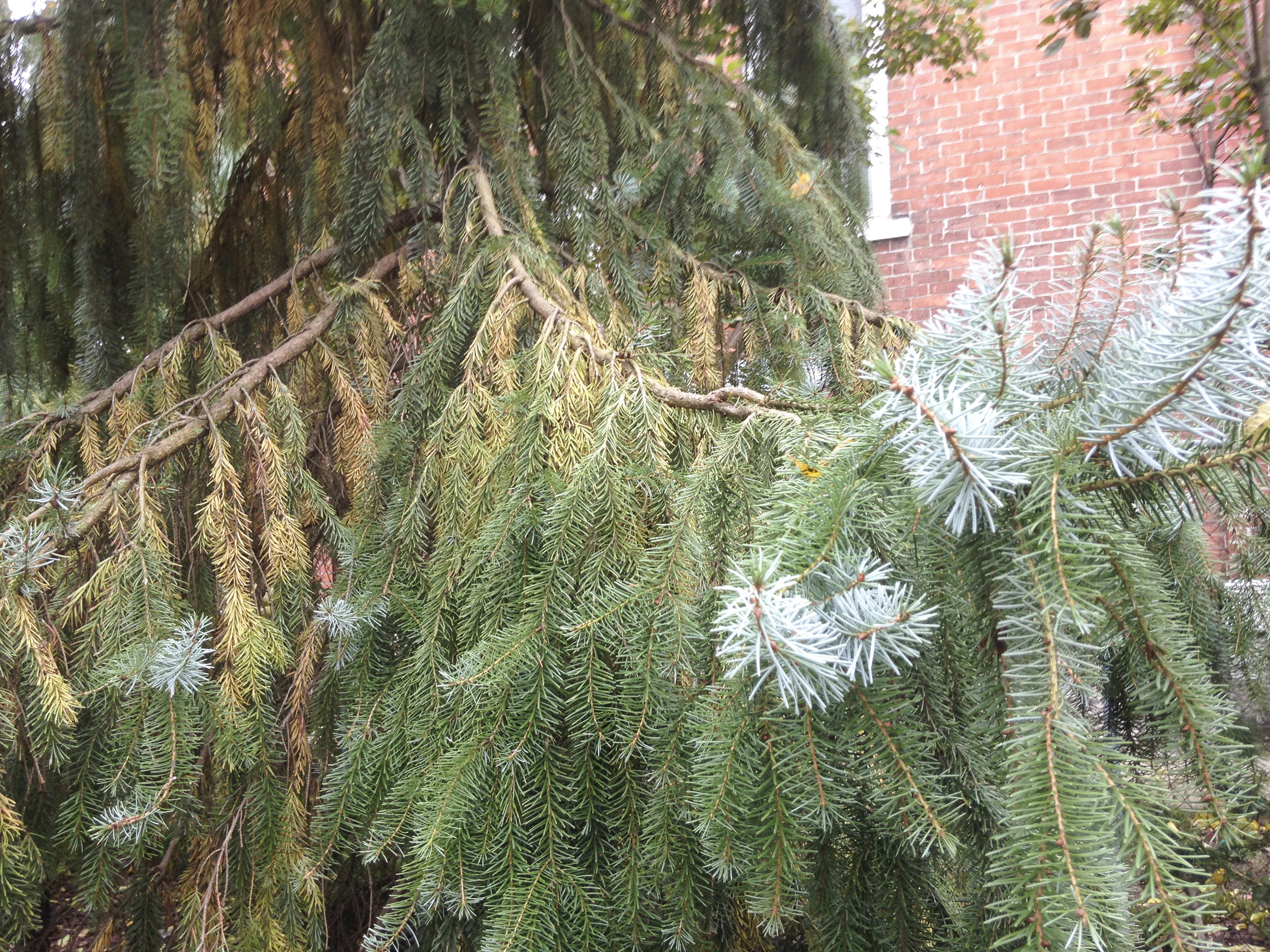
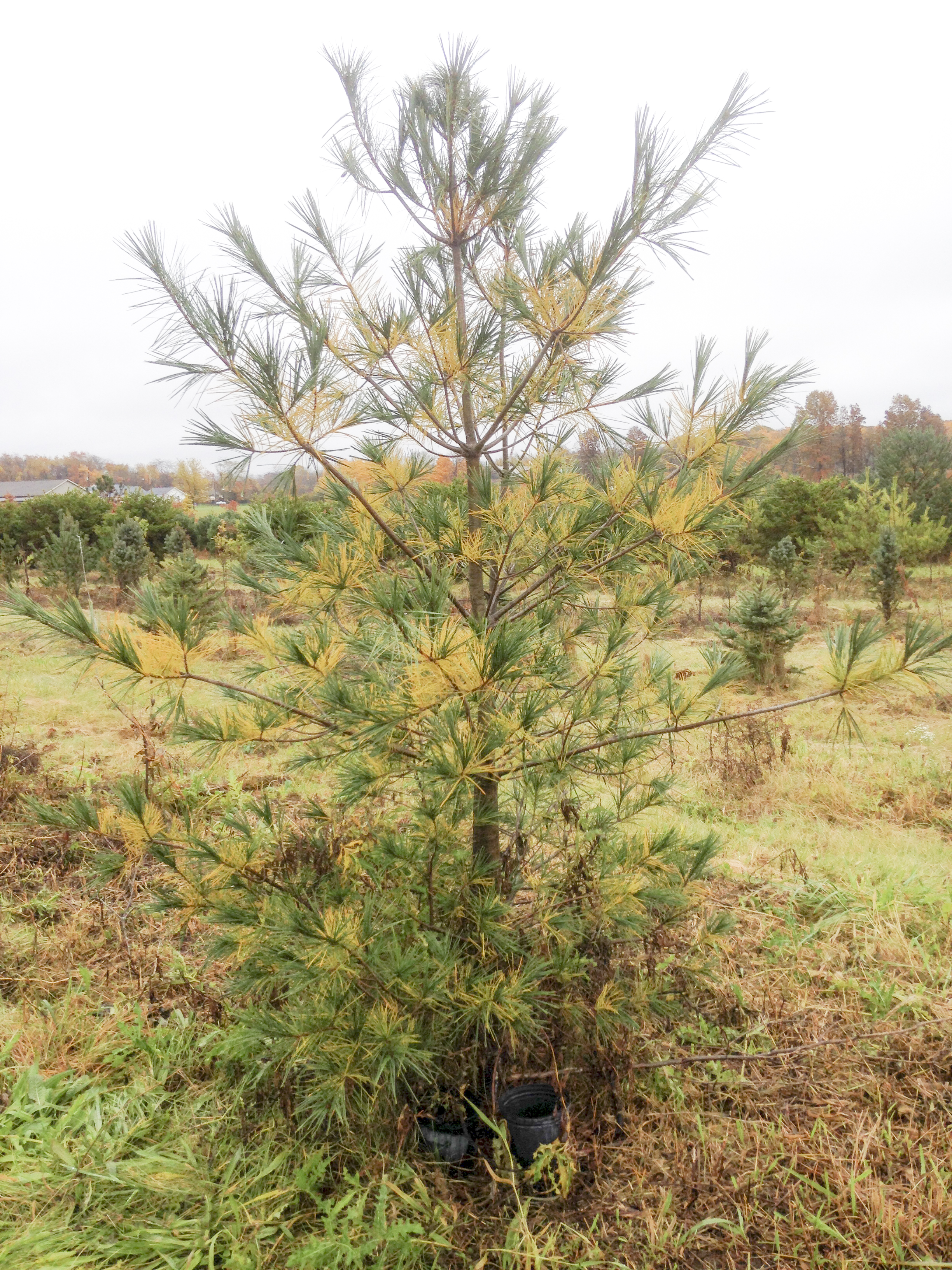
Please note: This article was revised on 11/12/25 and originally published on 11/28/18.
ADDITIONAL ARBOR ED™ ARTICLES!



TJ Nagel I Scheduling Production Manager, Russell Tree Experts
TJ joined Russell Tree Experts in 2012 and loves trees. He is an avid gardener and plant collector. TJ graduated from The Ohio State University with a B.S. in Agriculture with a major in Landscape Horticulture and minor in Entomology. TJ is an ISA Board Certified Master Arborist® and well versed in plant pathology and tree ID.
STOP! DON'T TOP!
As an arborist I have frequently been asked to “top” people’s trees. People want their trees topped for several reasons: safety concerns, vista pruning, aesthetics or height reduction. This request prompts a conversation about the practice of tree topping and the hazards associated with it.

As an arborist I have frequently been asked to “top” people’s trees. People want their trees topped for several reasons: safety concerns, vista pruning, aesthetics or height reduction. This request prompts a conversation about the practice of tree topping and the hazards associated with it.
Topping a tree is the practice of removing tree tops or pieces of the canopy while leaving stubs or branches that are too small to assume the role of a terminal leader. Probably the most common place to observe a topped tree would be underneath a utility wire. These trees are topped in order to prevent them from interfering with the electric grid and not necessarily pruned with the overall tree’s health as the primary focus.
Topping, “hat racking” or “rounding-over” a tree can put a tremendous amount of stress on a tree. The practice can result in the removal of 50-100% of the tree’s leaves. This extreme reduction in a tree’s leaf bearing canopy places tremendous stress on the tree. If the tree doesn’t die it will use a large portion of it’s starch reserves (stored in the roots) to replace the removed canopy. The replacement shoots will grow quickly from buds located in the outer tissue around the removed branches, but will not be anchored the same as a “normal” branch. This poor attachment point and fast growth often results in these “shoots” failing.
Residential tree improperly trimmed called “topping” (click to enlarge)
The large wounds left after a tree has been topped expose the tree to more hazards than just fast growing, poorly attached shoots. The wounds are slow to heal (if they heal at all) and the exposed cambium layer is vulnerable to insects, disease, and decay. The remaining portion of the tree can also experience sunburn or “scalding” due to the lack of leaves and sun exposure.
After explaining this to a potential client I am often asked “then what should I do?” Depending on the species, location, health and client desires there are several options. Proper reduction pruning is one solution and involves reducing limbs according to industry standards (Click here to see our pruning guide). If the tree is in poor health or an unfortunate location, removal is also an option. Often times it is better to remove a poor specimen and replace it with a species that is better suited to that particular site.
As we learn more about the value of trees in our urban forest we have a responsibility to be good stewards of our trees. Witnessing the proverbial “light bulb” turn on after discussing the practice of topping trees is one of the many rewards of being an arborist.
Sincerely,

Chris Gill
Regional Manager, Russell Tree Experts
ISA Certified Arborist® OH-6416A
The Value of Trees in the Urban Landscape
Trees in our landscapes are not only beautiful but they provide countless benefits that can enrich our lives. These benefits extend well beyond backyard aesthetics and go on to include health implications, improved energy efficiency, and community-wide effects.

Trees in our landscapes are not only beautiful but they provide countless benefits that can enrich our lives. These benefits extend well beyond backyard aesthetics and go on to include health implications, improved energy efficiency, and community-wide effects.
Increased Energy Efficiency
The canopy of properly placed trees surrounding your home can provide much needed shade to ensure the house stays cooler on hot summer days. Additionally, trees around the home can provide an often underestimated windscreen which can help diminish harsh winter winds and keep your home warmer in the winter months. The end result is the same - increased energy efficiency and cost savings on heating and cooling bills.
Environmental/Community Benefits
There are innumerable environmental and community benefits of trees, however there are two that we chose to focus on at this time.
Through the years, the community and public have been increasingly aware of the concern for increased CO2 emissions in our atmosphere. Trees are a beautiful way to help combat this as they naturally provide a reduction in carbon dioxide through photosynthesis. In the process of consuming carbon dioxide, trees release more oxygen into the atmosphere as a byproduct. Depending on the age of the tree, they are estimated to absorb anywhere from 12-48lbs of carbon dioxide per year. Amazingly, trees also have the ability to absorb other harmful environmental gases as well, including sulfur dioxide, ozone, and nitrogen oxides, effectively serving as a filter to clean the air we breathe every day.
Another important quality of trees is their ability to reduce storm water runoff and erosion. Trees are able to do this in three main ways. Firstly, a trees broad leaves and branching limbs help deflect heavy rains over a larger area. Secondly, a tree’s wide reaching roots act as an anchor to support not only the tree itself but the surrounding soil, which helps prevent erosion. Lastly, trees act as a sponge to absorb surrounding ground water in the environment (a single mature tree can uptake thousands of gallons of water per year!). The end result is reduced storm water runoff and reduced soil erosion.
Personal Health and Wellness
Trees also provide the intangible benefit as a place of social gathering for local community members, and can provide a calming environment that reduces stress levels and improve overall health and wellbeing.
Property Value
There are an abundance of studies showing the benefit of great landscaping on property value. Trees are essential to a well-maintained landscaped property. With proper planning, well placed trees on your property can greatly enhance your property value.
In Summary
Trees provide countless benefits to individuals and communities as a whole. Trees not only provide improved energy efficiency in the home, they also improve property value, have long lasting environmental effects, and can improve one’s quality of life. After reading this, I hope you can truly appreciate the power of trees to change our lives both for today and for the future to come.
Chris Gill
ISA Certified Arborist® OH-6416A