
Neonicotinoid Use in Ornamental Landscape and Effects on Honeybees
Neonicotinoids are chemical products that are effective in systemic control of insect pests in plants. Systemic application of insecticide has multiple advantages over other methods, such as topical applications. When applied systemically, neonicotinoids are absorbed by the plant, and persist for a longer period of time, so that insect pests subsequently feeding on plant parts ingest the chemical and die.
Because of this mode of action, there has been concern about neonicotinoids persisting long enough to be found in plant products such as nectar or pollen, where they could be ingested by foraging bees.
Neonicotinoids are chemical products that are effective in systemic control of insect pests in plants. Systemic application of insecticide has multiple advantages over other methods, such as topical applications. When applied systemically, neonicotinoids are absorbed by the plant, and persist for a longer period of time, so that insect pests subsequently feeding on plant parts ingest the chemical and die.
Because of this mode of action, there has been concern about neonicotinoids persisting long enough to be found in plant products such as nectar or pollen, where they could be ingested by foraging bees.
--
I have been following this topic for several years, collecting various articles that have been trickling in. As licensed commercial applicators, we are trained that “the label is the law”, so pesticide applications to plants are always made according to label instructions. However, there have been claims made about neonicotinoids causing problems for Honeybee populations.
I have personally attended seminars here in Ohio where scientists leading research on neonicotinoid use for controlling invasive insect pests have stated that despite some claims to the opposite, there have been “no documented studies” proving a relationship between neonicotinoid use and Honeybee decline. Since then I have read some articles referring to studies that seem to show a correlation, but no conclusive proof. As an applicator who cares about the welfare of beneficial insects, the lack of conclusive studies is a source of frustration. In fact, the approach I was leaning toward was “if there is a high level of uncertainty, perhaps it is best to seek alternatives for treatment, or to not treat at all”. There is a lot to consider when deciding whether or not to treat a plant chemically, but that topic is beyond the scope of this article.
What is the issue with neonicotinoid use and bees? The reason neonicotinoids are great options for pest control are ease of application, larger windows of application timing, and more targeted applications. Using topical sprays to control pests requires very specific timing (pest usually needs to be present at the time of spray), and there is a risk that other non-target plants may get sprayed (wind drift). Also, non-targeted insects present at the time of application can come into contact with the chemical.
A systemic application is much simpler: no spraying may be required (usually applied as liquid drenches into the soil around the root zone of the target plant, or injected directly into the tree), only insects feeding on plant tissue are targeted, and timing is much less critical since the chemical resides within the tree, eventually breaking down so reapplication is necessary for continued control. And this is the question raised by many concerned people: If the plant tissue has enough chemical to kill insects feeding on the plant, isn’t it possible that the nectar produced by the plant’s flowers will be laced with the chemical as well? So how does this affect bees? These are very reasonable questions, and I agree that they merit consideration.
I was intrigued to see Bernadette Mach (Department of Entomology, University of Kentucky) on the speaker schedule at the Ohio Chapter ISA Tree Care Conference in Columbus, Ohio, this year. Intrigued, because she was speaking on the topic of neonicotinoid levels that persist within a plant after treatment, specifically in nectar. Her talk was in two parts, both of which applied to our concerns as commercial applicators. The first half dealt with her studies on which flowering plants were attractive to bees. The second half was measuring residual levels of systemic chemicals in nectar following application at label rates during different times of the year. Details of her study informing the second half of her talk can be found online (Uptake and Dissipation of Neonicotinoid Residues in Nectar and Foliage of Systemically Treated Woody Landscape Plants).
In short, there were several important details that I came away with:
- Of two chemicals commonly used, one has a lower residual in nectar than the other.
- The timing of the application matters. Applications made post-bloom had a low residual in nectar the following year.
- For some plants, the issue does not matter. For example, Boxwood, in particular, has caused me difficulty. Leafminer is a very common insect pest that can destroy Boxwoods, but it can be readily treated with a systemic application. Last season I began communicating with clients my concern over treating Boxwoods and potential harm to bees. After communicating with Bernadette specifically on this topic, I feel more comfortable continuing with Boxwood treatments as usual. The reason is that Boxwoods are not a plant that attracts bees, so there is a greatly reduced risk that they would feed on the nectar.
As a Certified Arborist and licensed commercial applicator making recommendations to clients, I need to consider each plant prior to treatment. Yes, the client wants to control Magnolia Scale, but should we attempt to do so systemically? Is this plant attractive to bees? If so, should we time the application post bloom? Will this concur with the insect life stage being targeted? What about other options? Can we apply a targeted topical spray that will be effective?
In some cases, nothing more will be possible than to explain to the client the implications of treatment. For example, if the client has a Hawthorn that consistently looks ugly each season when the leaves turn brown and blotchy due to Hawthorn leafminer, I can explain that the best way to control this pest is with a systemic application in the fall (which is essentially pre-bloom) to protect the tree from the pest in spring. This means that there will be higher levels of neonicotinoid in the nectar the following spring, and since bees are attracted to Hawthorn blooms there is a chance they may be affected by the chemical. Leafminer in Hawthorn causes damage that is mostly aesthetic. Once the client considers all this, she may simply choose to leave the tree untreated and deal with some less than perfect leaves.
Ultimately Certified Arborists that are licensed commercial applicators will be making applications based on label recommendations provided by the specific chemical manufacturer. However, we need to follow the thought process outlined above to make responsible decisions, understanding that our choice of which chemical to use when to apply it, and how to apply it may have effects that reach further than simply trying to save one plant, or make it look better.
José Fernández
ISA BOARD CERTIFIED MASTER ARBORIST® OH-5129B
ODA COMM. PESTICIDE LIC. #105859 (Categories 2B, 4A, 6A, Core)
TREE RISK ASSESSMENT QUALIFICATION (TRAQ)
20 NEED-TO-KNOW TREES BY TJ NAGEL
TJ Nagel, ISA Certified Arborist® of Russell Tree Experts, created a list of 20 trees you should know about in Central Ohio. Some are wonderful, must-have trees while others are on the ol' DO NOT PLANT list!

As the weather breaks, this is a time of year that I get a lot of questions from clients about what kind of tree to plant. This is a decision that requires careful thought because there are several factors that can influence the success of a new tree planting.
Selecting the right tree for a particular site the first time is the best strategy for a healthy tree. A healthy tree will avoid costly services down the road like pesticide applications, extra pruning, aggressive fertilizations and potentially removal and starting over.
So this Winter, I spent some time by the fireplace compiling a list of 20 trees that I think central Ohioans should be aware of when buying a tree because it’s an important investment.
Most trees on this list have been selected for urban adaptability and ornamental qualities. Others have been selected because they would make a great street tree. Read through these carefully because not every tree on the list should be considered for your landscape. I have also included a couple of trees that I recommend NOT planting.
Things to consider when selecting the appropriate tree are cold hardiness, provenance, soil quality and nutritional content, sunlight, mature size of the tree and planting site restrictions (structures, utilities, restricted root zones). It is also important to purchase trees from a reputable source.
If you are feeling a bit overwhelmed with the tree selection process, that’s OK – we are here to help.
Hire us for a tree selection consultation and one of our certified arborists can meet with you, inspect the planting site, give you options for the appropriate tree and recommend the appropriate Landscape contractor that plants high quality plant material and plants trees to industry standards.
Remember, choosing the right tree the first time is a lot less expensive than trying to make the wrong tree work. Let us help you do that – you will be rewarded many times over.
CLICK ON A TREE BELOW TO LEARN MORE



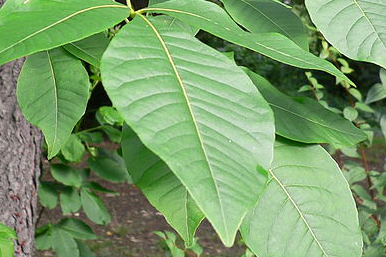


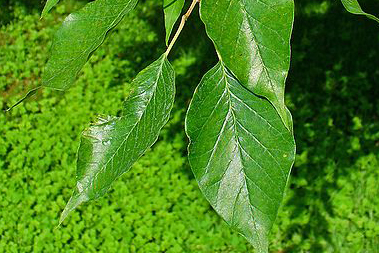



✅Wafer Ash
General Info
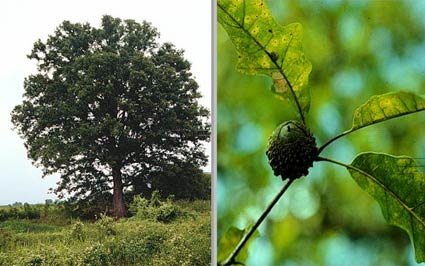
Latin Name - Ptelea trifoliata
Native Range - Ontario and New York to Florida, west to Minnesota and parts of Colorado and Arizona
Growth Rate - Medium
Mature Height - 15 – 20’
Mature Spread - 15 – 20’
Arborist Thoughts
A great native plant that can perform well in full sun to full shade, Wafer Ash is easy to grow, adaptable, and should be considered for the small landscape or as a street tree in areas with low hanging utilities.
No significant pest or disease problems
Host to Giant Swallowtail butterfly
Fruit of wafer ash has been used as a substitute for Hops and is sometimes referred to as Hoptree.
🚫Tree of Heaven


>>>DO NOT PLANT OR ALLOW TO GROW ON YOUR PROPERTY<<<
General Info
Latin Name: Ailanthus altissima
Native Range: China
Growth Rate: Fast
Mature Height: 40 – 60’
Mature Spread: 25 – 40’
Arborist Thoughts
Introduced from China in the late 1700s as a shade tree and horticultural specimen, this tree now threatens to overwhelm our native areas and landscapes.
Its ease of establishment, prolific seed production, rapid growth, absence of significant disease/pests and ability to out compete other plants with allelopathy (producing toxic compounds to poison its competition) has made it possible for Tree-of-Heaven to invade natural areas and suppress the growth of native trees.
Tree of Heaven is considered an invasive species and should be ruthlessly eliminated.
DO NOT PLANT OR ALLOW TO GROW ON YOUR PROPERTY
✅Serbian Spruce
General Info
- Latin Name - Picea omorika
- Native Range - Southeastern Europe
- Growth Rate - Slow to Medium
- Mature Height - 50–60’
- Mature Spread - 20–25’
Arborist Thoughts
- One of the most adaptable spruces and one of the most graceful and beautiful evergreen trees in general.
- An excellent evergreen tree for urban areas because of its narrower growth habit, unlike Norway spruce and White pine that can become quite wide and unruly at maturity.
- Less susceptible to insect infestation and needle cast diseases than other spruce.
- Should be considered as an alternative to using White spruce or Blue spruce in the landscape.
✅Persimmon


General Info
- Latin Name - Diospyros virginiana
- Native Range - Connecticut to Florida, west to Kansas and Texas
- Growth Rate - Medium
- Mature Height - 35–60’
- Mature Spread - 30–35’
Arborist Thoughts
- Persimmon is a great native tree that can perform well in the toughest sites. It is drought tolerant and will thrive in soils with low fertility and areas with restricted root zones.
- Produces a large edible berry that ripens late September through October (although flavor is best after the first hard frost).
- Good tree for reliable yellow to red Fall color.
- Could be used as a specimen tree, street tree or in the edible landscape.
✅Persian Parrotia


General Info
- Latin Name - Parrotia persica
- Native Range - Iran
- Growth Rate - Medium
- Mature Height - 25–40’
- Mature Spread - 15–30’
Arborist Thoughts
- One of the best specimen trees available, interesting bark, attractive foliage, interesting flowers, showy fall color and excellent disease/pest resistance make this a tree a must have for all landscapes.
- Parrotia is often grown as a multi-stemmed large shrub but single stem more traditional tree form cultivated varieties like ‘Vanessa’ and ‘Red Bull’ are becoming readily available and would make a great street tree.
✅Pawpaw


General Info
Latin Name - Asimina triloba
Native Range - New York to Florida, west to Nebraska and Texas
Growth Rate - Medium
Mature Height - 15–30’
Mature Spread - 15–20’
Arborist Thoughts
Our largest native edible fruit tree in North America, Pawpaw is easy to grow (in full sun to shade), adaptable to most soil types and has no significant disease or pest problems.
Interesting purple flowers in Spring give way to edible greenish yellow fruits in late Summer. Flavor is similar to banana/pear/mango.
Great tree for edible landscaping or naturalizing in low areas or edge of woods. Has been used successfully as a street tree in some Columbus neighborhoods.
Host to Zebra Swallowtail butterfly.
✅White Shield Osage Orange

General Info
- Latin Name - Maclura pomifera ‘White Shield’
- Native Range - Arkansas to Oklahoma and Texas
- Growth Rate - Fast
- Mature Height - 30–40’
- Mature Spread - 30–40’
Arborist Thoughts
- Named after the White Shield creek in Oklahoma near where the original tree was discovered, this cultivated variety of Osage Orange is both thornless and fruitless.
- Dark green glossy foliage looks as good at the end of the growing season as it did when leaves first emerged in Spring. No real fall color or noticeable flowers
- Not the best tree for ornamental appeal but is fast growing in youth, tough, and adaptable to most sites.
- Excellent tree for a street tree or use in institutional or unmanaged sites being both drought tolerant and pest/disease resistant
✅Overcup Oak
.jpg)
General Info
- Latin Name - Quercus lyrata
- Native Range - New Jersey to Florida, west to Missouri and Texas
- Growth Rate - Medium, Fast in youth
- Mature Height - 40–60’
- Mature Spread - 40–60’
Arborist Thoughts
- An excellent oak for use in challenging sites. Overcup oak is a bottomlands species in its native habitat and adapts well to poor quality soils, poorly drained sites and restricted root zones.
- Overcup oak transplants well and is faster growing than most other oaks in the white oak group.
- Great specimen tree or a street tree for areas where overhead utilities are not an issue.
✅Lacebark Pine

General Info
- Latin Name - Pinus bungeana
- Native Range - China
- Growth Rate - Slow
- Mature Height - 30–50’
- Mature Spread - 20–30
Arborist Thoughts
- The Lacebark Pine is one of the most beautiful and interesting pines because of its attractive exfoliating bark at maturity. The bark is initially green but will begin to flake off revealing, brown, white and silver areas once stems reach 1.5 – 2 inches in diameter.
- Hardy and adaptable to high pH soils and makes an excellent specimen tree when planted in a location where the bark is visible
- Could also be used for screening as an alternative to other commonly used evergreens
✅Ginkgo


General Info
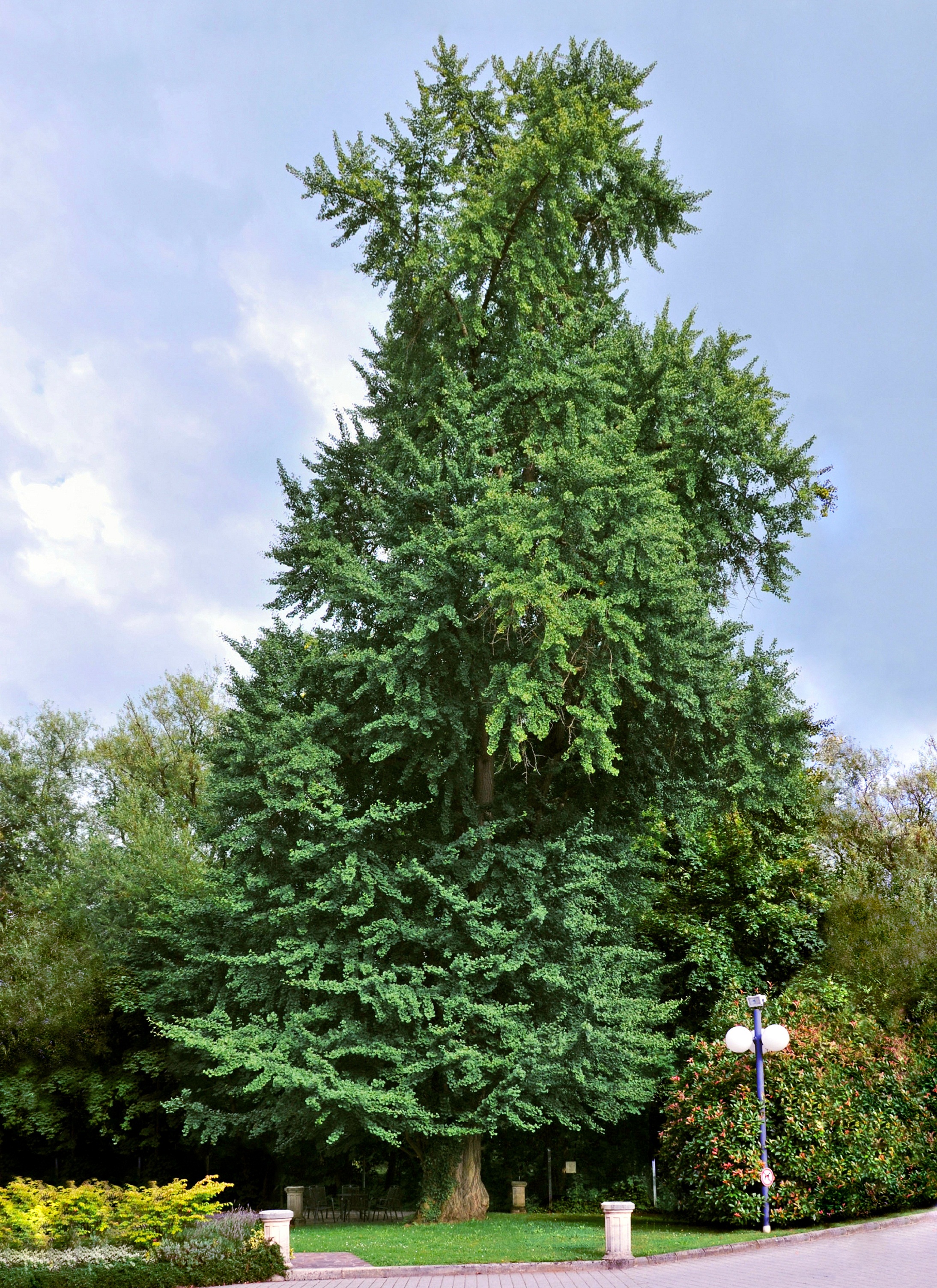
- Latin Name - Ginkgo biloba
- Native Range - Eastern China
- Growth Rate - Slow to Medium
- Mature Height - 50–80’
- Mature Spread - 30–50’
Arborist Thoughts
- An excellent and incredibly hardy shade tree that has stood the test of time – Ginkgo goes as far back as the dinosaurs (270 million years ago).
- Ginkgo has no known disease problems or insect predation and can grow well in a wide range of soil types and urban conditions including confined spaces.
- Ginkgo has unique, fan shaped leaves and stunning Golden-yellow Autumn color making it one of the most distinct and beautiful of all trees during the Fall season.
- Ginkgo trees can be male or female and the fruit of the female tree is considered messy and smells unpleasant. Several male cultivated varieties of Ginkgo are available such as ‘Saratoga,’ ‘Princeton Sentry,’ and ‘Autumn Gold.’
✅Kousa Dogwood

General Info
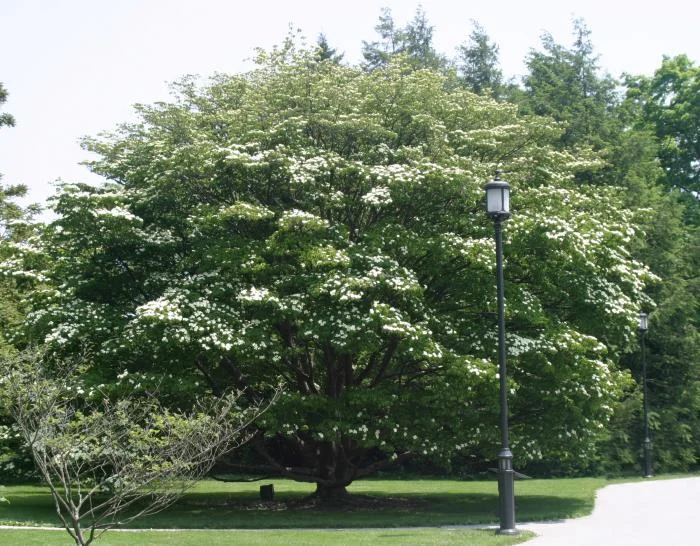
- Latin Name - Cornus kousa
- Native Range - Japan, Korea, China
- Growth Rate - Slow to Medium
- Mature Height - 20–30’
- Mature Spread: 20–30’
Arborist Thoughts
Kousa dogwood is a great ornamental tree for multi-seasonal interest. Beautiful white flowers (technically bracts in late Spring, attractive exfoliating bark, showy red fruit edible fruit and reliable red Fall color in the foliage.
Kousa dogwood is more sun tolerant, heat tolerant, and drought tolerant than our native dogwood and less susceptible to fungal diseases like anthracnose and powdery mildew.
✅Korean Evodia

General Info
- Latin Name - Evodia daniellii
- Native Range - Northern China, Korea
- Growth Rate - Medium to Fast
- Mature Height - 25–35’
- Mature Spread - 25–35’
Arborist Thoughts
This small to medium-sized tree could make a great front yard specimen in a smaller landscape or be used well as a street tree where growing height is limited.
Korean evodia flowers late June – early August with attractive white flowers that provide quite a show when few other woody plants are in flower. White flowers lead to attractive shiny red and black fruit. Also, a great source of nectar for honeybees and other pollinators.
Korean evodia has no significant disease or insect problems and is adaptable to most soil types and soil pH.
✅Japanese Zelkova


General Info
- Latin Name - Zelkova serrata
- Native Range - Japan, Korea, Taiwan
- Growth Rate - Medium, Fast in youth
- Mature Height - 50–80’
- Mature Spread - 40–50’
Arborist Thoughts
- Another great urban tolerant tree that deserves more consideration in the landscape or as a street tree.
Japanese zelkova has an upright vase shaped habit, attractive exfoliating bark at maturity and stunning apricot to red fall color.
Would make a great alternative to Red maple for folks seeing a tree with reliable Fall color.
✅Dawn Redwood


General Info
- Latin Name - Metasequoia glyptostroboides
- Native Range - Central China
- Growth Rate - Fast
- Mature Height - 70–100’
- Mature Spread - 5–30’
Arborist Thoughts
Thought to be extinct until discovered in China in the 1940s, Dawn Redwood is a great tree for a site that can handle some height.
Very fast growing, no serious disease or insect problems and can survive in a wide range of soil types and climates.
Dawn redwood is deciduous conifer so needles do fall of in the Fall but not before turning a nice coppery orange color.
A great tree to consider for folks looking to establish shade or a large screen in a short amount of time.
✅Concolor Fir


General Info
- Latin Name - Abies concolor
- Native Range - Colorado to Southern California and parts of New Mexico
- Growth Rate - Slow to Medium
- Mature Height - 30–50’
- Mature Spread - 15–30’
Arborist Thoughts
- This magnificent evergreen deserves more use in the Midwest landscape.
Needles have a beautiful silvery blue color and citrusy fragrance.
Concolor Fir is drought tolerant, urban tolerant/adaptable, has little insect or pest problems and is a narrower tree than other large evergreens making it better suited for smaller landscape sites.
Would make an excellent alternative to Blue Spruce in the landscape.
✅Chinkapin Oak


General Info
- Latin Name - Quercus muehlenbergii
- Native Range - Maine to Virginia, west to Minnesota, Nebraska and parts of Texas
- Growth Rate - Medium
- Mature Height - 50–60’
- Mature Spread - 50–60’
Arborist Thoughts
Strong drought tolerant Ohio native with clean lustrous dark green foliage and nice pyramidal habit.
Important tree for wildlife producing sweet and nutritious acorns. Good tree for wildlife habitat also.
More adaptable to high pH soils and urban landscapes than oaks in the Red oak group (pin oak, Northern Red oak, Shingle oak, etc).
Great long-lived specimen for an area that can accommodate a larger tree.
🚫Callery Pear

>>DO NOT PLANT<<
General Info
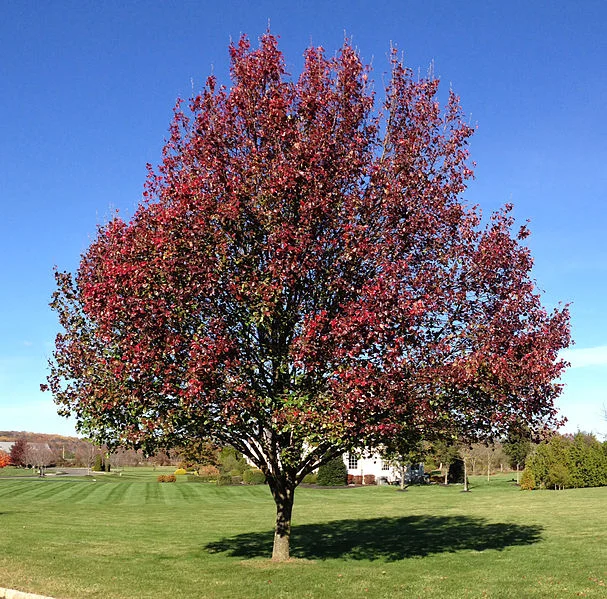
- Latin Name - Pyrus calleryana
- Native Range - China and Korea
- Growth Rate - Fast
- Mature Height - 40–60’
- Mature Spread - 25–40’
Arborist Thoughts
- Cherished for its white flowering show in the Spring but dreaded for its poor structure, weak stem attachment and susceptibility to fireblight (a lethal bacterial disease) and lecanium scale (a challenging insect pest to manage).
This tree has reached epidemic proportions through over planting and by the high volume of escaped seedlings along highways, abandoned fields and unmanaged areas.
Ohio added Callery pear to the Invasive species list in 2016.
One of the most likely tree species to fail under wind or ice load.
DO NOT PLANT
✅Black Tupelo


General Info
- Latin Name - Nyssa sylvatica
- Native Range - Ontario, Maine, Michigan to Florida and parts of Texas
- Growth Rate - Slow to Medium
- Mature Height - 40–60’
- Mature Spread - 25–35’
Arborist Thoughts
One of our most beautiful native trees, Black Tupelo (sometimes called Black Gum) can be used as a landscape specimen tree or street tree and is one of the best and most reliable trees for attractive red Fall color.
Also, a good tree for wildlife producing a small bluish fruit edible to birds and mammals. Several cultivated varieties have been introduced for superior Fall color, ie ‘Red Rage,’ ‘Wildfire,’ ‘Miss Scarlet.’Excellent choice for an area where a medium sized tree is sought
No significant disease or insect problems.